The Best Plyo Boxes for HYROX and Functional Training at Home
A good plyo box is not just a wooden cube that has wandered into your garage. The right one gives you three useful heights, a confidence-inspiring landing surface and enough stability to make jumps, step-ups and functional conditioning feel deliberate rather than faintly alarming.
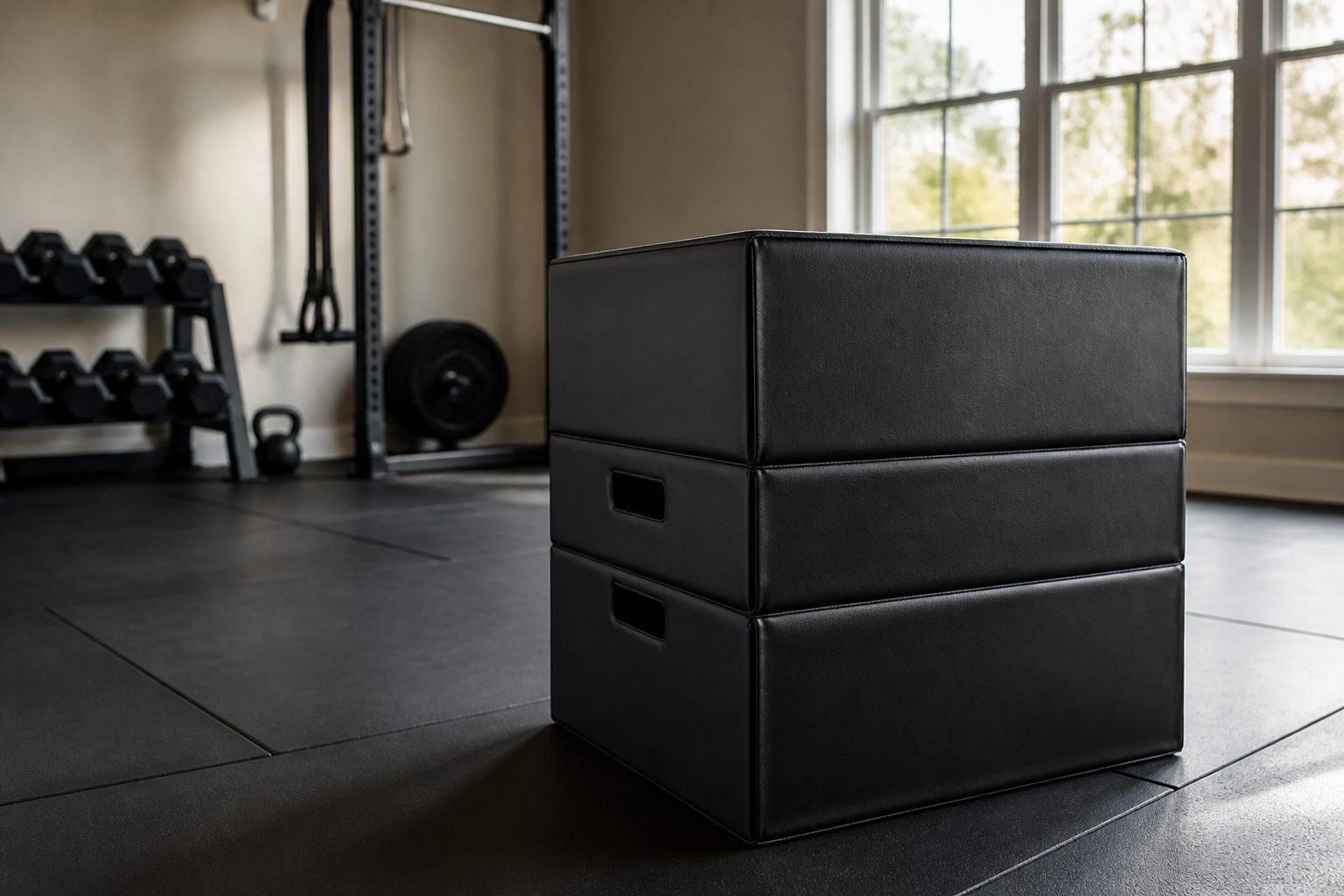
A three-height plyo box gives a home training space far more scope than its modest footprint suggests, provided the landing surface and surrounding floor are treated with the respect they deserve.
 By James Oduya · Staff Writer & Home Gym Columnist · Updated November 05, 2026
Why a plyo box belongs in a HYROX-minded home gym
HYROX does not include box jumps as a formal station, but plyometric work still earns its floor space. Box jumps and controlled step-ups can help develop explosive lower-body strength, coordination and repeatable leg drive. Those qualities matter when burpee broad jumps have made your lungs cross with you, when the running legs feel a little less springy, and when a session asks you to move efficiently from one effort to another.
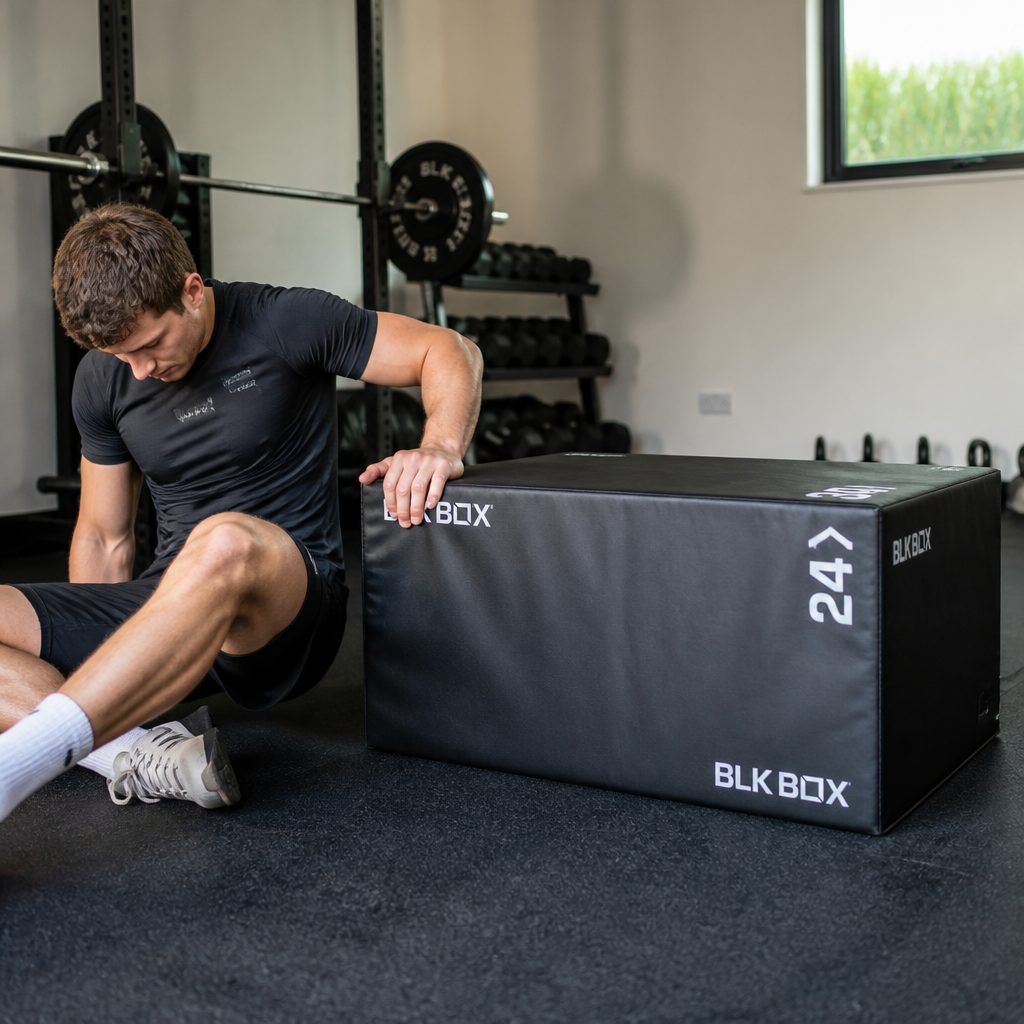
Soft-padded hybrid boxes retain a rigid internal core while reducing the unpleasantness of clipping an edge during learning or fatigued conditioning work.
There is also a less glamorous benefit: a box is a useful training anchor in a small home gym. It can support unilateral leg work, elevated press-up variations, seated drills, low-impact step-ups and general conditioning circuits. You do not need to make every session an audition for a highlights reel. In fact, you probably should not. A box jump is useful only when it is a controlled jump to a stable target, followed by a calm step-down. Landing in a deep squat, then hopping straight back down because enthusiasm has outrun judgement, is not a meaningful training philosophy.
The complication is that "plyo box" covers several quite different things. Traditional wood offers a firm platform and tends to keep costs sensible. Hybrid designs put foam around a rigid wood core, softening an edge strike without creating the unstable, squashy sensation some people associate with all-foam equipment. For compact rooms, the classic three-in-one format is especially handy: turn one box onto a different face and the working height changes, without buying three separate pieces of furniture.
For home use, prioritise a flat, non-slip floor and enough clear space to approach, land and step down without negotiating kettlebells, laundry baskets or a family pet with poor timing. A safer box cannot fix a cluttered landing zone.
What separates a sensible home plyo box from a regrettable one
The first question is not "how high can you jump?" It is "which height lets you land quietly, consistently and with both feet fully on the platform?" A three-in-one box gives you room to answer that question honestly. A lower setting can be used for crisp repetitions and step-ups; the taller faces remain available once your movement, confidence and training needs warrant them.
Material changes the experience. A wooden box gives you a direct, firm contact point and generally high stated capacities. It is simple, durable and useful for people who prefer a hard platform for controlled strength work. But a missed jump into plywood has a way of making itself memorable. Soft-padded hybrids exist largely because shin contact is not an especially aspirational part of functional fitness.
That does not make foam a magic force field. The safer decision is still to choose a manageable height, avoid tired attempts with sloppy mechanics and keep the box stable. Foam padding helps reduce the consequence of brushing an edge; it does not turn a reckless rep into a clever one. Think of it as sensible insurance, not permission to become optimistic after a double espresso.
Soft, wood or hybrid: choose the landing surface before the badge
Hybrid boxes make the most sense for confidence-building
A wood core wrapped in foam provides a stable structure with a more forgiving outer surface. It is a particularly useful compromise if more than one person trains at home, or if jumps are a newer part of your programme rather than an old friend.
Wood remains the direct and durable option
Plywood boxes provide a hard landing platform, familiar three-height versatility and strong stated load ratings. They are a logical fit for confident jumpers who want a simple item that can also handle controlled step-up work.
Three usable faces beat one intimidating number
A 3-in-1 design is not merely a space-saving gimmick. It gives you a sensible training progression, lets different household users work at suitable heights and makes the box useful for more than max-effort jumping.
Step down rather than rebound
For a home functional-training setup, a controlled step-down is generally the sensible choice after a jump. It keeps repetitions more consistent and avoids asking the same box to manage repeated impact from a jump down.
The small-space rule
A box earns its keep when it replaces several training tools, not when it becomes a permanent obstacle course feature. Pick a size and surface that you can safely rotate, store against a wall and bring into a circuit without rearranging the entire room.
How the leading 3-in-1 boxes compare
The four boxes below are the strongest fits for this particular brief because each combines a confirmed three-height format with a stated capacity and an established construction approach. There is no universal winner: a hybrid is usually kinder to nervous shins, whilst a wooden box delivers the harder, simpler platform that experienced functional trainees often prefer.
| Feature | REP Fitness 3-in-1 Soft Plyo Box | Titan Fitness 3-in-1 Plyo Box | Synergee 3-in-1 Wooden Plyo Box | Yes4All 3-in-1 Soft-Padded Plyo Box |
|---|---|---|---|---|
| Construction | Rigid wood core with 18mm dense foam | Plywood | ¾" plywood & PVC | Wooden core with foam padding |
| Stated capacity | 400 lbs | 550 lbs | 450 lbs | 450 lbs |
| Confirmed height options | 20 / 24 / 30" | 30 / 24 / 20" | 16 / 14 / 12" to 20 / 18 / 16", depending on variant | Three height options |
| Notable surface or stability feature | Grippy vinyl cover | Non-slip surface and four non-skid rubber feet | PVC non-slip coating with hexagonal design | Non-slip vinyl cover |
Capacity is only one part of the story, but it is still useful context when comparing otherwise similar boxes. The bars below use the manufacturers' stated limits, with the highest figure represented as the full scale. They are not a measure of jump quality, stability on a particular floor or suitability for a particular athlete. Those decisions remain use-case decisions, not a competition in who can print the largest number on a specification sheet.
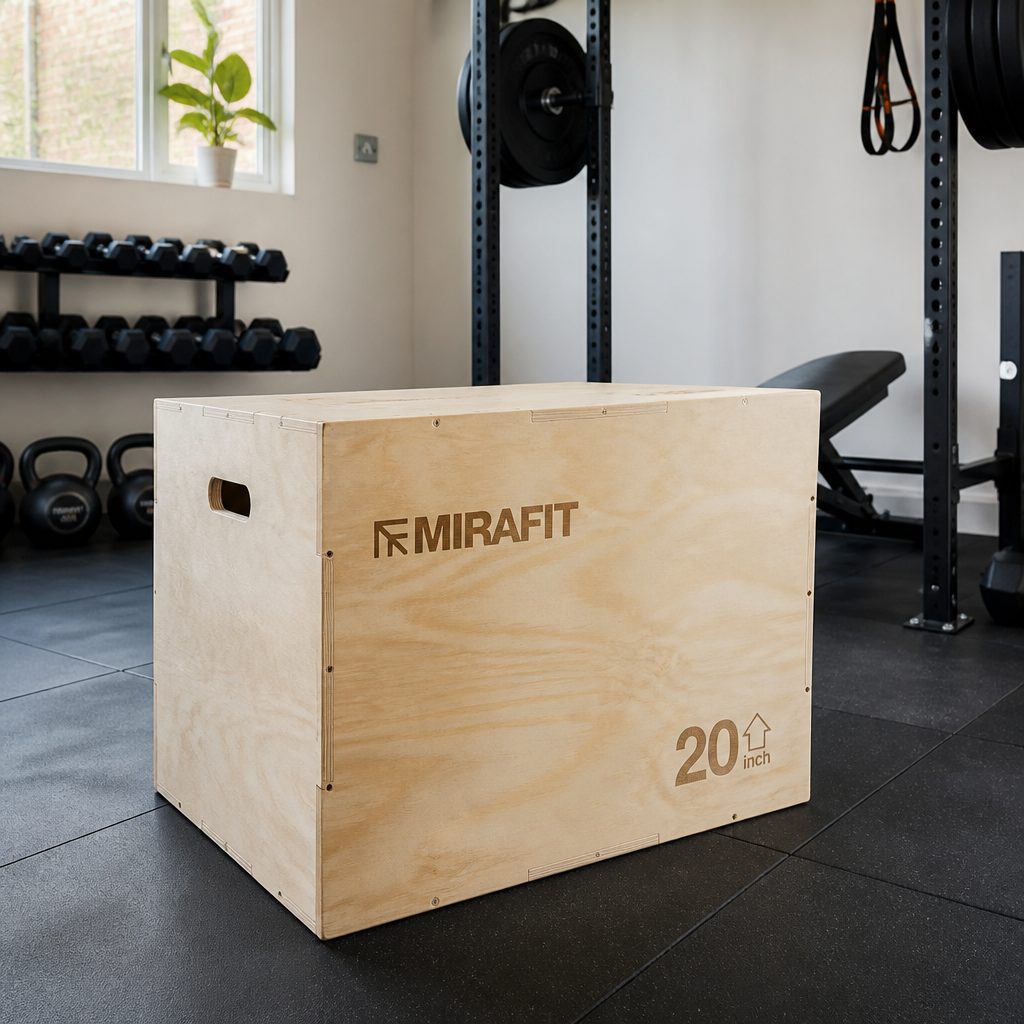
A traditional plywood box is compact, direct and highly versatile, but it asks for accurate foot placement and a little more respect when fatigue begins to affect your jump.
Ranked picks: the best plyo boxes for home functional training
1. REP Fitness 3-in-1 Soft Plyo Box — Best for safer all-round HYROX preparation
Shop REP Fitness 3-in-1 Soft Plyo Box on Amazon UK
The REP Fitness 3-in-1 Soft Plyo Box is the strongest all-round choice for a home athlete who wants to train jumps without making every missed contact feel like a disciplinary hearing. Its rigid wood core brings the planted feel that lighter foam blocks sometimes lack, whilst the 18mm dense foam and grippy vinyl outer layer take some of the sharpness out of a clipped edge.
The confirmed 20, 24 and 30-inch heights cover a useful progression for experienced trainees, and the three faces allow a single piece of equipment to support lower-height practice as well as more demanding jump work. That matters for HYROX-minded training. Much of the useful work happens below a headline-grabbing height: repeated low box jumps, controlled step-ups, single-leg strength work and circuits where movement quality survives after the heart rate has gone north.
Its stated 400 lb capacity is lower than the wooden Titan and Synergee options here, but that should not distract from the core appeal. This is a hybrid box for people who put safety, confidence and a less punishing exterior ahead of chasing the highest stated capacity. It is especially suitable if the home gym is shared, if you train early in the learning curve, or if an old shin scar has already provided sufficient character development.
Pros
- Rigid wood core helps it stay stable on each working face.
- 18mm dense foam provides a more forgiving outer edge than bare plywood.
- 20, 24 and 30-inch heights suit structured progression.
- Grippy vinyl cover supports secure foot contact.
Cons
- Its stated 400 lb capacity is lower than the wood picks in this guide.
- Hybrid construction suits jumps and bodyweight training better than loaded barbell step-ups that create high shear forces.
2. Titan Fitness 3-in-1 Plyo Box — Best for maximum stated capacity on a wood box
Shop Titan Fitness 3-in-1 Plyo Box on Amazon UK
The Titan Fitness 3-in-1 Plyo Box is the sensible choice for buyers who want a straightforward plywood platform with a particularly high stated capacity. At 550 lbs, it has the largest declared limit in this roundup. That will appeal to larger athletes and to anyone who wants the reassurance of a substantial figure behind a simple, traditional design.
The 30, 24 and 20-inch configuration is familiar territory for functional training. Rotate the box and you have three practical heights from one footprint, while rounded edges, a non-slip surface, four non-skid rubber feet and built-in handles make the design more civilised than the crude plywood cube stereotype. It remains wood, of course. It will not politely cushion a missed rep. But it offers the solid, consistent landing feel many experienced trainees actively want.
For HYROX conditioning, this box makes most sense when used conservatively. A lower face can become the basis of repeatable step-ups or low box-jump intervals; the taller settings are there for controlled strength and power work, not as a dare. The handles also matter in a small garage or spare room. Moving a box out of the main floor area between sessions is much easier when it has somewhere sensible to hold.
Pros
- 550 lb stated capacity is the highest of the featured picks.
- Three familiar working heights: 30, 24 and 20 inches.
- Rounded edges, non-slip surface and rubber feet improve day-to-day usability.
- Built-in handles help when a compact training area needs clearing.
Cons
- The hard plywood exterior offers no foam protection for missed jumps.
- The highest face is not where newer jumpers should begin simply because it is available.
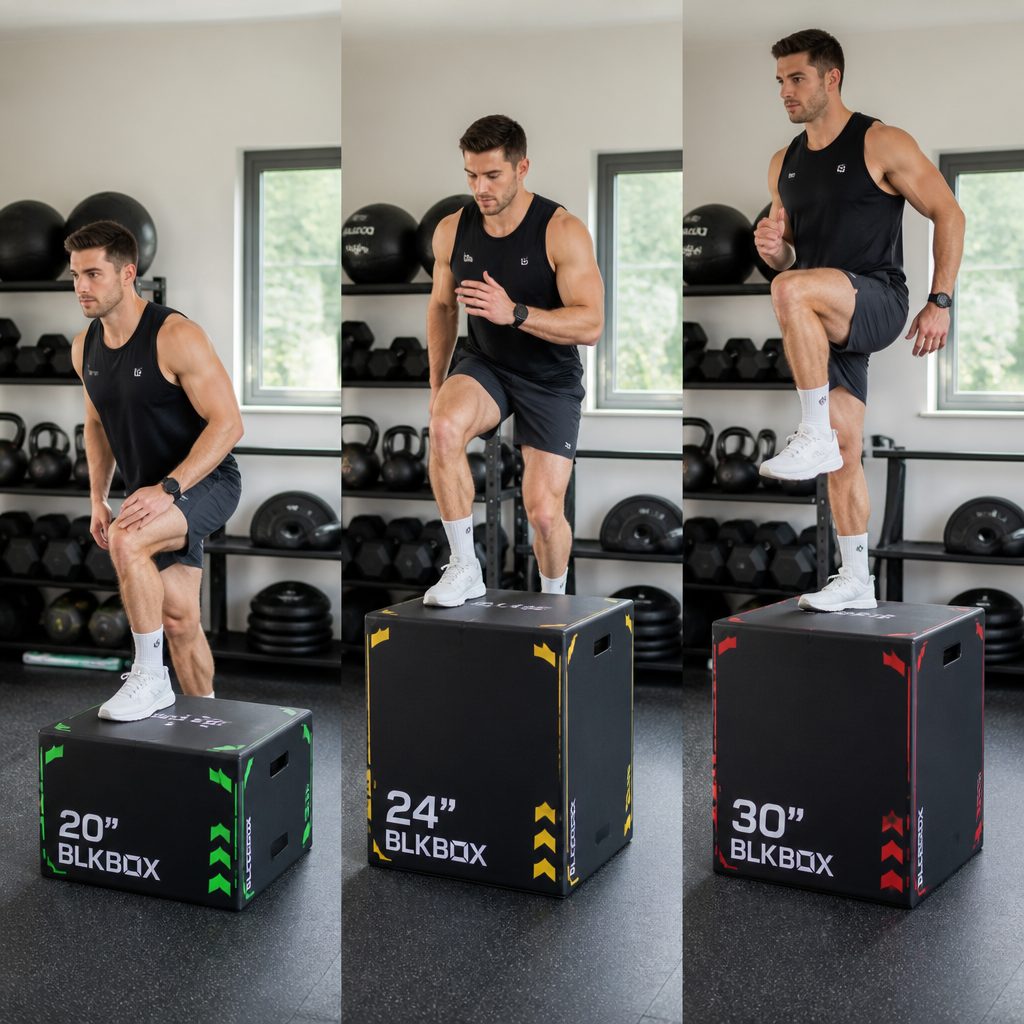
Three working heights allow one box to cover controlled low-impact step-ups, repeatable conditioning intervals and more advanced power sessions as confidence develops.
3. Synergee 3-in-1 Wooden Plyo Box — Best for gradual progression in tighter spaces
The Synergee 3-in-1 Wooden Plyo Box stands out because it is available in four size families, including lower configurations that make a great deal of sense for home training. The available 16/14/12, 20/18/16, 24/20/16 and 30/24/20-inch options allow you to choose a box around your current movement quality rather than buying an oversized 30-inch cube and then using it mostly as an expensive shelf.
That range matters. Plenty of home athletes need a dependable platform for step-ups, split-squat variations and modest-height jumping long before they need a tall box. The lower configurations make the Synergee particularly appealing for those building confidence, returning to impact work or sharing equipment with a partner who has different goals. A smaller box can be less intimidating, easier to store and more likely to be used consistently. Consistency is not glamorous, but it tends to get results whilst glamour is looking for decent lighting.
Construction combines ¾-inch plywood with PVC, and the non-slip coating uses a hexagonal design intended to divert sweat and water. Its stated 450 lb capacity sits between REP's hybrid rating and Titan's higher wood-box rating. It is still a hard-edged box, so the safety case rests on suitable height selection, a secure floor and disciplined repetition. Yet as a compact, progression-friendly wooden option, it is hard to overlook.
Pros
- Four size families give buyers unusually useful progression choices.
- Lower 12, 14 and 16-inch options suit controlled home training.
- PVC non-slip coating and hexagonal surface design address sweaty sessions.
- 450 lb stated capacity is substantial for a compact wooden box.
Cons
- It remains a firm plywood box with no padded edge protection.
- You need to choose the configuration carefully, as each variant has its own three heights.
4. Yes4All 3-in-1 Soft-Padded Plyo Box — Best for a lighter hybrid alternative
The Yes4All 3-in-1 Soft-Padded Plyo Box offers the basic appeal of a hybrid design: a wooden core for structure, foam padding around it and a non-slip vinyl cover on the outside. With a stated 450 lb capacity, it brings a stronger declared limit than the REP hybrid whilst retaining the friendlier landing surface that makes padded boxes attractive for home users.
Its three-height format supports gradual progression, which is exactly how a home plyo box should be used. Start on the face that lets you land with control. Use it for step-ups and lower-intensity circuits. Then move upwards only when your jump is genuinely powerful enough to clear the edge with room to spare, rather than technically capable because the adrenaline happened to be helpful that day.
This model is also notably lighter than the bigger hybrid alternatives at 13.2 lbs in the confirmed 20 x 18 x 16-inch version. That makes it appealing if you need to shift the box around a multi-use room between training sessions. The trade-off is obvious enough: lighter equipment can be easier to relocate, but a stable setup still depends on placing it correctly and using it on a suitable floor. There is no prize for rushing the set-up because the warm-up playlist has started.
Pros
- Wooden core and foam padding balance structure with a kinder edge.
- Non-slip vinyl cover supports more secure landings.
- 450 lb stated capacity matches the Synergee wood box.
- 13.2 lb confirmed weight for the 20 x 18 x 16-inch version makes it easier to move.
Cons
- Like other padded boxes, it is not the natural choice for loaded barbell step-ups involving high shear force.
- Its lighter construction does not remove the need for careful placement before every session.
Using a plyo box for HYROX-adjacent conditioning
The best way to use a plyo box for HYROX preparation is not necessarily to mimic race day. HYROX rewards running economy, robust legs, repeatable movement and the ability to keep going when each station feels slightly inconvenient. Plyometric drills can support that, but they should complement the main work rather than becoming the entire plan.
One sensible approach is to use lower-volume box jumps early in a session, when power and landing mechanics are fresh. Keep the repetitions neat and leave plenty in reserve. Later, use step-ups in a conditioning block, where the aim is steady movement under fatigue rather than explosive height. This respects the difference between power training and aerobic suffering. Both can be useful. They are simply not the same thing wearing different trainers.
A three-in-one box helps here because one piece of kit can handle several roles. The lower face can be used for alternating step-ups or elevated press-ups. A middle setting can be used for controlled jumps. The tallest face might be reserved for athletes with an established jumping base, provided the platform is positioned correctly and the landing remains tidy. This range is what makes these boxes genuinely helpful in a small room rather than a novelty confined to one exercise.
Build power without chasing fatigue
For jump training, stop a set when landing quality deteriorates. In a conditioning circuit, favour the lower face and step-ups if fatigue makes jumping inconsistent. The box does not care which variation you choose; your knees may have a more nuanced opinion.
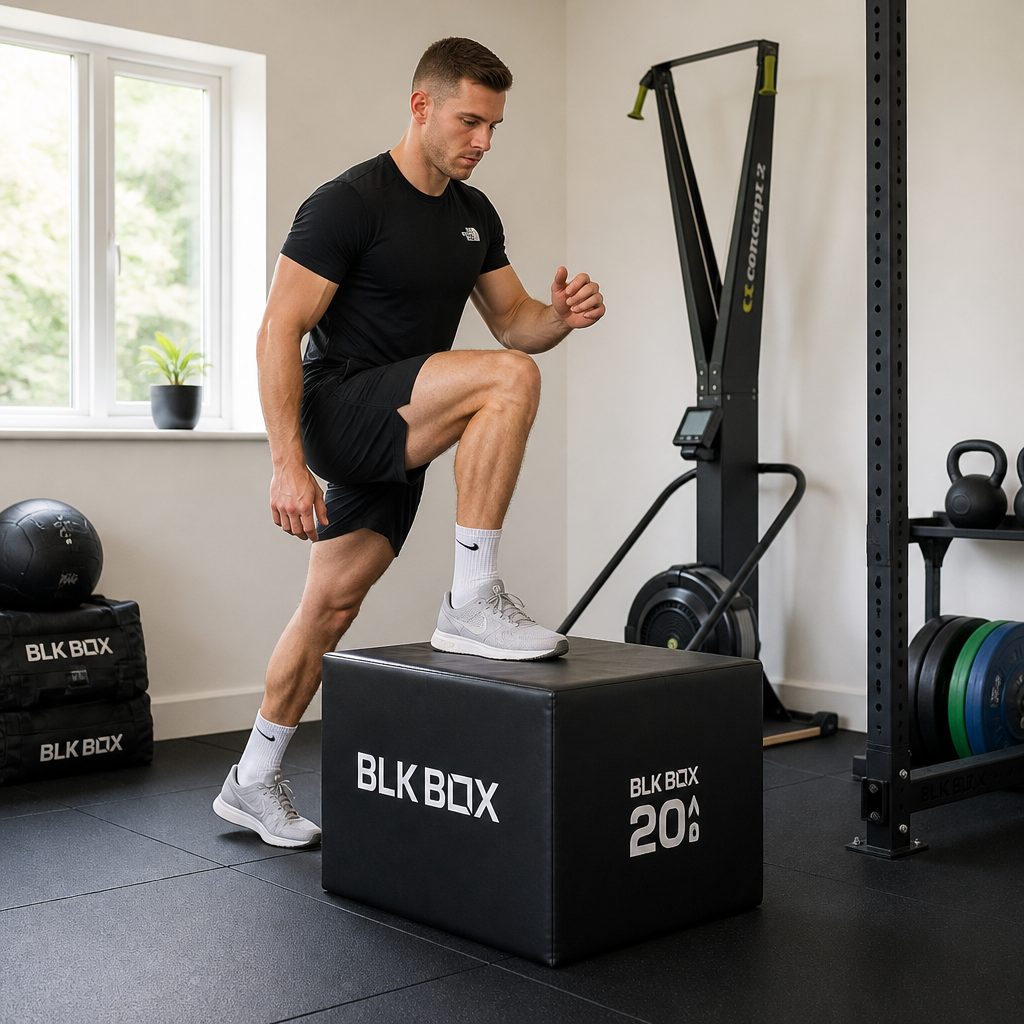
For HYROX-adjacent conditioning, a lower box face is often more useful for controlled step-ups and repeatable effort than a taller face used simply to impress the garage wall.
Set-up and safety rules for a small home gym
Every box in this guide benefits from the same boring-but-important foundations. Place it on a level surface. Make sure the selected face sits flat. Check that the surrounding floor is dry. If you have rubber gym flooring, ensure it is laid securely and has not curled at an edge. If you train on concrete, do not assume that a heavy box cannot shift simply because concrete looks stern.
Before jumping, take a few step-ups and check the box does not rock. For wooden models, inspect the edges and surface periodically. A hard box that has developed roughness is not suddenly a medieval torture device, but it deserves attention before bare knees and hands meet it. For padded hybrids, look after the vinyl cover and avoid using them for exercises that create substantial sideways or shear force across the top surface.
Footwear matters too. A clean, stable training shoe and a dry sole are more useful than a supposedly heroic approach. Jump onto the centre of the platform rather than hunting the front edge. Land softly with both feet, stand tall if the drill calls for it, then step down. Rebounding may look brisk, but it adds impact and reduces the calm margin that makes home training safer.
Foam-covered boxes reduce the sting of an edge contact, but they do not eliminate injury risk. Choose a height that gives you obvious clearance, especially when training alone or when fatigue is part of the session.
Best-for breakdown: which box suits which buyer?
A ranking is useful, but buyer type matters more. The most capable wooden box is not automatically the best pick for someone starting box work. Equally, a padded hybrid is not automatically necessary for a confident athlete whose main priority is a firm platform and a high stated capacity. These are the clearest matches from the four featured choices.
Best all-rounder: REP Fitness 3-in-1 Soft Plyo Box
Choose this for the strongest blend of rigid-core stability, forgiving foam coverage, grippy vinyl and the useful 20, 24 and 30-inch progression.
Best for maximum stated capacity: Titan Fitness 3-in-1 Plyo Box
Choose this if you want a traditional plywood platform with a 550 lb stated capacity, rubber feet and built-in handles.
Best for lower-height progression: Synergee 3-in-1 Wooden Plyo Box
Choose this if a 12, 14 or 16-inch starting option suits your current training better than beginning with a taller standard box.
Best lighter hybrid for small spaces: Yes4All 3-in-1 Soft-Padded Plyo Box
Choose this if you want a foam-padded wooden-core box that is easier to shift around a multi-purpose home training room.
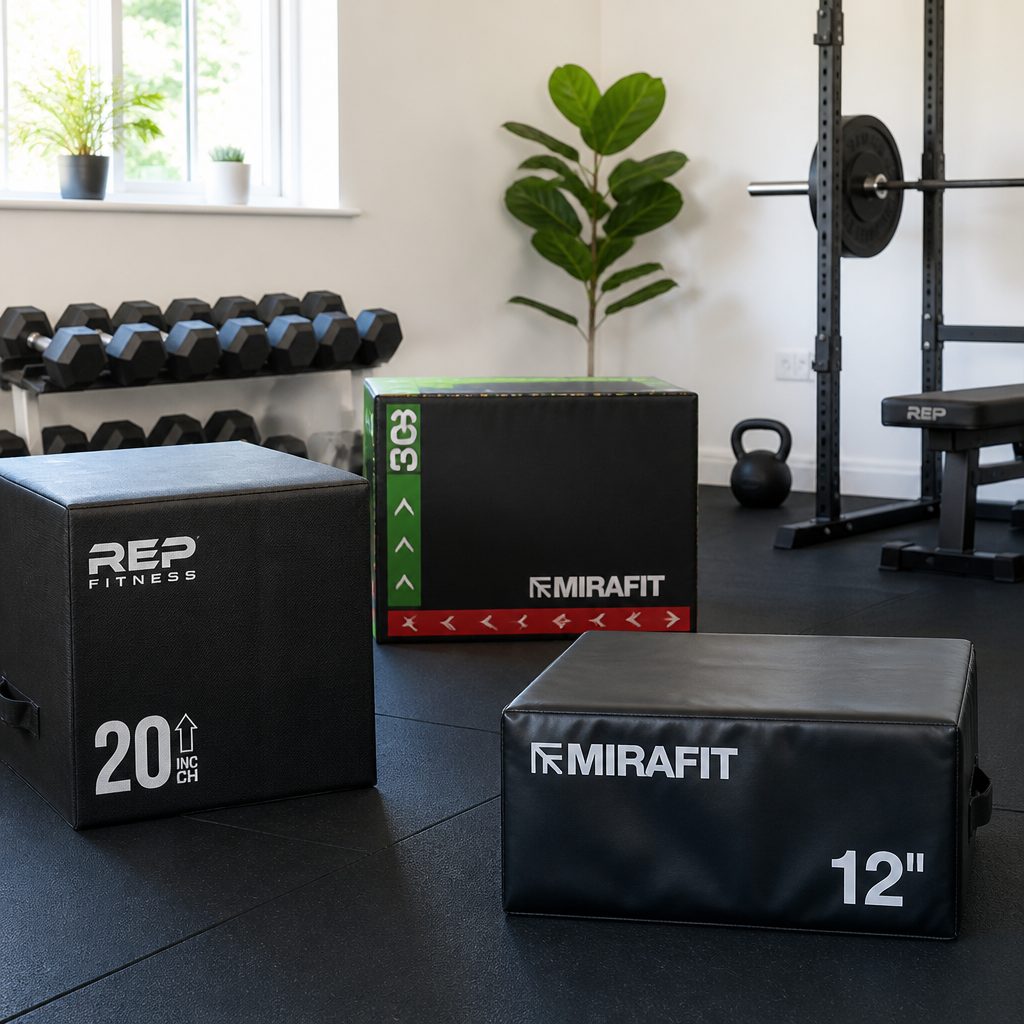
The best box for a home gym is usually the one that suits your present ability and floor space, not the tallest model that looked impressive in a gym montage.
When a wooden box is the better buy
Wooden boxes deserve their long-standing place in functional training. They are uncomplicated, robust and give a consistent hard platform. The Titan Fitness 3-in-1 Plyo Box is the obvious pick if stated capacity is the key concern, while the Synergee 3-in-1 Wooden Plyo Box is more adaptable for buyers who want lower configurations or a specific progression path.
A wooden box is most logical if you already have good jump mechanics, value a firm landing surface and accept that accurate movement is part of the bargain. It can also be a good choice if step-ups form a larger part of your programme than jumps. The key is not to treat hard construction as a reason to train recklessly. Wood is durable; shins are less keen on the arrangement.
In a small home gym, the practical case for wood is equally strong. A single three-in-one box gives you multiple heights without racks of separate platforms. It can sit against a wall between sessions, be moved into the centre of the room for circuits and work as a simple anchor for lower-body and upper-body variations. Just make sure you choose the correct face before setting off. Nothing punctures a determined interval like realising the box is currently much taller than intended.
When a soft-padded hybrid is worth choosing
Hybrid boxes make a convincing case for newer jumpers, people returning after time away from impact training and households where several trainees use the same equipment. The REP Fitness 3-in-1 Soft Plyo Box offers the more substantial three-height setup, while the Yes4All 3-in-1 Soft-Padded Plyo Box brings its own wooden-core, foam-padded approach in a lighter confirmed version.
The value is not merely emotional. When you are less worried about catching an exposed plywood edge, you may be more willing to practise correct, manageable jumps. That can make training more consistent. There is a line, though. If the soft exterior becomes an excuse to attempt a height you have not earned, the benefit evaporates rather quickly.
For most people building a HYROX-focused home setup, a hybrid is the more forgiving choice. The sport already gives you enough ways to become acquainted with fatigue. Your training box does not need to add theatrical shin damage to the list. Choose the hybrid if confidence, shared use and a cushioned perimeter rank above the absolute highest stated capacity.
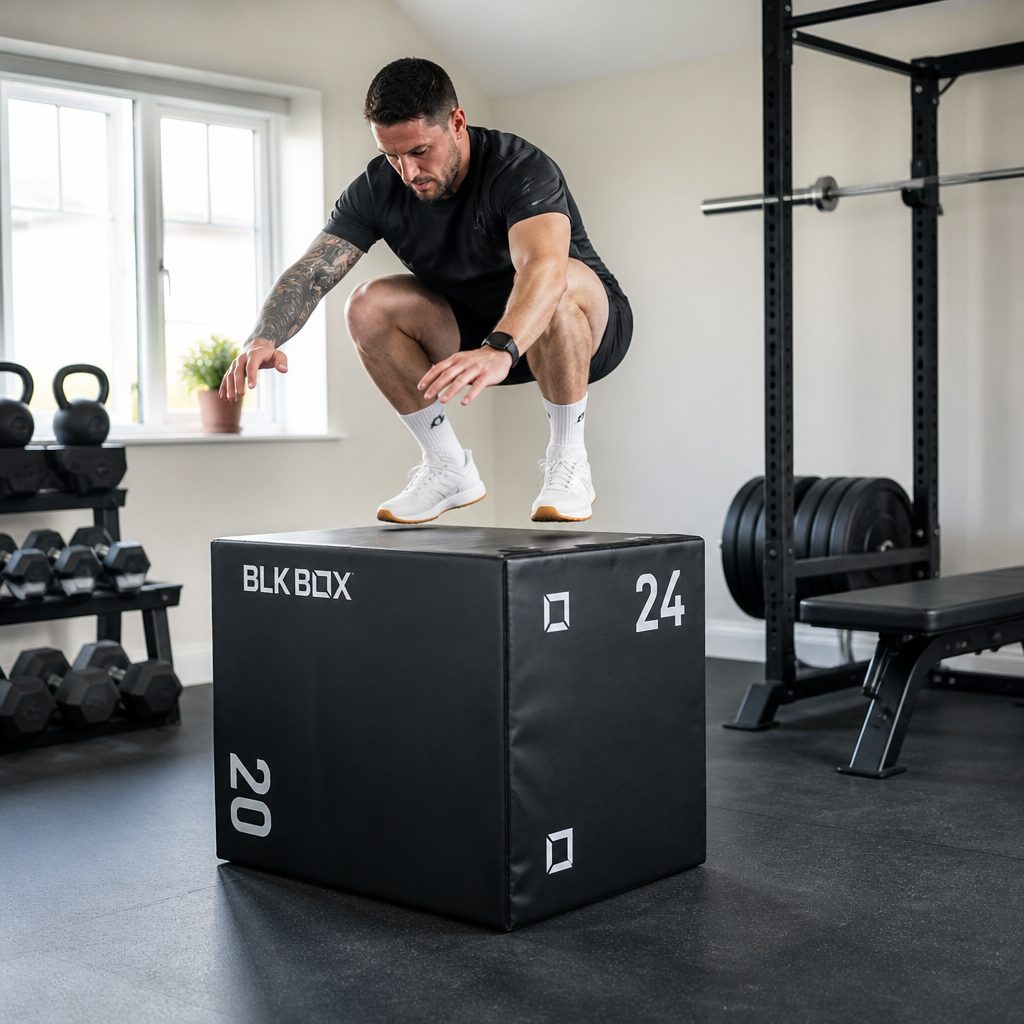
A well-chosen hybrid box offers a stable core and a more forgiving exterior, making it a sensible option for shared home gyms and developing jump mechanics.
Frequently asked questions
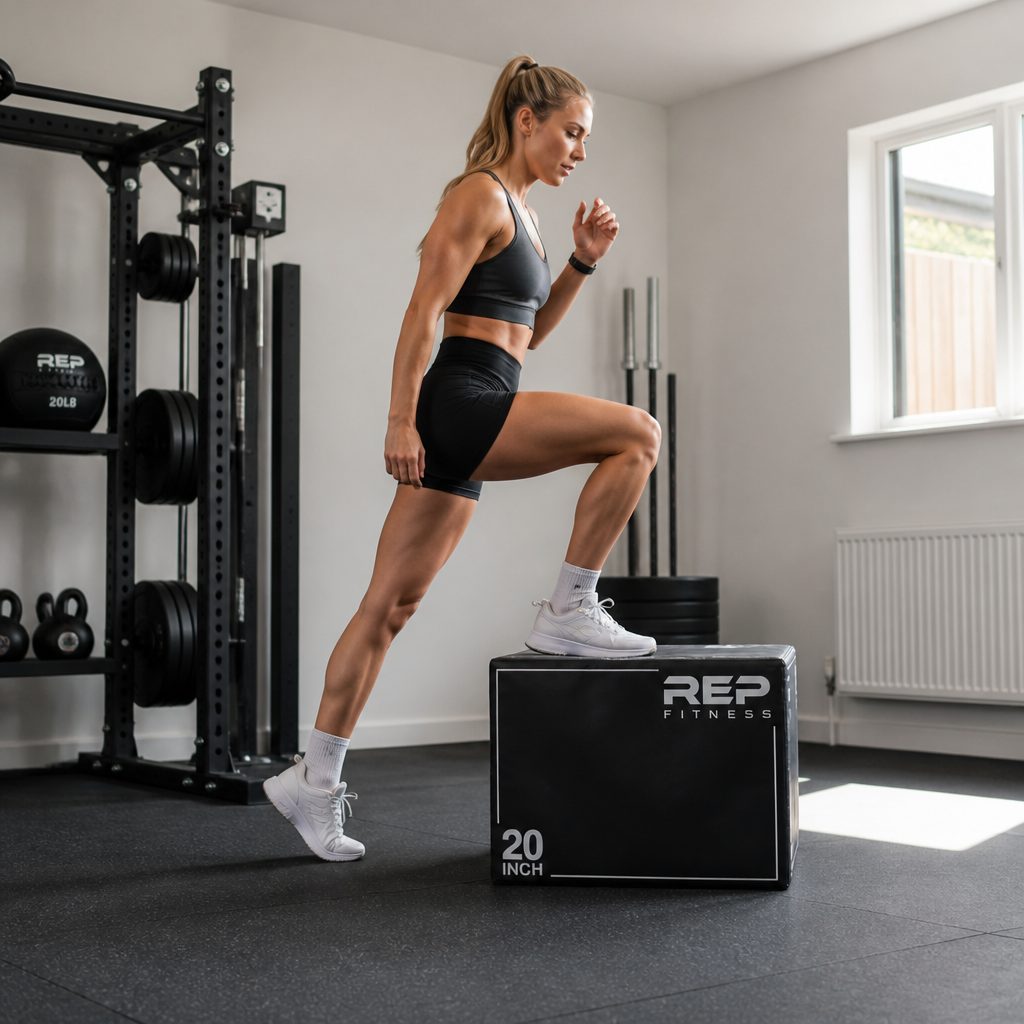
A compact box can support jumps, step-ups and strength variations, but it should always be set on a clear, dry and level surface before the session begins.
The bottom line
For most home athletes building HYROX-relevant power and conditioning, the REP Fitness 3-in-1 Soft Plyo Box is the best overall choice: its rigid wood core, 18mm foam layer, grippy vinyl and 20, 24 and 30-inch format make it a confidence-friendly all-rounder. Choose the Titan Fitness 3-in-1 Plyo Box if a firm wooden platform and the highest stated capacity matter most. Choose Synergee if lower-height progression is the priority, or Yes4All if you want a lighter padded hybrid. Whichever route you take, keep the height honest, the floor clear and the landing quiet. That is where useful plyometric training begins.