Best Powerlifting Accessories to Add to a Basic Barbell Setup
A sensible starter bundle does not need to turn your garage into a specialist strength facility overnight. These Gravity Fitness accessories cover support, grip and productive training variety for the newer barbell lifter who wants better training without collecting clutter.
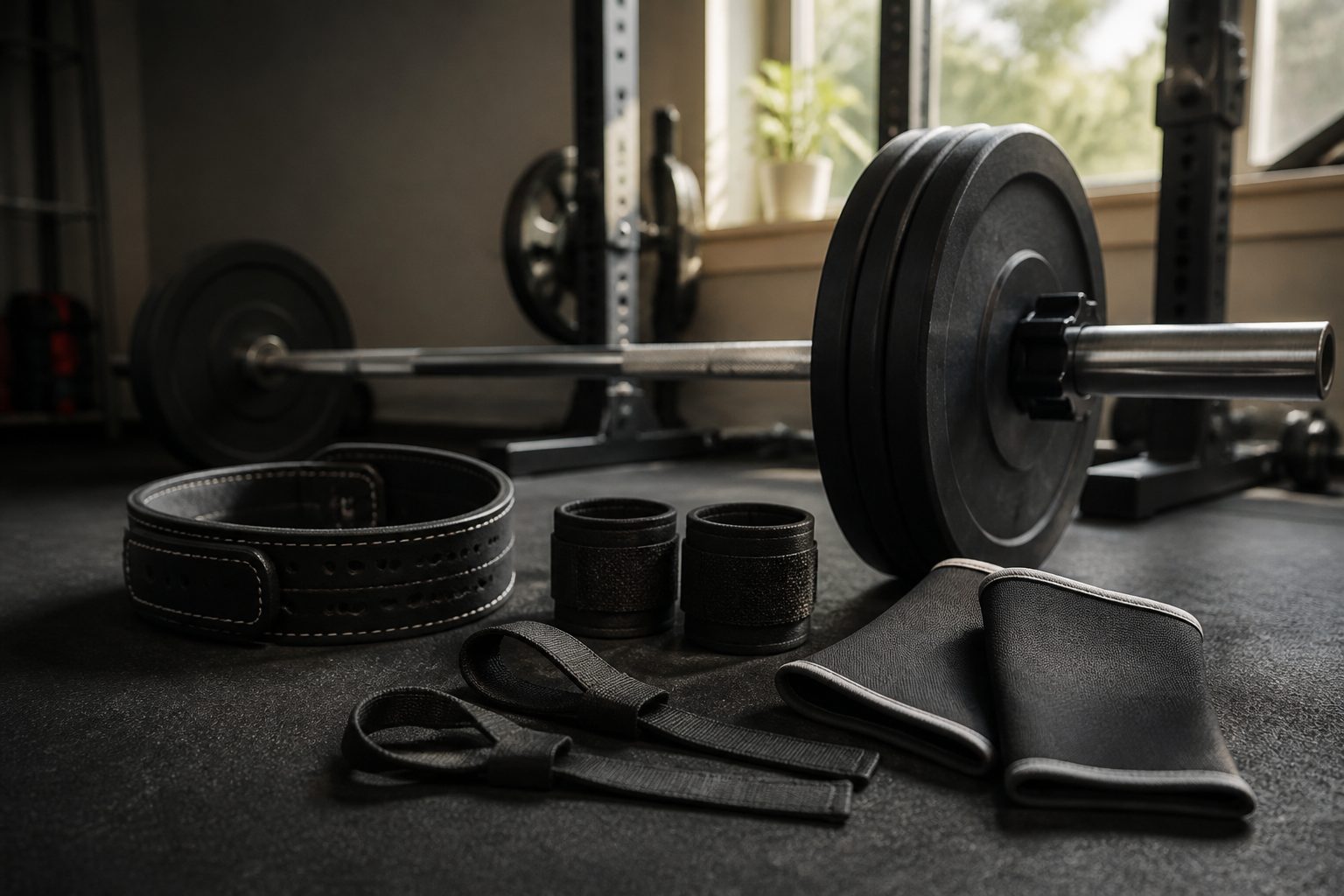
A basic barbell setup becomes far more useful once you add a few small, purposeful accessories rather than buying every shiny item within reach.
 By James Oduya · Staff Writer & Home Gym Columnist · Updated October 30, 2026
What a basic barbell setup actually needs next
A barbell, plates, rack and bench will take you a surprisingly long way. They remain the important bits. Nobody ever missed a deadlift because they had failed to buy enough accessories, and there is a certain kind of gym bag that looks as though its owner is preparing for a minor expedition rather than three sets of squats.
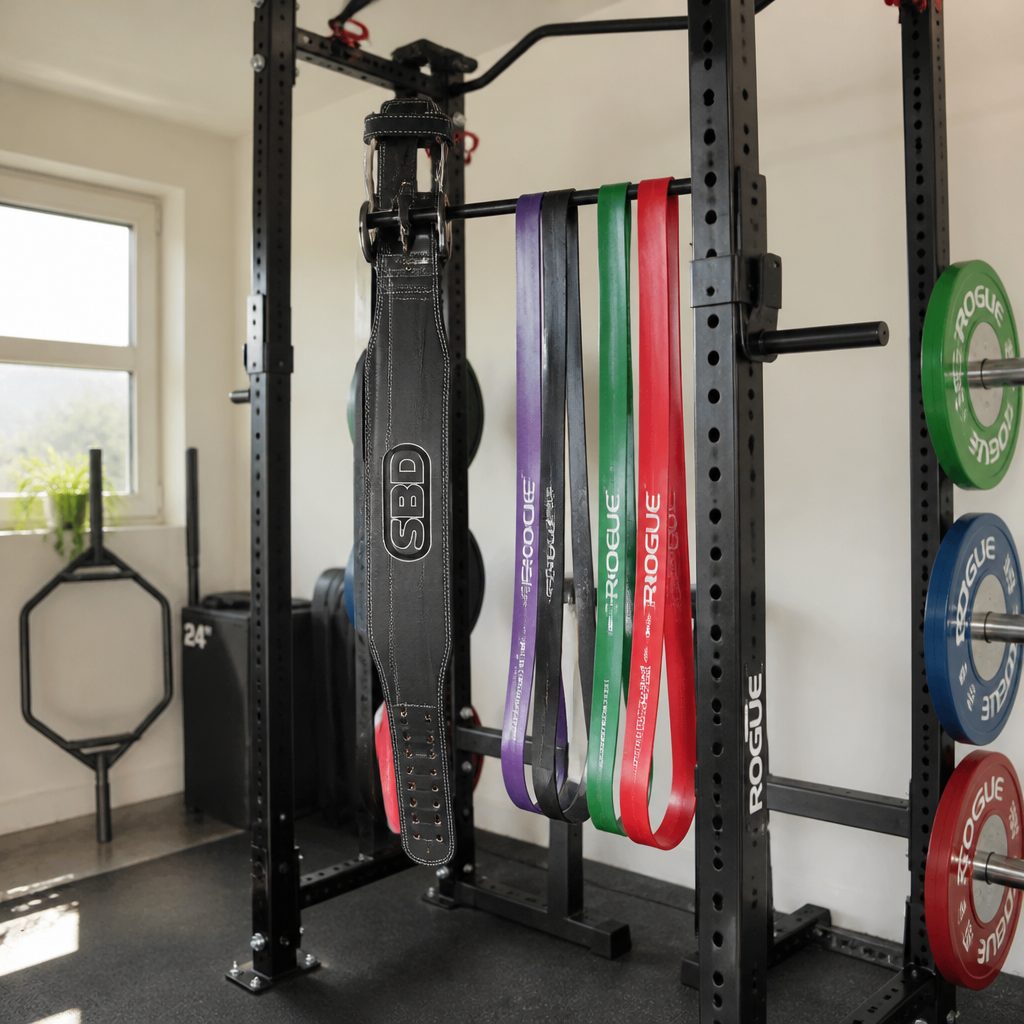
A convertible belt can turn a pull-up station or rack into a more flexible training area without swallowing the spare room.
That said, a few small additions can solve very ordinary problems. Your wrists may feel less happy than your legs during pressing. The bar may start sliding in a humid garage just when your deadlift is becoming interesting. You may want to add weighted dips or sled pulls without dedicating an entire room to each one. This is where accessories earn their place.
For a new barbell lifter, the shopping list is best kept brutally practical. Start with grip management. Add wrist support only if pressing or front-rack work gives you a reason. Consider a belt when you understand how to brace into one rather than merely fastening it dramatically. Then look for a multi-use item which gives your existing kit another job.
The key phrase there is one problem at a time. If the issue is grip, liquid chalk is a cleaner first answer than immediately strapping your hands to the bar. If your wrists fold backwards during a heavy press, wraps can offer a little structure. If your rack routine has become stale, a flexible dip belt can introduce useful variations. It is all rather less glamorous than a "complete powerlifting transformation", but it works.
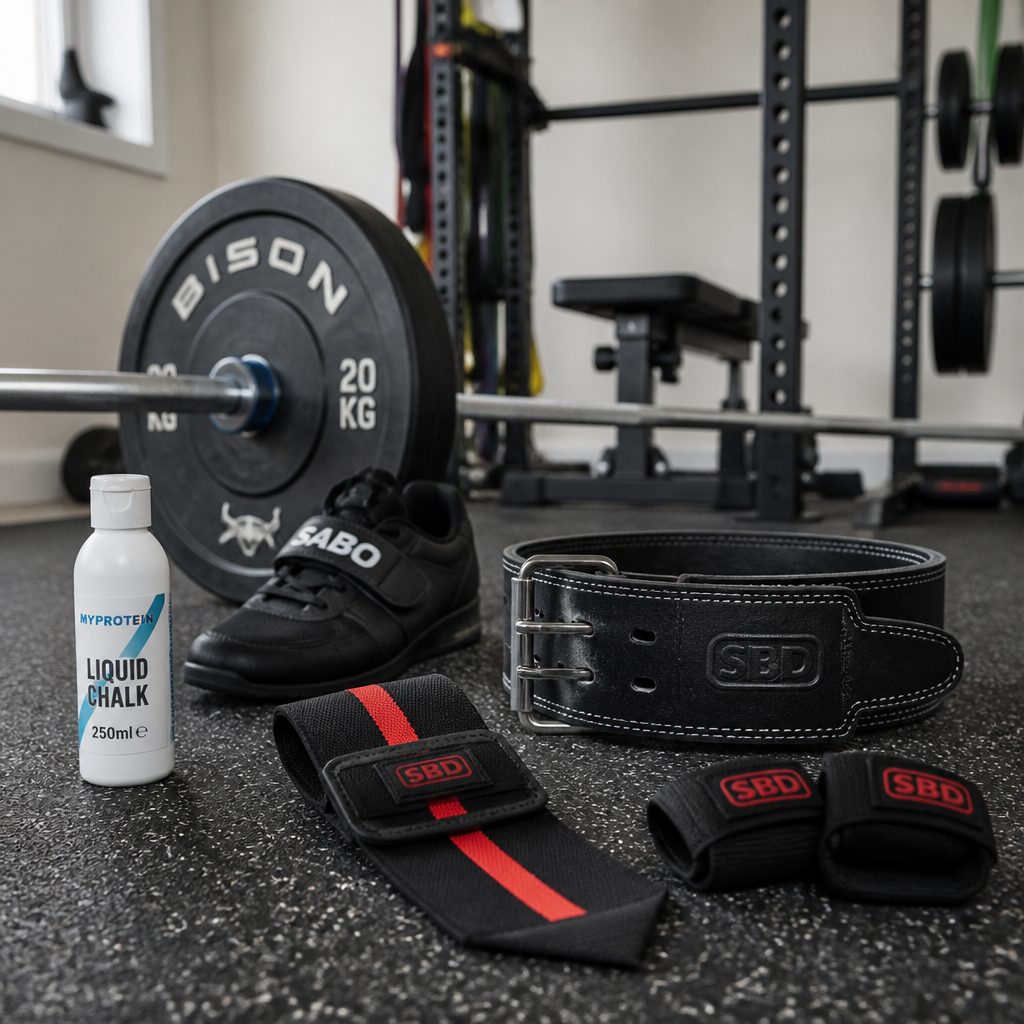
Liquid chalk is the least glamorous item here, which is precisely why it tends to become the accessory people use most often.
How to build the bundle in the right order
Accessories work best when they arrive in response to your training rather than in anticipation of a problem you may never have. Buying a belt, wraps and chalk simply because a more experienced lifter owns them is rarely the most efficient route. A more useful approach is to add each item in an order which protects the things you are trying to develop: consistent technique, a reliable grip and the confidence to train hard without manufacturing a drama.
- Start with chalk if sweat or a smooth bar is compromising your hold.
- Add wrist wraps if you want adjustable support for pressing, front squats or heavy rack positions.
- Choose a belt once you can brace consistently through your trunk and have a clear use for it.
- Add a convertible belt when you want more exercise options from the rack, pull-up bar or bodyweight station you already own.
The sensible beginner rule
If an accessory changes your technique so much that you cannot perform the lift without it, step back. Good accessories should help you practise hard, not conceal a lift that needs patient work with lighter loading.
There is also a distinction worth making between powerlifting training and a powerlifting competition. In everyday training, wrist wraps and a versatile nylon belt can be entirely sensible tools. On the platform, equipment rules are specific to the federation and event. If a first meet is part of your plan, check its rules before assuming that what lives in your gym bag will be eligible on the day.
The ranked picks at a glance
This is not a conventional list of near-identical belts with slightly different logos. It is a practical accessory bundle, so each pick does a different job. Gravity Fitness supplies the most complete support and grip options in this group.
1. Gravity Fitness Advanced 4-in-1 Heavy Duty Workout/Dip Belt — Best for making one accessory do several jobs
Shop Gravity Fitness Advanced 4-in-1 Heavy Duty Workout/Dip Belt on Amazon UK
The Gravity Fitness Advanced 4-in-1 Heavy Duty Workout/Dip Belt is the standout if your basic setup includes a pull-up bar, dip station, rack or a place to anchor a band. It is a deliberately flexible piece of kit: a standard weighted-dip belt, a front harness for sled pulls or resistance-band anchoring, a squat and deadlift belt, and a back harness to attach resistance bands for pull-up resistance.
That is a lot of possible uses from one item, although it is best thought of as a versatile training belt rather than a traditional rigid powerlifting belt. Its bonded nylon construction and cushioned, breathable neoprene lining are aimed at comfort around the hips, and the belt adjusts to fit waist circumferences from 30 to 36 inches. Gravity Fitness rated it to support loads up to 200kg, with military-grade webbing and reinforced stitching, and backed it with a five-year warranty.
Pros
- Four configurations make excellent use of a modest home gym.
- Rated for loads up to 200kg.
- Neoprene lining is designed to stabilise load around the hips.
- Five-year warranty adds welcome reassurance for a hard-used accessory.
Cons
- Its flexible nylon construction is not the same thing as a competition-style rigid leather belt.
- The stated fit range will not suit every lifter.
- Its many setups ask you to spend a little time learning what each one is for.
2. Gravity Fitness Liquid Chalk — Best for cleaner barbell grip
Gravity Fitness Liquid Chalk is the easiest recommendation in the roundup because it addresses an irritatingly common problem without asking you to alter your programme. Apply it, let it dry, grip the bar. That is the entire arrangement, and it is often enough to make deadlift work, rows and pull-ups feel considerably more secure.
Liquid chalk is particularly useful in a shared home, a commercial gym that dislikes chalk dust, or a garage where every surface already has an enthusiastic coating of something. Traditional chalk blocks still have their place, of course, but liquid chalk is quieter, tidier and easier to keep in a gym bag. It also gives you a fairer picture of whether grip is really the limiting factor before you reach for lifting straps.
Pros
- Simple way to improve traction without changing the lift.
- More contained than loose chalk for home and shared gym use.
- Useful across deadlifts, rows, pull-ups and carries.
Cons
- It does not replace proper bar control or sensible hand care.
- Some gyms have their own policy on any form of chalk.
- It is a grip aid, not a substitute for straps when straps are genuinely the right programming choice.
3. Gravity Fitness Wrist Support Wraps — Best for pressing support without a bulky setup
Gravity Fitness Wrist Support Wraps are the uncomplicated pick for lifters who want support through pressing movements without feeling locked into a single wrist position. They use premium rubber construction and include an elastic thumb loop for an adjustable fit. The design intent is sensible: provide support through a range of lifts without unnecessarily limiting range of movement.
That matters because wraps are very easy to overtighten. Done sensibly, they can make a hard bench press, overhead press or front-rack position feel more planted. Done theatrically, they can leave your hands tingling and your wrist mechanics no better understood. Start with a supportive rather than punitive wrap, and save the very tight setup for the particular heavy set that actually needs it.
Pros
- Thumb loop helps create an adjustable, repeatable setup.
- Designed to support the wrist without needlessly restricting movement.
- Useful for pressing, front squats and selected bodyweight work.
Cons
- They will not fix poor bar placement, wrist mobility or rushed setup.
- Not every lifter needs wraps for every warm-up set.
- A thumb loop should be used carefully and released between work sets.
Comparison table: which accessory solves which problem?
There is no point declaring one product the "best" when they do entirely different things. The more useful question is which problem each one solves first. This table puts the bundle on the same page, including the concrete specifications which matter most for the heavy-duty belt.
| Pick | Best use | Confirmed construction or feature | Useful figure | Choose it if… |
|---|---|---|---|---|
| Gravity Fitness Advanced 4-in-1 Heavy Duty Workout/Dip Belt | Weighted dips, sled pulls, band anchoring and training support | Bonded nylon with breathable neoprene lining; four configurations | Supports up to 200kg; fits 30–36in waists; five-year warranty | You want the broadest range of jobs from one accessory. |
| Gravity Fitness Liquid Chalk | Bar grip for pulling and carries | Liquid chalk format | Compact gym-bag accessory | Your hands or bar are the thing slipping first. |
| Gravity Fitness Wrist Support Wraps | Pressing and front-rack support | Premium rubber construction with elastic thumb loop | Adjustable fit | Your wrists need a little more stability during hard sets. |
For context, a conventional powerlifting belt is often either 10mm or 13mm thick. The 10mm format tends to balance flexibility, comfort and support for most strength athletes, whilst 13mm belts are stiffer and more specialised. That does not make the Gravity Fitness belt inferior. It makes it different. Its value is versatility around a mixed home-gym routine, not pretending to be a four-layer leather competition belt.
Why a training belt is not automatically a powerlifting belt
This is worth lingering on, because "belt" is a word that gets asked to do too much work in strength training. A classic powerlifting belt is usually chosen for a specific brace against a consistent, rigid surface. You learn where it sits, how to fill it with air and tension, and how to keep that setup repeatable under a squat or deadlift bar.
The Gravity Fitness Advanced 4-in-1 Heavy Duty Workout/Dip Belt approaches the job from another direction. It has been built to adjust around the waist, help avoid load pulling down on the hip joints, and move between weighted dips, sled pulls, band anchoring, squat/deadlift use and pull-up resistance. That breadth is its advantage. It is what makes it compelling for a lifter whose setup needs to cover general strength training as well as barbell work.
There is no shame in choosing the flexible option first. In fact, for the lifter with one barbell, a rack and limited room, it may be the smarter purchase. Just do not buy it expecting the same uncompromising feel as a 10mm or 13mm competition-style lifting belt. A tool can be very good at its intended job without being every tool at once. Your socket set does not need to be a hammer. Life is easier when we allow objects a little professional dignity.
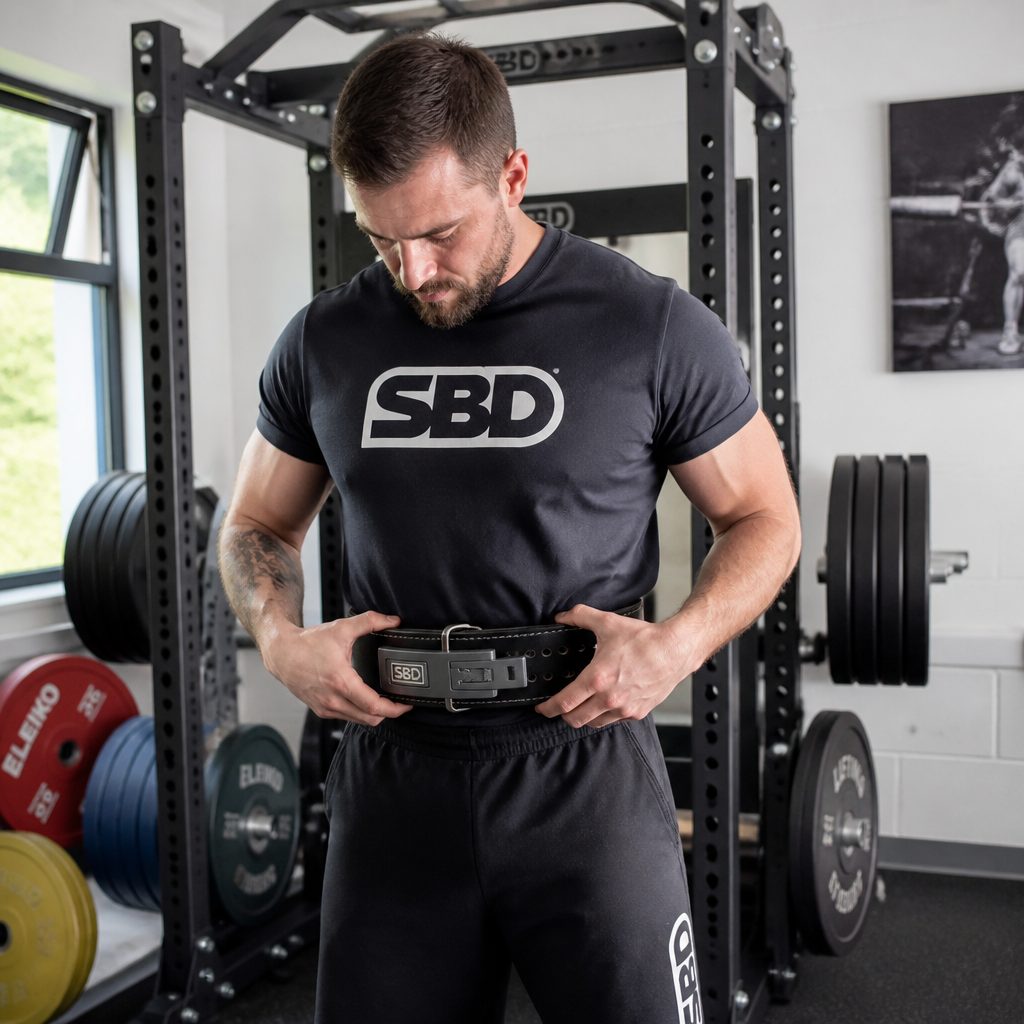
A belt should support a deliberate brace; it should never become a reason to stop learning how to create one without external help.
Wrist wraps: how to use support without relying on it
Wrist wraps have a slightly undeserved reputation for being either essential armour or pointless cosplay. The truth is more boring and more useful. They can help a wrist feel more secure under load, particularly during bench pressing, overhead work, front squats and dips. They cannot make a painful position sensible, and they cannot repair an elbow flare, collapsed upper back or a bar sitting in the wrong part of the hand.
The Gravity Fitness Wrist Support Wraps earn a place because the construction is aimed at support without preventing movement, and the elastic thumb loop gives you a practical way to position them consistently. Put the wrap low enough to support the wrist joint rather than winding it halfway up your forearm. Tighten it progressively. Then see if you can maintain the same bar path and hand position with and without it.
Set the bar properly first
For pressing, aim for a stacked hand and wrist position before tightening a wrap. The wrap is there to reinforce a good setup, not hold together a bad one.
Use the same setup each session
Repeatability matters more than brute tightness. Find a wrap position that supports hard sets and recreate it rather than changing the arrangement every week.
Release them between sets
Unwind or loosen wraps once the set is finished. It is more comfortable, and it stops support gear becoming something you simply forget is on.
For most new lifters, wraps are best reserved for working sets that genuinely benefit. Wearing them through every warm-up can make the support feel psychologically compulsory. Your wrists still need normal movement and loading exposure. Let them have it.
Grip management: chalk first, straps later
Straps have a legitimate role in training, especially if you are trying to train the back hard after your grip has already done its duty on deadlifts. For a new barbell lifter, however, chalk is generally the better first addition. It improves friction whilst leaving the relationship between your hands and the bar largely unchanged.
Gravity Fitness Liquid Chalk is ideal for this job. In a garage, it saves a fair amount of mess. In a commercial gym, it is less likely to make you the person who leaves a white archaeological record across every handle. More importantly, it lets you distinguish between a genuinely weak grip and a slippery bar, sweaty palms or a rushed setup.
If your gym supplies chalk, use its policy and product rather than assuming you need to bring your own. If it does not, liquid chalk is generally the neater option for a barbell bag. Either way, apply a modest amount and let it dry before touching the bar.
Once grip is the limiting factor on a back-off set, straps can be a sensible programming tool. The distinction matters. Chalk asks your grip to do its job in better conditions. Straps reduce how much grip is required. Both can be useful, but they are not interchangeable, and a new lifter will normally benefit more from the former first.
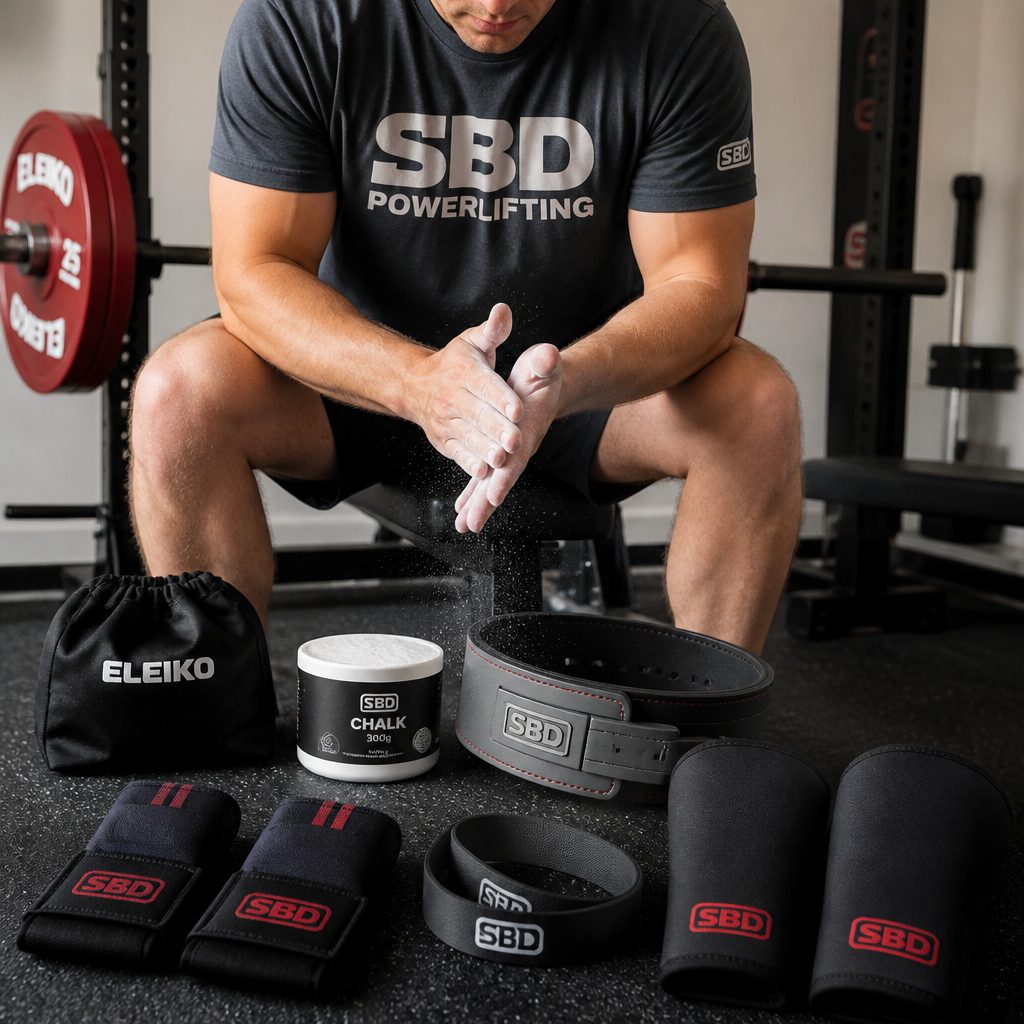
Use chalk to improve friction, then decide whether the session truly calls for grip assistance rather than reaching for every accessory at once.
Who should buy which pick?
Choose according to what your current setup fails to do, not what looks most advanced in somebody else's training montage.
Best all-rounder
Gravity Fitness Advanced 4-in-1 Heavy Duty Workout/Dip Belt. The best choice for the home lifter who wants dips, sled pulls, band work and general belt support from one adaptable item.
Best first purchase
Gravity Fitness Liquid Chalk. The smallest intervention and the one that preserves the most honest version of the lift for lifters whose grip is the immediate issue.
Best for pressing
Gravity Fitness Wrist Support Wraps. A sensible addition for lifters who want adjustable support for hard pressing and front-rack positions.
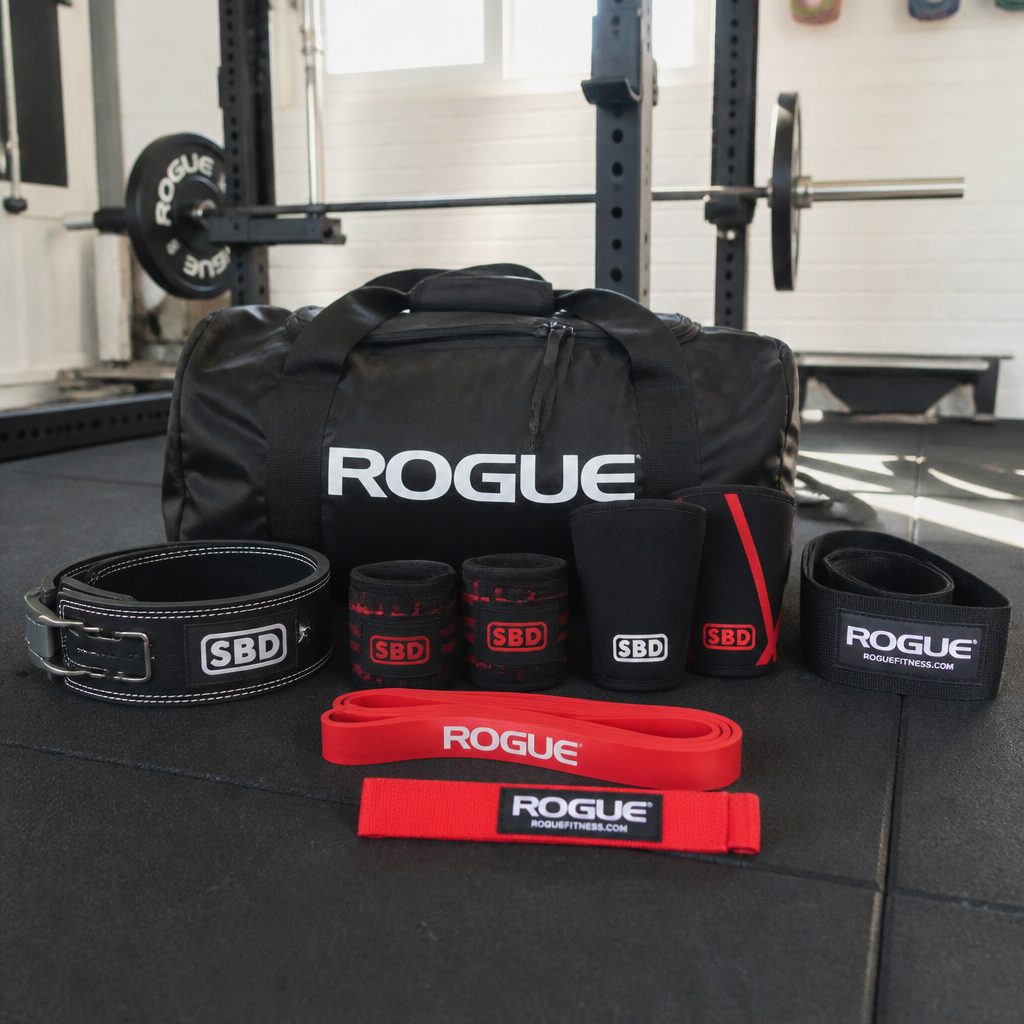
The best starter accessory bundle is one that fits inside a gym bag and expands your training without overwhelming the basic lifts.
A realistic starter bundle for a new barbell lifter
There is a temptation to buy every item at once, then spend the next month wondering which one ought to be used on Tuesday. Resist it. A realistic bundle evolves in stages.
Stage one: add Gravity Fitness Liquid Chalk. Use it on pulls, rows, pull-ups and carries. Give yourself enough sessions to learn whether grip is actually the limiting factor. It may be. It may also turn out that your bar is simply slick and your hands are not the problem.
Stage two: add Gravity Fitness Wrist Support Wraps if pressing, front squats or dips make your wrists feel unstable despite an otherwise solid setup. Keep them for meaningful working sets. You do not need wrist wraps to collect the post.
Stage three: buy the Gravity Fitness Advanced 4-in-1 Heavy Duty Workout/Dip Belt if weighted dips, banded pull-ups, sled work or a more supportive training belt would give your current station new life. This is the largest functional expansion in the group.
This order also helps you avoid the classic accessory trap: becoming extremely prepared for lifts you have not yet learnt to perform. Good training is still not terribly exciting on paper. It is mostly repeating sound movements, adding load or reps gradually, sleeping enough and returning next week. Accessories make that routine smoother. They do not make it optional.
Frequently asked questions
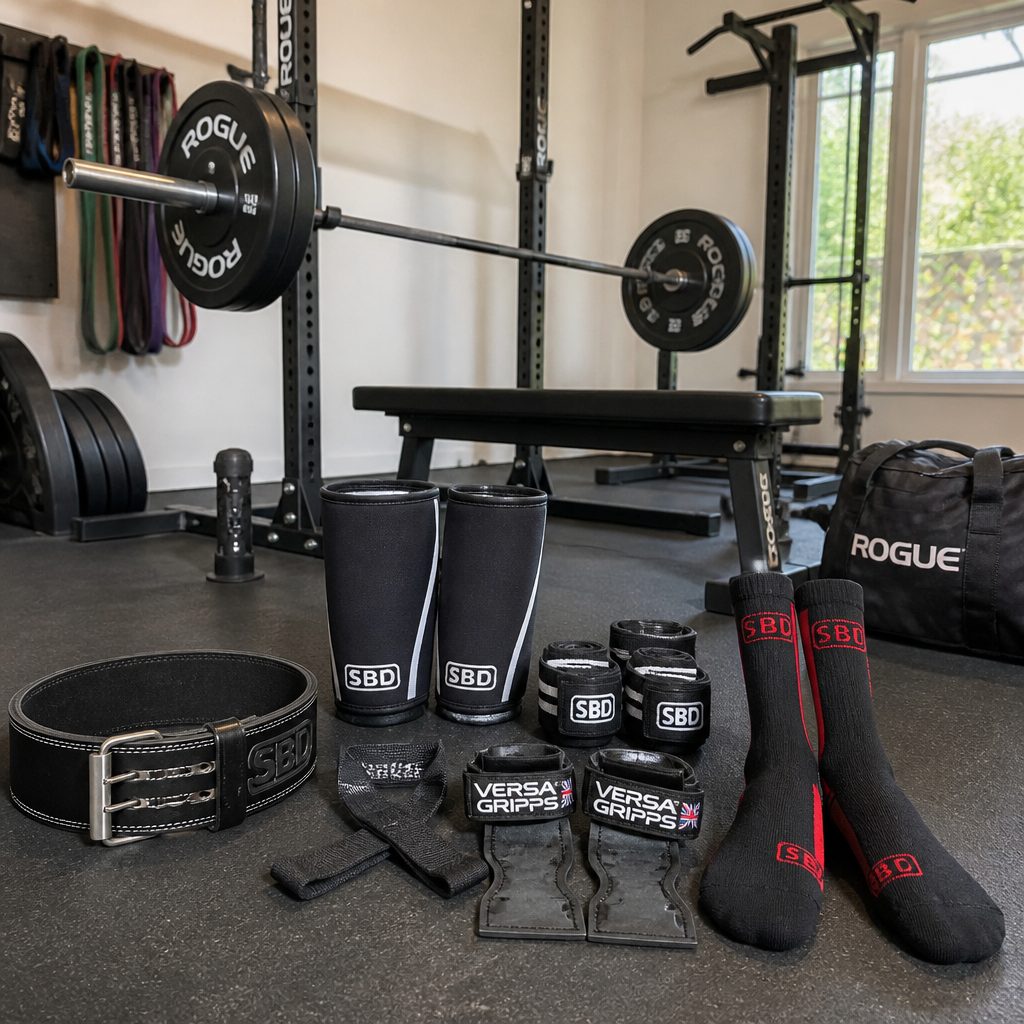
The finished bundle should support confident, repeatable training: better grip, sensible wrist support and more ways to use the bar, rack and pull-up station you already own.
Final verdict
Build slowly, train consistently, keep the barbell central
The Gravity Fitness Advanced 4-in-1 Heavy Duty Workout/Dip Belt is the most versatile addition here, especially for a home lifter who wants weighted dips, harness work and band-assisted options alongside basic barbell training. Gravity Fitness Liquid Chalk is the smartest first purchase for most people, whilst the Wrist Support Wraps make sense when pressing support becomes a real need. None of these accessories will replace good technique, but each can make a simple setup work harder for you. That is exactly what good gym gear ought to do.