
Best Multisport GPS Watches for Serious Home and Outdoor Training
Garmin, Polar and Amazfit all make compelling training watches, but the best one is rarely the one with the longest feature list. This is the practical shortlist for runners, lifters, hybrid trainers and outdoor regulars who want a watch that earns its space on the wrist.
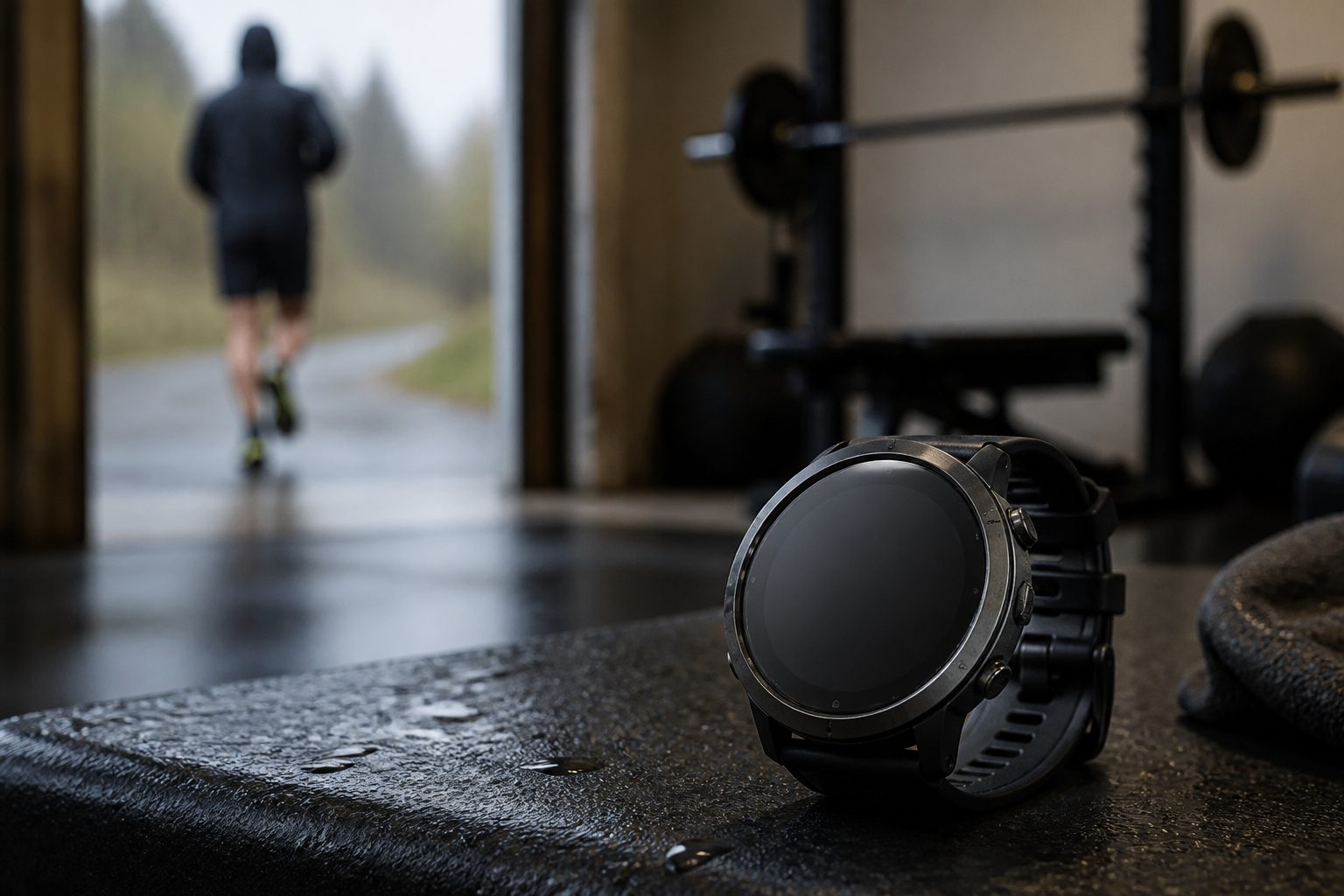
A serious multisport watch should feel useful in a home gym, on a rainy pavement and halfway through a long weekend outside — not merely impressive in a product photograph.
 By James Oduya · Staff Writer & Home Gym Columnist · Updated October 18, 2026
Why a multisport watch still makes sense when you train at home
It is easy to assume that GPS watches are only for runners who own suspiciously bright socks and know the exact distance to every village within a twenty-mile radius. That is selling them short. A good multisport watch can be very useful when most of your training happens at home, in a commercial gym or in the slightly chilly gap between the sofa and the kitchen table that has become your workout area.
The point is not to turn every dumbbell curl into a spreadsheet. Nobody needs that level of emotional pressure before breakfast. The useful bit is context: keeping a record of sessions, seeing whether hard days are stacking up too aggressively, maintaining a running habit alongside strength work, and having a dependable outdoor companion when you leave the four walls of the gym.
For this guide, I have ranked watches by the person they suit rather than by an assumed "more expensive equals better" ladder. A marathoner needs something different from a home lifter who runs twice a week. A hillwalker needs different priorities again. The sensible choice is the one that gets worn, understood and used without making training feel like admin.
The rankings below should therefore be read as buying directions, not a league table etched into stone. Your training history, comfort preferences and willingness to interact with a screen during exercise all matter. That last point is bigger than it sounds. A watch can have every sport mode under the sun; if its controls annoy you in gloves, rain or a hard set, it will become an expensive step counter with delusions of grandeur.
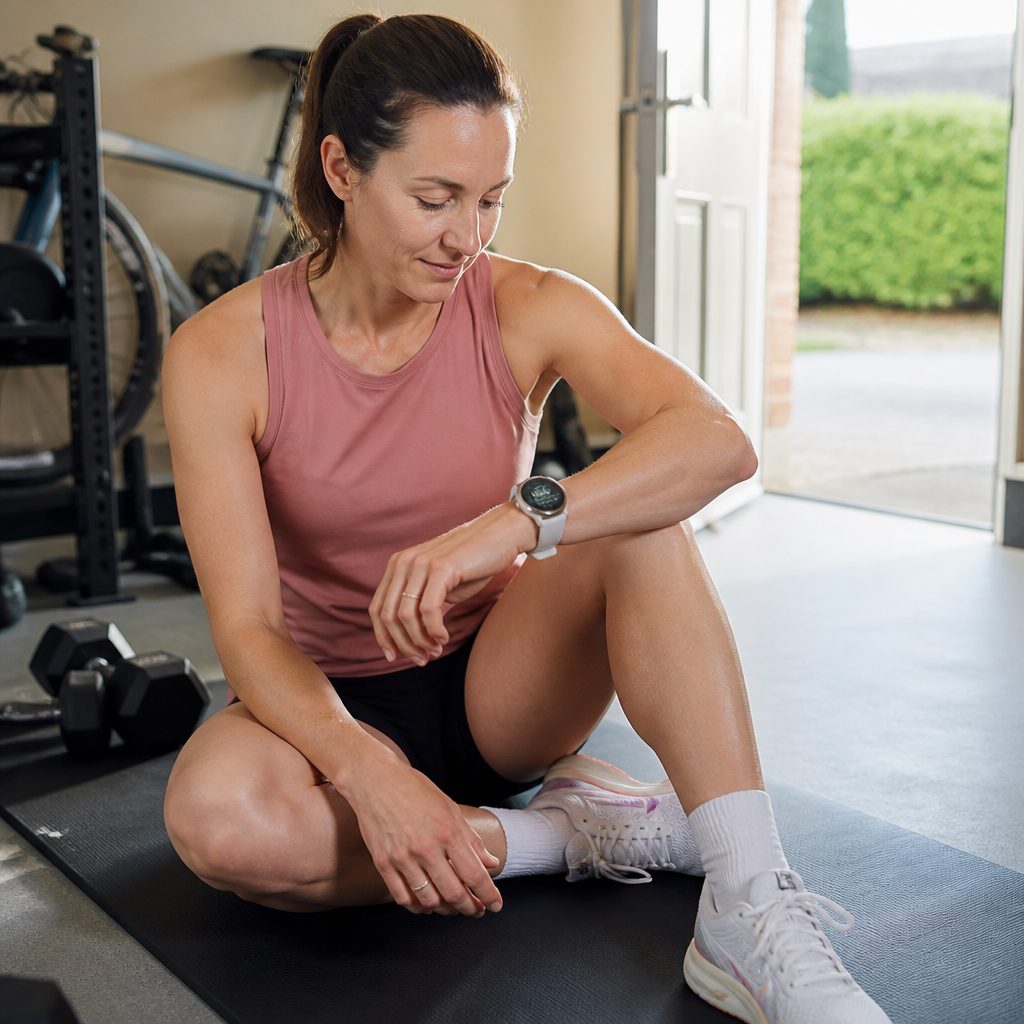
For hybrid athletes, the best watch is usually the one that copes gracefully with a strength session, a steady run and an unplanned walk home.
What to prioritise before choosing a watch
Start with the sessions you do most often, not the sessions you hope to do after watching one motivational montage. If your week is three gym sessions, two runs and an occasional hike, buy for that reality. You can always grow into a watch. It is much harder to grow fond of a bulky, overcomplicated one that nags you from the bedside table.
Outdoor usefulness
Runners and walkers benefit when route-focused information is quick to access and easy to interpret. If you regularly head somewhere unfamiliar, simplicity matters more than novelty.
Gym practicality
Strength tracking should support your training, not interrupt it. A watch is most valuable here as a session record and recovery companion rather than as an argumentative rep counter.
Controls under pressure
Consider sweaty hands, cold fingers and mid-interval brain fog. Straightforward buttons and readable data screens are deeply unglamorous virtues. They are also the ones you notice every week.
Training interpretation
The best ecosystem for you is the one whose trends you can understand. A useful prompt can change a session; an avalanche of colourful metrics can simply make you ignore all of them.
Pro tip: buy for friction, not fantasy
If a particular watch makes your usual training easier to start, easier to log and easier to review, it is doing its job. The grand adventure features can be brilliant, but they should not distract from the training you already enjoy.
Ranked picks: the watches that suit different serious trainers
1. Garmin Forerunner 970 — Best for marathon-focused hybrid athletes
Shop Garmin Forerunner 970 on Amazon UK
The Garmin Forerunner 970 is the pick for the runner whose training is organised around a meaningful goal but who still lifts, cross-trains and wants an everyday watch rather than a single-purpose running gadget. That might be a first marathon, a faster marathon, a half-marathon campaign, or simply the quiet determination to stop treating the Sunday long run as an optional social engagement.
Its appeal is the familiar Garmin proposition of putting a broad training toolbox on the wrist. For a committed runner, that matters because the watch can remain central through easy efforts, interval days, strength work and recovery periods. You are not choosing a device only for race day; you are choosing a place where the ordinary work gets recorded too.
For home training, the important consideration is restraint. Use the watch to timestamp the workout, monitor the broad shape of your week and keep your running and gym effort in one history. Do not expect it to know your programme better than you do. A barbell session is still best planned with a notebook, an app you like, or the extremely advanced system known as remembering what you lifted last time.
Why it fits
- A natural match for runners who also want one watch for gym sessions and general fitness.
- Suited to people who enjoy reviewing training patterns rather than merely collecting activities.
- A strong choice when running is the main event but not the whole personality.
Think twice if
- Your training is almost entirely strength based and you rarely use route or pace data.
- You prefer the least complicated possible interface and a short list of essentials.
- You want an outdoors-first tool rather than a running-led training companion.
2. Polar Vantage V3 — Best for athletes who value recovery context
Shop Polar Vantage V3 on Amazon UK
The Polar Vantage V3 suits the athlete who likes training structure but does not want every session judged solely by speed, distance or whether a graph happens to be pointing upwards. Polar's appeal has long been the coaching-minded feel of the platform: it encourages you to look at training as a relationship between work, recovery and consistency.
That is a particularly sensible angle for home and gym training. Heavy lower-body work can affect a run. A run that felt strangely difficult can be explained by poor sleep, life stress or simply a previous session that went a little too well. The watch cannot remove those realities, sadly. It can make them harder to ignore.
I would point regular gym-goers towards the Vantage V3 when they want a multisport watch that supports better decisions, not louder decisions. It rewards the person who can take a hint, adjust the plan and return tomorrow. This is not glamorous advice, but it is the advice that keeps training moving forward.
3. Garmin fēnix 8 — Best for outdoor training that begins at the front door
Shop Garmin fēnix 8 on Amazon UK
The Garmin fēnix 8 is for the person whose sessions do not always fit neatly into a gym timetable. You may lift at home during the week, run on roads before work, head out for longer walks at the weekend and occasionally disappear into terrain where taking a wrong turn is considerably less charming than it sounds in a brochure.
This is the outdoors-led choice in the round-up. It makes most sense when robust, all-purpose training appeal is more important to you than having the lightest, most stripped-back running watch. If your idea of a recovery walk regularly ends with mud on the trainers and a detour because "the view might be over there", this is the category of watch worth considering.
It is also a reminder that premium does not automatically mean appropriate. A fēnix 8 can be wonderfully reassuring for serious outdoor use, but it is excessive if the furthest you venture is the gym car park and you regard a parkrun as expeditionary travel. There is no medal for owning more watch than you need.
4. Polar Grit X2 Pro — Best for endurance-minded walkers and trail trainers
Shop Polar Grit X2 Pro on Amazon UK
The Polar Grit X2 Pro is the better fit for the outdoor enthusiast who values a training watch with a sturdy, purposeful character and who approaches endurance as something built patiently. Think long walks, hilly routes, trail outings and steady conditioning alongside strength work. Not every serious athlete is chasing a road-race personal best, and thank goodness for that.
For a home trainer, the attraction is having a watch that does not make your indoor work feel separate from your outdoor life. You can train strength and mobility during the week, then carry the same training history into a longer route on Saturday. The thread running through both is capacity: stronger legs, better tolerance for time on feet and fewer unpleasant surprises when the route drags on.
Choose the Grit X2 Pro if outdoors is your reason for training, not merely the place you occasionally exercise. That distinction helps. A trail-minded buyer will appreciate the outdoor orientation; a gym-only buyer may find a simpler sports watch more satisfying day to day.
For walkers, hikers and trail runners, navigation-minded features are only one part of the equation. Learn your route, take appropriate clothing and carry the essentials. A watch is helpful; it is not a woodland wizard.
5. Amazfit T-Rex 3 Pro — Best for practical all-weather training
Shop Amazfit T-Rex 3 Pro on Amazon UK
The Amazfit T-Rex 3 Pro makes sense for the trainer who wants a sportier, more rugged-feeling companion without building their entire exercise identity around performance analytics. This is the watch to consider when home workouts, outdoor circuits, walks, runs and informal weekend adventures all sit in the same calendar.
That does not mean casual. There is a difference between training without obsession and training without intent. The T-Rex 3 Pro is best viewed as an accessible multisport option for someone who wants useful activity structure and outdoor confidence while keeping the experience fairly straightforward.
It will particularly appeal if you are starting to connect the dots between indoor strength work and outdoor fitness. You might be squatting and pressing at home, adding easy runs to build an aerobic base, then using weekends for longer active time outside. That is a very sound training life. It does not require the most elaborate watch in the shop.
6. Amazfit Active 2 — Best for gym-first athletes adding outdoor structure
Shop Amazfit Active 2 on Amazon UK
The Amazfit Active 2 is the most sensible choice here for gym-first athletes who want a watch to support a broader routine without feeling as though they have enrolled in an analytics degree. It suits the person who enjoys lifting, uses cardio as conditioning rather than punishment, and wants to start taking outdoor sessions a little more seriously.
That could mean establishing a weekly run, using walks as genuine low-intensity activity, or building an interval session that does not rely on repeatedly looking at a wall clock. The value is in basic structure. You can leave the gym knowing that the session exists in the same overall picture as your run or walk, rather than scattering your efforts across different apps and half-remembered notes.
For the serious beginner or the gym regular broadening their training, that can be exactly enough. There is a strange pressure in wearable shopping to buy for a future self who is doing ultramarathons before lunch. Most of us would be better served by a watch that supports this week's plan properly.
Comparison table: match the watch to the way you train
There is no single winner because there is no single serious trainer. This table keeps the comparison where it belongs: on use case. The "best for" labels are editorial judgements based on the role each watch plays within a mixed home, gym and outdoor routine.
| Rank | Watch | Best training fit | Ideal buyer | Why it stands out in this list |
|---|---|---|---|---|
| 1 | Garmin Forerunner 970 | Marathon plans and hybrid training | Runner who also lifts and cross-trains | Running-first without becoming running-only |
| 2 | Polar Vantage V3 | Structured training and recovery awareness | Athlete who values context around effort | Best fit for calmer, more considered planning |
| 3 | Garmin fēnix 8 | Outdoor-heavy multisport use | Gym regular who spends serious time outside | Outdoor capability is central, not decorative |
| 4 | Polar Grit X2 Pro | Trail, walking and endurance building | Time-on-feet enthusiast | Made for the athlete whose training has a horizon |
| 5 | Amazfit T-Rex 3 Pro | All-weather general training | Practical outdoor and home-workout regular | Good for broad activity without overcomplication |
| 6 | Amazfit Active 2 | Gym-first fitness with outdoor progression | Lifter building a more rounded routine | The straightforward starting point for hybrid habits |
Those bars are not laboratory scores, because watches are not kettlebells and training priorities are not a timed sprint. They are a quick visual way to show where each pick has the clearest purpose. A marathoner should not be pushed towards a rugged outdoors watch simply because it looks more substantial; equally, a keen trail walker should not choose a running-led model just because it sits at the top of a generic "best watch" list.
How Garmin, Polar and Amazfit feel different in practice
Garmin is the natural home for the person who wants breadth. The brand's watches often appeal to athletes who have several sports in rotation and enjoy having plenty of ways to organise training. The upside is flexibility. The potential downside is that you need to be comfortable choosing what to pay attention to. A buffet is great until you have put seven puddings on the plate.
Polar tends to suit the athlete who appreciates training interpretation and recovery-minded thinking. It can be an especially good philosophical fit for people balancing work, family life and regular sessions. In other words, adults with normal lives and limited patience for advice that assumes they can nap between intervals.
Amazfit is compelling for the buyer who wants multisport usefulness without necessarily seeking the most elaborate analysis experience. It is a sensible route for gym-goers building an outdoor habit, or for active people who want their watch to be encouraging rather than all-consuming.
None of those approaches is inherently superior. They simply ask a different question. Garmin asks, "What would you like to track?" Polar asks, "How is training fitting together?" Amazfit asks, "How can this be useful without becoming a project?" Your answer tells you more than any global ranking ever could.
Strength training: use the watch as a witness, not a coach
A multisport watch can be genuinely helpful for strength work, but it has limits. It knows that you trained. It may help you mark the session, observe broad effort and keep a record alongside your running or cycling. What it cannot reliably replace is judgement about technique, load selection, range of motion, programme design or when your lower back is quietly suggesting a different hobby.
For serious home training, I would keep the hierarchy simple. Your programme comes first. Your logbook comes second. The watch is useful supporting evidence. If you are following progressive overload, write down the exercises, sets, repetitions and loads in a way you can review easily. Then let the watch provide the surrounding context: activity history, consistency and recovery signals.
The sensible lifting setup
Start the relevant workout mode, train with a written plan, and review the session only after you have finished. Glancing at your wrist between every set is rarely necessary unless your programme consists chiefly of checking your watch.
This approach is also kinder to your attention. Strength sessions are one of the few places many of us can step away from notifications and concentrate on physical effort. Preserve that. A watch should be a tool on your wrist, not the tiny manager of your workout.
Outdoor training: build confidence before chasing complexity
When you train outdoors, the priorities shift. You need to start a session quickly, glance at information without breaking stride and trust the device when weather, terrain or fatigue make your brain slightly less cooperative. This is why a watch's practical character matters more than an enormous feature list.
Road runners should think about whether they want a running-first watch that fits into daily training. Trail runners and walkers should think more about the role outdoors plays in their life. If regular routes are becoming longer, more remote or less predictable, an outdoors-oriented watch becomes easier to justify. It is not about looking adventurous in the supermarket. It is about choosing equipment that reflects the conditions you actually face.
For anyone moving between gym and outdoors, I also recommend keeping the transition gradual. Add easy runs after lifting rather than trying to establish a heroic mileage total overnight. Use walks to build time on feet. Let the watch record the pattern, but let your body set the pace. Tendons are not impressed by motivational podcasts.
Who should buy which watch?
Marathoner
Best pick: Garmin Forerunner 970. Choose it when running is the priority but your plan includes strength work, easier conditioning and general activity.
Recovery-conscious athlete
Best pick: Polar Vantage V3. A strong match for people who want training feedback to encourage steadier, more sustainable decisions.
Outdoor all-rounder
Best pick: Garmin fēnix 8. Best for gym users, runners and adventurers whose outdoor sessions are a major part of the week.
Trail and walking regular
Best pick: Polar Grit X2 Pro. The sensible choice when endurance, terrain and longer days outside shape your training.
Practical all-weather trainer
Best pick: Amazfit T-Rex 3 Pro. Suits varied training without demanding a highly technical relationship with your watch.
Gym-first improver
Best pick: Amazfit Active 2. A natural starting point for lifters adding runs, walks and more deliberate conditioning.
The "best budget" answer is not necessarily the cheapest-looking watch in a shop window. It is the one that fits your training so well that you keep wearing it. Buying a complicated endurance watch for occasional treadmill runs is poor value, even if it makes you feel briefly like an expedition leader. Buying a simpler model that you use four times a week is usually the better investment in your actual fitness.
Common buying mistakes worth avoiding
The first mistake is buying on appearance alone. There is nothing wrong with wanting a watch you like looking at — it will sit on your wrist a great deal — but aesthetics cannot rescue awkward controls or a poor fit. Try to imagine using it during a hard interval, a sweaty home circuit and a damp walk. That is a more revealing test than how it looks beside a flat white.
The second is treating every metric as a command. Training data is information, not an order. If you slept badly because the baby was ill, work was stressful or your neighbour discovered DIY at midnight, do not be surprised if the numbers reflect that. Be flexible. Consistent training is built on adaptation, not on winning an argument with your wrist.
The third is overlooking comfort. You will get more useful information from a watch you willingly wear than from one that spends half the week charging on a shelf. For strength training especially, think about whether the case and strap will distract you during presses, cleans or front-rack work. If it does, take it off for that exercise and put it back on afterwards. This is not a betrayal of the data.
Frequently asked questions
The bottom line
For marathon-minded athletes who also train in the gym, the Garmin Forerunner 970 is the best overall fit. Choose the Polar Vantage V3 when recovery-aware decision-making matters most, the Garmin fēnix 8 when outdoor training drives your lifestyle, and the Polar Grit X2 Pro when trails and long days on foot are the real goal. The Amazfit T-Rex 3 Pro is the practical all-weather option, whilst the Amazfit Active 2 is the sensible gateway for gym-first athletes expanding into more rounded outdoor fitness. Buy the watch that suits your actual week. Your future self can earn the expedition model later.