
Best Weighted Vests for Longevity and Functional Training
The best weighted vest is not necessarily the one that makes you look like a tactical extra in an action film. For long-term fitness, the smarter choice is a stable, comfortable loading tool you will actually use for walks, stairs, carries and controlled bodyweight work. These are the vests worth considering for rucking, practical strength and joint-friendly progression.
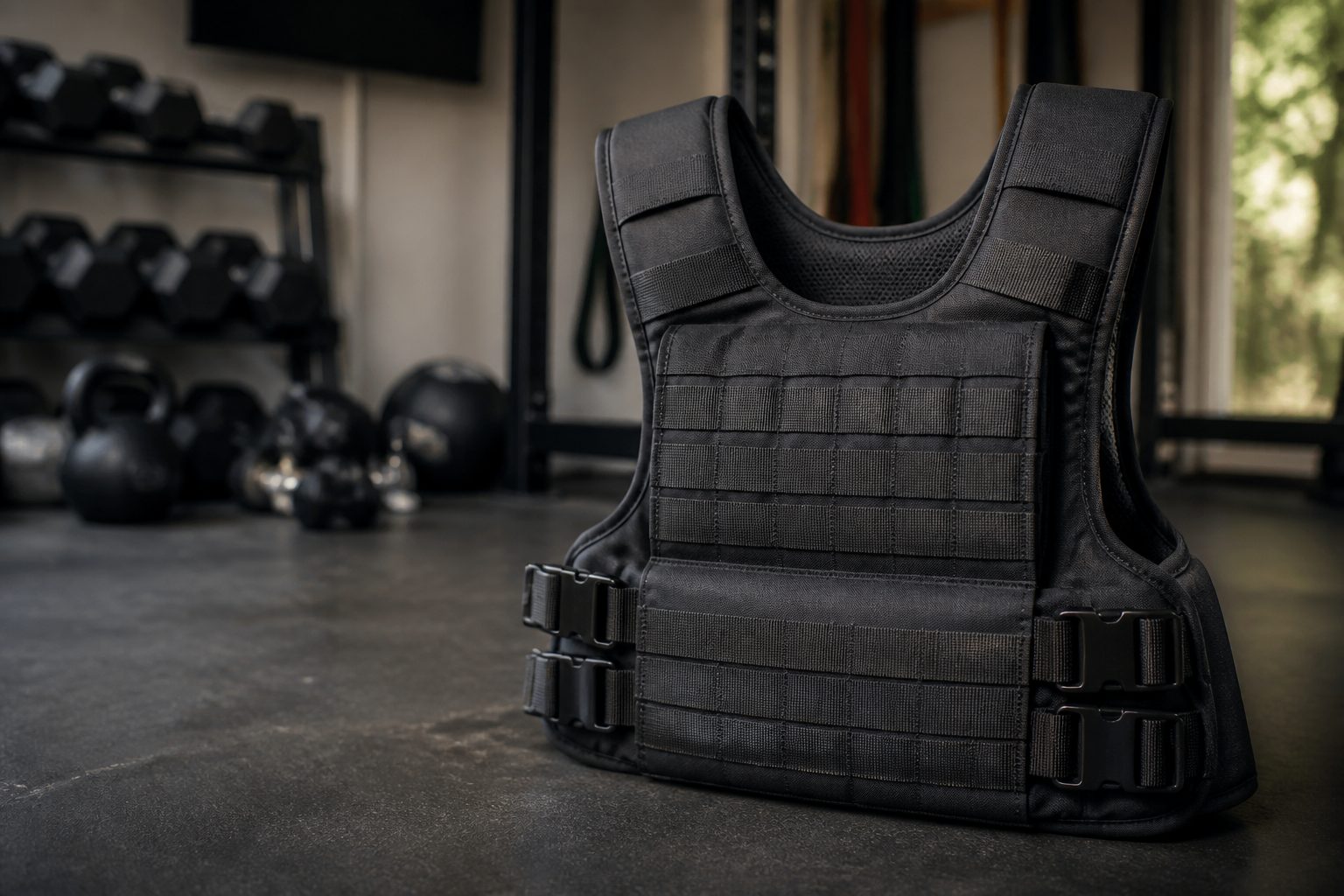
A well-fitted weighted vest should move with your torso rather than swing, chafe or turn an ordinary walk into an argument with your shoulders.
 By James Oduya · Staff Writer & Home Gym Columnist · Updated August 25, 2026
Why a weighted vest makes sense for longevity
A weighted vest is gloriously uncomplicated. Put it on, go for a walk, climb a few stairs, do some careful squats or press-ups, then take it off again and get on with your day. No battery to charge. No programme that believes every session should end with you lying on the floor reconsidering your hobbies.
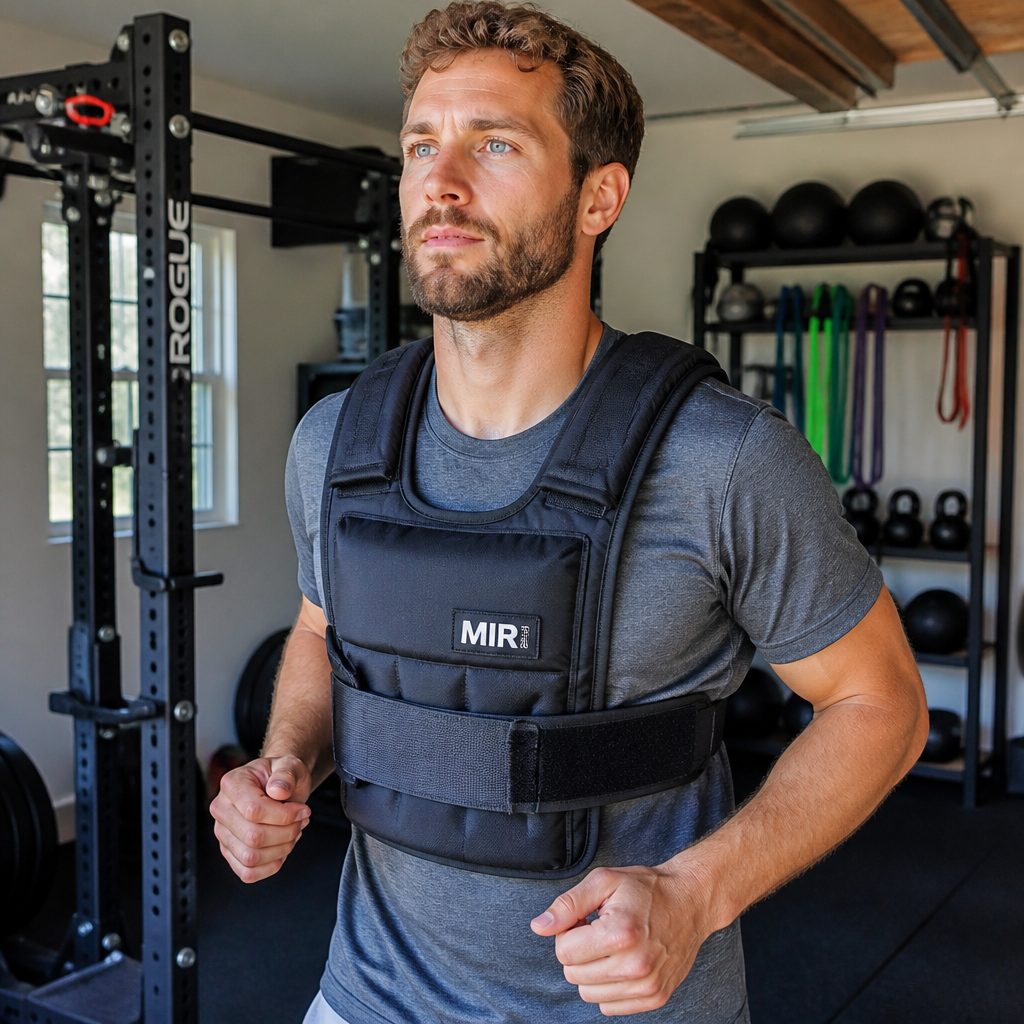
For longevity-minded training, a modest load carried consistently beats an impressive load that spends most of its life hanging on a hook.
That simplicity is exactly why weighted vests have become useful tools for people thinking beyond a short, heroic fitness kick. The goal here is not to load yourself until your knees send a formal complaint. It is to add a modest, repeatable dose of resistance to activities that already make sense: walking briskly, hiking, carrying shopping, standing up from the floor, climbing hills and maintaining enough strength to live independently later in life.
A 20 lb weighted vest has become a popular sweet spot for general fitness, fat loss and longevity work. That does not mean every beginner should begin at that load. Far from it. It means that, for many regular exercisers, this is enough load to make walking and bodyweight exercises noticeably more demanding without automatically crossing into the territory of cumbersome, highly specialised training.
There is a useful bit of context in the wider market, too. In a 2026 consumer survey of 1,069 weighted-vest owners, 62% said body sculpting was their main aim, while 13% were training with life longevity in mind. The first group may want sweatier sessions and a mirror-friendly pump. The second tends to benefit more from sensible fit, manageable increments and a vest that can survive a lot of quiet, unphotographed miles. I know which camp ages better.
What to look for before buying
The strongest-looking vest on a product page is not always the right one for your actual training. Start with the kind of movement you want to do most often. A rear-loaded ruck carrier is excellent for walking with purpose. A plate carrier with weight spread across the front and back is more versatile for squats, step-ups, press-ups and functional circuits. A soft, fixed-weight vest may be the least fiddly option for a person who simply wants to walk more often.
Stability matters more than maximum capacity
A vest should sit close to the body and remain there. If it bounces on a walk or shifts during a squat, you will compensate without realising it. That is annoying at first and potentially uncomfortable once fatigue arrives.
Progression should be boringly manageable
The ability to increase load in small stages is more valuable than a headline-grabbing maximum. MiR's 3 lb increments and Ativafit's individual 1 lb enclosures are particularly relevant if you are building up gradually.
Choose the loading format for the job
Rigid plates keep a carrier compact and predictable. Softer loading can feel kinder against the chest and ribs. Fixed-weight vests remove adjustment decisions entirely, which is either liberating or limiting depending on your temperament.
Fit is not an optional extra
Torso length, chest shape and shoulder width all affect comfort. Options with different carrier sizes or sex-specific measurement design deserve attention, particularly if a generic "one size" vest has never fitted you properly before.
For walking and rucking, the vest should feel secure before you start moving. If you need to constantly tug straps, tighten buckles or reposition the load during a short walk, reduce the load or reassess the fit. "Getting used to it" is not a proper fitting strategy.
How to progress without upsetting your joints
Weighted walking is not a race to see how much mass you can hang from your torso. Your joints already deal with your bodyweight, footwear, hills, pavement, tiredness and whatever you carried home from the supermarket. The vest is one variable. Treat it accordingly.
I would begin by making the walk itself routine. Build a reliable walking habit without load, then add a very modest load for a short, familiar route. Hold that setup until it feels normal. Only then change one thing: more time, a hillier route, a little more pace or a little more weight. Not all four on the same determined Monday morning.
For bodyweight exercises, keep the movement selection sensible. Step-ups, controlled sit-to-stands, split squats, incline press-ups and farmer-style carries all reward patience. Fast burpees in a heavy vest may look energetic, but "energetic" and "appropriate for the next decade" are not always close friends.
The useful rule: earn the next increment
If you cannot walk tall, breathe comfortably and recover normally from your present vest load, there is no prize for adding more. Earn progression through repeated comfortable sessions, not through one dramatic outing that makes the stairs at home feel personally offensive.
Weighted vest comparison: the key specifications
There is no single winner because these vests solve rather different problems. A compact GORUCK carrier is designed around rear-loaded rucking; REP and Rogue are more natural all-round plate carriers; fixed-weight vests make the decision for you. The table below puts the practical differences in one place.
| Weighted vest | Load arrangement | Stated capacity or supplied load | Construction | Best use |
|---|---|---|---|---|
| GORUCK Ruck Plate Carrier 3.0 | Rear ruck plate | Up to 30 lb | 1000D Cordura | Rucking and loaded walking |
| REP Fitness Strata Weight Vest | Front and rear plate system | Plate pairs from 5 lb to 20 lb | 750D Cordura nylon | All-round functional training |
| Rogue Plate Carrier | Front and rear plates | Up to 40 lb | 1000D and 500D Cordura | Strength and functional fitness |
| 5.11 TacTec Plate Carrier | Balanced front and rear plates | Compatible with Rogue plates | 500D nylon | Versatile plate-based sessions |
| Hyperwear Hyper Vest Fit | Fixed-weight vest | 10 lb | Cordura-polyester blend | Women's walking and fitness |
| MiR Air Flow Weighted Vest | Adjustable small weights | Up to 60 lb; 3 lb increments | Compact adjustable design | Long-term progression |
| Ativafit Adjustable Weighted Vest | Individual weight enclosures | 22 single-pound enclosures | Breathable mesh | Walking comfort and gradual loading |
| Wolf Tactical Quick-Release Weighted Vest | Fixed-weight vest | 35 lb | 600D polyester | Fixed-load training |
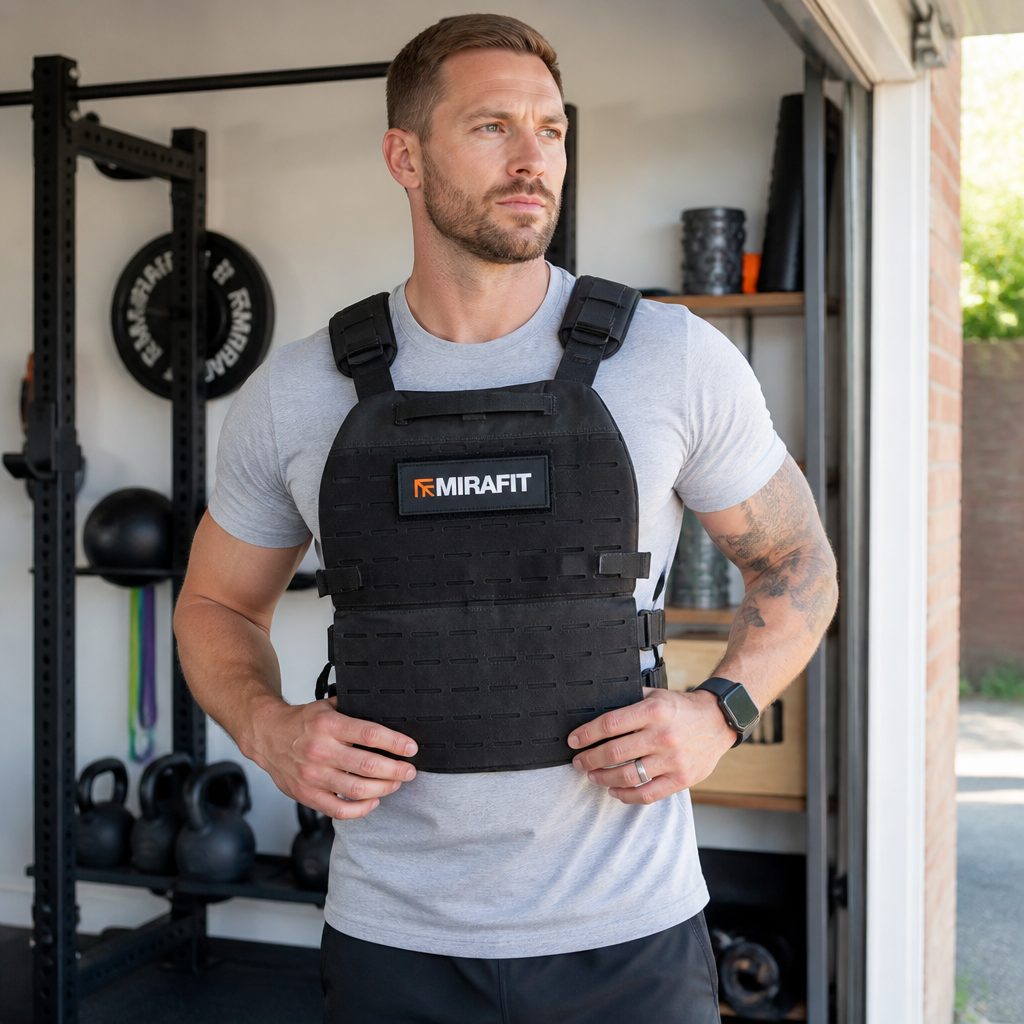
Plate carriers keep weight close to the torso, but the best layout depends on whether your week is mostly rucking, bodyweight strength work or a mixture of both.
Ranked picks: the best weighted vests for useful strength
1. GORUCK Ruck Plate Carrier 3.0 — Best for rucking longevity
The GORUCK Ruck Plate Carrier 3.0 is the clearest recommendation for somebody whose main plan is to walk, hike and ruck consistently. It is a rear-loaded carrier built around 10 lb, 20 lb and 30 lb Standard Ruck Plates, with a deliberately streamlined shape that sits high and tight against the back.
That placement matters. A ruck-style load feels more like a purposeful backpack than a chest-and-back plate carrier, and GORUCK has refined the details that become important after many miles: wider sternum strap coverage, improved lumbar support, EVA foam padding, a less abrasive back panel and underside of the shoulder straps, plus reinforced construction. It also has a padded top handle and additional protection around the plate pocket for dynamic movements.
The trade-off is versatility. This is not the vest I would select as my only loading tool if regular press-ups, ground work and front-loaded squat variations were the main agenda. It is a specialist, albeit a very polished one. For the person who wants to make daily walks more useful without wearing a bulky tactical carrier, that specialism is precisely the appeal.
Pros
- Rear-loaded design is purpose-built for stable rucking.
- Up to 30 lb capacity covers sensible walking progression.
- 1000D Cordura and reinforced build favour long-term use.
Consider
- Plates are separate from the carrier.
- Less natural than a balanced vest for all-purpose bodyweight circuits.
- Rear-only loading will not suit every training preference.
2. REP Fitness Strata Weight Vest — Best all-rounder for functional training
The REP Fitness Strata Weight Vest is the best middle-ground choice in this guide. Its 2.3 lb carrier uses 750D Cordura nylon and accepts plate pairs ranging from 5 lb to 20 lb, including precision 5.85 lb and 8.85 lb plate pairs. That makes it unusually friendly to the person who wants measured progression rather than leaping from no load to a huge jump because the available plates happened to be sitting there.
The fit system is properly useful rather than decorative. Adjustable shoulders and waist, a Velcro harness, front hook-and-loop closure and side slide-lock hardware allow small adjustments as you move. Internal padding is intended to reduce shoulder and chest pressure during longer sessions, whilst a phone pocket and die-cut lash points are practical additions if this becomes your outdoor training vest as well as your gym tool.
REP also offers soft plates made from steel shot wrapped in durable nylon. They will appeal to anyone who dislikes the hard edges and slightly armoured feel of conventional cast plates. The downside is simply that this is a more involved system than a fixed-weight vest: carrier, plates, fit adjustments, choices. If you enjoy tailoring kit, excellent. If you want to put something on and head out the door, it asks a little more of you.
Pros
- Broad plate options allow genuinely gradual progression.
- Adjustable fit and internal padding support varied training.
- Soft plate option may feel more comfortable for some users.
Consider
- More setup than a simple fixed-weight vest.
- One-size approach will not be as tailored as multi-size carriers.
- Plates and carrier are separate decisions.
3. Rogue Plate Carrier — Best for durable plate-based strength work
The Rogue Plate Carrier is for buyers who want a lean, hard-wearing plate carrier with serious capacity. It uses a combination of 1000D and 500D Cordura, USA-made Velcro straps and fasteners, and X-box reinforced stitching. The carrier itself weighs just over 1 lb, yet it can handle up to 40 lb.
Three sizes are available, selected by measuring around the torso 12 inches below the sternal notch. That is a major advantage over generic vest sizing. A close fit is a safety and comfort feature, not a vanity metric, especially when you are doing step-ups, squats, carries and bodyweight work under load.
Its plate pocket is optimised for Rogue USA Cast Plates and Echo Cast Plates up to 20 lb, so the system is geared towards balanced front-and-back loading. That makes it more adaptable than a ruck carrier, but it can feel more restrictive around the chest than a rear-loaded option when you are simply walking for an hour. It is brilliant for the person who sees a vest as a strength accessory first and a walking accessory second.
Pros
- Up to 40 lb capacity leaves substantial room to progress.
- Three sizes help achieve a secure torso fit.
- Cordura construction and reinforced stitching suit hard use.
Consider
- Higher capacity does not mean everyone should use it.
- Plate-based setup is less grab-and-go than a fixed vest.
- Front-and-back loading can feel more restrictive for long walks.
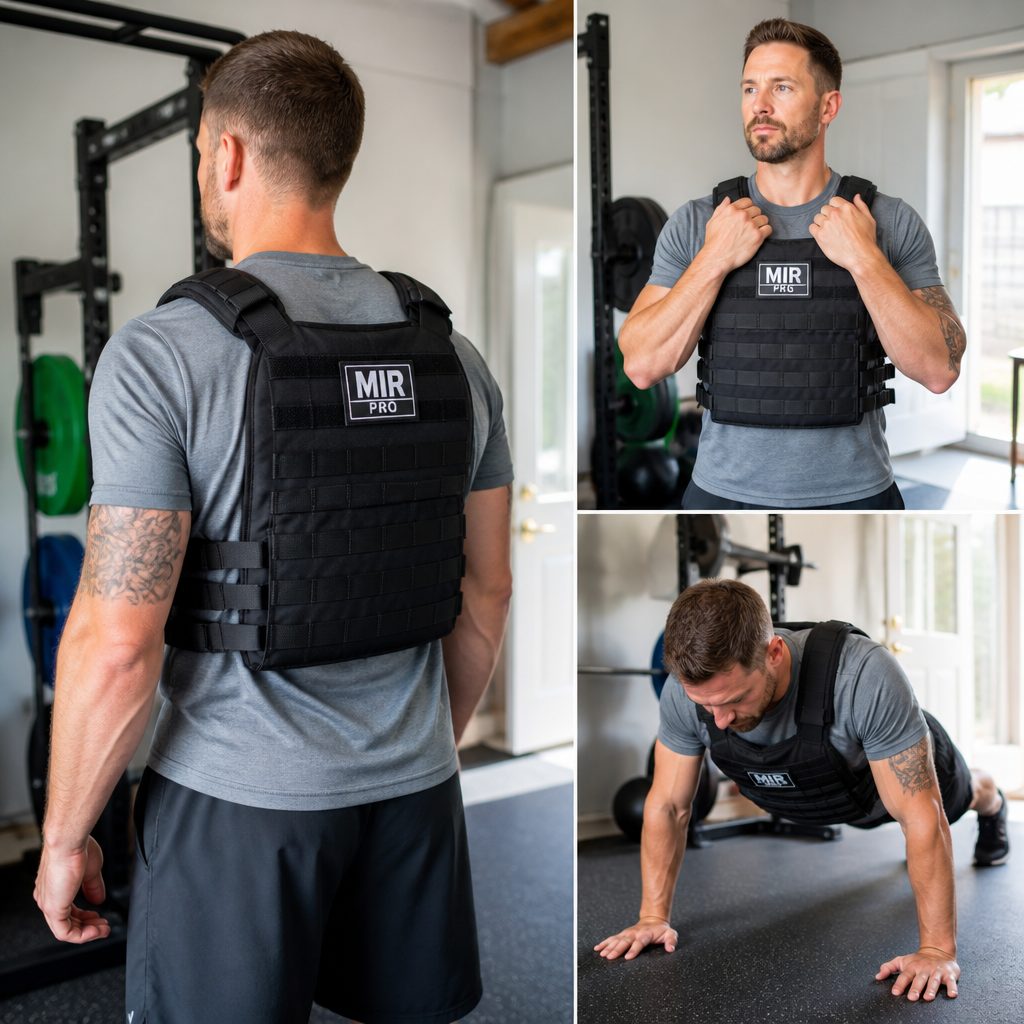
For step-ups, controlled squats and press-ups, plate carriers work best when the front and rear loads remain close and evenly positioned.
4. 5.11 TacTec Plate Carrier — Best for a balanced plate-carrier feel
The 5.11 TacTec Plate Carrier is a familiar option in the plate-carrier world, using 500D nylon and a balanced front-and-back loading format. It is compatible with Rogue plates, which makes it a sensible route for people who already know they prefer that plate style.
For functional training, balance is the key word. Evenly distributed load can make a vest feel predictable during controlled squats, lunges, step-ups and conditioning work. Predictable is not glamorous, but it is the sort of quality that keeps a vest in regular circulation rather than relegated to the cupboard with the massage gun you used twice.
This is still fundamentally a tactical-style plate carrier, though. If your aim is relaxed daily walking in normal clothes, a ruck carrier or softer vest may be easier to live with. Buy the TacTec because its plate layout and secure training feel suit your movement menu, not because you fancy the aesthetic. Longevity training has no need for cosplay.
5. Hyperwear Hyper Vest Fit — Best fixed-weight vest for women
The Hyperwear Hyper Vest Fit takes a different route. It has a female-specific measurement design and a fixed 10 lb capacity, using a Cordura-polyester blend. That fixed load will be a limitation for some, but it is also its charm. There are no plates to select, no individual weights to remove and no temptation to turn a steady walk into an accidental maximal effort.
For smaller-framed users, women who have found unisex plate carriers overly broad, or anyone who wants a modest load for walks and gentle bodyweight work, it makes a great deal of sense. Ten pounds is enough to make a difference whilst remaining within the sort of load that can be used frequently and thoughtfully.
Its weakness is obvious: the load does not change. If you outgrow it, you cannot simply add another small increment. But there is a strong case for owning a vest that keeps training simple. The most sophisticated progression plan in the world is useless if it feels like admin.
6. MiR Air Flow Weighted Vest — Best for gradual progression
The MiR Air Flow Weighted Vest is the progression specialist. It accepts up to 60 lb and uses 3 lb increments, giving it a huge usable range for households where more than one person may train with it or for a buyer who wants years of room to develop. It also carries a lifetime warranty.
For longevity work, the headline capacity is not the point. The useful part is the ability to start with a restrained load, become comfortable with it, then add a small amount as walking fitness, strength and confidence improve. That makes it more adaptable than a fixed 10 lb or 35 lb vest, particularly if your training is intentionally gradual.
The compact adjustable format is appealing, although a vest carrying lots of individual weights can feel less sleek than a plate carrier. If you love minimal kit, the pockets and incremental-weight system may not be your favourite. If you value practical flexibility over a tidy silhouette, it is one of the strongest options here.
7. Ativafit Adjustable Weighted Vest — Best for comfortable walking progression
The Ativafit Adjustable Weighted Vest is the most walking-focused adjustable choice in this roundup. Its breathable mesh construction, reflective strips and 22 individual 1 lb enclosures point towards the person training outdoors, especially during darker mornings or evenings, rather than somebody preparing for a punishing functional-fitness event.
One-pound changes are wonderfully civilised. They allow you to progress with restraint, which is exactly what many walkers, older trainees and people returning from a long break need. You can make a small change, observe how your feet, knees, hips and shoulders respond over a few outings, then decide whether it is time to stay put or add another pound.
It also has a lifetime warranty. The compromise is that mesh comfort and a multi-pocket loading system are not the same thing as a dense Cordura plate carrier for highly dynamic work. For steady walking and moderate bodyweight training, however, it has an unusually sensible brief.
8. Wolf Tactical Quick-Release Weighted Vest — Best for a fixed heavier load
The Wolf Tactical Quick-Release Weighted Vest is supplied as a fixed 35 lb vest in 600D polyester, with quick-release buckles and multiple colour options. It is aimed at the buyer who already knows they want a fairly substantial fixed load and does not need the delicate progression of adjustable pockets or separate plates.
That makes it a narrower longevity recommendation. Thirty-five pounds can be entirely appropriate for a well-conditioned person, but it is not the load I would nominate for a beginner, for a tentative return to exercise, or for a plan built around making walking feel better rather than merely harder.
There have also been reliability concerns around its quick-release buckles. A quick-release function is useful in theory, particularly if a vest ever needs to come off promptly, but it should not come at the cost of confidence during movement. Consider this one only if the fixed load genuinely matches your present training level and you have checked the buckles carefully.
How the load ranges compare
Capacity is not a scorecard. A higher figure simply means a vest can carry more, not that it will be more useful to you. Still, the figures show why the GORUCK, REP and Ativafit options make such different recommendations: each supports a different kind of progression.
Rucking versus bodyweight loading
Rucking is simply walking with deliberate load. It does not need a boot-camp atmosphere, special military language or a route that involves crawling under things. A comfortable carrier, a sensible load and a walking route are enough. The GORUCK Ruck Plate Carrier 3.0 is the best fit for this specific use because it was designed to keep a plate high and stable on the back, leaving the chest comparatively open for breathing.
Bodyweight loading changes the equation. During squats, step-ups, lunges and press-ups, front-and-back balance becomes more useful. This is where the REP Fitness Strata Weight Vest, Rogue Plate Carrier and 5.11 TacTec Plate Carrier make more sense. Their plate-carrier layout better suits exercises where your torso is leaning, bracing and changing angle.
There is no rule saying you cannot walk in a plate carrier or squat in a ruck carrier. You absolutely can. The question is what you will do most weeks. Choose the vest that makes your most frequent activity comfortable, then let it occasionally do other jobs. The reverse approach is how people end up owning very capable kit that they dislike wearing.
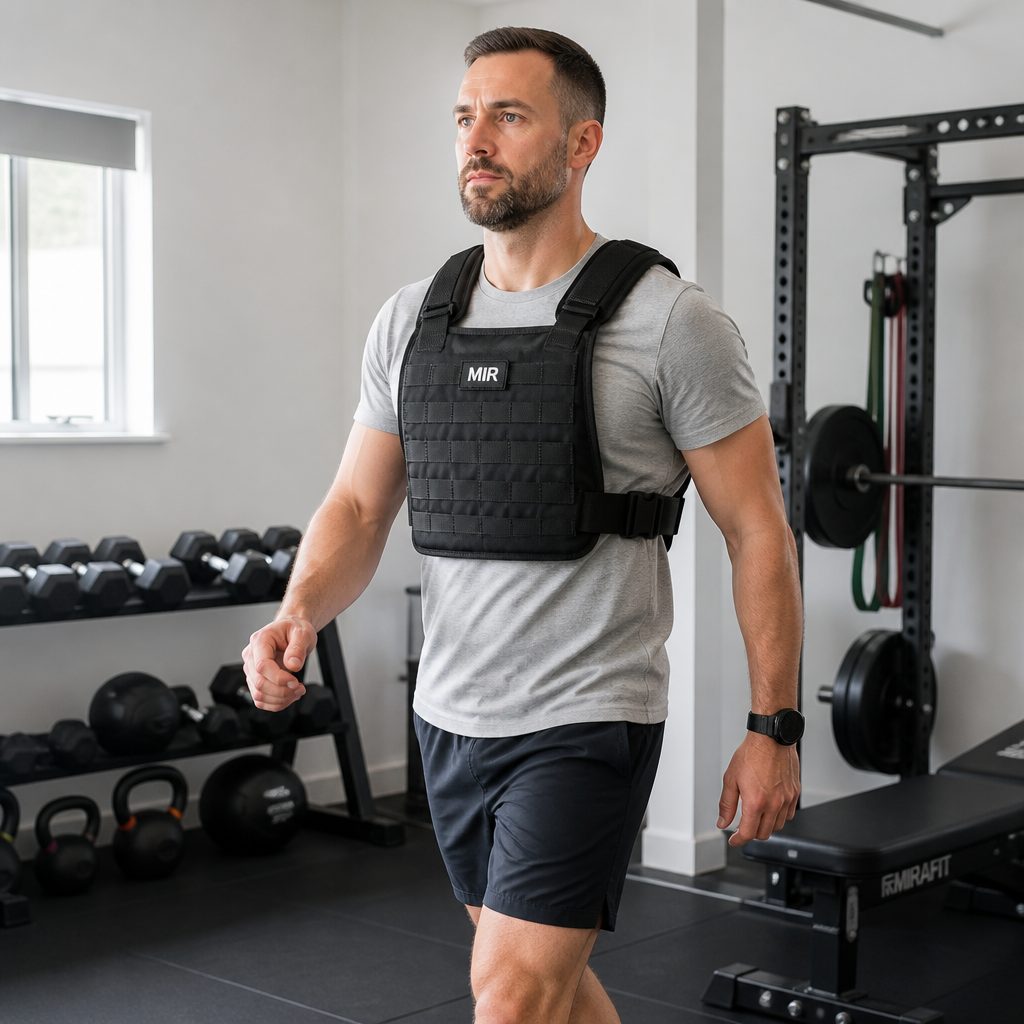
Rucking rewards a tall posture, a controlled pace and a load you can carry without altering your stride or shrugging your shoulders towards your ears.
A simple functional-training session
Try a short brisk walk, a few controlled sets of step-ups, incline press-ups and sit-to-stands, then another easy walk to cool down. Use a load that lets every repetition remain tidy. This is not meant to be a televised sufferfest. It is a repeatable session you can still enjoy next week.
Fit, comfort and the details that decide whether you use it
Fit determines whether a vest becomes a habit. The first thing to check is vertical placement: the load should not hang low enough to pull you backwards, nor sit so high that it rubs your neck. Then check lateral movement. Take a few steps, turn, reach overhead and do a gentle squat. Any obvious sway, bounce or strap migration deserves attention before you add load.
The GORUCK's wider sternum strap and revised padding are meaningful rucking details. REP's adjustable shoulders, waist and quick-adjust side hardware are meaningful if you share the vest or use it across different layers of clothing. Rogue's three-size approach is meaningful for buyers who have historically found one-size carriers too long, too wide or too loose. They are not glamorous specifications. They are the specifications you notice after half an hour.
Breathability is worth considering, too. Ativafit's mesh design is particularly appealing for walkers, while the GORUCK uses EVA foam padding and keeps the chest open. A vest may be durable enough to survive anything, but if it turns into a warm, soggy nuisance on every summer walk, it will not help your consistency. You are buying a training tool, not a portable greenhouse.
Best weighted vest for each type of buyer
Best for rucking
GORUCK Ruck Plate Carrier 3.0. Choose it for stable rear loading, a streamlined high-and-tight profile and a purpose-built approach to loaded walking.
Best all-rounder
REP Fitness Strata Weight Vest. The varied plate options, adaptable fit and soft-plate option make it the best broad-use choice for walking and functional strength.
Best for gentle progression
Ativafit Adjustable Weighted Vest. Its 22 individual 1 lb enclosures make small, patient increases unusually straightforward.
Best premium strength carrier
Rogue Plate Carrier. Select it for multi-size fitting, reinforced Cordura construction and capacity for serious plate-based progression.
Best women's fixed-weight choice
Hyperwear Hyper Vest Fit. Its female-specific measurement design and fixed 10 lb load suit uncomplicated, modest loading.
Best long-term load range
MiR Air Flow Weighted Vest. The 3 lb increments and 60 lb maximum give it the widest runway for gradual development.
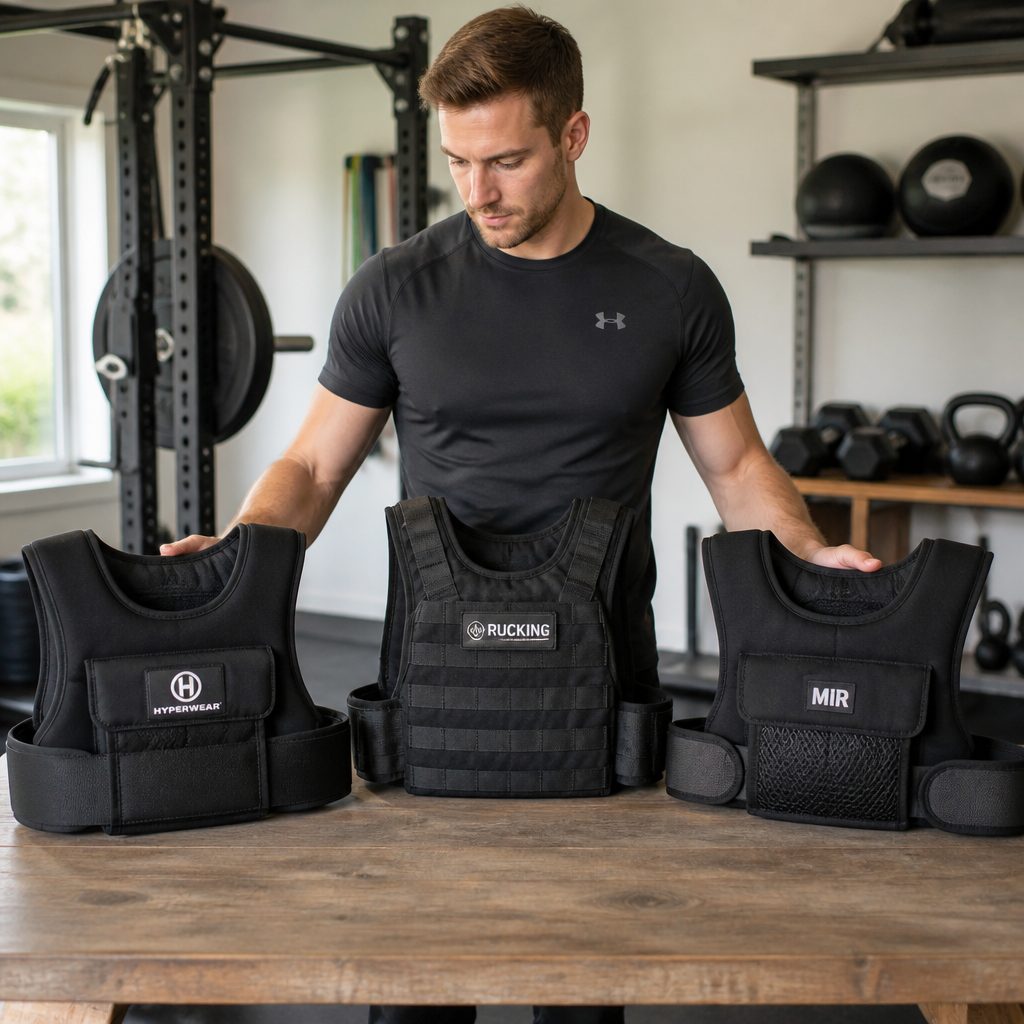
The right vest category is usually obvious once you decide whether most of your sessions are walks, bodyweight strength work or a roughly even split of both.
Care, storage and making your vest last
Longevity equipment should have some longevity itself. Remove any adjustable weights after especially wet outdoor sessions and allow the vest to dry thoroughly before storing it. That simple habit is kinder to fabrics, padding, fasteners and your nose. A damp vest sealed into a gym bag is an experiment nobody needs to run.
Check straps, hook-and-loop closures and buckle hardware regularly. Plate carriers rely on their closures staying secure when you bend, twist and breathe deeply. If a strap begins to fray or a closure no longer grips confidently, deal with it before it becomes a mid-walk issue. The Wolf Tactical's reported buckle concerns make this point especially relevant: inspect quick-release hardware rather than assuming it will always behave.
Store plates and weights where they cannot land on toes, pets or flooring you value. It sounds obvious until you are changing a vest on a rushed morning and a weight slips out of your hand. Weighted vests are wonderfully low-tech, but gravity remains extremely committed to its work.
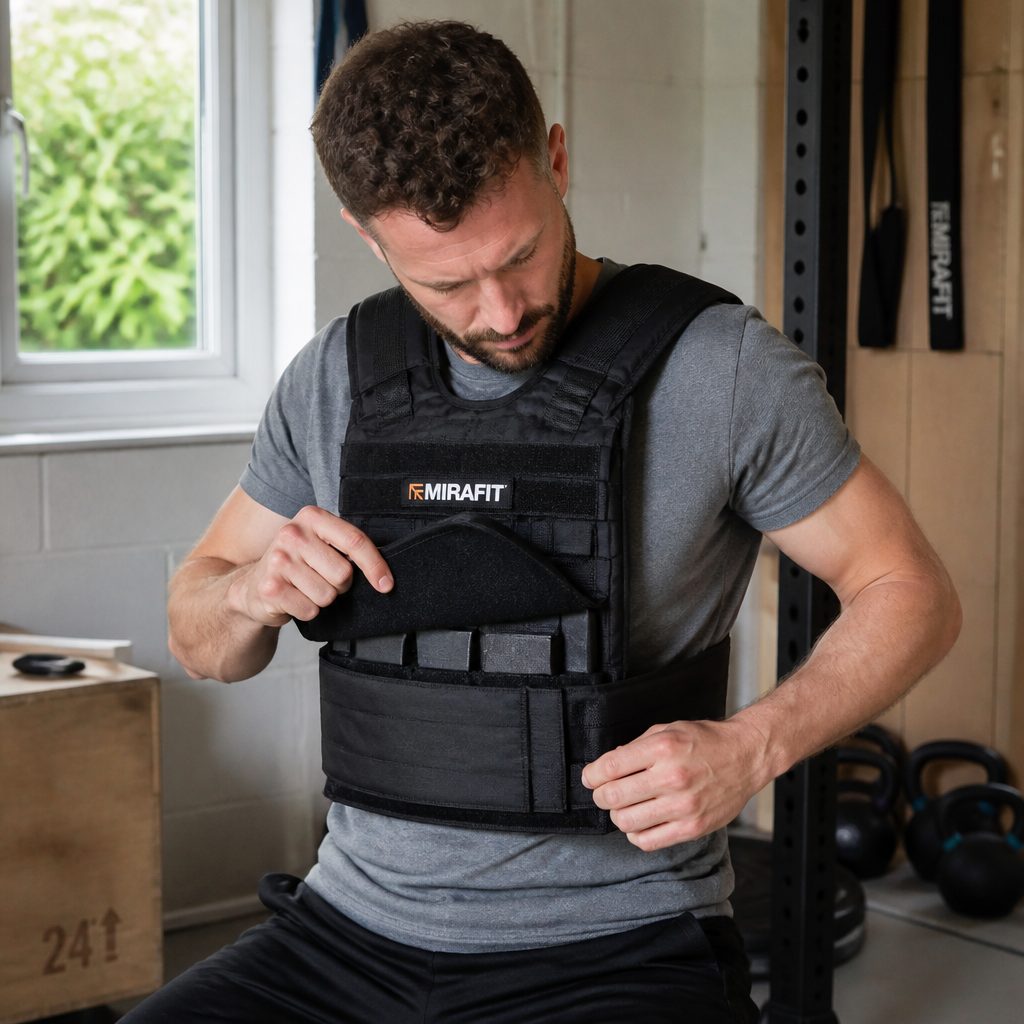
A quick check of straps, closures and plate pockets before each session is far less dramatic than discovering a problem halfway through a loaded walk.
Frequently asked questions
The bottom line
For most people building durable, useful fitness, the REP Fitness Strata Weight Vest is the best all-round choice: it offers adaptable fit, sensible plate options and enough versatility for walking, strength work and functional training. Choose the GORUCK Ruck Plate Carrier 3.0 if loaded walking is the real priority, the Rogue Plate Carrier if durable strength-focused plate work comes first, and the Ativafit Adjustable Weighted Vest if small, joint-friendly increases are your non-negotiable. Buy for the training you will repeat calmly for years. That is the whole game.