
How to Kit Out a HYROX-Ready Home Gym Under £300
You cannot reproduce every last metre of a HYROX race in a spare room. You can, however, build a very credible place to practise the movements, raise your work capacity and turn up to race day less surprised by your own legs. Here is how I would spend carefully, prioritising a kettlebell, bands and a wall ball over shiny things that mostly collect dust.
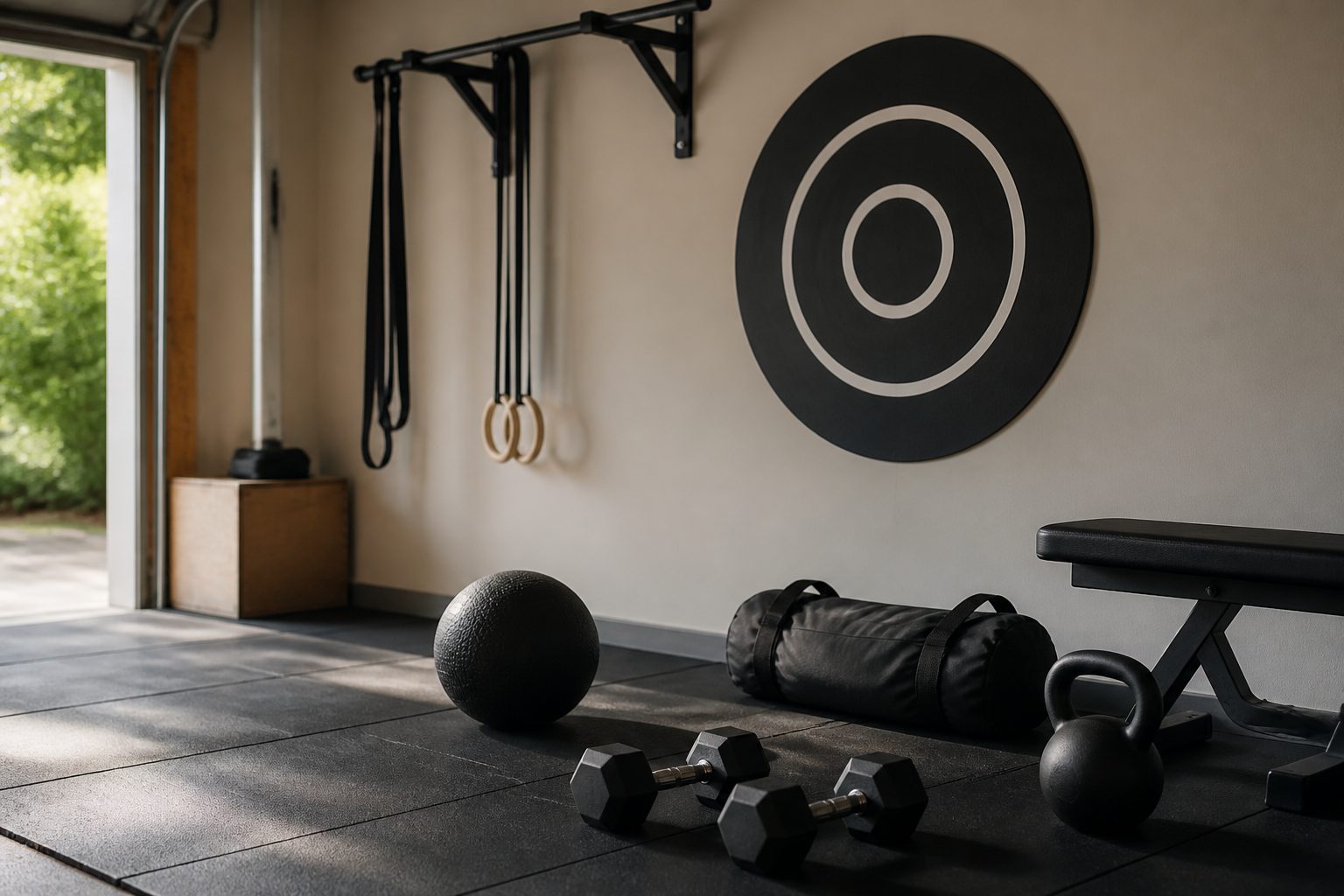
A compact HYROX-focused corner does not need a commercial gym footprint: clear floor space, a sensible wall-ball target and a few versatile pieces go a remarkably long way.
 By James Oduya · Staff Writer & Home Gym Columnist · Updated October 13, 2026
1. Start by understanding what "HYROX-ready" actually means
HYROX had been around since its first season in 2018, and its appeal was refreshingly straightforward: running broken up by functional stations that reward strength, repeatability and the ability to keep moving when you would rather lie on the floor and negotiate with the ceiling. It is not a sport that asks you to own every machine in a premium chain gym. That is good news for the home trainer.
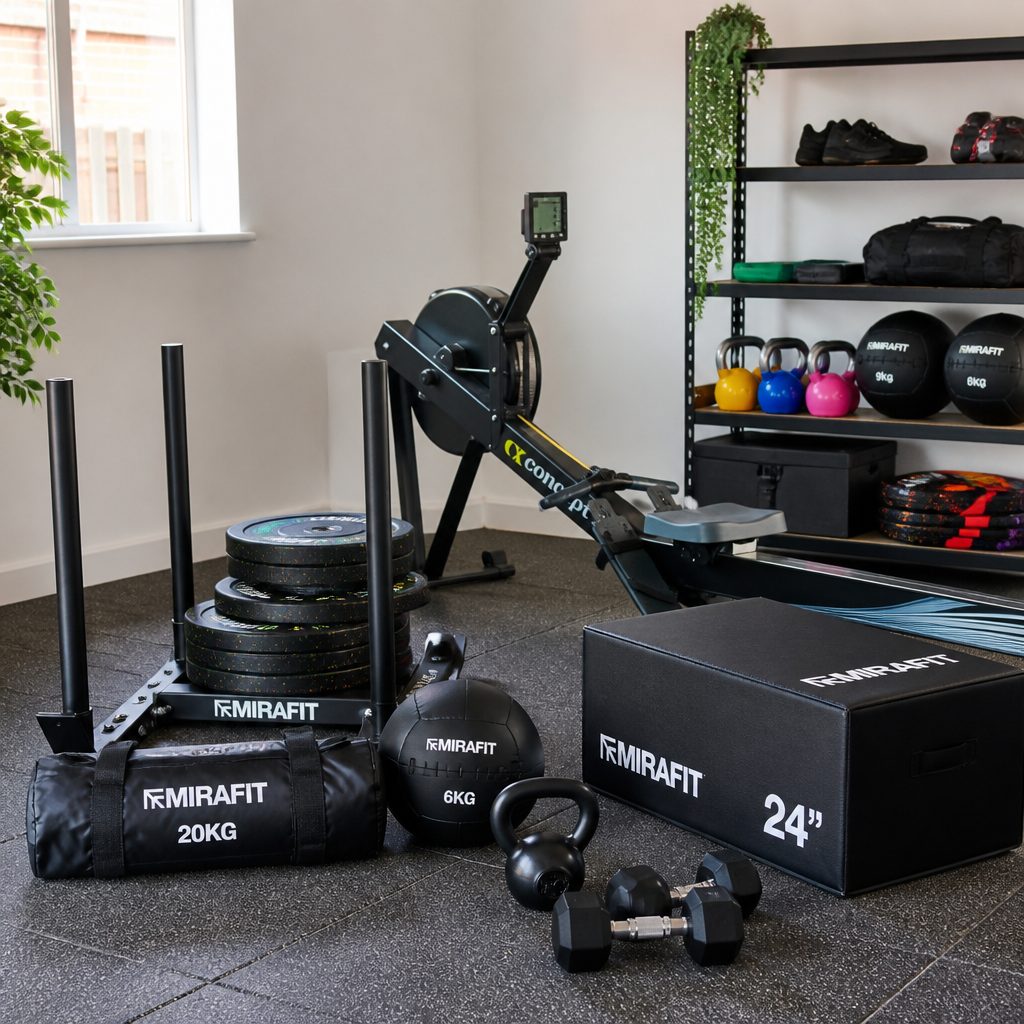
The sensible shopping order is simple: establish the core movement tools first, then use bodyweight work, running and intelligent substitutions to fill the gaps.
A genuinely useful home setup should prepare the movement patterns rather than pretend it can perfectly imitate a full competition floor. You want to squat and throw, hinge and carry, pull, push, lunge, brace your trunk and work while your heart rate is already fairly cross with you. The sled push and sled pull are the awkward bits. SkiErg and rower work are also difficult to recreate faithfully without buying the actual machines. But neither problem should derail a modest build.
For a restricted budget, the big mistake is trying to own tiny versions of all eight stations. That leads to a cluttered room full of compromises: a flimsy doorway bar here, a tiny sandbag there, perhaps an ab roller purchased in an optimistic moment. Instead, buy a small set of robust, multipurpose kit and practise the qualities that transfer.
That is the lens for every purchase below. If an item does not help you train one of those patterns safely and often, it is a nice-to-have. Lovely, perhaps. Necessary? Not really.
Keep the distinction clear: a HYROX-ready home gym is a training environment, not a claim that you have recreated an official venue. A short outdoor running route, a hill, stairs or even brisk treadmill intervals can handle much of the conditioning side without occupying your house permanently.
2. Set the rules before you add anything to the basket
The budget is not a challenge to spend every penny; it is a ceiling. Leave a little breathing room for delivery, floor protection, a chalk ball, replacement band or the unexpectedly useful bit of kit you discover after a few weeks. Home-gym buying becomes much less stressful when you treat the first order as version one, not the final renovation of the National Exhibition Centre.
I would set four rules. First, every item must earn its footprint. Secondly, it must support more than one exercise. Thirdly, it has to be safe for the room you have, not the garage you wish you had. Finally, choose load that lets you practise good positions now and gives you some room to progress.
Measure before buying. For loaded walking lunges and farmers carries, you need a clear lane where you will not clip a coffee table, a pet or a very expensive television. For wall balls, you need ceiling height, a durable wall or target area, and enough room to squat without finding the sofa with your backside. That last one sounds obvious. It apparently is not obvious enough.
Measure the usable training lane
Measure the floor you can actually use once furniture, doors and radiators are taken into account. A short lane is still useful; you simply turn more often during carries and lunges.
Choose your wall-ball surface honestly
A ball repeatedly thrown at fragile plasterboard, a low ceiling or a decorative wall is not a training plan. If the room is unsuitable, use a safe lower target or practise the squat-and-press portion separately.
Buy for controlled repetitions
HYROX training rewards steady output. A load you can move neatly for repeated work is normally more valuable than a heroic weight that turns every set into an audition for a lower-back complaint.
The useful minimum
If you only remember one thing, make it this: a wall ball trains the most distinctive station, a kettlebell covers carries, hinges and loaded lunges, and bands provide low-cost pulling and conditioning options. That trio does far more than it first appears.
3. Buy the kettlebell first: it is your workhorse
If I were building from scratch, the kettlebell would be first through the door. It handles farmers carries, suitcase carries, goblet squats, swings, Romanian deadlifts, cleans, front-rack holds, reverse lunges and a mildly unpleasant collection of complexes. In a compact gym, that is exceptional return on floor space.
Competition preparation uses two kettlebells for the farmers carry. Official HYROX standards had men working with two 24kg kettlebells and women with two 16kg kettlebells. Your home kit does not have to begin at those loads. Indeed, unless you already have a confident carry, squat and hinge, chasing the race load immediately can make training more stop-start than productive. Build capacity first, then make the implements more demanding as budget and readiness allow.
Cast iron is the uncomplicated choice. It is durable, easy to store and works for almost everything here. A powder-coated finish can be friendlier for grip than a slippery gloss surface, particularly once your hands are warm. Mirafit powder-coated cast-iron kettlebells had a range spanning 6kg to 32kg, whilst Wolverson's Competition Kettlebells MK4 began at 8kg and extended through to 32kg. Both are examples of the sort of sensible progression range worth looking for rather than a random novelty shape.
How to choose your starting load
Choose based on the weakest relevant movement, not your best lift. Someone who can deadlift strongly may still find a front-rack carry uncomfortable or struggle to hold a tidy goblet squat. If you are newer to loaded training, pick a bell that allows smooth sets of swings, squats and carries. If you already train regularly, prioritise a load that makes carries and lunges meaningful without wrecking your technique.
One heavy bell can be useful, but two matching bells eventually make farmers carries much more direct. If buying a pair from day one means compromising heavily on wall-ball quality or band resistance, I would rather get one good kettlebell and train asymmetrically for a while. Suitcase carries are brutally effective. Just swap sides evenly and do not let your torso fold sideways like a deckchair in a stiff breeze.
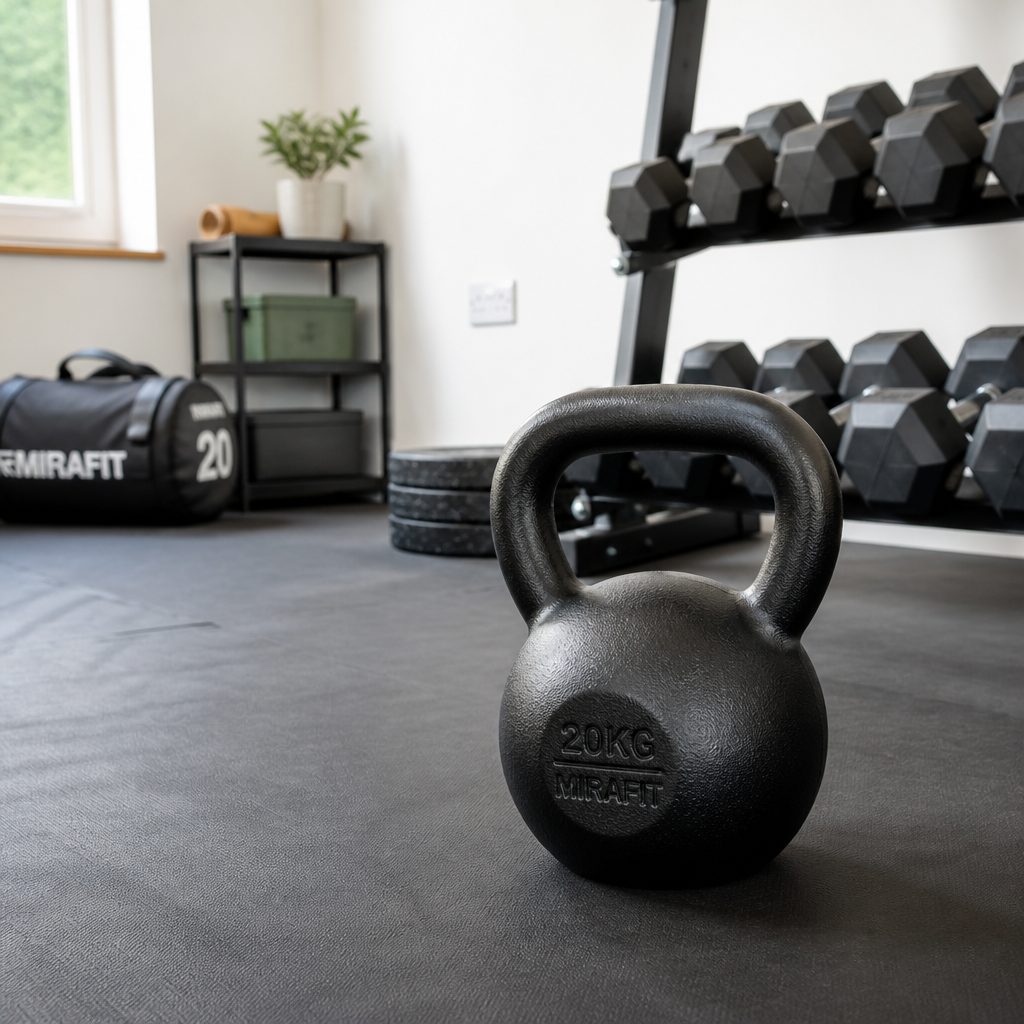
A cast-iron kettlebell earns its space quickly, covering carries, hinges, squats and lunge variations without requiring a rack or a dedicated corner of the house.
4. Add long resistance bands for pulling, pushing and conditioning
Bands are not glamorous. They also happen to be one of the cleverest purchases in a small training area. A basic loop set gives you rows, pulldowns, face pulls, presses, triceps work, assisted pull-ups where appropriate, dead-bug variations and a surprisingly nasty way of making bodyweight movements feel less relaxing.
For HYROX preparation, the main role is pulling endurance and sled substitution. Anchor a long loop band securely around a fixed, genuinely sturdy anchor point, step back until there is tension, then perform controlled rows or hand-over-hand pulls. Keep your shoulders down and away from your ears, brace your trunk and avoid turning it into a panicked biceps curl. It should feel like a whole-body effort.
A Core Balance long loop set offered four bands across a 7kg to 56kg resistance range, which illustrates why a graduated set makes more sense than a single light band. The lighter bands are ideal for warm-ups, technique work and higher-repetition rows. Heavier bands give you enough tension for a stronger pull or to make marching and sled-style drags more interesting.
The exact resistance of a band is never as fixed as a kettlebell weight because tension rises as you stretch it. That is not a flaw; it is simply how elastic resistance behaves. Mark your standing position with tape or note a floorboard seam, use the same setup each session, and progression becomes easy to track. More stretch, more tension. More repetitions at the same stretch, more capacity. No app required. Mercifully.
Why bands deserve a place
- They take up almost no room and travel easily.
- They make pulling work possible without a large machine.
- Different tensions let one small set support warm-ups and hard work.
- They are useful for sled-pull-style drills when anchored safely.
Their limitations
- They do not perfectly reproduce a SkiErg, rower or weighted sled.
- Resistance changes across the movement rather than staying constant.
- Unsafe anchors are a hard no, not a calculated risk.
- They eventually wear, so inspect them before hard sessions.
5. Make the wall ball your station-specific priority
A wall ball is the item that makes the setup feel most recognisably HYROX-focused. It is also one of the few pieces where I would avoid buying the absolute cheapest option simply because it exists. Wall-ball sessions involve repeated catches, squats and throws. A misshapen ball, unreliable stitching or slick outer surface turns a hard conditioning session into an irritating one very quickly.
The CENTR x HYROX Competition Wall Ball was available in 2kg, 4kg, 6kg, 9kg and 12kg options, all with a 35.5cm diameter. Its PVC outer shell was described as non-slip and scuff-resistant, with double-stitched seams intended to help it retain shape through hard training. Those are the details that matter: predictable diameter, grip when sweaty, and construction that can cope with repeated catches.
The 6kg and 9kg options are particularly useful reference points because they align with common HYROX wall-ball training needs. The right choice is not automatically the heaviest one you can force overhead a few times. You should be able to catch it with soft knees, descend into a stable squat, drive up without collapsing forward, then throw to a repeatable target. If every catch becomes a wrestling match, you are practising survival rather than movement efficiency.
Set your target conservatively to begin with. A strip of tape, a marked point on a suitable wall or a hanging target can all work, provided the area is safe. Focus first on a clean squat-to-throw rhythm. Then add sets. Then reduce rest. Only after that should you worry about squeezing every rep into a race-style simulation.
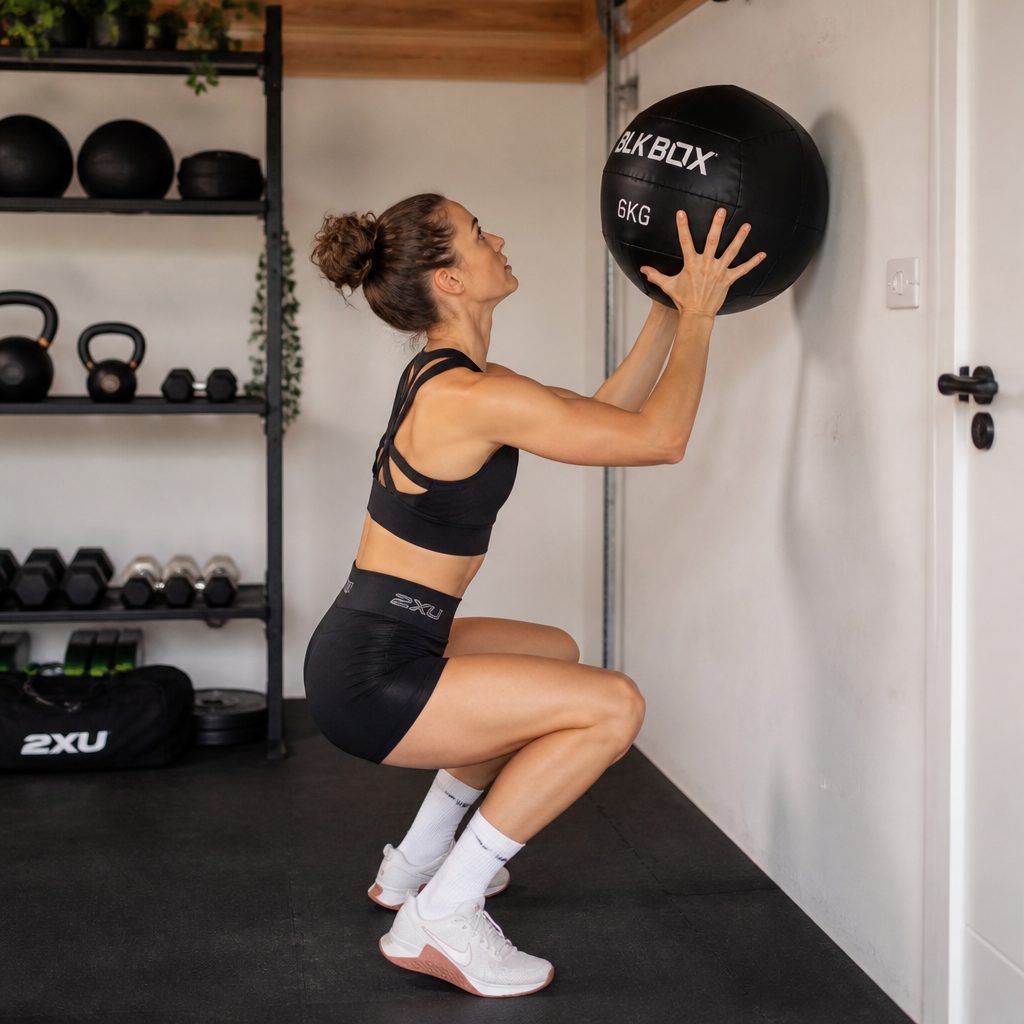
A durable wall ball gives you a direct way to rehearse the squat, catch and throw rhythm that becomes rather important when fatigue has already arrived.
Protect the room as well as yourself. Check ceiling height, lighting, frames, shelves and the wall surface before throwing. If you live above someone or share walls, choose controlled drills and sensible training hours. Your neighbours did not enter a functional fitness event, however much they may feel otherwise.
6. Build a movement map instead of chasing every official station
This is where the setup becomes useful rather than merely photogenic. Take the stations you cannot reproduce perfectly and identify the physical demand underneath. A sled push requires leg drive, trunk stiffness and relentless stepping. A sled pull needs bracing, pulling strength and the willingness to keep moving backwards when your quads have filed a formal objection. Bands, kettlebells, hills and bodyweight work can develop most of that.
| Training need | Compact kettlebell, bands and wall-ball build | KEFL Beginner HYROX Kit | CENTR x HYROX competition equipment route |
|---|---|---|---|
| Core equipment | Choose a kettlebell, long loop bands and a wall ball to suit your space. | Included a colour-coded cast-iron kettlebell, Life resistance loop bands and premium wall balls. | Uses dedicated wall balls and octagonal competition kettlebells. |
| Wall-ball format | Prioritise secure seams, a grippy shell and a manageable load. | Wall balls included as part of the bundle. | Wall balls measured 35.5cm and came in 2kg, 4kg, 6kg, 9kg and 12kg options. |
| Kettlebell progression | Build from a controlled single bell towards matching bells for carries. | Useful all-in-one entry point, with a cast-iron kettlebell included. | Octo kettlebells were available from 8kg through to 32kg. |
| Best use | Flexible home training where space and versatility lead the decision. | Simple starter purchase for someone who wants the core categories together. | Closer competition feel for the buyer who values dedicated design details. |
For sled-push-style work, try heavy band-resisted marching: loop or anchor the band behind you at waist height, lean very slightly forward from the ankles and take short, deliberate steps. Keep your hips under you. Alternatively, use hill marches, incline treadmill walking if you already own one, or goblet squat intervals paired with brisk walking. None is a literal sled. All can train the sensation of working your legs whilst breathing hard.
For sled pulls, use a secure band anchor and walk backwards with the band held close to your torso, or use hand-over-hand pulls from a seated or half-squat position. For SkiErg-style work, straight-arm band pulldowns and high-to-low pulls are useful. For rowing-style work, seated band rows, hinge-and-row combinations and hard running intervals cover some of the same conditioning territory.
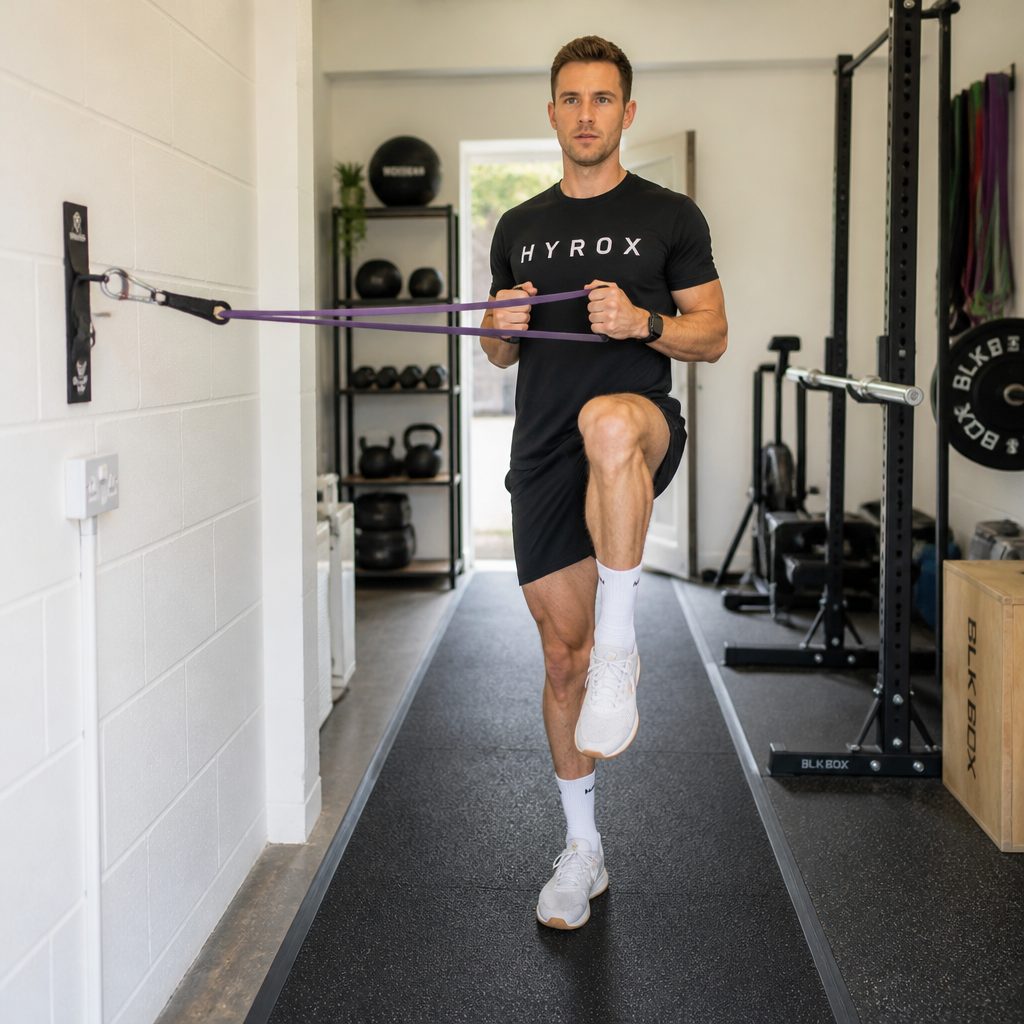
A band anchor and a short clear lane can turn a simple loop band into useful pulling, marching and race-conditioning work without adding another large machine.
Do not confuse substitution with imitation
You are not trying to trick yourself into believing a band is a sled. You are training the leg drive, trunk control, grip and breathing discipline that make the real station less of a shock. The distinction matters, and it keeps expectations sensible.
7. Arrange the room so training stays friction-free
The best home gym layout is the one you will use on an unglamorous Tuesday evening when motivation is mediocre and dinner is doing a perfectly good job of calling your name. Make the first movement easy to start. Store the kettlebell where you warm up. Keep the bands coiled in a basket or hung on a hook. Leave your wall-ball target clear if that is safe to do.
You do not need an elaborate storage system. In fact, for three main items, elaborate storage can become a remarkably efficient way of spending money that might otherwise have bought useful load. A sturdy shelf, a clear corner and perhaps a mat to protect the floor are enough for most people.
Flooring deserves a little thought. Kettlebells and wall balls are forgiving compared with a barbell dropped from height, but repeated swings, catches and loaded carries can still mark delicate surfaces. If you train on carpet, make sure your feet are stable. If you train on smooth laminate, check that the mat does not slide. Test the space with light warm-up sets before you begin a workout that features ambitious reps and limited coordination.
Keep kit visible, but not underfoot
The aim is low friction, not an obstacle course. Store your ball and bell where they are easy to retrieve but cannot roll into a walkway.
Mark a carry lane
A modest route is fine. Turning is part of the drill, and it forces you to control the bells rather than just stroll until your grip gives up.
Build a small reset zone
Leave a safe place to put equipment down between blocks. A tidy reset improves pacing and stops tired decisions becoming clumsy decisions.
8. Use a simple weekly structure, not random punishment
HYROX preparation benefits from consistency more than spectacular one-off sessions. With this kit, I would organise the week around two strength-and-skill sessions, one mixed conditioning session and your running. The running could be outdoors, on a treadmill if you already own one, or split into short hard intervals when time is tight.
One session might focus on kettlebell strength: goblet squats, deadlift or swing work, suitcase carries and reverse lunges. Another can focus on wall-ball technique, band pulls and trunk stability. The mixed session then joins them together with short runs or brisk intervals. You do not have to finish every workout face down on the floor to make progress. In fact, you probably should not.
Progression can be deliberately boring. Add a few repetitions. Add a round. Reduce rest slightly. Use a stronger band. Carry for longer with taller posture. Improve how reliably you hit the same wall-ball target. These are real wins, even if they do not make for particularly dramatic social media captions.
A practical compact-gym circuit
- Run, march quickly outdoors or use another hard conditioning interval.
- Perform kettlebell carries with calm shoulders and a firm brace.
- Complete wall-ball repetitions at a controlled target.
- Move into band rows or high-to-low pulls.
- Finish with alternating loaded lunges or goblet squats.
- Rest just long enough to restore good movement, then repeat.
Start with manageable rounds rather than copying the volume of an event. The goal is to finish with technique still recognisable. When that feels repeatable, gradually make the session denser or extend the running portions.
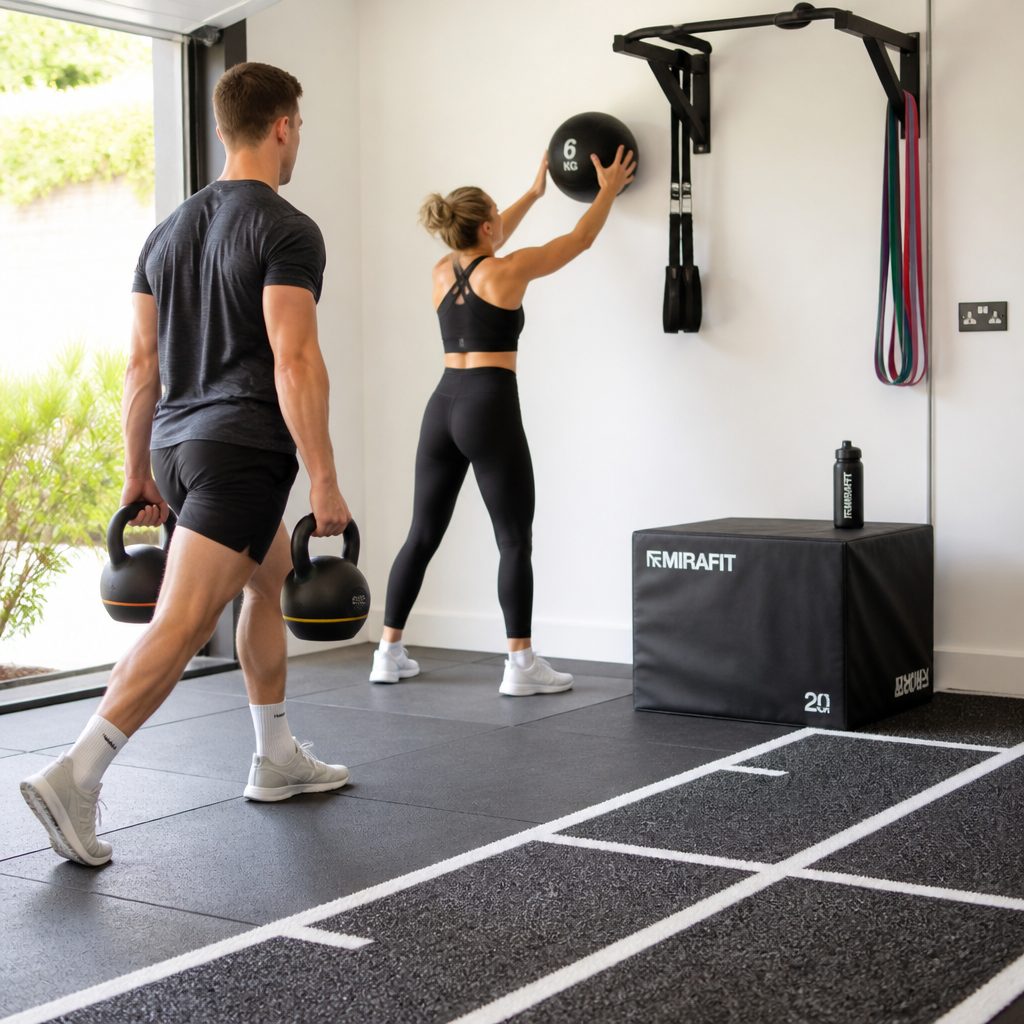
A compact circuit combining carries, wall balls, bands and short runs develops the transitions and repeatable effort that matter far more than owning a room full of specialist machines.
9. Decide which route suits your budget and experience
There is no universal "best" purchase because training history and living arrangements matter. Someone with a garden wall and good overhead clearance can gain huge value from wall-ball practice. Someone in a flat with low ceilings may be better served by a kettlebell, bands and carefully programmed squat-to-press work until they can access a suitable target elsewhere.
Best for the tightest budget
Long loop bands plus one kettlebell. Start with pulling, carries, squats, hinges and lunges. Add a wall ball when your space and training routine are ready for it.
Best all-rounder
One kettlebell, a graduated band set and a wall ball. This is the sensible three-piece build for the widest range of HYROX-relevant work at home.
Best for wall-ball specificity
CENTR x HYROX Competition Wall Ball. Its 35.5cm diameter, double-stitched seams and grippy PVC shell make it the focused option for repeated throws.
Best for experienced lifters
Matching kettlebells over extra accessories. A pair allows more direct farmers-carry practice and makes loading more race-relevant.
Check the latest price and any current bundles on Amazon.
10. Avoid the common budget-build mistakes
The first is buying too many categories at once. You do not need a sled, a rower, a SkiErg, a pull-up tower, a sandbag, a rack and an indoor track to begin useful HYROX preparation. You need a plan and enough equipment to follow it. Every pound directed into clutter is a pound that could have gone into a more durable wall ball or a kettlebell you will still use years from now.
The second is choosing load entirely by ego. Heavy is only useful when you can own the movement. Farmers carries should look purposeful, not like you are trying to transport two bags of cement across a frozen lake. Wall balls should have a repeatable catch and throw. Band pulls should stay smooth instead of snapping you back into the anchor.
The third is ignoring running. A lovely set of kettlebells does not prepare your running legs for HYROX. Keep running in the programme, even if it is simple: easy mileage, short intervals, hill repeats or steady efforts broken up by your home-gym stations. The transitions between running and functional work are where a lot of the event's character lives.
Finally, do not save every difficult session for the weekend. Frequent, manageable exposure beats a single grand punishment session followed by several days of walking downstairs sideways. Build the habit. The fitness follows.
| Tempting purchase | Why it often disappoints in a compact build | More useful first move |
|---|---|---|
| Specialist sled | It needs space, loading and a suitable surface to feel worthwhile. | Use heavy band marches, backwards pulls, hills and strong lower-body work. |
| Single light mini band | Useful for activation, but too limited for progressive pulls and conditioning. | Choose long loops with multiple resistance levels. |
| Random heavy object for wall balls | It will not give you the predictable catch, shape or throw of a proper wall ball. | Use a purpose-made wall ball or separate squat-and-press work safely. |
| One maximal kettlebell | It can rule out quality swings, squats, lunges and longer carries. | Choose a manageable bell first, then progress to matching carries. |
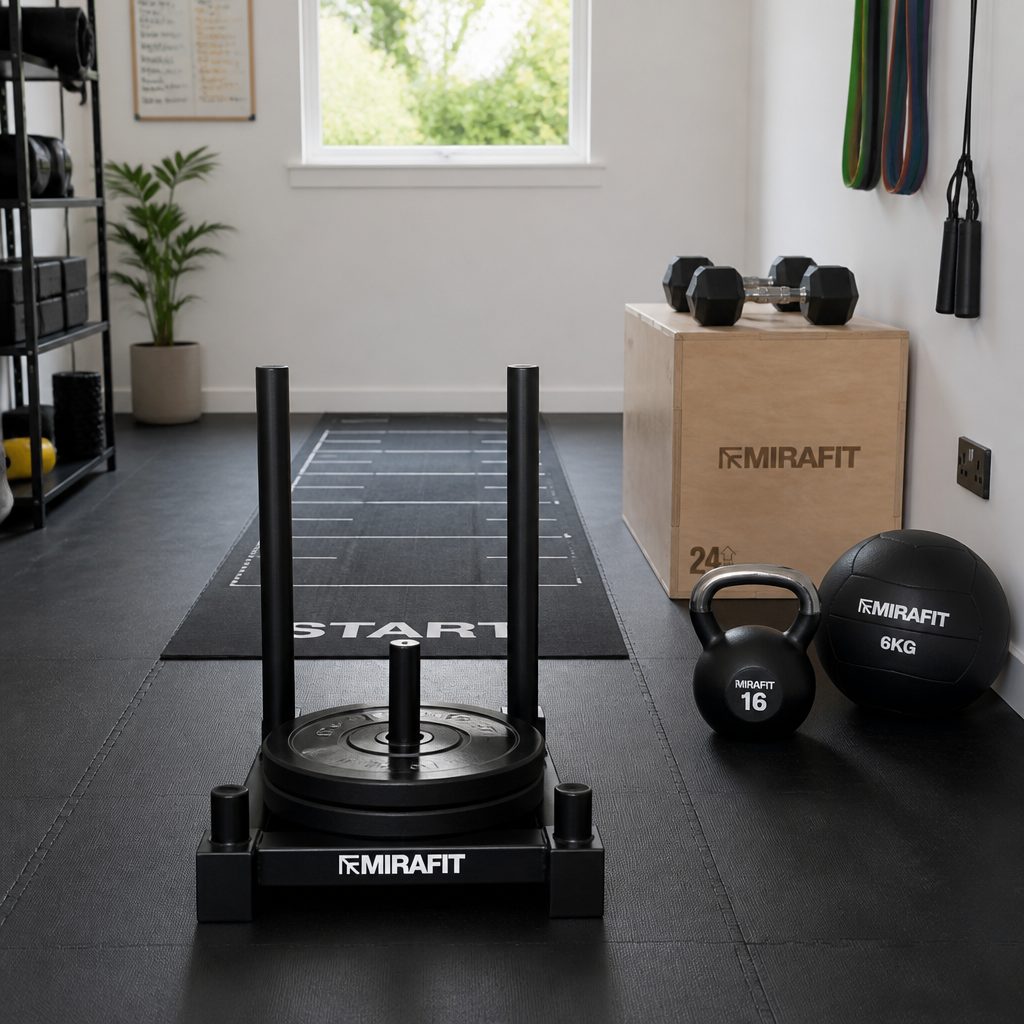
The strongest budget setup is usually the tidiest one: a few reliable tools, a clear training lane and enough room to move well when tired.
11. Frequently asked questions
Bottom line
A HYROX-ready home gym under £300 is entirely realistic when you stop trying to recreate a full event venue in miniature. Make the kettlebell your strength-and-carry workhorse, use long loop bands for pulling and sled-style substitutions, and choose a durable wall ball if your space allows safe throws. Add running, progress patiently and keep the room clear enough that training feels easy to begin. That is not the flashy answer. It is, rather usefully, the one that works.