
How to Choose an Adjustable Dumbbell That Won't Get Recalled
No one can promise that any product will never be recalled. What you can do is buy with your eyes open: understand how the lock works, ask for proper evidence of testing, reject vague safety claims, and build a quick inspection routine before the dumbbells ever reach shoulder height.
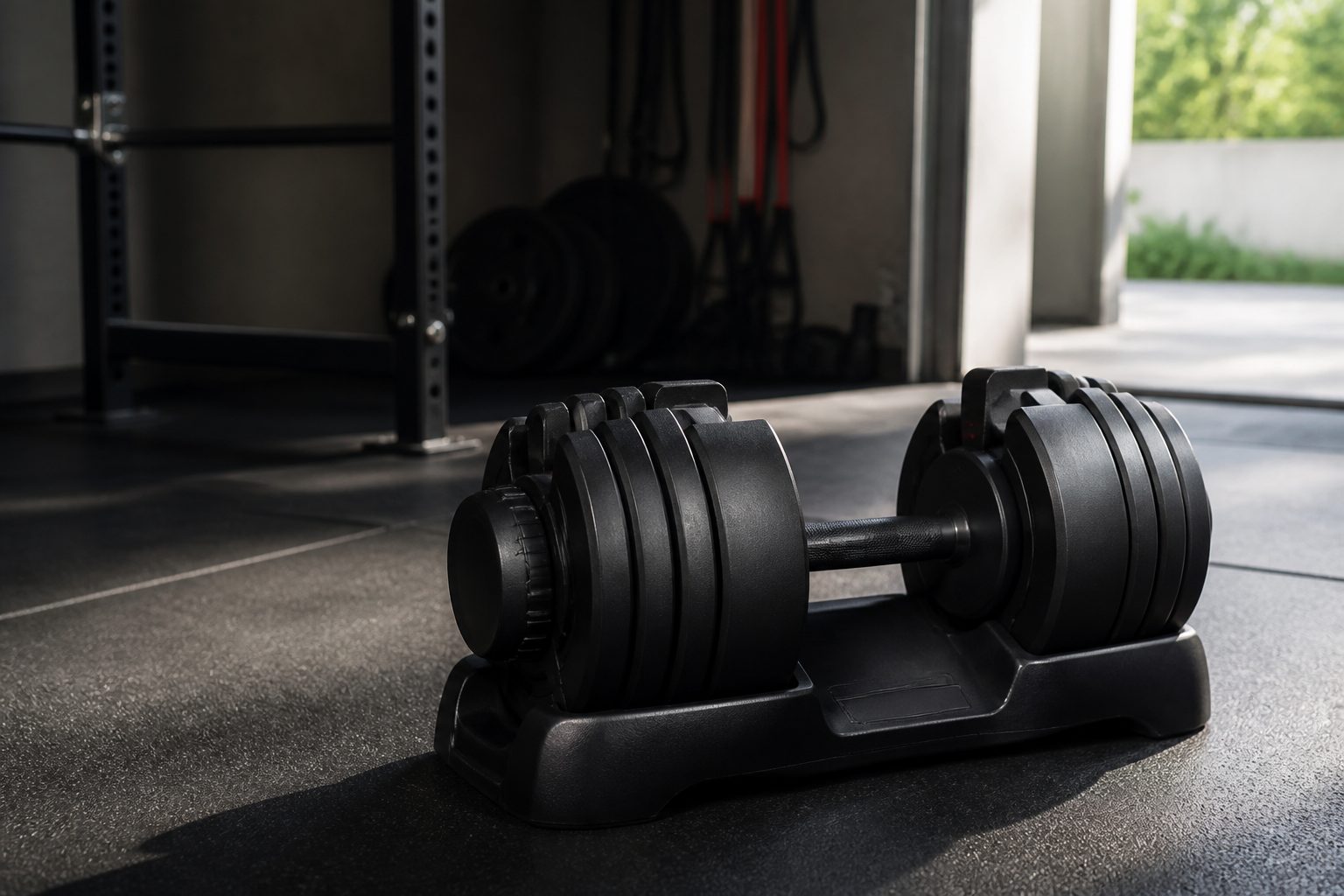
A reliable adjustable dumbbell should feel boringly secure in the hand: the exciting bit is your training, not wondering whether a plate has properly engaged.
 By James Oduya · Staff Writer & Home Gym Columnist · Updated October 09, 2026
1. Start with the BowFlex recall, but do not stop there
Adjustable dumbbells are brilliant bits of home-gym kit when they are well made. One compact pair can replace an awkward little colony of fixed dumbbells, make progressive overload much easier in a spare room, and save you from performing a furniture-moving routine every time you want to train arms. The compromise, of course, is complexity. A fixed dumbbell is essentially a handle with weight attached. An adjustable model adds selectors, cradles, latches, rails, plates and tolerances. More useful parts, but also more parts that need to keep doing their job.
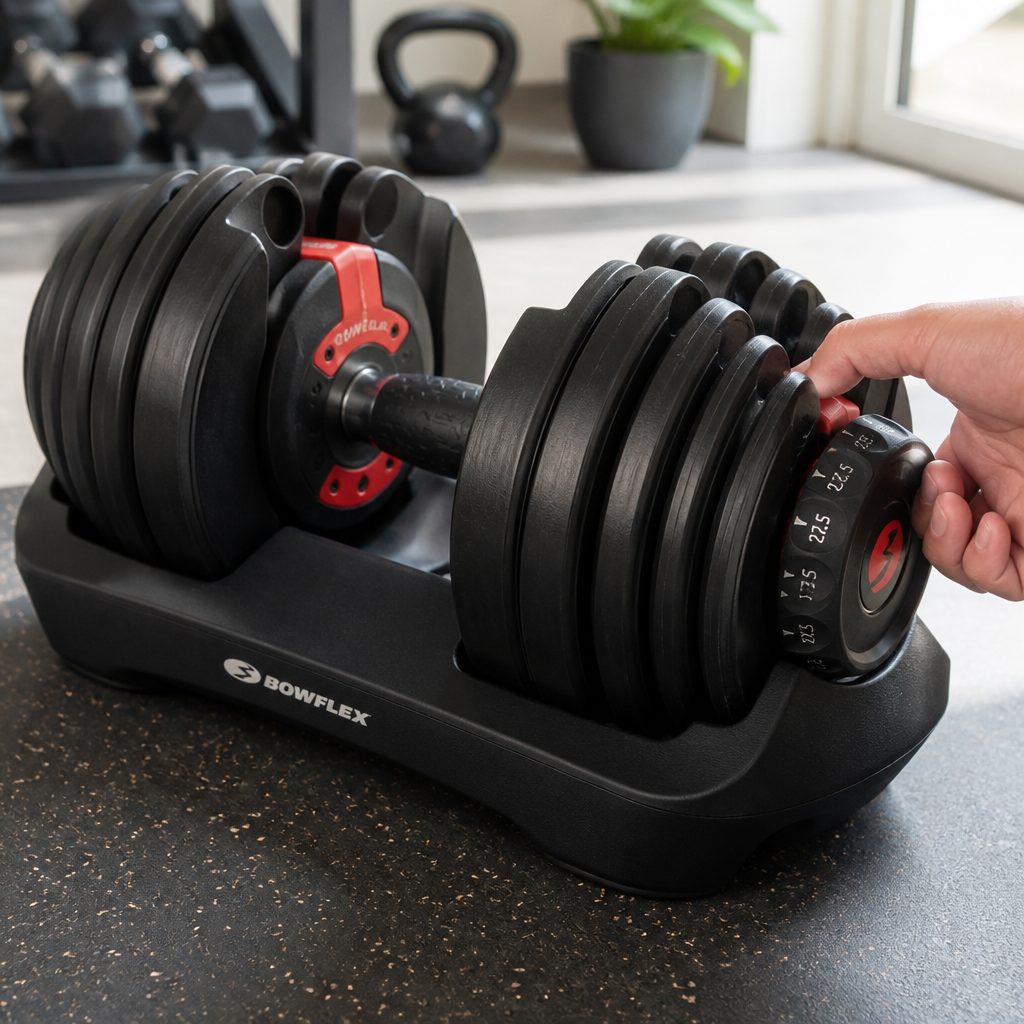
An adjustable dumbbell's cradle and selector mechanism deserve a closer look before purchase; they are the parts responsible for keeping unselected plates behind.
That distinction became much harder to ignore after the June 2025 recall involving BowFlex SelectTech 552 and 1090 adjustable dumbbells. The recall covered 3,844,200 units. Weight plates could detach during use, creating an impact hazard, and there had been more than 100 reports of injuries, including concussions, abrasions, broken toes and contusions. That is not a minor cosmetic defect. It is a direct reminder that a dumbbell's selection system is part of its safety structure, not merely a clever convenience feature.
The sensible aim is not "a dumbbell that can never be recalled". Recalls can arise from faults discovered years after sale. The aim is to reduce avoidable risk by choosing a transparent manufacturer, a straightforward and positive locking design, evidence of standards compliance, and a warranty process that looks like it would still exist if you needed it.
It is worth being slightly fussy here. Not performatively fussy. Just the sort of fussy you would be if someone handed you a loaded barbell with a collar that looked as though it had been borrowed from a garden shed. The dumbbell will travel over your feet, your knees, your chest and, on pressing movements, potentially your face. "It seems fine" is not a quality-control process.
2. Make a short safety brief before comparing models
Before looking at brand names, decide what "safe enough for my training" actually means. This sounds almost tediously practical, which is exactly why it works. Shoppers can get distracted by compact styling, fast changes or a dramatic maximum weight figure, then discover that the mechanism feels vague at the very setting they use most often.
Write down the movements you will perform and the likely conditions. If your adjustable dumbbells will mostly handle goblet squats, rows and controlled floor presses, your demands differ from somebody doing fast alternating presses, heavy one-arm rows or exercises where the bell must be manoeuvred close to the face. This is not an argument for avoiding adjustable dumbbells. It is an argument for choosing one whose engineering suits the job.
- Choose your real working range. Focus on the increments and settings you will use weekly, not only the maximum setting printed in the advert.
- Choose your most demanding movement. Think pressing, overhead work and anything involving a quick reposition between reps.
- Decide whether other people will use them. A mechanism that one careful owner understands may not suit a busy household where someone else will adjust it hurriedly.
- Plan the storage spot. The supplied cradle needs a stable, level surface. An adjustable dumbbell on a tilted shelf is a small problem waiting patiently.
- Set your tolerance for maintenance. If you know you will never inspect a complex selector again after unboxing, favour a simpler system.
A good rule is that the lock should give you a clear, repeatable answer to one question: have the chosen plates actually engaged? The best mechanisms do not require intuition, good luck or an interpretive reading of a half-seated dial. There should be a definite position, a clear click or stop where appropriate, and no ambiguity about whether the handle can leave the cradle with the intended load.
The five-second habit that matters
Before every set, lift the dumbbell just clear of the cradle, hold it vertically, and give it a controlled pause. Look and listen for movement from the selected plates. It is not a drop test and it is not a reason to shake it like a maraca. It is a quick engagement check before you bring the load into your training space.
3. Understand the three common locking systems
You do not need an engineering degree to compare adjustable dumbbells. You do need to know which family of mechanism you are looking at. In broad terms, most models use a dial or handle-twist selector, a selector-pin arrangement, or a plate-loaded spin-lock setup. Each can be useful. Each asks something different of the user and the manufacturer.
Dial and handle-twist systems
These select weight by rotating a dial or handle mechanism while the dumbbell sits in its cradle. They are quick, tidy and very appealing if you change load frequently in a circuit. The important question is whether the rotation positively locks selected plates before the handle leaves the tray. Check for a crisp end position, clean alignment and a mechanism that does not feel rough, reluctant or loose.
Selector-pin systems
These use a physical pin to determine the chosen stack. They are less sleek than some dial designs, but the basic idea is easy to understand: the pin needs to pass fully through the intended location and sit flat. Inspect the pin, its seating point and the surrounding plates. A pin that is bent, loose or only partly engaged should end the session, not start it.
Plate-loaded spin-lock systems
These use separate plates secured by threaded collars. Adjustment takes longer, which is a nuisance in a fast circuit, but the retention method is visible and mechanically simple. Confirm that collars thread smoothly, tighten fully and remain secure during use. They are not immune to user error, but there is less hidden selection hardware between your hand and the plate.
The mechanism you choose should suit your habits. If you love a quick full-body session with repeated weight changes, a well-made twist or dial system can be extremely convenient. If visual confirmation matters more to you than speed, a pin or spin-lock design may feel more reassuring. There is no medal for owning the most complicated dumbbell in the room. Your shoulders will not know. Your toes might, unfortunately.
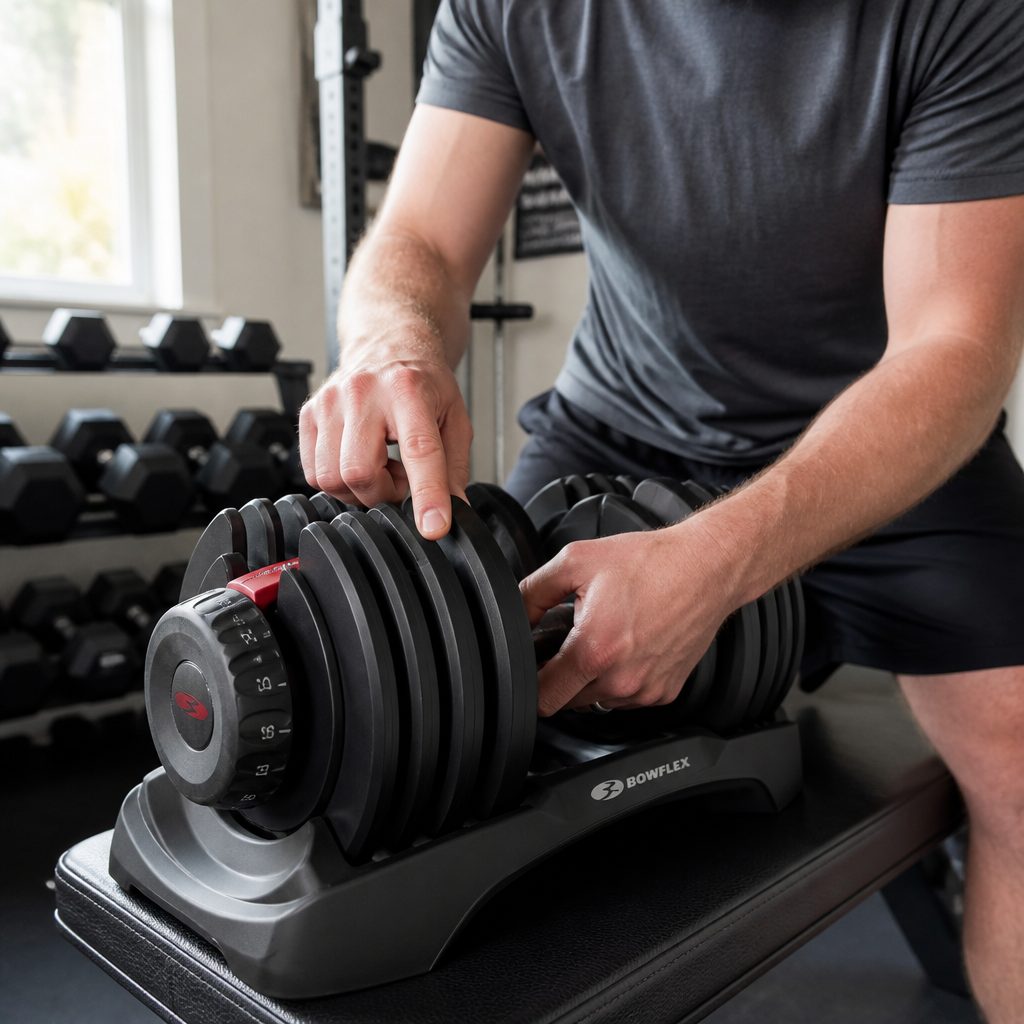
A close-up inspection should focus on plate alignment, selector seating and whether the handle can leave the tray cleanly at each chosen load.
4. Learn how a positive lock should feel in person
Product photos cannot tell you whether a mechanism gives a convincing lock. Reviews can help, but they are not a substitute for handling the dumbbell yourself if you have the opportunity. When you do, resist the urge to jump straight to a few curls. Spend five minutes behaving like a mildly suspicious quality inspector. It is an excellent use of five minutes.
Start with the dumbbell fully seated in its cradle. Change through several settings, including light, middle and heavier selections. Rotate the selector slowly. Does it stop decisively at each position, or can it hover awkwardly between settings? Does the handle lift free without dragging unselected plates? Does it need a wiggle to release? A little care in alignment may be normal for a design, but repeated fiddling is not something to dismiss because the dumbbell otherwise looks handsome.
Then inspect the loaded unit from both ends. Plates should sit squarely rather than appearing cocked, offset or only partly captured. Hold the dumbbell still and look down the length of it. Any rattle, gap or inconsistent plate position deserves a question. A selector mechanism should make the chosen load feel like a single object, not a collection of components that have agreed to cooperate for the moment.
Good signs
- A definite stop or click at the selected setting.
- Selected plates sit evenly and lift together.
- The handle releases cleanly from the cradle.
- Settings change consistently from both ends.
- The manufacturer explains inspection and safe use clearly.
Walk-away signs
- A dial that can rest between positions.
- Plates that rattle or sit visibly out of line.
- A handle that catches, sticks or needs force to remove.
- Cracked plastic, chipped selectors or bent pins on a used pair.
- Safety documentation that is absent, evasive or impossible to obtain.
If you are buying online, read reviews in a slightly different way. Ignore the inevitable "great product, arrived yesterday" comments. Search within reviews for words such as lock, plate, detach, rattle, selector, cradle and warranty. In an analysis of more than 400 Amazon reviews across five adjustable dumbbell products, 23% of negative reviews mentioned locking-mechanism failures, while 8% reported plates falling off. Those figures do not diagnose every model, but they do show where to spend your reading time.
5. Ask for evidence of safety testing, not just a reassuring logo
"Tested for safety" is one of those phrases that sounds helpful until you ask the obvious follow-up: tested by whom, against what, and can I see the documentation? A serious manufacturer should be able to explain its approach rather than relying on a picture of a badge next to a lifestyle photo of somebody doing biceps curls in an aggressively tidy living room.
For products sold in the European Economic Area, CE marking indicates conformity with applicable health, safety and environmental protection requirements. It matters, but it is not magic. Treat it as a starting point for questions, not as the end of them. Ask the manufacturer or retailer for a Declaration of Conformity and for the standards used in testing. The EN 20957 series covers stationary training equipment. EN 957 is another standard family you may see referenced in fitness-equipment documentation. In the United States, ASTM F2276 is a fitness-equipment standard worth asking about when relevant.
It is also sensible to ask whether the manufacturer operates an ISO 9001-certified quality management system. ISO 9001 does not certify that a particular dumbbell is indestructible. What it can indicate is that the business has an established quality-management process intended to produce more consistent outcomes. That is useful context, particularly with a product involving repeated mechanical engagement.
Useful wording for an email: "Please could you provide the Declaration of Conformity and identify the applicable safety standards and test reports for this adjustable dumbbell model? I would also like confirmation of the warranty terms and the process for reporting a locking or plate-retention fault." Clear question, clear paper trail.
Do not be embarrassed to ask. You are not demanding proprietary blueprints or insisting that someone hand-deliver a laboratory report in a velvet folder. You are checking whether a company selling a substantial moving load can answer basic questions about safety and after-sales support. If the answer is vague, delayed or oddly defensive, you have learned something useful before spending anything.
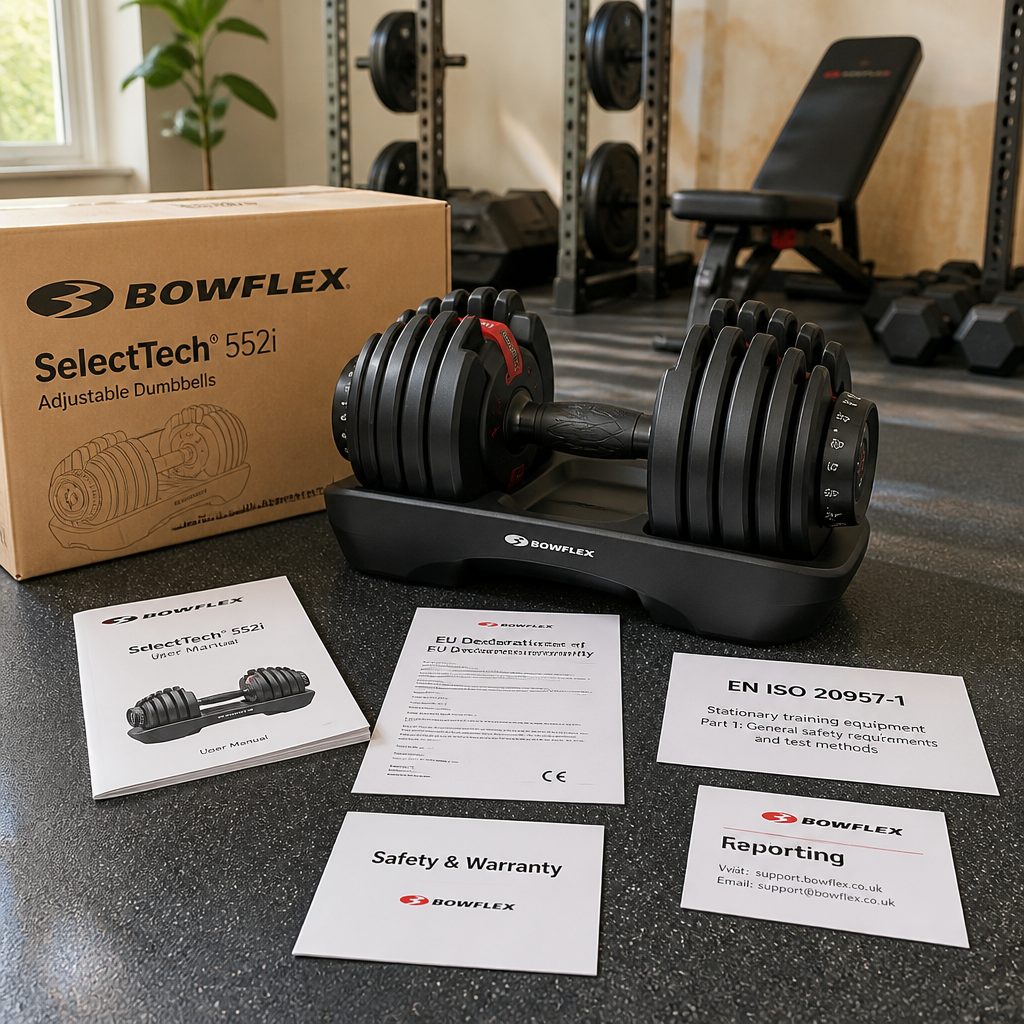
Documentation matters as much as a polished product page: declarations, test standards and a clear fault-reporting route are all signs of a more accountable purchase.
6. Compare credible adjustable-dumbbell designs on the things that matter
The point of a comparison is not to declare one universal winner. Your priorities may be rapid changes, a high ceiling for strength work, a visible selector, or simply a warranty that inspires confidence. The models below illustrate the different approaches available, using published details rather than guessing at hidden specifications.
| Model | Maximum stated weight | Selection system | Published warranty detail | Useful safety context |
|---|---|---|---|---|
| REP × Pépin | 125 lb | Handle twist | Lifetime frame warranty | Described as drop-rated; suited to buyers wanting a high-capacity premium design. |
| NÜOBELL 80 lb | 80 lb | Handle twist | Four-year warranty | A twist-adjustment approach for people who value fast changes between exercises. |
| REP QuickDraw | 60 lb | Lock-N-Load steel switches | Lifetime warranty | Steel switching hardware and a clearly stated long-term warranty are reassuring details to investigate. |
| PowerBlock Pro 50 | 50 lb | Selector pin | — | A direct selector-pin format for buyers who prefer visible, uncomplicated adjustment. |
| Snode AD80 | 80 lb; 85 lb with add-ons | Magnetic, without physical pins | Five-year warranty | Published as drop-proof from 32 inches; still inspect and use any model exactly as instructed. |
There are a few things not to infer from this table. A bigger maximum weight is not automatically safer. A lifetime warranty does not remove the need for a pre-lift check. And a model with no published recall history is not a guarantee against a future issue. What the comparison does show is that locking architecture and manufacturer support differ meaningfully. That should affect your shortlist much more than a glossy photo or a claim that the dumbbells "feel professional".
Trulap uses a handle-twist system, whilst BrainGain SmartBells uses a single dial that seats plates with a definite click. The SmartBells range also carries a 36-month warranty, and SmartBells Pro scored 95/100 in independent SaferBuy testing. These are the kinds of concrete details worth collecting: how the selection engages, whether engagement can be sensed or seen, and what third-party or warranty support exists after the sale.
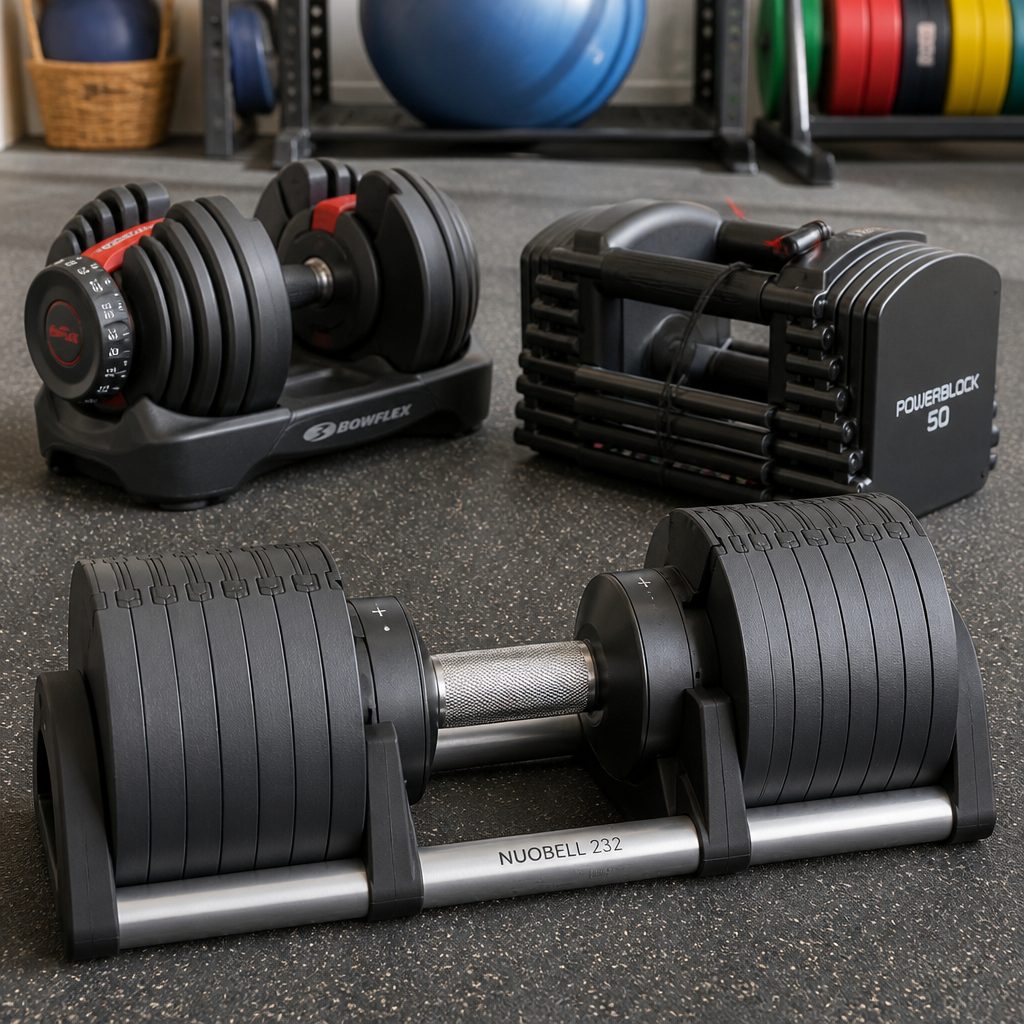
Different mechanisms can all work well, but they should be compared by the certainty of their engagement and the clarity of the maker's support, not by looks alone.
7. Match the best type of dumbbell to your training and risk tolerance
"Best" is annoyingly personal with adjustable dumbbells. The neatest selector for a circuit enthusiast may not be the one a cautious beginner wants. The strongest lifter in the house may outgrow a compact range quickly. And the person who trains at six in the morning before work may reasonably prize fast weight changes over almost anything else, apart from not dropping a plate on their foot before coffee.
Best for cautious beginners: PowerBlock Pro 50
The selector-pin format is easy to understand visually. It is a sensible starting point for someone who values a straightforward adjustment concept and intends to build the habit of checking the pin before every lift.
Best for rapid changes: NÜOBELL 80 lb
A handle-twist system suits training with frequent load changes. Treat smooth operation and full engagement as non-negotiable, particularly when moving from one exercise to the next without much rest.
Best premium strength pick: REP × Pépin
Its stated 125 lb maximum, handle-twist system and drop-rated description make it the high-capacity choice for experienced home lifters who need room to progress.
Best for warranty-focused buyers: REP QuickDraw
Its Lock-N-Load steel switches and lifetime warranty make it a sensible model to investigate if durable selection hardware and long-term support top your list.
For a buyer who wants the most visible and mechanically direct approach, plate-loaded spin-lock dumbbells remain worth considering too. They are slower, and that is the point for some people. You manually load the plates, you tighten the collars, and you see what is holding the load together. They make less sense for a rapid metabolic circuit, but they can make plenty of sense for steady strength training where changes are infrequent.
Whatever you select, do not buy a capacity you will never need simply because the number looks impressive. A dumbbell that is comfortable to handle, quick enough for your programme, and consistently secure at your actual working loads is the better home-gym tool. Your future self does not need to admire the maximum figure from across the room.
8. Inspect a new or second-hand pair before training properly
The first workout is not the first time you should discover how the adjustment system behaves. New equipment can arrive damaged in transit. Used equipment can look excellent in a listing photo whilst hiding a worn selector, cracked tray or damaged plate edge just outside the frame. Adjustable dumbbells deserve an acceptance check before they earn a place in your programme.
With a new pair, keep packaging until you have tested both dumbbells across their ranges. Read the supplied manual before improvising. Yes, manuals are rarely thrilling. Neither is a warranty dispute in which you discover that a particular use or handling procedure mattered. Assemble or position the cradles on a flat, solid surface, then test each adjustment slowly and methodically.
- Check both dumbbells at their lightest, a middle selection and their heaviest selection.
- Rotate or insert selectors only with the dumbbell fully seated in its cradle, unless the manual specifically says otherwise.
- Check that selected plates rise with the handle and unselected plates remain in the tray.
- Listen for clicking, scraping, grinding or a metallic rattle that was not present on the other dumbbell.
- Look for cracked housings, chips around selection points, loose fasteners, warped trays or bent pin components.
- Compare left and right dumbbells. They should behave alike rather than requiring different rituals to choose the same load.
Second-hand buyers need to be firmer. First, identify the precise model and confirm it is not affected by an active recall. Do not accept "I think it's the newer one" as identification. Ask for clear photos of model labels, selectors, handles, trays and every plate section. If possible, inspect in person and run every weight setting. A bargain becomes a very expensive paperweight if its selection mechanism is compromised.
Used-buying rule
If the seller will not let you test the complete adjustment range, treat that as a reason not to buy. Adjustable dumbbells are not the place to purchase on faith, no matter how persuasive the listing's phrase "barely used" happens to be.
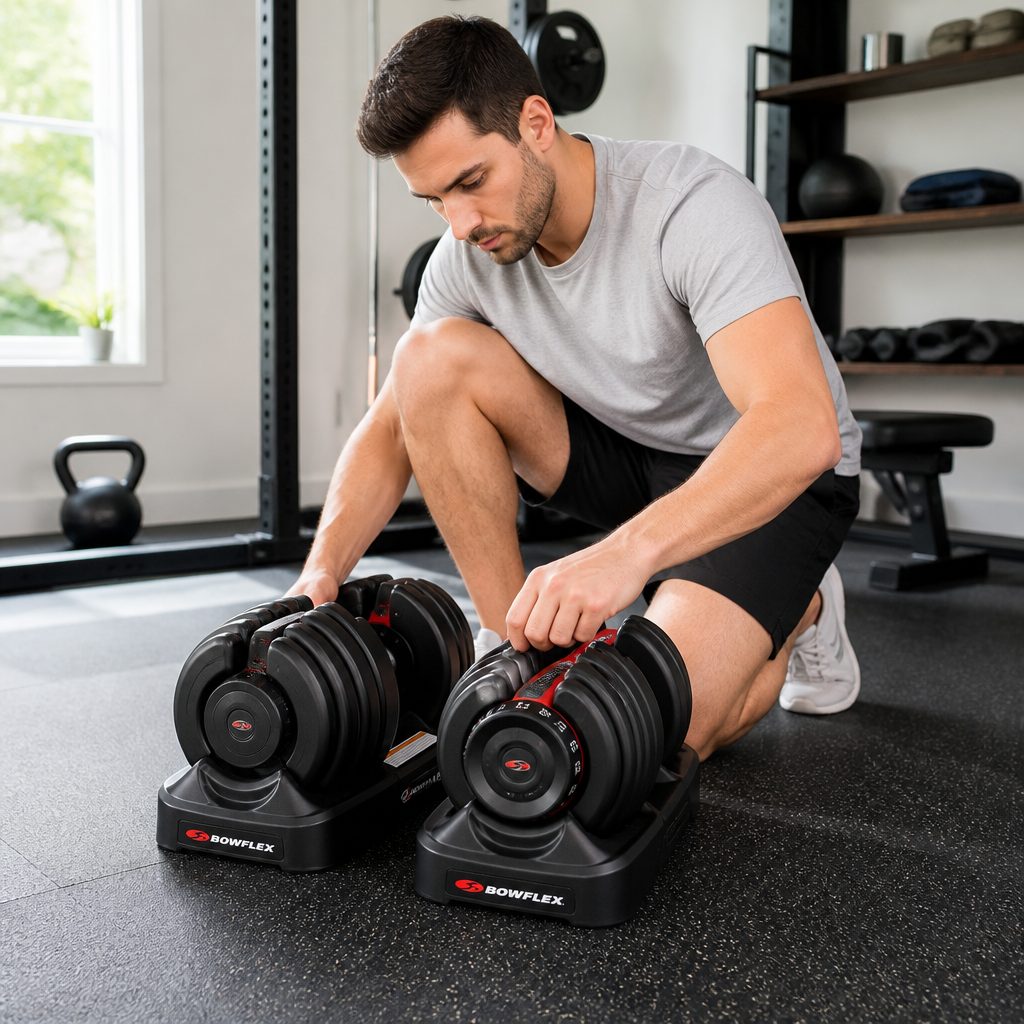
When examining a used pair, test every selector position rather than merely lifting the dumbbell at one convenient setting for a few seconds.
9. Build safe habits that protect the mechanism over time
Choosing well is only half the job. A perfectly sound adjustable dumbbell can be damaged by careless handling, and repeated small knocks have a way of becoming somebody else's problem later. Follow the manufacturer's instructions about use, storage and any stated drop guidance. "Drop-rated" is not an invitation to use the dumbbells as soft kettlebells. It is a description of testing, not a personal challenge.
Return the dumbbells to their cradles in a controlled manner. Avoid dropping them from the last few centimetres because you are tired, late or attempting to preserve the rhythm of a playlist. Keep the cradle free from grit, loose screws, pet hair and anything else that could affect how the plates seat. A quick wipe-down is not glamorous maintenance, but grime around a moving selector is a silly way to create uncertainty.
Every few weeks, especially if you train often, repeat your basic function check. You are looking for change: a new wobble, a dial that no longer reaches its positive stop, a selector that feels rough, a plate that sits differently, or a tray that has developed a crack. If anything changes, stop using the dumbbell until you have checked the manual, contacted the manufacturer or arranged a remedy. Do not train around a fault. There are plenty of exercises; there is only one set of feet.
Finally, register the product if the manufacturer offers registration, retain the purchase record, and keep the model information somewhere easy to find. If a safety notice is ever issued, you want to know exactly what you own and how to contact support. This is one of those dull little admin jobs that takes a few minutes once and can save a ridiculous amount of confusion later.
10. Know when to stop using an adjustable dumbbell immediately
Not every odd noise means disaster, but there are a few symptoms that should stop a session straight away. A selected plate that shifts independently, a selector that skips past a setting, a pin that will not fully seat, a newly cracked component, or a dumbbell that cannot return cleanly to its cradle all belong in the "stop and investigate" category.
Do not try to fix a structural or locking fault with tape, glue, a tightened random screw or an internet hack involving an elastic band. That is not maintenance; that is introducing a new unknown into an already compromised load-bearing system. Contact the manufacturer, retailer or warranty provider with photos and a concise description of the setting and movement involved. If there is a recall or safety instruction relevant to your model, follow it precisely.
Never test a suspected fault above your body. If you must check whether a selected load is stable before contacting support, keep the dumbbell low, clear of feet and on a controlled surface. Do not take a questionable unit to a bench, shoulder press or overhead extension in the hope that it will somehow prove itself.
This is also where a real warranty earns its keep. A good policy is not merely a line in small print. It should give you a workable route to report an issue, explain what evidence is needed, and provide a meaningful response. Before buying, take two minutes to find the warranty wording and support contact details. If that information is difficult to locate now, it will not become easier to locate when something has gone wrong.
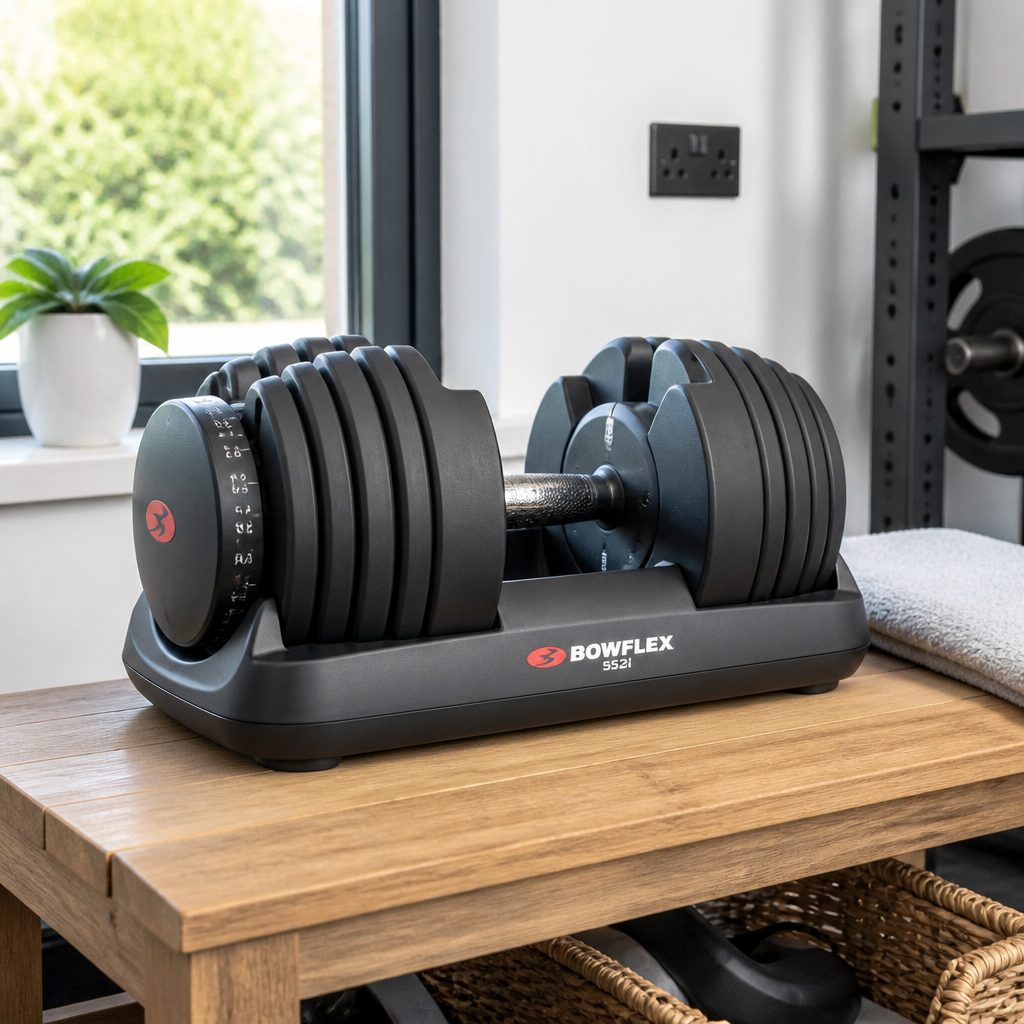
Safe storage is part of safe ownership: keep cradles level, clean and away from clutter that could prevent the dumbbell seating correctly.
11. Frequently asked questions
The bottom line
The best adjustable dumbbell is not the one with the flashiest selector or the biggest claim on the box. It is the one whose plates lock with a clear, repeatable action; whose maker can provide meaningful safety and warranty information; and whose mechanism you are willing to inspect before every session.
The 2025 BowFlex SelectTech 552 and 1090 recall was an important reminder that convenience hardware needs to be treated as safety hardware. Choose a positive locking design, check compliance documentation, test every setting from day one, and stop using the dumbbell at the first sign of a changing mechanism. That is not being overly cautious. That is simply good home-gym ownership.