
The Best Recovery Wearables That Don't Charge a Monthly Fee
A recovery wearable should help you decide whether today is the day to push, cruise or leave the barbell alone — not add another recurring bill to your training life. These four screen-free bands put sleep, heart rate and readiness data in their apps without locking the useful bits behind a monthly subscription.
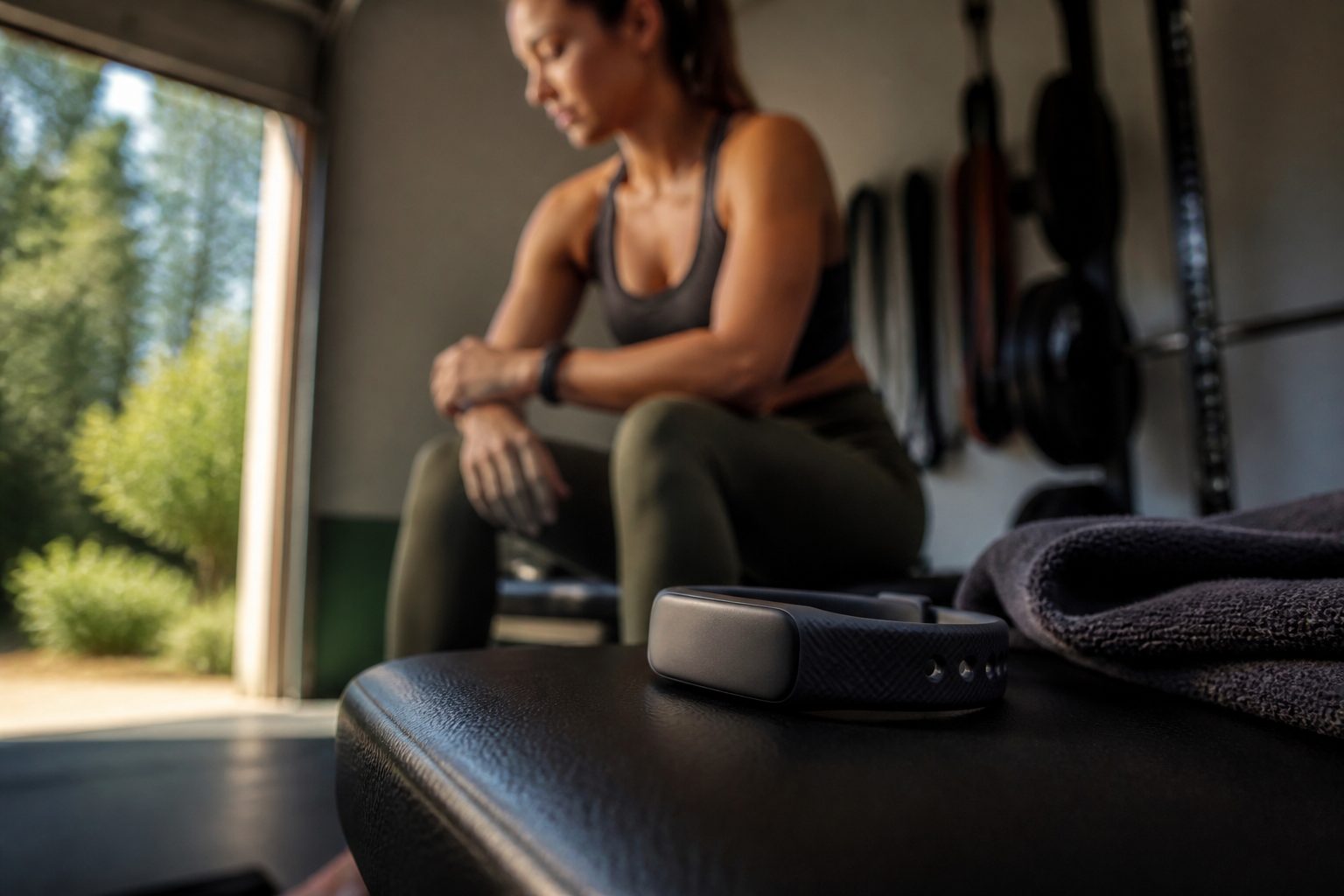
Screenless recovery bands keep the health tracking and lose the distracting miniature watch face — a useful change if you want your wrist back during the rest of the day.
 By James Oduya · Staff Writer & Home Gym Columnist · Updated September 24, 2026
Why subscription-free recovery tracking matters
There was a time when a fitness tracker did one obvious thing: you bought it, wore it and looked at the data. Then recovery tracking became fashionable, which was largely good news. Better sleep context, heart-rate variability trends and sensible prompts to ease off can be genuinely helpful when you train regularly. The less charming development was discovering that some of your own overnight data now lived behind a permanent monthly charge.
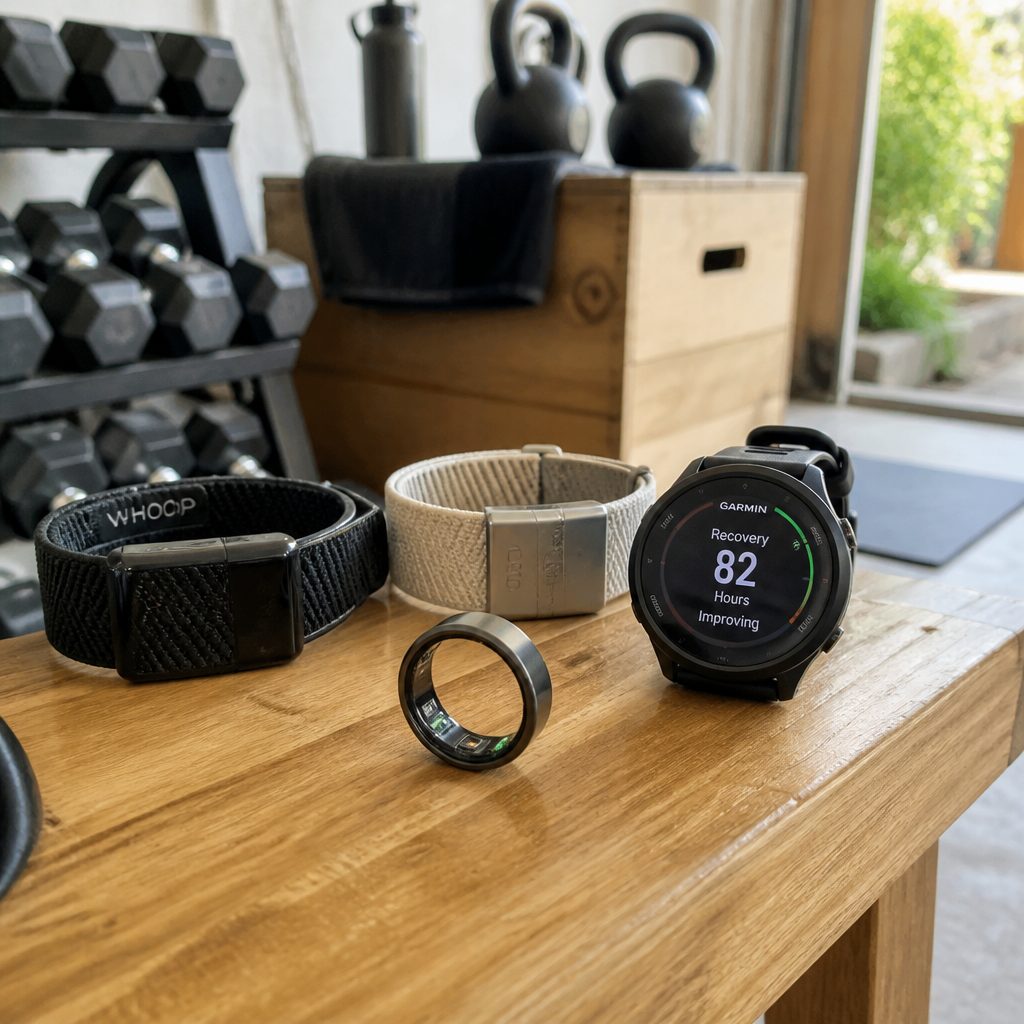
The best choice is the band you will wear through ordinary weeks, hard weeks and the occasional week when recovery is mostly tea and an early night.
I understand the appeal of a polished subscription service. A good readiness score can turn a messy collection of numbers into a clear training decision. But if you are already paying for a gym, classes, nutrition, perhaps a coach and the occasional pair of trainers you absolutely did not need, another ongoing fitness bill can become irritating rather quickly. Especially when the wearable itself was not cheap in the first place. Your recovery should not feel like a streaming service with worse plotlines.
The good news is that the screenless band category had become far more interesting by September 2026. Garmin CIRQA, Polar Loop, Google Fitbit Air and Amazfit Helio Strap all took the deliberately quiet route: no watch face, no app alerts nudging you at dinner, and no expectation that you should stare at your wrist between sets. Their work happened in the background. You reviewed it later, when a little perspective was available and you were not halfway through a deadlift.
They were not interchangeable, though. Garmin was the broadest training-minded option, with its familiar readiness ecosystem. Polar was the most focused on mature recovery interpretation. Fitbit Air was the smallest and lightest route to continuous health monitoring. Amazfit's Helio Strap was the value-led choice, with generous storage and an unusually long claimed battery figure. The right one depended less on the brand name and more on what you hoped the band would change about your training decisions.
A sensible expectation: no wearable can diagnose illness, prescribe training or perfectly quantify "recovery". These devices are most useful as trend tools. Look for several nights of poor sleep, a sustained HRV change or an elevated resting pattern alongside how you actually feel, rather than treating one low score as a formal instruction to cancel leg day.
What makes a good WHOOP alternative?
For this sort of wearable, the absence of a display is not a compromise in the usual sense. It is the point. A recovery band should be comfortable enough to wear to bed, discreet enough for work and simple enough that you do not keep fiddling with it. If you primarily want a running map, music controls, live pace or incoming calls, buy a sports watch. These bands are for people who want the data gathering without the wrist-based theatre.
There are five things I would prioritise. First is overnight comfort: sleep data is central to recovery, so a device that ends up on the bedside table tells you precisely nothing. Second is sensor coverage. Heart rate, sleep and HRV are the core trio here; skin temperature, oxygen-related tracking and respiration can add context, but they should not distract from the fundamentals.
Third comes the quality of the interpretation. Raw HRV can be useful for experienced athletes, but most of us benefit from an app that explains whether the trend is normal for us. Fourth is battery life, because charging gaps create data gaps. Finally, and very much not least, comes ownership. All four picks here deliver their central health and recovery proposition without a compulsory monthly membership.
Sleep is the foundation, not an optional extra
Recovery scores are only as useful as the overnight picture beneath them. Sleep staging, regularity, disturbances and naps can all make the following day's recommendation more believable than a score generated from one isolated workout.
HRV is best read as a personal trend
A number that looks high or low on paper matters less than whether it has moved away from your normal baseline. Give a new band time to learn what a typical week looks like before allowing it to influence hard training.
Training context separates useful advice from generic advice
The stronger options connect recovery to load, activities and sleep. That matters if you train four times a week, because a poor night after an easy walk means something rather different from a poor night after heavy squats.
At-a-glance: the four subscription-free bands
Before getting into the ranked picks, here is the practical snapshot. Battery figures are manufacturer claims where stated, rather than a promise that every wearer will see identical results. Sleep settings, pulse oximetry use, workout volume and syncing habits can all move the final result. Still, this is a very useful first filter if the charger drawer is already full enough.
| Feature | Garmin CIRQA Smart Band | Polar Loop | Google Fitbit Air | Amazfit Helio Strap |
|---|---|---|---|---|
| Best suited to | Gym regulars who want broad training context | Recovery-led athletes who value Polar Flow | Minimalists wanting the lightest option | Value-conscious users wanting long stretches between charges |
| Claimed battery life | 10 days | 8 days | Up to 7 days | Not stated |
| Weight | 20g | 29g | 12g without strap | Not stated |
| Core recovery tools | Training Readiness, HRV Status, Body Battery and recovery time | Nightly Recharge, Training Load Pro and SleepWise | Sleep, heart rate, skin temperature and background AFib detection | HRV, sleep tracking and recovery tracking |
| Screen and controls | Screenless with a manual side button | No display, buttons or notifications | No screen or buttons; haptic motor and status lamp | Screen-free |
| Water resistance | Not listed here | WR30 | 50 metres / 5ATM | Not stated |
| Data storage | Not stated | Up to 4 weeks | Not stated | 21 days offline |
A blank-looking category is not a negative judgement. It simply means there is no specification included here for that particular comparison point. Do not make a buying decision on a feature you have not verified for the exact band and region you are considering.
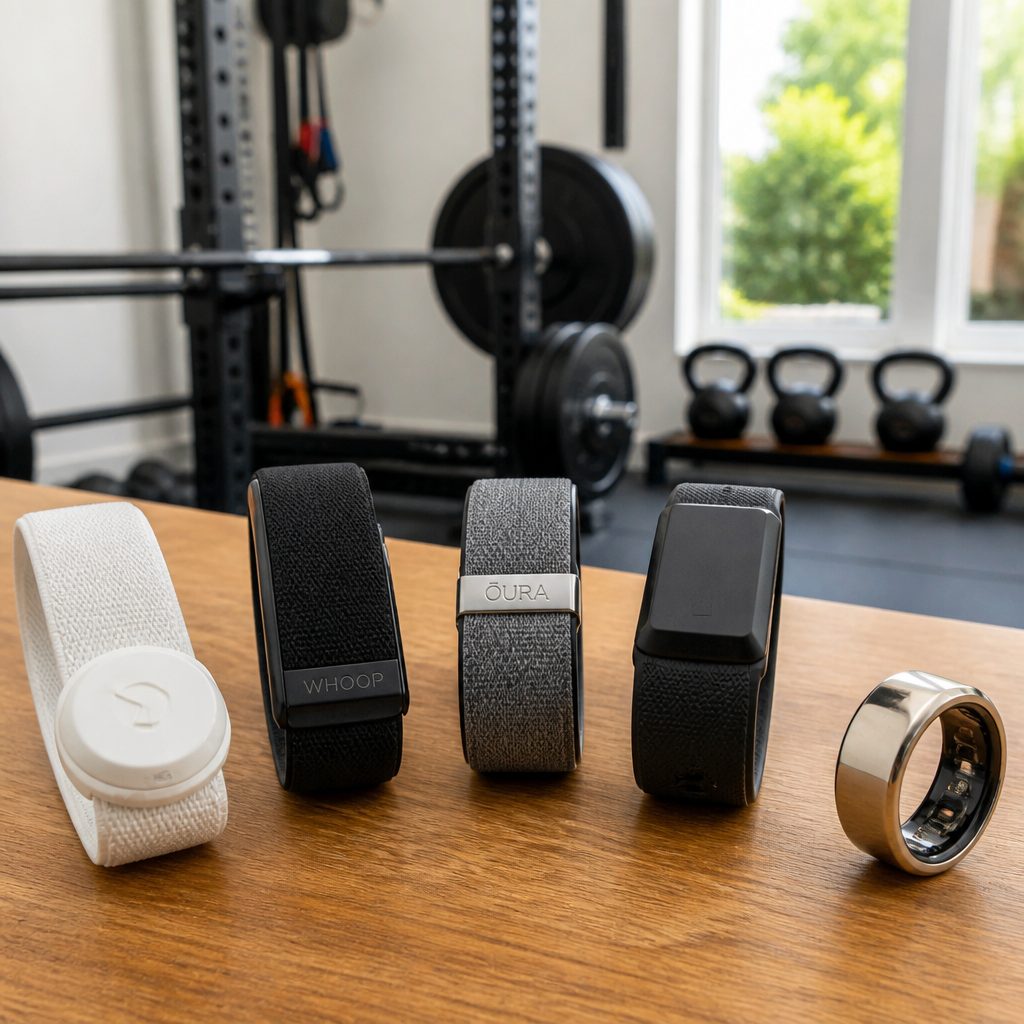
The key comparison is not simply battery life: it is whether the band's interpretation of sleep, effort and readiness matches the way you actually train.
Battery comparison: less charging, more consistent trends
It sounds mundane, but charging is one of the biggest reasons wearable data becomes patchy. Miss a night and you lose the sleep record. Miss the following morning and you lose the recovery context that should have followed it. A band with a longer claimed run time is not automatically better, but it does leave more margin for ordinary human behaviour. We have all said "I'll charge it later" and then absolutely not done that.
Garmin's claim of 10 days was the headline figure among the confirmed claims here, though enabling Pulse Ox could reduce endurance. Polar's eight-day figure was still properly practical, and its capacity to retain up to four weeks of data was reassuring if you occasionally leave your phone behind. Fitbit Air's seven-day claim was independently achieved with between two and four hours of workouts each day, which is a far more useful real-world detail than a best-case estimate from a laboratory desk.
Fitbit also said a five-minute charge could deliver a full day, whilst a complete charge took 90 minutes. That is excellent damage control for the person who notices an empty battery just before bed. If sleep tracking is your central reason for buying, that small convenience may prove more valuable than an extra theoretical day of battery life.
Ranked picks: the best recovery bands without a monthly fee
1. Garmin CIRQA Smart Band — Best for gym-goers who want the fullest training picture
Shop Garmin CIRQA Smart Band on Amazon UK
Garmin CIRQA was the most complete choice for the person whose training week contains a bit of everything: strength work, conditioning, walks, perhaps a run at the weekend and a vague intention to stretch more. It delivered Garmin's familiar stack of health and training metrics in a properly screenless format, so you got continuous heart rate, HRV, sleep stages, stress, respiration, skin temperature and optional Pulse Ox information without a miniature smartwatch constantly asking to be noticed.
The meaningful feature here was Training Readiness. Rather than forcing you to interpret sleep quality, HRV status, recovery time and acute load separately, Garmin combined them into a daily score. That is not magic, and it should not overrule your body, but it is a useful starting point. If you woke up feeling flat and the app also showed depleted recovery, it might be a good day for technique, easy cardio or a walk instead of trying to make personal records happen through spite.
CIRQA also supported more than 80 activity types via its side button. The adaptive activity classification could learn regular routines more accurately as you edited activities in the app, which made it a better fit for a varied gym routine than a recovery device that treats all movement as anonymous exertion. The option to wear it on the biceps was particularly welcome for anyone who dislikes wrist wearables during lifts, wears lifting straps or simply finds a fabric band more comfortable higher on the arm.
There were caveats. Pulse oximetry was switched off by default because it affected battery life. Breathing Variations, which monitored possible sleep breathing disturbances, needed Pulse Ox enabled and roughly three days to establish a baseline. Skin-temperature information also needed a similar bedding-in period. That is entirely reasonable, but it does reinforce a wider point: do not expect a brand-new recovery band to know you on night one. Give it a fortnight of normal life before drawing firm conclusions.
Pros
- Excellent breadth of sleep, recovery, health and training context in Garmin Connect.
- Training Readiness combines the metrics gym-goers most often want help interpreting.
- Biceps-band option is useful around weights, straps and wrist wraps.
- Claimed 10-day battery life reduces the risk of missing overnight data.
Cons
- Pulse Ox affects battery life and is disabled by default.
- Several temperature and breathing insights need a baseline before appearing.
- The screenless design means all detailed review happens in the app.
The important distinction is that Garmin's core health, activity, sleep and training metrics worked without a required subscription. Garmin Active Intelligence sat separately within an optional Connect+ plan, but Training Readiness and Body Battery were core tools rather than a tease behind a paywall. For most people leaving WHOOP specifically because they want to buy a thing and then simply own it, CIRQA was the best all-round answer.
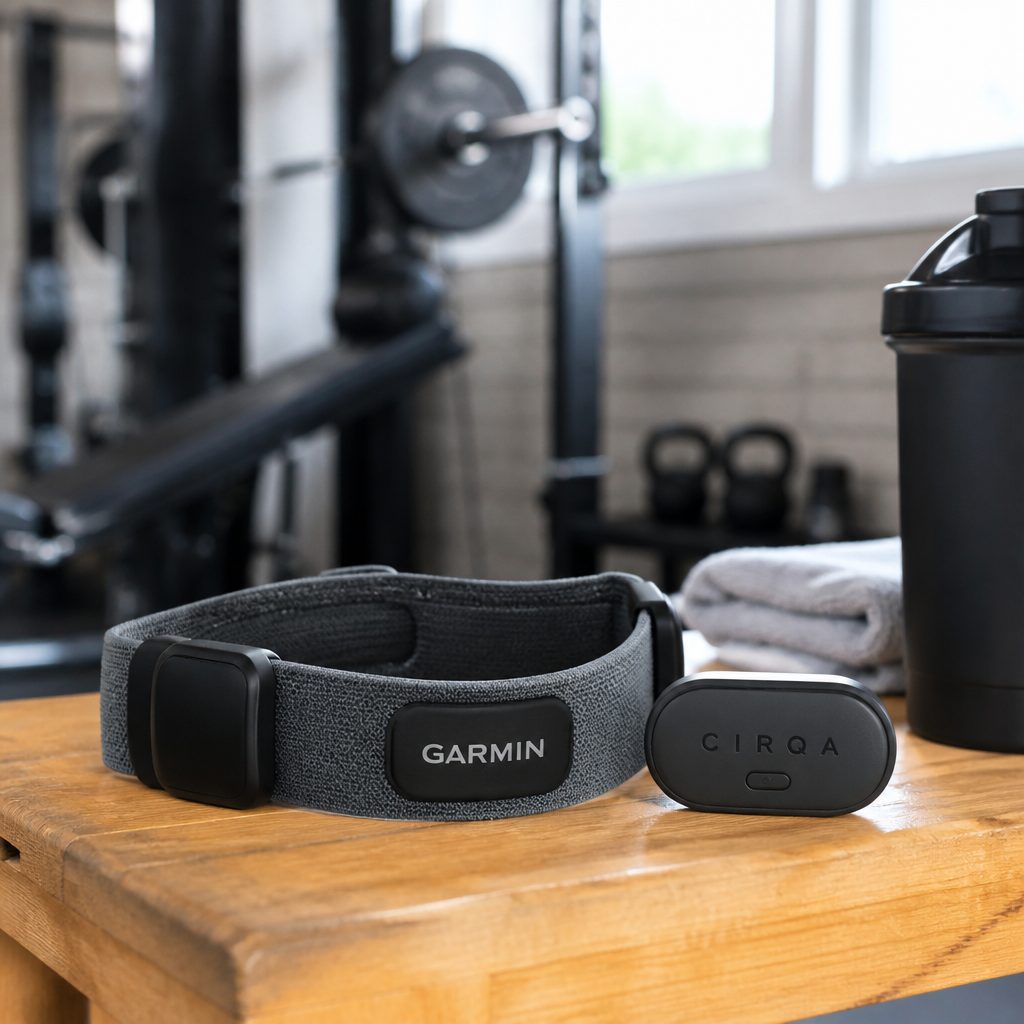
Garmin CIRQA makes the most sense for lifters and mixed-discipline gym users who want recovery data connected to a wider training picture.
2. Polar Loop — Best for recovery-first athletes who prefer calm, mature coaching
Polar Loop was the purist's choice. It had no display, no buttons and no notifications. Not even a token little screen to tell you the weather, which frankly feels like admirable commitment to the assignment. It was a 29-gram woven band built around Polar's Precision Prime optical heart-rate sensor, and its focus was clear: quietly gather reliable day-and-night data, then let Polar Flow make sense of it.
Polar had long been very good at making recovery feel practical rather than mystical. On the Loop, Nightly Recharge brought together overnight recovery signals, Training Load Pro put your exercise into context and SleepWise looked at the role of sleep in daytime alertness. None of these core tracking and analysis tools were held back by a subscription. Polar did offer an optional Fitness Program service, but that was an add-on rather than a toll booth placed in front of the reason you bought the band.
The eight-day claimed battery life was solid, charging happened via USB-C and the band could store up to four weeks of data at a time. WR30 water resistance made it suitable for showering and swimming. There were extra bands available, which is useful because a recovery tracker needs to be worn consistently; the right fabric and fit matter more than people tend to admit when browsing product pages.
Polar's sensor approach was also well suited to the task. Precision Prime had been designed to deliver more stable readings during movement, and the company positioned the technology as lab-tested, peer-reviewed and proven in real-world use. In practical terms, it was a reassuringly serious heart-rate platform for the person who cared more about dependable trends than colourful app graphics.
There was one limitation worth being plain about. Accuracy on the biceps was solid across most training scenarios, but optical readings could degrade in open-water swimming and upper-body strength work, where arm and wrist movement can disrupt the signal. That is a common optical-sensor issue, not a peculiar failing of Polar alone. Still, if your programme revolves around violent kettlebell work, pull-ups, Olympic lifting or swimming outdoors, no wrist-or-arm optical wearable should be treated as flawless.
Pros
- Polar's Nightly Recharge, SleepWise and Training Load Pro form a deeply useful recovery suite.
- Every central Loop feature is available in the free Polar Flow app.
- USB-C charging, swimming suitability and four weeks of data storage are thoroughly practical.
- Minimal design avoids notifications, buttons and distractions altogether.
Cons
- It cannot broadcast heart rate to external devices.
- Optical tracking can suffer during open-water swimming and some upper-body lifting.
- There is no on-device control at all, which will not suit everyone.
Choose Polar Loop if recovery is the centre of your buying decision, rather than an add-on to a sprawling smartwatch replacement. It was especially appealing for people who train consistently, sleep imperfectly and want a calmer explanation of the relationship between the two. Polar Flow did not try to turn every minute of your day into a competition. Sometimes that is exactly what you need.
3. Google Fitbit Air — Best for minimalists who want the lightest health tracker
Shop Google Fitbit Air on Amazon UK
Google Fitbit Air took minimalism further than the others. At 12g without its strap, it was the lightest band in this guide and Google described it as its smallest tracker yet, with a footprint 25% smaller than the Fitbit Luxe. Its compact dimensions were 1.4 by 0.7 by 0.3 inches. Numbers like that sound rather abstract, but the everyday implication is simple: this was the option least likely to feel like you had strapped a gadget to yourself for the night.
There was no screen and no button. Instead, Fitbit Air used an onboard motor for haptic alerts and a status lamp that illuminated while charging. That stripped-back hardware made sense for overnight wear. A bright display is not a recovery feature, no matter how sharp the pixels are. It is mostly an opportunity to read the time at 3am and then wonder whether you should be asleep. You should. Put the wrist down.
Underneath the simple shell, Fitbit Air combined an optical heart-rate reader, blood oxygen-related sensors, skin-temperature sensing, a gyroscope and an accelerometer. It tracked the essentials for sleep and everyday health, whilst background AFib detection continuously monitored heart rhythm and could flag irregular rhythms without you needing to start a reading. It was FDA certified, although it was not intended for people under 22 or those with known arrhythmias. That feature adds useful health awareness, but it does not turn a fitness band into a replacement for medical care.
For gym users, the claimed seven-day battery was more credible than it might initially sound. Independent testing confirmed seven days with two to four hours of workouts per day, and Google said workout time had no meaningful effect on battery life. It also offered 50-metre, 5ATM water resistance, so sweat, showers and pool sessions were not delicate special occasions for the band.
The comfort test matters more than the feature list
If you repeatedly remove a wearable overnight because it catches on bedding, presses into your wrist or simply feels fussy, its recovery system becomes irrelevant. Fitbit Air's strongest case was that it made continuous wear easier. A smaller device with complete data is better than a feature-packed one that spends three nights a week charging on the kitchen counter.
Pros
- Extremely light 12g body should suit sleepers who dislike wearing watches.
- Independent testing backed the seven-day battery claim under substantial workout use.
- Fast top-ups can provide a full day from five minutes of charging.
- Continuous background AFib detection adds a meaningful health-monitoring feature.
Cons
- No screen means all detail and interpretation lives in the Fitbit app.
- It is more health-and-comfort led than a full training-load system.
- AFib detection is not intended for those under 22 or users with known arrhythmias.
Fitbit Air was not the first choice for the data-hungry lifter who wanted a readiness score tied to acute load, VO2 max estimates and a long list of activity types. That is Garmin territory. It was, however, an exceptionally sensible pick if your primary goal was to build a reliable overnight record, monitor health trends and avoid the sensation of sleeping in a smartwatch. For many people, the smallest device is the one that gets worn most. Wear time wins.
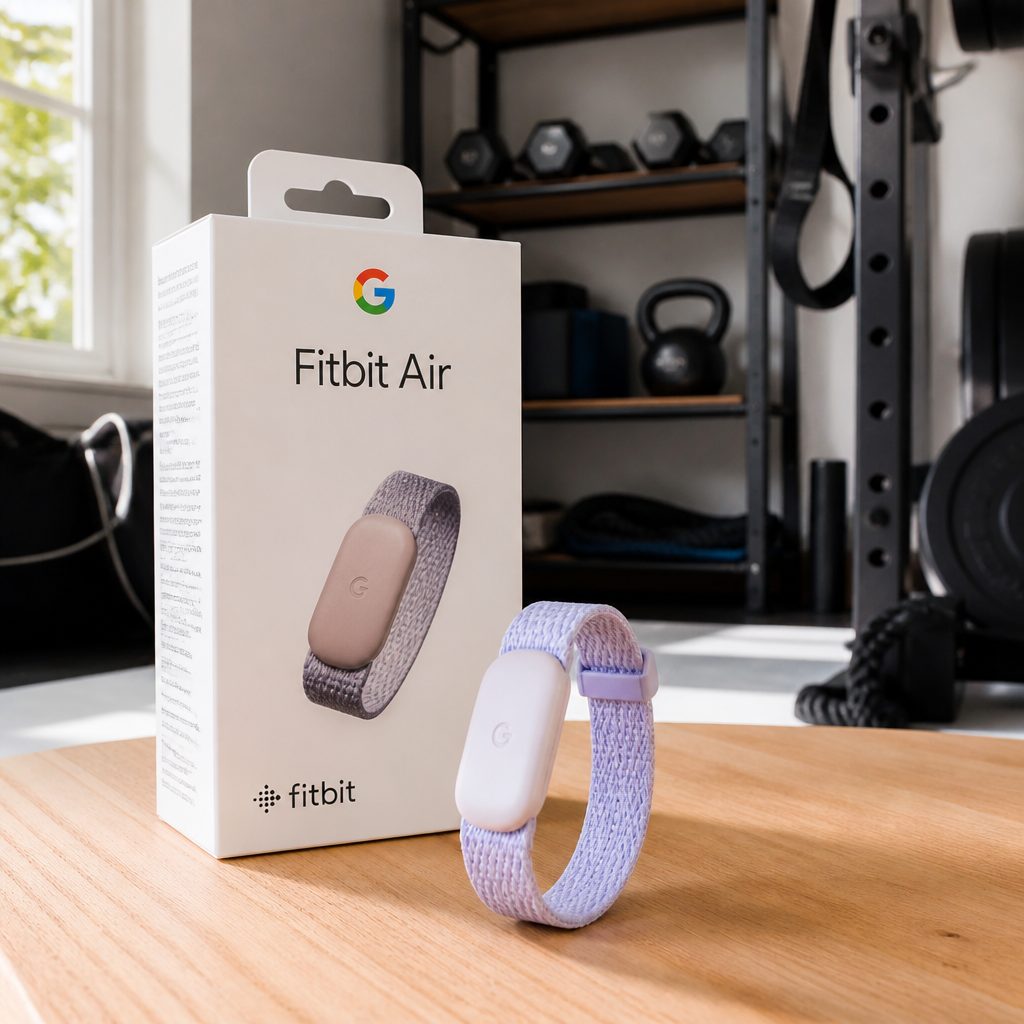
Google Fitbit Air's tiny, screen-free body is aimed squarely at users who want sleep and health data without the feel of wearing a conventional smartwatch overnight.
4. Amazfit Helio Strap — Best for value-minded recovery tracking and offline storage
Shop Amazfit Helio Strap on Amazon UK
Amazfit Helio Strap earned its place because it delivered the core screen-free recovery proposition with a notably practical feature set. It used Amazfit's BioTracker 6.0 sensor platform, tracked heart rate variability and sleep, and stored up to 21 days of information offline. That last detail is more valuable than it sounds if you travel, train outdoors without your phone or are simply the kind of person who postpones syncing until several days have passed. No judgement. We are all busy.
As a recovery band, Helio Strap was aimed at the same basic problem as the others: gather physiological data continuously, then turn it into something that can help you regulate effort. It did not have a screen competing for your attention, which made it easier to think of it as a background tool rather than another device demanding interaction. For someone stepping away from a subscription model, it represented a very approachable route into HRV-led recovery tracking.
The key decision here was whether you valued low-friction basics over the more developed training ecosystems available from Garmin and Polar. Helio Strap made sense when you wanted sleep and HRV data, a discreet format and robust offline storage without paying for layers of analysis you might never use. It was the sort of sensible purchase that leaves enough of your budget for protein, classes or the coffee you will have after failing to take a true rest day.
Pros
- BioTracker 6.0 sensor platform covers heart rate, HRV and sleep tracking.
- Up to 21 days of offline storage is excellent for travel and infrequent syncing.
- Screen-free design keeps the focus on later review rather than live distraction.
- A strong choice for buyers seeking a lower-cost route into recovery tracking.
Cons
- Its recovery ecosystem is less established for serious training analysis than Garmin or Polar's.
- It offers less confirmed detail here on hardware design and durability features.
- Buyers wanting deep training-load interpretation may prefer a more training-led platform.
It is worth separating the original Helio Strap from Amazfit's later Helio Strap Pro. The Pro was a separate, more premium model, while the original Helio Strap remained the relevant choice for shoppers seeking the straightforward, value-oriented version of the concept. If you are comparing listings, make sure you know which one you are looking at before making assumptions about features.
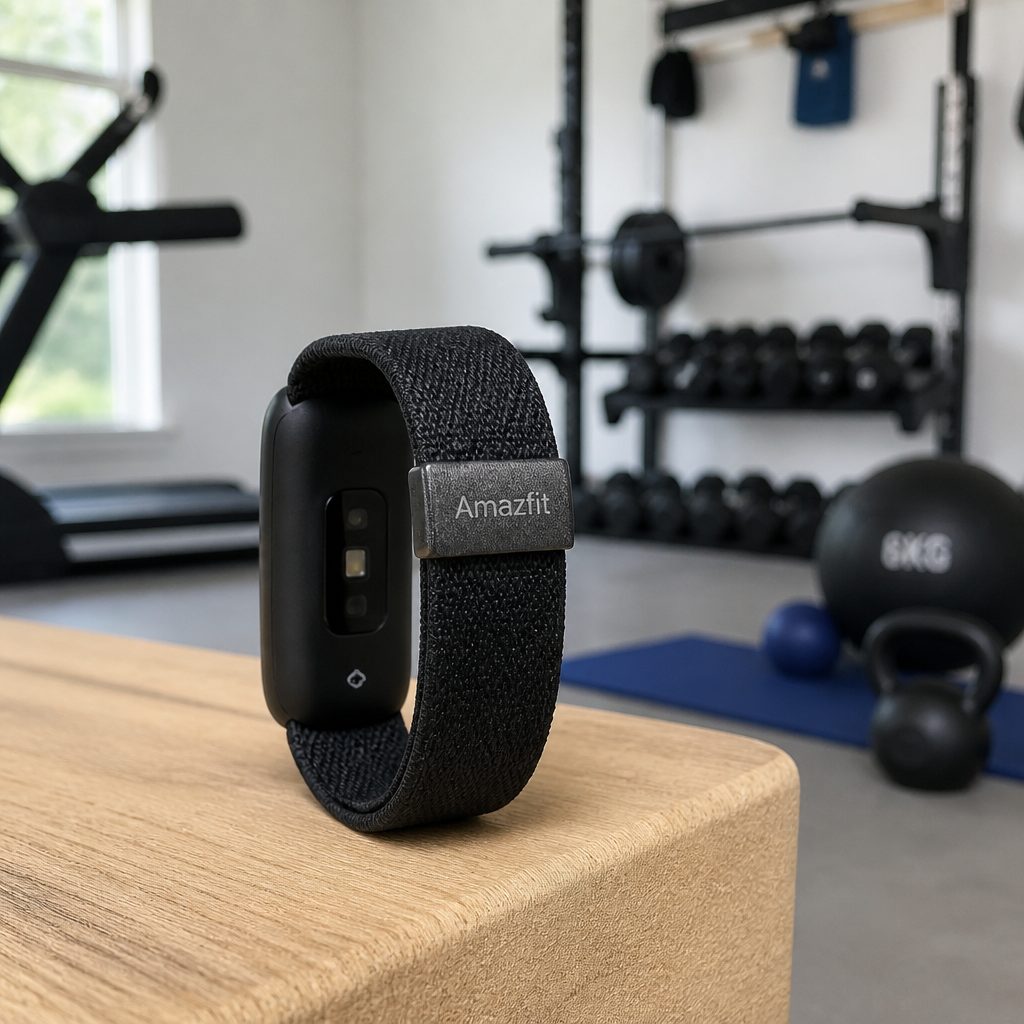
Amazfit Helio Strap stands out for people who want HRV and sleep tracking with enough onboard storage to leave the phone behind for extended periods.
How to use recovery data without becoming ruled by it
The best recovery wearable is not the one that produces the most dramatic score. It is the one that helps you make slightly better decisions over months. That might mean recognising that your hard Friday session usually follows poor sleep, noticing that late alcohol affects your overnight pattern more than you thought, or seeing that your resting state settles more quickly when you take an easy day after demanding lower-body training.
Start by wearing the band consistently for at least a couple of weeks. Keep training and sleeping roughly normally. Do not suddenly become the ideal version of yourself because you have bought new tech; the device needs to learn the actual version first. A baseline created during a fantasy health kick is less helpful when ordinary work stress returns and you are back eating toast at 10pm.
Then use a three-question check before changing a planned session. First: how do I feel? Second: what has changed from my normal trend? Third: what is the training cost of ignoring this? If you slept poorly but feel alert and your HRV trend is normal, a hard session may still be fine. If sleep, subjective fatigue and the wearable all suggest you are struggling, backing off is not weakness. It is programming with fewer Instagram captions.
Look for patterns over several days
One disrupted night can happen for dozens of reasons. A cluster of reduced sleep quality, unusual HRV and elevated stress data is much more useful evidence that your body may want a lighter day.
Adjust the dose, not necessarily the habit
A low-readiness day need not mean no movement. It can mean fewer sets, lighter loads, a technique session, zone-two cardio or a walk. The habit survives whilst the recovery cost comes down.
Escalate genuine concerns properly
Persistent concerning symptoms, unusual heart-rhythm notifications or major health changes deserve a conversation with a qualified clinician. Wearables provide information, not reassurance-by-app.
Fit, placement and optical-sensor reality
Optical heart-rate sensors work by reading blood flow near the skin, which means fit matters enormously. The best software in the world cannot rescue a loose band, a poor contact point or a device sliding around during burpees. Wear the band snugly enough to stay still, but not so tightly that it becomes uncomfortable or leaves you counting down until bedtime removal.
The biceps option on Garmin CIRQA is especially interesting for strength athletes because it moves the device away from wrist wraps, grips and the bend of the wrist. Polar Loop also showed solid biceps accuracy in most training situations. However, the caveat about upper-body lifting still matters. Dynamic arm movement, flexing muscles and gripping can all challenge optical tracking. When precise live heart rate is essential for a specific session, a chest strap remains the more specialised tool.
That does not make these bands poor purchases for lifters. It simply clarifies their job. Their greatest value often comes from continuous overnight and resting trends, where movement is limited and sensor conditions are calmer. Your recovery wearable does not need to perfectly capture every kettlebell swing to help show that a heavy fortnight has caught up with you.
Before blaming the sensor: wash the contact area, dry your skin, adjust the tension and give the device several ordinary sessions. A surprising number of "accuracy" problems are really fit problems. If readings remain clearly implausible during the activities you care about, that is the point to reconsider the device or use a more specialised heart-rate tool alongside it.
Best-for awards: choose the one that matches your routine
There is no universal winner because these bands solve slightly different problems. Someone doing five gym sessions a week needs different guidance from a person whose biggest objective is finally understanding their sleep. The cards below give the short version, but the longer reviews above are worth revisiting before you commit.
Best for gym users who want sleep, HRV, activity context and a clear readiness tool in one established training ecosystem.
Best for athletes who care most about mature sleep and recovery interpretation without any core feature paywall.
Best for sleepers and minimalists who want the least noticeable option with useful health tracking.
Best for buyers who want the fundamentals of HRV and sleep tracking, plus substantial offline storage, without overspending.
Who should buy which recovery wearable?
Buy Garmin CIRQA Smart Band. Its Training Readiness score, recovery time, activity support and Garmin Connect integration make the most sense when your training is varied and you want data to inform how hard you push.
Buy Polar Loop. Polar's established recovery tools and training-load thinking offer a calm, coherent system for connecting sleep, exertion and readiness.
Buy Google Fitbit Air. Its very low body weight and tiny footprint make it the sensible pick if conventional watches annoy you overnight.
Buy Amazfit Helio Strap. Its 21 days of offline storage is a genuine practical advantage when you do not want to keep a phone close by.
If you already use Garmin Connect for other devices, CIRQA was the obvious friction-free choice. If Polar Flow already made sense to you, Loop was equally logical. Ecosystems are not glamorous, but they matter. Staying in one place keeps your training history easier to understand, and it reduces the odds of abandoning a perfectly good wearable because another app has become one more inbox to ignore.
Frequently asked questions
All four provide their central tracking and recovery functions without a required monthly subscription. Garmin's optional Connect+ offering was separate from core CIRQA metrics, while Polar's optional Fitness Program did not restrict the Loop's central health and recovery analysis. The key point is that you do not need an ongoing membership to access the reason you bought these bands.
Polar Loop and Garmin CIRQA are the closest conceptual matches. Polar focuses strongly on sleep, recovery and training load through Nightly Recharge, SleepWise and Training Load Pro. Garmin CIRQA offers Training Readiness, HRV Status, recovery time and acute-load context, making it the broader option for gym training.
Yes, but do not expect optical heart-rate readings to be perfect during every upper-body session. Wrist and arm movement, gripping, straps and muscle flex can make readings less stable. Garmin's biceps-band option can be useful around wrist wraps, and Polar's biceps accuracy was solid in most scenarios, though upper-body lifting remained challenging.
Google Fitbit Air is the obvious answer. Its body weighed 12g without the strap and was designed to be notably smaller than Fitbit Luxe. Its absence of a screen and buttons also removes the bulk and bright display that can make a smartwatch feel intrusive overnight.
That depends on what you value. Pulse Ox was off by default because it affected battery life. Enabling it was necessary for Breathing Variations monitoring, but it is worth deciding whether that feature is useful enough for you to accept more frequent charging. It also needed time to establish a baseline.
No. Fitbit Air's background AFib detection could continuously monitor heart rhythm and flag irregular patterns, but it was not a diagnostic substitute for a clinician. It was also not intended for people under 22 or those with known arrhythmias. Treat any concerning notification or symptom as a reason to seek appropriate medical advice.
Give it at least a couple of weeks of consistent, normal wear before letting it alter your training significantly. Garmin's skin-temperature and Breathing Variations information specifically needed around three days to establish a baseline, but a longer period gives any system a better understanding of your ordinary sleep and activity pattern.
Yes, if your goal is the original model's simpler, value-led proposition. The Helio Strap offered screen-free heart-rate, HRV and sleep tracking with 21 days of offline storage. The Helio Strap Pro was a separate premium option, so compare the exact model carefully rather than assuming every Helio listing has the same positioning.
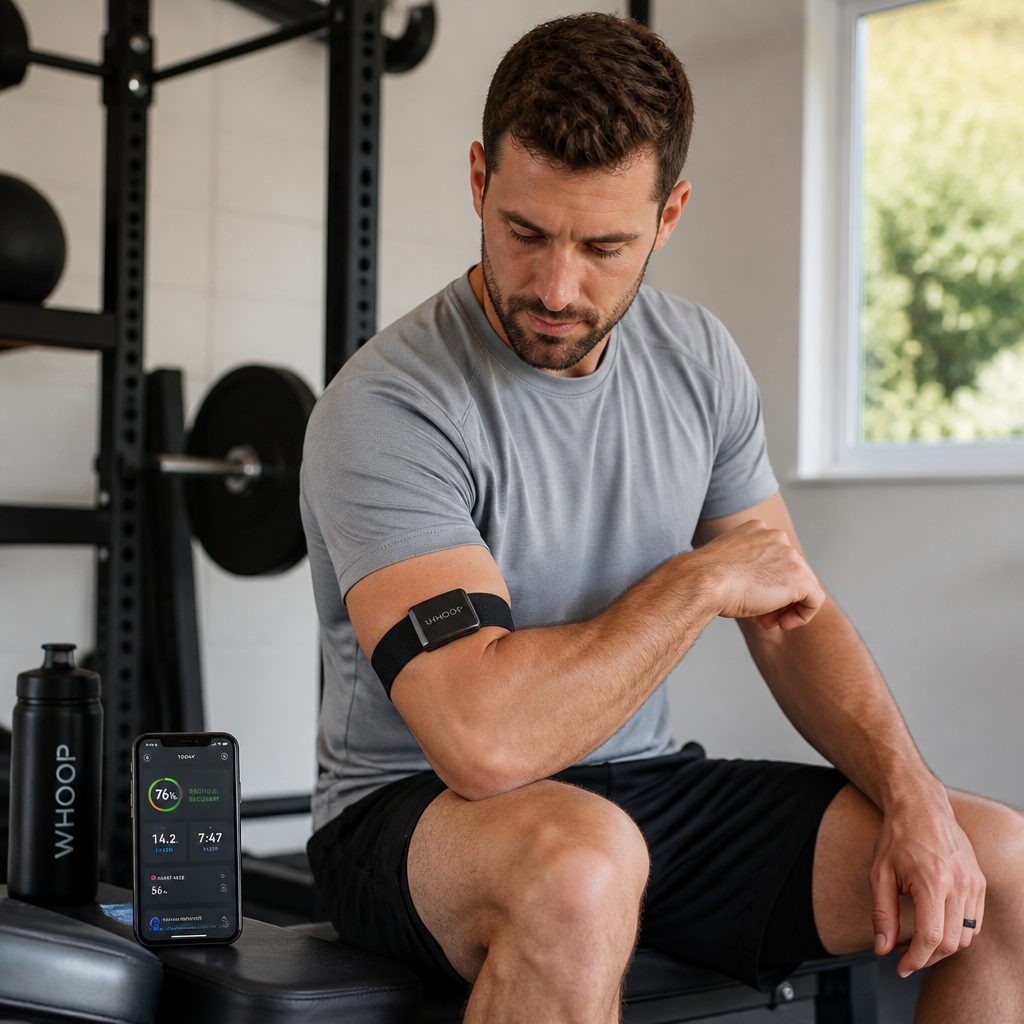
A good recovery wearable should sit quietly in the background, then provide useful context when you decide whether to train hard, train easy or take the hint and rest.
The bottom line
Garmin CIRQA Smart Band was the best subscription-free recovery wearable for most gym-goers because it paired broad health tracking with meaningful training context, a claimed 10-day battery and proper readiness tools. Polar Loop was the sharper choice for people who wanted recovery insight above everything else. Google Fitbit Air was the comfort champion for sleep tracking, whilst Amazfit Helio Strap made the most sense for value-minded buyers who liked the idea of 21 days of offline storage. None removes the need to listen to your body. They simply make that conversation rather better informed.