
Best Kettlebells for Home Workouts: Cast Iron, Competition and Adjustable
The right kettlebell is wonderfully uncomplicated: a dependable lump of metal, a sensible handle and a weight that challenges you without compromising the next rep. The buying decision, however, gets rather more interesting once cast iron, competition bells and adjustable designs enter the picture.
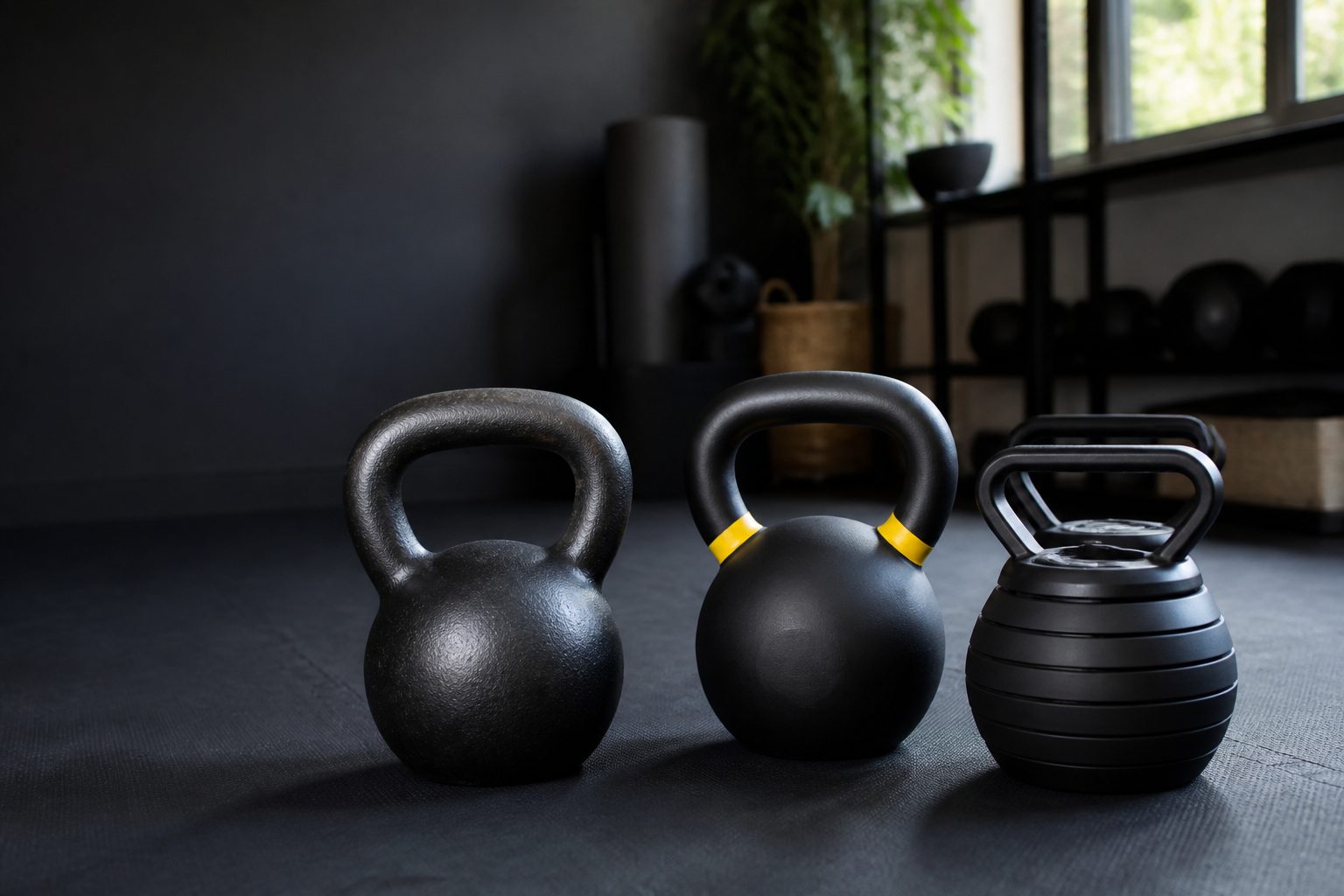
A practical home kettlebell collection should make progression simple, not turn the spare room into a poorly organised ironmonger's shop.
 By Sophie Marchant · Product Reviews Editor · Updated August 28, 2026
Why the "best" kettlebell depends on how you train
Kettlebells are refreshingly honest bits of kit. They do not need charging, syncing or updating. They will not send you a congratulatory badge for standing up. Put one on the floor, though, and it can cover strength work, conditioning, carries, mobility drills and a very brisk lesson in why bracing matters.
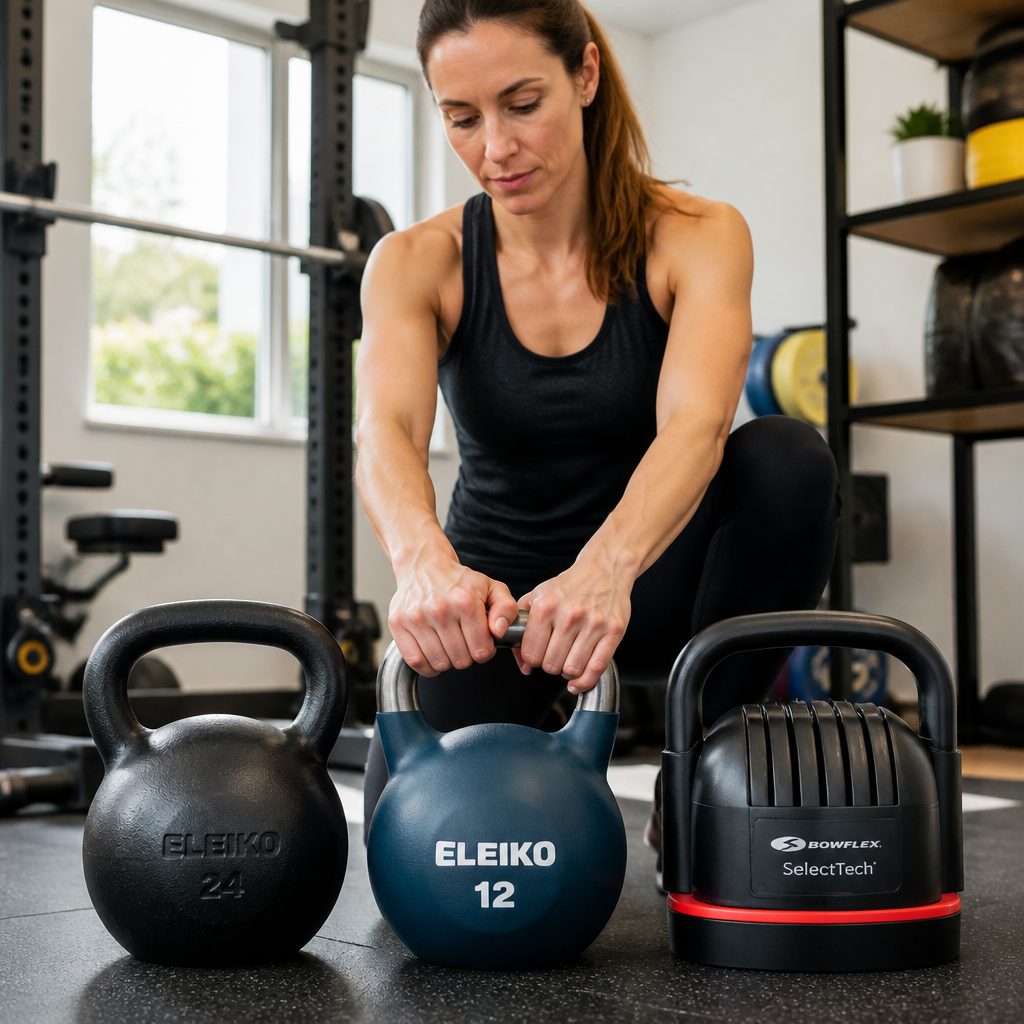
Handle comfort matters more than catalogue glamour: it is the part of the kettlebell your hands, forearms and wrists will know best.
For home training, the practical question is not whether kettlebells work. They do. It is whether you should buy a few fixed cast-iron bells, commit to the uniform dimensions of competition-style equipment, or reclaim some floor space with an adjustable model. Each route changes the feel of training slightly, and each rewards a different sort of buyer.
Cast iron remains the uncomplicated favourite. A solid bell is ready instantly, usually has a broad selection of weights available, and makes sense if more than one person trains at home. Competition kettlebells use the same external size across their weight range, which is particularly useful when you practise technical lifts and want the rack position to remain familiar as loads increase. Adjustable competition designs aim to offer the latter's compact footprint with far more progression steps. Clever, certainly. Quite as quick to use as a row of fixed bells? Not always.
Do not confuse a colour-coded handle with a guarantee of competitive suitability. Competition bells follow a uniform-size concept, whilst individual manufacturers determine construction, coating and the precise details that affect day-to-day comfort.
Cast iron, competition or adjustable: the short version
A fixed cast-iron kettlebell is the default recommendation for most home gyms because it is durable, uncomplicated and immediately available at the selected weight. The best examples are formed as a single solid piece, with a flat base and a finish that gives your hand enough purchase without feeling like coarse sandpaper. Powder-coated and textured finishes are especially popular because they hold chalk well and avoid the overly slick sensation that can make a hard swing session unnecessarily exciting.
Competition bells solve a more specific problem. A 12kg and a 32kg competition bell share the same outer dimensions, so the handle, rack position and trajectory do not dramatically change when you move up. That consistency is valuable for kettlebell sport, of course, but it is not only for competitors. Anyone who loves cleans, long-cycle work, snatches and presses can appreciate having the same physical reference point every time.
Adjustable competition-style bells offer remarkably fine progression. The Kettlebell Kings version has a 12kg steel shell and internal cast-iron plates, reaching 32kg in 1kg increments apart from 13kg and 31kg. That is appealing if you train alone, live in a flat, or simply refuse to surrender an entire wall to iron. The compromise is adjustment time. Bolt and Allen-key systems are secure but usually take around 30 to 60 seconds per change. That is trivial between sessions and irritating in a circuit.
Fixed bells reward simple programming
If today is a 16kg swing day, you pick up the 16kg bell. There is nothing to configure, secure or recheck. For couples or families training at different loads, that convenience compounds quickly.
Uniform size rewards technical repetition
Competition-style bells keep the physical dimensions familiar as the load changes. That can make a gradual increase in training weight feel less like learning a new object every few weeks.
Adjustable bells reward limited space
One adjustable bell can replace a meaningful portion of a fixed-weight collection. It is a tidy answer for a small home gym, provided you plan sessions so you are not changing plates every few minutes.
Start with the movement, not the material
If your training will centre on swings, goblet squats, deadlifts and carries, a good fixed cast-iron bell is usually the least fussy choice. If you want to spend serious time on snatches, cleans and long-cycle work, competition dimensions become much more compelling. The bell should support the work you will actually do, rather than the version of you who owns an improbably organised training log.
Our ranked picks
1. REP Fitness Kettlebell — Best for the widest fixed-weight progression
REP Fitness Kettlebells are the all-round fixed-weight choice for the home trainee who wants room to grow without moving into a separate product family later. The range ran from 4kg to 48kg, covering the very light end useful for technique, rehabilitation-style controlled work or smaller trainees, through to the loads that make swings, squats and carries genuinely demanding.
These were gravity die-cast, a manufacturing approach intended to deliver a precise, durable bell with a smooth handle and properly flat base. That combination is worth more than it sounds. A flat base matters for floor storage and for exercises where the bell needs to sit securely. A smooth handle matters when volume rises. You can get away with a slightly awkward handle for a handful of deadlifts; several sets of swings or snatches are less forgiving.
REP used a textured premium black coating designed to hold chalk and offer grip. It is the sensible middle ground for general strength training: more secure than a very smooth glossy finish, but not dependent on a thick painted layer to disguise the casting. Colour-coded handles also make it easier to spot weights at a glance once your collection begins multiplying. They have a habit of doing that.
Pros
- Broad 4kg to 48kg progression for a long-lived home setup.
- Gravity die-cast construction, smooth handles and flat bases suit regular training.
- Textured black coating is designed to work well with chalk.
Cons
- Fixed bells still require storage space as your collection grows.
- The broad range can tempt you into buying more than your current programme needs.
2. Kettlebell Kings Competition Kettlebell — Best for dedicated kettlebell sport technique
Kettlebell Kings Competition Kettlebells are the premium fixed choice for people who care deeply about consistency in the rack, overhead position and hand path. They are single-piece steel bells with a hollow core, colour-coded to international competition standards. The available weights include 12kg, 16kg, 20kg, 24kg and 32kg, which is an extremely sensible set of waypoints for an experienced lifter building a deliberate collection.
The 35mm handle deserves attention. That diameter is part of the competition-style experience and gives a familiar reference for cleans, jerks and snatches. Whether it feels ideal in your hands is personal—hand size, chalk habits and training volume all play a part—but standardising the handle makes switching weights less disruptive. The recessed logo is another small but welcome detail, intended to reduce the chance of an emblem becoming an unexpected pressure point.
There is also a lifetime warranty. That does not mean you should cheerfully throw a steel bell around a laminate-floored spare room. It does, however, underline the product's long-term intent. This is equipment for someone who regards kettlebell technique as a practice rather than an occasional finisher after the treadmill.
Pros
- Uniform competition-style sizing supports repeatable technique.
- Single-piece steel construction with a hollow core is built for balanced lifting.
- 35mm handle, recessed logo and lifetime warranty strengthen the premium case.
Cons
- Available fixed weights are more focused than a broad cast-iron range.
- Its specialist dimensions are unnecessary for a buyer doing only occasional swings.
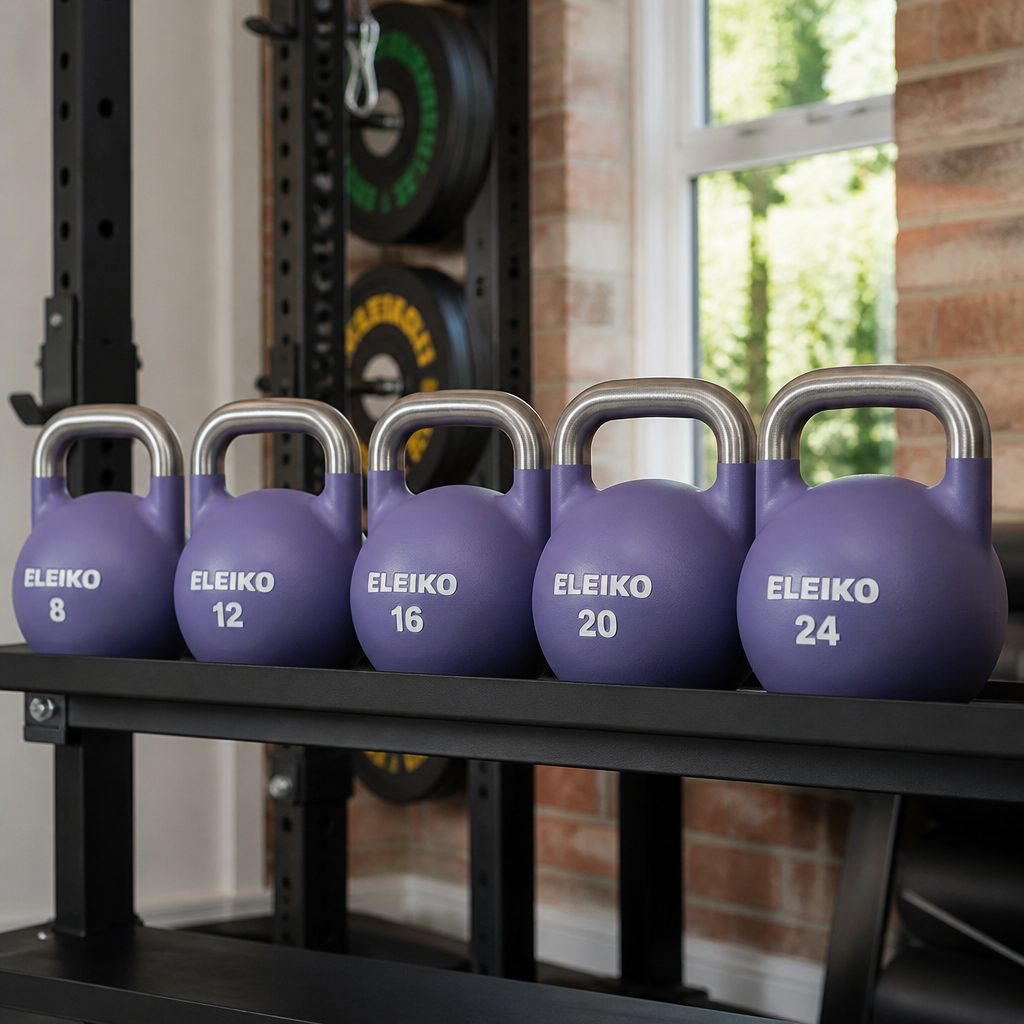
Competition kettlebells stay the same external size across different weights, helping the rack and overhead positions remain familiar.
3. Mirafit Cast Iron Kettlebells — Best for straightforward UK home-gym buying
Mirafit Cast Iron Kettlebells are a sensible, no-drama option for UK home-gym owners who want to build a conventional collection. The range covers 4kg to 32kg, which provides useful options for beginners, intermediate trainees and households where people have different starting points. A fixed bell does one job. It weighs what it says it weighs and waits patiently for the next session. There is something rather comforting about that.
For a first home gym, this range makes it easier to think in useful pairs or stepping stones rather than trying to buy every conceivable weight. A lighter bell may be appropriate for pressing and controlled get-ups, whilst a heavier one might be the better fit for swings and deadlifts. As strength improves, you add the next relevant bell instead of replacing a whole system.
Mirafit also offered a 30-day money-back guarantee, which is helpful when buying gym equipment without first getting your hands around the handle. Comfort is subjective, and kettlebells are unusually tactile equipment. A bell can look faultless on a product page yet not feel like your favourite once you begin racking it repeatedly against the forearm.
Pros
- 4kg to 32kg range covers the weights many home trainees will actually use.
- Fixed cast iron is fast to use and uncomplicated to maintain.
- 30-day money-back guarantee gives reassurance for a hands-on purchase.
Cons
- Moving beyond 32kg requires looking elsewhere in the wider market.
- Separate bells occupy more floor space than an adjustable solution.
4. Kettlebell Kings Adjustable Competition Kettlebell — Best for compact fine-grained progression
The Kettlebell Kings Adjustable Competition Kettlebell is the clever choice for the committed home trainee with limited space. It uses a 12kg steel shell and seven internal cast-iron plates weighing 2kg, 2kg, 2kg, 3kg, 3kg, 4kg and 4kg. Combined, they create a 12kg to 32kg range, with 1kg increments other than 13kg and 31kg.
That degree of adjustment is unusually useful. Standard fixed collections often encourage jumps that are perfectly manageable for swings but a little abrupt for presses. A 1kg increase can be meaningful when you are working on strict overhead strength, refining a movement or returning after time away. The 35mm handle retains the competition-style format, whilst the plates are screwed in and secured by a bolt to prevent movement during use.
The one thing to understand before buying is that adjustable does not mean instantly adjustable. The Allen-key approach takes roughly 30 to 60 seconds per change. That is not a deal-breaker; it simply asks for better session planning. Set the load before you begin. Group exercises using the same weight. Avoid writing a frantic five-round workout that needs three load changes per round unless you enjoy tiny metal engineering projects between burpees.
Pros
- 12kg to 32kg range compresses extensive progression into one bell.
- Mostly 1kg increments are excellent for deliberate strength progression.
- Steel shell, bolted plates and 35mm handle preserve a competition-style feel.
Cons
- 13kg and 31kg are not available configurations.
- Adjustment takes around 30 to 60 seconds, so it is less suited to fast mixed-load circuits.
5. Titan KG Cast Iron Kettlebells — Best for a practical metric fixed-bell set
Titan KG Cast Iron Kettlebells are another solid route for buyers who prefer a clean metric progression. They ranged from 4kg to 32kg, were made as single, solid-piece casts and used machined flat bases. That is the core specification many sensible home users should prioritise before becoming distracted by elaborate finishes or overly theatrical branding.
A one-piece cast removes the concern that a handle has been joined to a separate body, which is exactly what you want in a bell that will be swung, cleaned and carried for years. The machined base is equally practical. It sits neatly on a rack or floor and gives you confidence for exercises that begin or finish from the ground.
This is a particularly good format for someone building a modest selection around the essentials: perhaps one lighter bell for technique and pressing, one central working weight, and one heavier bell for lower-body or ballistic work. You can later fill the gaps based on actual training needs rather than buying a full rainbow of equipment because the internet made it look tidy.
Pros
- Single solid-piece cast construction is dependable and uncomplicated.
- Machined flat base improves storage and ground-contact stability.
- 4kg to 32kg metric range supports useful home progression.
Cons
- Individual bells demand more storage as the collection expands.
- It does not offer the uniform external dimensions of competition bells.
6. Bells of Steel Adjustable Competition Style Kettlebell — Best for the most adjustment options
The Bells of Steel Adjustable Competition Style Kettlebell targets the person who wants one competition-format shell but refuses to be boxed into large loading jumps. It adjusted to 32kg in more than 40 configurations, using 1.1-pound iron plates. With additional expansion kits, total loading could reach 70.4 pounds. It also came with a lifetime warranty.
That is a remarkably broad utility proposition, especially for lifters whose sessions include both technical work and conventional strength training. An adjustable bell with many steps can serve as a lighter pressing tool one day, a moderate clean-and-press bell the next, and a serious swing implement later in the week. The format also makes it easier to share one piece of kit between trainees of different abilities.
As with the Kettlebell Kings adjustable model, the main compromise is workflow. Changing plates is a deliberate task, not a flick of a selector. The upside is durability and fine adjustment; the downside is that you need to decide your weight before the timer starts. For structured blocks, that is entirely reasonable. For chaotic bootcamp sessions, fixed bells remain happier company.
Pros
- More than 40 weight adjustments give exceptional programming flexibility.
- Can load to 32kg, with expansion-kit capacity to 70.4 pounds.
- Competition-style feel and lifetime warranty suit serious long-term use.
Cons
- Plate changes are slower than picking up a fixed bell.
- Buyers who need several weights at once may still prefer a fixed collection.
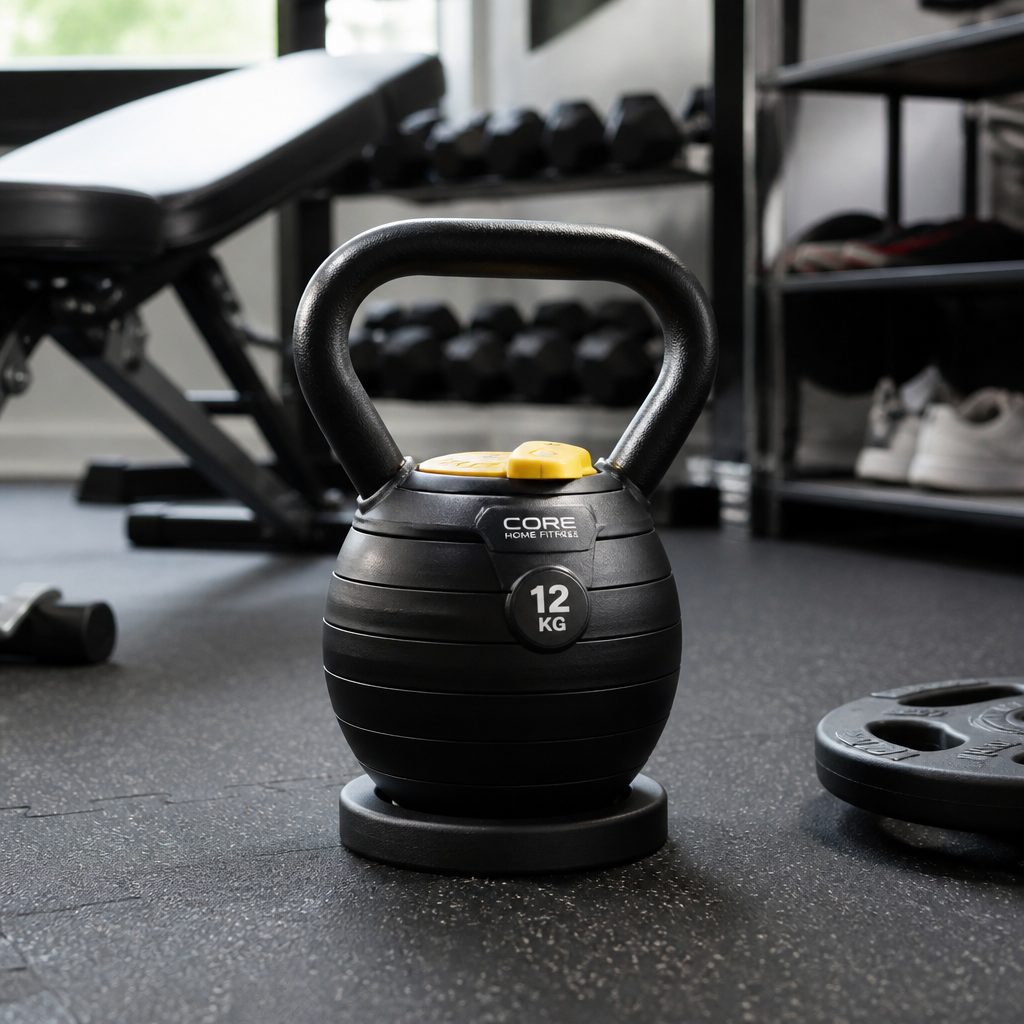
An adjustable competition-style bell saves space brilliantly when the session is planned around one load at a time.
How the leading options compare
The table below focuses on the numbers and construction details that genuinely separate these choices. There is no pretend precision here. A kettlebell is not a smartphone benchmark. The important things are the weight range, whether the outer size changes, what holds the bell together, and how much faff the design adds to a normal session.
| Pick | Type | Weight range or loading | Construction and key detail | Best suited to |
|---|---|---|---|---|
| REP Fitness Kettlebell | Fixed competition-style cast iron | 4kg to 48kg | Gravity die-cast; textured black coating; smooth handle; flat base | Long-term fixed-weight progression |
| Kettlebell Kings Competition Kettlebell | Fixed competition | 12kg, 16kg, 20kg, 24kg, 32kg | Single-piece hollow-core steel; 35mm handle; recessed logo | Sport-style technique work |
| Mirafit Cast Iron Kettlebells | Fixed cast iron | 4kg to 32kg | Conventional fixed-weight format | Everyday UK home training |
| Kettlebell Kings Adjustable Competition Kettlebell | Adjustable competition-style | 12kg to 32kg; 1kg steps except 13kg and 31kg | Steel shell with seven cast-iron plates; bolt-secured | Space-saving fine progression |
| Titan KG Cast Iron Kettlebells | Fixed cast iron | 4kg to 32kg | Single solid-piece cast; machined flat base | Simple metric fixed-bell sets |
| Bells of Steel Adjustable Competition Style Kettlebell | Adjustable competition-style | Up to 32kg; more than 40 adjustments | 1.1-pound iron plates; expansion capability to 70.4 pounds | Maximum adjustment flexibility |
One useful way to visualise the decision is to compare progression coverage rather than treating every bell as interchangeable. The bars are not performance scores. They simply show the stated span or number of adjustment options, because that is the point at which these products part company.
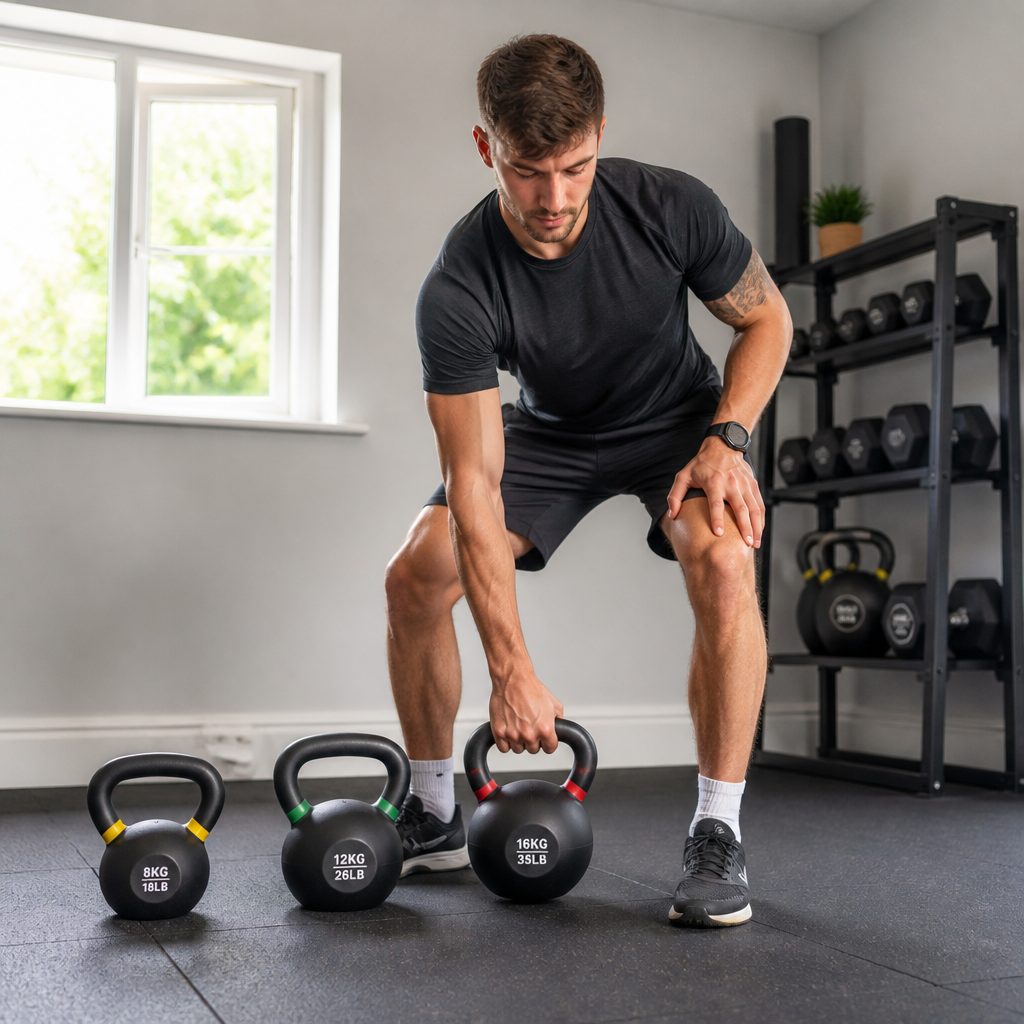
A small fixed collection is often more practical for fast-paced sessions, where changing load mid-workout would interrupt the flow.
Choosing weights: buy a progression, not a trophy
The most common kettlebell buying mistake is buying one bell that feels impressively heavy in the hand and then discovering it is too much for pressing, too light for deadlifts, and not especially useful for learning technique. Weight selection should follow movement patterns. Ballistic lower-body movements such as swings often tolerate a heavier load than strict presses. Carries can also use a substantial bell, whilst get-ups and high-repetition snatches tend to ask more of control and grip.
That is why a collection works better than a single all-purpose answer once you train regularly. With fixed bells, think in roles. You might use one bell for controlled overhead work, another for general strength, and a heavier option for swings, squats and carries. With an adjustable model, you achieve those roles by planning blocks carefully and selecting the load before the session starts.
In my experience, the best progression is not necessarily perfectly even. It should make your current programme workable. If you press a moderate weight but swing a much heavier one, that is not a problem to solve. It is normal. Kettlebells are asymmetrical tools, and the exercises you perform with them have very different limiting factors.
Avoid the "one bell forever" fantasy
A single kettlebell can deliver a great deal of training, particularly at the beginning. But strength, skill and exercise choice change. Buying into a range with a sensible next step is more useful than trying to identify one mythical perfect weight for every movement and every stage of your training.
Handle, coating and base: small details with large consequences
When you are comparing similar-looking bells, the handle should decide more than the paintwork. You want enough internal room for two-handed swings, a surface that does not tear at your skin during repeated work, and a shape that allows the bell to rotate cleanly around the hand. A handle can be technically wide enough yet still feel wrong because its coating is too slick, too aggressively textured or awkwardly shaped at the corners.
Powder-coated cast iron is often a dependable all-purpose option because it balances grip and durability. REP's textured coating was specifically designed to hold chalk, which is useful if your hands run warm or you train for longer sets. Competition handles tend to be more standardised in approach; Kettlebell Kings used a 35mm handle, for example, which gives experienced users a familiar competition-style reference.
Flat bases are another unglamorous but meaningful feature. They make storage tidier and help with exercises that require the bell to be placed securely on the floor. Titan's machined flat bases and REP's perfectly flat bases are good examples of the sort of detail worth paying attention to. You may not think about the base often. You will think about it immediately if a bell rocks during setup.
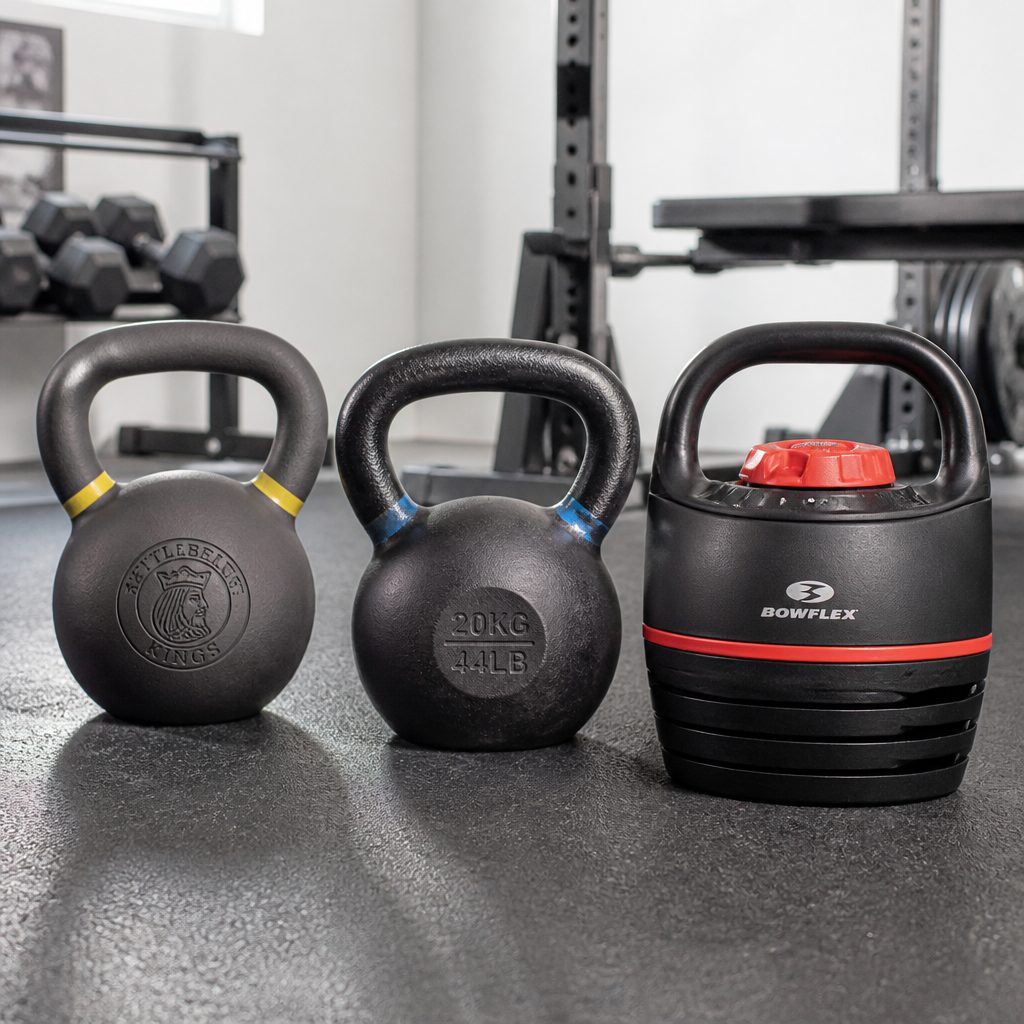
Powder-coated and textured finishes can provide useful chalk retention, particularly during higher-volume swings and snatches.
How to make kettlebells work in a small home gym
Space is where adjustable kettlebells make their strongest argument. A 12kg to 32kg adjustable model can replace multiple individual bells, and a competition-style adjustable keeps a consistent external form throughout that range. If your training corner is also your guest room, dining room or the increasingly optimistic "study", that is a serious advantage.
Fixed bells can still be the better home choice if your workouts need two weights at once. Supersets, descending ladders, partner sessions and circuits are simply smoother when the next bell is already sitting on the floor. There is also less chance of misplacing an Allen key, which is a sentence that will make complete sense to anyone who has assembled a home gym.
Protect the floor beneath any kettlebell training area. More importantly, protect the bell from unnecessary drops. A controlled set-down is good training etiquette and good equipment care. Store bells on a stable, level surface, keep the handles dry, and avoid leaving them where a bare foot may discover them in the dark. Kettlebells are remarkably durable. Toes remain comparatively delicate.
Use fixed bells for density work
Timed swing intervals, complexes and circuits benefit from having the required weight immediately available. Every second spent adjusting a bell is a second not training—or recovering, depending on how charitable you feel.
Use adjustable bells for focused blocks
They shine in sessions where several sets use the same load. Pressing blocks, strength ladders and repeated technique practice all fit the format very well.
Consider who else trains
One adjustable bell can accommodate different users, but a couple training simultaneously will quickly appreciate having more than one load ready to go.
Best kettlebell for each kind of buyer
There is no need to make this more complicated than it is. Pick the category that matches your space and training style, then choose the range that leaves enough room to improve. These are the clearest recommendations from the roundup.
Best straightforward value
Mirafit Cast Iron Kettlebells. A practical 4kg to 32kg fixed-weight range for building a useful home setup without overcomplicating the purchase.
Best all-rounder
REP Fitness Kettlebell. The 4kg to 48kg range, flat base and textured coating make it the strongest fixed-bell platform for long-term progression.
Best premium pick
Kettlebell Kings Competition Kettlebell. A focused steel competition bell with 35mm handle, hollow core and lifetime warranty for technical regulars.
Best for very small spaces
Kettlebell Kings Adjustable Competition Kettlebell. Its 12kg to 32kg loading range and mostly 1kg steps are exceptionally useful where storage is scarce.
Best for micro-adjustments
Bells of Steel Adjustable Competition Style Kettlebell. More than 40 adjustments suit lifters who want unusually granular load choices.
Best metric fixed set
Titan KG Cast Iron Kettlebells. Solid-piece casting, machined bases and a 4kg to 32kg range keep the brief satisfyingly simple.
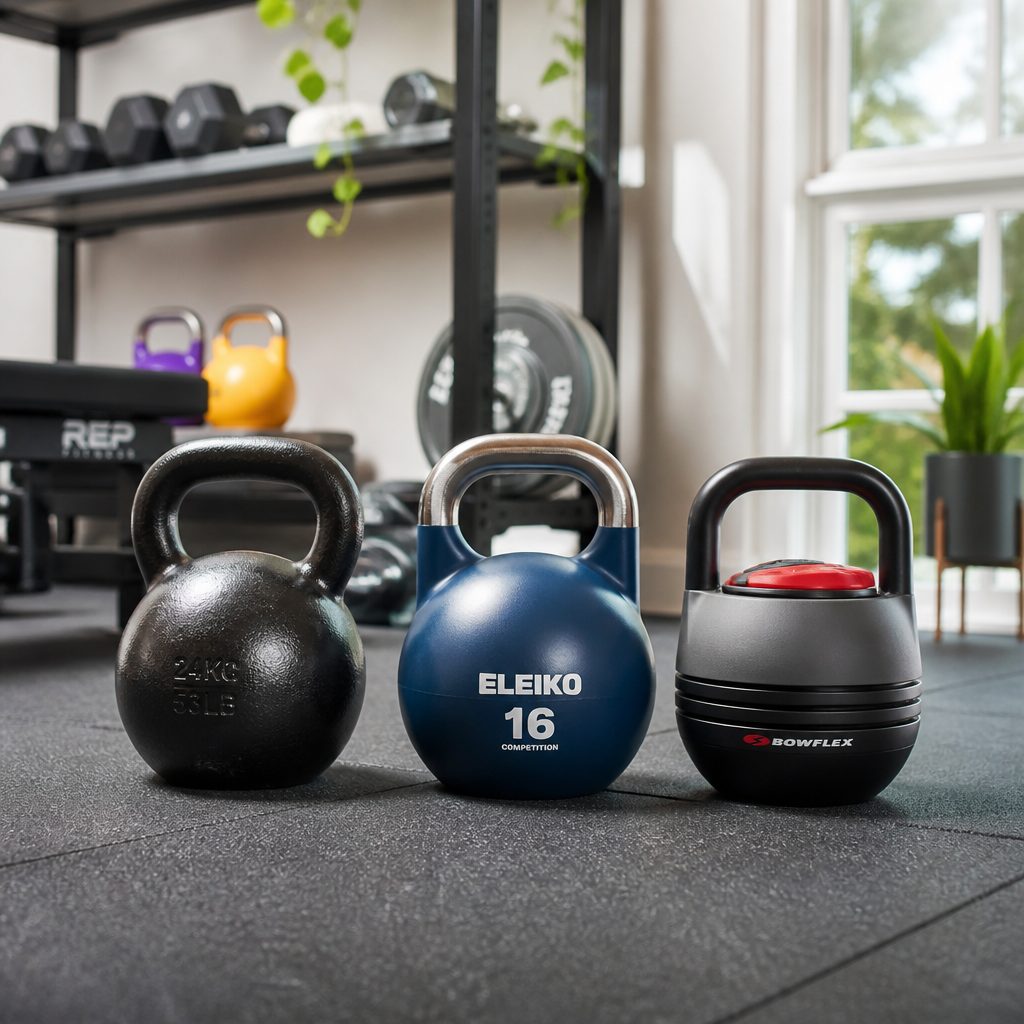
The best home-gym choice is the bell that suits your available space and programme, rather than the one with the most elaborate product description.
Frequently asked questions
Absolutely. A well-made fixed cast-iron bell is a long-lasting, straightforward tool for swings, squats, presses, carries and much more. Look for solid construction, a stable flat base and a handle finish you can use comfortably. Competition dimensions are helpful for specialist technical work, but they are not a requirement for getting strong at home.
Competition bells keep their external dimensions consistent so the handle position, rack feel and overhead path remain familiar as the load changes. This consistency is particularly valuable for kettlebell sport and high-skill lifts such as snatches, cleans and jerks. A lighter competition bell is not physically smaller in the way a lighter cast-iron bell normally is.
A properly secured adjustable bell is designed to be used for normal kettlebell movements. The Kettlebell Kings adjustable model uses plates screwed in and secured with a bolt so that there is no movement during use. As with all equipment, follow the manufacturer's adjustment procedure, confirm the load is secure before training, and do not treat a loose or damaged bell as something to "probably be fine".
Allen-key systems typically take around 30 to 60 seconds per change. That is perfectly manageable between exercises or before a session, but it is a genuine interruption in fast circuits. Adjustable bells work best when you organise your workout in blocks that use one load for several sets.
No, but they are useful. Colour coding makes identifying a weight quicker when you own multiple bells, and competition models use colours in line with international standards. It is a convenience feature, not a substitute for checking the marked weight before a set—especially when fatigue has made your arithmetic a little adventurous.
A 35mm handle is a competition-style reference point used on models such as the Kettlebell Kings Competition Kettlebell and its adjustable counterpart. It helps maintain a consistent feel across loads. Whether it is comfortable for you remains personal, so hand size, chalk use and the volume of your training should influence the final decision.
Buy fixed bells if you value instant weight changes, train with another person, or regularly use different loads in the same session. Choose adjustable if storage is the limiting factor and you are happy to plan around adjustment time. Neither is objectively superior; they make different compromises.
A flat base helps the bell sit securely on the floor or storage surface and is useful for movements that begin with the kettlebell grounded. It is also simply more civilised in a home gym. A bell that rocks, rolls or sits awkwardly is not adding character; it is adding needless irritation.
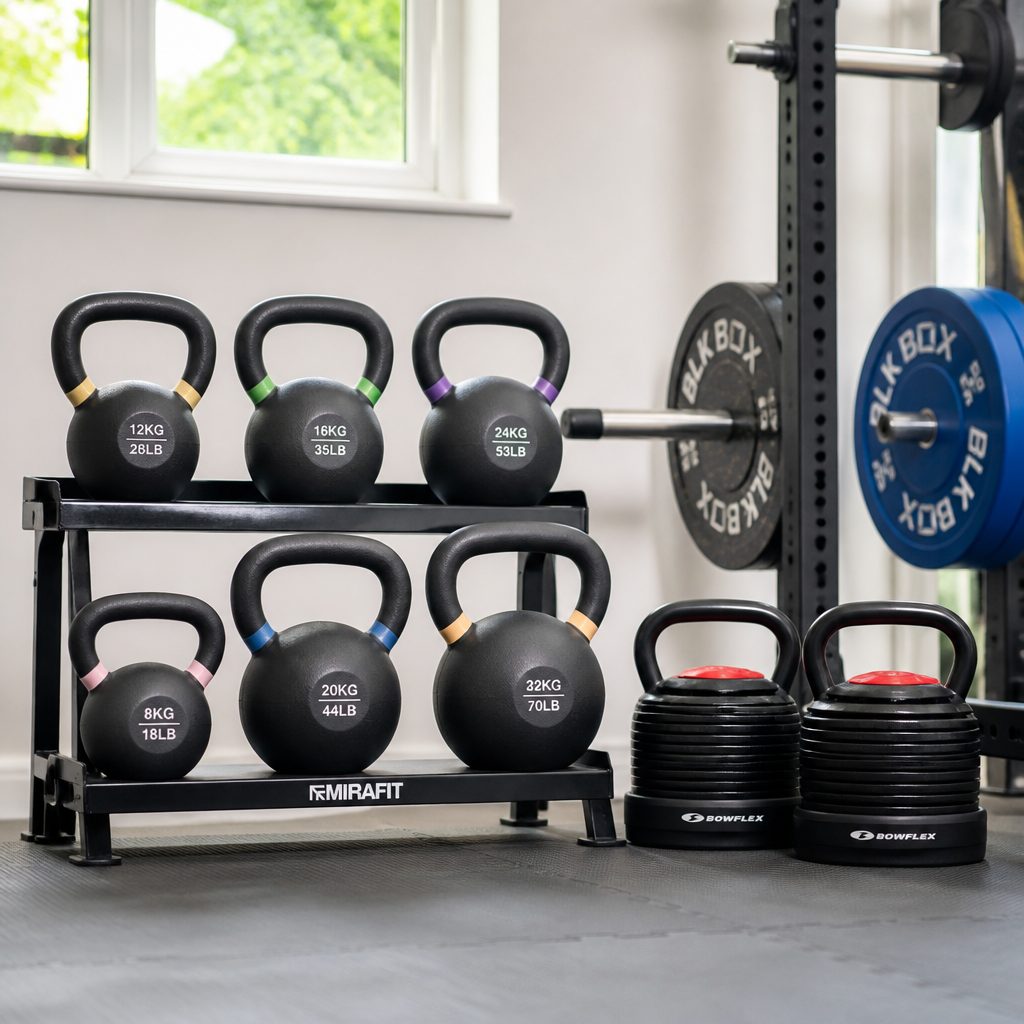
Whether you choose fixed or adjustable, orderly storage and controlled set-downs will keep both the equipment and your home gym happier.
The bottom line
For most people building a home kettlebell collection, the REP Fitness Kettlebell is the strongest all-round fixed option thanks to its 4kg to 48kg range, gravity die-cast construction, flat base and chalk-friendly textured coating. Choose the Kettlebell Kings Competition Kettlebell if uniform competition dimensions and a 35mm handle are central to how you train. If space is the hard limit, the Kettlebell Kings Adjustable Competition Kettlebell is the standout compact choice: it covers 12kg to 32kg in mostly 1kg increments, provided you can live with deliberate adjustment time. Buy the bell that makes you train more often. That is the specification that matters most.