
Are Adjustable Dumbbells Safe Now? What to Check After the Bowflex Recall
The 2025 Bowflex recall was a properly serious reminder that a compact dumbbell is only as safe as the mechanism holding its plates together. Here is how to understand the risk, inspect an adjustable set sensibly and buy with a much clearer head in 2026.
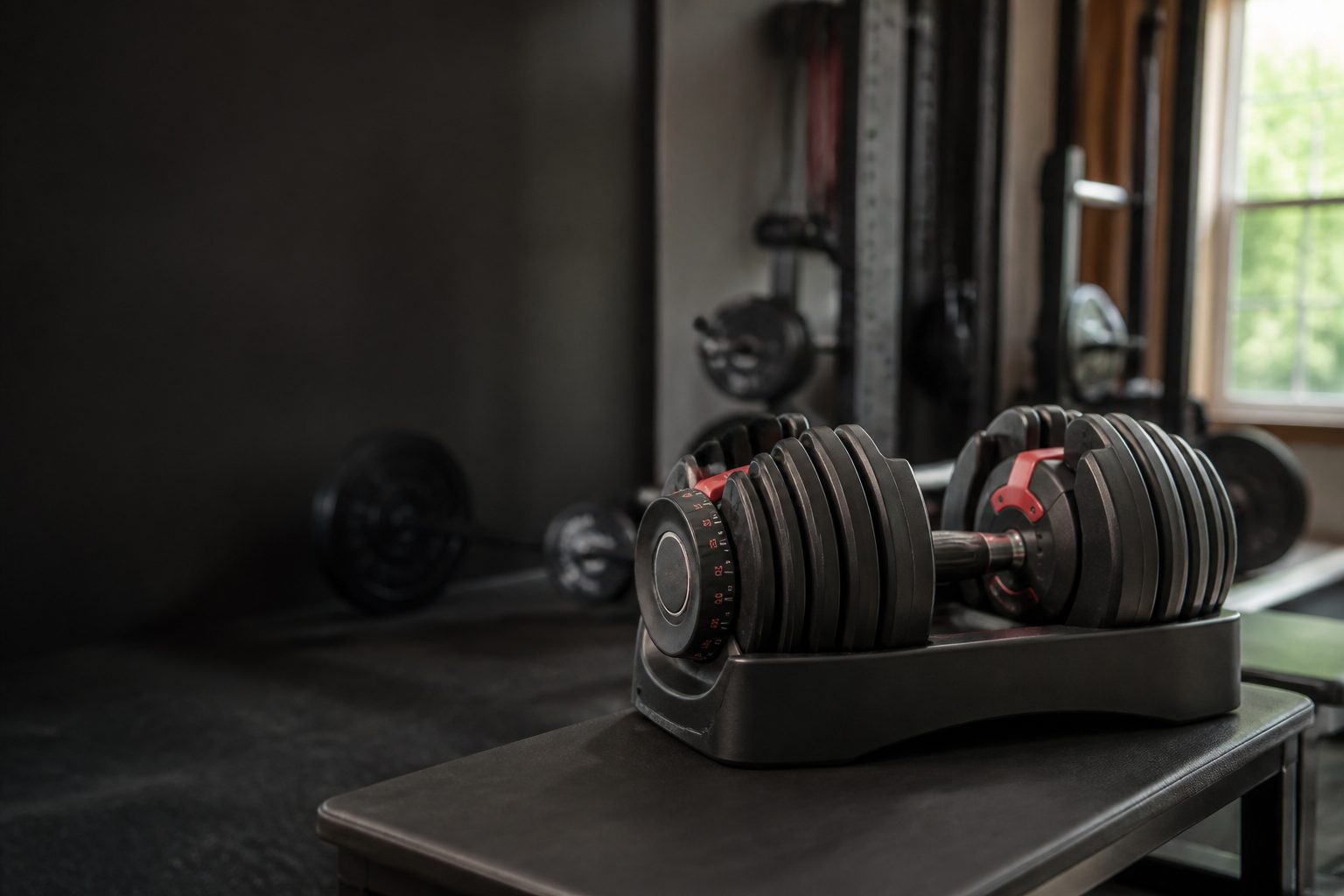
Adjustable dumbbells save an impressive amount of space, but the selector and plate-retention system deserve the same attention you would give a barbell collar.
 By James Oduya · Staff Writer & Home Gym Columnist · Updated August 26, 2026
1. The short answer: adjustable dumbbells can be safe, but they are not carefree kit
Adjustable dumbbells are not inherently unsafe. Millions of people have trained with them for years without incident, and a well-designed, well-maintained pair can be a brilliantly practical answer to the eternal home-gym problem: where exactly do you put a rack of fifteen dumbbells when your spare room also needs to contain a desk, a washing basket and, occasionally, a human being?
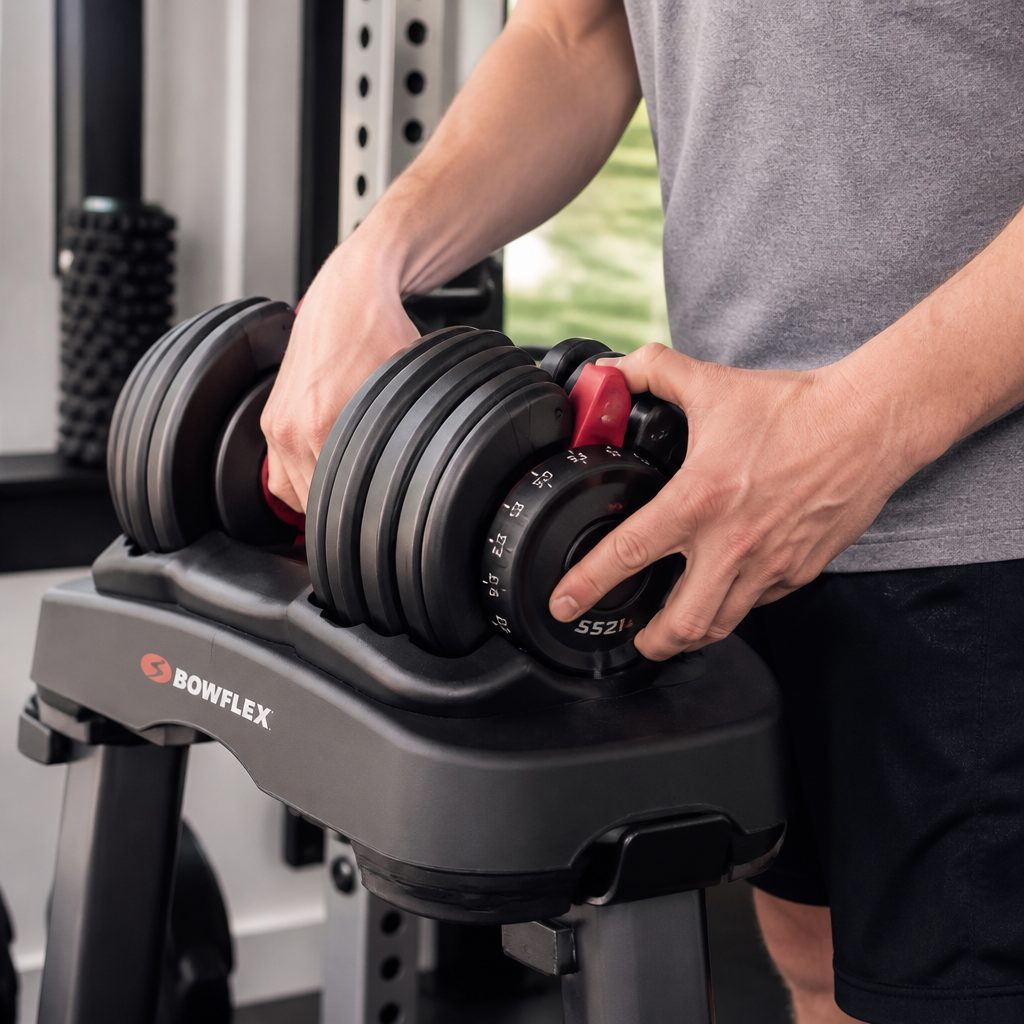
The important safety question is not whether a selector looks neat, but whether it fully captures every selected plate before the dumbbell leaves its cradle.
But they are more mechanically complicated than a fixed dumbbell. A conventional hex dumbbell is gloriously dull. It is one solid object. There is no selector dial, no cradle alignment, no locking tongue, no plate carrier and no possibility that you have chosen 20kg but somehow only half-engaged the thing that is meant to hold 20kg together. You pick it up, it is a dumbbell. The end.
An adjustable dumbbell asks a mechanism to do that work every time you change the load. That does not make it a bad idea. It simply means your habits matter more. The selector must fully engage. The plates must sit correctly in the tray. The handle must come out cleanly. The dumbbell must not have been damaged by being dropped. And, perhaps most importantly, you need to be willing to stop using it when something feels wrong rather than convincing yourself that the odd rattle is probably "just how they are".
The sensible conclusion after the recall: treat any adjustable dumbbell as a load-bearing mechanism, not as a plastic household gadget. Inspect it, use it in the way its selector requires, and keep people, pets and bare toes out of its fall zone.
The Bowflex incident did not prove that every adjustable system was dangerous. What it did prove was that a failure in a plate-locking system could have nasty consequences very quickly. A plate that slips free during a curl is inconvenient. A plate that slips free during a press, a lunge, a chest-supported row or a movement above shoulder height is a different sort of problem altogether.
So yes: adjustable dumbbells remained a sensible home-gym option in August 2026. They just deserved a little more respect than the marketing photos sometimes suggest. Those tidy little cradles are not magic. They are machinery.
2. What happened in the Bowflex SelectTech recall?
On 5 June 2025, Bowflex recalled approximately 3,844,200 adjustable dumbbells. The recall covered BowFlex SelectTech 552 and SelectTech 1090 dumbbells sold between 2004 and May 2025. These were long-running products rather than a one-season oddity, which is exactly why the news landed so heavily with home-gym owners. There were plenty of them in garages, garden rooms, flats and second-hand listings.
The issue was straightforward to describe and unpleasant to imagine: weight plates could dislodge from the handle during use, creating an impact hazard. The manufacturer and sellers received 349 reports of plates dislodging. Of those, 111 reportedly resulted in injuries, including concussions, abrasions, contusions and broken toes.
Those figures are worth taking seriously without becoming melodramatic about them. A recall figure is not a prediction that every dumbbell will fail. It is, however, more than enough evidence that a particular design family had a real safety problem. It also gives us a useful lens for judging any adjustable set, whether it carries the Bowflex name or not: can the user lift the handle when the lock is partly engaged, worn, dirty or damaged?
The recalled SelectTech 552 adjusted from 5 to 52.5lb using manual adjustment knobs, whilst the SelectTech 1090 ran from 10 to 90lb in 5lb increments. Both used steel plates encased or coated in polypropylene, and both relied on the dumbbell being correctly selected in its base before the chosen plates were lifted with the handle.
Bowflex had previously recalled the SelectTech 1090 in 2012 over a similar selector-dial concern, with a repair kit offered at the time. With hindsight, that earlier episode matters because it tells us something useful: selector mechanisms are the critical part of the product. They are not a cosmetic add-on. If the selector has a known weakness, the dumbbell's impressive weight range is beside the point.
The useful lesson from the recall
Do not judge an adjustable dumbbell by the number of weight settings alone. The more useful question is whether the locking system gives a clear, repeatable full-engagement signal and refuses to let you lift the dumbbell when the selection is incomplete.
If you owned a recalled Bowflex SelectTech 552 or 1090, the sensible approach was to stop using it and follow the recall instructions applicable to that product. If you saw one in a second-hand listing now, it should not be treated as a bargain simply because it has a wide range. Its history is part of the product. A cheap adjustable dumbbell with a plate-retention concern is not a cheap way to train; it is just a more elaborate way to drop metal on yourself.
3. Understand the failure modes before you inspect anything
"The plates can come off" is the headline. The practical detail is where safer buying and safer training begin. Adjustable dumbbells can fail in a few related ways, and knowing them makes you much less likely to miss a warning sign.
Partial lock engagement
This is the main concern. The dial may appear to be near the selected weight, but the internal capture system has not fully locked every intended plate. If the dumbbell can be lifted in that state, a plate may separate when the angle or force changes mid-rep.
Mis-seated plates in the cradle
When a plate is not sitting flat in its tray, the handle can meet it imperfectly. Dragging the handle sideways out of the base, rather than lifting straight up, can make that worse and may put unnecessary strain on the selector components.
Impact damage after drops
Dropping a loaded adjustable dumbbell can damage plate seats, selector parts or the plastic-coated plates themselves. Unlike a cast-iron hex dumbbell, it was not designed to shrug off being repeatedly launched at the floor.
Wear, dirt or rough dial action
Grit, damaged edges and worn parts can make a dial feel vague or gritty. That matters because a selector should give a clear end point. A setting that feels mushy, catches between numbers or needs persuasion is not a setting to lift from.
There is another failure mode that gets less attention because it begins with the user rather than the product: choosing a setting between marked positions. A dial or selector that is not fully on a number should never be treated as "close enough". The tiny bit of extra time needed to turn it back, choose the weight cleanly and confirm the click is an extremely good trade for avoiding a plate at ankle level.
Equally, do not assume that a lock is safe merely because it worked at a light load. A mechanism that feels fine when you lift 5lb may behave differently when several plates are selected. That is why an inspection needs to cover more than the lowest and highest settings. Move through the range. Pick the dumbbell up carefully at several points. Listen and feel.
There is no award for bravely finishing a session with gear you do not trust. If a dumbbell clacks, shifts, catches, visibly sits unevenly or feels different from its partner, stop. Use fixed dumbbells, bodyweight movements, resistance bands or a different exercise for the day. Your programme will survive. Your foot would rather not become part of a consumer-safety statistic.
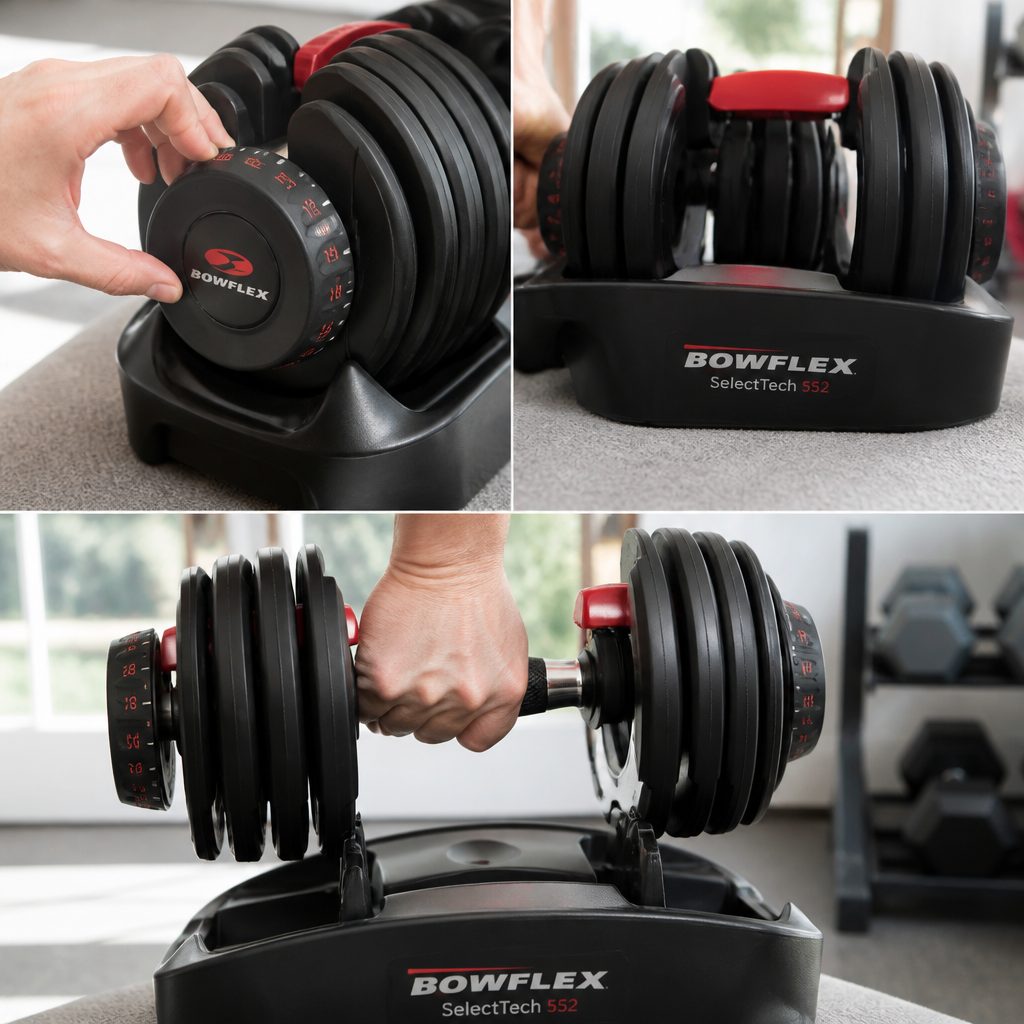
A close inspection should include the selector position, the plate seats and the way the handle lifts clear of the storage tray.
4. The five-minute inspection routine before every workout
You do not need to dismantle an adjustable dumbbell before each session. In fact, if a product needs that level of ceremony just to make a few curls possible, it has rather missed the point. What you do need is a quick, consistent routine. Once learnt, it takes about five minutes for a pair and becomes as automatic as checking that a bench pin is seated.
- Clear the tray and the plates. Look for obvious cracks, deformation, loose material, dirt or anything trapped around the plate seats. Wipe away dust or grit. The dumbbell should sit flat and calmly in its base, not perch at an odd angle.
- Check both dials or selectors without lifting. Turn them slowly through several settings. Each chosen number should be deliberate. You are looking for a positive click or detent, not a vague stop between markings.
- Choose a light setting first. Make sure both ends of the dumbbell show the same selected load where the design uses two adjustment points. A mismatched selection is an immediate stop-and-reset moment.
- Lift vertically from the cradle. Do not drag the handle towards you or twist it free. Pull straight up, slowly enough to feel whether every selected plate came with the handle as intended.
- Do a gentle tug-and-twist check. Hold the dumbbell low, over the tray or a clear floor area, and give it a light upward pull with a tiny controlled twist. Do not shake it about like a cocktail. You are checking for clicking, shifting, play or a plate that seems reluctant to stay aligned.
- Repeat at the working load. Select the weight you actually plan to use and repeat the lift. If you are moving from a light warm-up to a substantially heavier pressing or rowing set, this second check matters.
I would add one small rule: do the check before the first hard set, not when you are already lying back on a bench, halfway through a superset and trying to remember whether you chose the right number. Adjustable dumbbells reward boring little routines. It is not glamorous, but neither is a concussion.
Signs you can proceed
- The selector reaches a marked setting cleanly and consistently.
- The plates lie evenly in the base before lifting.
- The handle rises straight out without dragging or catching.
- There is no unexpected click, rattle or lateral movement during a gentle check.
- Both dumbbells feel and behave in the same predictable way.
Signs to stop using it
- A dial stops between numbers or will not give a clear engagement point.
- A selected plate stays behind, shifts or looks misaligned.
- The handle catches when it is lifted from the cradle.
- There are cracks, damaged plate seats or obvious impact damage.
- The dumbbell suddenly feels different from its normal operation.
Do not use a hard test to prove that a suspect dumbbell is unsafe. There is no need to swing it overhead or give it a dramatic shake. The goal is not to recreate a failure. The goal is to spot the reason not to lift before a failure gets the opportunity.
5. Use adjustable dumbbells in a way that protects the mechanism
Most people do not deliberately abuse their kit. They just train quickly. A little haste at the wrong point, though, can be enough to make an adjustable dumbbell work harder than it should.
First, change the load whilst the dumbbell is fully seated in its base. This sounds obvious, but it is the foundation of the whole system. The plates need the base for alignment. Trying to alter a dial when the dumbbell is partly out, tilted or resting awkwardly on one end is not a clever shortcut. It is a good way to create a selection you have not properly verified.
Second, lift it vertically. The selected plates should come away in a straight line. Pulling the handle forwards, sideways or at a steep angle can create friction at the plate interfaces and make the mechanism feel rougher than it should. The same goes for returning it: lower it into the tray with control, make sure it is properly seated, then release it. Avoid dropping it from the final few centimetres because you are tired. That last little clunk adds up over time.
Third, keep the dumbbell's travel under control. Adjustable models are especially poor candidates for exercises where the whole point is to throw, slam or deliberately drop the load. They are not for dumbbell snatches performed with a careless catch. They are not for weighted plyometric work. And they are absolutely not for testing how loud your downstairs neighbours can become.
That does not mean you must limit yourself to tiny isolation movements. Controlled goblet squats, rows, presses, split squats, Romanian deadlifts, curls, floor presses and carries can all be perfectly sensible uses if the dumbbell is sound and the movement is under control. The key distinction is between controlled training and uncontrolled impact.
When working at the heavier end of a dumbbell's range, be more conservative with positioning. Set up for floor presses and bench presses with the dumbbells close to your body, rather than kicking or heaving them into place. For shoulder work, avoid swinging the bells from the floor to the rack position. A calm clean-and-press is one thing; flinging a mechanically complex dumbbell into the air is another.
Finally, footwear is not a silly footnote here. The injury reports connected with the recall included broken toes. Training barefoot is perfectly normal for some exercises, especially lower-body work, but it leaves no margin for an unexpected falling plate. If you use adjustable dumbbells in a busy shared room, keep your feet protected and ensure children and pets are nowhere near the storage trays. A dog does not understand progressive overload, unfortunately.
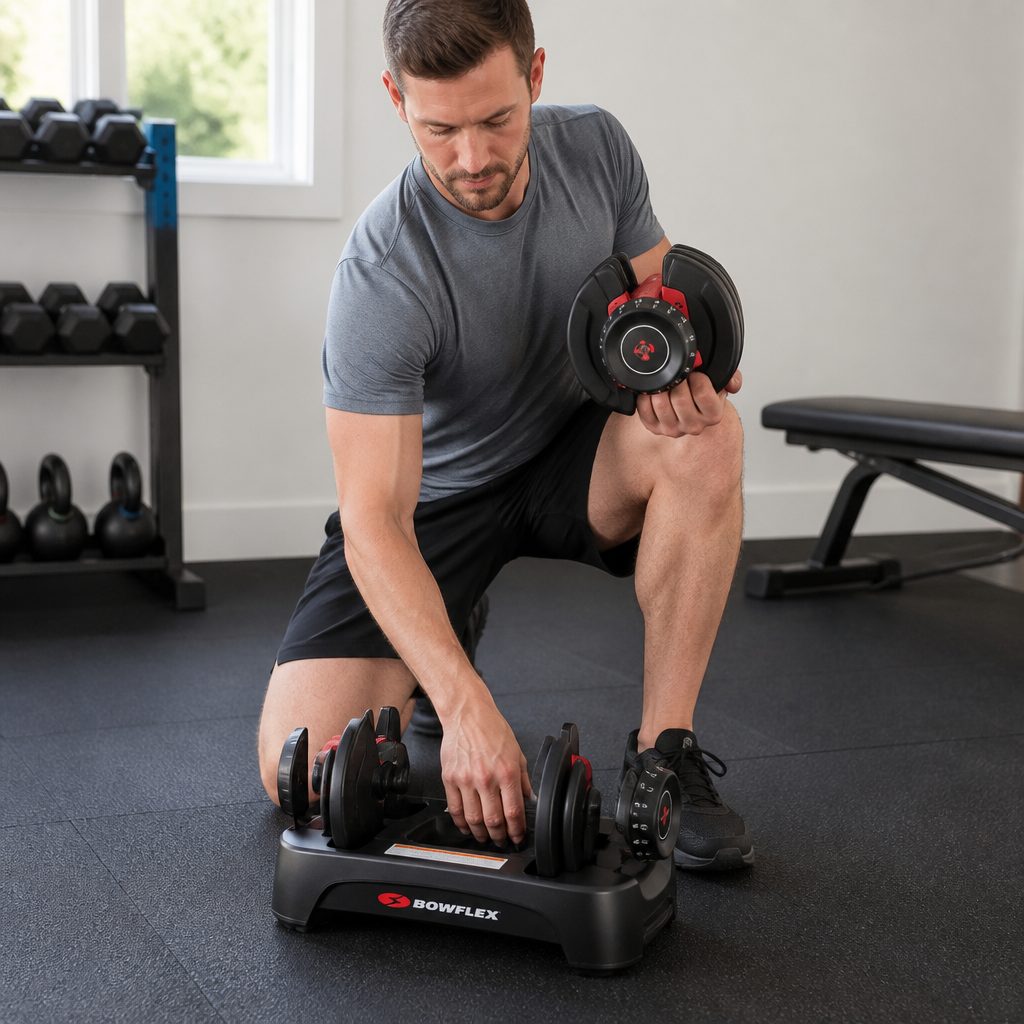
Controlled lifts and careful returns to the cradle reduce the avoidable knocks that can damage selector components over time.
6. What to look for when buying second-hand adjustable dumbbells
The second-hand market is where you need to be particularly switched on after the Bowflex recall. Adjustable dumbbells are ideal candidates for resale because they are expensive-looking, compact and easy to photograph. They are also exactly the kind of item that might have had a hard life in a garage gym, been dropped on concrete or been sold because something did not feel quite right.
If you are looking at any older BowFlex SelectTech 552 or SelectTech 1090 unit from the recalled 2004-to-May-2025 period, do not buy it as ordinary used equipment. Its recall status should be the first thing in the conversation, not a detail to discover after you have carried it home.
For other adjustable designs, ask to inspect the pair in person where possible. A seller's photograph cannot tell you whether a dial has a positive lock. It cannot show whether the handle drags out of the tray. It certainly cannot tell you whether one plate intermittently stays behind and then releases at an awkward moment.
Start by looking at the storage tray. It should not be cracked, warped or bent in a way that stops the plates sitting squarely. Then inspect the plates and their coated surfaces. Scuffs happen. A home gym is not a museum. But cracks, splits, loose sections, badly chewed edges or material that looks distorted after impact are reasons to walk away.
Turn every selector slowly. You are listening for consistency. A good mechanism should not make one setting feel crisp and the next feel as though you are stirring porridge. Check the lowest, middle and higher settings, then lift straight up at each one. You do not need to perform a workout in the seller's hallway. You do need enough confidence that the selected plates rise as one unit and return to the base cleanly.
Second-hand rule worth keeping
If a seller will not let you select, lift and re-seat the dumbbell at several settings, treat that as useful information. The safest adjustable dumbbell is the one you can inspect properly before it becomes your problem.
Ask whether the dumbbells were ever dropped and whether any repair work was attempted. You may not get a perfectly forensic history. Most people cannot remember every bump their kit has taken. Still, a straightforward answer is better than a vague one, and a seller who says "it sometimes sticks but it's fine once you get used to it" has already given you your answer. It is not fine.
Also inspect both dumbbells, not just one. Pairs can age differently. One may have been used for almost every unilateral set whilst the other sat in the tray looking decorative. Make sure the adjustment range, plate count and action match. If one handle has noticeably more movement or a different sound, do not assume it will settle down.
7. BowFlex SelectTech 552, SelectTech 1090 and Results Series: the practical differences
Shop BowFlex SelectTech 552, SelectTech 1090 and Results Series on Amazon UK
It is useful to separate the recalled BowFlex models from the later Results Series models rather than assuming every product with a similar silhouette is the same thing. The recalled BowFlex SelectTech 552 and SelectTech 1090 were the models associated with the 2025 action. The subsequent BowFlex Results Series 552 and Results Series 1090 used premium metal components and a locking system designed so that the dumbbell locks only when a new weight has been fully selected.
That design point is important. On the Results Series models, you turn each adjustment dial or handle to the selected number until it clicks into place. If the selector is between settings, it locks and the dumbbell cannot be removed until a new weight is fully selected. In plain English: it is intended to prevent the very dangerous grey area where a user might lift a partially selected dumbbell.
| Feature | BowFlex SelectTech 552 | BowFlex SelectTech 1090 | BowFlex Results Series 552 | BowFlex Results Series 1090 |
|---|---|---|---|---|
| Recall status | Recalled model | Recalled model | Post-recall replacement model | Post-recall replacement model |
| Weight range | 5 to 52.5lb | 10 to 90lb | 5 to 52.5lb | 10 to 90lb |
| Increment detail | Manual adjustment knobs | 5lb increments | 2.5lb increments up to 25lb | 5lb increments |
| Plate construction | Steel plates encased in plastic moulding | Polypropylene-coated steel plates | Polypropylene-coated steel plates | Polypropylene-coated steel plates |
| Stated locking approach | Manual selector system | Automatic locking mechanism | Cannot be removed between settings | Cannot be removed between settings |
| Grip detail | Not specified | Not specified | Non-slip grips | Knurled hand grips |
| Warranty | Not specified | Not specified | 2 years | 3 years |
The Results Series 552 covered 5 to 52.5lb and used 2.5lb steps through the first 25lb. That makes it the more natural match for people who value smaller jumps during presses, raises, rehabilitation-style work and gradual progression. The Results Series 1090 started at 10lb and ran to 90lb in 5lb increments. It replaced 17 sets of weights, while the 552 replaced 15 sets.
Neither range is automatically "better". A heavier maximum is useful for rows, deadlifts, loaded squats and stronger lifters. Smaller jumps are useful where a 5lb increase can feel disproportionately large, such as lateral raises or a single-arm press. What matters most in this guide, though, is not simply range. It is whether the selector system keeps you out of an incomplete setting and whether you remain willing to inspect it.
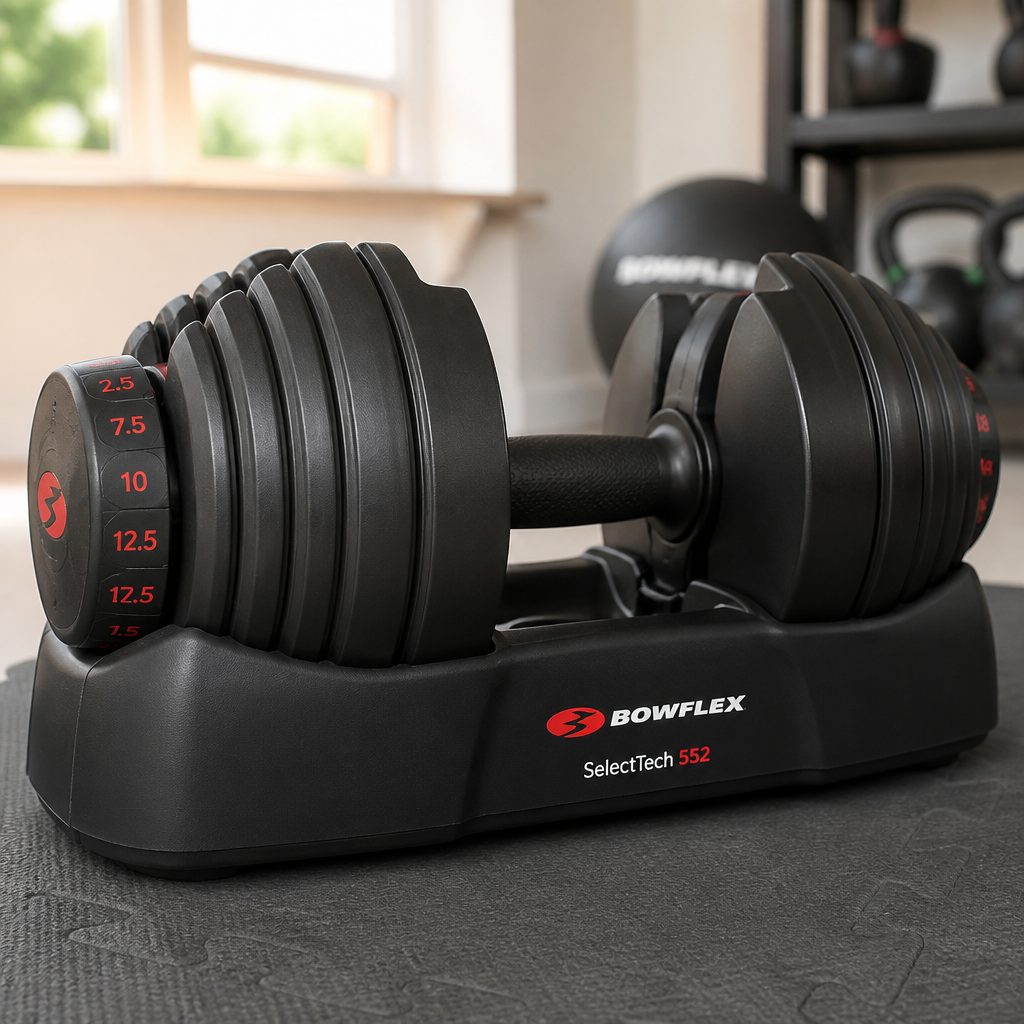
Later Bowflex Results Series models were designed around a full-selection lockout, making correct dial engagement the central part of the user experience.
8. Best-for breakdown: choose by training needs, not just the biggest number
A sensible purchase decision starts with the weights you genuinely use, not the weight you hope to use once your training montage begins. There is no prize for buying a 90lb-capable adjustable dumbbell if your training revolves around lighter presses, rows and lower-body work. Equally, there is little point choosing a lighter range if you already know you will outgrow it quickly for compound lifts.
Best for gradual progression: BowFlex Results Series 552
Shop BowFlex Results Series 552 on Amazon UK
The 5 to 52.5lb range and 2.5lb increments up to 25lb make this the better fit for beginners and anyone who wants smaller, more manageable increases for upper-body work.
Best for heavier home training: BowFlex Results Series 1090
Shop BowFlex Results Series 1090 on Amazon UK
The 10 to 90lb range is the stronger choice for lifters who need more load for rows, squats, Romanian deadlifts and heavy pressing variations.
Best for the key safety concern: Results Series lockout design
The key attraction is not a cosmetic feature but the stated inability to remove the dumbbell when the selector sits between settings. Full selection is required.
Best avoided second-hand: recalled SelectTech 552 and 1090
Models sold between 2004 and May 2025 fell within the 2025 recall. A tempting used listing does not outweigh a known plate-disengagement history.
For a beginner, I would prioritise clear adjustment, manageable increments and a range that covers the exercises you can perform with good form now. Plenty of useful programmes can be built around a maximum of 52.5lb per dumbbell, particularly if you use unilateral work, pauses and slower tempo. More weight is not always more useful. Sometimes it just makes the storage tray more annoying to move.
For an experienced home lifter, the 90lb maximum of the Results Series 1090 will be more meaningful. Rows, Bulgarian split squats and dumbbell Romanian deadlifts can outgrow lighter ranges quickly. The trade-off is that 5lb jumps can be noticeable in smaller isolation lifts, so it helps to have another progression method available: additional repetitions, slower eccentrics, extra sets or a reduced rest period.
For any buyer, the best safety feature remains the one you actually use correctly. A full-selection lockout is helpful. So is a clear click. But neither substitutes for putting the dumbbell in the cradle properly, selecting the number deliberately and checking it before lifting. Equipment design can reduce risk; it cannot eliminate the need for a switched-on user.
9. Build a safer adjustable-dumbbell training area
Your dumbbells do not operate in isolation. The floor, storage spot and people around you all affect how safely they can be used. It is worth setting up the training area so that one small error does not turn into a larger one.
Start with a stable, level surface. The storage trays need to sit flat. If one corner rocks, if the base sits on a sloping garage floor, or if it is perched on a thick uneven rug, the plates may not settle as cleanly as they should. A firm floor covering suitable for gym equipment makes life easier. You want the tray stable, accessible and visible.
Give yourself enough space to place the dumbbells down in their trays without stepping around furniture. That is particularly important when you are tired after a hard set. If returning the dumbbells means shuffling sideways between a sofa and a radiator, the odds of an awkward angle rise. A clear landing zone is boring but useful.
Keep the storage trays in their intended orientation and do not stack random items on them. Resistance bands, towels and water bottles have an astonishing ability to migrate into places they should not be. Anything trapped beneath a plate or jammed around a selector can interfere with normal seating.
Make the return path obvious
Set the trays where you can see them and lower the dumbbells back down deliberately. You should never be guessing where the cradle is while holding a heavy load.
Protect your feet and clear the floor
A clear floor reduces trip hazards, whilst training shoes add a little protection if a plate or dumbbell is dropped unexpectedly. Injury reports from the recall included broken toes for good reason.
Create a no-go zone for others
Children, pets and distracted adults should not be walking through the lifting area. It only takes one wandering foot near a tray to make a controlled return much less controlled.
It is also sensible to keep a simple note of any odd behaviour. That need not be a maintenance log worthy of an aircraft hangar. Just make a note if a selector started feeling rough, a particular setting failed to lift cleanly or the dumbbell suffered a drop. If the behaviour appears again, you have a pattern rather than a vague memory.
One last point on storage: do not leave the dumbbells selected at an arbitrary heavy setting simply because that was your final set. Return them carefully to their trays. Before the next workout, you will start from a known, tidy position rather than discovering the previous session's hurried ending when you are trying to warm up.
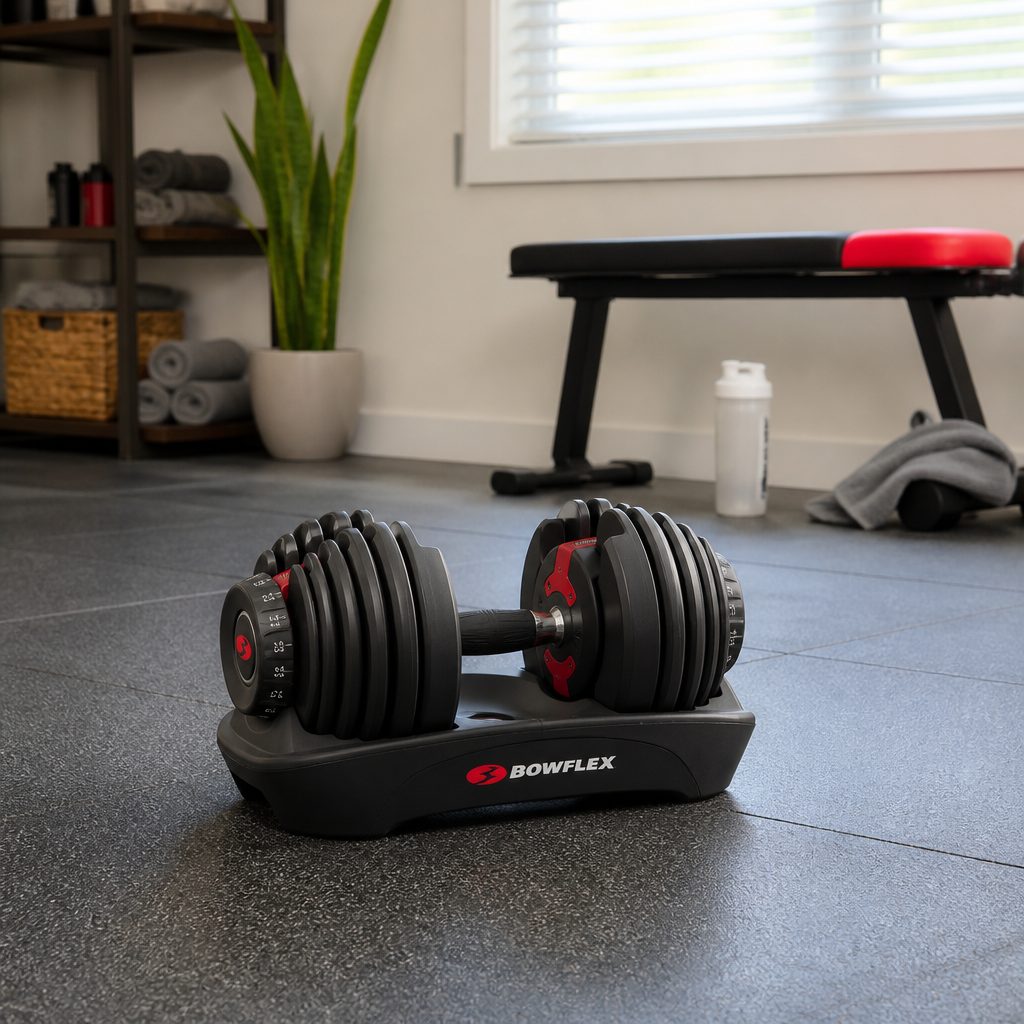
A level, uncluttered training area gives adjustable dumbbells the stable cradle alignment they need and gives you a safer place to return them after each set.
10. When a fixed dumbbell is the safer and simpler answer
There is a perfectly respectable answer to all of this: buy or use fixed dumbbells instead. That is not defeat. It is simply choosing the tool that best suits your training style.
Fixed dumbbells are usually the better choice if you train in a way that involves frequent drops, fast transitions or very dynamic movements. They are also more forgiving in a shared training space, where different people may use the equipment and not all of them will be equally diligent about checking selector settings. A solid dumbbell still needs sensible handling, obviously, but it has fewer moving parts waiting to be misunderstood.
If you are a complete beginner, there is an argument for either route. Adjustable dumbbells keep a room uncluttered and allow easy progression. Fixed dumbbells remove a layer of operational complexity. The deciding factor is your temperament. If you are methodical and happy to follow a small inspection routine, adjustables can work well. If you know you tend to rush through sessions, leave gear lying around and treat every set like a fire drill, simpler kit may suit you better.
For heavier lifters, a mixed setup often makes sense. Adjustable dumbbells can cover a broad range of controlled presses, rows and accessories, whilst a small number of fixed dumbbells can handle movements where speed, repeated handling or a more robust feel matters. It does take more space, but it can make training smoother.
There is no moral superiority in adjustable dumbbells. Their real advantage is space efficiency and flexible loading. If those benefits do not outweigh the need for selector care in your home gym, fixed dumbbells may simply be the better fit.
Whichever route you choose, the basic safety principle stays the same: use equipment that is sound, appropriate for the movement and handled with control. A fixed dumbbell can still hurt you if dropped. An adjustable dumbbell merely gives you one more mechanism worth respecting.
11. A final pre-purchase checklist for 2026
Before buying an adjustable pair, whether new, refurbished or second-hand, run through these questions. They are more useful than getting lost in glossy product photography and trying to decipher whether "premium" means anything beyond a nicer font on the box.
- Does the dumbbell use a clearly defined plate-retention system?
- Does the selector give a distinct full-engagement point rather than sitting ambiguously between settings?
- Can it be removed from the tray when a setting is incomplete, or is there a lockout?
- Can you inspect the actual pair at several settings before buying second-hand?
- Are the trays, plates and selector areas free from cracks, warping and impact damage?
- Does the range suit your real exercises, rather than merely looking impressive on paper?
- Will you use the dumbbells for controlled strength work rather than dropping or throwing them?
- Do you have a level, uncluttered space where the trays can sit securely?
- Will everyone who uses the equipment understand the selector routine?
The Bowflex recall made this sort of checklist feel less optional. That is not a bad thing. Home gyms have become more capable, and compact adjustable equipment has become more common. A little more attention to the mechanism is simply part of using that convenience responsibly.
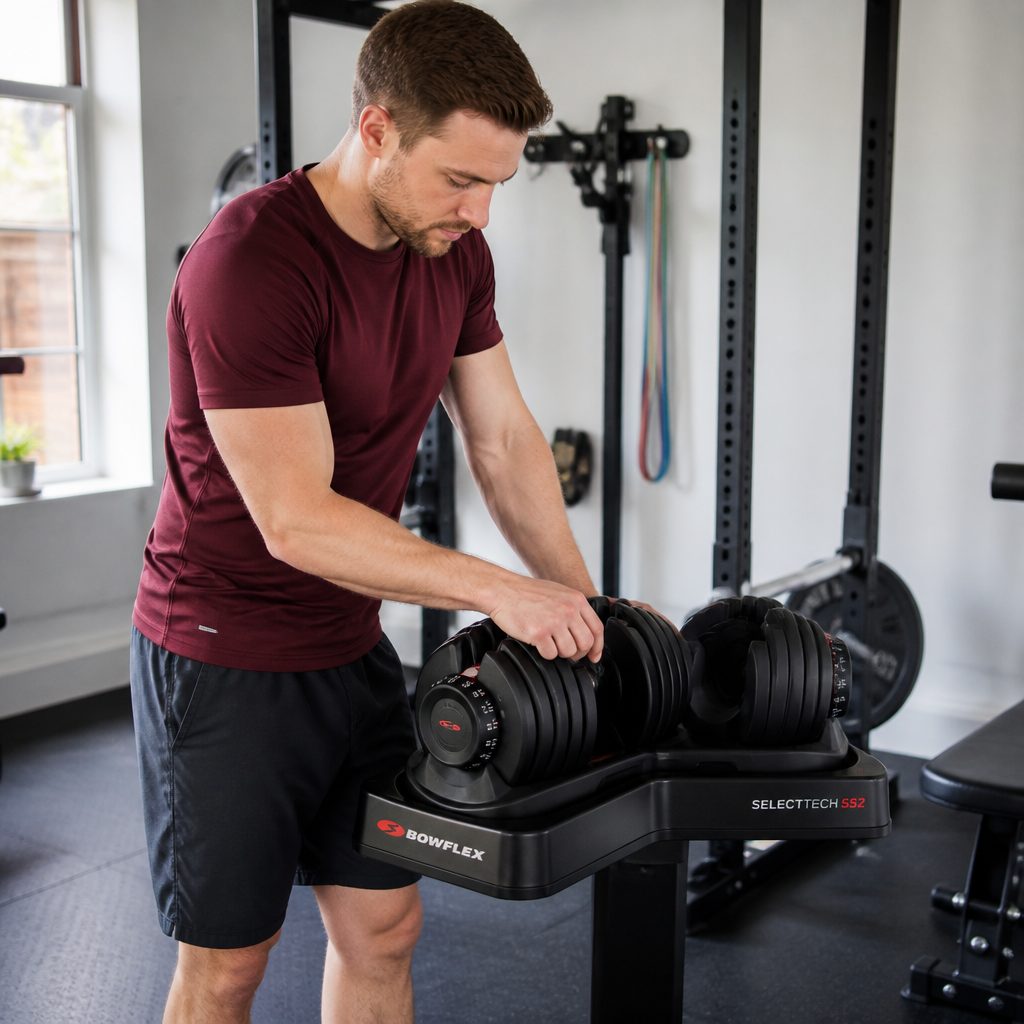
Before committing to any adjustable system, make sure its range suits your training and that the selector routine feels clear enough to follow every single session.
12. Adjustable dumbbell safety FAQs
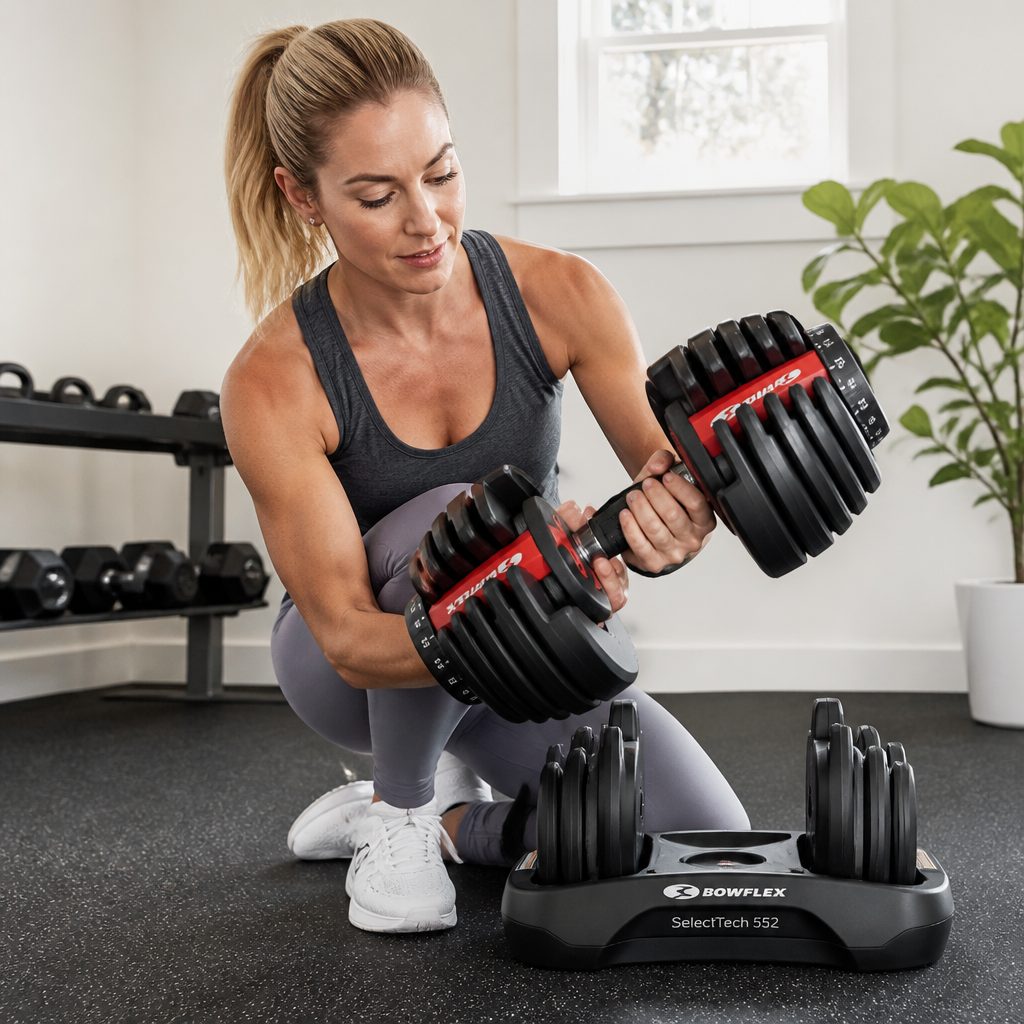
The best adjustable dumbbell is not merely compact or heavy; it is one you can select, inspect, lift and return to its tray with complete confidence.
The bottom line
Adjustable dumbbells were still a safe and useful home-gym option in August 2026, provided you chose a sound design and treated its selector system seriously. The Bowflex recall was a sharp warning that plate retention mattered more than convenience claims or the number printed on a dial.
Avoid recalled BowFlex SelectTech 552 and SelectTech 1090 models from the 2004-to-May-2025 period. If you are considering a later Bowflex Results Series model, use its full-selection lockout as intended: set the dial cleanly, wait for the click, lift vertically and stop immediately if anything feels vague, gritty or loose. That modest routine is not overcautious. It is simply good gym sense.