
Google Pixel Watch 5 Review: Is the Cloud-GPS Claim Real for Gym and Outdoor Training?
Google's Pixel Watch 5 arrived in August 2026 with a very specific boast: route mapping up to twice as accurate as previous Pixel Watch generations in difficult places. That is a properly ambitious claim, not the usual "now with even more wellness" fog. For gym regulars, runners and walkers who train around Britain's towers, terraces, trees and occasionally quite aggressive weather, it matters. Here is how the Cloud-GPS promise held up, and whether the rest of the watch earned its place on your wrist.
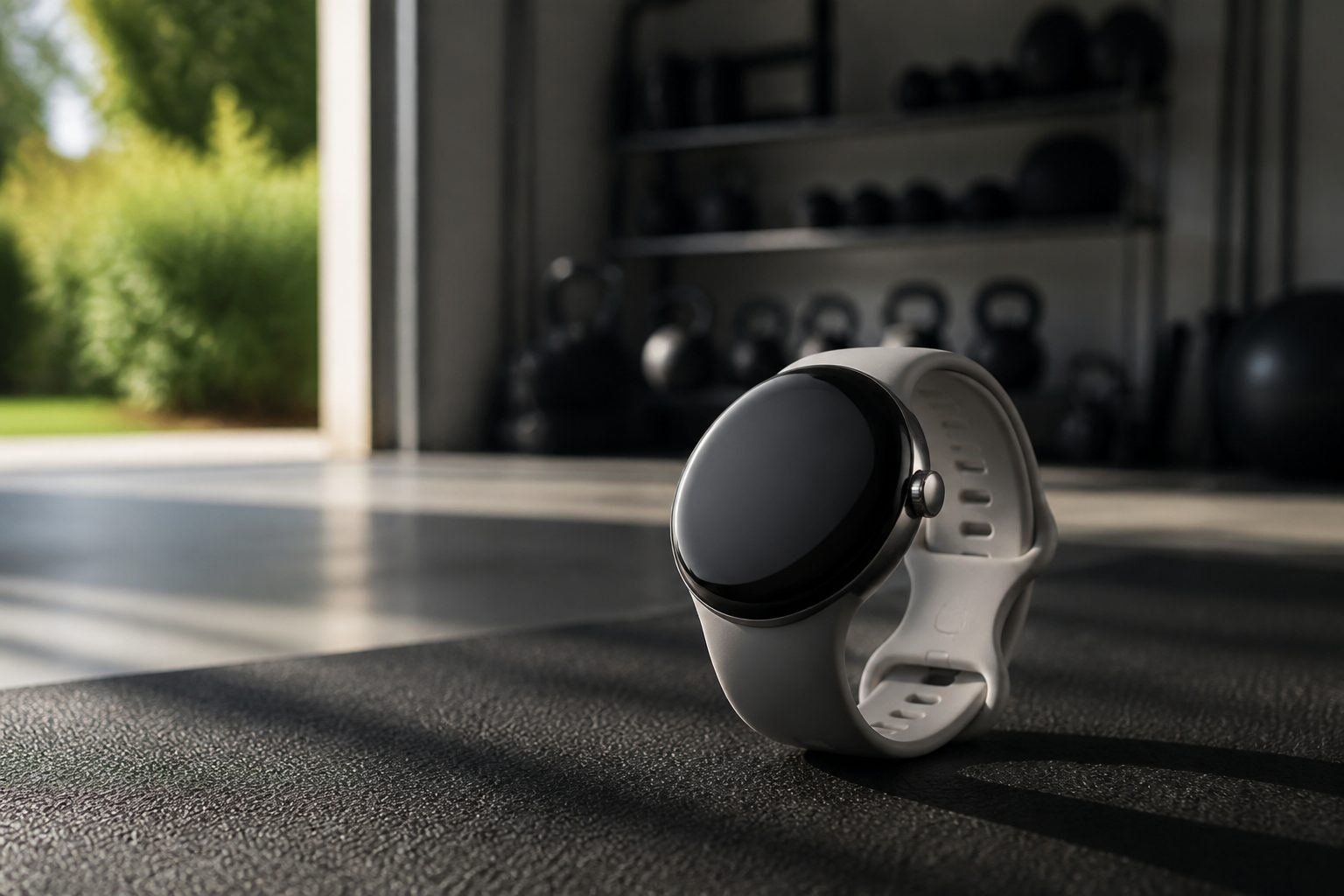
The Pixel Watch 5 paired its familiar round watch shape with a new Cloud-GPS system designed to tidy up the routes that city buildings usually make a mess of.
 By James Oduya · Staff Writer & Home Gym Columnist · Updated September 18, 2026
Google Pixel Watch 5 at a glance
The Google Pixel Watch 5 launched on 12 August 2026, with sales opening on 20 August 2026. It came in 41mm and 45mm case sizes, each offered in Wi-Fi and LTE versions. The basic formula was recognisably Pixel Watch: a compact, domed, very smartwatch-looking wearable rather than a rugged satellite-navigation biscuit strapped to your arm.
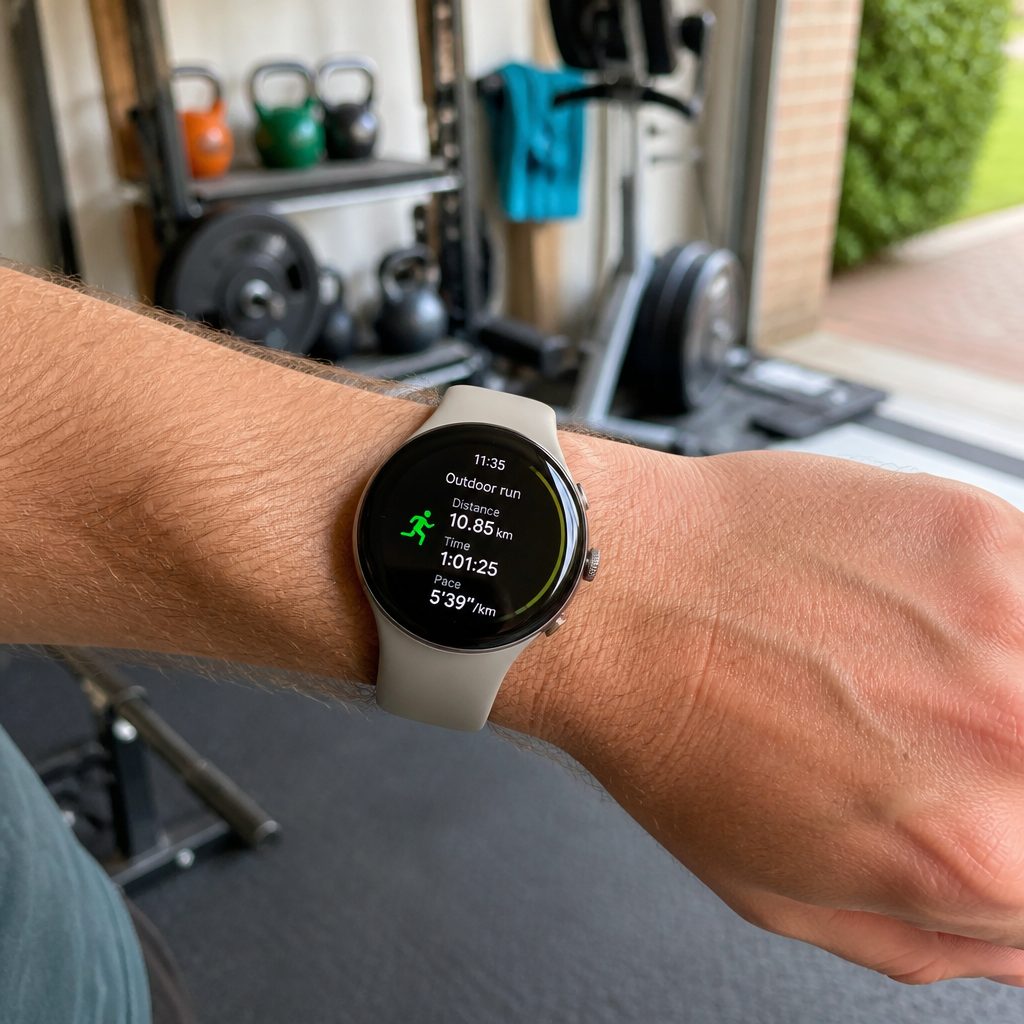
The Pixel Watch 5 was strongest as a polished daily smartwatch that could also produce unusually convincing post-run route data in difficult city conditions.
The headline change was not cosmetic. Google put serious emphasis on post-workout route correction through its Cloud-GPS system. Rather than trusting the watch's live satellite trace alone, Google combined Android Location technology, atmospheric corrections, a GNSS reference-station network, 3D building models and corrections for signals bouncing off buildings. The recorded route was then reprocessed after the session. The underlying thought is sensible: GPS does not suddenly become useless near tall buildings, but it does become confused, and a watch that can recognise that confusion has a useful advantage.
There is no escaping the fact that this is a premium smartwatch rather than a basic gym tracker. But the Pixel Watch 5's best argument is not that it does everything. Plenty of watches have attempted that and ended up feeling like a tiny admin department. Its better argument is that it improves the data that actually affects runners: pace, distance, route and effort.
Design, fit and that neatly domed display
Both versions measured 12.3mm thick, which kept the Pixel Watch 5 from disappearing under a cuff but stopped it becoming comically tall. The 41mm weighed 31.0g without a band, whilst the 45mm weighed 36.7g. Neither figure suggested a watch that would feel like a kettlebell during burpees, and the smaller model made the most sense for people who dislike oversized sports watches.
The 45mm had a 45mm diameter and, unsurprisingly, felt more spacious for mid-run glances at pace, heart rate and distance. It also carried the larger battery. The 41mm was not merely a cut-down version for smaller wrists, though; it was the more discreet daily-wear option, especially if you spend as much time typing, lifting, commuting and sleeping as you do chasing kilometres.
The domed Gorilla Glass 5 face gave the watch a smoother, less technical character than a square smartwatch. That was lovely when swiping through everyday widgets and still practical in the gym, where the round display did not feel cramped for timers or workout prompts. The Actua 360 OLED could alter its refresh rate between 1Hz and 60Hz and reached 3,000 nits at peak brightness. Outdoors, this was the sort of brightness that made a difference rather than another number added to a launch presentation because somebody had brought a laser pointer.
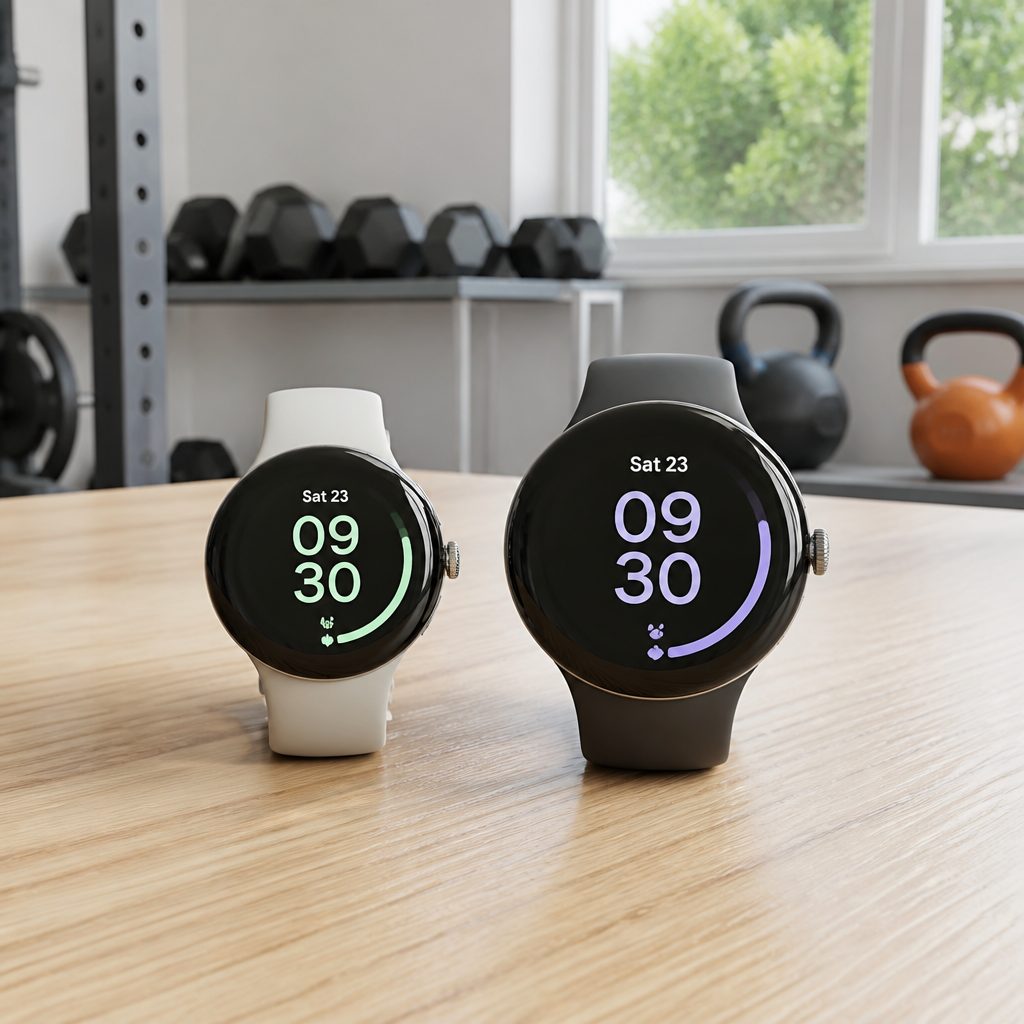
The 41mm Pixel Watch 5 is the lighter, subtler option, while the 45mm gives outdoor trainers more screen space and the larger battery.
The 5 ATM and IP68 ratings made the Pixel Watch 5 a credible all-weather training companion. It was designed to comply with 5 ATM water protection under ISO 22810:2010 and dust and water protection under IEC 60529. That is reassuring for sweat, rain, dusty gym floors and the inevitable moment you forget it is still on your wrist.
The Cloud-GPS claim: what Google actually meant
"Twice as accurate" has the potential to sound a little too tidy. Routes are messy things. A city run can include a riverside path, bridges, parks, pavement diversions, tall office blocks and the odd point where you duck into a shop because your gels have gone missing. No single number can describe every one of those conditions.
Google's claim was narrower than the slogan made it sound. Its internal testing described up to two times greater route-map accuracy than previous generations in the toughest environments. The study used pre-production Pixel Watch 5 devices in July 2026, with outdoor running, walking and cycling sessions of three hours or less in challenging urban areas under good network conditions. Apple Watch Ultra 3 and Garmin Fenix 8 Pro were included as leading competing devices.
Google measured the mean difference between each device's recorded track points and ground truth. Put simply, a point that was two metres away from the real route scored better than one four metres away. That is a sensible way of judging the physical line on the map, but it does not mean the Pixel Watch 5 ran faster, had a better live pace display, or necessarily produced a materially different total distance on every route. It meant its corrected line was closer to where the runner actually went.
The important distinction
Cloud-GPS was a post-processing feature. Your route could look cleaner after the workout than it did while you were running. For training analysis, that is excellent. For somebody trying to navigate a new trail turn by turn without a phone, it is a different question entirely.
That distinction is worth holding on to. A beautiful activity map after the event is genuinely useful for checking distance, comparing a familiar route or confirming whether a city race went around the course it claimed to. But it does not make the watch a substitute for a dedicated mapping device if real-time navigation is the thing you need most.
Does route mapping really improve on a run?
In the testing that mattered, the answer was yes. The Quantified Scientist gave the Pixel Watch 5's corrected GPS a score of 90 out of 100 after a week of evaluation, calling it "great". That is not faint praise from a reviewer who has built an audience largely by refusing to accept that a sleek app screen is the same as useful measurement.
DC Rainmaker's assessment was even more striking: the Pixel Watch 5's corrected tracks were described as "by far the most accurate GPS tracks we're seeing in sports tech today". His explanation of Google's methodology also helped put the claim in perspective. This was not just Google looking at whether a finished route seemed generally close to the road. It was about the mean distance between recorded points and a ground-truth track.
TechRadar's real-world test around the London Marathon course gave the claim a bit of human context. Around Canary Wharf, where tall buildings had previously made Apple and Garmin tracks lose their way, the Pixel Watch 5 stayed closest to the route. Anyone who has reviewed a GPS trace through a dense part of London will understand why that is significant. You can run in a dead straight line and later find that your watch believes you spent several minutes hopping between roads like an indecisive pigeon.
London's dense Canary Wharf towers are exactly the kind of environment in which GPS reflections can pull a route trace off the road or footpath.
The caveat is not a small-print gotcha; it is simply how the system worked. Google's strongest tracks depended on Cloud-GPS correction after the workout, and the internal testing was conducted under good network conditions. If you train where mobile data is patchy, or your priority is instant live metrics rather than the finished activity map, you should treat the result as a meaningful advantage rather than magic.
Google Pixel Watch 5 versus its two sizes
The two-size approach was less about style and more about daily compromises. The 41mm Pixel Watch 5 had a 332mAh battery and a claimed 30 hours with always-on display, rising to 48 hours with Battery Saver. The 45mm used a 465mAh battery, with claims of up to 40 hours always-on and up to 72 hours in Battery Saver.
That makes the 45mm the obvious selection for people who stack outdoor runs, gym sessions and sleep tracking into the same day. The 41mm made more sense if comfort was the decisive factor. The best fitness watch is still the one you actually wear to bed, wear on a recovery day and remember to put on before leaving for a run. Very glamorous stuff. Nobody dreams of battery management, but we all end up doing it.
| Feature | Pixel Watch 5 41mm | Pixel Watch 5 45mm |
|---|---|---|
| Case diameter | 41mm | 45mm |
| Case thickness | 12.3mm | 12.3mm |
| Weight without band | 31.0g | 36.7g |
| Typical battery capacity | 332mAh | 465mAh |
| Claimed always-on battery life | Up to 30 hours | Up to 40 hours |
| Claimed Battery Saver life | Up to 48 hours | Up to 72 hours |
Battery life for gym sessions, running and sleep
The manufacturer estimates were respectable, but outdoor activity use told the more relevant story. In gym and outdoor use, the 45mm managed up to around 10 hours during a hike, whilst the 41mm managed approximately six hours. Those are the figures to think about if you are planning a long day outside with GPS use rather than simply wearing the watch at a desk.
For ordinary gym training, neither model should feel especially fragile. A session of strength work, a commute and some sleep tracking were well within the sensible routine of a daily charge. For long runs, hiking, cycling or a weekend away from the charger, the 45mm was the safer choice. Daily charging was still part of the ownership experience for both models, though. This was not a watch that invited the carefree, charge-it-on-Sunday attitude of a long-battery sports watch.
Charging speed softened that annoyance. The 41mm was listed at about 15 minutes to 50%. The 45mm was also listed at around 15 minutes to 50%, roughly 30 minutes to 80% and about 60 minutes to full. A shower-and-breakfast charge could therefore salvage a day, which is much better than discovering a low battery ten minutes before you are meant to leave for a run.
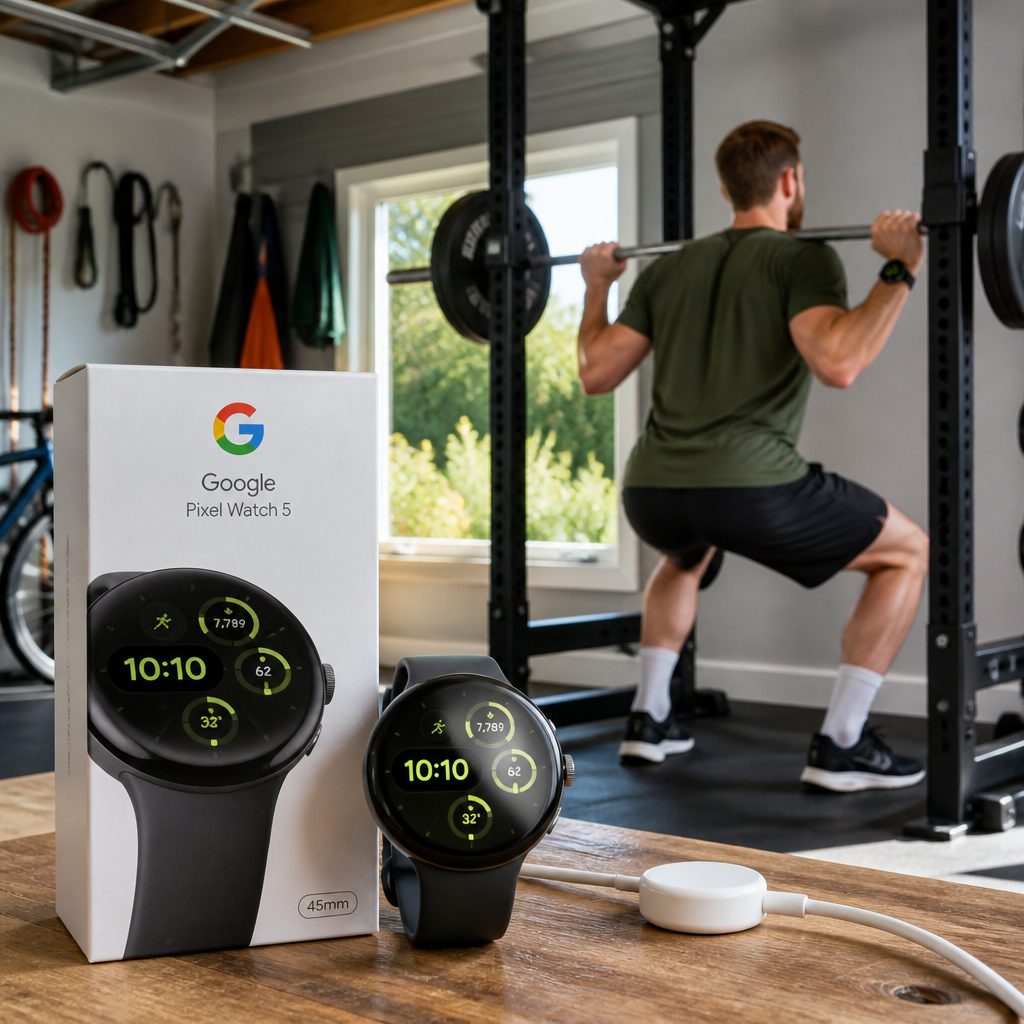
The 45mm model's larger 465mAh battery is the better fit for runners and hikers who use GPS heavily rather than only for the occasional walk.
Gym training: more useful than a glorified rep counter?
The Pixel Watch 5's gym appeal came from the Workout Builder. Introduced during September 2026, it brought personalised routines, audio cues, rest timers, weight and repetition tracking, plus support for strength-training and HIIT structures. That is a welcome step beyond simply detecting that you have moved about a lot near some dumbbells.
A structured workout on the wrist can be particularly helpful when you do not want to spend the entire session prodding your phone between sets. Rest timers are not exciting, but they are useful. Audio cues can keep a HIIT session moving when your concentration has understandably begun to negotiate with your legs. Weight and rep tracking are potentially handy for progressive overload, provided you treat the watch as a logbook rather than a personal trainer with a whistle.
The limitation is that strength tracking remains more complicated than running. GPS has a clear ground truth: there is a physical road or path. A gym workout has messy variables: partial reps, unilateral exercises, cable stacks with odd increments, sets done out of order because a bench was occupied, and the deeply British decision to avoid asking whether someone has finished with the only barbell you need. The Pixel Watch 5's builder helped with structure, but it could not magically know whether your form deserved applause.
Workout Builder for strength and HIIT
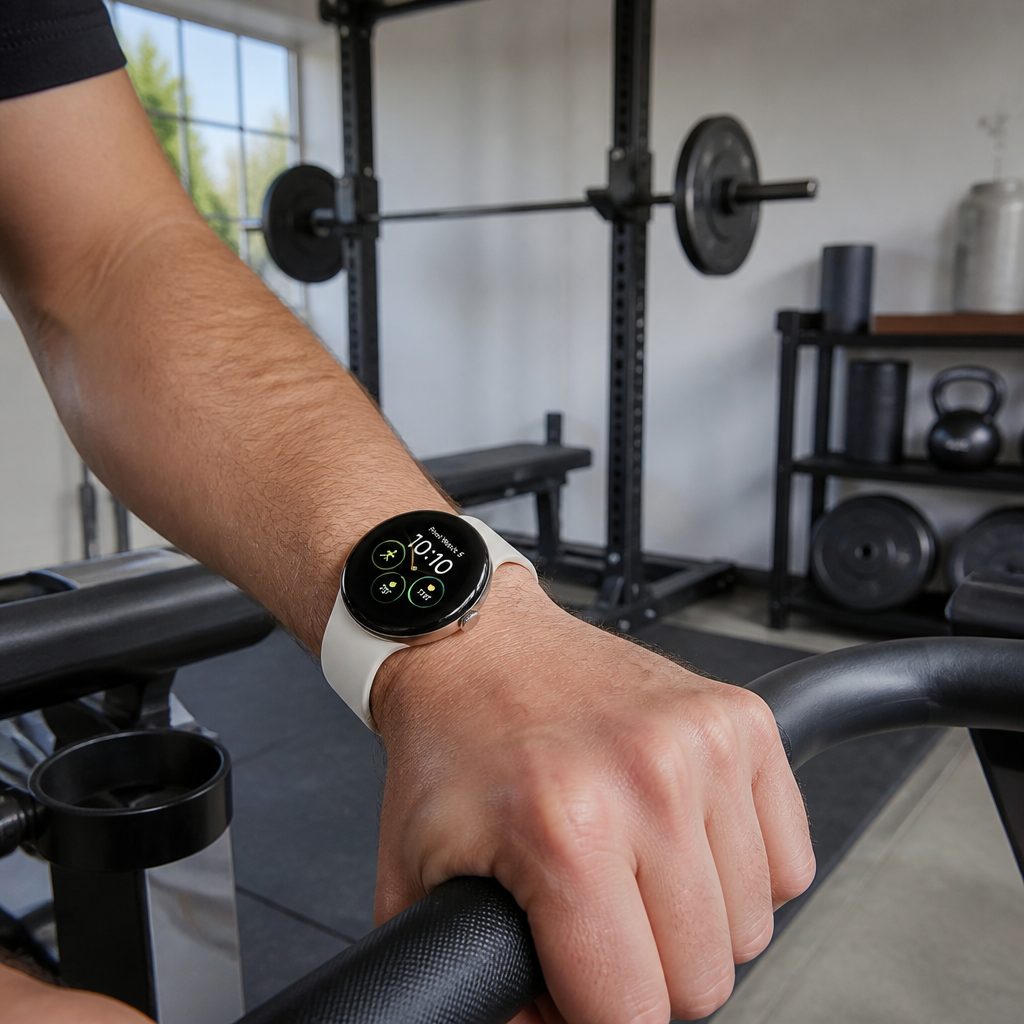
Personalised routines, guided audio cues, rest timers and weight-and-rep tracking gave gym sessions more structure without requiring constant phone handling.
Broad fitness and health sensor set
The watch included an optical multipath heart-rate sensor, ECG, blood oxygen, skin temperature, cEDA electrical sensors, accelerometer, gyroscope, altimeter, barometer, compass and magnetometer.
Breathing Emergency Detection
If it detected a persistent oxygen-level drop and you were unresponsive, the feature could prompt an emergency call. Loss of Pulse Detection and blood-pressure trend tracking broadened the wellness and safety focus further.
Gemini with a wrist raise
Gemini was accessible with a wrist raise, which was a nicely low-fuss way to use voice assistance when hands were full, wet or covered in chalk.
For gym regulars, the Pixel Watch 5 worked best as a convenient layer of accountability. It could keep the clock moving, make resting periods more deliberate, record the broad shape of training and carry health data into the rest of the day. If you want meticulous coaching for every barbell session, you may still prefer a paper log, a proper programme and the humility to write down what you actually lifted.
Outdoor training and the value of cleaner data
The Pixel Watch 5 was most convincing outdoors when the environment was difficult. Dual-frequency GPS with GPS, Galileo and Glonass already gave it a strong positioning foundation. Cloud processing added an extra layer that targeted the real irritations of urban training: tall buildings, signal reflections and routes that go suspiciously through a block of flats instead of along the pavement.
For runners, a cleaner track can improve more than the map screenshot. A route that does not zig-zag across streets is less likely to inflate distance in short chunks, which in turn can make pace and post-run comparisons more trustworthy. It is particularly useful for people who use repeat routes as a simple fitness gauge. If you ran the same canal loop twice and one session apparently gained distance because GPS drifted around office buildings, that comparison was never fair.
For walkers and cyclists, the map itself matters more. You may want to look back at where you explored, check a detour, or keep a sensible record of an unfamiliar route. The watch's reported performance in urban London suggested it was unusually capable at the sort of mapping many people actually do, rather than only on wide-open test tracks beneath a friendly blue sky.
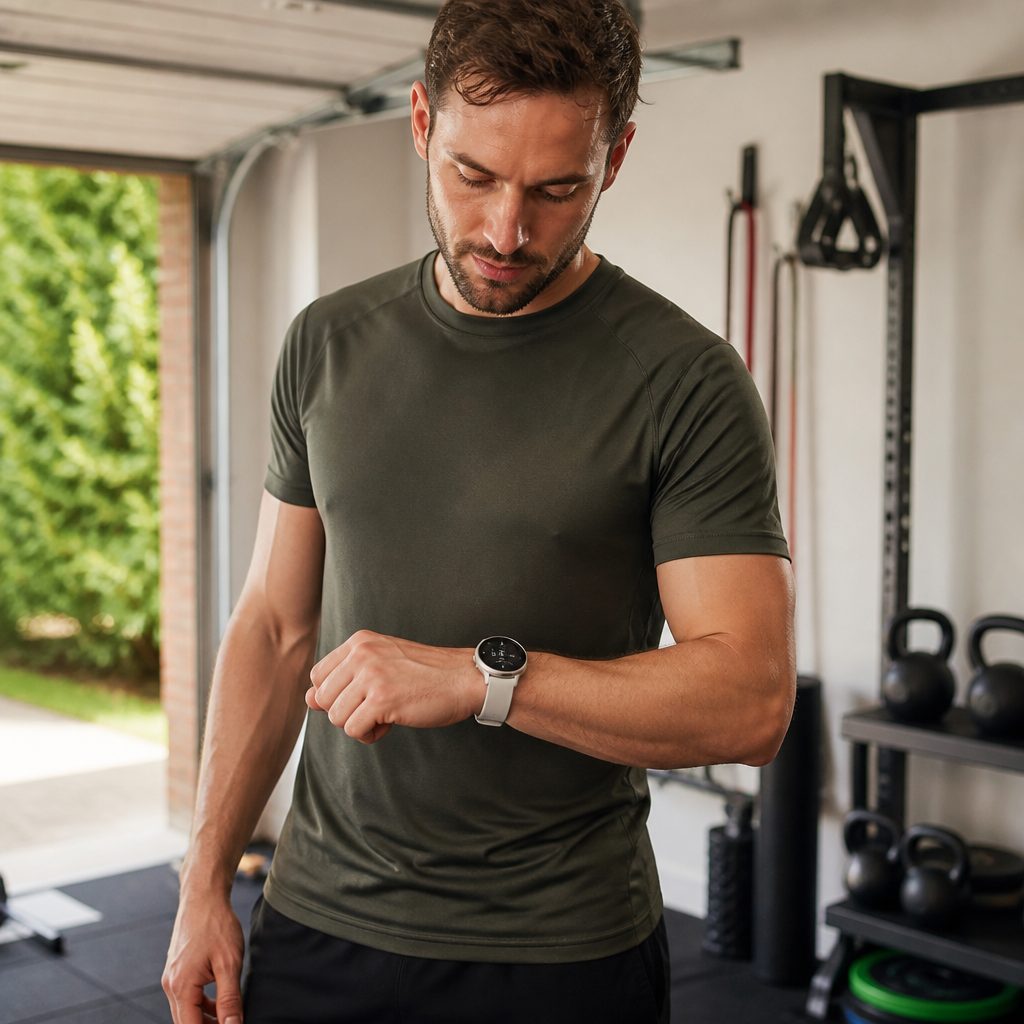
For outdoor training, the Pixel Watch 5's strongest advantage is not merely finding satellites but correcting route errors caused by urban reflections afterwards.
Performance and everyday smartwatch use
The Snapdragon W5 Gen 2 Accelerated chip was said to deliver 20% faster processing than the Pixel Watch 4. Alongside 3GB of RAM and 64GB of storage, that gave the Pixel Watch 5 decent headroom for an everyday watch that also needed to record workouts, display rich metrics and manage a Gemini voice assistant.
The doubled storage versus the Pixel Watch 4 was practical rather than merely a tick-box upgrade. Smartwatch storage becomes useful when you want the freedom to leave a phone behind more often, and 64GB is more comfortable than a watch that constantly makes you decide what to remove. The LTE option added another level of independence for people who want connectivity on outdoor sessions without carrying a handset.
The screen was perhaps the most noticeable daily benefit. A 3,000-nit peak was very welcome during bright outdoor runs, where a dim display turns every pace check into a small act of theatrical squinting. The variable 1–60Hz refresh rate also allowed a sensible balance between smooth interaction and battery control. This was not a rugged endurance watch pretending to be smart; it was a polished smartwatch that had put meaningful effort into sport.
Pros
- Cloud-GPS correction delivered exceptionally clean urban route traces in published testing.
- Dual-frequency GPS and multi-system support gave the hardware a strong outdoor foundation.
- The 3,000-nit OLED was excellent for checking training data in bright conditions.
- Workout Builder made strength and HIIT sessions more structured and less phone-dependent.
- 64GB storage, LTE availability and satellite SOS made it a very capable daily wearable.
Cons
- The best GPS result was achieved after the workout, not necessarily as a live on-wrist advantage.
- Daily charging remained likely for both sizes, particularly with regular training.
- The 41mm's approximately six-hour outdoor-use result was limiting for longer adventures.
- Strength logging still needed a degree of manual attention and sensible interpretation.
- Google's two-times claim applied to tough conditions, not every route in every circumstance.
Google Pixel Watch 5 compared with Apple Watch Ultra 3 and Garmin Fenix 8 Pro
Google's comparison did not pick easy targets. The Apple Watch Ultra 3 and Garmin Fenix 8 Pro were the named competing watches in its internal route-mapping study, and the Pixel Watch 5's result was based on point-by-point distance from ground truth in tough urban environments. That was a more exacting claim than simply declaring that its map looked a touch neater.
The core finding was that Google's post-processed tracks could sit closer to the real route in challenging city conditions. DC Rainmaker's view that they were the most accurate tracks currently appearing in sports technology was the stronger independent validation. It suggested Google had not merely found a favourable test route and put on a very confident face.
| Route-mapping context | Google Pixel Watch 5 | Apple Watch Ultra 3 | Garmin Fenix 8 Pro |
|---|---|---|---|
| Included in Google's July 2026 urban study | Yes, using pre-production units | Yes, as a comparison device | Yes, as a comparison device |
| Google's stated route-map result | Up to 2x greater accuracy than previous Pixel Watch generations in the toughest environments | Used as a leading competitor in the internal comparison | Used as a leading competitor in the internal comparison |
| TechRadar's London Marathon-course observation near Canary Wharf | Tracks stayed closest to the route | Track began to lose its way among tall buildings | Track began to lose its way among tall buildings |
| Important interpretation | Cloud-GPS corrected the route after a workout | Comparison was based on finished route accuracy | Comparison was based on finished route accuracy |
That did not make the Pixel Watch 5 the automatic answer for every serious athlete. A runner whose main need is an after-the-fact accurate city map should take Google's advantage seriously. A person who values days of battery above all else, or wants a very particular form of sports-watch workflow, may still see the balance differently. The Pixel Watch 5's victory was most compelling in the specific place Google targeted: complex urban tracking, with a cloud connection available to do the clean-up.
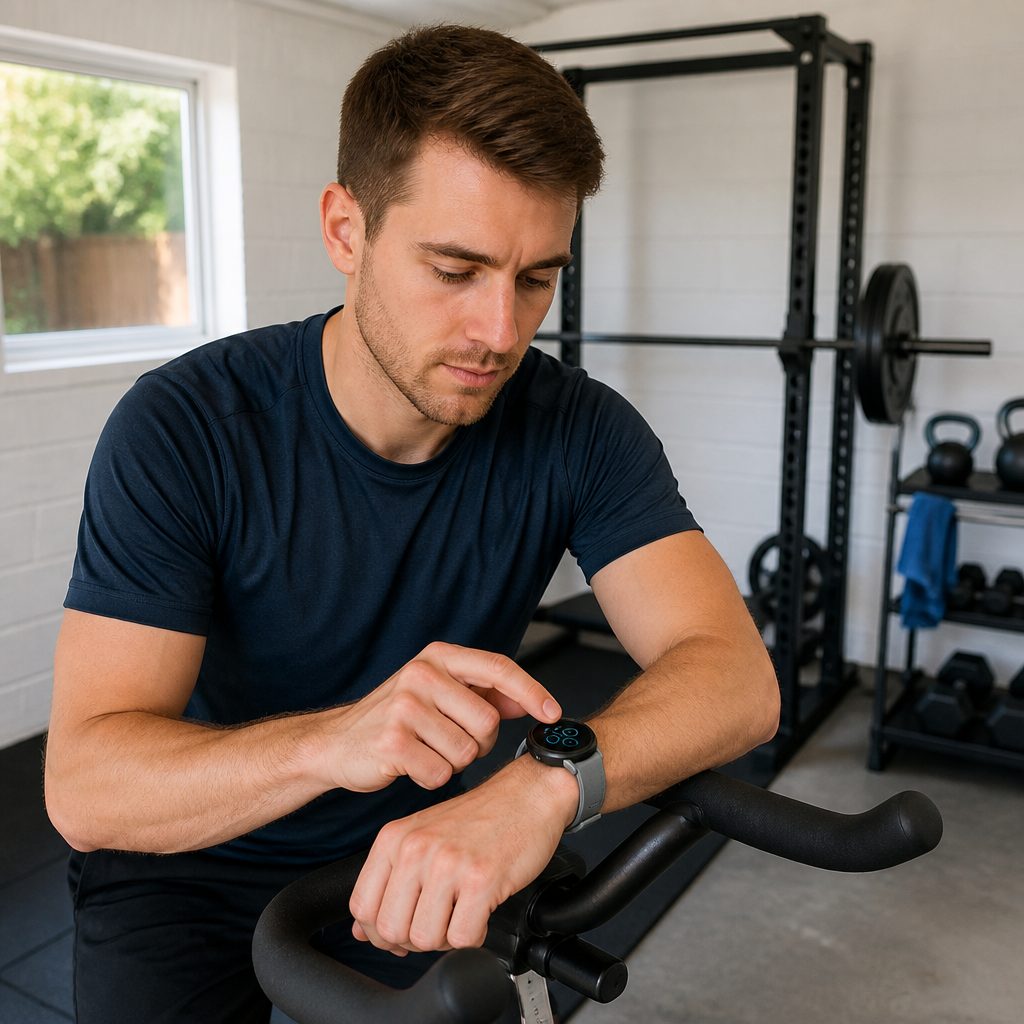
The Pixel Watch 5's positioning advantage was especially relevant for runners comparing routes through dense cities rather than only tracking wide-open park loops.
Who should buy the Google Pixel Watch 5?
This was not a one-size-fits-all fitness watch, even though it came in two actual sizes. The right buyer is somebody who values a refined everyday smartwatch but does not want to compromise too heavily on running accuracy or gym structure. It did many things well, but its best feature was unusually specific: trustworthy urban route mapping after a session.
Best for city runners
Choose the Pixel Watch 5 if your usual routes pass towers, narrow streets or built-up business districts. Its Cloud-GPS correction was the clearest reason to buy it.
Best for gym regulars
Workout Builder, rest timers, audio cues and rep-and-weight tracking made it a useful session companion for strength work and HIIT.
Best for everyday wear
The lighter 41mm model suited people who wanted sleep tracking and activity data in a more subtle, less bulky watch format.
Best for longer activity days
The 45mm was the better pick for outdoor training thanks to its larger battery, longer claimed endurance and more generous display.
I would steer very long-distance hikers and people who hate regular charging towards the 45mm at minimum, because the smaller watch's approximately six-hour outdoor-use result could become a frustration. Equally, I would not buy the 45mm merely out of fear if your training consists mostly of gym workouts, shorter runs and the occasional weekend walk. Wrist comfort is not vanity. If a watch irritates you at night, it loses part of its value as a health tracker.
Rating: Google Pixel Watch 5
Shop Google Pixel Watch 5 on Amazon UK
The Pixel Watch 5 deserved a high score because its best claim survived scrutiny. The Cloud-GPS system did not simply offer a prettier route image; it addressed a real weakness in wrist-based GPS, particularly in cities. The score was held back slightly by the post-processing dependency and the reality that regular charging was still part of life with either size.
Frequently asked questions
Final verdict: a genuinely important GPS upgrade
The Google Pixel Watch 5 did not merely claim better route tracking; it offered a credible technical explanation for it and produced published results that backed the claim up. Cloud-GPS correction was particularly impressive around difficult urban landmarks, where poor GPS traces normally turn an honest run into modern art. For city runners, that alone made this one of the most compelling fitness smartwatches of 2026.
It also made a strong case for gym users through Workout Builder, bright display visibility, extensive health sensors and a genuinely polished daily-wear design. The trade-off was battery life. The 45mm was clearly the more practical pick for serious outdoor use, whilst the lighter 41mm was the better everyday companion for smaller wrists. Buy the Pixel Watch 5 for its accuracy, its gym structure and its lovely screen. Just keep the charger somewhere sensible.