
Best Weight Benches Under £150 for a First Home Gym
A good first weight bench is gloriously unglamorous: it sits still, gives you a secure place to train, and does not require a degree in furniture engineering every time you move it. I have focused this shortlist on approachable FLYBIRD, Marcy and Sunny Health & Fitness options, with stability and useful adjustability doing the heavy lifting.
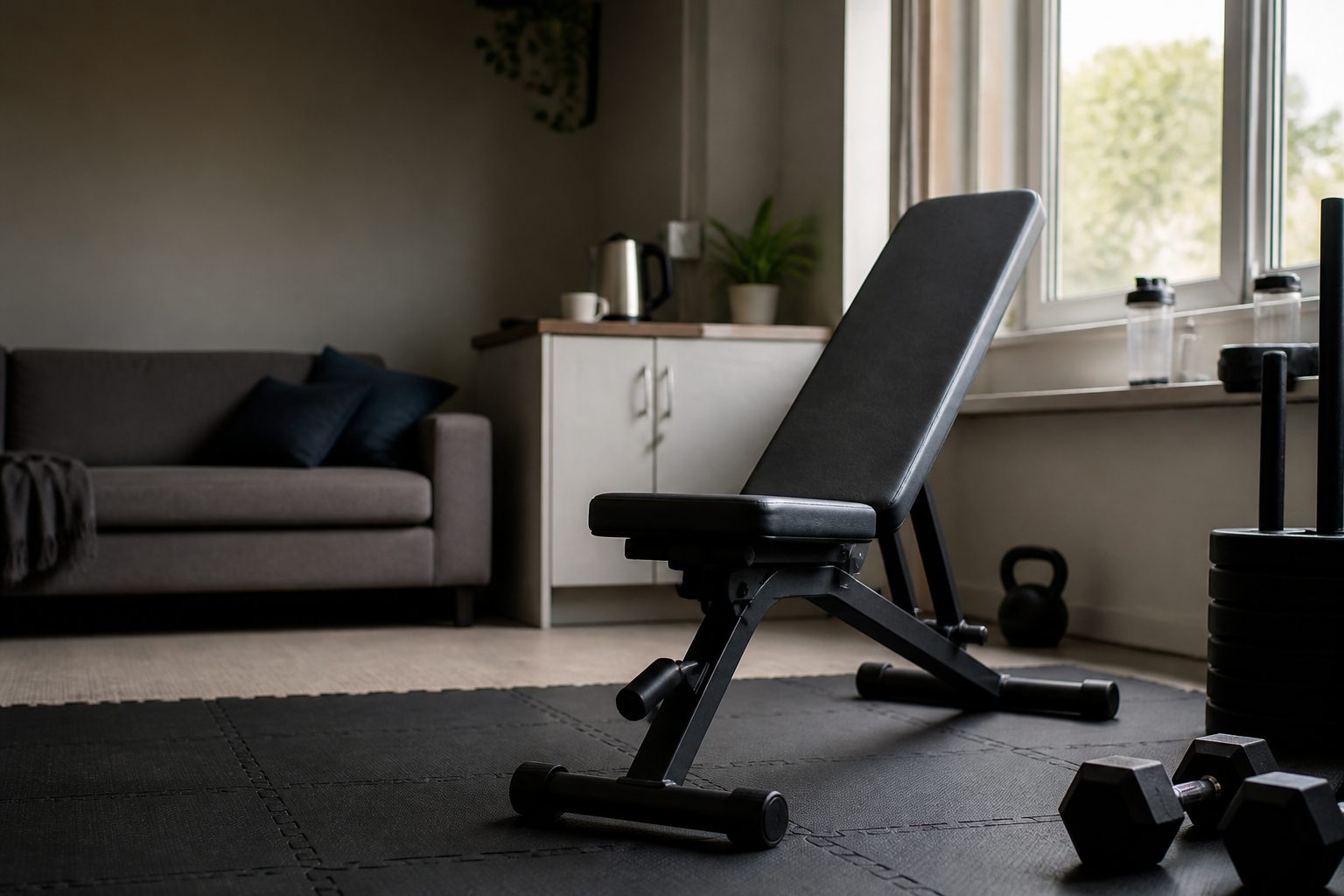
A first bench should make a small training space feel more useful, not turn it into an obstacle course between the kettle and the sofa.
 By James Oduya · Staff Writer & Home Gym Columnist · Updated October 16, 2026
Why a bench matters more than it first appears
When people begin building a home gym, the bench is often treated as the sensible-but-dull purchase. Dumbbells are more exciting. A barbell looks more serious. Resistance bands come in colours that suggest you may be about to join the circus. Yet the bench is the thing that quietly connects much of the room together.
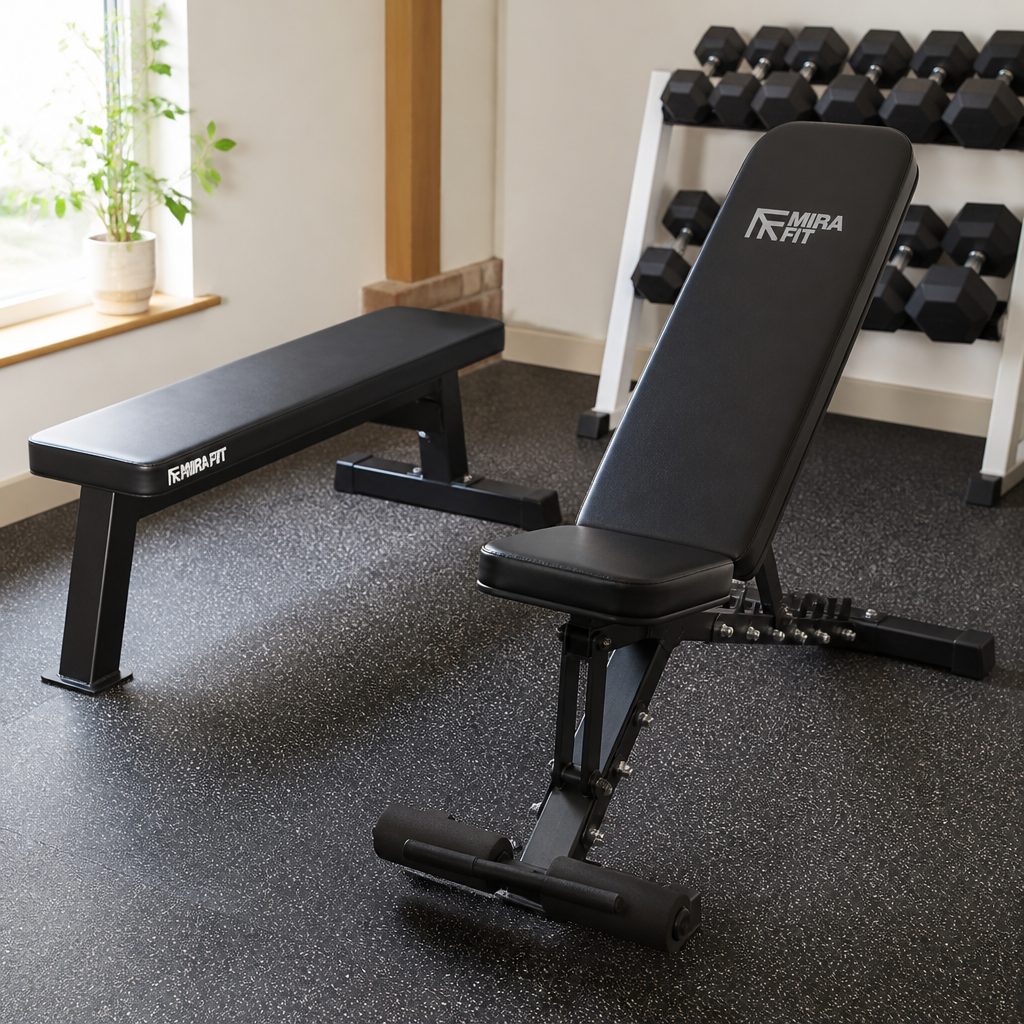
The useful distinction is simple: a flat bench offers a straightforward base, while an adjustable design can alter the feel of many dumbbell exercises.
A stable platform gives pressing, rowing, shoulder work, core training and plenty of dumbbell movements a proper home. It can change the angle of an exercise without changing the equipment around it. That matters when your gym is a spare room, a corner of the bedroom or a patch of floor which normally belongs to a drying rack.
For a first setup, I would not chase complexity for its own sake. A bench should be easy to understand on day one and useful enough that you are still glad you bought it after your training has moved beyond a few sets of presses. The right choice is less about looking like a commercial gym and more about removing reasons not to train.
A bench is not merely somewhere to lie down between sets. Treat it as a piece of support equipment. If it feels awkward, wobbly or badly suited to your available floor space, every exercise built around it becomes more annoying than it needs to be. Annoyance is a surprisingly effective training-plan killer.
What I looked for in a first-home-gym bench
There is a temptation to judge a budget bench by the number of positions, attachments or bolts visible in the product photography. Resist it. More moving parts are only useful if they make the bench easier to train on. The basics are much less glamorous and much more important.
Stability before novelty
A bench should feel settled beneath you when you get into position, brace yourself and change sides between sets. That quiet, planted sensation builds confidence. It is especially valuable when you are learning movements without a coach standing beside you.
Adjustability with a purpose
An adjustable bench is worthwhile when you will genuinely use different backrest positions for pressing, supported pulling and seated work. If your sessions are simple and your space is tight, a flat platform may be the better sort of boring.
Comfort that does not distract
You should notice your form, your breathing and the weight in your hands. You should not spend a set wondering whether the upholstery, pad shape or edge of the bench is making a movement strangely uncomfortable.
A realistic storage plan
Before buying, imagine the bench after a workout rather than during one. Can it live where it needs to live? Can you still open a cupboard, walk through the room and retain diplomatic relations with everyone else in the house?
For this sort of buying guide, the test is not whether a bench could support every possible future gym plan. It is whether it makes your next year of training easier. Start there. You can add specialist equipment later, once you know what you actually enjoy doing rather than what looked impressive in a late-night basket.
The ranked picks at a glance
These three benches represent the main decisions most first-time buyers face: a versatile adjustable choice, a no-fuss flat platform, and an adjustable option for someone who wants a little more variety from their dumbbell training. They are not interchangeable. That is rather the point.
1. FLYBIRD Adjustable Weight Bench — Best for first-time versatility
The FLYBIRD Adjustable Weight Bench is the sensible starting point for the person who wants one bench to cover a broad range of beginner home workouts. An adjustable design gives you room to experiment with incline pressing, seated shoulder work, chest-supported dumbbell rows and the various slightly improvised movements that inevitably emerge once you have a bench and a pair of dumbbells.
That flexibility is particularly useful in a first gym because your routine is unlikely to stay fixed. You may begin with full-body sessions three times a week, then decide you prefer upper/lower training. You may discover that pressing at one angle feels much more natural on your shoulders than another. A bench that can change with you is a practical thing, not a promise of instant athletic enlightenment.
The trade-off is that adjustability asks more of the user. You need to set it carefully, check that everything is properly engaged, and accept that a moving backrest is inherently a different proposition from one solid flat platform. If you want to train quickly before work, choose your preferred setup and avoid fiddling with it between every exercise simply because you can.
Pros
- Suitable for beginners who want to explore more than flat pressing.
- Adjustable format supports a wider variety of dumbbell-led sessions.
- A strong fit for a home gym built gradually around general strength work.
Cons
- More adjustment can mean more setup between exercises.
- Not everyone needs multiple angles in a simple first routine.
- Requires a little more attention to positioning and storage.
2. Marcy Flat Weight Bench — Best for uncomplicated stability
The Marcy Flat Weight Bench is the pick for buyers who want to keep the first home gym deliberately simple. A flat bench has one job, and there is something reassuring about that. You place it on suitable flooring, line yourself up and get on with the set. There is no decision tree, no angle to second-guess and no urge to spend twenty minutes rearranging equipment instead of training.
That simplicity suits dumbbell presses, supported rows, split squats, step-up variations, core work and the general collection of movements that make a modest home setup surprisingly capable. It also has a useful psychological advantage. The less intimidating a gym feels, the more likely you are to use it on an ordinary Tuesday when motivation has gone off for a lie-down.
Of course, the flat-only format does not create incline or upright support when you decide you want it. That is the limitation, plainly stated. But there is no shame in buying for the routine you have. A stable flat bench can remain useful even if you eventually add more specialised equipment around it.
Pros
- Direct, simple format for a first dumbbell-focused training space.
- Flat platform avoids the extra decisions of a multi-position bench.
- Especially appealing when consistency matters more than exercise variety.
Cons
- Does not offer the training angles of an adjustable bench.
- Less adaptable if incline pressing becomes a regular favourite.
- A more focused choice for buyers who know what they need.
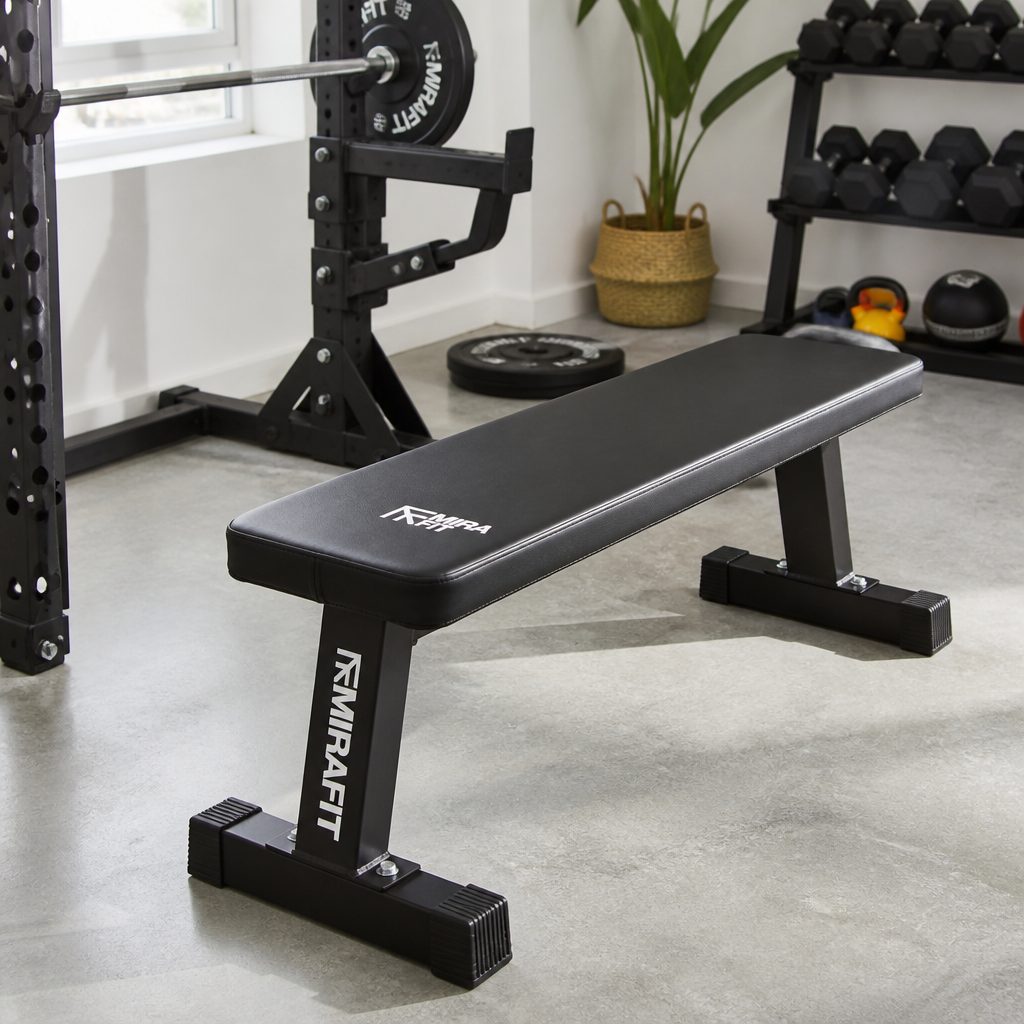
A flat bench is often the most straightforward route into dumbbell pressing, supported rows, split squats and core work.
3. Sunny Health & Fitness Adjustable Weight Bench — Best for varied dumbbell sessions
The Sunny Health & Fitness Adjustable Weight Bench makes sense for the beginner who knows they will value different training positions but wants to keep the gym centred on accessible dumbbell work. The appeal is not that an adjustable bench somehow transforms every exercise. It is that it gives a small equipment collection more ways to earn its keep.
Different backrest positions can make a home session feel less repetitive. One day might centre on a flatter pressing position and supported rows; another might lean more towards incline work and seated shoulder movements. That variety can help you learn what suits your body, your mobility and your preferences without immediately buying a separate piece of kit for every idea that crosses your mind.
As with the FLYBIRD option, the best results come from being purposeful. Pick the positions you will use, practise getting in and out safely, and let the training do the talking. The bench is there to support the session. It is not a small mechanical puzzle whose final boss is a chest press.
Pros
- Adaptable approach for people who enjoy changing their dumbbell sessions.
- Useful for building a more varied routine from a compact equipment base.
- Good match for beginners who want seated and inclined exercise options.
Cons
- More versatile than a flat bench, but correspondingly less minimal.
- Best for people who will genuinely use the different positions.
- May be unnecessary if your training stays entirely flat-bench focused.
How the three choices differ in practice
The comparison below is intentionally about the ownership experience rather than a spreadsheet contest. A bench is one of those products where the right choice depends on the way you will train, the room you have and how much friction you can tolerate before a workout starts feeling like a household chore.
| Buying priority | FLYBIRD Adjustable Weight Bench | Marcy Flat Weight Bench | Sunny Health & Fitness Adjustable Weight Bench |
|---|---|---|---|
| Bench style | Adjustable bench | Flat bench | Adjustable bench |
| Best suited to | First-time buyers seeking all-round exercise flexibility | Buyers prioritising a straightforward, stable training base | Dumbbell users wanting more session-to-session variety |
| Adjustment needs | Worth learning if you use several exercise positions | None beyond placing it securely for the exercise | Worth learning if angled work is part of your plan |
| Ideal first-gym mindset | "I want room to grow." | "I want to start simply." | "I want variety from a compact setup." |
| Main compromise | More complexity than a flat platform | Fewer exercise angles | More setup than a fixed flat bench |
The useful rule
Choose a flat bench if you value speed, simplicity and a planted platform above all else. Choose an adjustable bench if you already know that different pressing and seated positions will keep your training more interesting. Neither answer is more "serious". The serious choice is the one you will use.
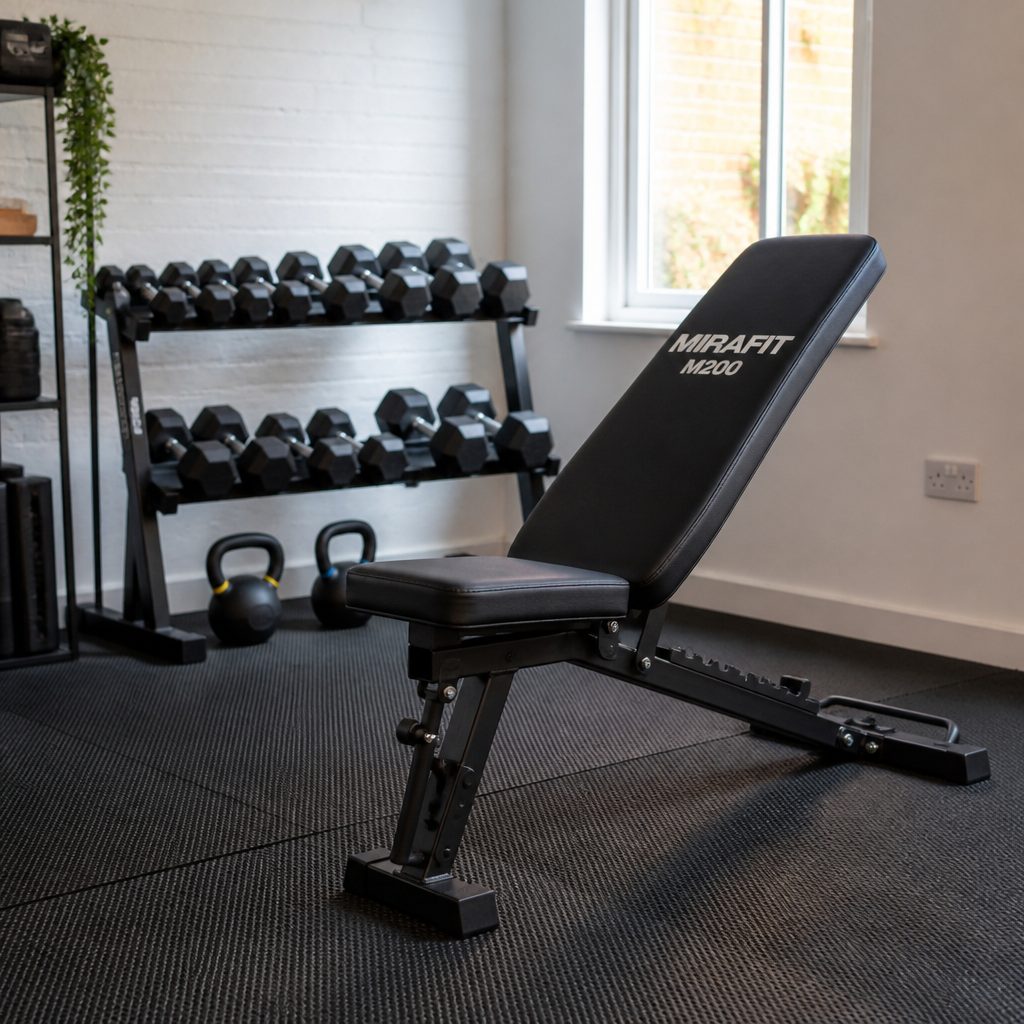
A compact dumbbell setup becomes much more flexible when the bench matches the way you actually prefer to train.
Stability: the unsexy feature you will appreciate every session
Stability tends to be discussed in dramatic terms, as though the only concern is a catastrophic failure. In ordinary home training, it is more subtle than that. A stable bench feels predictable when you sit down, lie back, brace your feet and pick up a dumbbell. It does not distract from the movement. You should be able to focus on controlling the weight rather than negotiating with the furniture.
Before each session, get into the habit of checking that the bench is sitting on a level surface and that nothing around it interferes with its footing. A folded rug, a loose resistance band or a stray charging cable can make a perfectly sensible training area suddenly feel sketchy. Home gyms are charming precisely because they are improvised. They also reward a little housekeeping.
These bars are not a mechanical test score; they are a simple visual reminder of the buying trade-off. The Marcy choice puts simplicity front and centre. The two adjustable designs put exercise variety ahead of that stripped-back approach. It is a choice about priorities, not a universal league table.
Adjustability: useful when it changes the workout, pointless when it does not
An adjustable bench earns its place when you use its positions deliberately. Incline work can give your pressing routine a different feel. A more upright setup can support seated dumbbell exercises. Angled support can also make some pulling and arm movements more comfortable to organise in a small room.
But there is a small trap here. Beginners sometimes believe they need to use every available position because it exists. You do not. Pick an angle, use it consistently for a few sessions, and learn what changes in your technique. Are your shoulders comfortable? Can you keep your feet planted? Can you control the dumbbells into position without awkward swinging? Those answers matter more than collecting settings.
A flat bench, meanwhile, asks very little of you. That can be a feature, especially in the first months. You can develop a strong habit around flat dumbbell presses, rows, split squats and basic abdominal work without spending any mental energy on configuration. Training has enough moving parts already. Your bench does not always need to be one of them.
If you are new to pressing with dumbbells, practise getting into position with a comfortable weight first. Sit down, place the dumbbells securely, then move into your chosen bench position with control. The graceful part comes later, if it comes at all. Most of us simply develop a reliable system and call it a day.
Build a first routine around the bench you choose
A bench should support a simple training plan rather than encourage random exercise collecting. For a beginner, a compact full-body routine can go a long way. Think lower-body movement, push, pull, a shoulder or arm exercise if you enjoy it, and a little trunk work. Repeat the basics, aim for steady progress and give yourself enough recovery to come back keen rather than creaky.
With a flat bench, you can centre sessions around flat dumbbell pressing, one-arm supported rows, Bulgarian split squats, hip-focused work, controlled step-ups where appropriate and seated core exercises. The bench becomes a stable prop that makes the room more functional.
With an adjustable bench, you can retain those basics and add changes of angle for pressing or seated work. That does not mean your routine needs to become complicated. It simply gives you options if a flat position stops feeling ideal, if you want to spread the work across different patterns, or if you find an upright support position helpful for learning control.
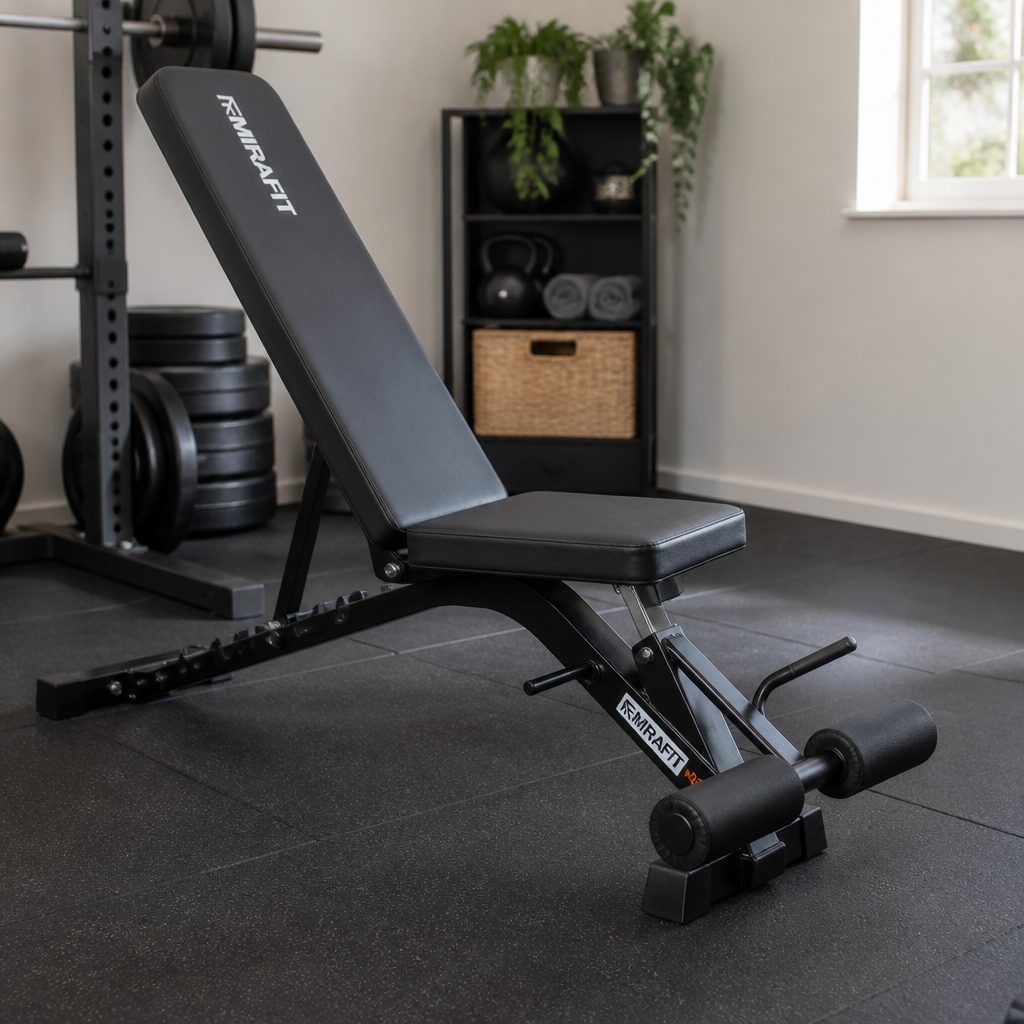
The best beginner routine is usually built from repeatable movements, a clear progression plan and equipment you do not dread setting up.
Space, flooring and everyday setup
It is easy to measure a room once and declare it gym-ready. It is much harder to imagine the real use of it: getting the bench into place, carrying dumbbells around it, lying back safely, standing up after a difficult set and putting everything away without kicking a weight under the radiator.
Give yourself usable clearance, not merely enough space for the bench to exist. You need room to move around it and enough unobstructed floor for the exercises you intend to do. Consider doors, drawers, low ceilings, pets with questionable judgement and the fact that a training session rarely remains perfectly contained to one neat rectangle.
Flooring deserves equal thought. A secure, level area is the beginning of a stable bench setup. If you are using dumbbells, you also want to protect the floor and minimise the temptation to drop equipment when tired. Put weights down deliberately. Your neighbours, floorboards and future self will all be grateful.
Measure the movement, not just the bench
Picture yourself performing a press, a row and a split squat before committing. The footprint of a bench is only one part of the equation. The space your elbows, knees, dumbbells and feet need is the part people discover after the delivery box is already blocking the hallway.
Common buying mistakes to avoid
The first is buying an adjustable bench because "adjustable" sounds automatically better. It is only better if those changes suit your programme. If you want a solid base for straightforward dumbbell work, the Marcy Flat Weight Bench approach may make more sense than paying in effort and complexity for angles you never use.
The second is buying a flat bench when you already know that incline pressing and seated dumbbell training are central to the way you like to exercise. It is perfectly reasonable to want those options. Just be honest about it before you buy, rather than trying to persuade a flat platform to become something it is not.
The third is treating setup as an afterthought. Read the instructions, make sure the bench is assembled carefully, inspect it before training and keep the area clear. This is not thrilling advice. Neither is wearing a seatbelt. Both become very convincing when things go wrong.
Finally, avoid trying to make the bench prove its worth through endless exercise variation. A few movements performed well, consistently and with controlled progression will do more for you than an elaborate circuit of vaguely familiar exercises performed because they looked interesting in a short video.
Who should buy which bench?
There is no need for a grand winner if your needs point clearly elsewhere. These are the most useful matches for different first-home-gym buyers.
Best all-rounder
FLYBIRD Adjustable Weight Bench. Choose this if you want a versatile first bench that can accommodate a growing dumbbell routine and different training positions.
Best for simplicity
Marcy Flat Weight Bench. The strongest match for the buyer who wants an uncomplicated, stable platform and no unnecessary setup decisions.
Best for varied sessions
Sunny Health & Fitness Adjustable Weight Bench. A good fit if you want to change positions across pressing, seated and supported dumbbell work.
Best for a first gym
Marcy Flat Weight Bench. For many complete beginners, a simpler bench is the easiest one to start using consistently and confidently.
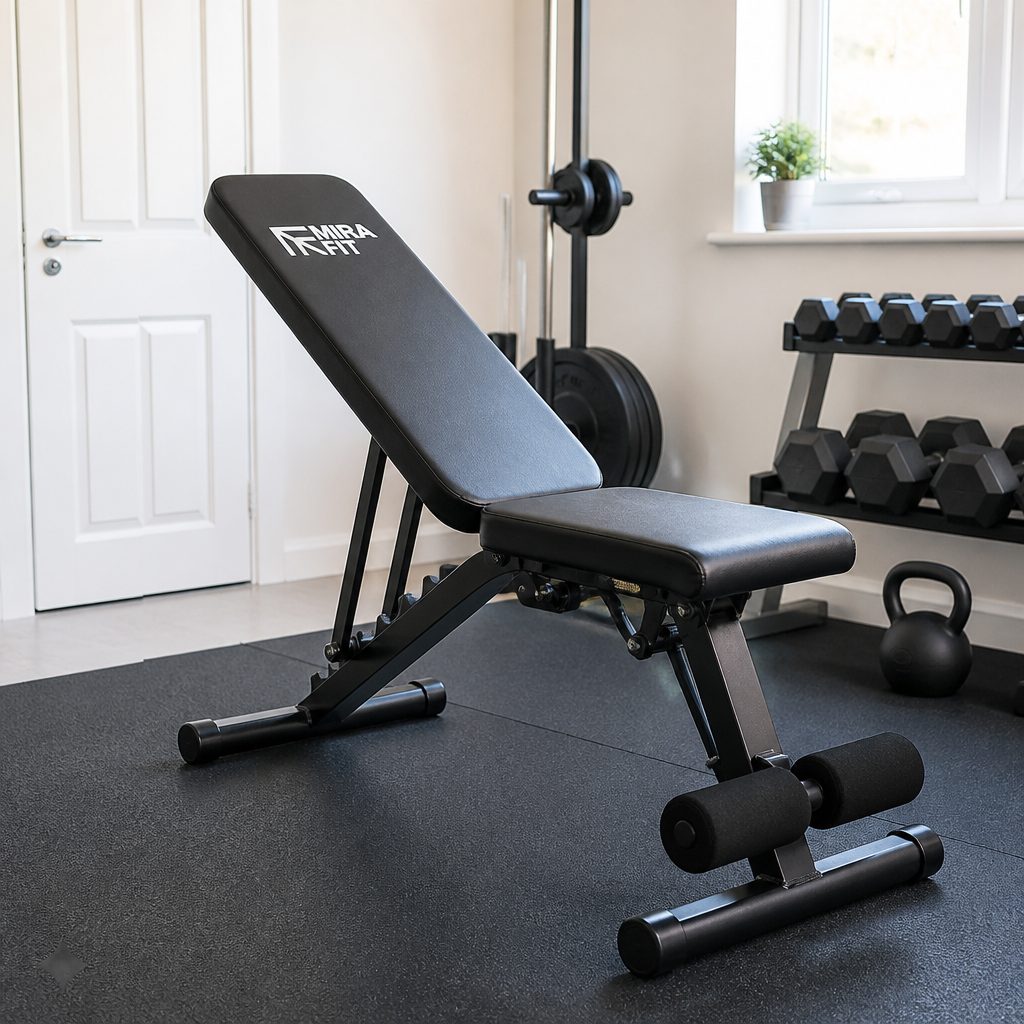
A bench that suits your room and routine is more valuable than one chosen purely for the longest feature list.
My final buying checklist
Before making the decision, take one last pass through the practical questions. They are not glamorous, but they are the questions that separate a useful purchase from an expensive place to hang laundry.
- Do I genuinely need adjustable positions, or would a stable flat platform better suit my current routine?
- Can I leave enough clear floor around the bench to move safely with dumbbells?
- Will I use the bench several times a week, or am I buying features for an imaginary future self?
- Have I planned a secure, level training area rather than simply found an empty corner?
- Will the bench be straightforward to move, store or live around in my actual home?
- Can I name at least a handful of exercises I will use it for in the first month?
If you can answer those sensibly, you are already ahead of the game. A first home gym does not need to be a showroom. It needs to make training feel possible on normal days. That is a far better standard.
Frequently asked questions
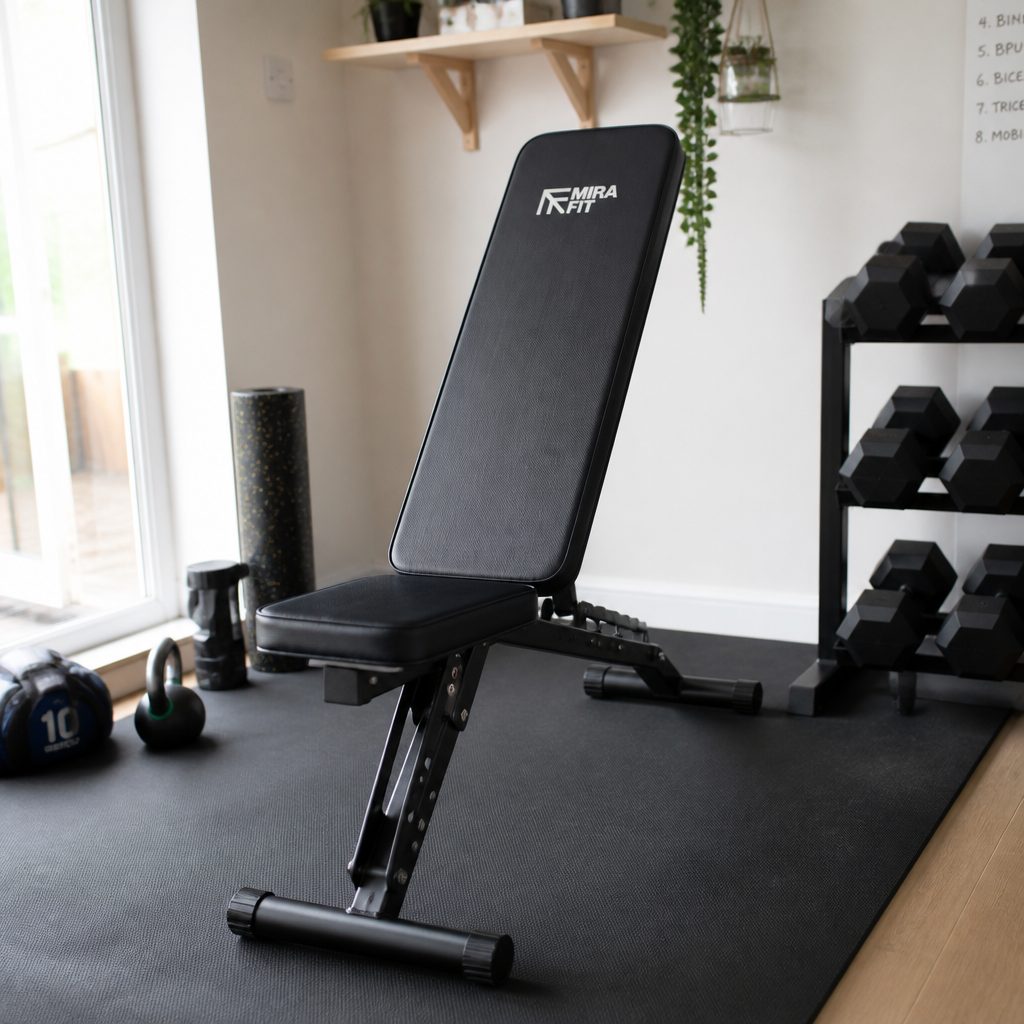
The right first bench is the one that quietly becomes part of your routine, rather than a large object you keep meaning to start using.
The bottom line
For most people building their first home gym, the FLYBIRD Adjustable Weight Bench is the best all-round choice because it gives a beginner room to develop a broader dumbbell routine. The Marcy Flat Weight Bench is the smarter buy if stability, simplicity and a fast setup matter most. Choose the Sunny Health & Fitness Adjustable Weight Bench if varied dumbbell sessions and different exercise positions are likely to keep you engaged.
Whichever route you take, prioritise a secure setup, clear training space and a routine you can repeat. A bench does not need to be clever. It needs to help you train often enough that the results have a chance to turn up.