Best Heart-Rate Chest Straps for Accurate Training Data
A good chest strap is gloriously unglamorous. It does not count your emails, shine at you during dinner or need charging every other night. It simply measures the work you are doing, even when that work involves burpees, barbell complexes and a heart rate that has temporarily left the building.
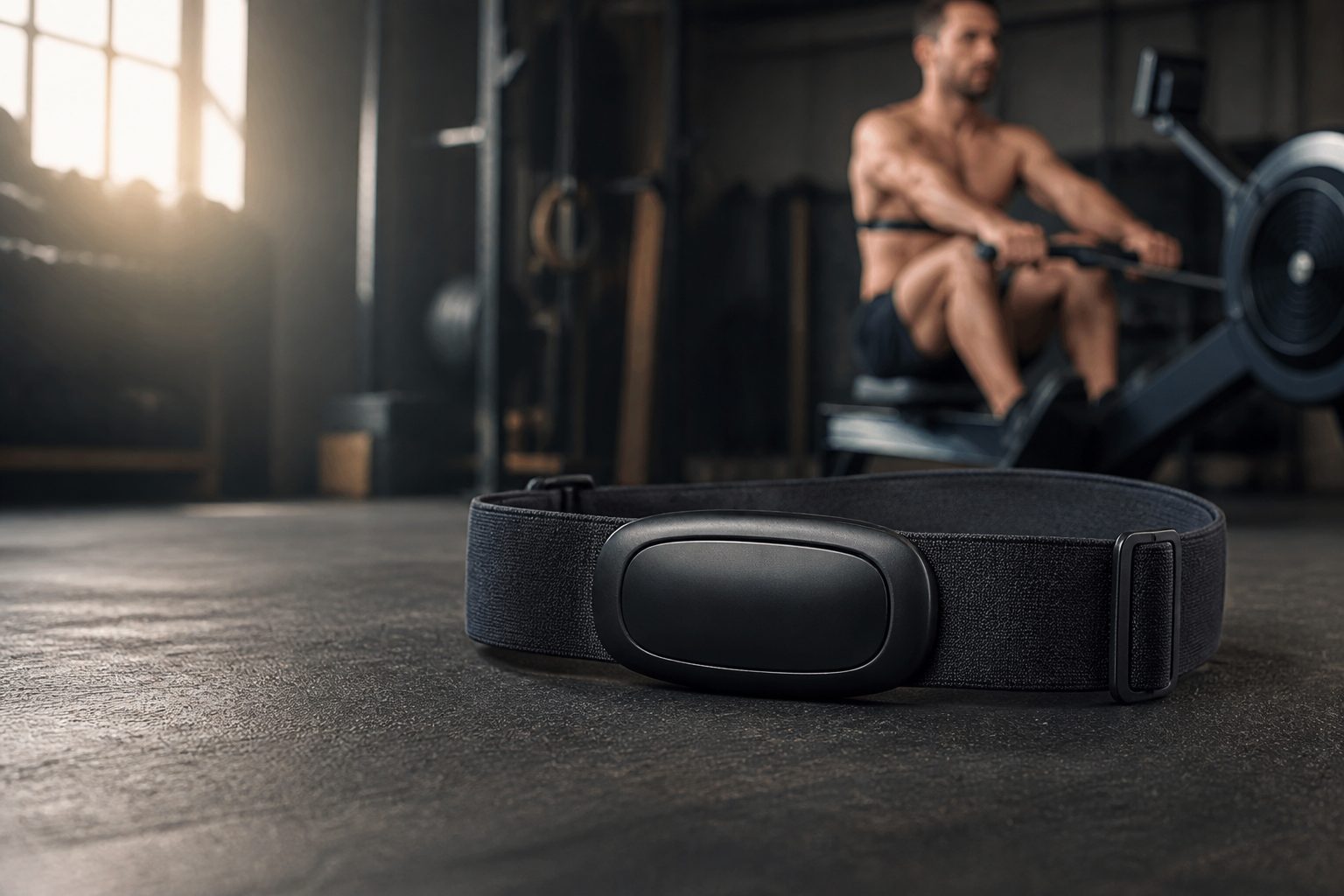
A properly fitted chest strap remains the sensible choice when interval sessions, rowing sprints and heavy sets make wrist-based heart-rate readings less dependable.
 By James Oduya · Staff Writer & Home Gym Columnist · Updated November 02, 2026
Why a chest strap still matters for serious training
Heart-rate training sounds wonderfully simple until the session gets difficult. Easy cardio is forgiving: a wrist watch can often keep pace when your arm is moving steadily and blood flow is predictable. Intervals, strength circuits, indoor cycling sprints and kettlebell work are much less polite. Your wrists flex, your grip tightens, the sensor shifts, and an optical reading can lag just when you most want to know whether you have actually reached the intended effort.
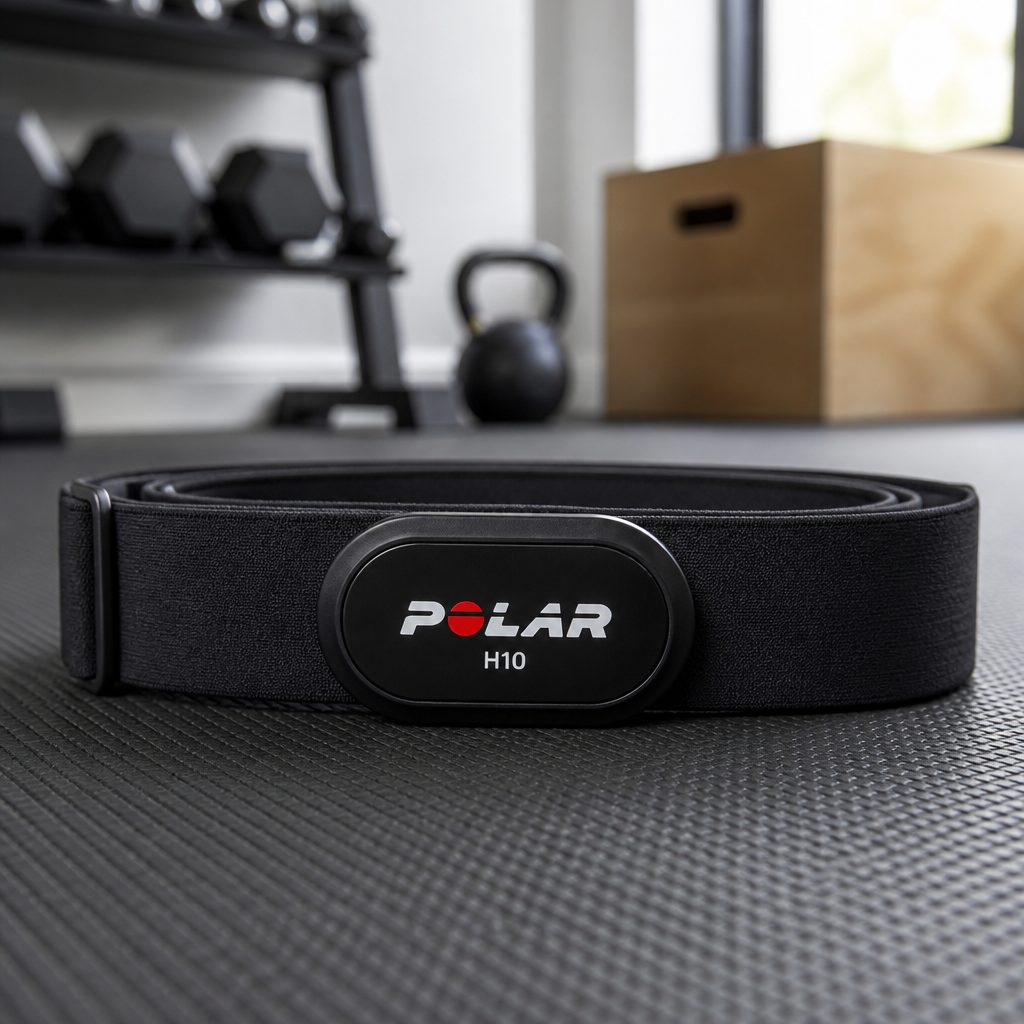
Polar H10 is built around a traditional textile chest strap, a format that remains particularly effective for fast-changing gym and interval sessions.
A chest strap takes a different route. It detects the electrical activity associated with your heartbeat rather than trying to interpret changes in blood flow through the skin. That is why athletes who train by zones, use cardio equipment with wireless receivers, or simply dislike wondering whether their watch has briefly mistaken a dumbbell for a pulse still tend to favour one.
This guide focuses on Polar, Garmin and Myzone models that suit gym-led training. The strongest choices here support ANT+ and Bluetooth, making them useful with watches, apps, bike computers and compatible gym equipment. There are also a couple of simpler alternatives for buyers whose needs are less sprawling. Not everybody needs three Bluetooth connections and stored activity recording. Equally, buying too little strap for a busy home-gym setup can become irritating remarkably quickly.
The short version: chest placement is still the accuracy-first option. Myzone states 99.4% accuracy for its MZ-Switch 2.0 on the chest, compared with 95% when that monitor is worn on the arm or wrist.
What accurate training data actually means
Accuracy is not merely about getting a plausible average heart rate at the end of a workout. For strength and interval training, the important moments are the awkward ones: the rapid rise into a hard effort, the sharp drop during a rest period, and the point where you decide whether another round is sensible or whether your legs are preparing a formal complaint.
That makes beat-to-beat consistency valuable. Polar's H10 recorded 99.4% R-R interval detection accuracy in the cited comparison, while a Myzone Belt recorded 94.1%. Those are both respectable figures, and they do not mean that every individual workout will produce wildly different results. They do show why an electrical chest strap remains the useful reference point when you care about short, changing efforts rather than just a broad daily trend.
Calorie estimates are another reason to care about a dependable signal, although they should always be treated as estimates rather than a receipt from your metabolism. In a 25-minute HIIT comparison estimated at 400 kcal, Polar's calorie estimate was about 417 kcal, while Myzone's was about 451 kcal. That was a difference of 34 kcal: not the end of civilisation, but enough to matter if you repeatedly use session totals to guide nutrition or workload.
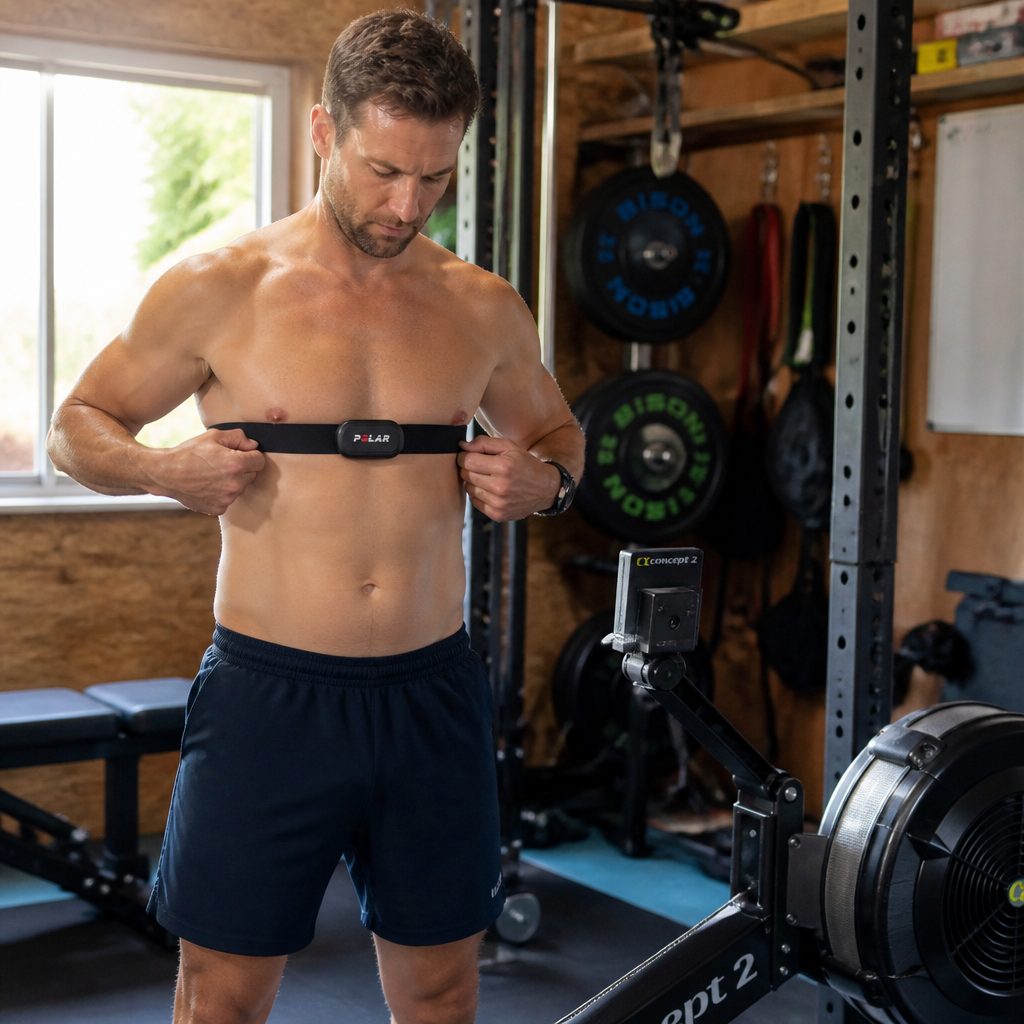
The best strap is the one that stays securely in place through repeated changes of position, pace and effort rather than behaving beautifully only during a gentle warm-up.
The connection question: ANT+, Bluetooth and gym compatibility
Connectivity is the practical bit that is easy to ignore until you are standing next to a treadmill wondering why nothing is talking to anything. Bluetooth is common across phones, tablets and many apps. ANT+ is particularly helpful when you use compatible sports watches, bike computers or gym equipment, and it can support several receiving devices at once.
For a multi-device household or a complicated training setup, Garmin's HRM-Dual and HRM 600 make a persuasive case. The HRM-Dual supports two Bluetooth connections plus unlimited ANT+ connections. Garmin's HRM 600 goes one further with three Bluetooth connections and unlimited ANT+. That is useful if you want a watch, a training app and a bike computer to see the same live effort without turning each connection into a small diplomatic incident.
Polar H10 also transmits over Bluetooth and ANT+ simultaneously, and adds 5 kHz transmission for water monitoring. Myzone's MZ-Switch 2.0 supports both Bluetooth and ANT+, so it remains a strong choice if you train across home equipment, classes and app-based sessions. Polar H9 is more straightforward: it uses ANT+, which can be disabled to preserve battery life. Garmin HRM 200 gives you Bluetooth or ANT+, whilst Myzone Max connects to fitness apps and is built around chest-only ECG measurement.
Buy for the receiver you already use
Do not choose connectivity because it sounds cleverer on a specification sheet. Start with the watch, app or cardio machine you actually use. If several devices need live data at once, Garmin's multi-connection options are meaningfully different. If one receiver is enough, a simpler strap can be the calmer and cheaper solution.
At-a-glance comparison of every ranked pick
The models below are all credible chest-strap choices, but their priorities differ. Polar is strongest where established ECG-style accuracy and straightforward ownership are the main concern. Garmin offers excellent flexibility for device-heavy setups. Myzone makes the case for engagement, classes and a sensor that can move from chest to arm or wrist when that is genuinely useful.
| Model | Connectivity | Power approach | Water rating | Wear approach |
|---|---|---|---|---|
| Polar H10 | Bluetooth and ANT+ simultaneously; 5 kHz transmission | CR2025; 400 hours | 30 m | Chest strap |
| Polar H9 | ANT+ | CR2025; 400 hours | WR30 | Chest strap |
| Garmin HRM-Dual | Two Bluetooth connections; unlimited ANT+ | User-replaceable lithium battery; up to 3.5 years | 1 ATM | Chest strap |
| Garmin HRM 600 | Three Bluetooth connections; unlimited ANT+ | Rechargeable; up to 2 months claimed | 5 ATM | Chest strap |
| Garmin HRM 200 | Bluetooth or ANT+ | CR2032; up to 1 year claimed | 3 ATM | Chest strap |
| Myzone MZ-Switch 2.0 | Bluetooth and ANT+ | Rechargeable; 3 to 6 months between charges | WR10 | Chest, arm or wrist |
| Myzone Max | Connects to fitness apps | Rechargeable | 5ATM water resistant | Chest only |
The dash for Myzone Max's water rating does not make it unsuitable for sweaty training. It simply means this guide should not invent a rating that has not been confirmed. It is a useful rule generally: a strap can be excellent without every box being filled in.
Ranked picks: the best heart-rate chest straps
1. Polar H10 — Best for accurate all-round training data
For most people who want a serious chest strap without collecting a drawer full of adapters, charging cables and minor frustrations, the Polar H10 is the strongest all-round choice. It uses an ECG chest sensor, connects via Bluetooth and ANT+ simultaneously, and offers 400 hours from a replaceable CR2025 button cell. That is a wonderfully sensible ownership model. Fit it, train, rinse the strap, replace the battery when required, carry on with life.
The H10 is also unusually well suited to varied training. There is built-in memory for one training session, with capacity for up to 30 hours, which is handy when you do not want to take a phone along. Its 5 kHz transmission supports water monitoring, and the 30 m water resistance gives it more confidence around swimming than many basic straps. The textile strap is machine-washable, with silicone dots and an improved buckle intended to keep it secure.
Pros
- ECG sensing and 99.4% R-R interval detection accuracy in the cited comparison.
- Bluetooth and ANT+ can work simultaneously.
- Replaceable battery rated for 400 hours.
- Internal session memory and 5 kHz transmission broaden its usefulness.
Consider before buying
- Memory holds one session rather than becoming a full training archive.
- It is a chest-first product, so it does not offer the alternate arm and wrist positions of Myzone MZ-Switch 2.0.
2. Garmin HRM 600 — Best for advanced multi-device setups
Shop Garmin HRM 600 on Amazon UK
The Garmin HRM 600 is the pick for people whose training ecosystem has become slightly elaborate. Perhaps there is a Garmin watch, a cycling computer, a phone app and a preference for recording activity even when a smart device is not present. This strap accommodates that life rather well: it supports three concurrent Bluetooth connections, unlimited ANT+ connections, HRV transmission and internal storage for activity recording without a smart device.
It is also the most capable Garmin here for varied sports. The 5 ATM water resistance is more robust than Garmin HRM-Dual's 1 ATM rating and Garmin HRM 200's 3 ATM rating. The rechargeable battery is claimed to last up to two months. That is less hands-off than a multi-year coin cell, but charging can be preferable if you do not enjoy keeping a miniature battery collection in the kitchen drawer.
Three Bluetooth connections
Useful where several devices need a live heart-rate signal during the same workout.
Unlimited ANT+ connections
A practical advantage for Garmin-centred training setups and compatible equipment.
Activity recording without a smart device
It can store activity data internally when taking a watch or phone is not convenient.
The trade-off is straightforward: this is an advanced strap because it solves advanced problems. If your training only involves one phone app and a rowing machine, its extra connection capacity may be impressive in the way a commercial espresso machine is impressive. Lovely. Slightly unnecessary.
3. Myzone MZ-Switch 2.0 — Best for classes and flexible wear
Shop Myzone MZ-Switch 2.0 on Amazon UK
Myzone MZ-Switch 2.0 is the most adaptable physical design in this roundup. It can be worn on the chest, arm or wrist, and arrives with chest and wrist straps. On the chest, Myzone states 99.4% accuracy; on the arm or wrist, it states 95%. That is the key to buying it wisely. Chest mode remains the choice for your hardest, most data-led sessions. The other placements exist for convenience, classes and days when a chest strap is not the thing you fancy dealing with.
The module weighs 17 g without a strap, supports Bluetooth and ANT+, stores 36 hours of exercise data and is rated WR10. Its rechargeable battery lasts between three and six months between charges. For someone who moves between a gym class, a home session and daily activity tracking, that flexibility is genuinely appealing. It has a broader lifestyle role than the chest-only designs here without pretending that arm and wrist optical readings are identical to chest ECG sensing.
Pros
- Can be worn on chest, arm or wrist.
- Chest accuracy stated at 99.4% and arm or wrist accuracy at 95%.
- Bluetooth and ANT+ support for broad compatibility.
- Stores 36 hours of exercise data.
Consider before buying
- The most accurate stated position is still the chest.
- WR10 is less confidence-inspiring for water use than the H10's 30 m rating or HRM 600's 5 ATM rating.
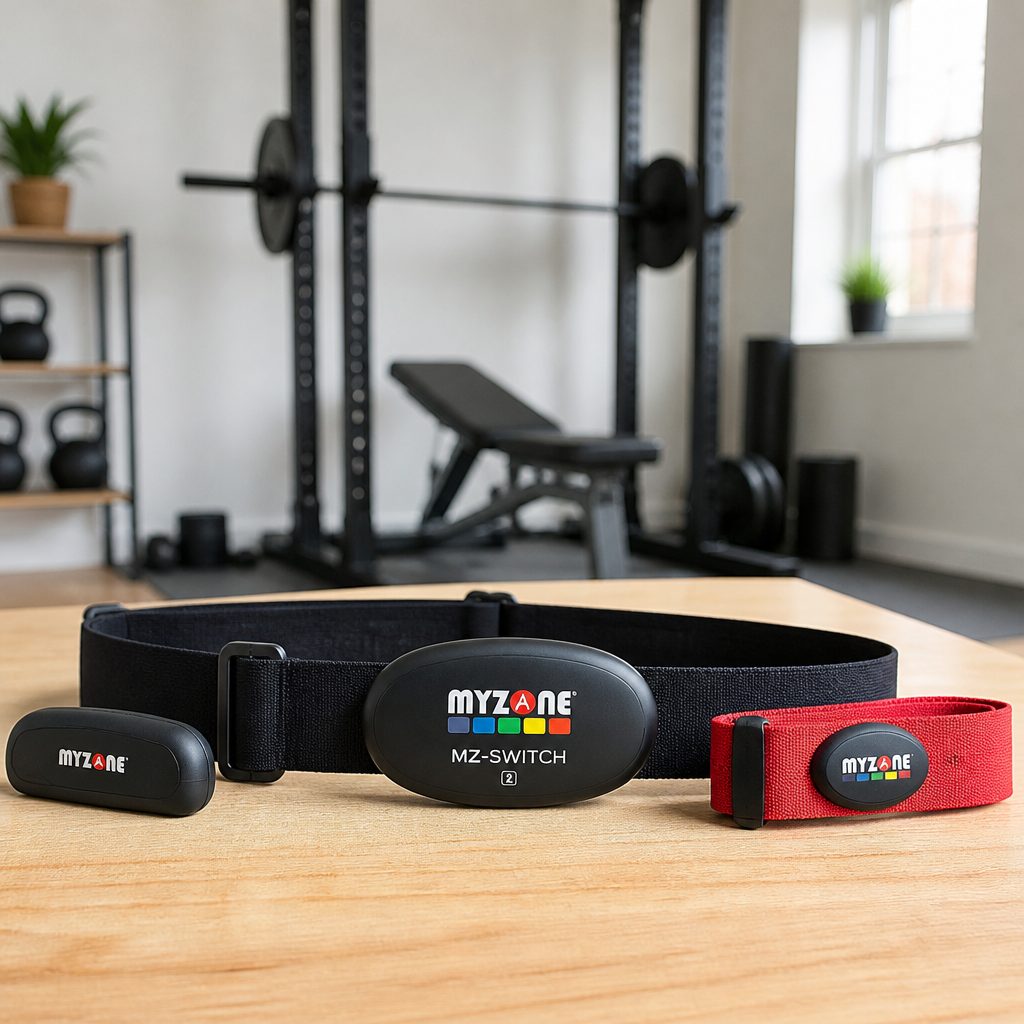
Myzone MZ-Switch 2.0 is the unusual option for trainees who want one monitor to cover chest-led gym sessions and more casual arm or wrist wear.
4. Garmin HRM-Dual — Best for simple long-battery connectivity
Shop Garmin HRM-Dual on Amazon UK
Garmin HRM-Dual is the sensible workhorse. Its remit is not glamorous: transmit real-time heart-rate data accurately and keep doing it for a very long time. The user-replaceable lithium battery is rated for up to 3.5 years based on average use of one hour per day. For people who find charging another device deeply tiresome, that is a superbly uncomplicated advantage.
It supports two simultaneous Bluetooth connections and unlimited ANT+ connections, which remains more generous than many gym users will need. The adjustable strap fits from 25 to 52 inches, the textile section is washable, and the total weight is 1.9 oz. Water resistance is 1 ATM, so it is more at home with sweat and ordinary training than being chosen specifically for serious swimming.
This is the strap for a watch-plus-app setup where reliable connection matters more than stored workouts, HRV transmission or a rechargeable power system. It does the boring part well, which is often the highest compliment gym equipment can receive.
5. Polar H9 — Best for straightforward ANT+ training
Polar H9 is the stripped-back alternative for people who want Polar's accurate ECG heart-rate tracking and do not need the H10's broader connectivity and stored-session capability. It offers the same quoted 400-hour CR2025 battery life, weighs 2.1 oz in total and uses a soft machine-washable textile strap. ANT+ can be disabled to extend battery life, which is a tidy practical touch for a user who does not always need broadcasting.
It is rated WR30 and comes in two size ranges. The important point is not to treat H9 as a lesser strap in the basic sense. It is a less complicated strap. If ANT+ works with your equipment and you do not need Bluetooth, that simplicity may be exactly what makes it the better match.
Fit is not a minor detail
Even the cleverest sensor cannot rescue a strap that is too loose, rolled up or sitting awkwardly over clothing. Polar H10 and H9 both use two size bands, while Garmin HRM-Dual adjusts from 25 to 52 inches. Measure before buying rather than relying on the optimistic memory of an old T-shirt label.
6. Garmin HRM 200 — Best for a basic Garmin-compatible strap
Shop Garmin HRM 200 on Amazon UK
Garmin HRM 200 is the most affordable Garmin chest strap in this group and is deliberately uncomplicated. It measures heart rate, connects by Bluetooth or ANT+, uses a detachable sensor and has a CR2032 battery claimed to last up to one year. Water resistance is 3 ATM.
That gives it a useful niche. It is for the buyer who wants a traditional chest strap to send heart-rate data to their chosen device, without paying for expanded connection management or offline activity recording. The detachable sensor is handy from a maintenance point of view because the strap itself can be handled separately. There is no need to turn a basic requirement into a procurement exercise.
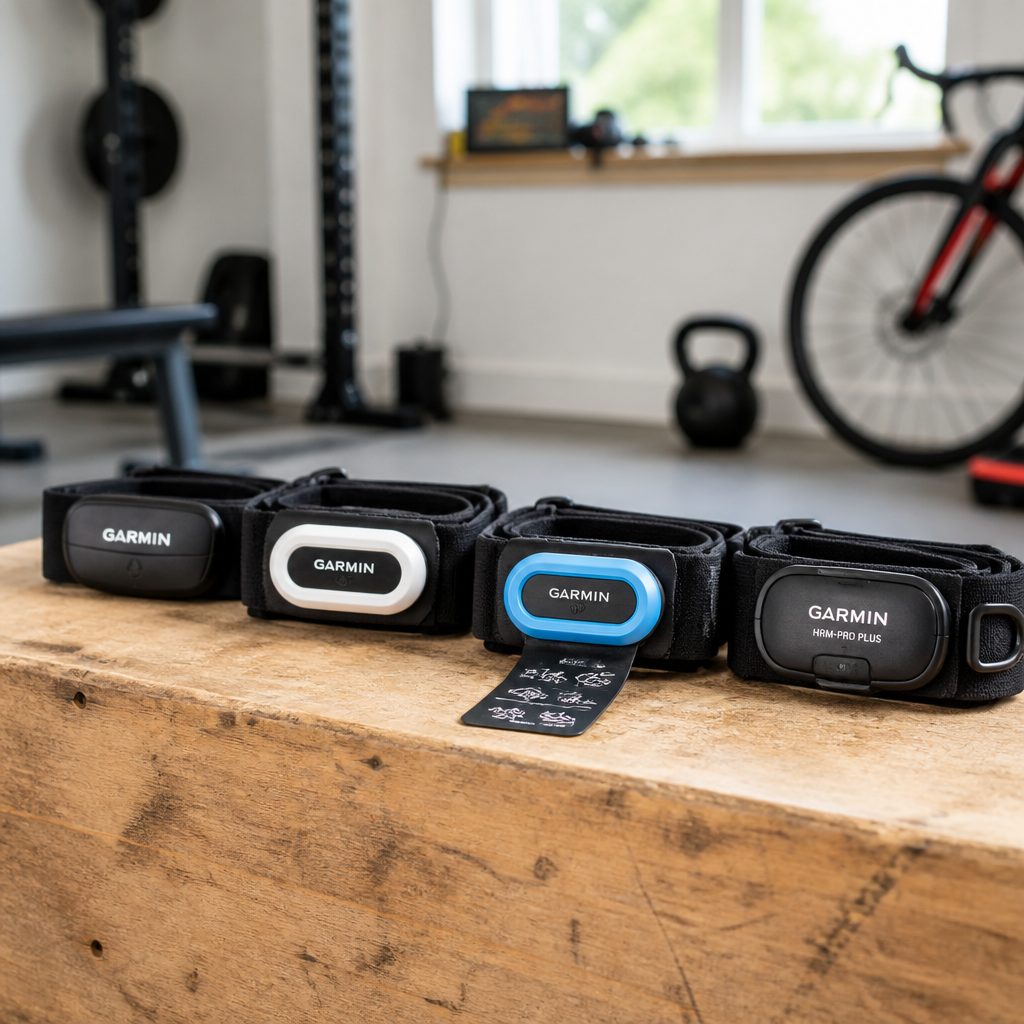
Garmin's HRM range spans from simple heart-rate transmission to multi-device, stored-data capability; choosing the right level prevents paying for features that will remain politely unused.
7. Myzone Max — Best for Myzone chest-only training
Myzone Max is the focused option for people who like the Myzone ecosystem and want chest-based ECG heart-rate measurement without the MZ-Switch 2.0's alternate wear positions. Myzone states 99.4% heart-rate accuracy, and the unit is nearly 50% smaller and 25% lighter than the older MZ-3. It stores 36 hours of exercise data and connects to fitness apps.
There is something refreshing about that narrow purpose. It is chest-only, so there is no ambiguity about where it performs at its stated best. If your sessions revolve around Myzone-compatible gym classes or app logging and you want the classic chest-strap format, Max is a tidy fit. Buyers who need ANT+ and Bluetooth explicitly confirmed, however, should choose MZ-Switch 2.0 instead.
Battery life, charging and the maintenance nobody advertises
Battery choice changes the relationship you have with a strap more than any marketing page would like to admit. Polar H10 and H9 use CR2025 coin cells rated for 400 hours. Garmin HRM 200 uses a CR2032 with a claimed one-year life, while HRM-Dual stretches to up to 3.5 years on its user-replaceable lithium battery under Garmin's stated average-use assumption.
Rechargeable models offer another kind of convenience. Garmin HRM 600 is claimed to last up to two months between charges, and Myzone MZ-Switch 2.0 lasts three to six months between charges. Neither approach is objectively superior. A replaceable battery means no cable and very infrequent attention. Rechargeable hardware means no coin cells to buy or dispose of. Choose based on your own habits, not an abstract idea of what is modern.
Care matters too. Rinsing a strap after sweaty work helps preserve the textile section and electrode contact. Machine-washable straps, such as those supplied with Polar H10, Polar H9 and Garmin HRM-Dual, make the process less fussy. Remove or detach the sensor where the product design allows, follow the maker's care directions and avoid leaving a damp strap crumpled in a kit bag for days. That is not an advanced training principle. It is simply common decency towards fabric that has seen you at your worst.
Best-for breakdown: choose by the way you train
Best all-rounder
Polar H10
Best balance of ECG chest sensing, simultaneous Bluetooth and ANT+, long replaceable-battery life and session memory.
Best for intervals and strength
Polar H10
A strong fit for fast-changing effort thanks to its ECG approach and cited R-R interval performance.
Best premium setup
Garmin HRM 600
Three Bluetooth connections, unlimited ANT+ and device-free activity recording suit complicated training setups.
Best flexible wear option
Myzone MZ-Switch 2.0
The only ranked option here built for chest, arm and wrist use.
Best low-maintenance choice
Garmin HRM-Dual
Its claimed battery life of up to 3.5 years removes charging from the weekly routine.
Best basic Garmin option
Garmin HRM 200
A straightforward Bluetooth or ANT+ chest strap with a detachable sensor and up to one year claimed battery life.
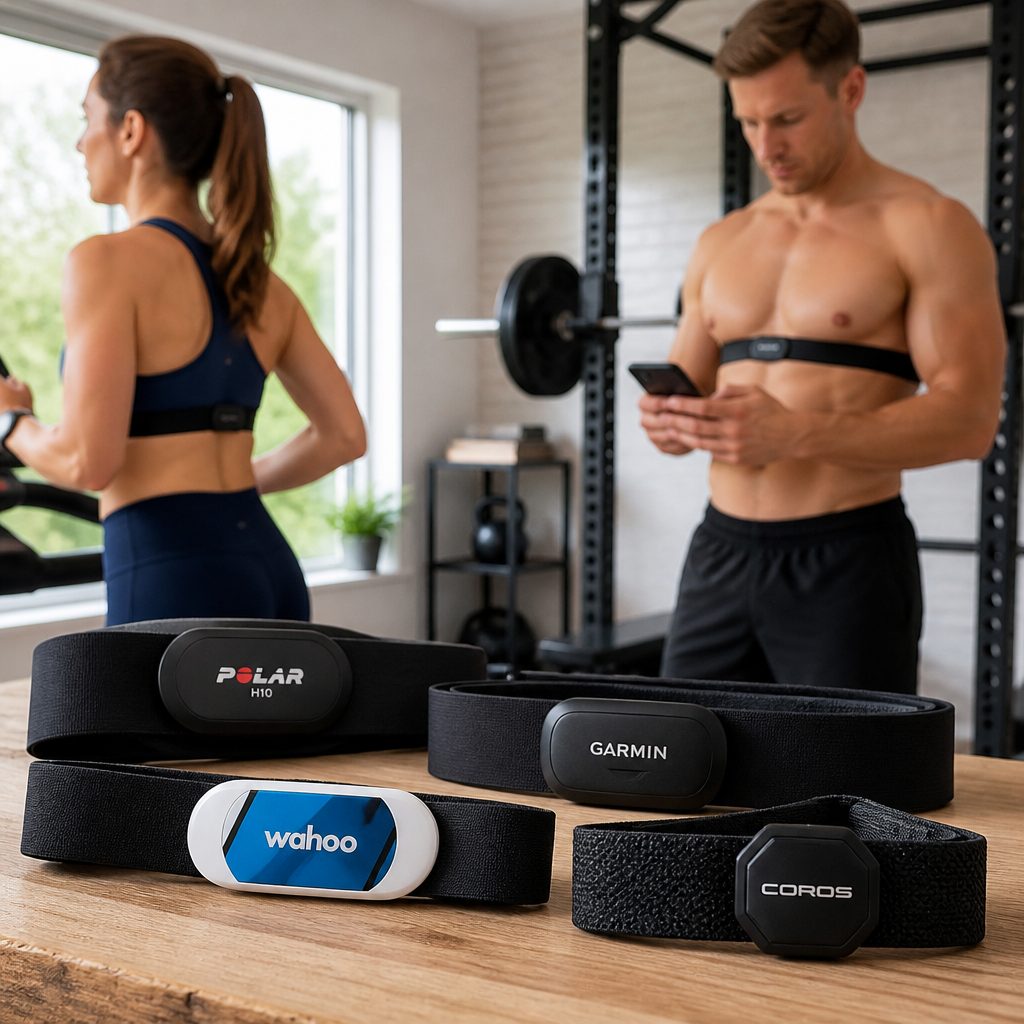
Different trainees need different things from a strap: a class regular may prioritise flexible wear, while a data-focused lifter may value simultaneous wireless connections and chest-only consistency.
How to get the best readings from any chest strap
Start with placement. The strap should sit firmly around the chest, just below the pectoral muscles, with the sensor central and flat against the skin. It should feel secure, not restrictive. A strap that slides down during burpees is not doing its best work, regardless of the logo on the module.
Moisten the electrode areas before training, particularly in a dry room or during a cold start. Electrical chest sensors often settle rapidly once sweat is present, but beginning with better contact makes the first few minutes more dependable. If readings look implausible, pause before blaming the product. Check the strap is clean, secure and sitting on bare skin.
Then think about the data you are asking it to produce. For interval training, use it to guide repeatable work and recovery. For strength training, focus on overall session effort and rest patterns rather than pretending heart rate alone can fully measure mechanical load. A hard set of five deadlifts and a hard set of twenty kettlebell swings can feel equally rude in entirely different ways.
For HIIT
Prioritise a chest position and stable wireless connection so rapid rises and falls are captured as cleanly as possible.
For strength circuits
Use heart rate alongside sets, reps and load. It adds context; it does not replace the training log.
For indoor cardio
ANT+ and Bluetooth support can make it easier to connect the same live signal to compatible bikes, apps and watches.
Common buying mistakes worth avoiding
The first is assuming all wireless standards work in the same way. A strap can be very accurate yet not be the right pairing partner for your favourite app or gym equipment. Check what your receiver supports before choosing. Garmin HRM 600 and HRM-Dual are the standout options when many devices need concurrent live data; that capability is unnecessary if you only ever connect to one watch.
The second is chasing alternate wear positions whilst expecting chest-strap accuracy everywhere. Myzone's own figures make the sensible distinction clear: MZ-Switch 2.0 is stated at 99.4% accurate on the chest and 95% on the arm or wrist. Flexibility is excellent. Physics still has a vote.
The third is buying based only on battery duration. Garmin HRM-Dual's long claimed battery life is appealing, but HRM 600's rechargeable arrangement may be preferable if you value its stored activity recording, HRV transmission and additional Bluetooth connection. The best battery is the one that suits the rest of the product you actually need.
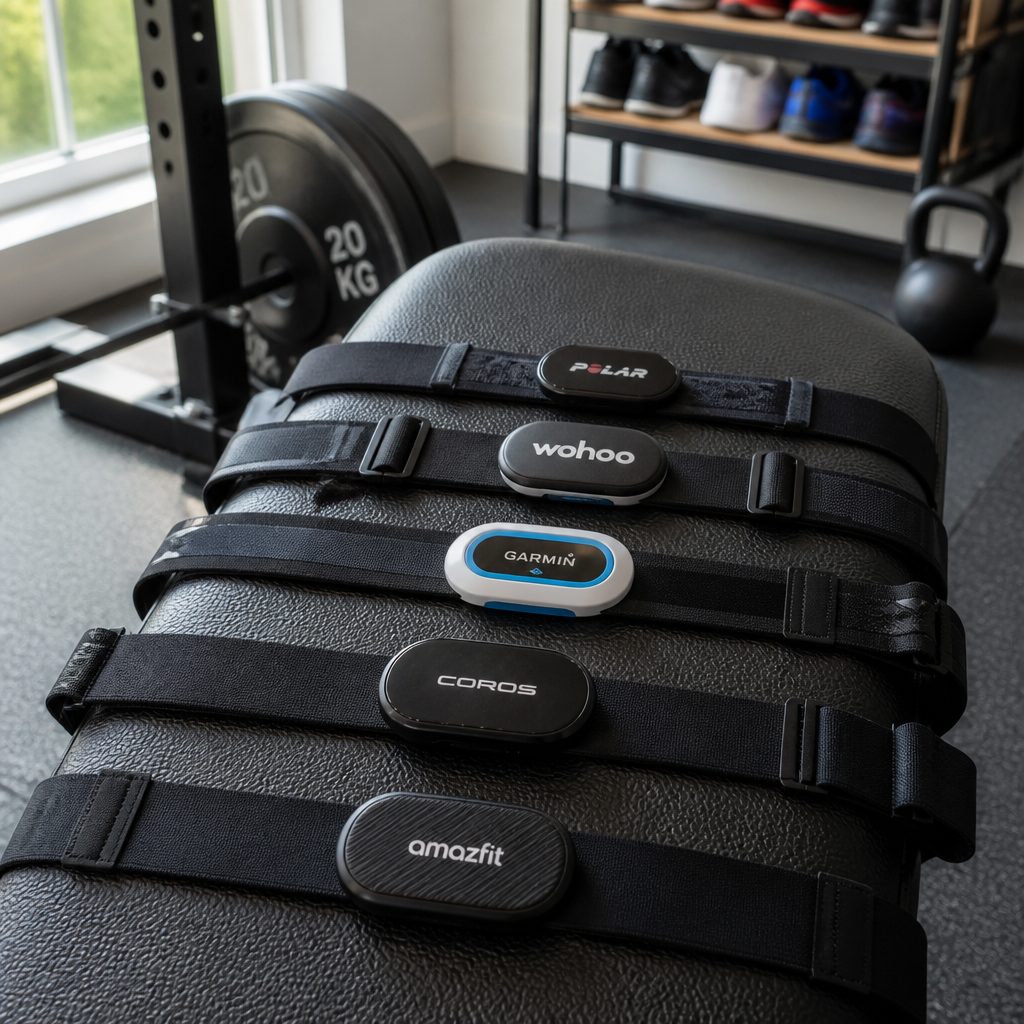
A chest strap should be treated as a training tool rather than a novelty metric machine: use its signal to guide repeatable decisions, not to create more numbers for their own sake.
Frequently asked questions
The bottom line
Polar H10 is the best heart-rate chest strap for most people who want accurate, useful training data across intervals, strength circuits and cardio. It has the right balance of ECG sensing, simultaneous Bluetooth and ANT+, long replaceable-battery life and practical stored-session capability. Choose Garmin HRM 600 if your training setup demands maximum connection flexibility and offline recording. Choose Myzone MZ-Switch 2.0 if alternate arm and wrist wear matters as much as chest-led accuracy. The common thread is simple: for hard training, a well-fitted chest strap remains one of the least flashy and most worthwhile upgrades you can make.