
The Best Fitness Trackers and Heart-Rate Straps for Strength Training
For lifting, circuits and proper breathless HIIT, a chest strap remains the sensible answer. Here are the best options for getting heart-rate data that does not quietly lose the plot halfway through a set of thrusters.
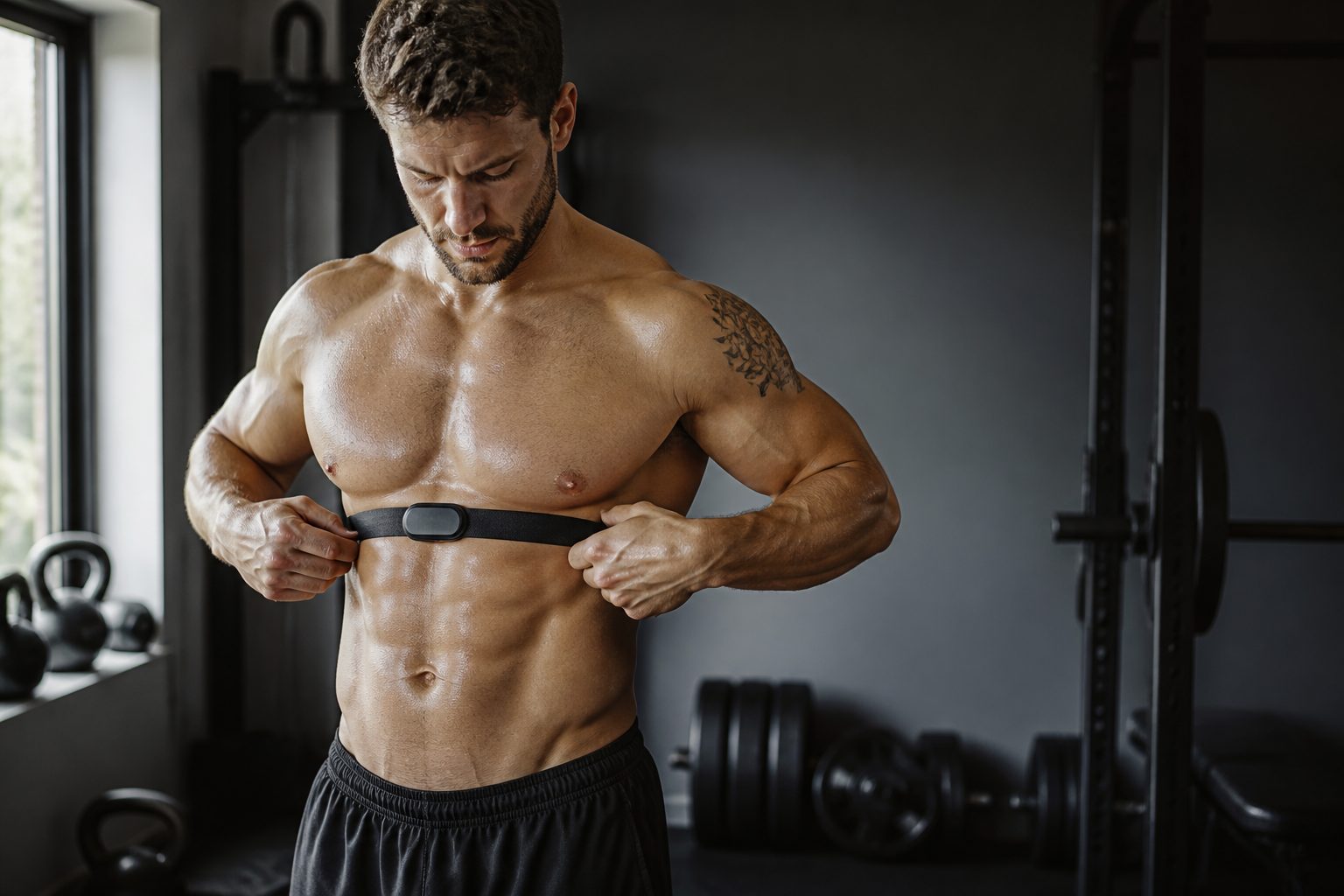
A chest strap sits below the pecs, where its electrical sensors can keep reading while your wrists are busy gripping, pressing and generally causing optical sensors a difficult afternoon.
 By James Oduya · Staff Writer & Home Gym Columnist · Updated August 31, 2026
Why strength training is different for heart-rate tracking
Most fitness trackers are sold with a runner jogging prettily through a park, wrist held at exactly the right angle, receiving a neat little pulse trace. The gym is not like that. Strength training involves clenched hands, flexed forearms, a bar pressing against the wrist, sweat, sudden changes of pace and plenty of moments where your arms are very much not doing a smooth, repeatable pendulum motion.
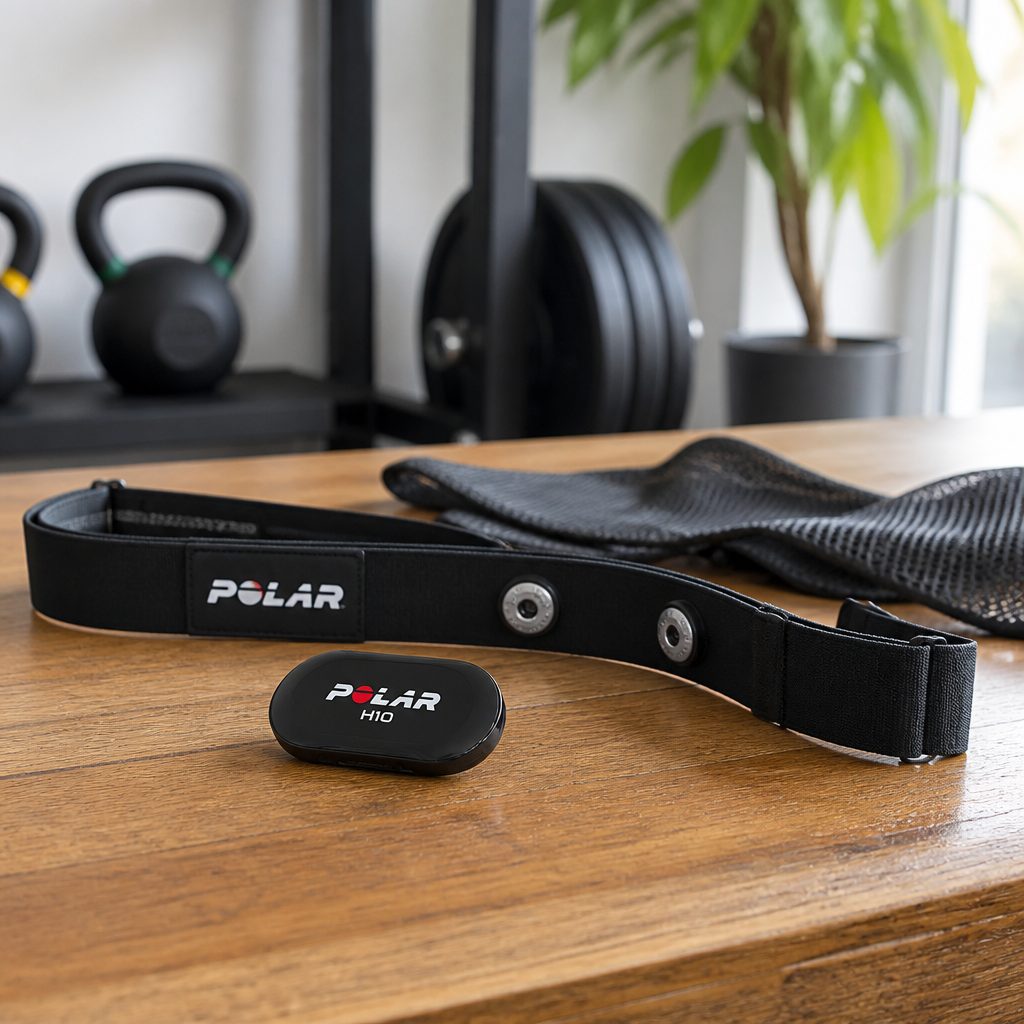
The Polar H10's detachable sensor and washable Polar Pro strap make it one of the more straightforward straps to live with over a long run of sweaty training sessions.
That matters because most watches and bands use photoplethysmography, usually shortened to PPG. In plain English, the device shines light into your skin and estimates blood flow from the reflected signal. It is clever technology, and it can be entirely useful for walking, sleeping and steady work. But it has a fairly thankless job when you are deadlifting, kettlebell swinging or racing through an EMOM.
A chest strap uses electrical sensing instead. It detects the heart's electrical activity through electrodes held against the chest. It is much closer to the way clinical heart-rate monitoring works, and it has fewer opportunities to be thrown off by forearm tension or a watch body bouncing around on a sweaty wrist. There is no romance in it. There is, however, a great deal of usefulness.
For people using heart rate to manage interval effort, rest periods or conditioning volume, a reliable trace matters more than having another screen on the wrist. A chest strap is not old-fashioned; it is simply the right tool for a particularly messy job.
Chest strap versus wrist optical: what the numbers said
The difference was not merely a fussy enthusiast's preference. During 30-second maximal efforts across Tabata, EMOM and sprint protocols, wrist devices captured only 68–83% of true peak heart rate when measured against ECG. They consistently lagged chest-strap readings by 12–22 beats per minute. That is a chunky gap when the whole purpose of the interval is to spend time near a particular effort level.
Recovery was arguably more revealing. In the same sort of high-intensity context, 74% of wrist devices reported a return to baseline of 100 beats per minute or lower between 22 and 48 seconds before ECG-confirmed recovery. If your watch says you have recovered when you have not, it encourages you to start the next effort prematurely. That might dilute the intended session, or just make a hard workout unnecessarily ragged. Neither outcome is especially charming.
Studies of wrist and forearm monitors also found that accuracy became worse as exercise intensity increased, particularly during cycling and elliptical work. Errors ranged from plus or minus 34 beats per minute to plus or minus 15 beats per minute depending on activity. Again, that does not make your smartwatch worthless. It does mean you should be cautious about treating its gym heart-rate graph as a lab report.
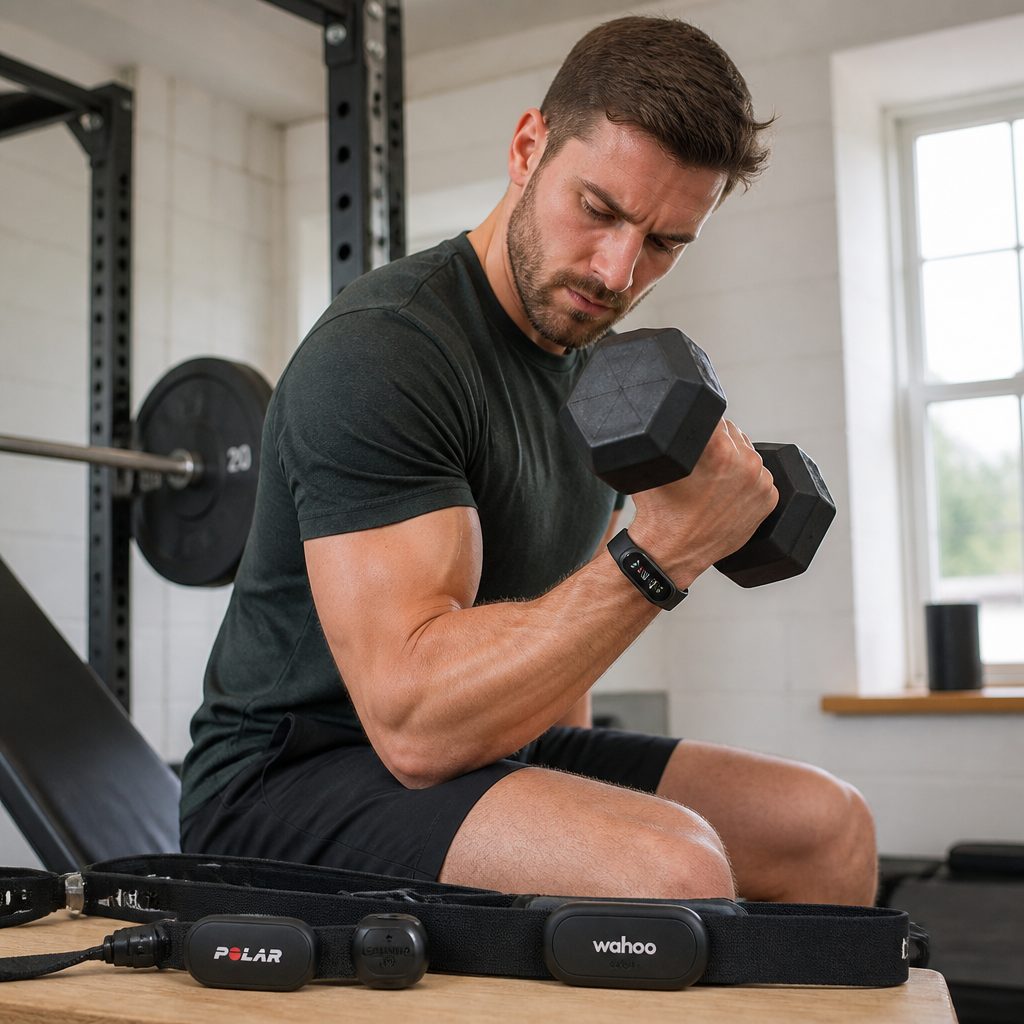
Rapid grip changes, muscle tension and wrist flexion are precisely the conditions that make an optical sensor work harder than it does on a steady outdoor run.
The practical case for a strap in lifting and HIIT
The best chest strap is the one you actually wear, so comfort is not a side issue. Get the fit right and a strap becomes forgettable after the first few minutes. It sits below the pectorals, under a top if you prefer, and gets on with recording. You can check a watch, gym display, cycling computer or phone if you need live feedback, but the measuring bit happens in a place where the sensor has a decent chance.
Heavy barbell work
Holding a bar can tense the forearm and alter wrist pressure, two things an optical sensor does not enjoy. A chest strap stays clear of both problems whilst you focus on bracing and technique.
Intervals with abrupt changes
Electrical sensing usually provides a steadier response when effort rises and falls quickly. That is particularly useful for circuits, assault-bike bursts, sled work and rower intervals.
Sweat and changing conditions
PPG has to contend with sweat-related noise and shifts in peripheral blood flow. Those are not unusual edge cases in HIIT. They are rather the point of it.
A better choice for more skin types
Skin tone and tattoos can affect optical reflection, and too little work has addressed those differences properly. A chest strap avoids relying on reflected light altogether.
A useful reality check
Heart rate is not a score for your strength session. It will not tell you whether your squat depth was better or whether your programme had enough progressive overload. It is brilliant for conditioning, density work and rest management; it is less useful as a verdict on a five-rep strength set with long rests.
At-a-glance comparison of the best straps
| Model | Best for | Power | Connectivity | Useful strength-training detail |
|---|---|---|---|---|
| Polar H10 | Best all-rounder | CR2025; approximately 400 hours | Bluetooth and ANT+ | On-board memory and two simultaneous Bluetooth connections |
| Garmin HRM 600 | Best premium pick | Rechargeable lithium-ion; up to two months at one hour daily | ANT+ and Bluetooth Low Energy | Three concurrent Bluetooth connections and machine-washable strap |
| Myzone Max | Best for motivation | Compact chest-strap system | Chest-strap ECG system | Effort-based gamification and claimed 99.4% clinical accuracy |
| Polar H9 | Best value alternative | Chest-strap system | Chest-strap ECG system | A simpler Polar option for those who do not need H10 extras |
| Garmin HRM 200 | Best Garmin basic | Non-rechargeable battery | Chest-strap ECG system | Entry-level approach without the HRM 600's advanced extras |
Ranked picks: the best heart-rate straps for gym sessions
1. Polar H10 — Best for strength-training accuracy and all-round versatility
The Polar H10 is the easy recommendation because it gets the important stuff right without turning the purchase into an ecosystem decision. It has been around since early 2017, which is practically vintage in wearable technology, but that is not a criticism. The H10 earned its reputation because an electrical chest strap does not need reinvention every other year. It needs accurate readings, solid connections and a strap you do not resent wearing.
Polar described it as the most precise sensor in its history, and the hardware is properly practical. It uses Bluetooth and ANT+, can connect to two Bluetooth devices at once, and has on-board memory for a phone-free session. That is excellent for a gym-goer who records through an app but also wants heart rate on a compatible watch, or who occasionally leaves the phone in the locker rather than carrying it round like a tiny anxious brick.
The Polar Pro strap is soft textile with quality electrodes and can be machine-washed. The module measured 65 by 34 by 10mm, whilst the standard strap adjusted from 67 to 91cm; a smaller version covered 58 to 71cm. Total weight was 60g. These are not thrilling numbers, admittedly, but they translate into a strap that feels like gym kit rather than medical equipment.
Pros
- Electrical sensing is the strongest option for lifting and HIIT.
- Broad Bluetooth and ANT+ compatibility.
- On-board memory is useful for phone-free sessions.
- Long claimed battery life from an easily replaceable coin cell.
Cons
- It uses a non-rechargeable battery.
- A chest strap remains less convenient to put on than a watch.
- It lacks the Garmin HRM 600's specialist running metrics.
2. Garmin HRM 600 — Best for premium multi-sport training
Shop Garmin HRM 600 on Amazon UK
The Garmin HRM 600 is for the person whose gym work is only part of the training week. Perhaps you lift three times, then run, ride or take a long weekend hike. Perhaps you simply enjoy data and have accepted that this is who you are now. It combines ECG-style chest-strap heart-rate sensing with a more ambitious set of running dynamics, including cadence, stride length, vertical oscillation, vertical ratio, ground contact time, ground contact time balance and step speed loss.
For strength work, the headline is not those running metrics. It is the rechargeable battery, rated for up to two months when used for around one hour a day, and the unusually flexible connection setup: ANT+ supports unlimited connections, whilst Bluetooth Low Energy supports three concurrent connections. If you use Garmin gear alongside apps or gym equipment, that extra flexibility can remove annoying pairing compromises.
It carried a 5 ATM water rating and came with a machine-washable strap in XS–S and M–XL sizing. Charging used Garmin's proprietary connector and took three to five hours. That connector is the one slightly inelegant part of an otherwise polished system: replaceable coin cells are not glamorous, but they do not need charging cables. Still, testing found the HRM 600 comfortably exceeded a 60-hour claim, lasting several weeks of daily riding with occasional running before it needed a recharge.
3. Myzone Max — Best for gym motivation and effort-based training
The Myzone Max takes the dependable chest-strap format and adds a more social, deliberately motivational layer. Its claimed 99.4% clinical accuracy put the focus firmly on dependable heart-rate capture, but its defining feature was effort-based gamification. It turned training intensity into a visible system that can make a hard circuit feel a little more purposeful, particularly if you train in a club environment where Myzone is already part of the furniture.
This is a good choice for the person who knows they work harder when a metric is staring back at them. That is not shallow. A nudge to stay honest in the final round, or to stop red-lining every single workout, can be genuinely useful. Just remember that the colour zones and effort points are tools, not a commandment handed down from the squat rack.
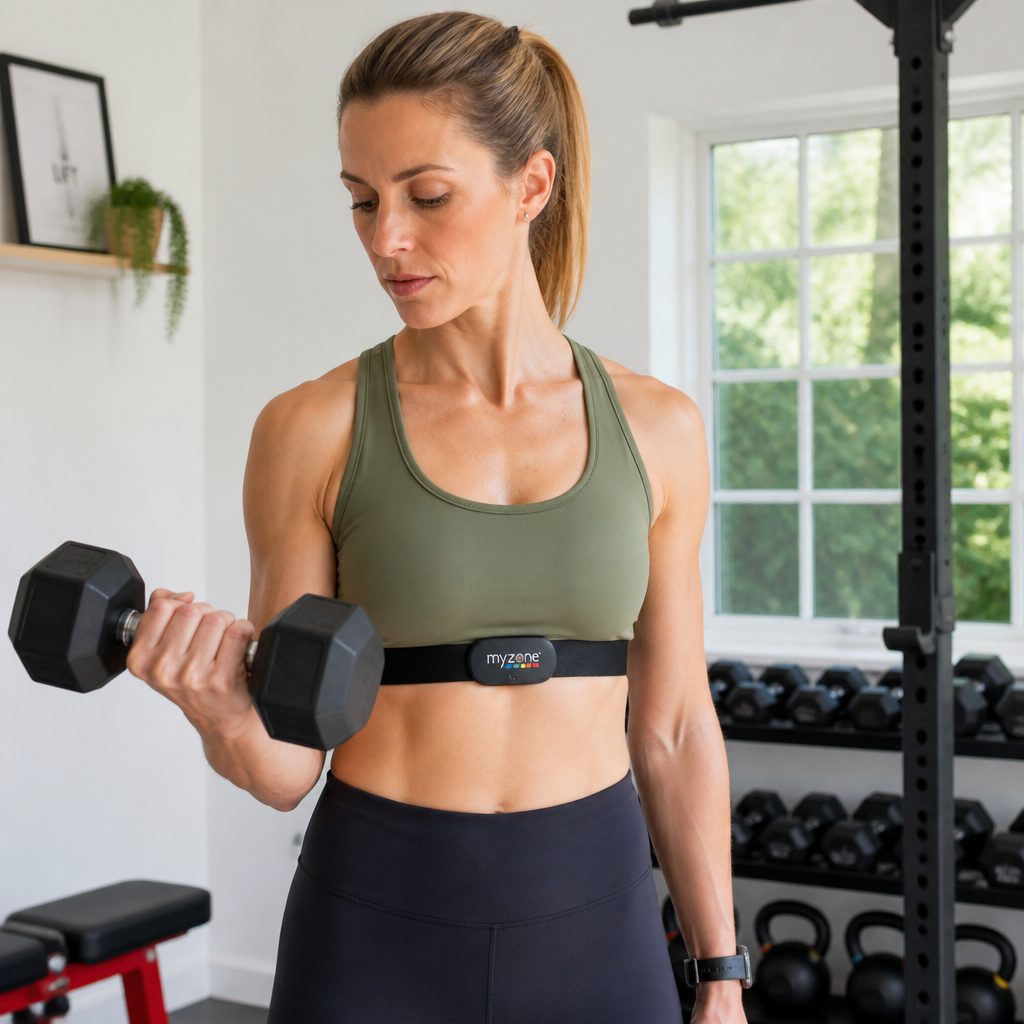
Myzone's effort-led approach suits circuit classes and busy gym floors, where seeing intensity in the moment can make pacing easier to manage.
4. Polar H9 — Best for budget-conscious lifters
The Polar H9 is the sensible stripped-back option. It is a chest-strap ECG model positioned as a more budget-friendly alternative to the H10, with a simpler feature set. That makes it appealing if your requirement is refreshingly uncomplicated: get a trustworthy heart-rate number during lifting and HIIT, connect it to your usual training setup, and avoid paying for features you will never touch.
There is a temptation to buy a watch because it appears to offer more. But if your real aim is accurate interval data, a simpler chest strap can be the better purchase. The H9 is for the lifter who would rather spend their money on plates, coaching or a decent pair of shoes than on a long list of wearable novelties. Entirely fair.
5. Garmin HRM 200 — Best for straightforward Garmin compatibility
Shop Garmin HRM 200 on Amazon UK
The Garmin HRM 200 is Garmin's entry-level chest-strap route. It used a non-rechargeable battery and offered basic functionality rather than the HRM 600's premium multi-sport package. That is not a failing if you want a clean, uncomplicated strap to accompany Garmin training equipment or simply prefer the brand's setup.
Think of it as the pick for someone who wants the chest-strap accuracy advantage but does not need advanced running dynamics or a rechargeable system. It is deliberately less elaborate. In a world where gym equipment often arrives with an app, a subscription and a personality, less elaborate can be rather refreshing.
Which strap should you actually buy?
There is no need to overthink this. If you train primarily with weights and conditioning, the Polar H10 is the strongest all-round choice. Its dual Bluetooth capability, ANT+ support, on-board memory, washable strap and long battery claim cover an enormous number of real-world gym situations. It has a mature, proven design, and that is often exactly what you want in a sensor.
Choose the Garmin HRM 600 if you also take running metrics seriously, prefer rechargeability, or need the flexibility of three Bluetooth connections. Choose Myzone Max if motivation and gym-community features will genuinely alter how consistently you train. The H9 and HRM 200 are the sensible reduced-feature options: pick between them based on the ecosystem you already use and how little extra complication you want.
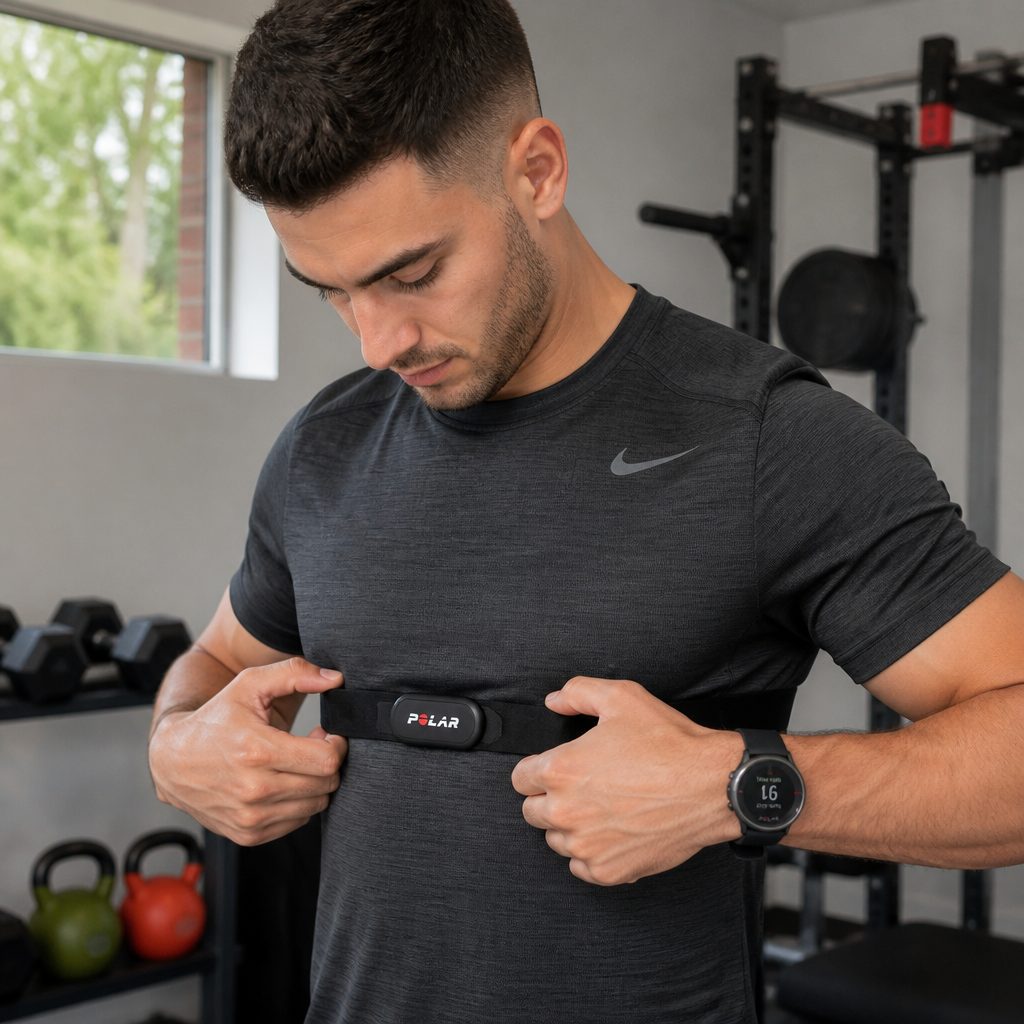
For most lifters, the best strap is the one that pairs reliably with the device or app they already use and remains comfortable through a full session.
Best all-rounder
Polar H10. The most versatile choice for lifting, HIIT, apps, watches and occasional phone-free training.
Best premium
Garmin HRM 600. The rechargeable multi-sport pick for people who want advanced running data too.
Best on a budget
Polar H9. A simpler ECG chest strap for buyers who want the core accuracy benefit.
Best for classes
Myzone Max. The effort-based gamification choice for people motivated by visible intensity feedback.
Getting a chest strap to read properly
Even the best strap benefits from a tiny bit of preparation. Position it just below the pectorals, snug enough that it cannot slide when you breathe deeply, but not so tight that it becomes an extra abdominal exercise. Wetting the electrode areas before starting can help establish a signal, particularly if you are training in a cool gym and have not started sweating yet.
Rinse the strap after very sweaty sessions and follow its washing guidance. The sensor module should be removed before washing where applicable. This is not glamorous maintenance, but salts and residue are not kind to textiles or electrodes. Treat it like lifting straps or knee sleeves: basic care means it stays pleasant to use rather than becoming a slightly sinister item at the bottom of your kit bag.
For interval work, do not obsess over the first few seconds of every effort. Use the trace to understand trends: how fast your heart rate rises, whether it falls adequately during the programmed rest, and whether similar sessions become more manageable over time. The exact number matters. The pattern matters more.
Train the session, not the graph
If a planned strength day calls for full rest between heavy sets, take the full rest even if heart rate looks low. Conversely, if you are doing conditioning intervals, a chest strap can stop a falsely optimistic wrist reading from persuading you that you are ready before your body agrees.
When a wrist tracker is still perfectly fine
I am not arguing that everyone must bin their smartwatch and start wearing a chest strap from breakfast onwards. Wrist optical tracking is convenient, useful for everyday activity and often acceptable for steady treadmill work. It also gives you a watch screen, notifications, sleep data and all the other things a strap simply does not attempt to do.
What it should not be asked to do is serve as the final authority during chaotic, high-intensity training. If you enjoy your Apple Watch, Garmin watch, Fitbit, Samsung Galaxy Watch or COROS watch, keep enjoying it. The tidy solution is to pair it with a chest strap for serious sessions if it supports external heart-rate monitoring. Your wrist device can remain the display and training log; the strap becomes the specialist sensor.
This is especially worth considering for people with dark skin or tattoos under their watch sensor. Optical accuracy can be affected by how light reflects from skin, and the industry had not done enough work to solve ethnicity-related accuracy concerns properly. Electrical sensing is not a fashionable workaround. It is simply a more direct measurement method for this job.
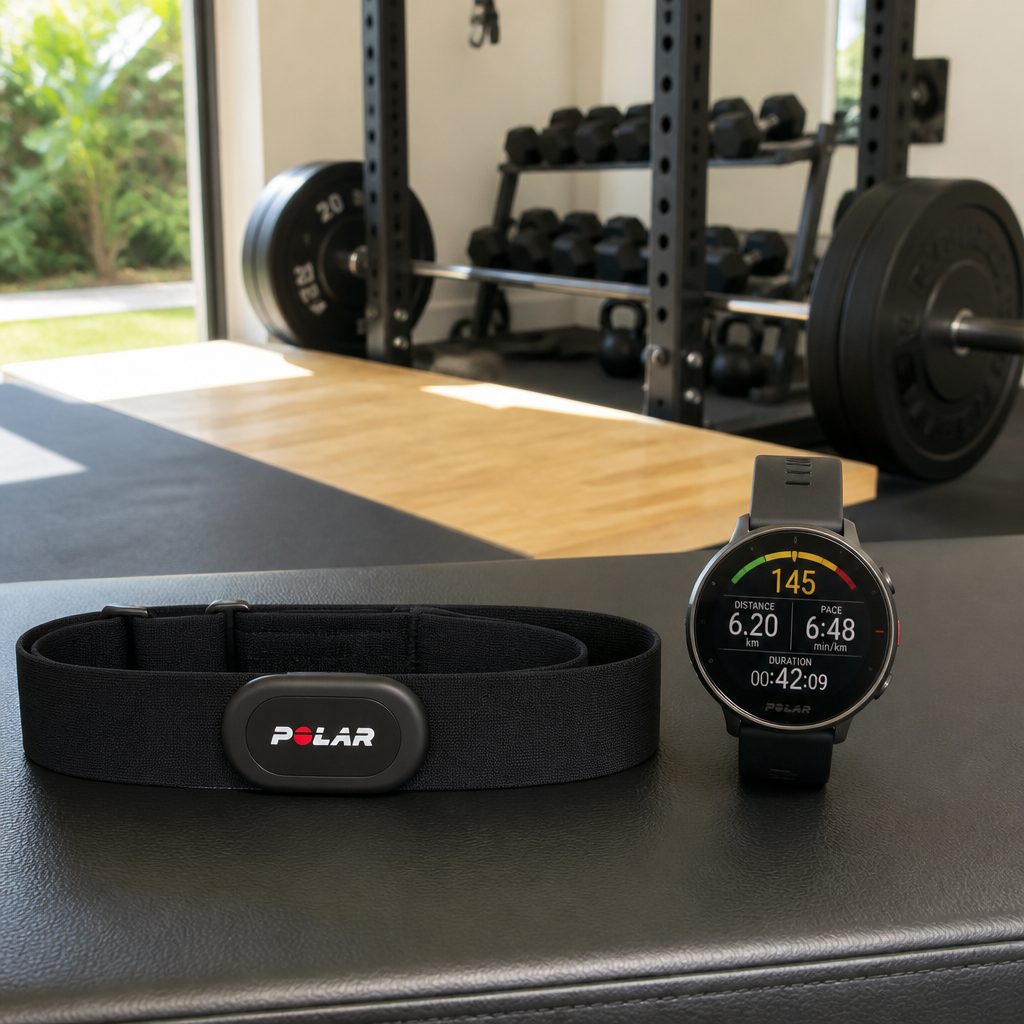
A compatible watch can still make an excellent training display; the chest strap simply handles the more demanding task of measuring heart rate during hard work.
Frequently asked questions
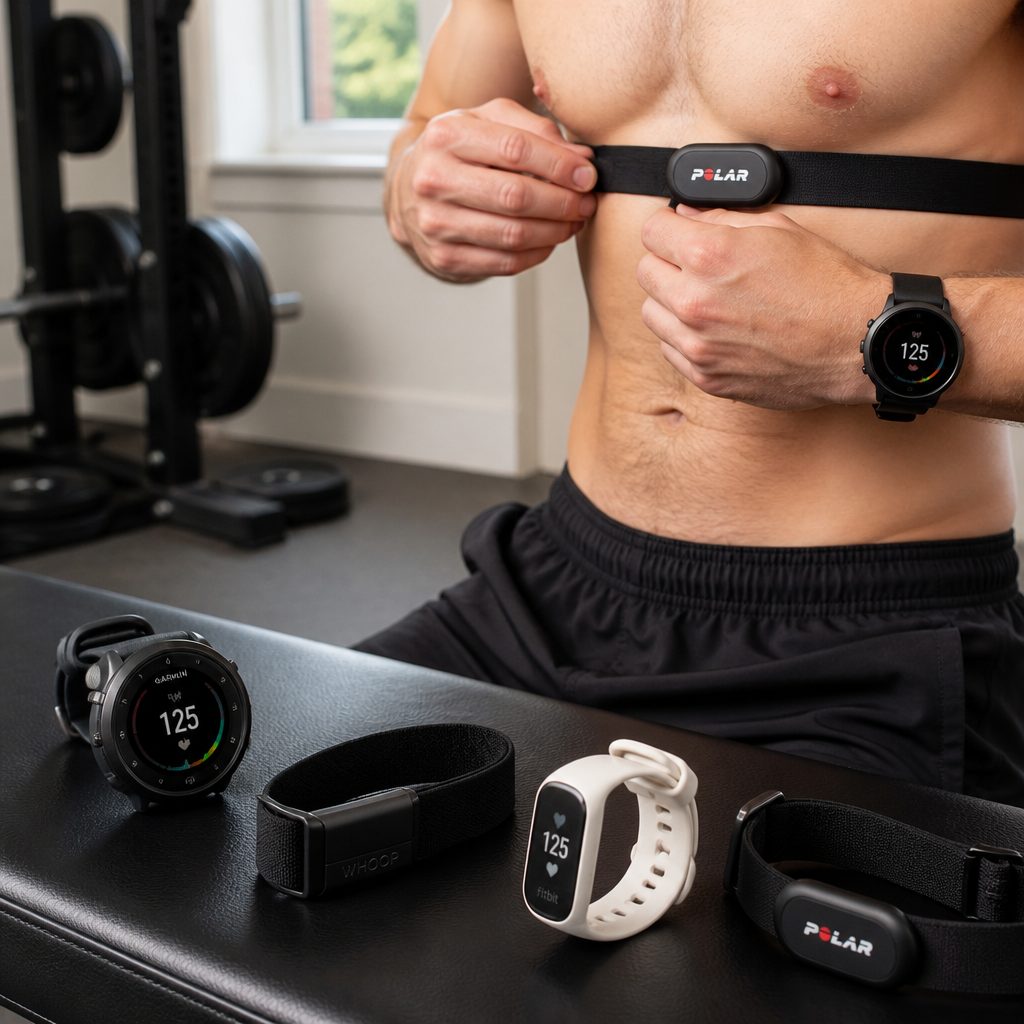
The useful result is not merely a high number after a hard set, but a consistent heart-rate trace you can use to pace circuits and judge recovery honestly.
The bottom line
For strength training and HIIT, buy a chest strap before you buy a wrist tracker solely for heart-rate accuracy. The Polar H10 remains the best all-round answer: accurate electrical sensing, broad compatibility, on-board recording and a long-lived battery in a comfortable washable package. Spend up on the Garmin HRM 600 if rechargeable power, multiple Bluetooth connections and advanced running dynamics suit your wider training life. Otherwise, choose the simpler Polar H9, Garmin HRM 200 or motivation-led Myzone Max according to how you train. Your wrists have enough to do when the bar gets heavy.