
Screenless band market booms: Fitbit, Garmin and Polar pile in
Four major brands now sell screenless recovery bands in the UK, squeezing WHOOP from every angle on price and subscription costs.
 By James Oduya · Staff Writer & Home Gym Columnist · Updated October 11, 2026
What you need to know
- Four screenless recovery bands — Fitbit Air, Garmin CIRQA, Polar Loop and Amazfit Helio Strap — are now all available in the UK
- UK prices range from £84.99 (Fitbit Air) to £179.99 (Garmin CIRQA), all cheaper than WHOOP's £169-a-year minimum which doesn't include hardware ownership
- None requires a mandatory subscription, unlike WHOOP's compulsory membership model
A market transformed in fourteen months
The screenless recovery band has gone from a niche curiosity to a mainstream battleground in little over a year. Four major brands — Amazfit, Polar, Google's Fitbit and Garmin — have all shipped hardware into the category since June 2025, offering UK buyers a raft of options that, for the first time, genuinely challenge the subscription-heavy model pioneered by WHOOP.
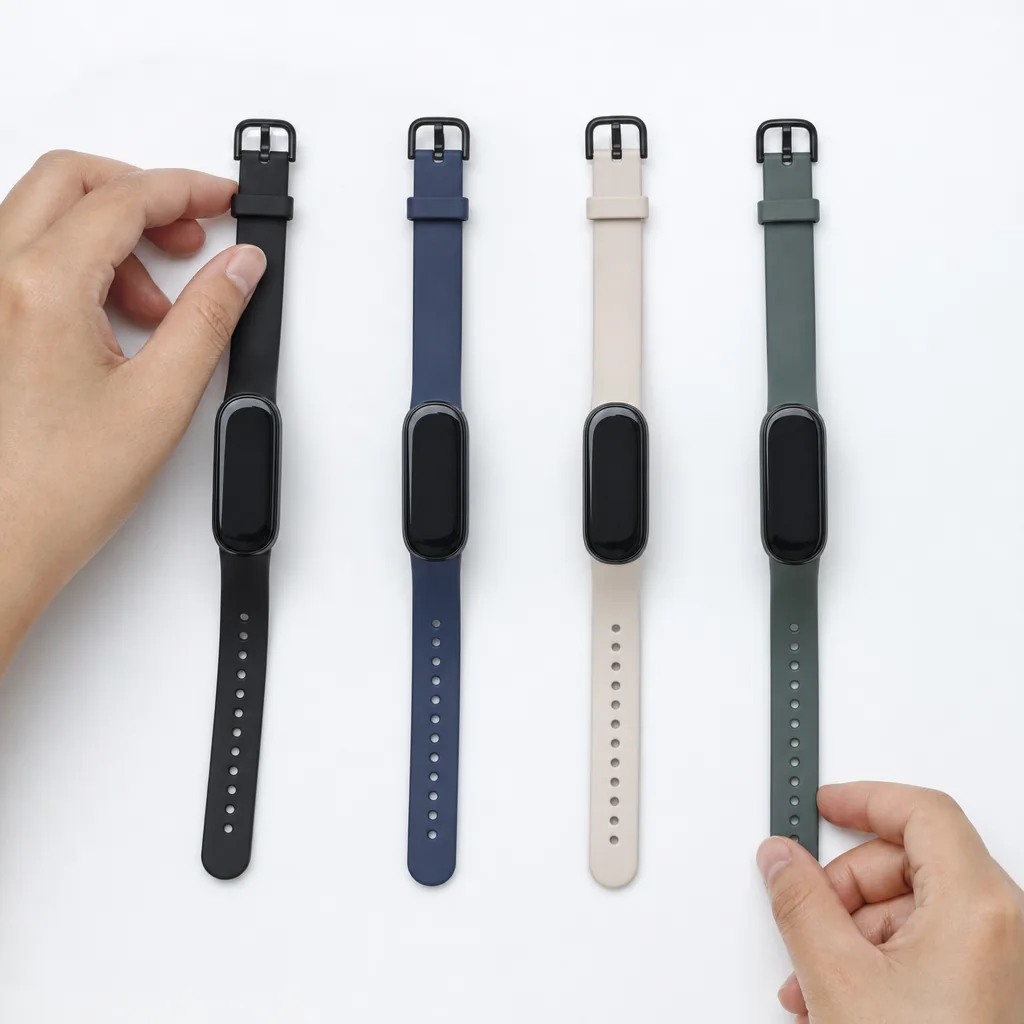
The timeline tells the story. Zepp Health's Amazfit Helio Strap arrived first, in June 2025, priced at £99. Polar followed in early September 2025 with its Loop, a subscription-free band built around the same Polar Precision Prime heart-rate sensor found in the company's flagship Vantage V3 watch, at £149. Google then officially launched the Fitbit Air on 7 May 2026 — described as the smallest Fitbit tracker yet — at £84.99, reaching stores on 26 May. Garmin completed the set, announcing its CIRQA Smart Band on 21 July 2026 and putting it on sale just three days later at £179.99.
What each band actually offers
Despite similar silhouettes, the four devices carve out distinct positions.
The Google Fitbit Air is the cheapest entry point in the UK at £84.99 and is, according to Google, the only screenless band in this group with FDA-cleared background AFib detection. It tracks heart rate, sleep, SpO2 and more, and works with the new Google Health app on both Android and iOS. Battery life is up to seven days. Core tracking is included in the hardware price; deeper features sit behind an optional Fitbit Premium subscription.
The Garmin CIRQA is the most feature-laden of the group. At £179.99, it delivers sleep stages, HRV, Body Battery, stress, skin temperature, training readiness, VO2 max, training status and over 80 activity profiles — all with no mandatory subscription. Garmin does offer an optional Connect+ tier at $6.99 a month for additional insights, but nothing is locked away on day one. Battery life is up to ten days.
The Polar Loop, at £149, makes its pitch on simplicity and trust. Polar has confirmed it is entirely subscription-free and that "every feature is ready on day one." It packs Bluetooth 5.1, USB-C charging and eight days of battery life. The band has not been without controversy: WHOOP has sued Polar, claiming the Loop's design copies its own hardware.
The Amazfit Helio Strap sits at £99, weighs just 20g with its band, and offers up to ten days of battery life with 5 ATM water resistance. An optional Zepp Aura Premium subscription adds an AI wellness advisor and audio relaxation content for $69.99 a year. Amazfit has also introduced a higher-tier variant: in June 2026 the company added the Helio Strap Pro at $199.99 — a two-sensor kit that includes a waist pod to measure muscular load, specifically aimed at HYROX-style hybrid athletes. A confirmed UK price for the Pro has not been announced.
Three different business models — all taking aim at WHOOP
The competitive pressure is not just about hardware specs. It is about money, and specifically about how much of it buyers are committed to spending each year.
WHOOP operates on a mandatory membership model. When you buy a WHOOP device in the UK, you subscribe to one of three plans: One at £169 a year, Peak at £229 a year, or Life at £349 a year. The hardware is bundled into the membership. Over three years, even the cheapest WHOOP tier reaches significant sums — one calculation puts the equivalent US figure for WHOOP One at $597 over three years.
The new entrants split broadly into two alternative models. Garmin and Polar are outright hardware purchases with no required recurring fee. Fitbit and Amazfit operate a freemium model — hardware upfront, with optional premium subscriptions for deeper data. All four deliver meaningful core tracking without asking for a direct debit.
Why it matters for UK buyers
The practical upshot for anyone in the UK considering a recovery band is significant. The price corridor now runs from £84.99 to £179.99 for a one-off purchase, against a minimum of £169 in year one for WHOOP — and with WHOOP, you never own the hardware outright. For casual users who want sleep tracking and heart-rate variability without committing to a subscription, there is now a genuine menu of options.
Analysts are, however, cautious about overstating the disruption. As one widely quoted observation in the wearables industry has it: "Three screenless bands launched in fourteen months and each was called a Whoop killer. None of them is. Together they close every cheap exit route around Whoop, but the product that would actually threaten it has not launched yet." That product is widely believed to be an Apple screenless band, reportedly targeting a launch no earlier than 2028.
For now, the category has moved decisively mainstream — and UK buyers are the immediate winners.
Why it matters
UK buyers can now enter the screenless tracking category from £84.99 — a fraction of what WHOOP costs over any meaningful period — and every new competitor offers core health data without locking users into recurring fees. The arrival of Garmin and Google in particular signals that this is no longer a niche for biohacker enthusiasts but a legitimate mainstream product category. That said, analysts are cautious: none of these devices individually threatens WHOOP's dominance, and the product that would truly challenge it may not arrive until Apple enters the market, which is reported to be 2028 at the earliest.