
WHOOP sues Polar over screenless band design in escalating wearable war
WHOOP filed a federal lawsuit against Polar in October 2025, claiming the new Polar Loop copied its signature faceless fitness band design.
 By James Oduya · Staff Writer & Home Gym Columnist · Updated August 21, 2026
What you need to know
- WHOOP filed a federal trademark infringement lawsuit against Polar on 14 October 2025, targeting the design of the Polar Loop
- Polar firmly denies the allegations, citing nearly 50 years of innovation; the preliminary injunction against Polar has not yet been ruled on
- WHOOP has already won a separate injunction against a Chinese copycat, with a judge confirming its design is "non-functional and distinctive"
The legal battle over who owns the look of the screenless fitness band is intensifying. WHOOP, the Boston-based wearable company, filed a federal lawsuit on 14 October 2025 against Finnish sports tech veteran Polar Electro in the U.S. District Court for the Eastern District of New York, alleging that Polar's new Loop fitness band unlawfully copies WHOOP's distinctive product design. The case is being brought under the Lanham Act — the principal U.S. federal trademark statute — and WHOOP is seeking damages, attorney's fees, and an injunction that would block U.S. sales of the Polar Loop outright.
What WHOOP is actually claiming
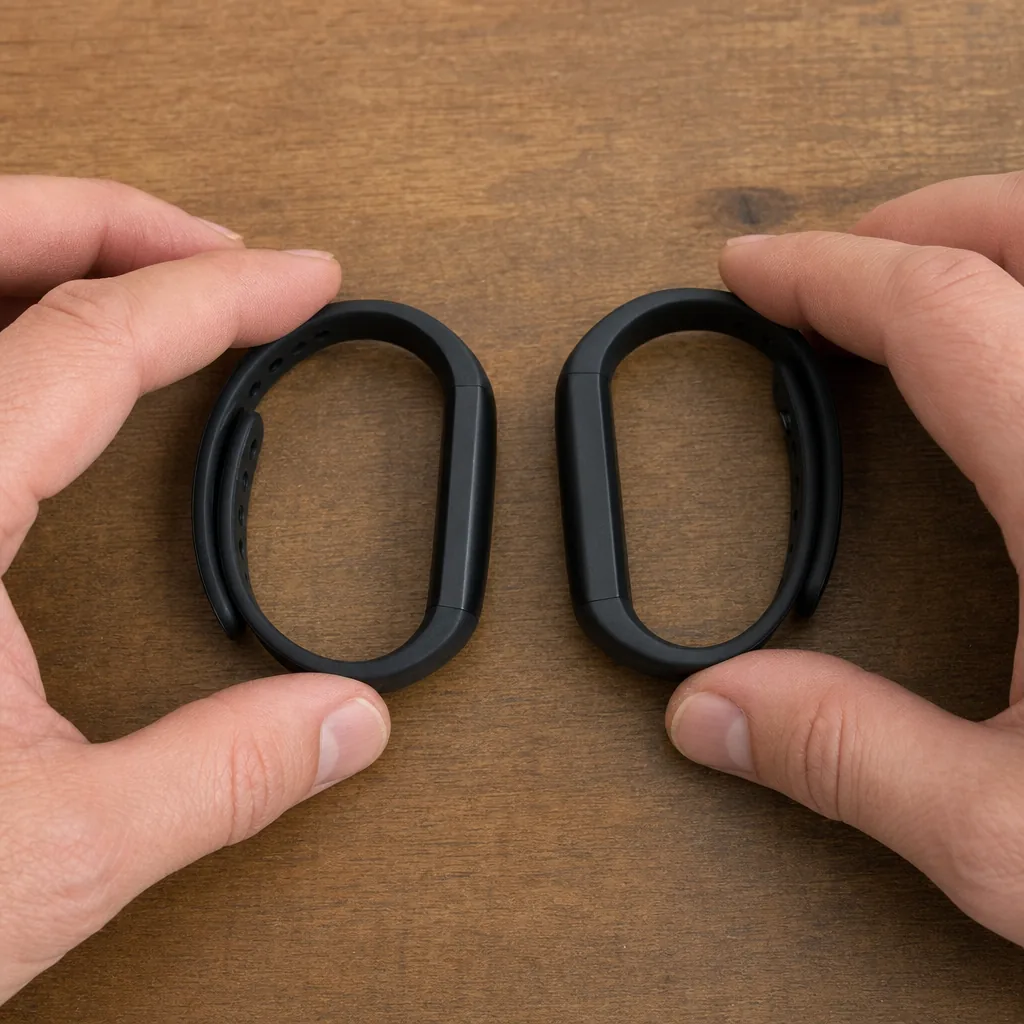
At the heart of the complaint is a set of specific design elements that WHOOP argues are uniquely its own: a continuous woven band that covers the sensor module, thin metallic side accents, a U-shaped clasp that folds over the sensor, and — most distinctively — a completely blank front face with no display and no buttons whatsoever. WHOOP calls this its "faceless" design and contends it has been a defining characteristic of its device since the WHOOP 1.0 launched in 2015.
Crucially, WHOOP's legal team is not merely arguing that Polar copied functional engineering. The complaint asserts that these design choices are non-functional — meaning they exist primarily as brand identifiers rather than to make the product work better. If a court accepts that argument, it could significantly broaden the scope of design protection across the wearable industry, making it harder for competitors to approach the same aesthetic territory regardless of their own innovation history.
WHOOP also contends that the similarity is enough to confuse consumers, given that the Loop bears traits the company says have made its strap "instantly recognisable" over more than a decade on the market. WHOOP declined to comment to media on the matter.
Polar's response
Polar launched the Loop on 3 September 2025, describing it as its "first screen-free wearable band designed to discreetly and comfortably track activity, sleep, and overall health 24/7." The company — which has been building heart-rate technology since 1977 — wasted little time in pushing back after the lawsuit landed. In a statement shared with Tom's Guide on 20 October 2025, the company said:
"Polar firmly denies any allegations of intellectual property infringement. Our products are the result of decades of innovation and rigorous design processes, and we remain confident in the originality and integrity of the appearance and design of our products."
That near-50-year design heritage is likely to form a central pillar of Polar's defence.
A related win — but not against Polar
Separately, WHOOP has already scored a significant legal victory that lends weight to its broader argument. A federal judge in the U.S. District Court for the District of Massachusetts granted WHOOP a preliminary injunction against Shenzhen Lexqi Electronic Technology Co., a Chinese manufacturer accused of producing a lookalike fitness tracker. In that ruling, the judge agreed that WHOOP's design is "non-functional and distinctive," halting U.S. distribution of Lexqi's device. WHOOP was required to post a $200,000 bond as a condition of that injunction.
It is important to note, however, that the preliminary injunction request in the WHOOP vs. Polar case — filed in a different New York court — is still under review. No ruling on that specific request has been confirmed as of today.
The Polar Loop: what you get for the money
For UK buyers, the Polar Loop is available at £149.50 as a one-time purchase, with no subscription required. It weighs just 29g, uses Polar's Precision Prime optical heart-rate sensor, offers up to eight days of battery life, charges via USB-C, and is water-resistant to 30 metres. It comes in three colourways — Greige Sand, Night Black, and Brown Copper — and replacement bands cost approximately £15.
The Loop tracks steps, heart rate, calories, sleep stages, and recovery, automatically detecting training sessions and syncing to the Polar Flow app. It stores up to four weeks of data on-device. Every feature is available from day one, with no paywall.
That stands in direct contrast to WHOOP's business model, which operates on an annual membership starting at $199 per year in the United States — the only device in this category that bundles hardware into a recurring subscription. UK membership pricing has not been confirmed.
A market that's suddenly crowded
The timing of this legal fight is notable. Until recently, WHOOP largely had the screenless tracker space to itself at the premium end. That has changed sharply in 2026. The confirmed competitors now in this category include:
- Garmin CIRQA — £179.99 in the UK, praised by TechRadar as offering WHOOP and the Fitbit Air "serious competition"
- Google Fitbit Air — starts at $99.99, weighs just 5g, and includes an AI chatbot tier
- Amazfit Helio Strap — also from $99.99, tested by Tom's Guide as a "screen-free subscription-free fitness tracker"
- WHOOP 5.0 — the subscription-dependent incumbent
- Polar Loop — £149.50, one-time purchase
The screenless band war, in other words, is no longer just legal — it is fiercely commercial. WHOOP is fighting on two fronts simultaneously: in court to protect its design identity, and in the market against a wave of well-resourced rivals that have concluded the subscription-free model is what most consumers actually want.
What happens next
The preliminary injunction request against Polar remains before the court in New York. Legal observers note that, should WHOOP ultimately prevail in both the Polar and Lexqi cases, the implications for how other brands design screenless wearables going forward could be substantial. A ruling against Polar might require a full product redesign — a process that could take around two years — and could send a chilling signal across the category at precisely the moment it is finding its mainstream audience. For now, the Polar Loop remains on sale in the UK, and UK buyers are not subject to the current U.S. injunction request.
Why it matters
UK buyers cannot currently be directly affected by the injunction request, which targets U.S. sales only — but if WHOOP prevails, Polar could face a costly redesign that dents its global commercial confidence and potentially limits availability even here. More broadly, the case arrives just as the screenless tracker market is finally giving consumers real choice: the Polar Loop (£149.50), Garmin CIRQA (£179.99), Google Fitbit Air, and Amazfit Helio Strap all offer subscription-free alternatives to WHOOP's membership model, and a ruling that broadly expands design protection could put a chill on that growing category.