
Fitbit Air vs Garmin CIRQA: The Cheaper Screen-Free Band Fight
Two screenless bands, two very different ideas of value. Fitbit Air made continuous health tracking unusually accessible at £84.99, whilst Garmin CIRQA asked £179.99 for deeper sports tools, a longer claimed battery life and Garmin Connect. Here is how the pair stacked up for gym-goers, runners, sleepers and people who simply wanted their wrist to stop glowing at them.
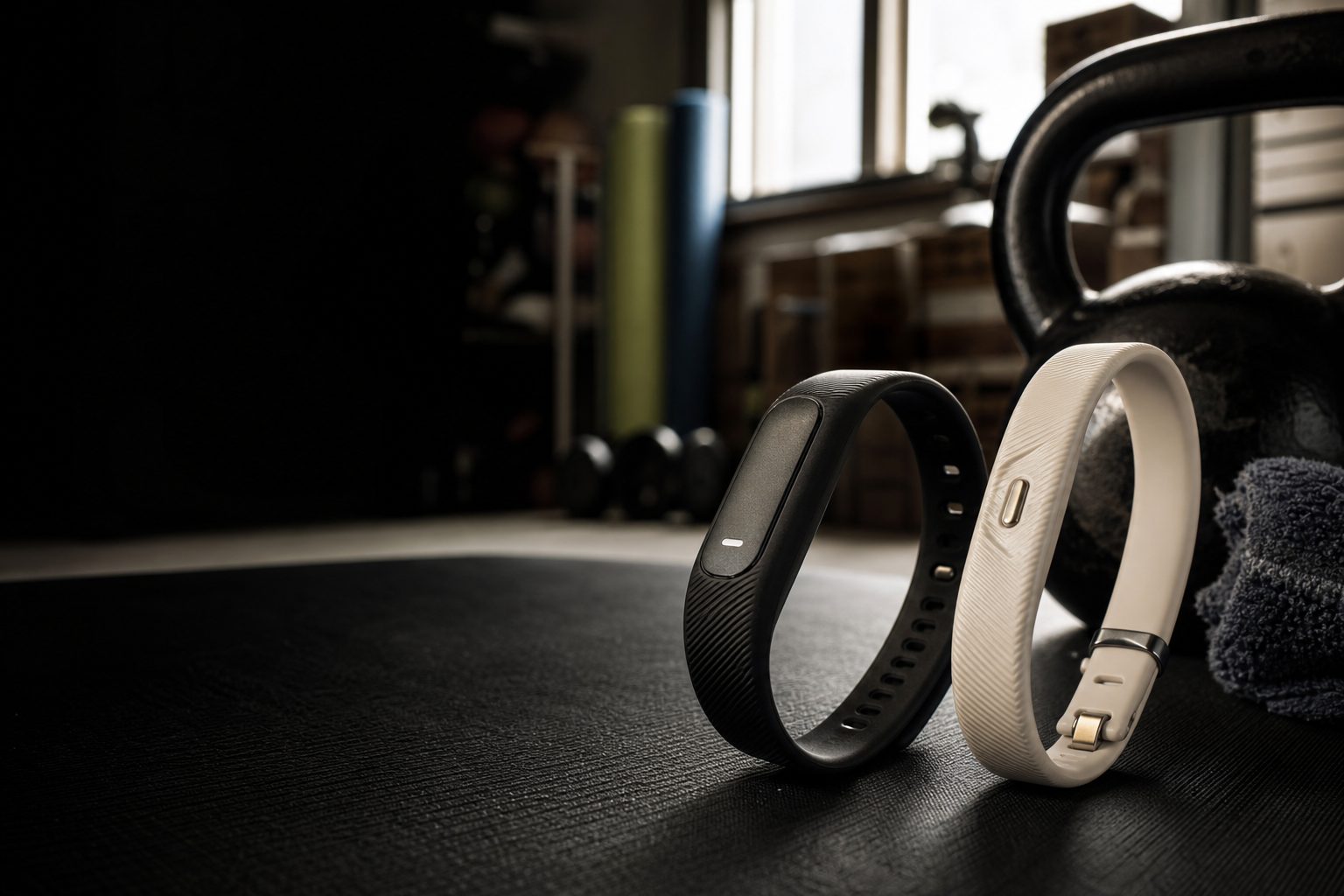
Fitbit Air and Garmin CIRQA both removed the screen from the equation, but they took very different routes to getting useful health and training data onto your phone.
 By James Oduya · Staff Writer & Home Gym Columnist · Updated August 05, 2026
1. Fitbit Air vs Garmin CIRQA: the quick answer
Screen-free fitness bands were an appealingly sensible idea by August 2026. They did the background work—heart rate, sleep, recovery and movement—without demanding that you read a miniature weather report halfway through a deadlift. Fitbit Air and Garmin CIRQA both belonged to that calmer sort of wearable, but calling them interchangeable because neither had a screen would have missed the point rather badly.
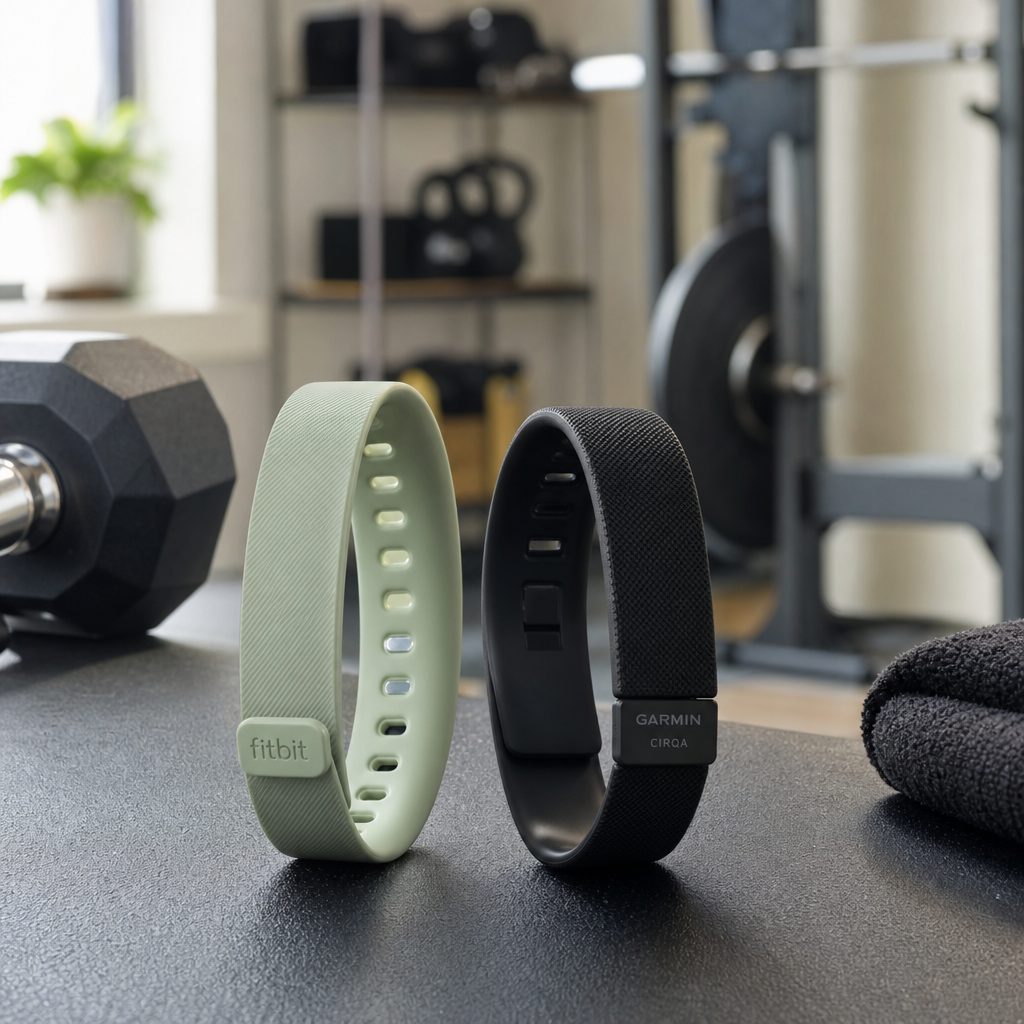
The better band depended on whether your priority was quiet everyday health tracking at a low price, or deeper training analysis within Garmin Connect.
Fitbit Air launched on 26 May 2026 after its announcement earlier that month. Garmin CIRQA was announced on 21 July 2026 and went on sale on 24 July 2026. So, although both were still very fresh products, Fitbit had a little longer to establish what it was trying to be: a notably light, affordable health band with seven-day battery claims, automatic workout detection, sleep tracking and AFib detection during stillness and sleep.
CIRQA was Garmin's first screenless band, and it arrived with a distinctly more training-minded brief. It tracked continuous heart rate, HRV, respiration, stress, blood oxygen saturation and skin temperature, then fed that information into Garmin's familiar Body Battery, Training Readiness, HRV Status, recovery guidance and VO2 max estimate. It also offered more than 80 activity profiles, connected GPS support and ANT+ heart-rate broadcasting. This was not merely a step counter that had been persuaded to wear fabric.
There was, however, a fairly blunt price difference. Fitbit Air cost £84.99 in the UK, or $99.99 in the US. Garmin CIRQA cost £179.99 in the UK, or $199.99 in the US. That is just over twice Fitbit's UK asking price. The Garmin had to offer more than a few extra graphs to justify that.
The shortest buying advice is this. Choose Fitbit Air if your first priority is spending as little as possible whilst still getting proper 24/7 health and sleep tracking, a very low weight and a strong quick-charge claim. Choose Garmin CIRQA if you train deliberately, want a broader list of sports, use a connected GPS setup, value Garmin's recovery and readiness language, or want to broadcast your heart rate to compatible training equipment.
Neither has a display. That is a feature here, not an omission to be apologised for. You will use the app for the numbers, patterns and context. The question is whether you want Fitbit's more approachable, health-led interpretation of your day, or Garmin's denser, training-centred one.
The important distinction
The £95 UK price gap was not mainly about a screen, because neither band had one. It paid for Garmin's wider activity system, connected GPS support, ANT+ broadcasting and its particular recovery ecosystem. If those things do not matter to your training, Fitbit Air's lower price becomes extremely difficult to ignore.
2. Fitbit Air and Garmin CIRQA: design, comfort and the whole point of having no screen
A screenless band has to earn its place on your body in a different way from a smartwatch. There is no bright face to admire and no notifications to make you feel briefly important whilst you are trying to cook pasta. Comfort, discretion and the likelihood that you will keep wearing it overnight become central. Both Fitbit Air and Garmin CIRQA understood that basic truth, although their physical approaches were very different.
Fitbit Air was the smaller and lighter proposition. Its main housing measured 34.9 × 17 × 8.3mm and weighed only 5.2g without its band. With the band fitted, the total was 12g. That is properly light. It mattered not because everyone needs the lowest possible number on a specification sheet, but because sleep tracking is only as useful as the nights you actually wear the tracker. A band that feels like a tiny, forgettable part of your wrist generally has a better chance of staying there.
The Air used a recycled polycarbonate housing and a stainless-steel buckle. There was no display to scratch, no face to polish and no temptation to turn your wrist towards your nose every 90 seconds. For people who found a conventional smartwatch bulky during pressing movements, kettlebell work, yoga or sleep, that simple physical restraint was a substantial advantage. It did one job: sit quietly and collect data.
Garmin CIRQA was bigger. Its module measured 46.9mm tall, 27.5mm wide and 8.7mm thick, and it weighed between 20g and 25g depending on whether you chose S/M or L/XL. Those figures did not make it heavy in the grand scheme of gym kit—most lifters have owned a water bottle heavier than their entire warm-up bag—but it was materially more substantial than Fitbit Air. It was a fabric wearable rather than a tiny conventional tracker with a standard-looking band.
The more interesting part of CIRQA's design was placement. Its fabric strap and quick-release pins supported wrist wear or upper-arm wear. That flexibility was especially relevant for gym users. Wrist straps can get in the way under wrist wraps, against lifting hooks or when a barbell sits across the front of your shoulders. An upper-arm setup could also appeal to people who dislike anything around the wrist during a run. Garmin had clearly built CIRQA around the idea that a wearable should adapt to training rather than become another accessory you tolerate.
There was one physical button on CIRQA's side module, with a ribbed edge, plus a discreet LED battery indication triggered by double tapping. It still was not a screen, of course. You could not stand on a treadmill and read a pace number from your wrist. But the button gave CIRQA a little more physical interaction than the Fitbit. Whether that was useful or needless depended on your habits. Some people liked a small degree of direct control. Others bought a screenless band precisely because they never wanted to fiddle with it.
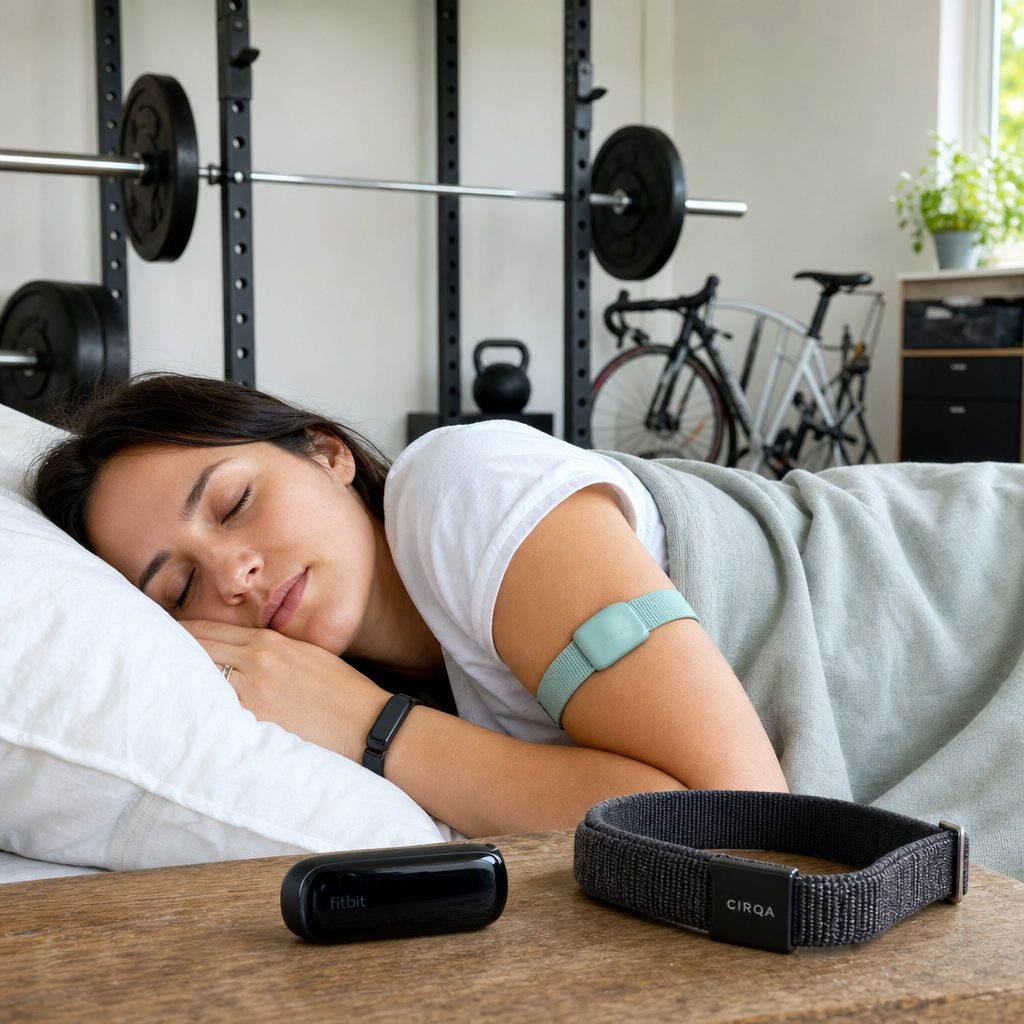
Fitbit Air's 12g all-in weight made it the more forgettable overnight band, while CIRQA's fabric system introduced the useful option of upper-arm wear.
Both bands carried a 5 ATM water-resistance rating. In practical terms, that placed them in the same broad camp for sweat, rain, shower-adjacent life and swimming-related exposure. More importantly for the average Total Gym Gear reader, neither required the sort of anxious removal ritual that can make a tracker feel like jewellery. You could train hard, get hot and generally behave like a human being without treating the band as a porcelain souvenir.
Fitbit's accessory approach was also worth noting. Extra Fitbit Air bands cost $34.99 or £34.99, and a bicep-band alternative was priced at $34.99, although it required two bands looped together. Garmin's dedicated bicep band cost $59.99 in the US or £49.99 in the UK. Fitbit had also published hardware specifications and accessory design guidance for third-party makers. That did not guarantee a flood of brilliant accessories, naturally. It did mean the Air was designed with a more open strap ecosystem in mind.
There is no automatic winner on fit alone. Fitbit Air was the better choice for the person who wanted the least visible, least intrusive tracker possible. CIRQA was the better choice for someone whose training made upper-arm wear genuinely useful. The latter was more versatile; the former was more featherweight. Those are not the same thing.
3. Fitbit Air vs Garmin CIRQA: core specifications compared
Before getting lost in score names and wellness jargon, it helps to put the unglamorous numbers side by side. They explained a surprising amount. Fitbit Air was compact, light and keenly priced. Garmin CIRQA was larger, lasted longer between charges on paper and included broader connectivity. Both had 5 ATM water resistance and both lived entirely through their companion apps, but their priorities showed clearly in the remaining details.
| Feature | Fitbit Air | Garmin CIRQA Smart Band |
|---|---|---|
| Availability date | 26 May 2026 | 24 July 2026 |
| UK price | £84.99 | £179.99 |
| US price | $99.99 | $199.99 |
| Size | 34.9 × 17 × 8.3mm | 46.9 × 27.5 × 8.7mm |
| Weight | 5.2g housing; 12g with band | 20–25g by band size |
| Water resistance | 5 ATM | 5 ATM |
| Claimed battery life | Up to 7 days | Up to 10 days |
| Quick charging | 5 minutes for 1 day of use | Proprietary Garmin charging port |
| Connectivity | Bluetooth 5.0 | Bluetooth Low Energy and ANT+ |
| Wear positions | Wrist; optional bicep arrangement | Wrist or upper arm with quick-release strap system |
| Activity options | Automatic workout detection | 80+ activity types |
| Training location support | — | Connected GPS support |
The battery row deserves a little context. Garmin's claimed 10-day endurance was three days beyond Fitbit's claimed seven days. That is a meaningful lead if you loathe charging, travel often, or are the sort of person who regularly discovers a flat wearable when you are halfway out of the door. Ten days means fewer chances to break a run of sleep data simply because the charger ended up beneath a pile of laundry.
But Fitbit's answer was not nothing. Its claim that five minutes of charging provided a full day of use was very practical. A quick top-up while you showered, made tea or tried to remember where you put your trainers could rescue the day. Long battery life and rapid recovery are different conveniences. Garmin won the former; Fitbit made a decent case for the latter.
Connectivity was another meaningful split. Bluetooth 5.0 suited Fitbit Air's straightforward phone-linked role. Garmin's Bluetooth Low Energy and ANT+ combination had more obvious appeal for people with connected gym kit, cycling computers or a training setup that could benefit from heart-rate broadcasting. Again, it was not an inherent sign that Garmin was "better". It was a sign that Garmin expected some owners to build sessions around more equipment and more data sources.
The specification sheet made CIRQA look more expansive, but the relevant question was not "which band has the most rows?" It was "which rows will affect my week?" If you only wanted sleep, daily movement, recovery cues and the odd automatically detected workout, Fitbit Air covered a great deal at nearly half the price.
4. Fitbit Air and Garmin CIRQA: health metrics and sensor depth
The screenless format placed unusual pressure on sensor quality. With a smartwatch, there are other reasons to own the thing: maps, music controls, messages, timers and a face you happen to like. With Fitbit Air and Garmin CIRQA, the body data was the product. If the heart-rate, sleep and recovery information did not feel believable or useful, there was very little decorative distraction to hide behind.
Fitbit Air offered 24/7 optical heart-rate monitoring, SpO2 using red and infrared sensing, HRV, breathing rate and skin-temperature variation. It automatically detected workouts and delivered Sleep Score with Sleep Stages, Cardio Load and a Readiness Score. This was a strong health foundation for a £84.99 band. In particular, it did not treat sleep as a simple start-and-stop timer; it gave sleep a score and stages, then set that information alongside broader readiness and load concepts.
The standout Fitbit feature was AFib detection during stillness and sleep. That was notable at this price. Fitbit Air brought a potentially valuable health-monitoring feature into a low-cost, screenless form factor, rather than placing it only in a high-end watch or an expensive annual membership tier. It was not a reason to diagnose yourself from a wristband, obviously. It was a meaningful extra layer of awareness for people who wanted passive monitoring rather than a device that required constant prompts.
Garmin CIRQA monitored continuous heart rate through its Gen 4 optical sensor, which was labelled Gen 4.1 here, along with SpO2, skin temperature, respiration rate, stress and HRV. The sensor was one generation behind the Gen 5 sensor in Garmin's Index Sleep Monitor. That detail mattered because CIRQA's price sat at £179.99. Garmin's Elevate Gen 4 platform had a substantial history and could be perfectly useful in the right conditions, but a premium price naturally made people look more closely at the underlying hardware.
Where Garmin pulled ahead was not necessarily in the raw count of physiological signals. Both bands measured a lot. It was in the way those signals fed into Garmin's established training interpretation. CIRQA offered Body Battery energy, Training Readiness, HRV Status, recovery guidance and VO2 max estimates. That collection created a more coaching-shaped picture: how ready you might be, whether your HRV pattern was changing, how your energy looked, and what recovery might mean before another session.
For someone with a repeating gym programme, this could be genuinely helpful. Imagine you train four days a week, squat and deadlift with some seriousness, then run once or twice because apparently free time is not stressful enough. A band that brings sleep, HRV status, stress and training readiness into one place can help you distinguish "I am lazy today" from "I have trained hard, slept poorly and may be better served by backing off." It will not replace judgement. No wristband can know your technique, nutrition, work stress or whether your toddler chose 4am as a reasonable hour for karaoke. But it can add a useful nudge.
Fitbit Air took a slightly softer route. Cardio Load and Readiness Score still spoke to training and recovery, but the wider feel was more health-forward and accessible. Fitbit's Gemini AI Health Coach added personalised fitness plans and sleep insights. That was likely to appeal to people who wanted interpretation without feeling as though they had enrolled on a part-time sports-science degree.
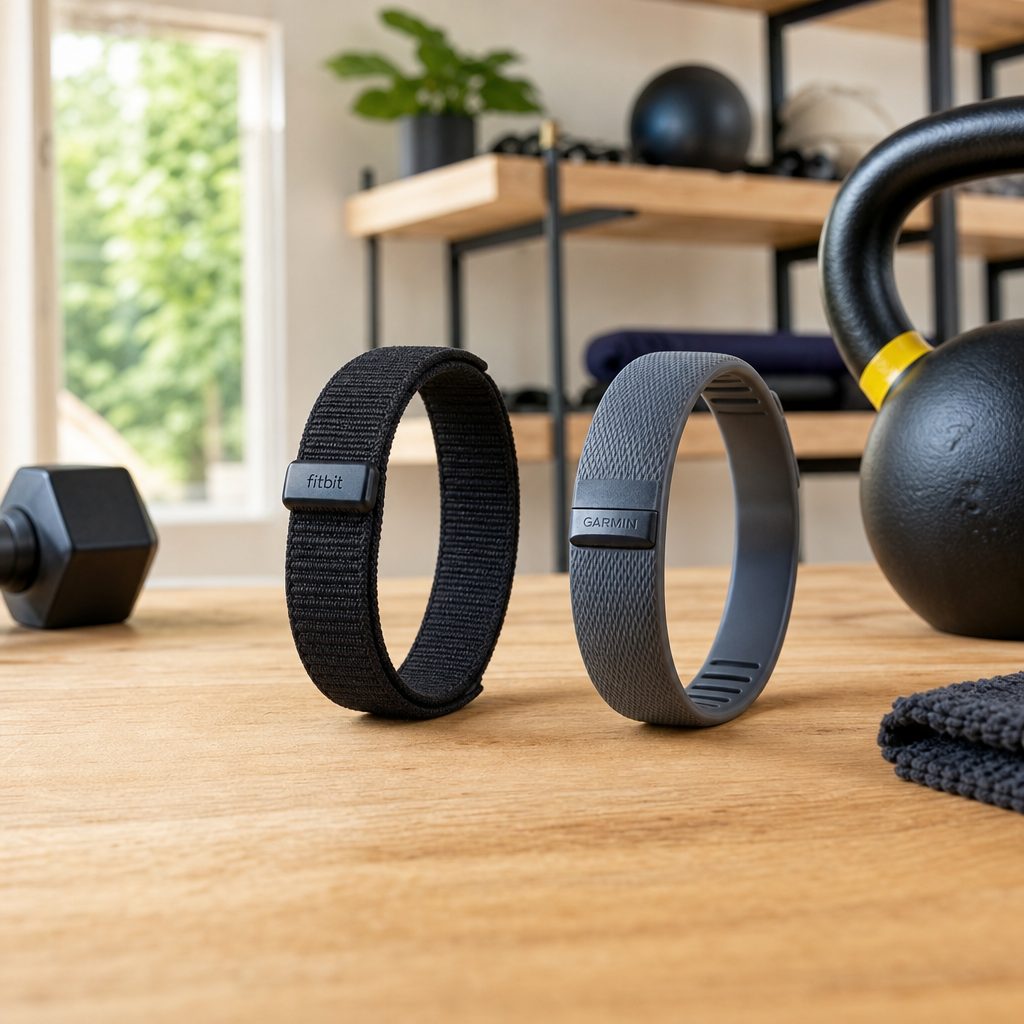
Both bands tracked the essentials around heart rate, sleep and recovery, but Garmin CIRQA translated them into a denser training vocabulary while Fitbit Air kept the emphasis more approachable.
Fitbit Air: health coverage without the intimidating price
Continuous optical heart rate, SpO2, HRV, breathing rate, skin-temperature variation, sleep stages and AFib detection gave Air a serious daily-health toolkit for £84.99.
Fitbit Air: sleep as a central metric
Sleep Score and Sleep Stages made the Air particularly attractive if better sleep habits, recovery and a less disruptive overnight wearable were your main reasons for buying.
Garmin CIRQA: deeper training interpretation
Body Battery, Training Readiness, HRV Status, recovery guidance and VO2 max estimation gave CIRQA more material for people who planned sessions around performance.
Garmin CIRQA: a familiar Garmin health stack
Stress, respiration, SpO2, skin temperature and continuous heart rate sat inside the broader Garmin Connect environment rather than existing as isolated figures.
It is tempting to declare Garmin the outright metric winner because it offered more named scores. I would resist that. More scores only help if they change what you do. Plenty of people were better served by a clear sleep score, an understandable readiness prompt and a band light enough to wear consistently than by a dashboard full of training terminology. Fitbit's restraint was part of its value proposition.
Conversely, experienced athletes were not wrong to prefer CIRQA. If you already understood HRV trends, cared about VO2 max estimates and used Garmin Connect as part of your routine, the extra context could be worth a lot more than the £95 difference. Buying the cheaper tracker then wishing it had the language of your training platform is rarely a bargain.
5. Fitbit Air vs Garmin CIRQA for gym sessions, running and sports tracking
Gym use tends to expose the difference between generic activity tracking and a band designed to sit inside an actual training routine. Fitbit Air could automatically detect workouts. That was pleasantly low-friction. You trained, it noticed that you were doing something more energetic than answering emails, and it logged the session without demanding a menu dive beforehand. For casual gym visits, walks, general fitness and people rebuilding consistency, that is often exactly what is wanted.
Automatic detection also suited the personality of Fitbit Air. The band did not have a screen, so it could not sensibly invite you to scroll through a vast sport list from your wrist. It was designed to reduce little points of friction. You put it on, went about your day and reviewed the useful bits later. There is a lot to be said for that. The best fitness plan is often the one that survives a tired Tuesday, not the theoretically perfect plan requiring seven taps and a mood board.
Garmin CIRQA was much more explicit. It supported more than 80 activity types via its side button or the Garmin Connect app. It also supported connected GPS. For runners, walkers and cyclists who wanted route-related context through a paired setup, that was a meaningful distinction. Fitbit Air's confirmed feature set did not include connected GPS support, so CIRQA was the more natural fit for outdoor exercise that formed a serious part of your routine.
ANT+ heart-rate broadcasting further strengthened Garmin's gym credentials. If you used compatible equipment and wanted the band to act as a heart-rate source, CIRQA had a role beyond simply collecting private data for later. This could appeal to indoor cyclists, people using compatible cardio machines, or anyone who had already built a Garmin-flavoured training setup. It was a fairly niche feature until it was exactly the feature you needed. Then it became the reason the cheaper band was no longer the cheaper choice in any useful sense.
Upper-arm wear mattered here too. Gym regulars know that wrist placement is not always ideal. Barbell front-rack work, wrist straps, certain cable movements and even some kettlebell drills can make a wrist tracker feel awkward. CIRQA's strap system gave you a different option. Fitbit Air had a bicep-band alternative, but it required two bands looped together and cost $34.99. Garmin's dedicated bicep band was £49.99 in the UK. Neither route was free, but Garmin's design seemed more deliberately built around alternate placement.
That said, a broad sport list should not be confused with perfect automatic recognition. Early hands-on use of CIRQA produced a conspicuous hiccup: the device did not recognise a walk as a walk. It logged a generic 45-minute workout instead, without distance or steps. Garmin said that CIRQA improved as it learned a user's patterns. That might prove reassuring over time, but it was still a useful reminder that first-generation screenless hardware sometimes needs a little patience.
Fitbit Air, by contrast, delivered a particularly strong reported step-counting result in testing: it overcounted by just two steps over 5,000 steps. That is a very small discrepancy. It does not prove every metric was perfect in every situation, because wearables are complicated little things and bodies are not laboratory equipment. It did show that Fitbit Air's basic daily movement tracking had a very encouraging early result.
The bars above are deliberately not a "Fitbit wins all accuracy forever" declaration. They represent one very specific, very good step-counting result. CIRQA had limited early testing and an activity-recognition stumble. That was enough to make Fitbit the safer pick if your priority was reliable everyday movement counts at a low price. It was not enough evidence to write off Garmin for sport tracking, especially given Garmin's claim that the band learned user patterns over time.
For strength training specifically, both bands faced the normal limitations of wrist-based optical tracking. Hard gripping, rapid wrist movement and certain lifting positions can make heart-rate tracking a difficult job for any optical wearable. Garmin's upper-arm option was therefore a practical advantage for serious lifters. Fitbit Air's lower profile was useful if you wanted something unobtrusive beneath wraps or simply did not want to notice a tracker while lifting.
My practical view is simple. Fitbit Air was the better "just get moving and let the tracker figure out the basics" band. Garmin CIRQA was the more ambitious option for people who selected activities, cared about workout categories, wanted connected GPS and valued a band that could sit elsewhere than the wrist. The difference was less about fitness level and more about how structured you liked your fitness tracking to be.
6. Fitbit Air vs Garmin CIRQA: battery life, charging and day-to-day ownership
Battery life is one of those specifications people claim not to care about right until their tracker dies before bed and turns a week of sleep monitoring into six days and a shrug. Screenless wearables should have an inherent advantage here because they are not spending their lives illuminating tiny icons. Both Fitbit Air and Garmin CIRQA made respectable claims, but they solved the charging problem in different ways.
Garmin CIRQA claimed up to 10 days between charges. That was the better headline number. Ten days was long enough to make charging feel occasional rather than routine, and it gave you a more comfortable margin around trips, busy weeks and general forgetfulness. CIRQA used Garmin's proprietary charging port with USB-C at the other end. It was a practical cable arrangement, but it remained a proprietary connection at the band. You would want to know where that cable lived.
Fitbit Air claimed up to seven days. Seven days was still strong for a continuous health tracker, and it lined up neatly with the sort of weekly rhythm many people already had. More importantly, Fitbit claimed that a five-minute charge could deliver a day of use. That is the sort of feature which can sound like marketing copy until you imagine real life: you notice low battery while making breakfast, put the Air on charge for a few minutes, and still have enough power to preserve that night's sleep tracking.
The practical win depended on your habits. If you were a charger minimalist who wanted to think about cables as rarely as possible, CIRQA's three-day claimed advantage was valuable. If you were more likely to forget, then need a tracker immediately, Air's quick-charge claim might be the less stressful system. A band that gets a day from five minutes had a very decent chance of recovering from human incompetence. Speaking as somebody who has misplaced a charging cable while it was attached to the device it charged, I consider this a real category.
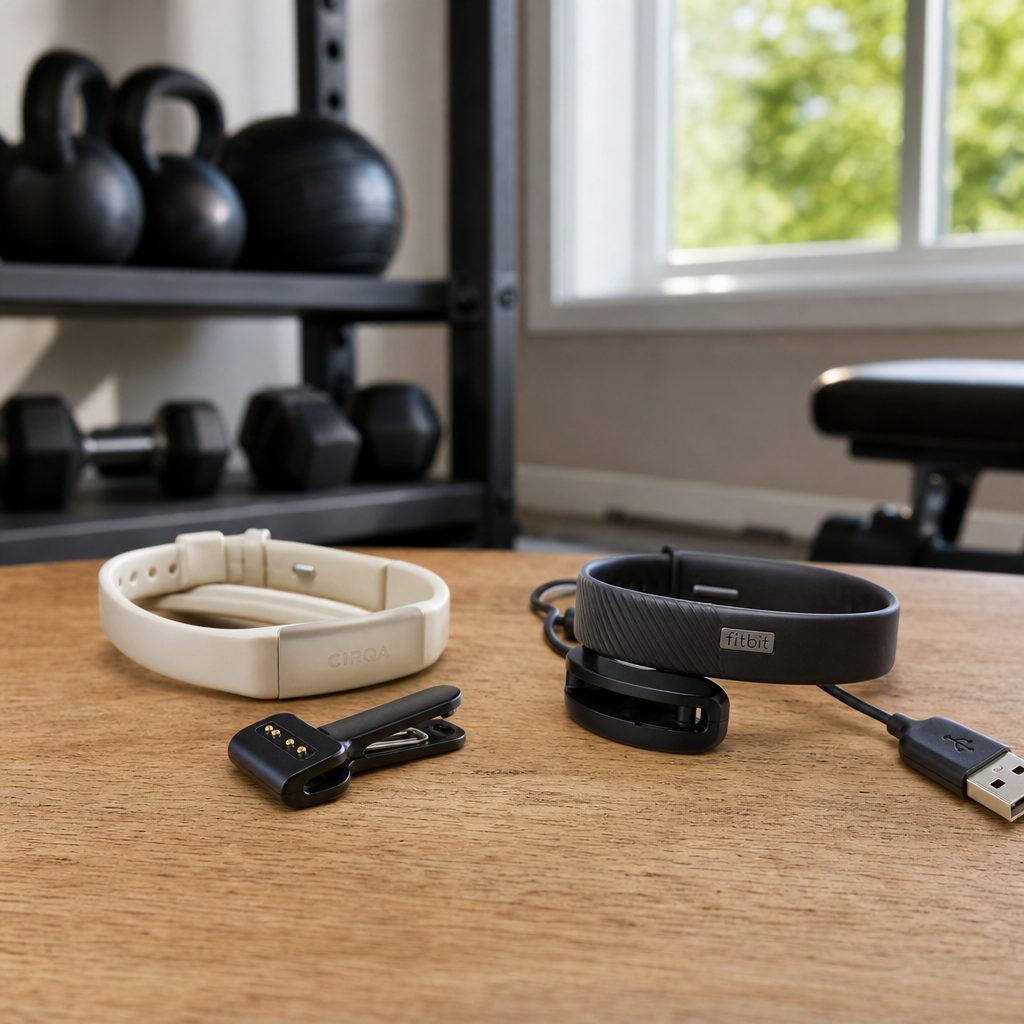
CIRQA's claimed 10-day battery favoured set-and-forget ownership, while Fitbit Air's five-minute-for-one-day charging claim was better suited to last-minute rescues.
Charging also fed into the reason people bought screenless bands in the first place: continuous data. Sleep score, HRV patterns, skin-temperature variation and readiness trends all gained value from regular wear. A band left on the charger for two nights in a row produced a rather large hole in the story. Neither model had an obviously poor battery proposition; Garmin just provided more raw endurance, while Fitbit offered more immediate recovery.
There was a small ownership consideration around accessories as well. Garmin's upper-arm option was more integrated into the device's identity, but the bicep band cost £49.99 in the UK. That was a sizeable add-on to a £179.99 tracker. Fitbit's extra bands were £34.99, while its bicep solution required two bands looped together. If alternate placement was an occasional convenience rather than an essential part of your training, factor that expense in before declaring either band the value winner.
Neither device made the mistake of being fussy around water. The shared 5 ATM rating helped their day-to-day appeal. If you were wearing a tracker all week, it needed to survive sweating through a circuit, getting caught in a downpour and generally existing around bathrooms and water bottles without becoming an extra chore. Both passed that common-sense test on paper.
7. Fitbit Air vs Garmin CIRQA: Fitbit's Google Health approach against Garmin Connect
When there was no display, the app mattered more than usual. This was the central difference that did not show up fully in a dimensions table. Fitbit Air's data lived within Fitbit's Google Health direction, including the Gemini AI Health Coach, personalised fitness plans and sleep insights. Garmin CIRQA lived in Garmin Connect, with its extensive training vocabulary and metrics built around readiness, status and ongoing performance interpretation.
Neither ecosystem was inherently correct for everyone. Fitbit's approach was more likely to suit someone who wanted the band to make health tracking feel manageable. You did not need to wake up and become fascinated by every fluctuation in a physiological trend. You could use Sleep Score, Sleep Stages, Cardio Load, Readiness Score and Health Coach insights as practical signals: perhaps sleep was not great, perhaps today was not the day for a maximal effort, perhaps a walk would be a more sensible choice than pretending your body did not have limits.
The Gemini AI Health Coach element was particularly on-brand for that approach. Personalised fitness plans and sleep insights can be useful for people who want a starting point rather than a pile of numbers. If you were newer to training, returning after a break, or simply too busy to enjoy analysing data for its own sake, the Fitbit route could feel less severe. The band was there to support behaviour, not turn every morning into an exam result.
Garmin Connect was likely to appeal more if you already trained with intent and liked seeing data develop over time. CIRQA's Body Battery was an energy-oriented summary, while Training Readiness, HRV Status, recovery guidance and VO2 max estimates offered more avenues for interpreting workload and recovery. The app ecosystem made more sense when you wanted to compare a hard session with recent sleep and stress, then decide whether a planned run, lift or ride was sensible.
It was also better aligned with people who already used Garmin gear or training platforms that benefited from ANT+ heart-rate broadcasting. This was not just a question of whether the graphs looked prettier. It was about whether CIRQA joined up with the kit and habits you had already built. A £179.99 band that slots into your existing Garmin life can be better value than a £84.99 band that makes you use a separate system you do not enjoy opening.
There was a danger on both sides. Fitbit users could mistake a friendly readiness prompt for medical advice or an instruction they must follow. Garmin users could mistake a detailed readiness metric for an objective verdict on whether they were allowed to train. Both were tools. Your own perception still mattered. If you slept well, felt fresh and had a sensible plan, a lower-than-expected score did not automatically cancel the workout. If you felt dreadful after three nights of poor sleep, a cheerful number did not make a punishing session brilliant.
Why Fitbit's ecosystem worked
- Fitbit Air combined Sleep Score, Sleep Stages, Cardio Load and Readiness Score in a more approachable package.
- Gemini AI Health Coach added personalised fitness plans and sleep insights for people who wanted guidance.
- AFib detection during stillness and sleep was a remarkable health feature at Air's low price.
- The simple screen-free setup suited people trying to reduce notification fatigue rather than add another dashboard.
Why Garmin's ecosystem could be better
- CIRQA brought Body Battery, Training Readiness, HRV Status and recovery guidance into Garmin Connect.
- Its 80+ activities, connected GPS support and ANT+ broadcasting made more sense for structured sport tracking.
- VO2 max estimates offered an additional performance-oriented metric absent from Fitbit Air's confirmed toolkit.
- The wider Garmin approach could feel like more information than a casual wearer genuinely needed.
The honest answer was that the ecosystem should be a deciding factor, not an afterthought. If you wanted an affordable way to understand sleep and general health better, Fitbit Air did not need to imitate Garmin's depth. If your favourite part of a wearable was understanding training status and working through exercise data, CIRQA had more room to grow with you. Buying the band whose app you would willingly check was the smart move.
8. Fitbit Air vs Garmin CIRQA: prices, accessories and real value
Here is where the fight became properly interesting. Fitbit Air's standard price was £84.99 in the UK and $99.99 in the US. There was also a Stephen Curry Special Edition at $129.99. Garmin CIRQA cost £179.99 in the UK, $199.99 in the US and €199.99 in Europe. The standard Fitbit was not merely a little cheaper. It was just under half the Garmin price in the UK, and exactly half in the US.
Fitbit Air standard model
$99.99 in the US. The core low-cost screenless option, with 24/7 health tracking, Sleep Score, Readiness Score and up to seven days of claimed battery life.
Fitbit Air Stephen Curry Special Edition
A special-edition Fitbit Air variant for US buyers who wanted that particular version rather than the standard model.
Garmin CIRQA Smart Band
$199.99 in the US and €199.99 in Europe. The pricier training-led band with 10-day claimed battery life and Garmin Connect depth.
At £84.99, Fitbit Air was almost mischievously well positioned. It offered continuous optical heart-rate tracking, SpO2, HRV, breathing rate, skin-temperature variation, automatic workouts, sleep stages, Cardio Load, Readiness Score and AFib detection during stillness and sleep. In a screenless band, that was not "cheap and cheerful" in the dismissive sense. It was a lot of practical capability for people who wanted an unobtrusive device and did not need a deep sports platform.
At £179.99, CIRQA needed to be judged as more than an alternative shape. The extra money bought its claimed 10-day battery, fabric design, wrist or upper-arm flexibility, 80-plus activity list, connected GPS support, ANT+ broadcasting, VO2 max estimation and Garmin's readiness and recovery system. It was a reasonable proposition for the right buyer. It was not automatically a reasonable proposition for every buyer simply because Garmin was the more established sports name.
Accessories complicated the maths slightly. Fitbit's additional band cost £34.99 in the UK and the US. Its bicep-band alternative was $34.99, but needed two bands looped together. Garmin's bicep band was £49.99 in the UK and $59.99 in the US. If you were planning upper-arm wear from day one, the true entry cost rose on both sides. Garmin's total became especially substantial, although its strap system was arguably the more purpose-built arrangement.
Value was therefore about avoiding waste. A casual walker who wanted sleep data, a good step count and less screen time would probably struggle to extract another £95 of value from CIRQA. A committed runner or gym regular who used Garmin Connect, paired GPS and heart-rate broadcasting might see Fitbit as a false economy because it omitted the things that made their setup useful.
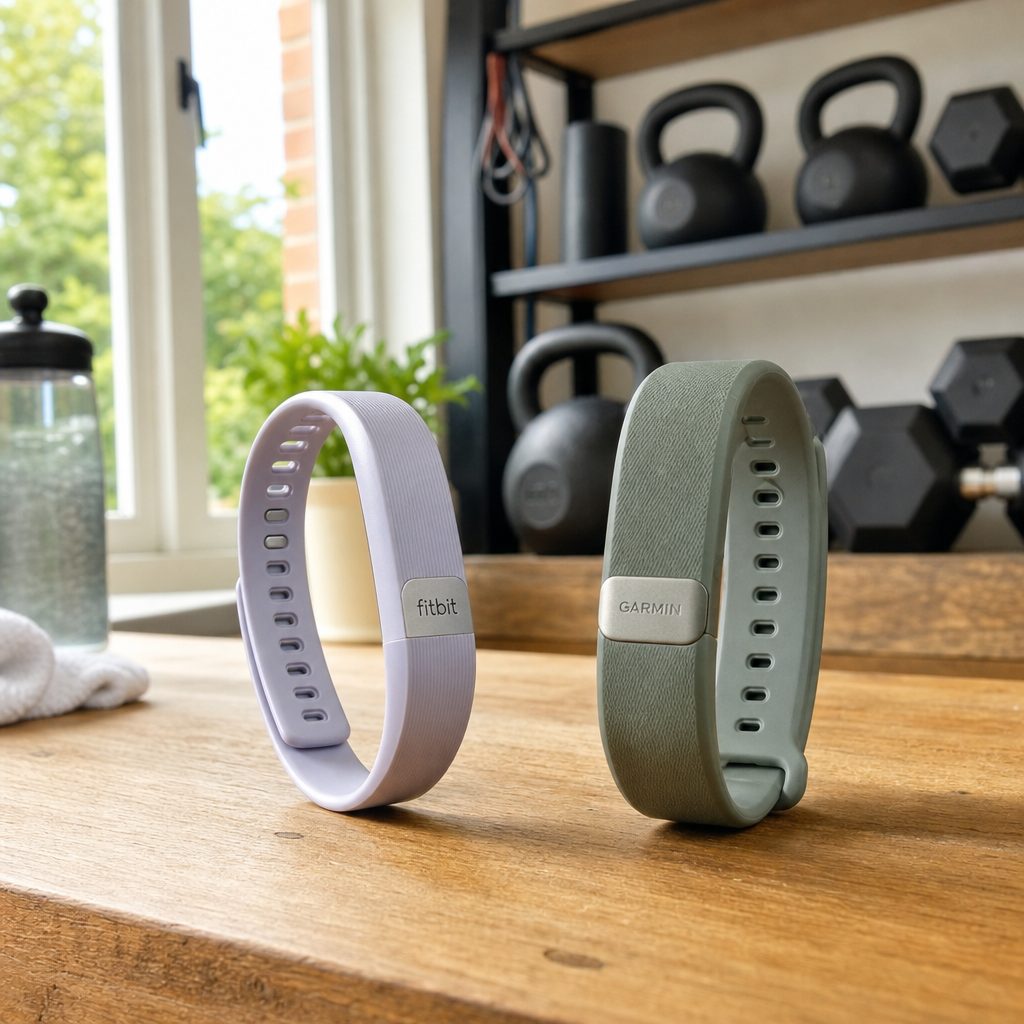
The most important number in this comparison was not a sensor measurement: Fitbit Air's £84.99 price left £95 in your pocket versus Garmin CIRQA in the UK.
Spend for the features you will use
Do not pay Garmin CIRQA money just because "more metrics" sounds healthy, and do not buy Fitbit Air only because it is cheap if connected GPS, upper-arm wear and Garmin Connect are already part of your routine. The best value was the band that removed friction from your actual training week.
9. Fitbit Air vs Garmin CIRQA: which one suits each kind of buyer?
This comparison did not end with a universal winner because the bands were built around different priorities. Fitbit Air was the clear budget champion, but Garmin CIRQA was not a frivolous luxury version of the same product. It had meaningful training features that Fitbit did not. The more useful question was which device matched the job you wanted a screenless band to do.
Best on a budget: Fitbit Air
At £84.99, Fitbit Air was the obvious pick for people who wanted continuous health and sleep tracking without paying £179.99. Its 12g fitted weight and five-minute quick-charge claim reinforced the value case.
Best for sleep and everyday health: Fitbit Air
Sleep Score, Sleep Stages, HRV, breathing rate, skin-temperature variation and AFib detection during stillness and sleep made Fitbit Air especially compelling for health-led buyers.
Best for structured sport: Garmin CIRQA
Shop Garmin CIRQA on Amazon UK
Choose Garmin CIRQA for 80+ activities, connected GPS support, ANT+ broadcasting, VO2 max estimates and Garmin Connect's training-focused recovery tools.
Best for alternate placement: Garmin CIRQA
CIRQA's quick-release fabric design and wrist-or-upper-arm flexibility made it the better fit for people who found wrist wear inconvenient in the gym.
Fitbit Air was the best fit for the person who had grown tired of smartwatch clutter. Perhaps you wanted to know whether you were sleeping properly, whether your general activity was improving and whether you had built a healthier rhythm, but you did not want a miniature computer buzzing during dinner. The Air's tiny dimensions and 12g dressed weight gave it a real advantage here. It could become part of your routine without constantly announcing itself.
It also suited new gym-goers very well. If you were starting a programme, returning after injury, getting your steps up or trying to establish some consistency, automatic workout detection and simple scores could be more motivating than a complicated sports library. You did not need to choose the perfect activity profile to receive a useful picture of your day. You just needed to wear the band and move.
Garmin CIRQA was the better buy for people who were already a little more organised about training. It made sense for the person who picked sessions in advance, considered recovery before a hard effort, cared about an estimated VO2 max and wanted a device that spoke to their running, cycling or gym work in a recognisably Garmin way. It also made more sense if the rest of your fitness life already involved Garmin Connect or compatible ANT+ equipment.
I would be cautious about recommending CIRQA purely for its bigger metric list to a first-time tracker owner. More data can inspire, but it can also become another thing to worry about. If you had no interest in connected GPS, no compatible ANT+ equipment and no desire to examine Training Readiness, then Fitbit Air did the more intelligent thing: it left you with useful essentials and more money for shoes, gym membership or, if we are being realistic, a truly excessive number of protein bars.
On the other hand, I would not recommend Fitbit Air to a keen Garmin user simply because it saved £95. A tracker becomes part of a system. If your system was built around Garmin Connect, HR broadcasting and detailed activity selection, CIRQA was the more coherent choice. The correct purchase was not always the cheapest one; it was the one you would still find useful after the initial novelty had worn off.
10. Fitbit Air vs Garmin CIRQA: limitations and early accuracy considerations
Both trackers deserved some restraint in the way they were discussed. Fitbit Air and Garmin CIRQA were released during 2026, and CIRQA in particular had only been on sale since 24 July by the time of this comparison. Screenless bands asked users to trust numbers they could not check live on the device, so early observations mattered, but they should not be inflated into final verdicts on every kind of exercise.
Fitbit Air had a very encouraging specific result in step testing: only two extra steps over 5,000. That is close enough to the reference count to inspire confidence in ordinary walking and day-to-day movement tracking. If steps were your anchor habit—perhaps a daily walking target alongside gym work—that was an excellent early sign. The Air appeared capable of doing the simple, foundational job exceptionally well.
Garmin CIRQA's early hands-on activity recognition was less tidy. One walk was not recognised as a walk and appeared instead as a generic 45-minute workout, without distance or steps. That did not make the entire device useless, and Garmin said the system improved as it learned user patterns. Still, it was precisely the sort of behaviour prospective buyers should know about. An activity profile list of more than 80 options was wonderful in theory, but recognition had to become dependable enough to make those categories useful in practice.
There was also the sensor-generation discussion. CIRQA used Garmin's Gen 4 optical sensor, identified here as Gen 4.1, while Garmin's Index Sleep Monitor used Gen 5. Gen 4 was not automatically poor. It was a mature platform and had been widely used. But CIRQA's primary value was measurement, and its £179.99 price meant some buyers understandably expected the latest sensor hardware. That was a fair concern, especially for people who bought the band chiefly to examine hard training and recovery data.
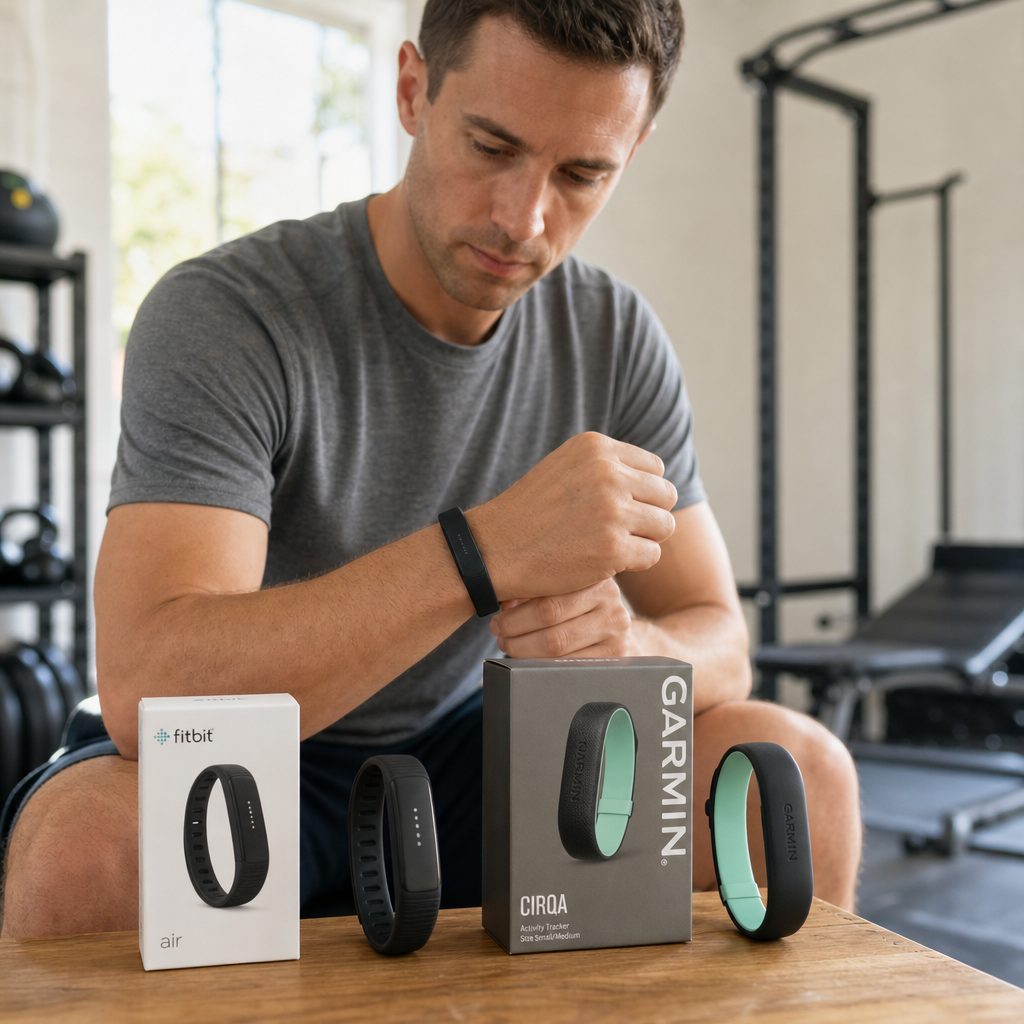
Early evidence favoured Fitbit Air's step-count consistency, while Garmin CIRQA's first hands-on activity-recognition behaviour suggested it needed time to learn individual patterns.
Fitbit Air was not free from limitations simply because it was cheaper. Its confirmed activity proposition centred on automatic workout detection rather than a stated 80-plus activity system. Its connectivity was Bluetooth 5.0 rather than Bluetooth Low Energy and ANT+. It did not have CIRQA's confirmed connected GPS support, VO2 max estimation or heart-rate broadcasting. These were not flaws if you did not need them. They were reasons to understand what you were buying.
Likewise, Garmin CIRQA's extra size and 20–25g weight were not necessarily drawbacks. Some people would prefer a more substantial fabric band, particularly on the upper arm. But if your whole reason for choosing a screenless tracker was to make overnight wear as unobtrusive as possible, Fitbit Air's 12g total weight was hard to beat. Comfort affected data continuity, and data continuity affected the usefulness of everything from Sleep Score to HRV trends.
The sensible conclusion was to buy according to your most important measurement, not your longest wish list. For step tracking, sleep and low-friction general health, Fitbit's early evidence and price were extremely persuasive. For structured activities, Garmin Connect, connected GPS and broader training context, CIRQA was the better-equipped choice—provided you were comfortable with a first-generation Garmin screenless band still establishing its real-world recognition behaviour.
11. Fitbit Air vs Garmin CIRQA: head-to-head pros and cons
If you have skipped directly here because you have a browser tab full of fitness trackers and a faint sense of financial dread, fair enough. Here is the balanced version. Fitbit Air was not merely the cheap option; it had a specific identity around ultra-light daily wear, accessible health metrics and remarkable value. Garmin CIRQA was not merely the expensive option; it was the deeper sport and training band, with a wider ecosystem for people who wanted to analyse more than they simply wanted to monitor.
Fitbit Air strengths
- £84.99 UK price made it substantially more accessible than Garmin CIRQA.
- Only 12g with its band, making it especially attractive for sleep and all-day wear.
- Up to seven days of claimed battery life, plus five minutes of charging for a claimed day of use.
- Sleep Score, Sleep Stages, Cardio Load, Readiness Score and Gemini AI Health Coach gave it approachable guidance.
- AFib detection during stillness and sleep was a major feature at this price.
- It overcounted by only two steps in a 5,000-step test.
Fitbit Air trade-offs
- Its claimed battery life was three days shorter than CIRQA's claimed 10-day figure.
- No confirmed connected GPS support, ANT+ broadcasting or VO2 max estimate.
- Automatic workout detection was simpler than Garmin's 80-plus activity selection.
- Bicep use required a two-band arrangement rather than a dedicated integrated upper-arm format.
Garmin CIRQA strengths
- Up to 10 days of claimed battery life suited low-maintenance ownership.
- Garmin Connect provided Body Battery, Training Readiness, HRV Status, recovery guidance and VO2 max estimates.
- More than 80 activities, connected GPS support and ANT+ heart-rate broadcasting favoured committed sport tracking.
- Quick-release fabric design could be worn at the wrist or upper arm.
- Bluetooth Low Energy and ANT+ gave it broader training-oriented connectivity.
Garmin CIRQA trade-offs
Shop Garmin CIRQA on Amazon UK
- £179.99 was £95 more than Fitbit Air in the UK.
- At 20–25g, it was considerably heavier than the 12g Fitbit Air.
- Early activity recognition logged one walk as a generic 45-minute workout without distance or steps.
- It used Garmin's Gen 4 optical sensor rather than the Gen 5 sensor used in the Index Sleep Monitor.
- The dedicated bicep band added £49.99 in the UK.
That is the comparison in miniature. Fitbit Air was the recommendation I would give most readily to someone who wanted a screenless band but had not yet decided that they were a data person. Garmin CIRQA was the recommendation for someone who already knew they were a data person and wanted a lighter, less distracting way to remain in Garmin's training world.
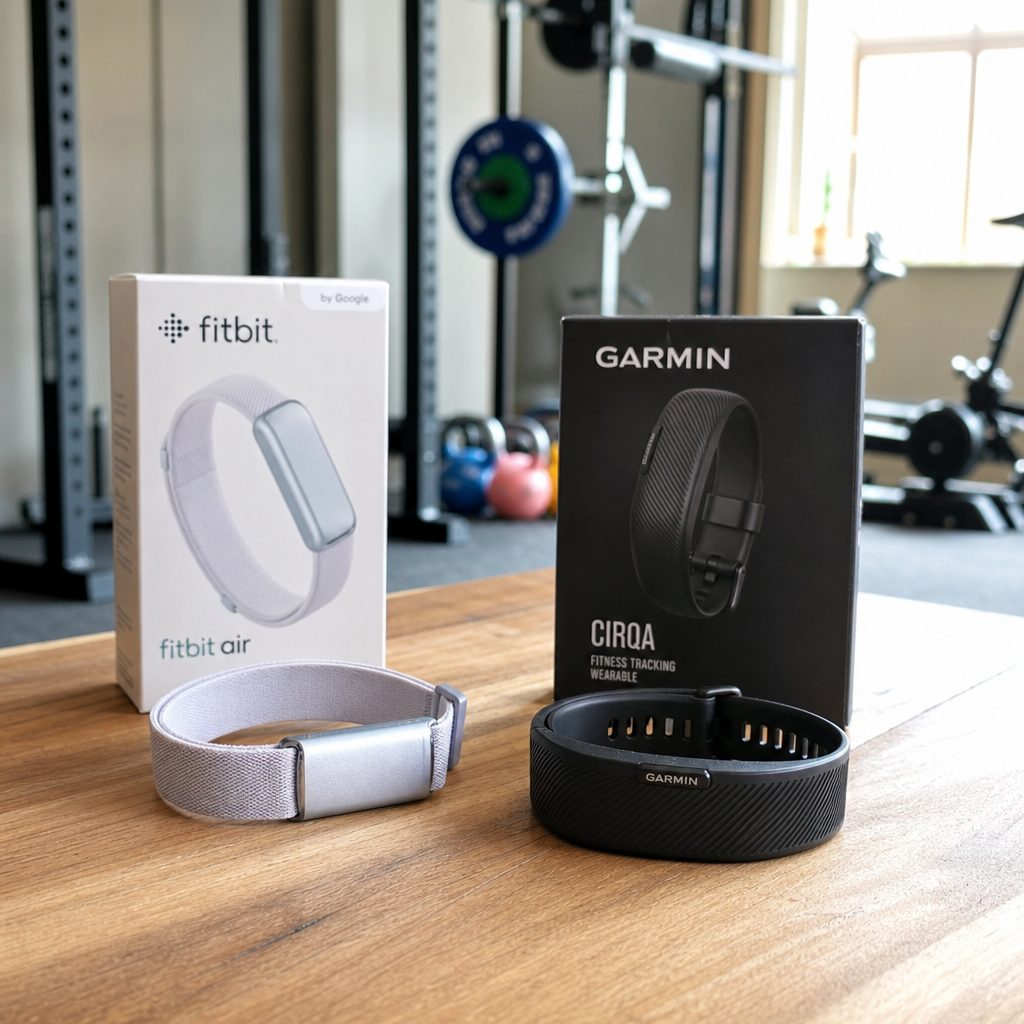
Neither tracker tried to replace a smartwatch. Fitbit Air focused on quiet, lightweight health tracking, while Garmin CIRQA aimed to bring a more serious training stack into a screen-free format.
12. Fitbit Air vs Garmin CIRQA frequently asked questions
Fitbit Air was much cheaper. Its standard UK price was £84.99, compared with £179.99 for Garmin CIRQA. That made Fitbit £95 less expensive, or a little under half the Garmin price. Fitbit Air therefore had a clear advantage for anyone who wanted continuous health tracking without committing close to £180.
Garmin CIRQA had the longer claimed battery life at up to 10 days, versus up to seven days for Fitbit Air. Fitbit's advantage was charging speed: Fitbit said a five-minute charge supplied enough power for one day of use. CIRQA was better for fewer charging sessions; Air was better for quick recovery when you forgot to charge it.
Fitbit Air was particularly well suited to sleep-focused buyers. It provided Sleep Score and Sleep Stages, while also tracking HRV, breathing rate and skin-temperature variation. Its 12g weight with the band was another major benefit because a very light tracker is easier to wear consistently through the night.
Garmin CIRQA supported more than 80 activity types and offered connected GPS support. That made it the more natural choice of these two for people who wanted a screenless band to sit alongside structured running, walking, cycling or mixed training. It also supported ANT+ heart-rate broadcasting for compatible equipment.
Garmin CIRQA was designed for wrist or upper-arm wear through its fabric strap and quick-release pin system. Fitbit Air had a bicep-band alternative priced at $34.99, but it required two bands looped together. Garmin's dedicated bicep band cost £49.99 in the UK and $59.99 in the US.
Garmin CIRQA was the stronger pick for a structured gym user who valued Garmin Connect, Training Readiness, HRV Status, recovery guidance, heart-rate broadcasting and flexible upper-arm placement. Fitbit Air remained an excellent gym companion for automatic workout detection, daily health and low-profile comfort, especially when budget mattered.
Fitbit Air produced the stronger confirmed early step-count result. In a 5,000-step test it overcounted by only two steps. Garmin CIRQA had an early recognition issue in which a walk was logged as a generic 45-minute workout without distance or steps, although Garmin said the device improved as it learned user patterns.
No. Both were screen-free bands. Fitbit Air was designed as a very light, passive health tracker, while CIRQA used a physical side button and discreet LED battery indication but still relied on Garmin Connect for detailed information. The absence of a display was the point: less wrist distraction, more background tracking.
Final verdict: Fitbit Air for value, Garmin CIRQA for training depth
Fitbit Air was the better buy for most budget-conscious UK shoppers. At £84.99, it delivered a very compelling set of health tools: 24/7 heart rate, SpO2, HRV, breathing rate, skin-temperature variation, Sleep Score, Sleep Stages, Cardio Load, Readiness Score and AFib detection during stillness and sleep. It was exceptionally light at 12g with its band, claimed up to seven days of battery life and offered a useful five-minute-for-one-day quick-charge claim. The excellent 5,000-step test result only strengthened the case.
Garmin CIRQA was the better buy for committed Garmin users and structured trainers. It cost £179.99, but justified a good portion of that premium with a claimed 10-day battery, more than 80 activities, connected GPS support, ANT+ heart-rate broadcasting, upper-arm wear, Body Battery, Training Readiness, HRV Status, recovery guidance and VO2 max estimates. If Garmin Connect was already your training home, CIRQA belonged there naturally.
Choose Fitbit Air if…
You wanted the lightest, least distracting screen-free band; your priorities were sleep, everyday health, step tracking and accessible guidance; or you simply wanted to spend £95 less without giving up the metrics most people actually use.
Choose Garmin CIRQA if…
You trained to a plan, used Garmin Connect, wanted connected GPS and ANT+ support, valued detailed readiness and recovery tools, or needed upper-arm wear for running and gym sessions.
In other words: Fitbit Air was the sensible bargain. Garmin CIRQA was the more specialised training tool. Neither needed a screen to make its case—thankfully, because one more glowing rectangle in the gym was never the answer.