
Garmin CIRQA vs Polar Loop: Which No-Screen Band Suits You?
Two screen-free bands, a very similar premium position and no appetite for turning your wrist into a tiny notification centre. Garmin CIRQA leant into deep, subscription-free health and training data, whilst Polar Loop made recovery, sleep and an exceptionally quiet user experience its central appeal. Here is how they really compare for gym-goers, runners and people who simply want to understand their body without another screen demanding attention.
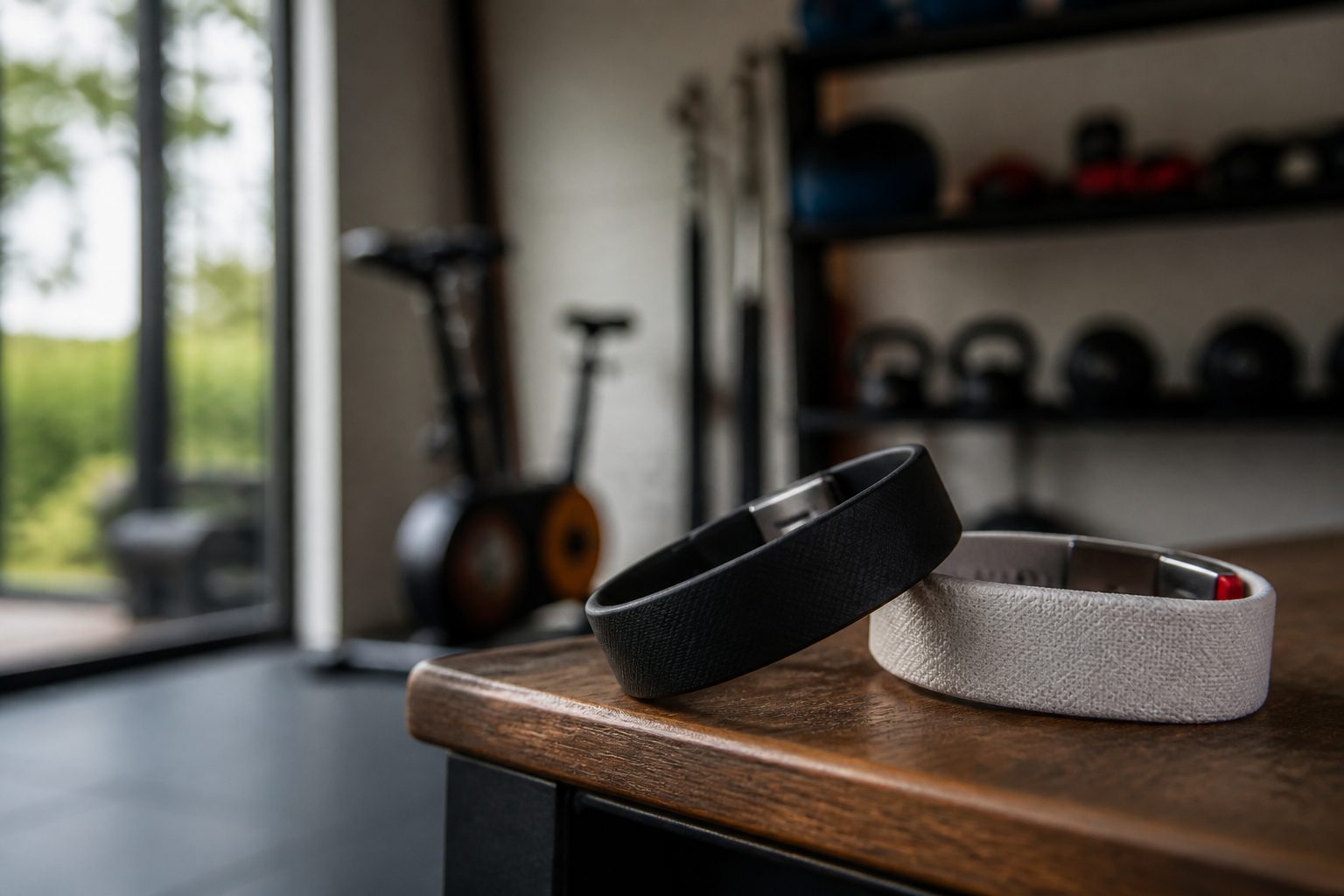
Garmin CIRQA and Polar Loop both keep the wrist free of a glowing screen, but they approach health, training and recovery from rather different directions.
 By James Oduya · Staff Writer & Home Gym Columnist · Updated September 03, 2026
1. The quick answer: Garmin depth or Polar recovery?
There is a pleasingly straightforward split at the heart of this comparison. Garmin CIRQA is the better fit if you already think in terms of training sessions, heart-rate zones, activity profiles, sensor data and the wider Garmin Connect ecosystem. It is a band for someone who wants a lot of information, but does not necessarily want a smartwatch. That distinction matters. Garmin has not taken a watch, removed the display and called it a day; CIRQA still offers continuous heart rate, HRV, sleep, stress, blood oxygen saturation and skin temperature, alongside more than 80 activity profiles.
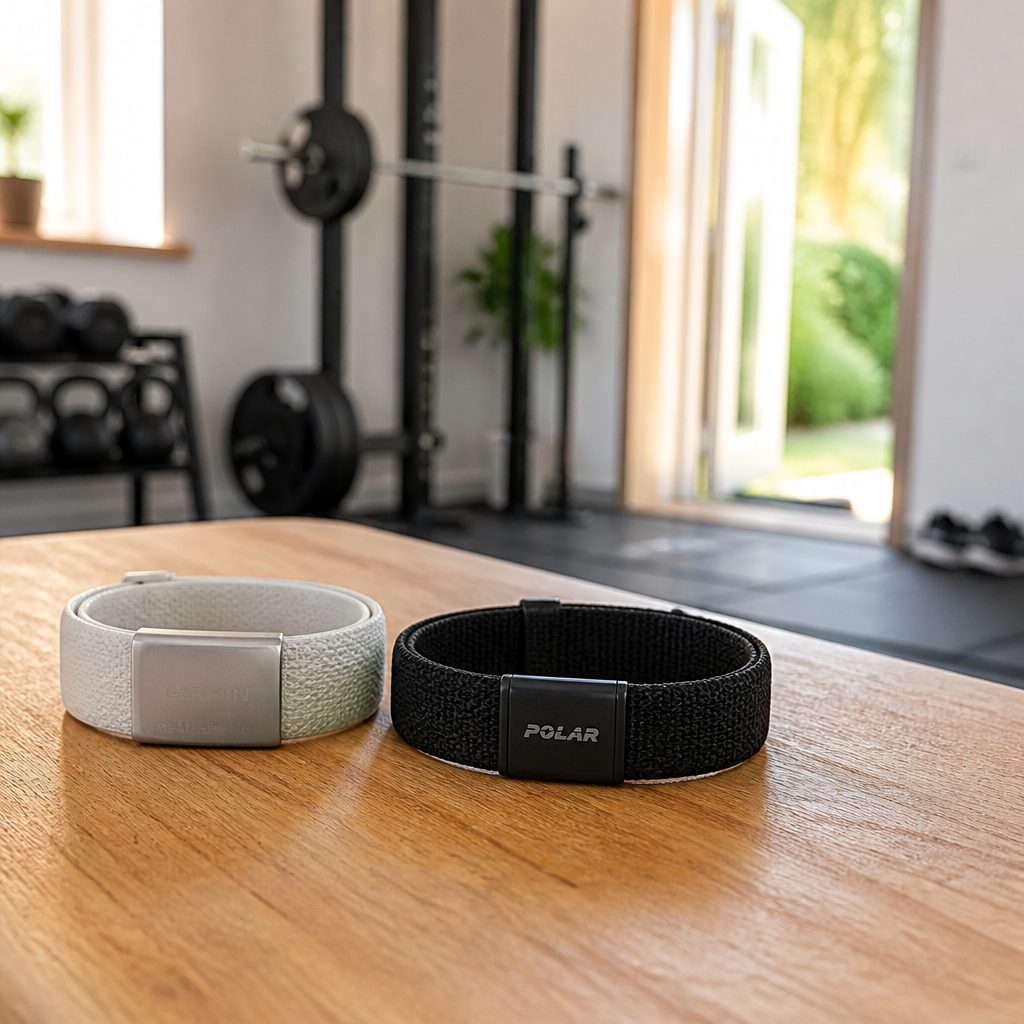
Neither band replaces a GPS sports watch for phone-free routes, but both make compelling sense for people who want their health tracking to stay quiet during the day.
Polar Loop takes a more reflective route. Its strongest argument is not that it piles up the most health metrics. It is that it turns the information it collects into a recovery-led picture that is easy to live with. Polar's Nightly Recharge, SleepWise and Training Load Pro systems make sense for someone asking, "How well did I recover?" before asking, "What else can this gadget measure?" That is a subtle difference, but it changes the daily experience considerably.
Both are genuinely screenless. Neither tries to tempt you into scrolling through menus at a traffic light. Neither has built-in GPS. Both expect your phone to do the map work for outdoor routes. They are also both fabric-led wearables designed to disappear into normal life rather than announce themselves like a chunky sports watch. The best choice therefore comes down less to the absence of a screen and more to what you want waiting in the app afterwards.
The sensible shortcut
Choose Garmin CIRQA if tracking a gym session properly matters as much as tracking the night after it. Choose Polar Loop if sleep, readiness and sustainable training habits matter more than having the broadest activity catalogue. Neither answer is glamorous. Both are useful.
2. Garmin CIRQA vs Polar Loop: key figures side by side
Before getting stuck into the day-to-day detail, this is the practical numbers table. It tells a fairly clear story: CIRQA is the lighter and slightly longer-lived device with a broader exposed sensor set, while Polar Loop carries more weight but puts its emphasis on recovery interpretation and a more app-led interaction model.
| Feature | Garmin CIRQA | Polar Loop |
|---|---|---|
| Screen and controls | Status LED and one physical activity button | No visible screen or controls |
| Typical battery position | 10-day claimed life | Up to 8–9 days with typical use |
| Total weight | 20.7g in S/M; 21.2g in L/XL | About 29g |
| Module thickness | 9mm | 9mm |
| Heart-rate platform | Garmin Elevate Gen 4 optical sensor | Polar Precision Prime Gen 3.5 optical sensor |
| Additional health measurements | HRV, sleep, stress, SpO2 and skin temperature | Sleep and recovery analysis; temperature sensor is not fully user-accessible in the app |
| Activity approach | 80+ profiles, automatic detection and timed activity button | Automatic detection and manual app logging |
| GPS | Phone GPS for outdoor routes | Phone GPS for route recording |
| Wireless heart-rate broadcast | ANT+ and Bluetooth Smart | Bluetooth LE connectivity |
| Water resistance | 5 ATM | 30m WR30 |
| Data storage | Continuous syncing through Garmin Connect | Up to four weeks stored on the band |
There are two things worth noticing here. First, "no screen" does not mean the same thing on these products. Garmin leaves you a single button and an LED state check. Polar removes even that, so the experience begins and ends in Polar Flow. Secondly, sensor counts can make a comparison look more decisive than it feels in real use. CIRQA has more directly exposed metrics, yes, but Polar's value lies in the manner in which it frames the data around recovery and training load.
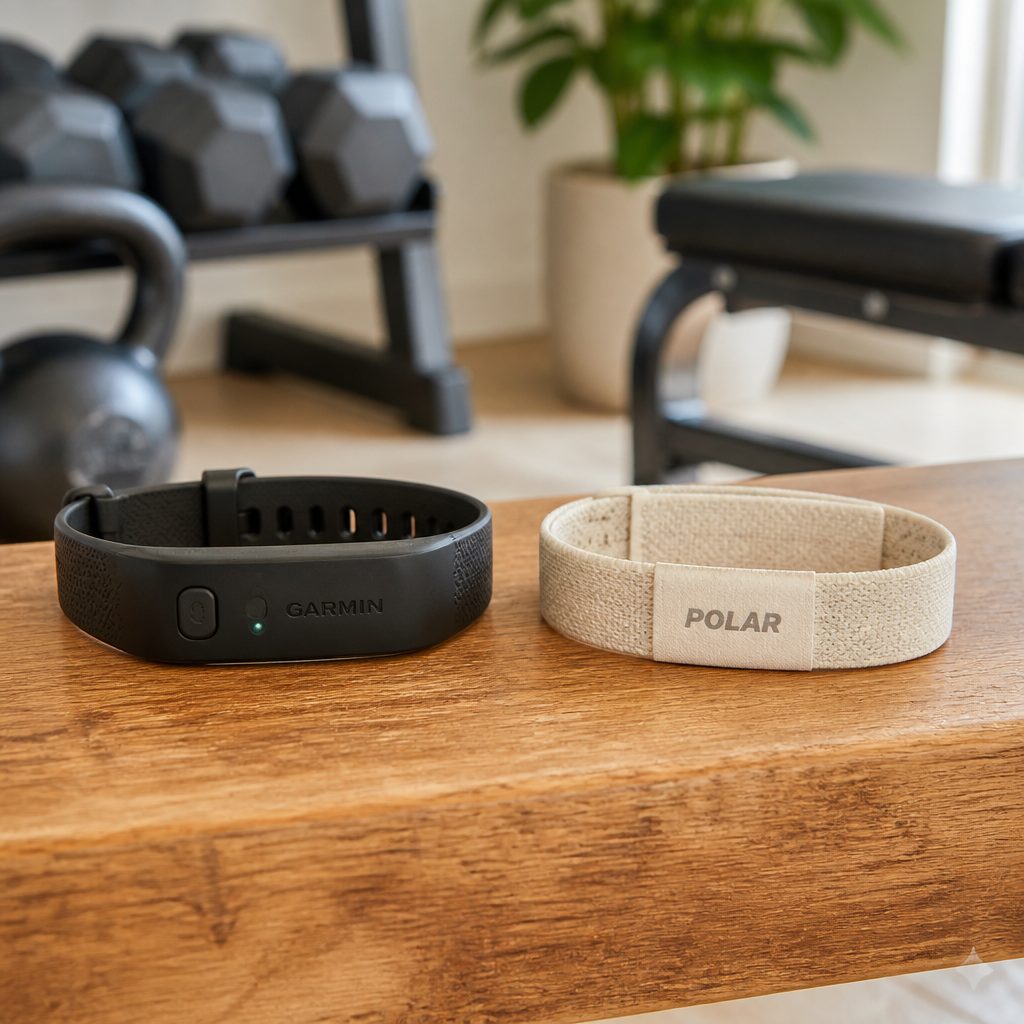
The distinction in wear philosophy is important: CIRQA retains a button and battery-status LED, whereas Polar Loop is designed to be controlled entirely through the Polar Flow app.
3. No-screen design, comfort and the small matter of wearing it all night
The great appeal of a no-screen band is that it makes a better case for 24-hour wear than most smartwatches. You do not have a bright rectangle at the end of your arm. You do not have emails peering at you from the sofa. You do not need to make a new hobby out of charging another thing every other evening. In this category, comfort is not a minor specification. It is the product.
Garmin CIRQA has a soft ComfortFit fabric band and weighs 20.7g in the smaller size or 21.2g in the larger one. That is impressively light, and the 9mm module is slim enough to make sense under a cuff, wrist wrap or long-sleeve training top. It comes in Small/Medium and Large/XL sizing, with four colourways, and Garmin also offers a biceps-band option. The latter is not just a fashion detour. An upper-arm position can be handy for people who dislike anything around the wrist during kettlebell work, lifting straps, boxing drills or sleep.
Polar Loop is roughly 29g and measures around 42 x 27 x 9mm. That makes it noticeably heavier on paper, though not enormous. Its SoftWeave fabric construction and stainless-steel buckle are meant to feel more like a soft piece of clothing than a conventional plastic tracker. Polar also offers interchangeable straps separately, which gives it a little more wardrobe flexibility if you want one band for training and another that looks less "I have just analysed my REM sleep" at dinner.
For sleeping, both make a better argument than a full smartwatch. I would give CIRQA the edge for sheer unobtrusiveness because of that lower weight, especially if you are somebody who notices a watch the moment you roll onto your side. Polar Loop remains a comfortable design, but its recovery-first identity raises the stakes: if you do not wear it overnight, you miss the part it does best. That is not a criticism, exactly. It is merely worth being honest about the deal.
Neither band works like a traditional watch. If you want live pace, maps, rep counts, messages or a clock on your wrist during training, these are deliberately the wrong tools. Their appeal is the freedom from that stuff.
4. Garmin CIRQA for gym training and multi-sport routine
Shop Garmin CIRQA for gym training and multi-sport routine on Amazon UK
Garmin CIRQA is the more natural choice for the person whose week is a cheerful mess of lifting, classes, bike sessions, runs, rowing machine work and whatever a friend has persuaded them to try on Saturday. With more than 80 activity profiles, automatic detection and a button for recording timed activities, it gives you a way to acknowledge that a workout happened without first opening your phone, hunting through a menu and losing the will to live.
The single button is a small thing, but it is a meaningful one. Screenless bands can be wonderfully minimal right up until you want to draw a line around a particular session. CIRQA lets you record the timed activity in the moment. You can also set the wear position by activity, which is useful if you alternate between wrist wear and the optional upper-arm band. It suggests that Garmin understood how people actually train: not every exercise agrees with the same strap position.
CIRQA also broadcasts heart rate over both ANT+ and Bluetooth Smart. That makes it unusually versatile in a gym setting. If you use compatible equipment, an app or another training device that accepts either protocol, CIRQA can act as the heart-rate source. That is a proper athlete-friendly feature, not a decorative health score. Polar Loop's Bluetooth LE connection keeps it linked to the phone and Polar ecosystem, but it does not offer the same dual-protocol heart-rate broadcasting proposition.
The limitation is equally clear. There is no built-in GPS, so runners and cyclists need their phone for outdoor route information. CIRQA is therefore better thought of as a deeply capable body sensor, not a self-contained running computer. For treadmill intervals, strength work, circuits and everyday activity, that is rarely a problem. For someone who cannot bear carrying a phone on a long run, it may be the deciding one.
Broad activity support without a watch face
More than 80 activity profiles make CIRQA the stronger option for varied gym routines and people who dislike forcing every workout into a generic "exercise" bucket.
ANT+ and Bluetooth Smart heart-rate broadcasting
It can share heart-rate data with compatible devices using two widely used wireless standards, a useful advantage for people who train with connected kit.
A physical way to mark a session
The button does not turn CIRQA into a smartwatch. It simply gives you a direct, practical way to start recording a timed activity.
5. Polar Loop for recovery, sleep and training load
Shop Polar Loop for recovery, sleep and training load on Amazon UK
Polar Loop asks a slightly more grown-up question than "How much did you do?" It asks whether what you did was sensible in the context of your sleep and recovery. That is exactly why it will appeal to regular exercisers who have had enough of all-or-nothing training. Sometimes the correct answer is a hard session. Sometimes it is a walk, a mobility routine and an early night. Nobody wants a wearable to become an overbearing life coach, but a helpful nudge towards the second option can be valuable.
Nightly Recharge is at the centre of that proposition. It uses overnight information to help frame how recovered you are, while SleepWise looks at sleep in a broader readiness context. Training Load Pro then gives your exercise strain a place in the conversation. Taken together, these systems make Polar Loop feel less like a device that just collects signals and more like one that wants to help you manage the relationship between exertion and rest.
For a gym-goer, this matters most across weeks rather than individual workouts. It is easy to feel fine during a lunchtime strength session, then gradually accumulate poor sleep, stress and too much intensity. Polar's recovery-led view is useful because it provides a counterweight to the familiar urge to prove that you are hard enough by never backing off. Frankly, your knees do not care how motivational your playlist was.
Polar Flow is where the interaction happens. Sessions can be automatically detected or manually logged in the app, while runners and cyclists can use route recording, voice guidance and pre-made training targets. As with Garmin, phone GPS does the outdoor route work. The difference is that Polar makes the phone relationship more central from the outset: there is no visible control on the band to start a session, and no status LED to consult.
Polar Loop does include a temperature sensor, but that information is not fully user-accessible in the app. It is a good illustration of why shoppers should not buy purely from a sensor checklist. What matters is not only what sits inside the module, but what you can see, understand and use when deciding how to train tomorrow.
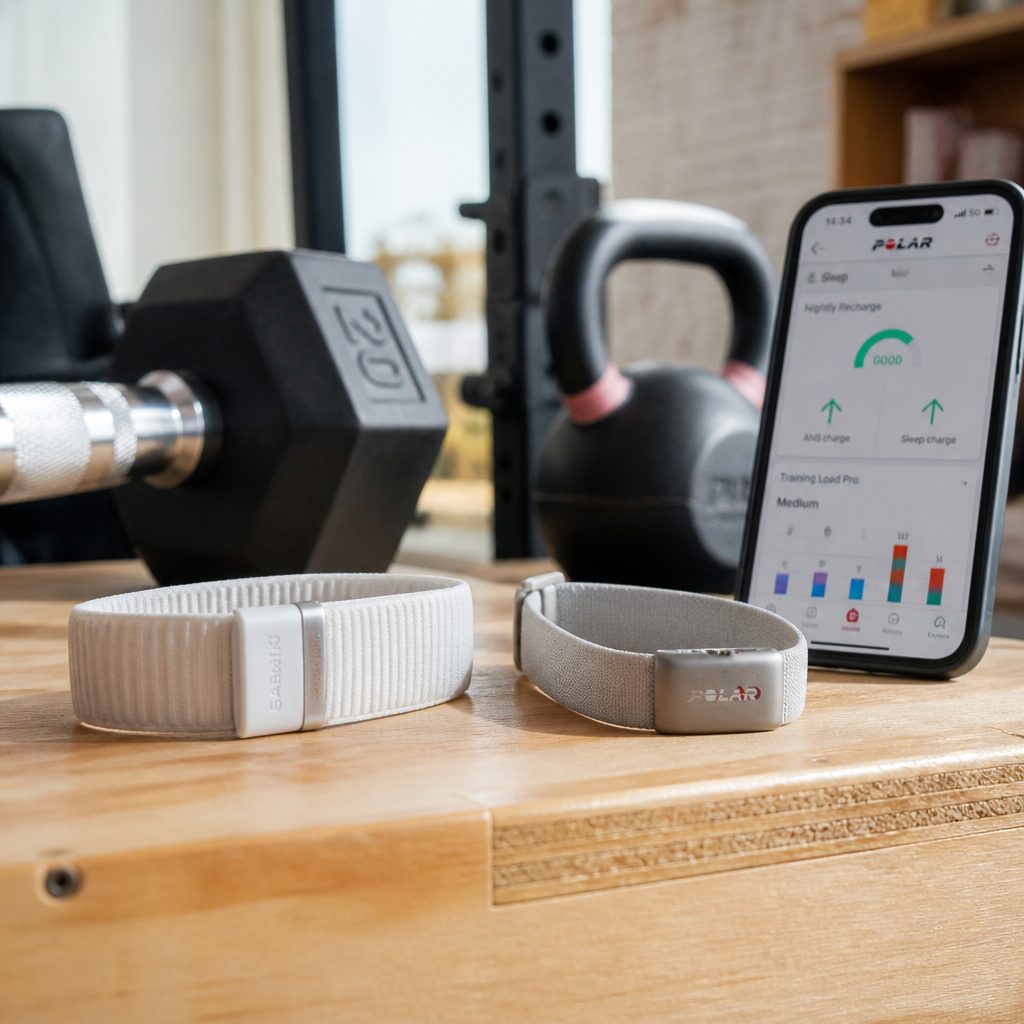
Polar Loop's strength is the recovery conversation: sleep, Nightly Recharge and Training Load Pro are designed to help put today's workout in the context of the rest of your week.
Polar Loop strengths
- Recovery-focused systems make sleep and training strain easier to interpret together.
- A completely screen-free, control-free band experience for people who want no wrist distractions at all.
- Up to four weeks of onboard data storage is reassuring if your phone is not always nearby.
- SoftWeave textile construction and interchangeable strap options support all-day wear.
Polar Loop limitations
- No direct control on the band means manual session handling depends on Polar Flow.
- It does not expose SpO2 or a broad set of advanced biometric measures in the app.
- There is no built-in GPS, so outdoor routes still require a phone.
- The temperature sensor is present but not fully available as a user-facing metric.
6. Accuracy: what the step and heart-rate tests actually showed
Accuracy is where comparisons often become a bit silly. A reviewer runs twenty metres, sees one graph wiggle differently from another and suddenly declares a sensor either miraculous or useless. Bodies move in complicated ways, wrists bend, fabric shifts, sweat happens, and optical heart-rate sensing is not a black art so much as an awkward science experiment strapped to your arm.
On step counting, a 500-step challenge gave Garmin CIRQA 509 steps when worn on the wrist, while Polar Loop returned 510 from a biceps position. The reference count was 500. For context, Fitbit Air on the wrist hit 500 exactly and Amazfit Helio on the bicep recorded 505. That makes both CIRQA and Loop close enough for everyday activity tracking, but neither was the neatest result in this particular controlled check.
The heart-rate picture is more favourable for CIRQA. Controlled testing against reference wrist devices found CIRQA averaged 0.4 beats per minute higher, usually within around 1.2 beats on any given night. Compared with a Tymewear VitalPro chest-strap reference, it had a +1.1 bpm bias and was rated excellent, with limits of agreement from -17.1 to +19.3 bpm across 5,311 readings.
Other comparisons were close too: WHOOP MG showed a +0.2 bpm bias versus CIRQA, Polar Sense was +0.3 bpm, and Garmin's HRM 600 was -0.3 bpm. Each was rated excellent with tight limits of agreement. Breathing-rate testing had CIRQA typically reading 1.3 breaths per minute higher, generally within about 1.4 breaths on a given night.
That does not prove that every CIRQA workout reading will be perfect, particularly during the sort of strength training where a wrist sensor is pressed into a bar, gripped around a handle or shoved beneath a wrist wrap. It does show that the platform was capable of very strong results under controlled conditions. Given that CIRQA uses Garmin's Elevate Gen 4 sensor rather than Gen 5, that is reassuring. It is still a mature optical platform, not a relic dragged from a drawer.
| 500-step challenge | Wear position | Recorded steps | Difference from 500 |
|---|---|---|---|
| Fitbit Air | Wrist | 500 | 0 |
| Amazfit Helio | Bicep | 505 | +5 |
| Garmin CIRQA | Wrist | 509 | +9 |
| Polar Loop | Bicep | 510 | +10 |
The fair conclusion is not that one tracker has "won" step counting by a mile. It is that both are in the everyday-use ballpark, while Garmin has the more detailed published heart-rate validation in this comparison. If heart-rate broadcasting, zone work and training analysis are a big part of why you are shopping, that tilts the evidence towards CIRQA.
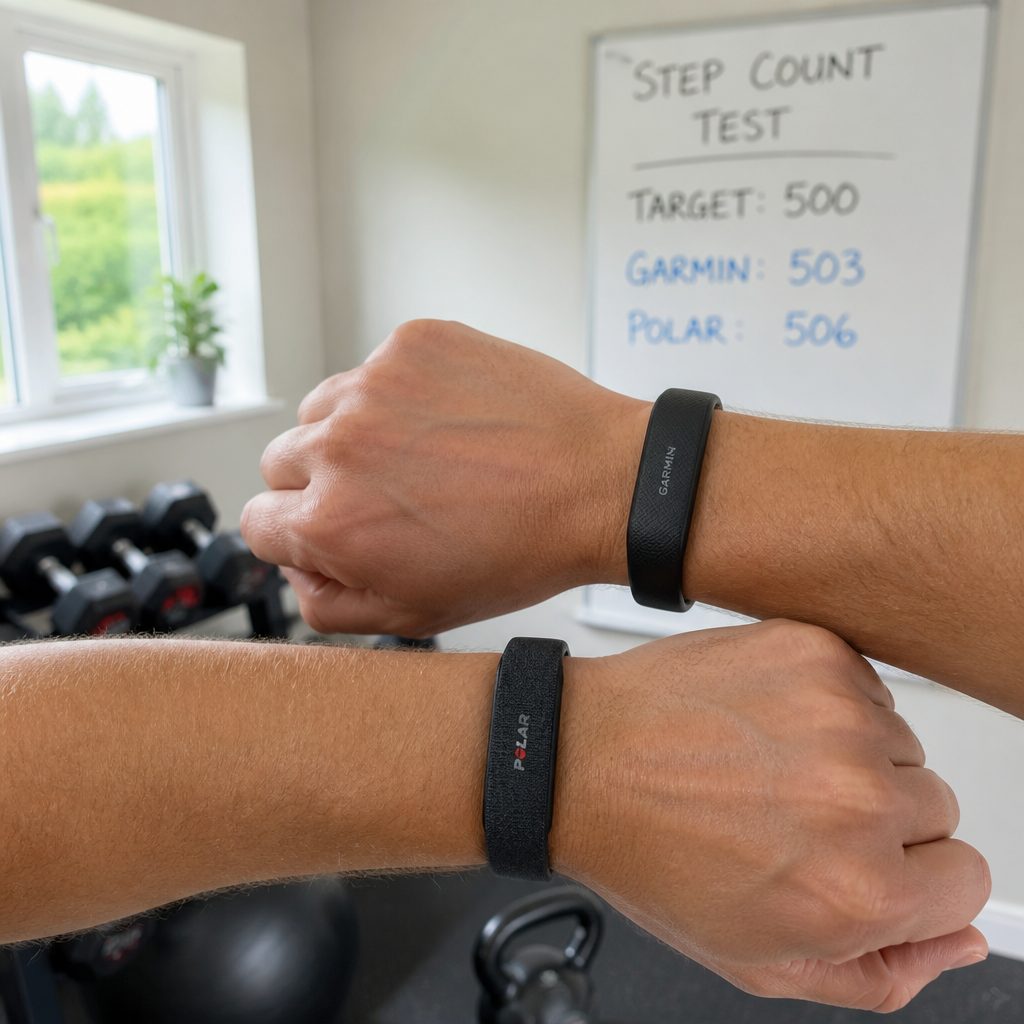
Step-count testing was close rather than flawless: both bands slightly over-counted a 500-step challenge, a useful reminder not to treat any daily total as holy scripture.
7. Battery, charging and living with the app
Battery life is one of the reasons screenless bands make so much sense. Garmin claimed up to 10 days from CIRQA, while Polar Loop offered up to 8–9 days with typical use. In real life, the gap is not enormous; both should let you go through a normal week without building a charging ritual around the thing. That alone makes either more relaxed than a display-heavy tracker that starts pleading for a cable halfway through the week.
Garmin's workout mode used roughly 1–2% battery per hour, usually closer to 1%. That is a useful figure for anyone who worries that deliberately recording activities will ruin the long battery claim. It suggests that a few structured gym sessions, a long walk and some normal daily wear should not turn the band into a needy little parasite.
Polar Loop uses a 170mAh rechargeable Li-Pol battery. A full charge took around 90 minutes, and a half-hour top-up was generally sufficient for most cases. That is a good practical charging pattern: not instant, but short enough that you can restore it whilst showering, working at a desk or sitting down for breakfast. CIRQA charges through Garmin's proprietary connector with USB-C at the other end. Its full charging duration is less central to the buying decision than its ten-day claim, but do factor in the proprietary connection if you are trying to travel with one cable and a very optimistic packing list.
The software question is more important. Garmin Connect is broad, data-rich and familiar to anyone already using a Garmin watch, bike computer or chest strap. CIRQA slots into that world naturally. Some coaching and generative-AI features sit behind the optional Garmin Connect+ plan, but the central tracking experience does not depend on a subscription. That is a meaningful advantage for buyers who dislike paying monthly merely to access the basics from hardware they already own.
Polar Flow is the calmer, more focused alternative. It remains app-led by necessity, because Polar Loop itself has no controls or visible interface. Polar also offers an optional Polar Fitness Program adaptive training plan after its free trial. Again, the key point is to separate optional coaching from the base wearable experience. Do not buy either band on the assumption that a subscription will somehow unlock its personality. Garmin is still Garmin, and Polar is still Polar, before you pay for anything extra.
Battery reality check
A claimed extra day or two is helpful, but comfort and app preference matter more here. A tracker with the longest battery in the world is not much use if it remains on the bedside table because you found its recovery dashboard bewildering.
8. The subscription-free depth argument
Garmin CIRQA's strongest commercial and practical advantage is that it gives you a substantial stack of useful information without making a recurring plan the admission fee. Heart rate, HRV, sleep, stress, SpO2, skin temperature, activity profiles, automatic detection and workout recording are all part of the core idea. Garmin Connect+ exists for those who want extra coaching and generative-AI features, but CIRQA does not feel hollow without it.
That matters more than it first appears. A screenless band has to justify itself through the app because there is nothing meaningful to interact with on the device. If the app then presents a locked door every time you want useful context, the quiet hardware starts to feel rather less elegant. CIRQA avoids much of that frustration. It is built for people who enjoy digging into trends, comparing sessions and using a wearable as part of a larger training setup.
Polar Loop does not become poor value because Polar offers an optional adaptive fitness programme. The base proposition remains sleep, recovery and activity tracking. But Garmin's wider data breadth means it is the safer option for someone who is not yet sure where their training will lead. You might begin by looking at sleep and steps, then start using heart-rate broadcast on compatible equipment, then get interested in activity profiles, then buy another Garmin device. CIRQA gives you room to become that person. Whether becoming that person is a blessing or a mild administrative burden is between you and your spreadsheet.
9. Polar Loop's recovery focus is not a lesser feature set
It would be easy, and wrong, to describe Polar Loop as simply the simpler band. It is more selective, not necessarily less ambitious. Recovery is difficult to measure in a way that people can act on. Everyone knows that sleep is good. The trick is making the information feel relevant when you are deciding whether to lift heavy, do intervals or take the dog for a long walk and call it a win.
Polar has spent years building a reputation around training guidance and physiological interpretation, and Loop channels that heritage into a very low-distraction format. Nightly Recharge, SleepWise and Training Load Pro are not there to create a bigger dashboard. They exist to give the data a job. For many people, that is precisely what is missing from highly detailed health platforms: information is plentiful, but a sensible next step is not always obvious.
There is also something attractive about Polar Loop's complete lack of visible controls. CIRQA's button is useful, but it introduces a tiny bit of device management. Polar says: wear it, sync it, review it later. If you are prone to fiddling with every available option, that minimalism can be liberating. It is one of the few tech products where doing less is genuinely the point, rather than a missing feature dressed up as enlightenment.
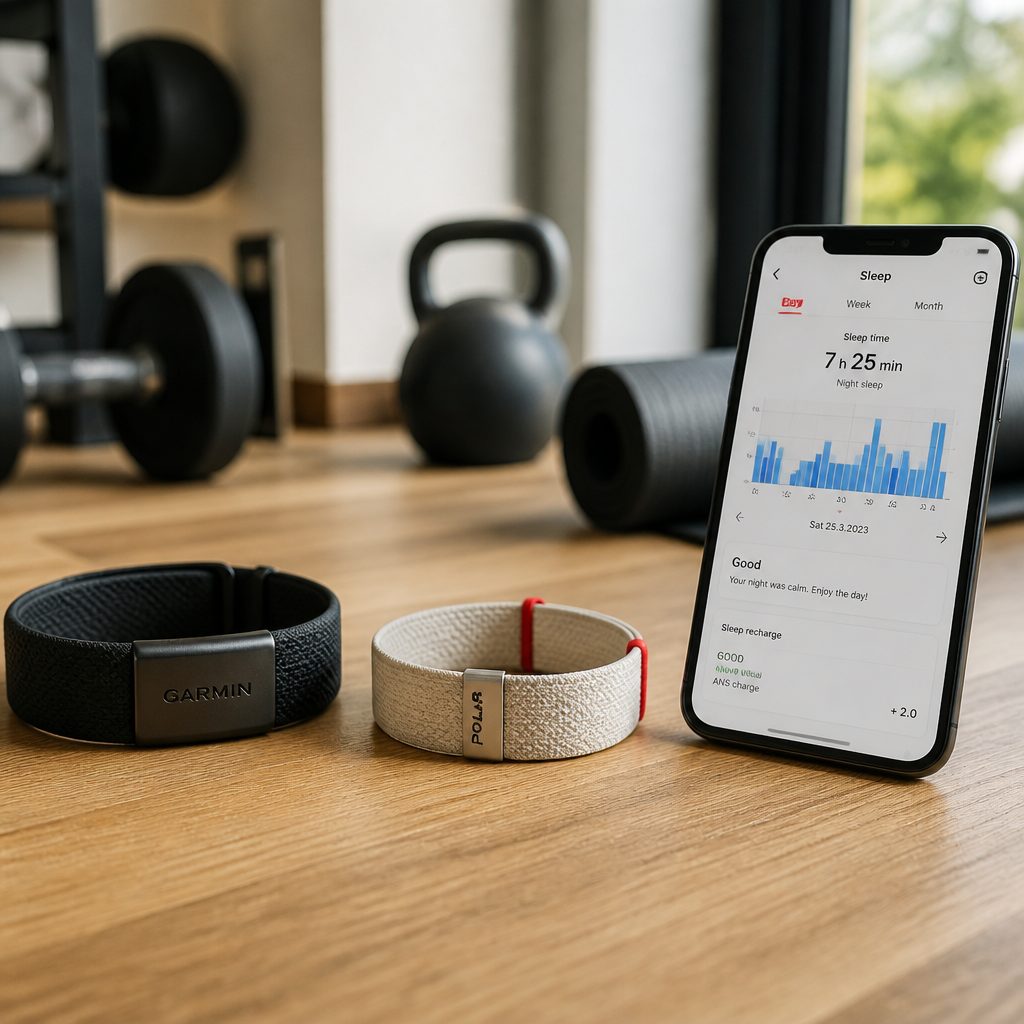
For someone who values a calmer relationship with training data, Polar Loop's app-first approach can feel less like a limitation and more like the whole reason to own it.
10. Best pick for each type of buyer
Neither band deserves to be declared the universal winner. They overlap heavily in purpose, but their priorities are distinct enough that the right purchase is usually obvious once you are honest about your own routine. Not the routine you plan to begin every Monday. The one you actually do.
Best for regular gym training: Garmin CIRQA
Shop Garmin CIRQA on Amazon UK
Choose CIRQA for broad activity support, timed workout recording, dual ANT+ and Bluetooth Smart heart-rate broadcasting, and a sensor set that extends beyond the basics.
Best for recovery-first users: Polar Loop
Choose Polar Loop if Nightly Recharge, SleepWise and Training Load Pro are the reason you want a band in the first place.
Best for data-minded Garmin owners: Garmin CIRQA
It makes the most sense for existing Garmin Connect users who want continuous metrics without adding another smartwatch to the collection.
Best for zero wrist interaction: Polar Loop
Its entirely control-free hardware is ideal if you want tracking to happen quietly in the background and prefer reviewing everything later in Polar Flow.
CIRQA earns the higher all-round recommendation for active users because its strengths reach further across gym training, activity variety, sensor exposure and connectivity. Polar Loop would score differently for a recovery-led buyer. Its value is not in winning a generic spec-sheet contest; it is in being the band that makes you pay attention to sleep and load before another hard session starts sounding like a brilliant idea.
11. Garmin CIRQA vs Polar Loop: buying limitations to know first
Start with GPS. Neither tracker has it built in. If your idea of the perfect run is leaving the phone at home, neither of these is the obvious answer. Both can use phone GPS for outdoor route work, but that is a very different experience from a GPS watch. There is no point pretending otherwise merely because both products are otherwise modern and capable.
Next, consider on-device feedback. CIRQA has a status LED: solid green for full battery, flashing green when charging, orange for low battery and red when critically low. It also uses vibration-based alerts for goals, hourly movement, bedtime and sleep score. Polar Loop has no visible controls or display interaction at all. If that sounds blissfully peaceful, Polar has nailed the brief. If it sounds like you will constantly reach for your phone, CIRQA gives you a little more independence.
Finally, neither is an ECG device. CIRQA has no ECG by design, and it does not substitute for medical advice. The bands are useful for spotting broad lifestyle patterns and training trends, not for diagnosing illness or giving a clinical all-clear. It should not need saying, but fitness tech has a remarkable ability to make ordinary people feel qualified to perform cardiology from the kitchen table.
Garmin CIRQA is easier to recommend when
- You train across several activity types and want proper activity categorisation.
- You want SpO2, stress, skin temperature and HRV alongside sleep data.
- You value broadcast heart rate for compatible gym equipment or training devices.
- You prefer useful core data without being pushed towards a mandatory subscription.
Polar Loop is easier to recommend when
- Your primary aim is building a more sustainable relationship with exercise and rest.
- You prefer recovery interpretation to a very broad list of exposed biometric metrics.
- You want the wrist hardware to have no screen, button or visible interface at all.
- You are already comfortable using Polar Flow as the centre of your training routine.
12. Frequently asked questions
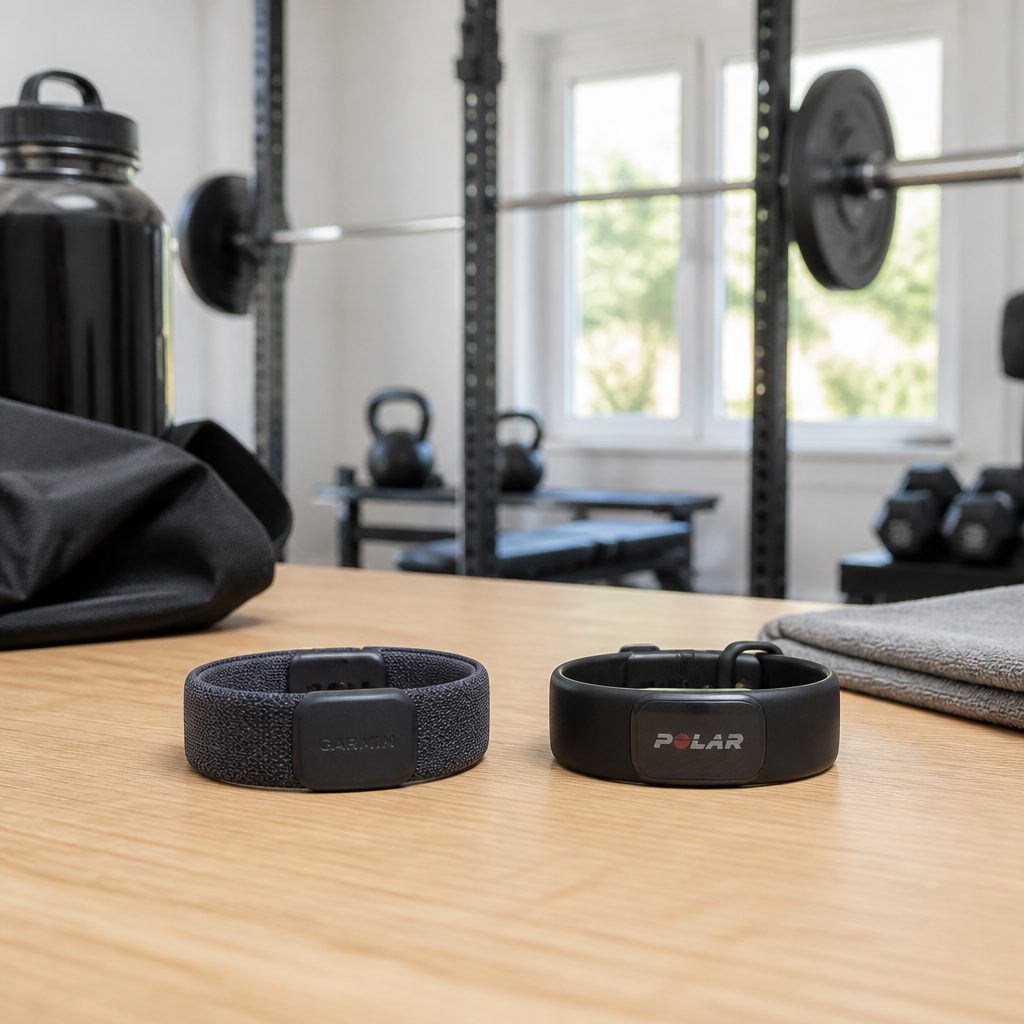
The better buy depends on what you want to learn after training: Garmin CIRQA provides more ways to capture and share workout data, while Polar Loop keeps the spotlight on readiness and recovery.
Final verdict: buy Garmin CIRQA for training depth, Polar Loop for recovery clarity
Garmin CIRQA is the better all-round no-screen band for the active gym-goer who wants broad health tracking, a light fabric design, a claimed ten-day battery, activity depth and flexible heart-rate connectivity without relying on a compulsory subscription. The single button, 80-plus activity profiles, ANT+ support and useful range of exposed health metrics make it the more capable training companion.
Polar Loop is the better choice for the person who has had enough of constant wrist interaction and wants their wearable to be a calm recovery tool first. Nightly Recharge, SleepWise and Training Load Pro create a more coherent rest-and-readiness story than a raw list of metrics ever could. It is especially compelling for people who would rather make better decisions across a whole week than obsess over every individual workout.
So there is no need for a forced knockout. Pick Garmin CIRQA if your favourite part of fitness is doing the work and examining the data afterwards. Pick Polar Loop if your real challenge is learning when not to do more. Both are refreshingly screen-free. One simply speaks fluent training log, whilst the other is much better at telling you to get some sleep.