
Screenless fitness bands in 2026: Fitbit Air, Polar Loop and Amazfit Helio Strap Pro compared
Three very different takes on the no-screen tracker have landed this year — here's what UK buyers need to know before they spend.
 By James Oduya · Staff Writer & Home Gym Columnist · Updated October 10, 2026
What you need to know
- Google's Fitbit Air launched in UK stores on 26 May 2026 at £84.99 — the most affordable entry in this comparison
- Polar Loop costs £149.50 with no subscription ever required; Amazfit Helio Strap Pro is $199.99 with UK pricing unconfirmed
- All three are screenless and subscription-free at their core, but target very different types of user
The screenless band has its biggest year yet
For several years, the screenless fitness tracker was largely the territory of one brand: WHOOP. In 2026, that changed decisively. Google launched the Fitbit Air in May, Polar's Loop — announced in September 2025 — has been shipping since, and Amazfit unveiled its Helio Strap Pro at the HYROX World Championship in Stockholm in June. Three bands, three very different philosophies, and three distinct price points. Here is what each one actually offers.
Google Fitbit Air: the mainstream entry point
Google officially launched the Fitbit Air on 7 May 2026, with UK retail availability from 26 May. At £84.99, it is the cheapest device in this comparison and arguably the most significant: it is the first new Fitbit hardware in three years, and the first Fitbit product designed from the ground up around Google's Gemini AI.
The Air is described by Google as the smallest Fitbit tracker yet — a "pebble" weighing just 5.2g without its textile band (12g total). It is swim-proof to 50 metres and charges from flat in 1.3 hours via USB-C magnetic connector. Battery life is seven days. Sensors include optical heart rate, red and infrared SpO2, skin temperature, a 3-axis accelerometer, and a gyroscope. There is no GPS and no NFC.
The launch was also the moment Google retired the Fitbit app brand entirely. The replacement is the Google Health app, which also introduced the Google Health Coach — formerly Fitbit Coach — powered by Gemini. Core features including 24/7 heart rate monitoring, sleep tracking and scoring, AFib detection, SpO2, skin temperature, and a daily readiness score are all free. The Gemini-powered coaching and personalised weekly plans sit behind an optional Google Health Premium subscription, priced at $10 per month or $100 per year in the US. UK-specific Premium pricing had not been formally confirmed at the time of writing. Pre-orders include a three-month Premium trial.
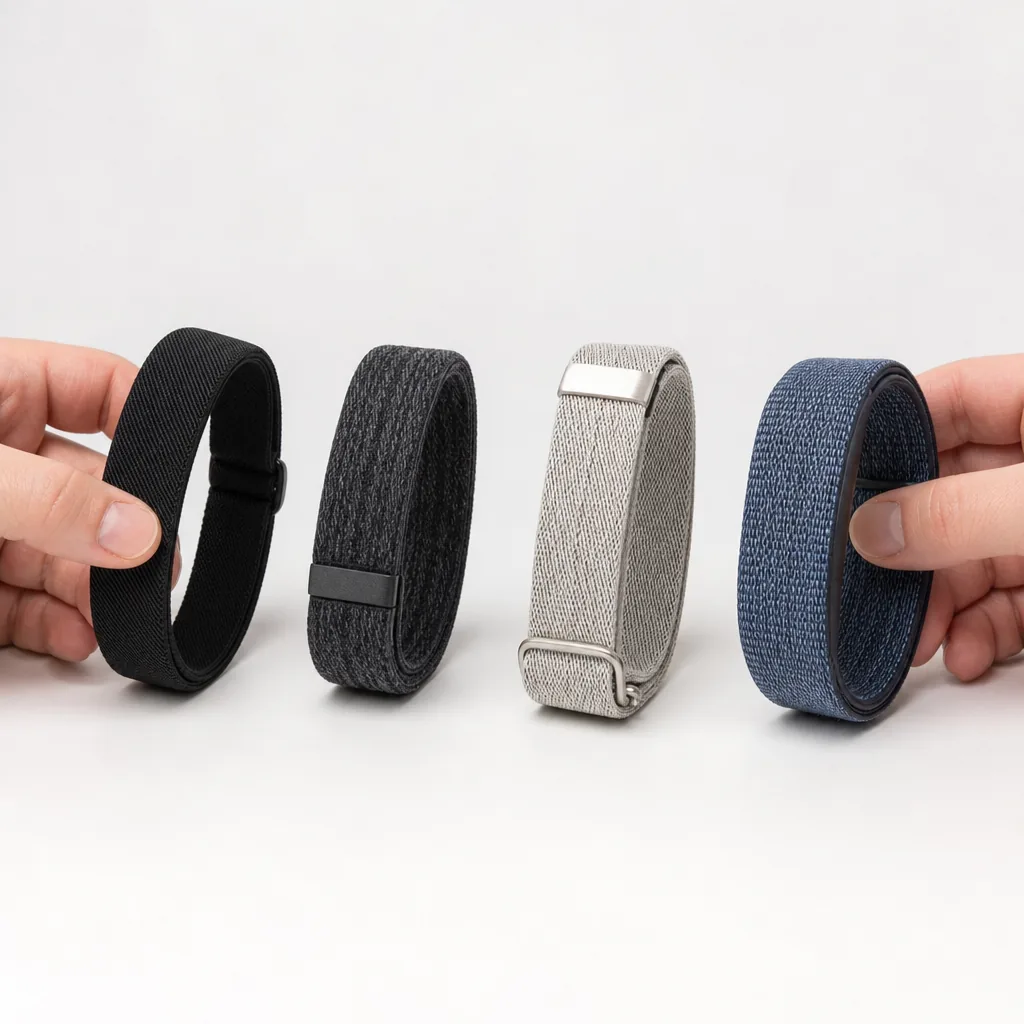
The Air is compatible with iPhones running iOS 16.4 or higher and most Android 11 or newer handsets. It comes in four colours — Obsidian, Lavender, Berry, and Off-White — with extra bands available from £34.99.
Polar Loop: no subscription, ever
Polar announced the Loop in September 2025, positioning it as a direct challenger to WHOOP but without the annual subscription that defines that product. Shipments began on 10 September 2025, and in February 2026 the device received the iF Design Award 2026 — recognition that sits well with its deliberately understated aesthetic.
The Loop is button-less, tracks heart rate, activity, sleep, recovery and training automatically, and stores four weeks of data on-device. Battery life is up to eight days. The case is stainless steel, dimensions are 42 x 27mm at 9mm thick, and total weight is 29g. Everything syncs to the Polar Flow app for iOS and Android, with no additional subscription required — ever.
UK price is £149.50. It is available in Greige Sand, Night Black, and Brown Copper, with additional band colours at $30 each. To put the pricing in context: a WHOOP One subscription costs £169 per year. The Loop costs less than one year of a WHOOP subscription and then runs indefinitely for free.
Sander Werring, CEO of Polar Electro, described the device's intent plainly: "POLAR Loop is an important step for Polar because it redefines what a wearable can be: not another screen competing for attention, but a quiet companion that fits naturally into everyday life."
Amazfit Helio Strap Pro: built for HYROX, not everyone
Amazfit unveiled the Helio Strap Pro at the HYROX World Championship in Stockholm on 18 June 2026, with sales beginning at the end of that month. This is a more complex proposition than either rival: it is a two-sensor system comprising a wrist or arm-worn heart rate unit (the Helio Core Motion HR) and a waist-mounted motion sensor (the Helio Core Motion Waist), designed together to track movement quality and core stability.
The wristband unit weighs 11.4g, offers up to 11 days of battery life, is water-resistant to 5 ATM, and uses BioTracker 6.0 PPG alongside a 9-axis IMU, skin temperature sensor, and Bluetooth 5.2. The waist sensor is claimed to last up to 40 days on a charge and can operate independently of a smartwatch.
There are meaningful caveats, however. At launch, the waist sensor works only in HYROX Race and HYROX Simulation modes — Amazfit's own documentation confirms further workout modes are coming in future updates. Full watch integration at launch is limited to the Balance 3 and Balance Ultra. The5krunner, which had a hands-on in Stockholm, noted the wristband hardware is largely unchanged from the original Helio Strap and concluded: "this is not worth upgrading to for most people, at least not yet."
US price is $199.99 for the full bundle. UK pricing had not been confirmed at the time of writing.
How they stack up
- Fitbit Air — £84.99: Lightest, cheapest, most accessible. Best for mainstream users who want AI-assisted wellness tracking without a screen. Requires a Google account.
- Polar Loop — £149.50: No subscription, ever. Sturdy, design-award-winning hardware. Best for those who want a clean, long-term companion with no ongoing costs.
- Amazfit Helio Strap Pro — $199.99 / UK price TBC: Specialist kit for HYROX and hybrid athletes. Significant potential, but the platform needs time to mature before it delivers on its full promise.
It is also worth noting that Garmin entered this space in July 2026 with the CIRQA Smart Band — its first screen-free tracker — further confirming that the category is no longer a niche. The competition is only going to intensify from here.
Why it matters
For UK buyers who've resisted fitness trackers because of cluttered screens or recurring subscription fees, 2026 has produced the most compelling screenless options yet — at genuinely varied price points. The Fitbit Air is the easiest entry point and the only one with confirmed UK high-street availability at launch; the Polar Loop suits those who want a premium, no-fuss daily companion without ongoing costs; and the Helio Strap Pro is a niche pick for HYROX and hybrid athletes willing to wait for the platform to mature. None of them will suit everyone, but together they signal that the screenless category is no longer a fringe experiment.