
Oura Ring 5 vs Garmin CIRQA: Finger or Wrist for Screen-Free Recovery?
Two deliberately quiet fitness wearables, two very different places to wear them. Oura Ring 5 puts recovery-led health tracking on your finger and places part of the experience behind a membership; Garmin CIRQA offers wrist or upper-arm flexibility, broad training tools and no compulsory subscription. Here is how they compare when sleep, gym work and getting out of your own way are the priorities.
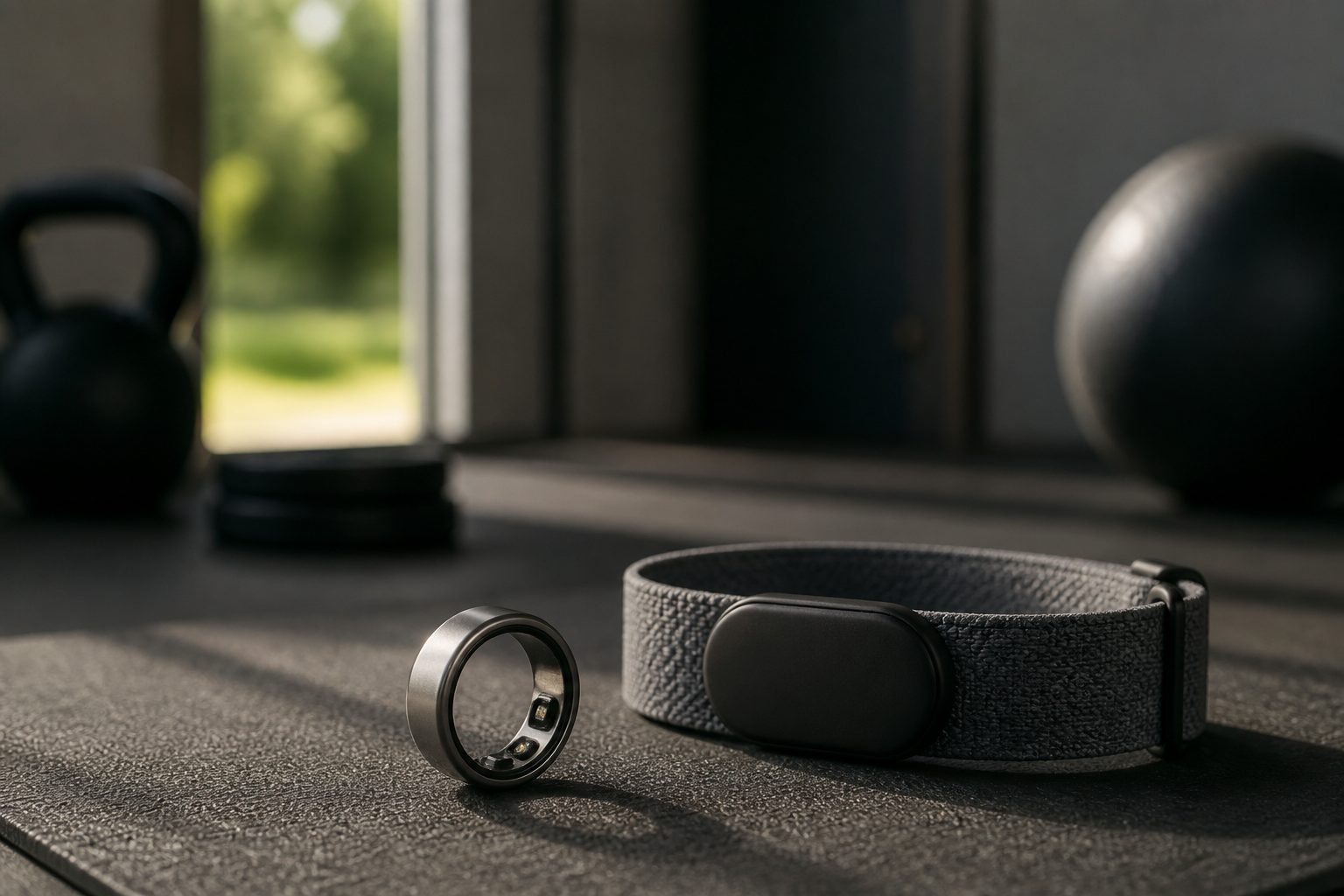
Oura Ring 5 takes the ultra-light finger route, whilst Garmin CIRQA places its sensor pod in a soft fabric wrist or upper-arm band.
 By James Oduya · Staff Writer & Home Gym Columnist · Updated September 28, 2026
The short answer: two good ideas, aimed at slightly different people
The screen-free tracker is no longer a strange little side street in fitness tech. For plenty of people, it is the sensible route. You still want sleep scores, heart-rate trends and recovery context, but you do not necessarily want another rectangular gadget lighting up every time somebody reacts to the family WhatsApp. Frankly, your wrist has suffered enough indignities.
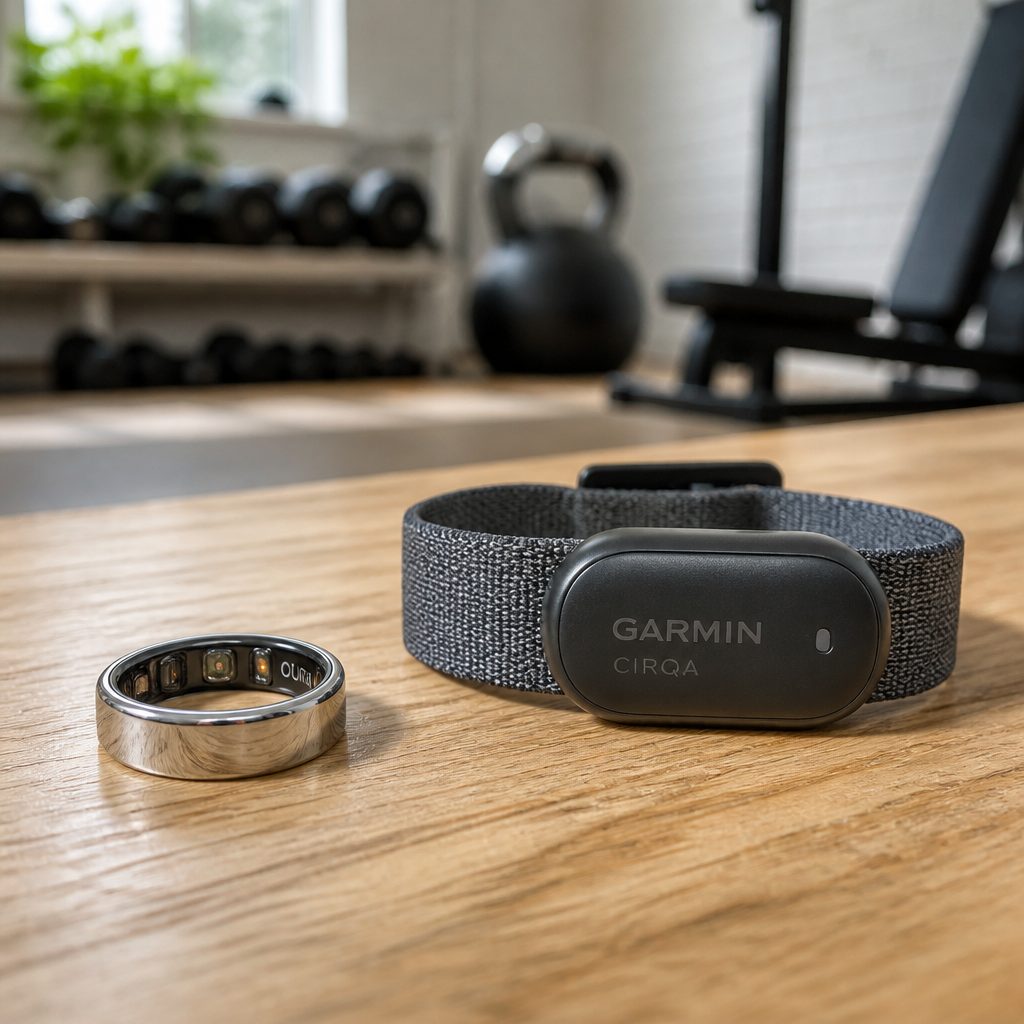
The physical contrast is substantial: Oura Ring 5 was 6.09 mm wide and 2.28 mm thick, whilst CIRQA used a 27 × 47 × 9 mm sensor pod held by a fabric band.
Oura Ring 5 and Garmin CIRQA shared that screen-free philosophy, but arrived at it from opposite directions. The Oura was a very small titanium ring, worn on the finger, with a redesigned optical sensing system and strong emphasis on sleep, readiness, temperature patterns and health guidance. Garmin's CIRQA was a fabric band with a removable-looking sensor-pod approach in spirit, designed to sit on the wrist or upper arm and bring Garmin's familiar training, Body Battery and Connect ecosystem to people who did not want a watch face.
The key distinction was not merely ring versus band. It was lifestyle. Oura Ring 5 made most sense for somebody whose primary question was, "How recovered am I, really?" Garmin CIRQA made more sense for somebody who also wanted the tracker to fit into actual training: heart-rate broadcasting, automatic activity detection, more than 80 activity profiles, Training Readiness and the ability to move the band to the upper arm when a wrist placement became inconvenient.
Neither wearable had a screen for live stats or notifications. Both asked you to check the companion app rather than the device itself. That is a limitation if you need instant pace or interval data, but it is exactly the appeal if your smartwatch had begun to feel like a tiny manager living on your wrist.
Oura Ring 5 vs Garmin CIRQA: the numbers that matter
Before getting into the feel of each device, it helps to put the fundamentals side by side. A spec table cannot tell you whether a ring will annoy you during a deadlift, or whether a fabric band will become your favourite sleeping companion. It can, however, make clear why these are not interchangeable purchases.
| Feature | Oura Ring 5 | Garmin CIRQA |
|---|---|---|
| Wear position | Finger | Wrist or upper arm |
| Dimensions | 6.09 mm wide; 2.28 mm thick | Sensor pod: 27 × 47 × 9 mm |
| Weight | 2–2.6 g, depending on size | About 20.7 g in S/M; about 21.2 g in L/XL |
| Battery claim | 6–9 days | Up to 10 days |
| Observed battery result | About 9 days, depending on ring size | 10–11 days |
| Water rating | 100 m / IP68 | 5 ATM, rated for pool swimming |
| Optical sensing | Two tri-LED emitters, two photodetectors and 12 signal pathways | Optical heart-rate sensor, Pulse Ox and accelerometer |
| Temperature tracking | Digital temperature sensor | Skin temperature sensor |
| GPS | Live activity pace and distance tracking | Connected GPS via paired phone |
| Heart-rate broadcasting | — | ANT+ and Bluetooth Smart |
| Recurring membership | Required | Not required |
The headline weight difference is dramatic. An Oura Ring 5 at 2–2.6 g was practically absent once your brain had accepted that you were wearing a ring. CIRQA was still light by fitness-band standards at around 21 g all-in, but it was a conventional piece of fabric and hardware around the arm. That sounds obvious. It becomes important at bedtime, in the shower and halfway through a front-rack session.
The Garmin also had a physical button. It was a small practical advantage for anyone who likes a little direct interaction without having to pull out a phone, although it did not transform CIRQA into a watch. It remained intentionally quiet.
Design and everyday comfort: finger elegance versus fabric flexibility
Oura Ring 5 was the more jewellery-like device. Its high-grade titanium body was built for a strong strength-to-weight ratio and non-allergenic wear, and the design was notably smaller than Oura Ring 4. There were sizes from 6 to 13, several finishes, and a 0.7 mm sensor-dome height. The domes are worth mentioning because no smart ring is completely featureless inside. You do feel them if you go looking. Most of the time, though, the ring's low mass was its superpower.
For sleep, desk work, walks and ordinary life, Oura's finger location was wonderfully unobtrusive. It did not slide around in the way a loose strap can, and there was no clasp, buckle or damp fabric edge to think about. If you already wear rings, the adjustment period could be brief. If you never wear rings, it could feel surprisingly personal. Some people simply do not enjoy a ring while cooking, washing up, lifting or dealing with chilly fingers.
Garmin CIRQA approached comfort more pragmatically. The casing was fibre-reinforced polymer, the same broad family of plastic Garmin used across much of its watch range, housed in a soft fabric band. It came in two fit ranges: S–M for 120–200 mm wrists and L–XL for 145–240 mm wrists. That means it accommodated a far broader arm-size range than a fixed ring-size system, and the option to use it on the upper arm was genuinely useful.
The upper-arm position particularly appealed to gym regulars. A wrist device can interfere with wraps, gloves, lifting straps and the bend of the wrist during pressing. A ring can be no friend of knurled bars either. CIRQA at the upper arm was the tidy answer if you wanted to keep recording a session without wearing anything on your hand or wrist. There was no magic in it; you still had a pod and fabric band on your body. But it gave you choices, and choices matter when training is not all leisurely zone-two walking.
Oura Ring 5 strengths
- Extremely light 2–2.6 g titanium construction.
- Finger wear can be less intrusive than a wrist band during sleep.
- Compact form leaves your wrist clear for a conventional watch.
- 100 m and IP68 water resistance suits daily water exposure, sauna use and water sports.
Oura Ring 5 compromises
- Rings can be awkward with barbells, kettlebells and some strength work.
- Finger size can vary with heat, cold and normal day-to-day swelling.
- You cannot relocate it to the upper arm for training comfort.
- The membership changed the ownership proposition.
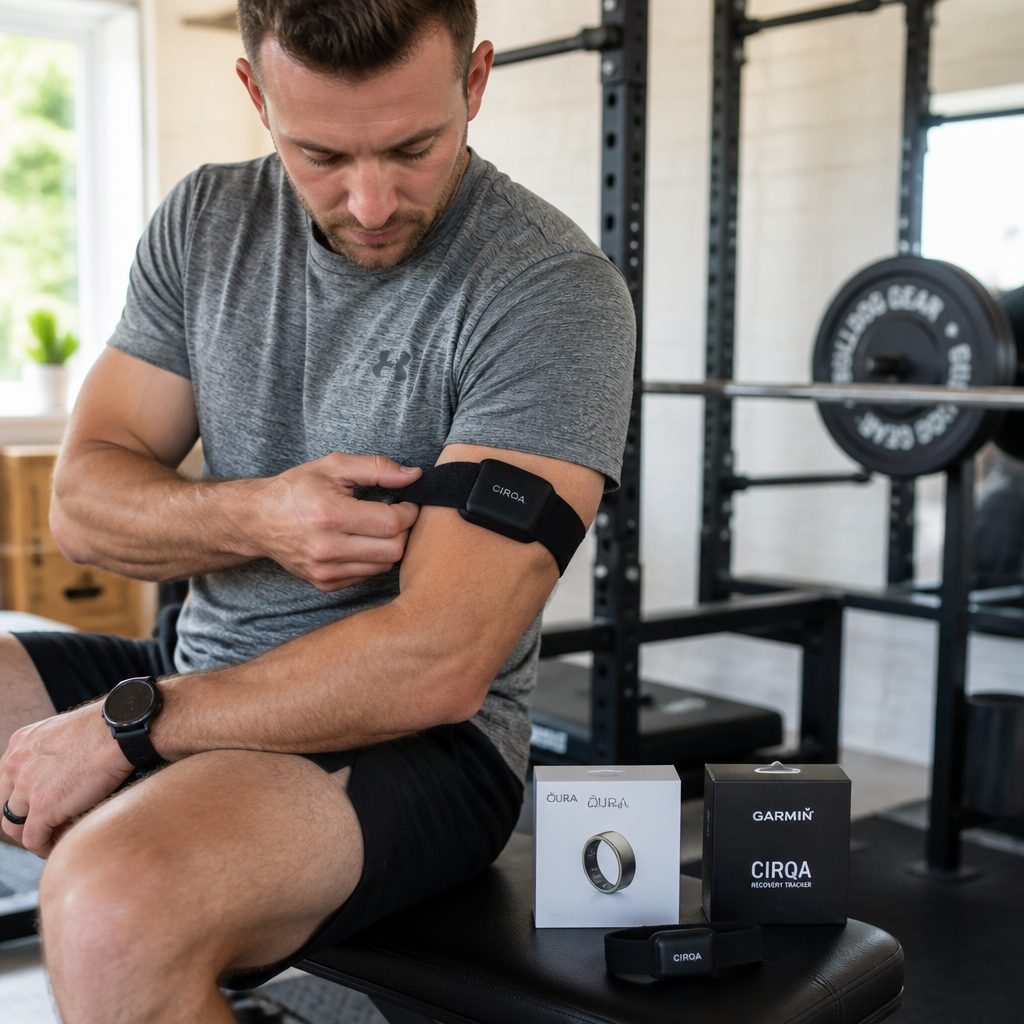
CIRQA's fabric construction and upper-arm option made it easier to adapt around lifting straps, watches and wrist-based gym accessories.
Sensor approach and health tracking: different routes to the same question
Both products were designed to collect the physiological basics continuously: heart rate, heart-rate variability, sleep information, stress-related insight and temperature context. Neither was a simple pedometer wearing a fashionable hat. Their sensing hardware, however, tells you a great deal about their intended roles.
Oura Ring 5 used two tri-LED light emitters and two photodetectors, guided through 12 signal pathways. Oura reduced the LED count to 12, six fewer than Oura Ring 4, whilst using the redesigned architecture to pursue stronger signal quality across more finger types and skin tones. It also included a digital temperature sensor. Finger-based optical sensing has a useful advantage in recovery tracking: the finger is a stable, well-perfused place to collect overnight pulse and HRV data when you are lying still. That is the environment where a recovery tracker earns its keep.
Garmin CIRQA used Garmin's Gen 4 optical sensing platform with skin temperature, red LED elements for blood oxygenation and surrounding light sensors. It tracked continuous heart rate, Pulse Ox, respiration, stress derived from HRV, HRV Status, Body Battery, sleep score and Training Readiness. It did not include an EDA sensor, so do not expect it to infer stress through electrodermal activity. Garmin's approach instead leaned on HRV and related physiological inputs, then presented those patterns through Garmin Connect.
Neither system should be treated as a diagnosis in a very small package. A rise in skin or digital temperature, an unusual resting heart-rate pattern or a subdued readiness score is useful context. It is not an instruction to make a clinical conclusion before breakfast. The good use of a recovery wearable is spotting patterns across days and weeks: heavy training, poor sleep, a late meal, travel, illness or that regrettable decision to turn "one episode" into four.
Oura Ring 5: recovery first, activity included
Oura tracked sleep, heart rate, HRV, temperature, recovery and activity among more than 50 health metrics. Health Radar, AI-enabled medical guidance through Counsel Health, GLP-1 Insights and Live Activity Tracking placed it firmly in a broad health-management lane.
Garmin CIRQA: recovery inside a training ecosystem
CIRQA combined wellness information with Garmin staples including Body Battery, HRV Status, stress and Training Readiness. Its data lived alongside activities in Garmin Connect, which was a more natural home for people already managing structured fitness there.
The practical accuracy caveat
In steady running, cycling, yoga and gym circuits, heart-rate readings tracked within a few beats of reference devices. During fast intervals, wrist-based failures were noted. That is not unique to Garmin, but it matters if interval precision is your main reason for buying.
Sleep and recovery: Oura Ring 5 had the more focused overnight case
Shop Oura Ring 5 had the more focused overnight case on Amazon UK
Sleep was where this comparison became more nuanced than "ring good, band bad". Over 10 nights of comparison testing, Oura Ring 5 recorded longer awake periods than Garmin CIRQA, more accurately reflecting time spent scrolling before sleep. A minor detail? Not really. If a tracker decides you fell asleep while you were still having a quiet browse, it can make your sleep duration look rosier than it was. That can flow into recovery interpretation the following day.
At the same time, the overall sleep score and guidance were mostly identical on most nights. That is an important dose of perspective. Both trackers could give useful sleep staging, sleep score and recovery context. Garmin supplied sleep stages, guidance on optimal sleep duration, HRV, respiration and nap detection. Oura brought its established sleep and readiness framing, backed by its finger-worn temperature and optical design.
Oura still got the nod if sleep and recovery were the whole reason for buying. It was lighter, it was designed around the finger's overnight sensing advantages, and the 10-night result suggested it handled pre-sleep awake time more faithfully. The gap was not a demolition. CIRQA did not suddenly become bad at sleep because you read an extra few pages on your phone. But Oura's focus showed.
The recovery-tracker rule worth following
Choose the wearable you will actually wear every night. The most sophisticated HRV graph in the world is not terribly useful if the device spends three evenings on the bedside table because it irritates your skin, catches on your hand or feels annoying under the duvet.
CIRQA had a particularly good case for someone who disliked sleeping in a ring. The fabric band gave it a different feel, and its upper-arm compatibility added another potential comfort position. Conversely, people who woke up with an ordinary watch pressing into the back of the hand might find Oura's tiny ring footprint much easier to forget. There is no universal winner here, only an honest bit of anatomy and preference.
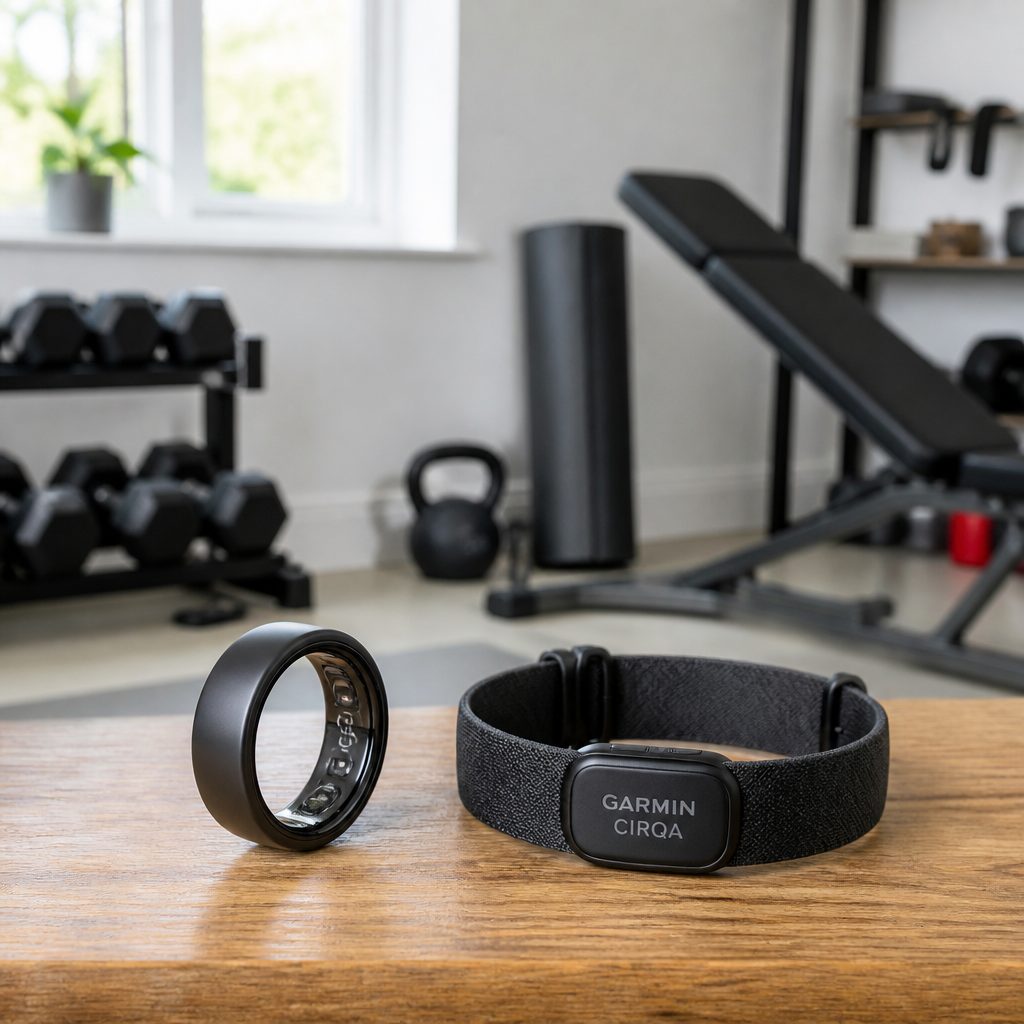
For recovery tracking, the most meaningful comparison is not a single morning score but the pattern each device reveals across consistently worn nights.
Training and gym use: Garmin CIRQA was the more capable companion
For a gym-focused audience, this was Garmin CIRQA's clearest win. CIRQA supported more than 80 activity profiles, could automatically detect and record a variety of activities, and let you view or edit them in Garmin Connect. That is simply a more training-oriented proposition than a health ring that also tracks activity.
It also broadcast heart rate through ANT+ and Bluetooth Smart, supported three current Bluetooth Smart connections plus the phone, and permitted unlimited ANT+ connections. That was useful if you trained with compatible gym equipment, cycling computers or another display device. The CIRQA itself remained screen-free, but it did not force you to abandon live heart-rate visibility elsewhere. It was a quiet sensor rather than a device trying to own the whole workout.
There was no onboard GNSS on CIRQA. Distance and pace came from connected GPS through a paired phone. Runners who leave the phone at home should not pretend this is the ideal device for them. Oura Ring 5 offered Live Activity Tracking for real-time pace and distance monitoring, but its real strength remained the big-picture recovery story rather than detailed sport analysis. Neither device replaced a dedicated sports watch for navigation, maps or a full interval workout screen. That was not the job.
The ring-versus-band issue is unavoidable in strength training. Oura Ring 5 should be removed for exercises where the ring could be pressed against a bar, pinched under a handle or otherwise put in an unpleasant battle with metal. You may be able to use it for bodyweight work, walking, cycling or a gentle class, but it was not the obvious wear-it-through-every-set choice.
CIRQA avoided the hand altogether if moved to the upper arm. For dumbbell work, barbell sessions, kettlebells, lifting straps and gloves, that flexibility was more than a footnote. It was the difference between collecting a useful session record and taking the tracker off before the warm-up. For many Total Gym Gear readers, that made the Garmin the more practical daily-training device.
| Training question | Better fit | Why |
|---|---|---|
| Strength training with bars and handles | Garmin CIRQA | Upper-arm wear keeps the device away from the grip. |
| Sleep and low-profile recovery tracking | Oura Ring 5 | Ultra-light finger fit and stronger awake-time result in 10-night sleep testing. |
| Using external training hardware | Garmin CIRQA | ANT+ and Bluetooth Smart heart-rate broadcasting. |
| Phone-free pace and distance expectations | Neither as a dedicated sports-watch replacement | CIRQA used connected GPS; both products prioritised screen-free use over watch-style sport functions. |
| Activity-led health guidance | Oura Ring 5 | More than 50 metrics, Health Radar and AI-enabled health guidance features. |
Battery and charging: both were pleasingly low-maintenance
Battery anxiety ruins the whole point of a passive tracker. Fortunately, neither of these demanded nightly charging. Oura Ring 5 carried a 6–9 day claim and reached about nine days in real-world use depending on ring size. Garmin CIRQA claimed up to 10 days and lasted 10–11 days in testing. That put Garmin ahead, though not by an amount that should decide the purchase by itself.
Oura's charging time was about 80 minutes, depending on battery level. It used proprietary charging contacts and had an optional portable charging case with capacity for up to one month of battery life. That case could be appealing for frequent travellers or anyone who has ever remembered every cable except the specific little charger their wearable requires. It was a convenience extra, not a substitute for choosing the right device in the first place.
Garmin used its familiar proprietary charging port, with USB-C at the other end of the cable. For existing Garmin owners, that could make life marginally tidier. More importantly, its 10–11 day observed result was good enough that charging did not become a routine disruption. Pop it on while showering, during desk work or before a longer journey and you should retain the overnight data that matters most.
The difference was more significant for people who travel often or are forgetful chargers by nature. Garmin gave you slightly more slack. Oura's optional charging case offered another way around the problem. Either way, this was a mercifully civilised category: both could collect a proper run of sleep and recovery data without you having to treat charging as a nightly ritual.
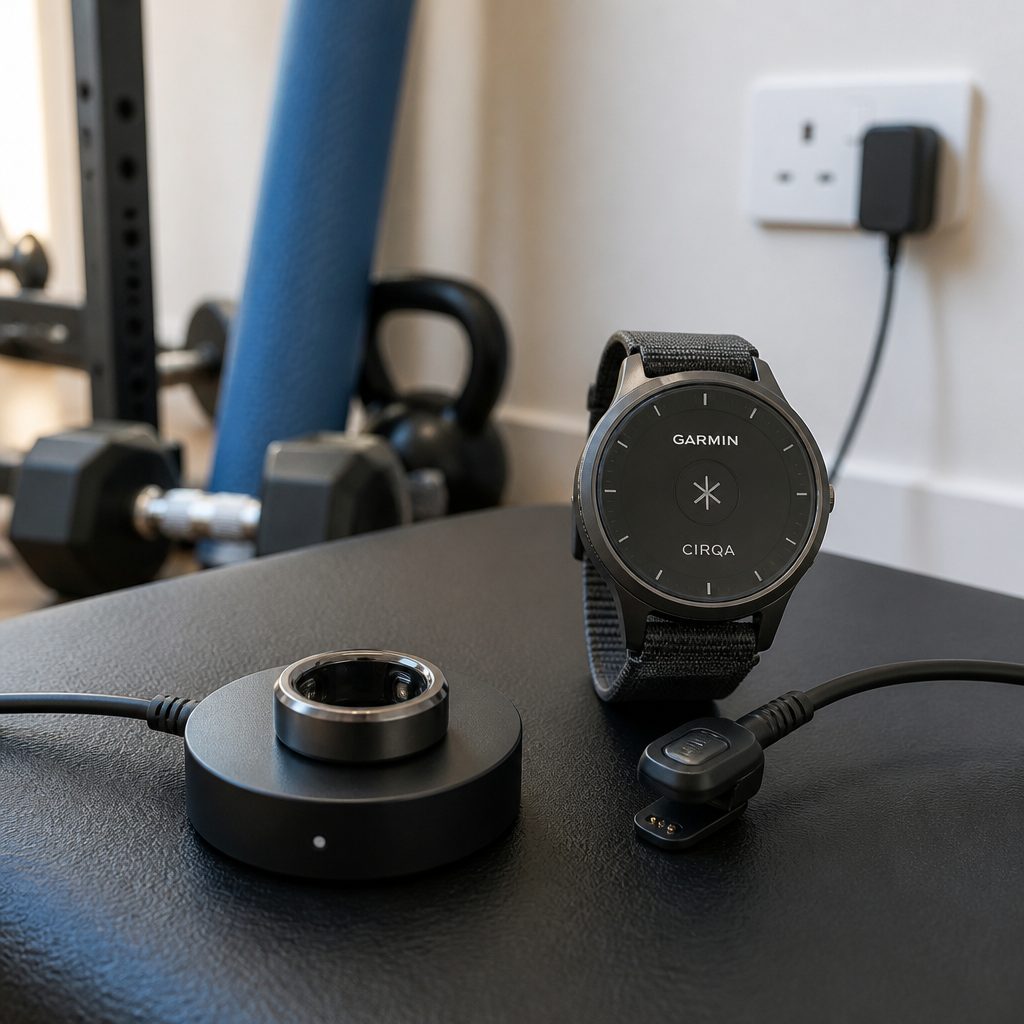
Both wearables were built for multi-day use, but CIRQA's 10–11 day real-world result provided the longer buffer between charges.
Oura Ring 5 membership versus Garmin CIRQA's subscription-free model
This was the biggest value divide and it deserves to be stated plainly. Oura Ring 5 required a membership. Garmin CIRQA did not require a subscription for its health and fitness tracking features. You paid for each product differently over time, and that should affect the decision as much as titanium, sensor pathways or the rather handsome range of fabric colours.
Oura's membership-backed approach supported its deeper health layer, including personalised AI-enabled medical guidance through Counsel Health, Health Radar and GLP-1 Insights. For the person who wanted an ongoing, guided health platform rather than just raw numbers, that could be precisely what made Oura attractive. The experience was designed to turn measurements into a narrative about habits, recovery and wider wellbeing.
But subscriptions are not neutral. Some people are perfectly happy to pay for continued interpretation and feature development. Others have had enough of recurring charges attached to things they already own, from streaming libraries to toothbrushes that appear to be plotting their own software roadmap. Garmin took the more straightforward position: CIRQA's core health and training toolkit sat in Garmin Connect without a required extra fee.
That made CIRQA the more reassuring long-term proposition for a committed exerciser who wanted Body Battery, HRV Status, stress, sleep, menstrual cycle and pregnancy tracking, Natural Cycles compatibility, activity tools and Training Readiness without an additional membership decision every month. If that sentence felt like a relief, Garmin was probably your answer already.
Do not assess value only by the device in your hand on day one. Consider how you want to use the tracker for a year or longer: a membership-led health service may suit you brilliantly, whilst a subscription-free platform can be the calmer choice for someone who wants ownership to remain uncomplicated.
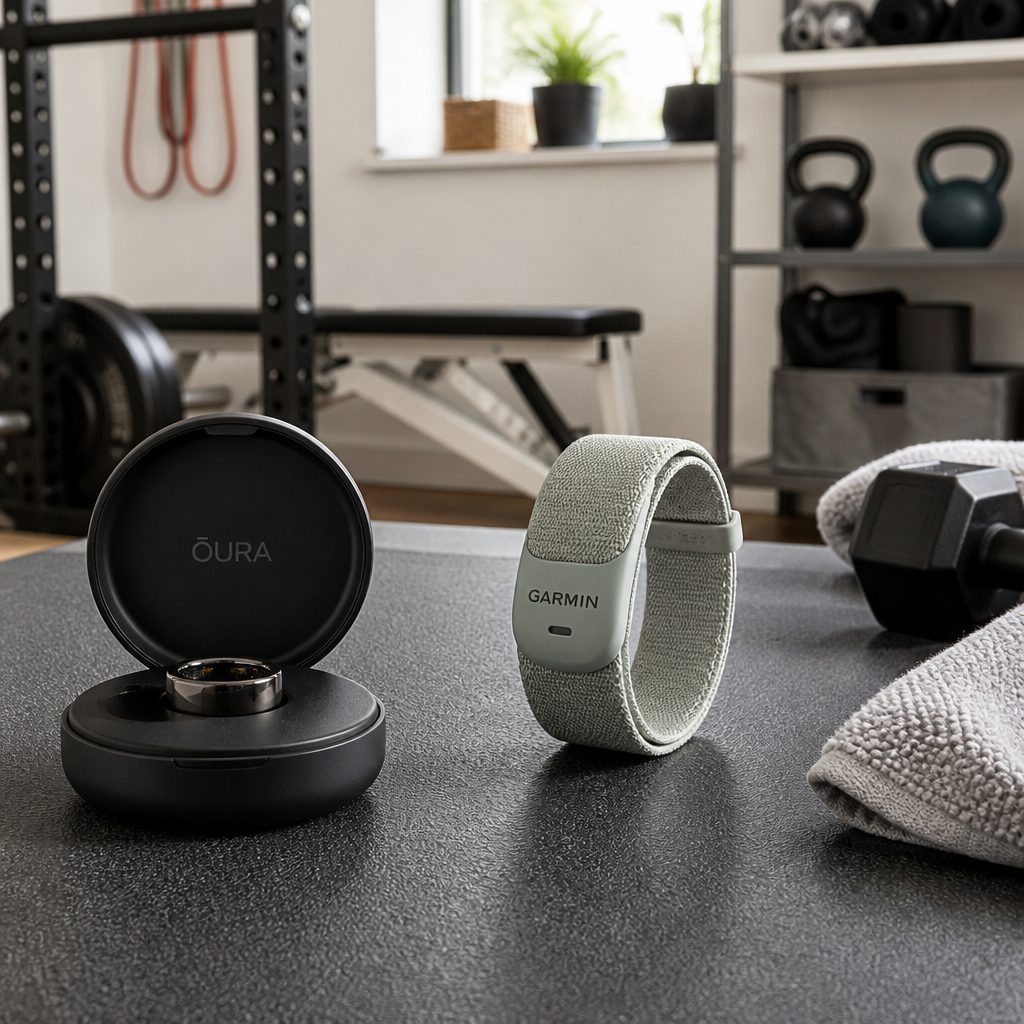
The practical value question is not just ring versus band: it is whether you prefer Oura's membership-led health platform or Garmin's subscription-free Garmin Connect experience.
Best for different buyers: Oura Ring 5 or Garmin CIRQA?
There was no honest single winner here. The better device depended on whether your training life revolved around recovery, lifting, app-led health guidance, running accessories or simply avoiding yet another subscription. These are the picks I would make for the most common buyer types.
Best for sleep-first recovery: Oura Ring 5
Choose Oura if overnight recovery is the centre of your decision. It was exceptionally light, recorded longer awake periods in 10-night testing and concentrated heavily on sleep, HRV, temperature and readiness context.
Best for gym regulars: Garmin CIRQA
Shop Garmin CIRQA on Amazon UK
Choose CIRQA if your routine includes barbells, straps, handles and structured sessions. The upper-arm option, 80+ activity profiles and heart-rate broadcasting make it the more flexible training partner.
Best subscription-free choice: Garmin CIRQA
Choose CIRQA if you want the useful health and fitness information without a compulsory ongoing membership. It offered a broad Garmin Connect feature set without that recurring layer.
Best premium minimalist: Oura Ring 5
Choose Oura if you want the most discreet, jewellery-like wearable and are comfortable with its membership model. At 2–2.6 g, it was the device most likely to disappear into everyday life.
For a person already invested in Garmin Connect, CIRQA was particularly logical. It slotted into a familiar training ecosystem, broadcast heart rate to compatible devices and kept the focus on actionable exercise information. It did not have to win every sleep metric battle to be the better fit for an existing Garmin user.
For somebody who wore a normal watch, wanted no wrist clutter at night and cared more about when to push, rest or adjust routine than about broadcasting heart rate to gym kit, Oura Ring 5 was the more compelling object. It had a very clear identity. That clarity is more valuable than a long feature list when the feature list includes things you will never use.
Limitations that should stop you buying either one too casually
The first limitation was the lack of a display. This is a feature until it is not. If you need real-time pace, route prompts, workout instructions or a quick glance at your interval heart rate, neither device gave you the watch-like interaction you might expect. CIRQA could broadcast heart rate to something else, which softened the issue. It did not eliminate it.
The second was workout type. Oura Ring 5 was not naturally suited to loaded hand work. You could remove it, but then you were not collecting continuous workout information from the ring. CIRQA's upper-arm flexibility gave it a much better answer for strength work, although fast intervals still highlighted the general challenge wrist-adjacent optical heart-rate sensing can face when movement becomes abrupt and intense.
The third was phone dependence for how you interpret everything. Both devices were meant to be reviewed in their apps. That is not a criticism so much as the central bargain: no screen on your body, more screen in your hand when you choose to look. If your aim is to reduce compulsive checking, set a routine for opening the app once in the morning or after training. Otherwise it is remarkably easy to replace watch-glancing with score-glancing. Same habit, less wrist strain.
Garmin CIRQA made most sense if you…
- Wanted no compulsory subscription.
- Lifted regularly and preferred upper-arm wear.
- Used Garmin Connect and training tools already.
- Needed ANT+ or Bluetooth Smart heart-rate broadcasting.
- Wanted the longest observed battery result of the pair.
Oura Ring 5 made most sense if you…
- Prioritised sleep, recovery and health context above training tools.
- Wanted an exceptionally light device with no wrist strap.
- Preferred finger-based sensing for overnight wear.
- Valued Health Radar and AI-enabled health guidance.
- Were comfortable with a required membership.
Frequently asked questions
Oura Ring 5 was the stronger pick if sleep was your main purpose. Across 10 nights, it recorded longer awake periods than CIRQA and more accurately reflected time spent scrolling before sleep. Overall sleep scores and advice were mostly similar on most nights, so Garmin remained very capable, especially for people who find a fabric band more comfortable than a ring.
Garmin CIRQA was the more sensible option for lifting because it could be worn on the upper arm, away from bars, handles, straps and gloves. Oura Ring 5 can be uncomfortable or impractical during exercises that load the hand, so many lifters would remove it for those sessions.
No. CIRQA provided its health and fitness tracking features without a required subscription. Its metrics, activity tools, Body Battery, HRV Status, sleep information, stress and Training Readiness were accessed through Garmin Connect without that compulsory recurring layer.
Yes. Oura Ring 5 used a required membership model. That formed part of the proposition around its wider health platform, including Health Radar and AI-enabled medical guidance, but it remains an important ongoing-cost consideration before choosing the ring.
Garmin CIRQA lasted 10–11 days in real-world testing, compared with around nine days for Oura Ring 5, depending on ring size. Both are comfortably multi-day devices, but Garmin gave you the slightly more forgiving charging window.
CIRQA did not have onboard GNSS. Its pace and distance came from connected GPS through a paired phone. It could still be a useful running companion for heart-rate and recovery information, but it was not the right choice if phone-free GPS tracking was essential.
Oura Ring 5 was the more discreet physically. At 2–2.6 g, it was dramatically lighter than CIRQA's roughly 21 g fabric-band setup and looked more like jewellery than fitness equipment. CIRQA was still understated because it had no display, but it remained recognisably a band.
Yes. CIRQA could broadcast heart rate through ANT+ and Bluetooth Smart, with support for three current Bluetooth Smart connections plus the phone, and unlimited ANT+ connections. That made it especially useful alongside compatible training hardware.
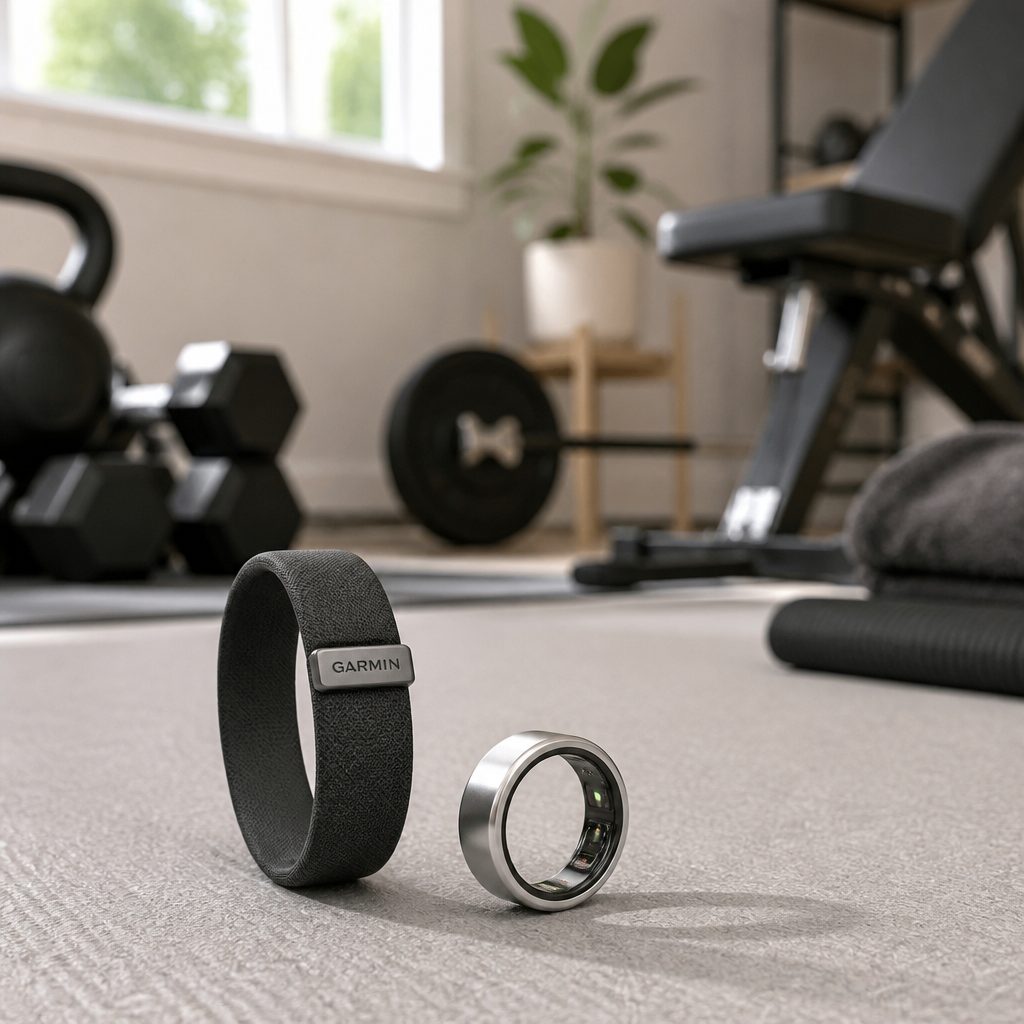
The right screen-free tracker is the one that fits your real routine: a near-invisible ring for recovery-led wear, or a flexible band for gym sessions and Garmin training data.
Final verdict: choose the body location that suits your routine
Oura Ring 5 was the better buy for the recovery-first person. It was remarkably light, genuinely discreet, water resistant to 100 m with IP68 protection, and its finger-based approach delivered the more persuasive sleep case in the 10-night comparison. If you want a wearable that quietly helps you understand sleep, readiness, temperature trends and broader health patterns, it was the more refined specialist.
Garmin CIRQA was the better buy for the training-first person. Its upper-arm option made far more sense around weights, its 80+ activity profiles and heart-rate broadcasting gave it genuine exercise utility, and its 10–11 day battery result was excellent. Crucially, it did all of that without a compulsory subscription.
So the decision was pleasantly simple. Pick Oura Ring 5 if you want the smallest, most sleep-focused and health-guidance-led wearable, and you are content with the membership model. Pick Garmin CIRQA if you want a screen-free recovery tracker that works harder in the gym, integrates with Garmin's training world and lets you keep the useful data without another recurring bill. Finger or wrist? In this case, it was really recovery specialist or flexible trainer.