
Garmin CIRQA vs Amazfit Helio Strap Pro: Which Screen-Free Band for HYROX?
Two screen-free fitness bands, two very different interpretations of hybrid training. Garmin CIRQA is the calm, broad-shouldered all-rounder with serious heart-rate broadcasting, whilst Amazfit Helio Strap Pro goes all-in on the awkward, brilliant specifics of a HYROX race. The better choice depends on whether you want to track your whole life, or dissect your wall balls.
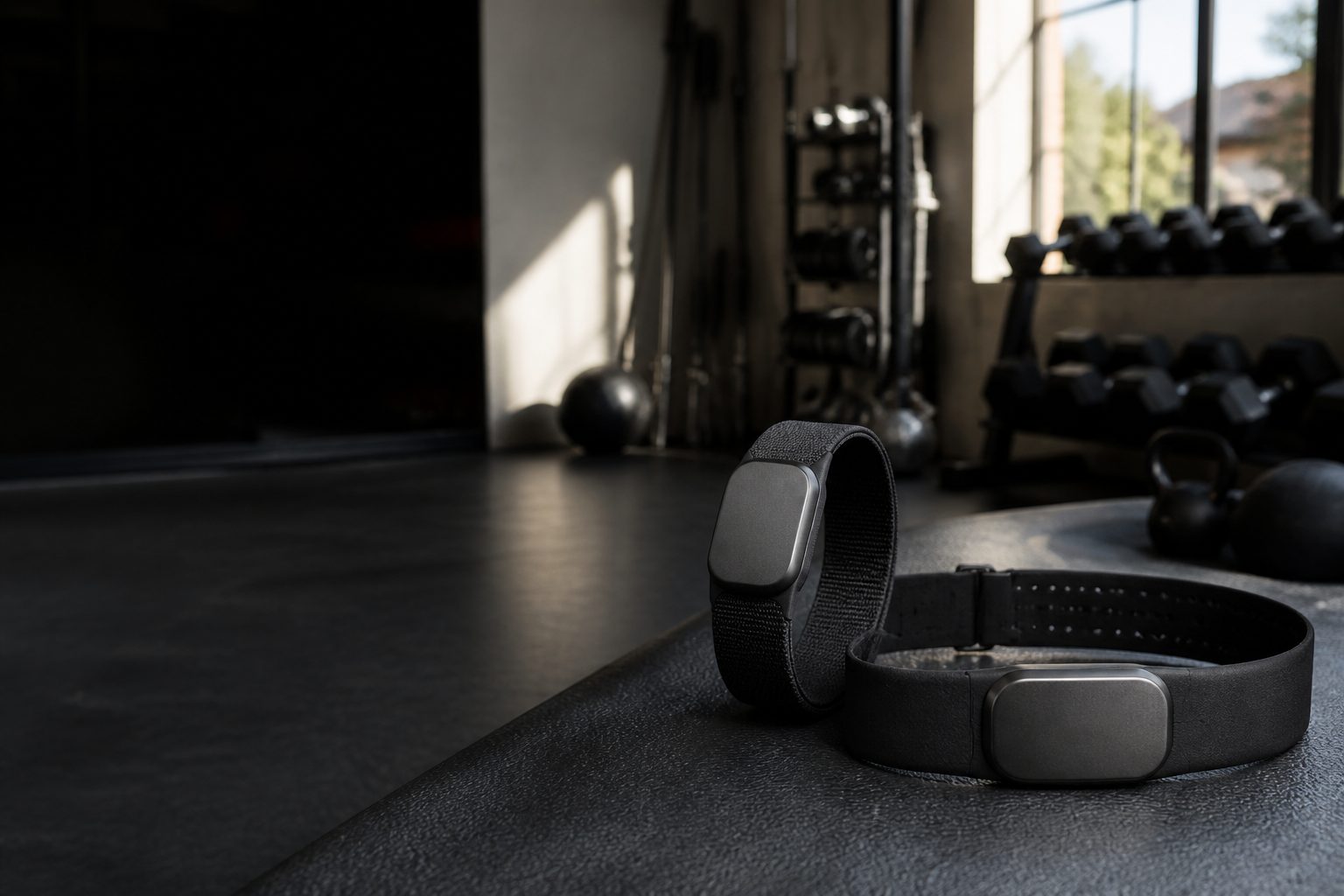
Garmin CIRQA keeps the formula simple with one screen-free tracker, whilst Amazfit Helio Strap Pro adds a dedicated waist sensor for HYROX-specific movement analysis.
 By James Oduya · Staff Writer & Home Gym Columnist · Updated September 12, 2026
Garmin CIRQA and Amazfit Helio Strap Pro: the short version
HYROX does not make choosing a wearable particularly easy. You need reliable heart-rate data during running, sled work, carries and burpees. You want something that will not batter your wrist during kettlebell work. You may also want to send live heart rate to a treadmill, bike computer or training app. Then there is the question nobody can settle for you: do you simply want a good record of your effort, or do you want an electronic second opinion on every station?
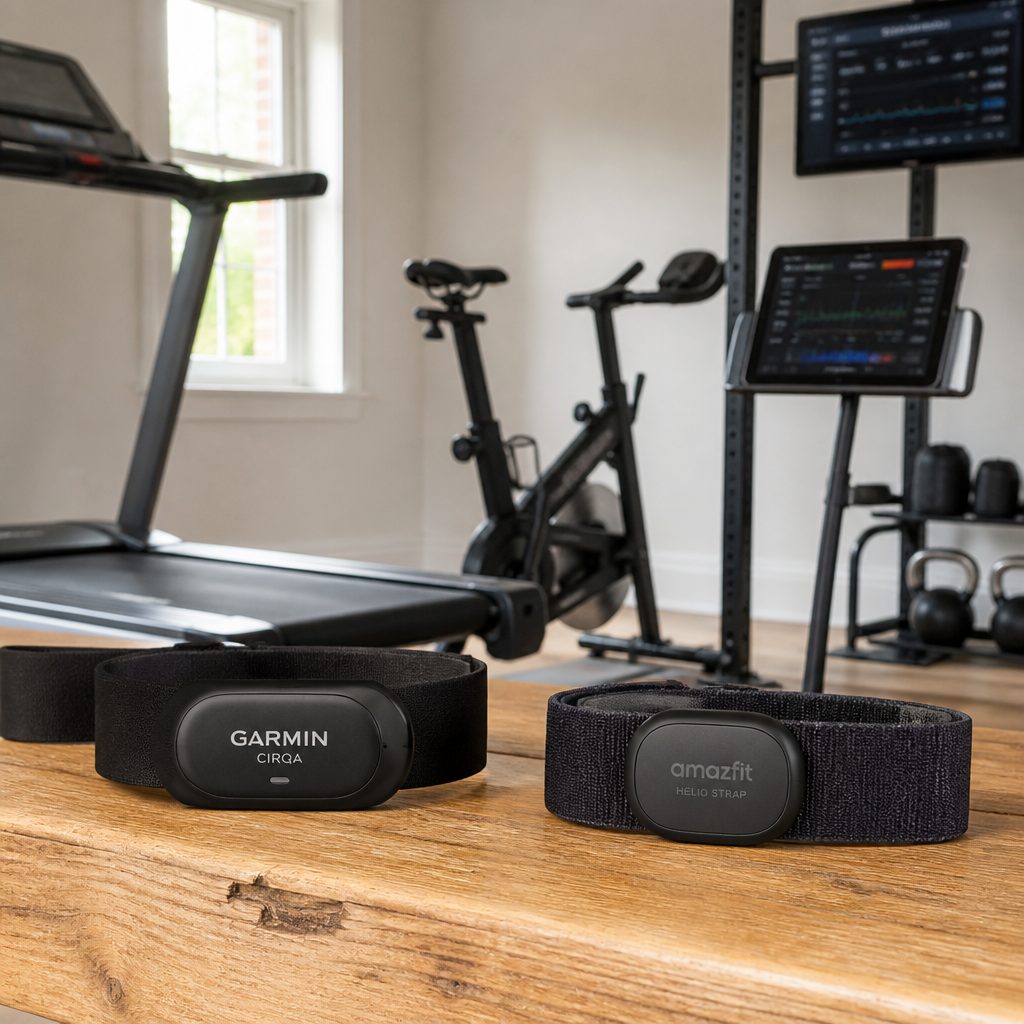
CIRQA's ANT+ and multi-device Bluetooth Smart broadcasting made it the more flexible choice for athletes who use treadmills, indoor bikes, head units and training apps together.
Garmin CIRQA and Amazfit Helio Strap Pro approached that question from opposite directions. CIRQA, announced on 21 July 2026, was Garmin's first screen-free fitness band. It used one compact module, Garmin's Elevate Gen 4.1 optical sensor platform, a single button and Garmin Connect. Its pitch was familiar Garmin territory: continuous health information, training readiness, sleep tracking, more than 80 activities, and broad device compatibility without a compulsory subscription.
Helio Strap Pro was more unusual. Its standard arm-worn Helio Core Motion HR looked like a conventional screenless health band, albeit one designed to sit higher on the arm when you wanted the most secure exercise reading. The Pro system also included Helio Core Motion Waist, a separate 9-axis movement sensor worn centrally at the waist. During HYROX Race and HYROX Simulation modes, that second module attempted to split cardiovascular work from muscular load, assess movement at each of the eight stations and provide natural-language feedback afterwards. It was clever. It was also gloriously specific.
That makes this less about which band has the most features and more about which compromises you can live with. CIRQA is the more flexible companion across running, general gym work, sleep and ordinary life. Helio Strap Pro is the more ambitious bit of specialist kit for an athlete who is building training around HYROX and wants station-level context rather than another generic calorie total.
Neither model had a display. That is a feature, not an omission, if you are tired of a watch face blinking at you between sled pushes. You record, review and interpret the session in the accompanying app rather than squinting at your wrist mid-race.
At-a-glance specification comparison
Before getting into the sweaty details, here are the useful hard numbers. Both devices were properly light, water resistant to 5 ATM and designed for continuous use. The difference was that Garmin put its resources into one multi-purpose tracker, whilst Amazfit divided the job between an arm heart-rate sensor and a HYROX-only motion module.
| Feature | Garmin CIRQA | Amazfit Helio Strap Pro |
|---|---|---|
| Screen | No display; one physical control button | No display; vibration motor for alerts |
| Primary exercise sensor | Elevate Gen 4.1 optical heart-rate sensor | BioTracker 6.0 PPG arm sensor |
| Additional sensor | Accelerometer | 9-axis waist motion sensor for HYROX modes |
| Module dimensions | 27 x 47 x 9mm | 33.96 x 24.29 x 11.25mm including sensor base |
| Module weight | 14.8g | 11.4g |
| Typical battery claim | Up to 10 days | Up to 11 days |
| Workout catalogue | More than 80 activities | More than 50 sports modes |
| Heart-rate broadcast | ANT+ and Bluetooth Smart | Bluetooth 5.2 connectivity |
| HYROX station analysis | No dedicated station-level system | Yes, in HYROX Race and HYROX Simulation modes |
| Compulsory subscription | No | No |
There is a trap in reading a table like this, mind. "More than 80 activities" sounds instantly better than "more than 50", and for the person who runs, rows, walks, lifts, does yoga and occasionally remembers to stretch, it probably is. But the Helio Pro's waist sensor was not trying to win an activity-counting contest. It existed to say something much more pointed about your HYROX technique and muscular cost. Whether that is useful to you is the central question here.
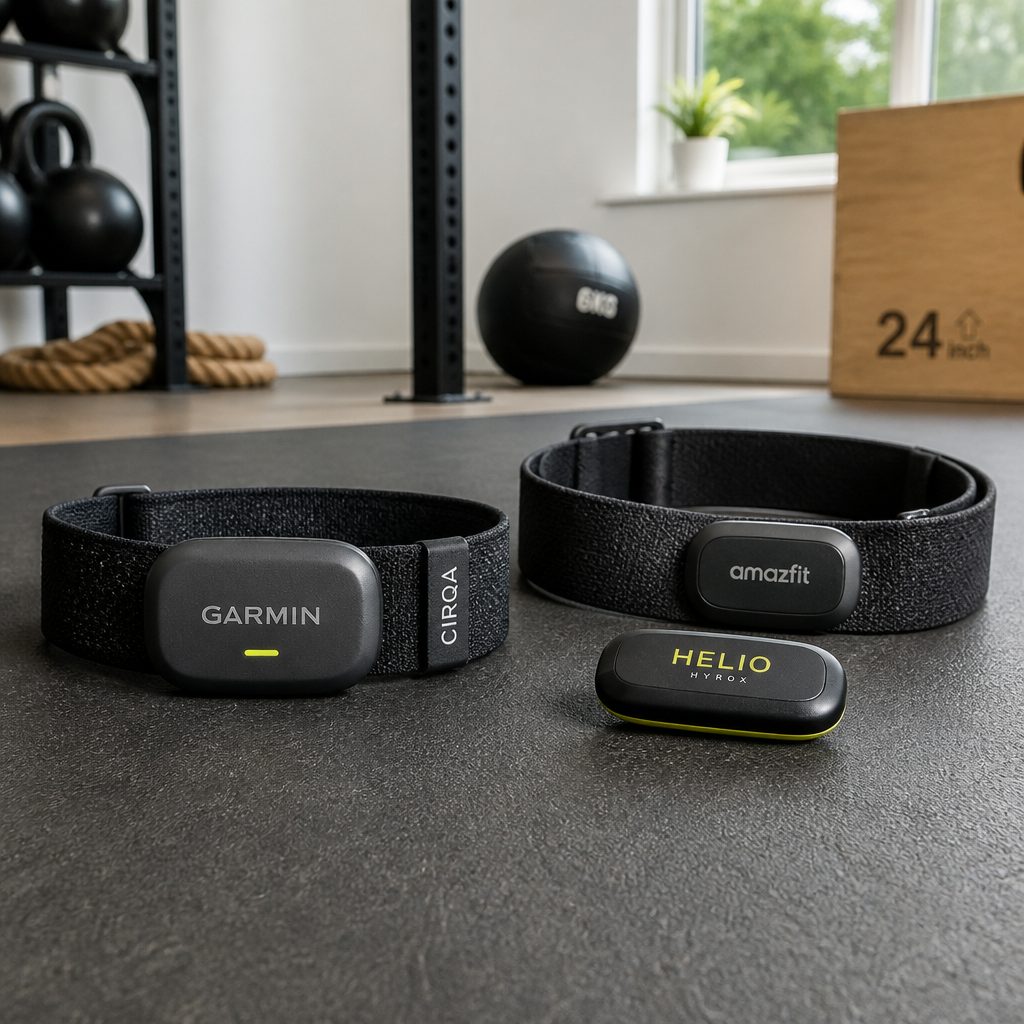
The two systems shared the same screen-free appeal, but CIRQA concentrated everything in one module while Helio Strap Pro made room for a separate waist-mounted HYROX sensor.
Screen-free design and comfort under load
Neither band had a screen, so neither could tempt you into checking notifications whilst you were meant to be recovering between intervals. Wonderful. Both pushed the important interpretation into a phone app, and both used discreet physical feedback rather than a bright little rectangle. For HYROX, where your hands, wrists and forearms are already busy with sled ropes, kettlebells, dumbbells and sandbags, that restraint made sense.
CIRQA's module measured 27 x 47 x 9mm and weighed 14.8g on its own. The fabric wrist strap was 24mm wide and used 14mm quick-release pins. The S/M version fitted wrists from 120mm to 200mm, whilst L/XL covered 145mm to 240mm. Garmin also allowed wrist and upper-arm wearing, which matters more than it sounds. A wrist strap can be perfectly comfortable during a run, then start to feel like a small hostage situation during repeated kettlebell cleans. Moving the sensor up to the bicep gets it away from pressure points and often improves optical heart-rate stability during dynamic exercise.
Helio Strap Pro's arm module was lighter at 11.4g. The supplied system included a wristband and separate armbands, with a 22mm nylon strap fitting 145mm to 205mm. Its upper-arm arrangement was not merely a style choice. Amazfit positioned the sensor closer to the heart, and upper-arm optical tracking generally has an advantage in movement-heavy exercise. There is less wrist flexion, fewer abrupt changes in skin contact and less chance that gripping a handle has just compressed the very area trying to measure blood flow. Science can be annoyingly sensible like that.
The waist component is the big practical difference. A central waist position is sensible for tracking whole-body movement patterns through lunges, rowing, carries and wall balls. It is also another thing to fit before training. That is fine for a planned simulation session. It is less appealing if your usual workout begins with "I'll just warm up for ten minutes" and somehow becomes a full session.
Garmin CIRQA strengths
- One compact tracker handles ordinary life, sleep, running and gym sessions.
- Wrist and upper-arm wearing options suit athletes who dislike watches during lifting.
- The 24mm fabric strap and quick-release fitting make it a flexible daily-wear design.
- A physical button gives you a direct way to control activity recording.
Amazfit Helio Strap Pro trade-offs
- Using the full HYROX system means fitting and calibrating an additional waist module.
- The waist sensor did not function as a general daily health or activity tracker.
- Its specialist focus will be excessive for someone who only does occasional hybrid workouts.
- Automatic workout detection could be overly eager, which is not ideal for clean training records.
Heart-rate accuracy: where the arm position matters
For a HYROX athlete, heart rate is not just a calorie number. It helps you learn whether you went out too hard on the first kilometre, whether sled push work destroyed your ability to run efficiently, and whether your so-called threshold session was actually spent far beyond threshold. If the sensor reads badly, all the readiness graphs and recovery language in the world become polished nonsense.
Both bands had a sensible route to better workout readings: wear them on the bicep. Upper-arm optical sensors generally produced heart-rate-strap-level accuracy and could often exceed a chest strap in awkward conditions. Chest straps are excellent tools, but they are not magic. A dry strap in cold weather can misbehave, whilst an excessively sweaty strap can produce artefacts in hot conditions. Anyone who has looked down to find an absurd heart rate halfway through an easy warm-up will recognise the genre.
Garmin used Elevate Gen 4.1, with continuous heart rate, Pulse Ox, skin temperature and stress derived from heart-rate variability. It also calculated HRV status, VO2 max, training status and training readiness. This gave CIRQA a fuller Garmin-style training picture, especially if you wanted exercise data to inform the rest of the week rather than only grade one session. It was a mature, broad health-and-training system.
Amazfit used BioTracker 6.0 PPG in the Helio Core Motion HR. It continuously tracked heart rate, SpO2, sleep, stress and HRV, then presented readiness through HybridCharge. The arm sensor worked independently across its 50-plus sport modes, so you did not need the waist module for a normal run or gym workout. That distinction is important. Helio Strap Pro was not useless outside HYROX; rather, its cleverest second sensor was deliberately dormant outside its two HYROX modes.
The sensible HYROX setup
If you own either band and care about workout heart rate, use the upper-arm position for your hard sessions. Wrist placement is convenient, but HYROX asks for repeated gripping, flexing and impact. Moving the optical sensor above the elbow is a small adjustment that can make a large difference to signal consistency.
There is no reason to assume one optical platform automatically beats the other in every body type, every temperature or every exercise. Fit, placement, skin contact and motion all matter. What can be said is that both products gave serious hybrid athletes a way to avoid a chest strap without accepting wrist-only tracking as the only option. Garmin's advantage lay in what it did with the signal across its wider training ecosystem. Amazfit's advantage lay in combining that signal with lower-body and torso movement context when you entered HYROX mode.
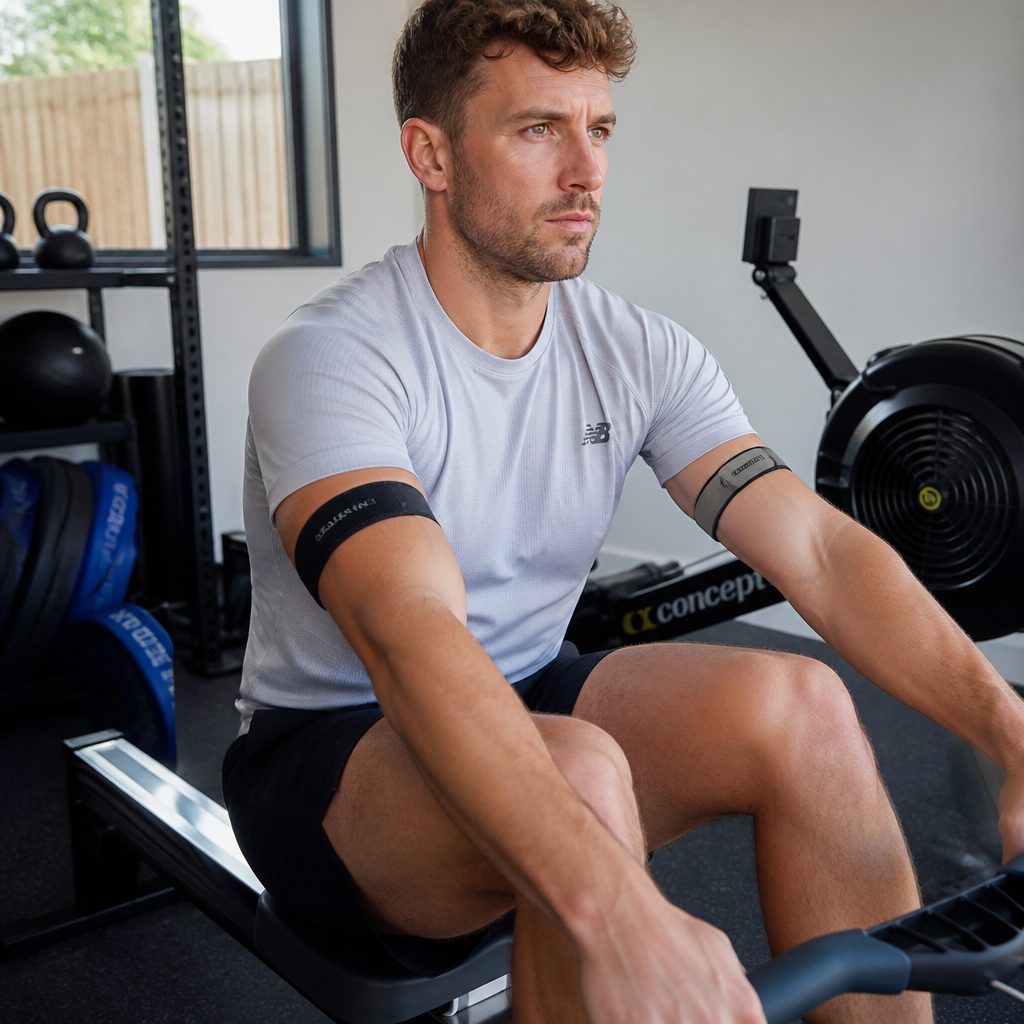
Upper-arm positioning was the sensible choice for both trackers during high-grip work, helping the optical sensor avoid the disruption caused by repeated wrist movement.
HYROX station tracking: Garmin CIRQA versus Amazfit Helio Strap Pro
This is the section where Amazfit Helio Strap Pro earned its name. Garmin CIRQA could log a HYROX-style workout as an activity and provide the usual heart-rate, training-load and recovery picture. It could be a very good companion for the work. But it did not have a dedicated second sensor intended to identify the muscular demands of each station. Garmin's answer was the athlete's broader training history. Amazfit's answer was, effectively, "let's look at what happened at the sled pull".
With Helio Core Motion Waist worn at the centre of the waist, Helio Strap Pro delivered a cardio-versus-muscle exertion split, per-station movement evaluation and natural-language feedback for each of HYROX's eight stations. That could make post-session review far more useful than a single average heart-rate figure. A high heart rate tells you that a session was hard. It does not tell you whether your running efficiency fell apart after farmers carry, whether the lunges became increasingly expensive, or whether one station created a disproportionate muscular hit.
For a competitor preparing for a race, that extra context could help shape training. You might notice that your heart rate recovered acceptably after a hard sled but that your muscular load stayed stubbornly high into the following run. You might use that finding to programme more compromised running, rethink pacing, or simply accept that those sandbag lunges are still a personal insult. The key is not that the band magically coaches you to a podium. It is that it gives you a more station-aware conversation with your training data.
There were caveats, and they were not small. The waist module worked only in HYROX Race and HYROX Simulation modes at launch. Before every session, it required calibration. Outside those modes, it had no standalone health or activity-monitoring function. It was not a second general-purpose tracker that happened to be capable of HYROX analysis. It was a dedicated instrument for a very particular job.
The full two-device setup also worked only with Amazfit Balance 3 and Balance Ultra at launch. That requirement mattered enormously. If you did not use one of those watches, the Pro system's defining feature was simply not part of your setup. CIRQA had a much less dramatic proposition: pair it with your phone, use connected GPS when needed, and get on with training. Less exotic, certainly. Less restrictive, also certainly.
Running segments between stations
CIRQA gave you continuous heart-rate and connected-GPS context across the whole session. Helio Strap Pro added a muscular-load lens designed to show how station work affected the running that followed.
Strength-heavy stations
The waist sensor's purpose was to evaluate movement at stations rather than merely record cardiovascular strain. That is most relevant around sleds, carries, lunges and wall balls, where a wrist tracker can only see part of the story.
Post-session review
Garmin leaned into familiar readiness, HRV, VO2 max and training-status metrics. Amazfit leaned into a cardio-and-muscle split with natural-language station feedback. One is wider; one is more event-specific.
Everyday health tracking and recovery context
Most of us do not train HYROX seven days a week, regardless of what the Instagram montage suggests. A screen-free band has to earn its keep on easy runs, dog walks, desk days, rest days and sleep. On this broader brief, Garmin CIRQA was the easier recommendation.
CIRQA continuously tracked heart rate, stress, respiration, Pulse Ox and skin temperature. It also provided comprehensive sleep-stage tracking, automatic nap detection, Body Battery, sleep score alerts, HRV status, training readiness, VO2 max and training status. That is a substantial collection of metrics for a product with no screen and no compulsory monthly fee. The app had to do the talking, but Garmin's idea was clear: the band should contribute to a joined-up picture of how you are coping with life and training.
For a hybrid athlete, that matters. You might not need an app to tell you that your legs are tired after a full HYROX simulation. You may, however, find it useful when sleep, stress and recent training strain all point in the same slightly alarming direction. CIRQA's strength was that it treated your Wednesday office day, Thursday sleep and Saturday session as connected parts of the same story.
Helio Core Motion HR also covered the major bases: continuous heart rate, SpO2, sleep, stress and HRV, with HybridCharge as Amazfit's readiness score. The arm module functioned as a genuine all-day wearable and supported more than 50 sport modes, plus automatic detection of 30 movements. Its data could sync through Zepp and share with platforms including Strava, TrainingPeaks, adidas Running, Runna, komoot, Relive and Apple Health. That is a useful ecosystem for athletes who already keep their training records in more than one place.
The annoyance was automatic detection sensitivity. The Helio band's auto-detection could trigger with minimal activity; one reviewer's observation that it might react to something as little as looking at a bike neatly captures the issue. Automatic detection is meant to save you from forgotten recordings, not produce a small archive of phantom workouts. If clean training data matters, it is safer to start the correct mode deliberately.
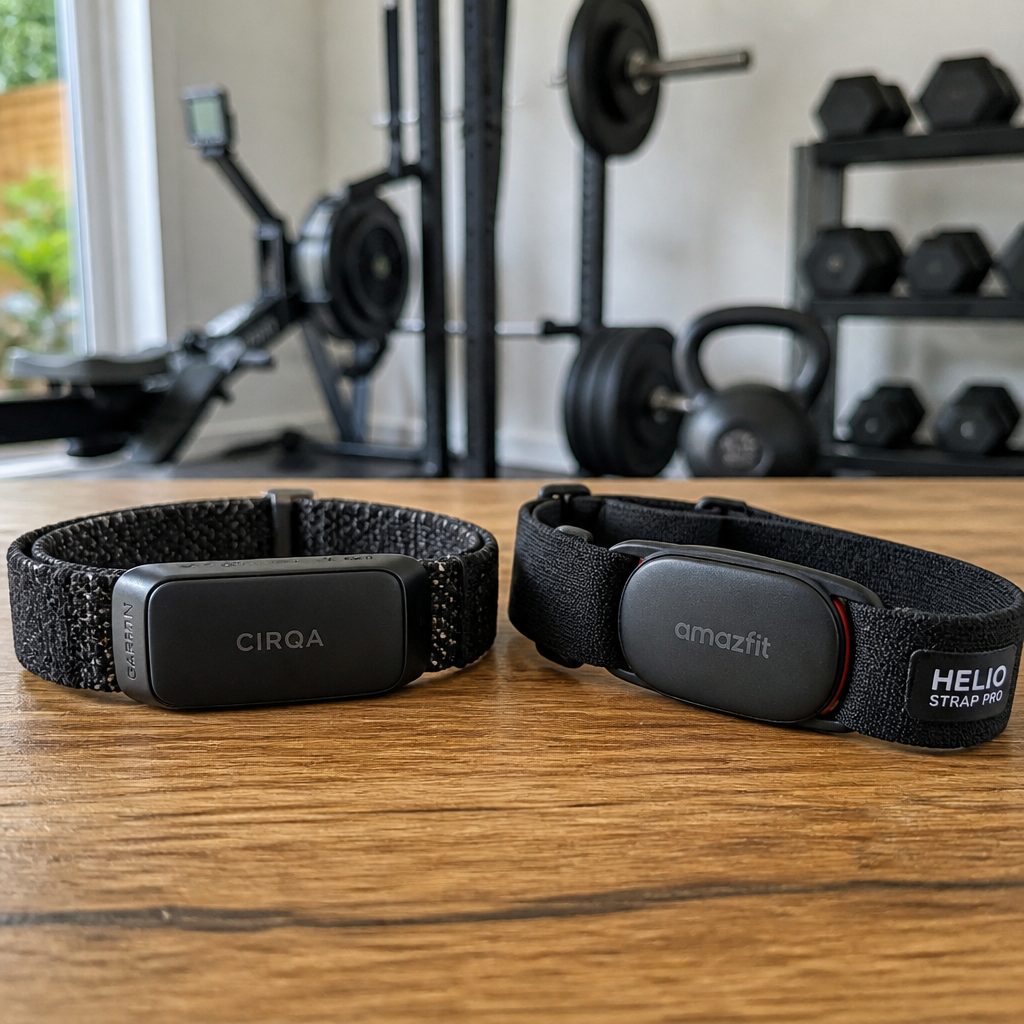
For ordinary sleep, recovery and daily health monitoring, CIRQA's broader Garmin metrics made it the more natural all-day companion; Helio's specialised waist sensor remained focused on HYROX sessions.
Battery life and charging practicality
Neither product should make charging a daily ritual, which is exactly as it should be. Garmin claimed up to 10 days from CIRQA, whilst Amazfit claimed up to 11 days from Helio Strap Pro under typical conditions. That one-day difference is not worth losing sleep over. The more meaningful distinction was how each system behaved when you asked it to track hard sessions as well as ordinary life.
CIRQA consumed roughly 1% to 2% battery per hour in workout mode. If you somehow kept it in active workout tracking around the clock, that worked out at roughly four days. Nobody sensible will do that, but it gives useful context: long training sessions and regular recording have a real effect, even if normal mixed use gets much closer to Garmin's headline claim.
Helio Strap Pro had a 232mAh battery and used a magnetic charging head. You could connect any USB-C cable to it, with charging taking under two hours. That is a small but genuinely useful detail in a kit bag. A proprietary cable is easy to misplace, particularly if you are the sort of person who can successfully prepare gels, trainers, towel, warm layer and race belt, then somehow leave the charger beside the kettle. Garmin used a proprietary Garmin charging port with USB-C at the other end. It was tidy enough, but less universal.
The fair conclusion is a draw with different conveniences. Helio's USB-C-friendly magnetic head was the better travel arrangement, and its claimed 11 days marginally edged Garmin's 10. CIRQA gave clear workout-drain context, which is useful if you are recording lots of longer sessions. In either case, a once-a-week-ish charging habit is far more realistic than another nightly device routine. Your phone already has that job. It does not need an assistant.
Heart-rate broadcasting and gym compatibility
For many serious gym-goers, live broadcasting is the quietly decisive feature. You may use a treadmill that displays Bluetooth heart rate, an indoor bike, a rowing setup, a training app or a Garmin head unit. If a band can send dependable live data to the kit you already use, it stops being merely a wellness tracker and becomes part of your actual training setup.
Garmin CIRQA was exceptionally strong here. It broadcast heart rate over ANT+ and Bluetooth Smart. It supported three simultaneous Bluetooth connections, plus the paired phone, and unlimited ANT+ connections. That is more flexibility than most athletes will ever need, but it is reassuring flexibility. You can run with a phone, see heart rate on compatible gym equipment and feed another compatible device without constantly re-pairing things like you are managing a tiny, sweaty IT department.
ANT+ remains particularly useful in multi-device sporting environments, whilst Bluetooth Smart keeps CIRQA relevant to a vast range of phones and gym equipment. If you already use Garmin hardware or train in an environment with ANT+ support, the case for CIRQA becomes straightforward. Its broadcasting specification was built for people who take live training data seriously.
Helio Strap Pro used Bluetooth 5.2 and sat within the Zepp ecosystem, with data sharing to the supported platforms listed earlier. That will suit a great many users, particularly those whose post-workout routine runs through Strava, TrainingPeaks, Runna or Apple Health. But the supplied connectivity information did not give it the same multi-connection and ANT+ broadcast proposition as CIRQA. If live display across several devices is your priority, Garmin was plainly the safer and more versatile choice.
Best pick for live gym heart rate
Choose Garmin CIRQA if you regularly broadcast heart rate to several devices or rely on ANT+. Its support for three concurrent Bluetooth connections, a paired phone and unlimited ANT+ connections was unusually accommodating for a display-free band.
Connected GPS, sports modes and training platforms
CIRQA had no onboard GNSS, so distance and pace came from connected GPS through a paired phone. That is not a deal-breaker for HYROX, where the running happens indoors or on a defined course, and it makes little difference to gym work. It does matter if you expected a completely phone-free outdoor running tracker. You would not get that here.
In return, Garmin offered more than 80 activities, from running and walking to yoga and beyond. The wider mode list fit the product's identity. CIRQA was designed for the athlete who might do a tempo run on Tuesday, a lunchtime mobility session on Wednesday, strength work on Friday and a long outdoor walk on Sunday. It did not force all that activity through a narrow hybrid-racing lens.
Helio Strap Pro's arm sensor had more than 50 sport modes and automatic recognition for 30 movements. That was plenty for mainstream fitness use. Its Zepp integration and sharing support made it easy to keep a training diary in the platforms many runners and gym-goers actually use. Strava, TrainingPeaks, adidas Running, Runna, komoot, Relive and Apple Health created a broad export and sharing picture, especially useful if a coach wants data in one place whilst your friends expect kudos in another.
The difference is philosophical. Garmin's sports catalogue and connected GPS catered to someone building an all-round active life around a phone-linked tracker. Amazfit's app and supported platform list catered well to a multi-app athlete, while its Pro hardware went further into one niche event format. Neither is wrong. CIRQA is less exciting but more adaptable. Helio Strap Pro is more exciting if HYROX is the thing you are actually training for.
Garmin CIRQA and Amazfit Helio Strap Pro: value without subscriptions
Both products avoided one of the least charming habits in modern fitness tech: selling you a wearable, then acting surprised when you want to see your own information. Garmin CIRQA included its core health, sleep and training metrics without a compulsory subscription. Garmin Connect+ existed for extra features such as a workout library, advanced coaching, breathing exercises and LiveTrack, but the essential tracking proposition did not sit behind a mandatory monthly payment.
Amazfit Helio Strap Pro also operated without a monthly subscription fee. You got the standalone health and sport functions of Helio Core Motion HR, plus the dedicated HYROX system, without a recurring charge being required to keep it useful. For anyone trying to control the steady creep of subscriptions into every corner of household life, both deserved credit for that alone.
Value, then, comes down to use. CIRQA gave you a broad suite of health metrics, multi-device heart-rate broadcasting, Garmin's familiar readiness and training tools, 80-plus activity modes and a design that can remain on your body every day. It has value if you want one screen-free wearable for nearly everything.
Helio Strap Pro justified itself only when its specialist function mattered. If you routinely train for HYROX, perform simulations, obsess constructively over station execution and already use a compatible Balance 3 or Balance Ultra, its waist sensor was doing something CIRQA simply did not do. If you only attend a hybrid class once in a while, however, the extra setup and inactive-outside-HYROX waist module can feel like owning a very clever tool with one very particular socket size.
Best value case for Garmin CIRQA
- It combined daily health tracking, sleep data, readiness metrics, broad activity coverage and serious HR broadcast support in one unit.
- It was the more sensible fit for athletes who mix HYROX with running, lifting, walking and general fitness.
- Optional Connect+ features did not prevent the core training and health tools from being useful without a subscription.
Best value case for Amazfit Helio Strap Pro
- It added station-level HYROX movement and muscular-load feedback no ordinary one-sensor band could replicate.
- Its arm sensor remained useful for everyday sport, sleep, stress, HRV and readiness tracking.
- The full Pro advantage depended on using HYROX modes, calibrating each session and owning a compatible Amazfit watch.
Who should buy Garmin CIRQA or Amazfit Helio Strap Pro?
There was no universal winner here, and pretending otherwise would be the lazy version of this comparison. One band was better for collecting a wide, useful picture of a training life. The other was better for examining a HYROX session with the sort of detail that can make you reassess how you approach a station. Your decision should follow your actual habits, not the version of you who plans to become frighteningly organised next month.
Best all-rounder: Garmin CIRQA
Shop Garmin CIRQA on Amazon UK
Choose CIRQA if you want continuous health metrics, sleep tracking, readiness, more than 80 activity modes and a screen-free band that stays useful every day of the week.
Best for dedicated HYROX analysis: Amazfit Helio Strap Pro
Shop Amazfit Helio Strap Pro on Amazon UK
Pick Helio Strap Pro if station-by-station muscular-load and movement evaluation are meaningful to your race preparation, and you use a compatible Balance 3 or Balance Ultra.
Best for heart-rate broadcast: Garmin CIRQA
Its ANT+ support, Bluetooth Smart broadcasting and multiple simultaneous Bluetooth connections suited complex gym and endurance setups best.
Best for Zepp platform users: Amazfit Helio Strap Pro
It made the most sense for athletes already using Zepp, supported training platforms and Amazfit's compatible Balance watches.
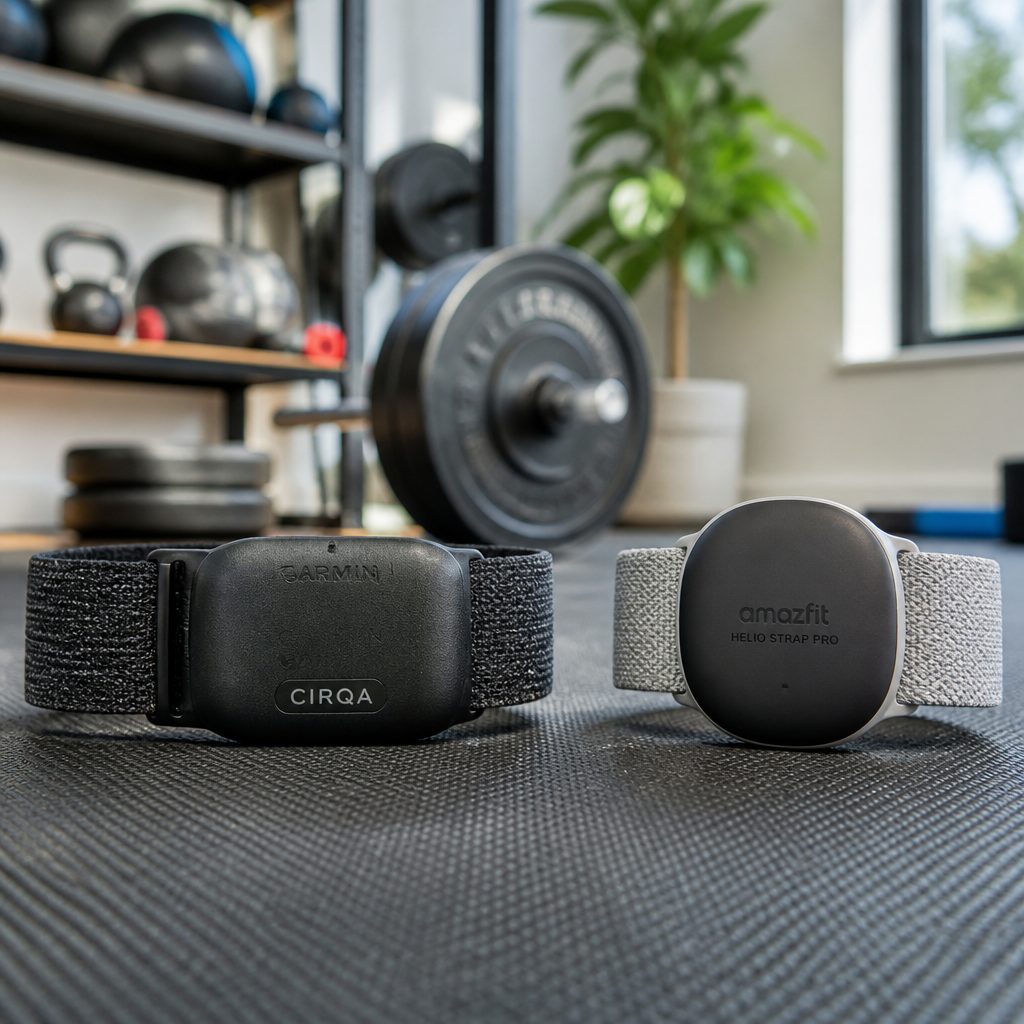
The better band depends on what you want to learn: CIRQA is the broader daily tracker, while Helio Strap Pro is the specialist choice for athletes analysing HYROX station performance.
Practical buying advice before choosing
First, be honest about your relationship with HYROX. If it is your primary event, if you regularly practise full or partial simulations and if you want to understand why one station ruins the next kilometre, Helio Strap Pro is genuinely distinctive. Its waist sensor was not a gimmick bolted on for a bullet point. It addressed a real blind spot in ordinary wrist and arm trackers: the inability to distinguish muscle cost and movement quality across specific work stations.
Second, check your watch situation before getting carried away. The full Helio two-device system worked only with Balance 3 and Balance Ultra at launch. That made it a much more conditional purchase than a normal screen-free band. The HR arm module could still work independently across more than 50 sport modes, but the reason to choose the Pro package was the extra HYROX sensor. Make sure that part belongs in your setup.
Third, think about broadcasting. If you train with a compatible treadmill, indoor bike, running app and Garmin equipment, CIRQA's ANT+ and three concurrent Bluetooth connections are not minor conveniences. They can remove an awful lot of pairing faff. A tracker that quietly works with everything is often more valuable than one that produces the most impressive-looking post-session panel.
Finally, do not underestimate the benefit of a band you are happy to wear at night. Sleep, HRV and recovery scores only become useful when the device is actually there collecting a consistent record. Both models were lightweight and 5 ATM rated, but CIRQA's single-module simplicity made it the easier set-and-forget option. Helio's arm sensor could do the same job. Its waist sensor, quite reasonably, belonged in the training bag until it was HYROX time.
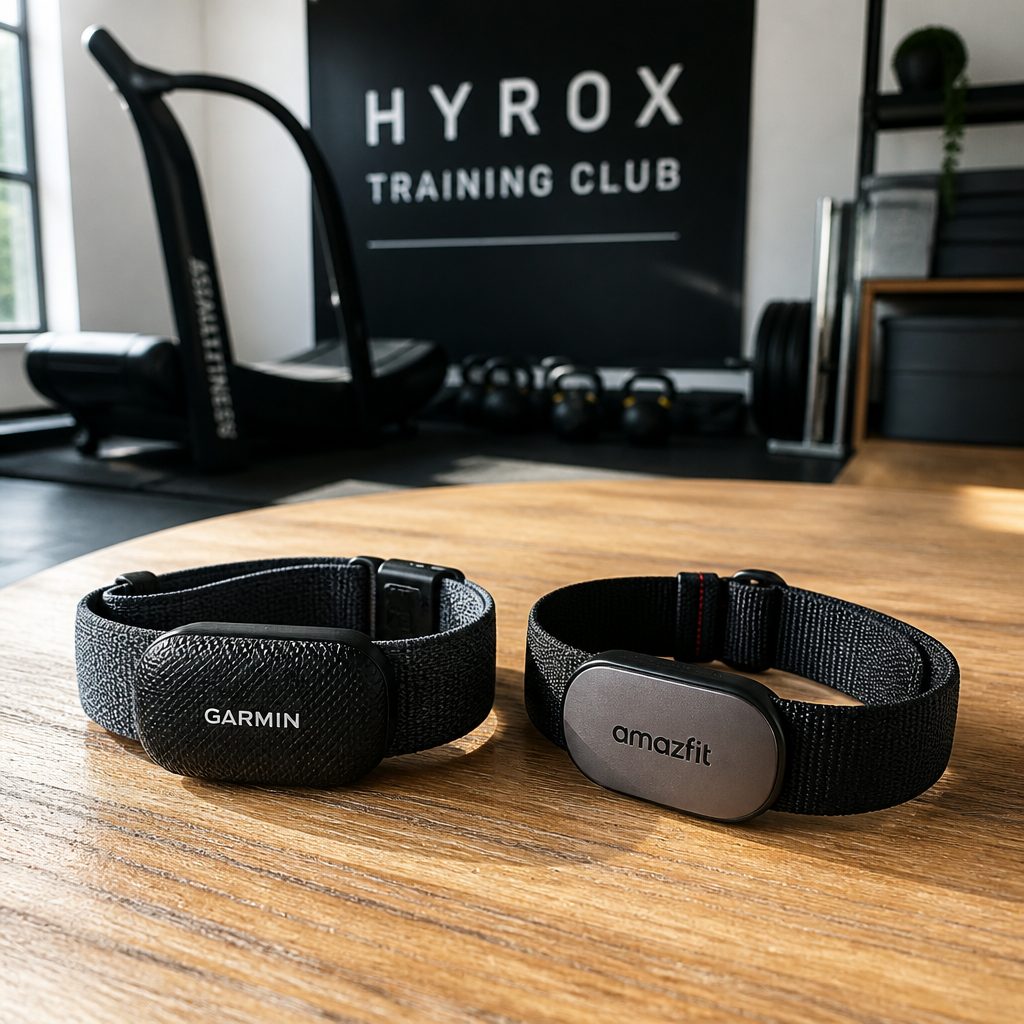
A calm, low-profile band can be easier to wear consistently than a smartwatch; the payoff is a fuller recovery picture when your hard HYROX sessions begin to accumulate.
Frequently asked questions
Final verdict: two smart answers to different HYROX questions
Garmin CIRQA was the better buy for most hybrid athletes. It was lighter on hassle, broader in daily use and unusually strong for heart-rate broadcasting. Its upper-arm option, 80-plus activity catalogue, training readiness, HRV status, sleep metrics and no-compulsory-subscription approach made it the screen-free band I would choose if HYROX was one important part of a varied training week.
Amazfit Helio Strap Pro was the better specialist tool for committed HYROX racers. Its two-sensor approach could provide muscular-load and movement context at each station that CIRQA could not offer. For someone using a compatible Balance 3 or Balance Ultra and regularly running simulations, that extra layer of feedback could be more useful than another broad readiness score.
Choose Garmin CIRQA if…
You want the most versatile screen-free band for training, sleep, everyday health tracking and live heart-rate broadcast across multiple devices.
Choose Amazfit Helio Strap Pro if…
You are deeply invested in HYROX, already sit in the compatible Amazfit ecosystem and want to study what each station costs your body rather than merely how hard the whole session felt.