
Amazfit Confirms Falcon 2 Leak as Brand Eyes Garmin's Crown
A code string buried in the Zepp app points to a Falcon successor, but the T-Rex Dual Solar has now emerged as the more likely candidate for Amazfit's final 2026 launch.
 By James Oduya · Staff Writer & Home Gym Columnist · Updated September 09, 2026
What you need to know
- App code from March 2026 and a regulatory filing point to an Amazfit Falcon 2, but no new evidence has surfaced since April
- The T-Rex Dual Solar (model A2570) has since cleared five regulatory bodies and is now considered the stronger candidate for Amazfit's next launch
- Amazfit's confirmed 2026 line-up already spans nine products, with at least one more needed to hit the 10-plus target cited by company sources
Falcon 2 surfaces in app code — but the trail has gone cold
Amazfit's next premium multi-sport watch appears to be in development, after code hidden inside the Zepp Health Android app pointed to a successor to the original Amazfit Falcon. The string SUPPORT_BIND_FALCON2025, discovered during a dig through app version 10.0.8 in March 2026, is the clearest public evidence yet that a Falcon 2 is real. A separate regulatory filing under model number A2564, referencing a 540 mAh battery — up from 500 mAh on the current model — adds a small but concrete hardware detail.
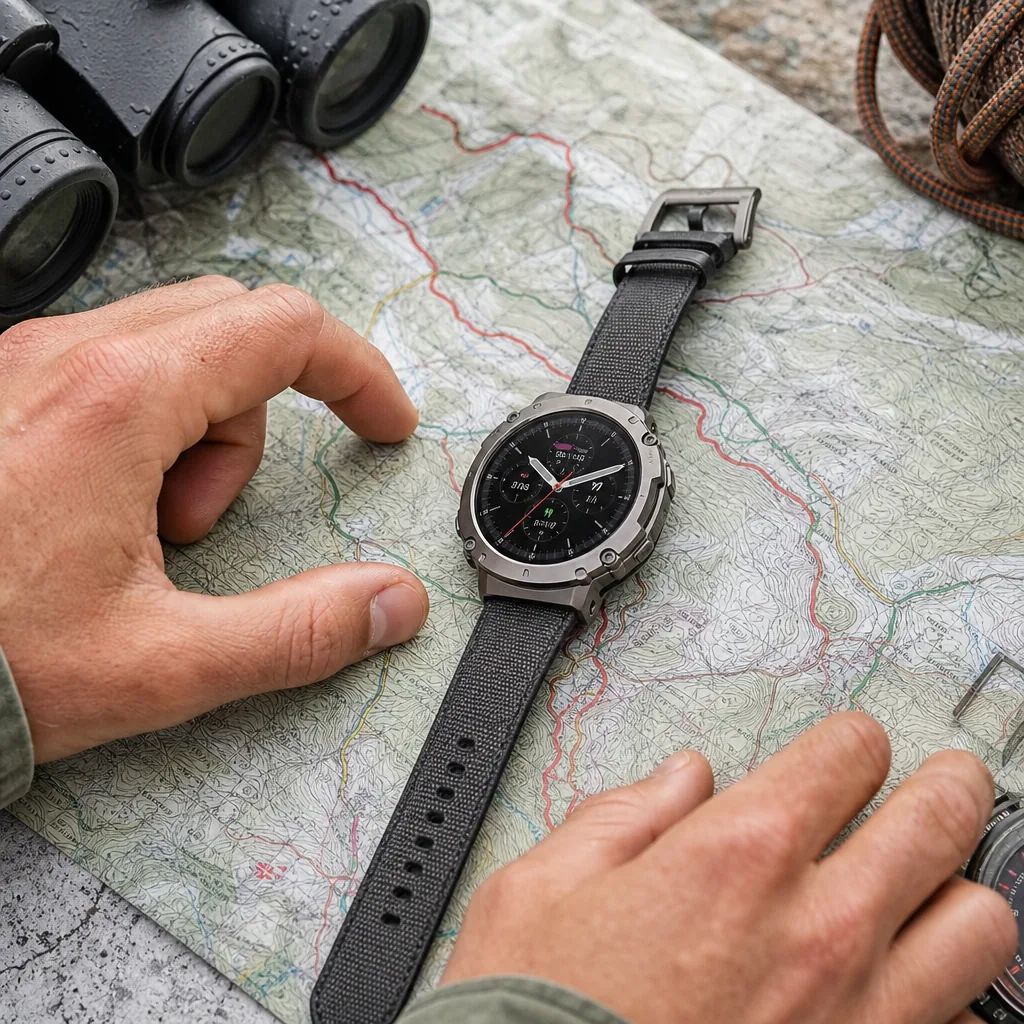
The "2025" suffix in that code string is telling. It suggests the device may have originally been earmarked for a launch last year before the project slipped. That reading is consistent with the fact that no new Falcon 2 evidence has surfaced since April 2026, and pricing remains unconfirmed.
The original Amazfit Falcon, launched in 2022, remains the brand's halo multi-sport watch: titanium unibody, sapphire glass, dual-band GPS, and 20 ATM water resistance, currently priced at $429.99. It competes directly with the entry tier of the Garmin Fenix range. The problem is that while the T-Rex and Cheetah lines have been refreshed repeatedly, the Falcon has now stood still for over three years.
The T-Rex Dual Solar is now the stronger story
Whatever the Falcon 2's eventual fate, a different device has quietly overtaken it as the most credible candidate for Amazfit's next launch. The T-Rex Dual Solar has cleared five separate regulatory bodies — Indonesia, South Korea, Malaysia, the Eurasian Economic Union, and the US FCC — all under model number A2570. Malaysia's SIRIM database approved the filing on 3 August 2026 and named the device outright. The FCC followed on 12 August 2026, confirming Wi-Fi, Bluetooth, and likely dual-frequency GNSS.
Zepp Health appears to be building a complete solar ecosystem around it: two solar panels, individual charging measurements per panel, a dedicated Solar Boost Mode, and temperature management. No launch date has been confirmed, and full pricing and specifications remain unknown.
Where the 2026 line-up stands
Zepp Health's chief financial officer Leon Deng estimated on the company's Q4 2025 earnings call that around nine Amazfit products would launch in 2026. Sources subsequently cited by specialist tracker the5krunner.com put the figure at ten or more. The confirmed launches so far are:
- Amazfit T-Rex Ultra 2 — February 2026, grade 5 titanium, $550
- Amazfit Cheetah 2 Pro — April 2026, marathon and road running
- Amazfit Cheetah 2 Ultra — April 2026, trail and mountain running
- Amazfit Bip Max — May 2026, entry-level, sub-$100
- Amazfit Balance 3 — June 2026, from £369.90 in the UK
- Amazfit Balance Ultra — June 2026, £599.90 in the UK, titanium only
- Amazfit Helio Strap 2 and Helio Ring 2 — confirmed, full feature sets not yet known
That brings the confirmed total to nine. At least one further launch is needed to clear the ten-or-more bar, and the Q2 investor call confirmed one or two more products are planned before the year is out.
Software catching up with the hardware
Alongside the new devices, Amazfit has pushed a substantial software update across its existing fleet. The Zepp app replaced its BioCharge and Readiness scores with a new metric called HybridCharge — a 0–100 daily energy score that adds subjective self-reported feelings to the biometric data the watch already captures. An Amazfit representative confirmed that ten existing smartwatches would receive HybridCharge, with the Active 3 Premium, Balance 2, Cheetah 2 Pro, Cheetah 2 Ultra, T-Rex 3, T-Rex 3 Pro, and T-Rex Ultra 2 already on the confirmed rollout list.
The Balance 3 and Balance Ultra also launched as the first devices running Zepp OS 6, which Zepp Health confirmed will eventually reach ten more existing watches. Stryd integration — real-time indoor pace from the popular running power metre — is live on the T-Rex 3 Pro and T-Rex 3, with further Amazfit devices to follow. The Cheetah 2 Ultra received a full structured HYROX suite alongside its first official Zepp OS 6 build.
On subscriptions, Deng was direct with investors: there are no plans to charge for core features. Training, recovery, and HYROX tools all remain free, even as sleep and stress subscription options already exist in the Zepp app.
The engineering challenge no one is hiding
Zepp Health's push upmarket has not been entirely smooth. Wang Huang told analysts that combining premium materials with a reliable antenna delivering excellent GPS performance is an engineering problem the company is still working through. CFO Leon Deng went further, admitting that the Balance 3's titanium and steel builds have proved difficult to manufacture at scale. Independent testing of the Balance 3 found GPS accuracy at 77 per cent, down from 85 per cent on the Balance 2 — a regression attributed to the new case and antenna design. If the Falcon 2 is to arrive as a serious Fenix rival, those are the numbers that will need to improve first.
Why it matters
For UK buyers, the big picture is that Amazfit is methodically climbing the premium ladder — and doing so at prices that undercut Garmin at almost every tier. If the Falcon 2 does eventually arrive above the £499 mark, it would land squarely against the Garmin Fenix entry tier, giving serious multi-sport athletes a credible alternative without the Garmin premium. Even if the Falcon 2 slips to 2027, the T-Rex Dual Solar's solar-assist tech and the software improvements already rolling out across existing devices mean the Amazfit ecosystem is becoming harder to dismiss as a budget compromise.