
Best Weight Plates for a Home Gym: Bumper, Rubber and Cast Iron Compared
Weight plates are wonderfully unglamorous right up until the wrong pair rattles your floor, fills a bar sleeve too soon or makes every lowered deadlift feel like a small structural survey. Here is how bumper, rubber-coated and cast-iron plates differ, plus the home-gym sets worth choosing for Olympic lifting, quiet training, compact strength work and proper competition-style lifting.
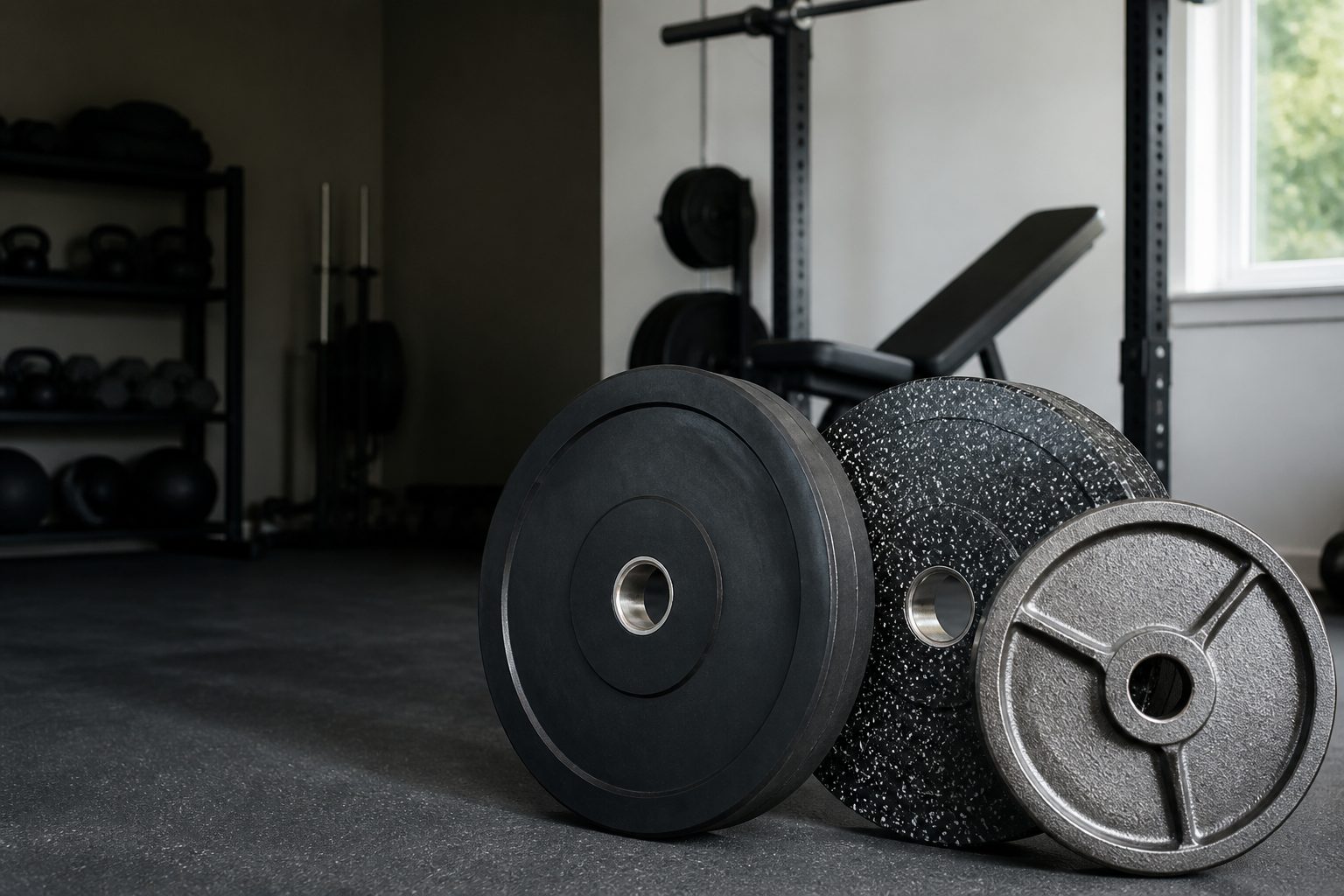
A sensible home-gym plate collection starts with the training you actually do, rather than the colour-coded stack that happened to look best in somebody else's garage.
 By James Oduya · Staff Writer & Home Gym Columnist · Updated August 27, 2026
Why the plate type matters more than most first-time buyers expect
A barbell and a pile of plates can look like the simplest shopping list in fitness. Metal goes on bar. You pick it up. Physics handles the rest. In practice, plates determine a surprising amount of how a home gym feels: how much noise leaves the room, whether you can lower a missed clean without panicking, how much weight your bar can physically hold and how nervy you become every time the bar meets the floor.
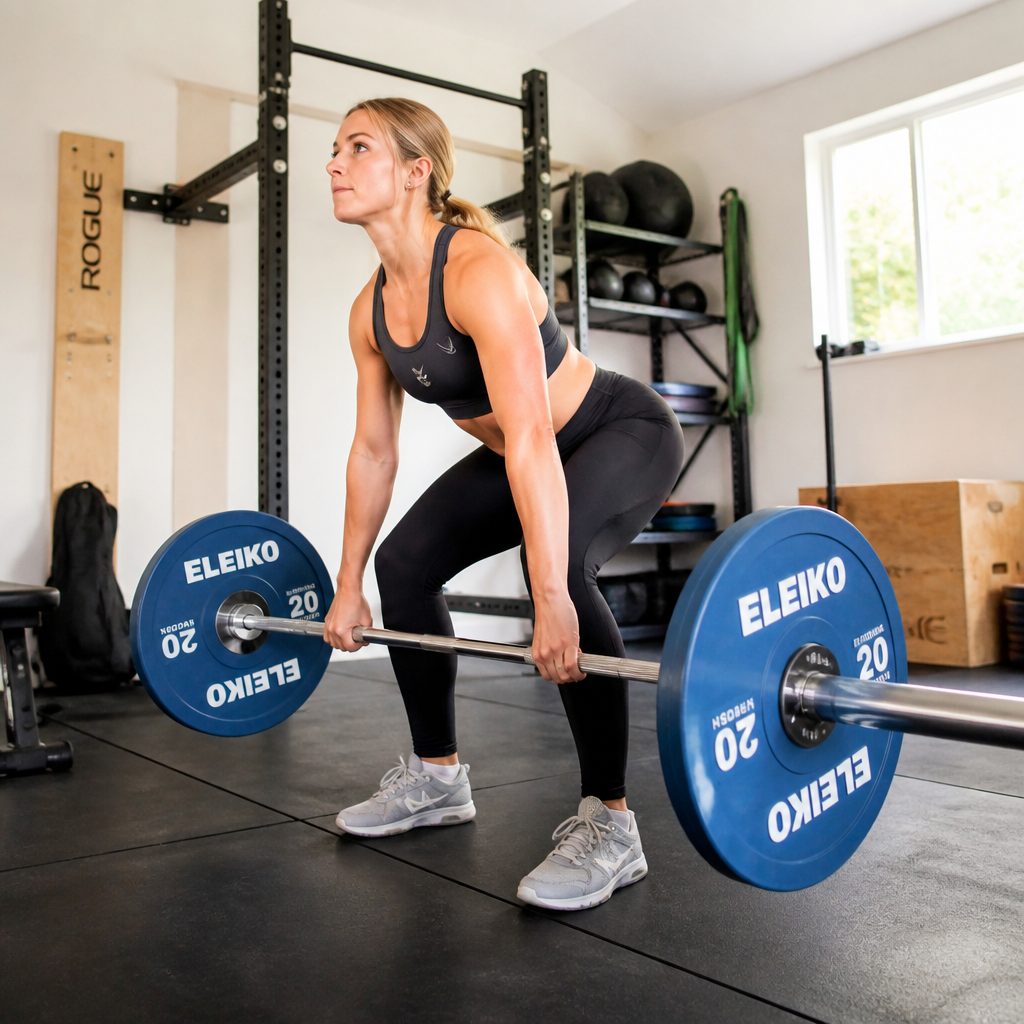
A bumper plate system is most useful where the bar may return to the floor quickly: Olympic-lift practice, functional fitness and demanding deadlift work are the obvious examples.
The first distinction is not branding. It is material and intended use. Bumper plates use rubber as their working outer body and are made to absorb impact. Cast iron is dense, compact and brilliantly straightforward, but it has no cushioning magic hiding inside it. Rubber-coated iron sits between those camps, retaining an iron core whilst using a thin rubber layer to reduce clatter and add some surface protection.
There is no universal winner. A lifter whose sessions are mostly bench press, squats and carefully controlled deadlifts has no pressing need to pay for the drop-friendly qualities of a full bumper collection. Someone practising power cleans in a converted garage, meanwhile, needs to treat dropping tolerance as a safety and usability feature rather than a nice little bonus. This is one of those purchases where being honest about your training pays off.
For nearly every serious home barbell setup, Olympic plates are the sensible starting point. They work with Olympic bars, which are the familiar larger-sleeve bars used for commercial strength training, functional fitness and weightlifting. Standard plates still have a place for light dumbbell work and compact starter equipment, but they are a separate ecosystem. Mixing the two is not a clever money-saving hack. It is mostly a way to acquire objects that do not fit each other.
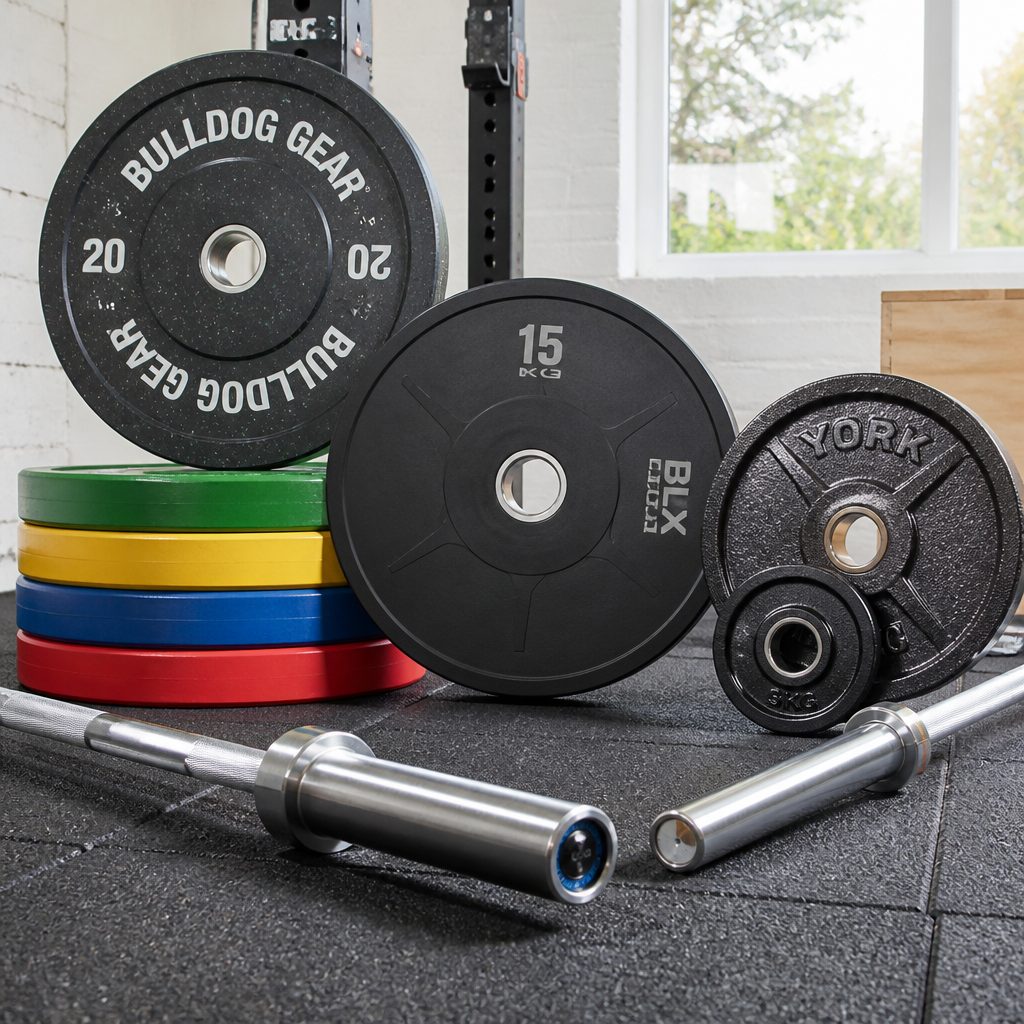
Olympic plates use a roughly 50mm centre opening and belong on Olympic bar sleeves; standard plates use a smaller bore and need matching standard bars or dumbbell handles.
Bumper, rubber-coated and cast iron: the practical differences
Bumper plates are often casually described as "rubber weights", which is true in the same way that a bicycle is "a thing with wheels". The important bit is what the rubber is there to do. It cushions impact when a loaded bar comes down hard, helping protect the plate, barbell and floor. Dense virgin-rubber bumpers usually aim for controlled, low bounce. Crumb-rubber bumpers use recycled rubber, tend to be more forgiving on impact and commonly bounce more.
For movements that finish overhead or receive the bar dynamically — snatches, cleans, jerks and many functional-fitness sessions — bumpers are the appropriate category. They also make sense for conventional deadlifts when the bar may come down less gently at the end of a demanding set. That does not mean a bumper plate turns bare concrete into a lifting platform. It merely means the plate is designed to be part of a more forgiving system. Flooring still matters. So does basic judgement, which unfortunately remains sold separately.
Cast iron plates are the old-school answer and still a very good one. Iron puts a great deal of weight into a relatively slim plate. That leaves more usable sleeve length if you are building a heavy barbell, and it makes storage pleasantly compact. The trade-off is straightforward: iron does not cushion a drop. Smaller iron plates are also smaller in diameter, with plates of 35lb or lighter not reaching the height of a 45lb plate. If a light iron plate is the only plate touching the ground during a deadlift, it takes the impact directly. Not ideal.
Rubber-coated iron is the compromise that works well for plenty of conventional strength rooms. A thin rubber coating, typically described as 2mm to 5mm, softens contact noise and provides some surface protection without the bulk and expense of a full bumper. It is still not a drop plate. Think of it as a quieter, friendlier iron plate, not a bumper that has put on a smart jacket.
Bumpers give every loaded lift a proper landing surface
Competition-style bumper plates maintain a 450mm diameter across the relevant range, so the bar is supported at a consistent height from the floor. Their thickness changes with the denomination, not their diameter.
Iron wins when collar space matters
Compact cast iron suits lifters who want to fit more weight on a bar or simply prefer an uncluttered plate tree. It is excellent for controlled lifts and poor for dramatic endings.
Flooring remains part of the purchase
A drop-rated plate is not a licence to throw a barbell around on an unprotected surface. Consider the floor, the room below, your bar and the amount of repeated impact involved.
Olympic versus standard bore: make this decision before buying anything
The bore is the hole in the middle of the plate, and it is very much not a minor measurement. Olympic plates have a centre opening around 2 inches, commonly expressed as 50mm or 50.4mm. Olympic bore tolerance is generally a functional range of 50.0mm to 51.0mm from a nominal 50mm opening. They fit the sleeves of Olympic barbells.
Standard plates usually use a 30mm bore and are intended for standard barbells with shafts around 25mm to 29mm, plus compatible dumbbell handles. The smaller centre opening is why a standard plate will not slide over an Olympic sleeve. Conversely, an Olympic plate has far too much room on a standard bar. A collar cannot turn that mismatch into a good idea.
If you already own a bar, measure it or check its specification before you buy plates. Do not rely on the word "Olympic" in a marketplace listing alone, particularly if the bar was part of an inexpensive all-in-one bundle. For a new garage or spare-room gym, I would generally choose Olympic from the outset if barbell training is the plan. It gives you access to the broadest range of bumper, cast-iron and rubber-coated choices, and it is the format used by the models in this guide.
The boring compatibility check that saves a return
Write down the diameter of your bar's loading sleeve before comparing plates. "Two-inch Olympic" describes the plate's intended fit, not a promise that every random barbell in the cupboard uses that system. If your current kit is standard-bore, buy standard-bore plates for it rather than trying to force a mixed collection together.
Dropping tolerance: what it tells you, and what it does not
When a manufacturer quotes drop testing, it is useful evidence of durability, but it is not a universal league table. The test height, plate loading, surface, bar condition and whether a pair of plates shared the impact all matter. A headline number is best used to compare the manufacturer's stated confidence in that specific product, not as permission to recreate an Olympic final in the upstairs box room.
REP Fitness Black Bumper Plates were factory tested for more than 12,000 drops from eight feet. PRx Crumb Rubber Bumper Plates were tested to withstand 30,000 drops. Those are meaningful claims, but they are not directly like-for-like because the quoted test details are not identical. The useful conclusion is that both are purpose-built bumper options, whereas cast iron and rubber-coated iron should be treated as controlled-lowering plates.
There is another detail new lifters often miss: light bumper plates are inherently more vulnerable when dropped on their own. They are thinner and have less material to spread an impact. PRx specifically limits the warranty on its 10lb and 15lb crumb plates to 90 days, and dropping either weight on its own voids that warranty. This is entirely sensible. If you are learning with an empty 20kg bar plus light plates, use technique, suitable flooring and enough loading to protect the plates rather than repeatedly testing what happens when enthusiasm gets the better of you.
The bars above visualise each maker's published test figure, not a direct durability score. Test protocols differ. More importantly, neither figure changes the basic rule: use bumper plates for dropping; lower iron and rubber-coated iron under control.
The best weight plates for a home gym
These four picks cover the decisions most UK home lifters actually need to make. The REP option is the broad all-round bumper recommendation. PRx is the tougher-on-paper recycled-rubber alternative for repeated drops. CAP is the uncomplicated cast-iron value choice for controlled strength work. Rogue's KG competition plate is for those who want competition geometry and IWF certification in their own training space.
1. REP Fitness Black Bumper Plates — Best for all-round home lifting
REP Fitness Black Bumper Plates are the easiest all-round recommendation if your home sessions include regular deadlifts, cleans or other work where a bar may hit the floor with intent. They use dense virgin rubber, aim for low bounce and fit Olympic two-inch barbells. In a home environment, low bounce is not an exciting specification until a bar has bounced somewhere you did not expect. Then it becomes very exciting indeed.
REP specifies a tight ±1% weight tolerance, which is reassuring if you care about consistency across the bar. Steel inserts with moulded hooks are another sensible detail. The intention is greater insert durability than a typical bumper construction, which matters because the centre insert is one of the areas repeatedly stressed as plates meet the sleeve and floor over years of use.
The stated factory test of more than 12,000 drops from eight feet gives these plates genuine credibility for home training that is more energetic than a very careful bench session. The 5kg plate is made extra thick at one inch for durability. That is useful because light plates are often the weak link in a bumper set. Do note that the 10lb plates have a slightly smaller diameter than the rest, so they are not the plate to use alone for pulling from the floor.
Pros
- Dense virgin rubber is designed for low bounce and lower impact noise.
- ±1% stated weight tolerance is strong for a general-purpose bumper.
- Steel inserts with moulded hooks address a key long-term wear point.
- Factory tested for more than 12,000 drops from eight feet.
Cons
- A strong rubber smell can be noticeable out of the box before it fades.
- The 10lb plates have a smaller diameter than the main plates.
- Virgin-rubber bumpers take more sleeve room than compact iron.
2. PRx Crumb Rubber Bumper Plates — Best for repeated drops and recycled rubber
PRx Crumb Rubber Bumper Plates are the pick for a home lifter who wants a durable, impact-friendly bumper made from recycled crumb rubber. That material gives the plates their distinctive character: less dense than a virgin-rubber bumper, kinder in impact terms and a little bouncier when the bar lands. In a spacious garage with a proper lifting area, that extra bounce may be perfectly acceptable. In a tight room with bikes, shelving and a reluctant houseplant nearby, plan your landing zone properly.
The published 50.6mm collar opening, with a tolerance of ±0.2mm, is designed for Olympic barbells. Their 17.75-inch diameter gives the bar proper elevation from the floor for normal bumper-plate work. The 30,000-drop test claim is the standout figure here and makes PRx a particularly compelling option for high-volume functional fitness or Olympic-lifting practice where plates repeatedly meet the floor.
There are sensible caveats. The 10lb and 15lb plates carry a 90-day warranty, while the 25lb, 35lb and 45lb versions have a two-year warranty. PRx also states that dropping the 10lb or 15lb plates alone voids the warranty. That restriction should not put off the right buyer; it should simply shape how you use them. Pair them with larger-diameter plates or use technique blocks when appropriate.
Pros
- Recycled crumb rubber gives an impact-focused alternative to virgin rubber.
- Tested to withstand 30,000 drops.
- Olympic-friendly 50.6mm collar opening with stated tolerance.
- Useful choice for frequent bar-to-floor training.
Cons
- Crumb rubber bounces more than denser bumper designs.
- Light plates must not be dropped on their own.
- Weight tolerance and durometer figures are not part of the published specification.
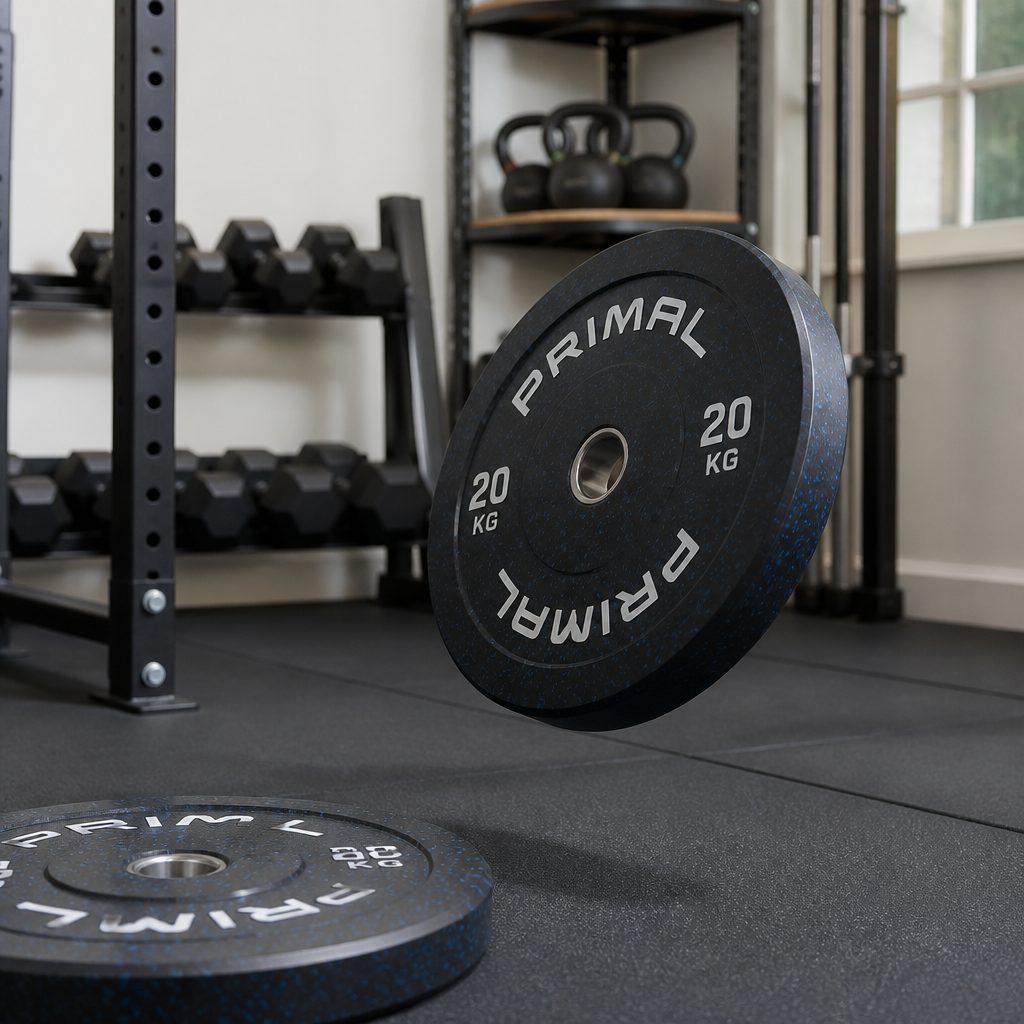
Crumb-rubber bumpers are designed around repeated impact, but their more forgiving construction can create more rebound than a dense low-bounce virgin-rubber plate.
3. CAP Barbell Olympic Cast Iron Plates — Best for budget strength training
CAP Barbell Olympic Cast Iron Plates are for the lifter whose programme is built around squats, bench press, overhead pressing, rows and carefully lowered deadlifts. There is something refreshingly honest about cast iron. It is weight. It is compact. It lasts. It makes a noise if you mistreat it. No-one is pretending otherwise.
These Olympic-bore plates are made from cast iron with a flat, compact design. Their main practical advantage over bumper plates is sleeve efficiency: they take up less collar space per pound, which is valuable as loads become heavier. They are also the straightforward lower-cost route into Olympic loading for a home gym where dynamic lifting is not the priority.
That economy only remains sensible if it matches your behaviour. Cast iron offers no cushioning effect and can damage flooring when dropped. It also produces more noise on impact. For touch-and-go deadlifts, power cleans or any lift likely to escape a perfectly controlled descent, choose bumpers instead. For a rack-based strength setup, though, a stack of iron remains entirely logical. Add suitable floor protection, use collars, lower the bar rather than abandoning it, and you have plates that should remain useful for an exceptionally long time.
Pros
- Compact profile leaves more room on an Olympic bar sleeve.
- Solid cast-iron construction suits traditional strength training.
- A practical budget route to Olympic loading.
- Flat design stores efficiently in a small home gym.
Cons
- Not designed to be dropped.
- Hard impact can damage floors, bars and surrounding equipment.
- Smaller iron denominations do not all maintain the same pulling height as a 45lb plate.
4. Rogue Competition Bumper Plates (KG) — Best for competition-style Olympic lifting
Rogue Competition Bumper Plates (KG) are the specialist choice. These are virgin-rubber, IWF-certified competition bumpers with a 450mm diameter and a 50.4mm collar opening. For lifters training Olympic movements seriously, those details are not decorative. They reproduce the familiar geometry of competition-style equipment: a consistent outer diameter and a close Olympic fit on the sleeve.
The key appeal is precision of format. Competition bumper plates are built around the IWF's 450mm diameter standard, so the bar begins from the same height from the floor across the range. Only plate thickness changes as weight changes. That consistency is especially helpful for lifters who care about their pull position, receive position and the general feel of a loaded Olympic bar.
These are not automatically the correct plates for every home gym merely because they are competition certified. A general strength trainee may receive more practical benefit from a broader all-round bumper set or thin iron plates. Competition bumpers make sense when your training genuinely values that format and you have an appropriate platform, barbell and room to use them. Premium equipment is lovely. Premium equipment bought for imaginary future habits is an expensive form of optimism.
Pros
- IWF-certified competition-bumper format.
- 450mm diameter supports consistent Olympic-lifting geometry.
- 50.4mm collar opening is designed for Olympic sleeves.
- Virgin-rubber construction suits dedicated lifting platforms.
Cons
- A specialist choice rather than the obvious first set for general strength work.
- Competition-style plates still need suitable flooring and controlled training space.
- Less compelling than compact iron if your programme never includes dynamic lifts.
At-a-glance comparison: all four picks
| Plate model | Material and format | Confirmed fit or diameter | Published durability detail | Best use |
|---|---|---|---|---|
| REP Fitness Black Bumper Plates | Virgin-rubber bumper; steel inserts | Olympic 2-inch bars | 12,000+ drops from eight feet; ±1% weight tolerance | All-round home lifting |
| PRx Crumb Rubber Bumper Plates | Recycled crumb-rubber bumper | 50.6mm ±0.2mm opening; 17.75-inch diameter | 30,000 drops; warranty varies by plate denomination | Repeated drops and functional fitness |
| CAP Barbell Olympic Cast Iron Plates | Uncoated cast iron | Olympic 2-inch bore | Controlled-lowering plate; not drop rated | Budget conventional strength training |
| Rogue Competition Bumper Plates (KG) | Virgin-rubber IWF-certified competition bumper | 450mm diameter; 50.4mm opening | Competition-style bumper construction | Dedicated Olympic lifting |
The biggest takeaway is that the CAP plates do not lose simply because they are not bumpers. They win a different contest. If your bar stays in a rack or comes down in a controlled deadlift, their thin, durable iron format is arguably more useful than a thick stack of rubber. Equally, REP does not beat Rogue at reproducing competition-style lifting geometry. It is simply a more broadly sensible bumper choice for most home users.
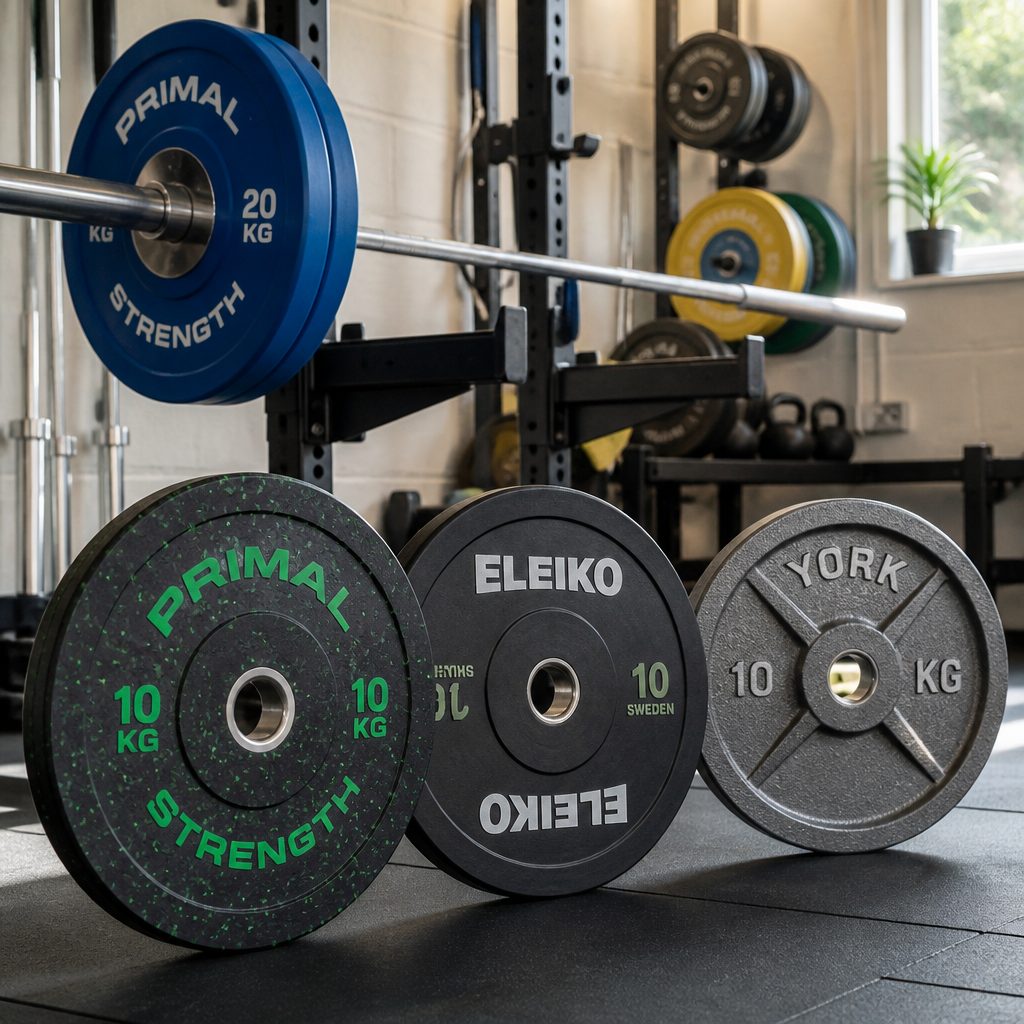
The right plate is the one that matches the way the bar returns to the floor. Controlled strength work and dropped Olympic lifts ask rather different things of the equipment.
How to build a sensible home-gym plate collection
Start with your heaviest likely lift, but do not buy only large plates. A useful collection needs loading flexibility. Small changes matter for progressive training, especially on pressing movements. At the same time, make sure your light plates are appropriate for the movements you plan to perform. With bumpers, light plates should not be asked to land alone. With iron, avoid creating a deadlift setup where a small-diameter plate is absorbing the entire impact.
For an all-round garage gym, a bumper-led collection is usually the calmest place to begin. It lets you deadlift, clean and learn without treating every imperfect rep as a potential floor-repair project. You can add iron later for compact loading if strength work becomes the priority. This mixed approach is common for a reason: bumper plates handle the floor-contact jobs, while iron adds dense loading for rack work.
For a powerlifting-style setup, cast iron or rubber-coated iron makes more sense. Your budget goes further, storage is tidier and the bar sleeve stays useful at higher weights. The crucial qualification is that deadlifts need control. If your training style involves dropping the bar after a grinder, do not tell yourself that you will become more careful once the plates arrive. Buy for the lifter you are on a hard Tuesday evening.
For Olympic lifting, use full-diameter bumper plates. The bar height matters to the pull, and the ability to release a missed lift onto a suitable platform matters even more. Competition bumpers such as Rogue's KG plates are the purist route; a robust general bumper such as REP's is usually sufficient for a lifter learning and training the movements at home.
A useful loading rule
When deadlifting from the floor, ensure the plates touching the ground are full diameter and appropriate for floor contact. Do not place small iron plates on a bar and assume the larger plate you own somewhere else in the room is helping. It is not. It is having a rest.
Noise, floor protection and the reality of neighbours
Home-gym buying guides can become strangely detached from houses. We talk about plates surviving drops as if every reader has a detached barn, a lifting platform and a neighbour whose only hobby is operating a pneumatic drill. Many people are in terraces, flats, converted bedrooms or garages attached to a home. Noise deserves equal billing with plate durability.
Bumper plates reduce impact and noise compared with bare iron, but they do not make a loaded bar silent. The rubber compresses; the bar flexes; the floor receives energy. Crumb rubber can soften the experience further but may rebound more. Dense low-bounce virgin rubber gives a more controlled landing, which can be preferable in a confined space. Neither option makes overhead drops suitable for an upstairs room.
Rubber-coated iron can reduce noise compared with uncoated iron and give a rack-based gym a more civilised feel. Yet the coating is thin, usually 2mm to 5mm, so it should not be treated as impact protection for cleans or dropped deadlifts. The safest approach is boring and effective: use appropriate flooring, create a designated lifting area, lower the bar under control and consider the people who share walls, floors and early mornings with you.
Iron announces every mistake
Cast iron is exceptionally durable for controlled work, but it provides no cushion when the bar lands. The sound is useful feedback, albeit feedback nobody in the next room asked for.
Low bounce is a control feature
A bar that settles predictably is easier to manage in a small space. This is why dense virgin-rubber bumpers appeal even when a crumb-rubber alternative is more impact forgiving.
Protect the whole system
Plates, floor, barbell, rack, platform and nearby belongings are one system during a drop. A good plate choice helps, but it cannot compensate for an unsuitable environment.
Common plate-buying mistakes to avoid
The first mistake is buying by kilograms or pounds alone. Total weight tells you how much resistance you own. It says nothing about bore compatibility, plate diameter, sleeve space or whether the plates can cope with the movements you intend to do. A cheap collection that restricts your training is not necessarily a bargain. It is just a heavy lesson.
The second is assuming all rubber plates are bumpers. Rubber-coated iron may look reassuringly padded, but it is not designed to be dropped like a full bumper. Look at the plate's construction and its stated use. If there is no drop-rating claim, use it for controlled lifting.
The third is overlooking the lightest plates. With REP, the 5kg plate is extra thick at one inch to improve durability, while the 10lb plate has a slightly smaller diameter. With PRx, dropping 10lb or 15lb plates alone voids the warranty. These are not obscure footnotes. They affect how you warm up, learn movements and choose your loading jumps.
Finally, do not buy competition-style plates because you like the idea of being a competition-style lifter. Buy them if the 450mm diameter, IWF-certified format and dedicated Olympic-lifting purpose genuinely serve your programme. There is absolutely no shame in buying cast iron for squats and bench. Your barbell will not notice that it is not being filmed for social media.
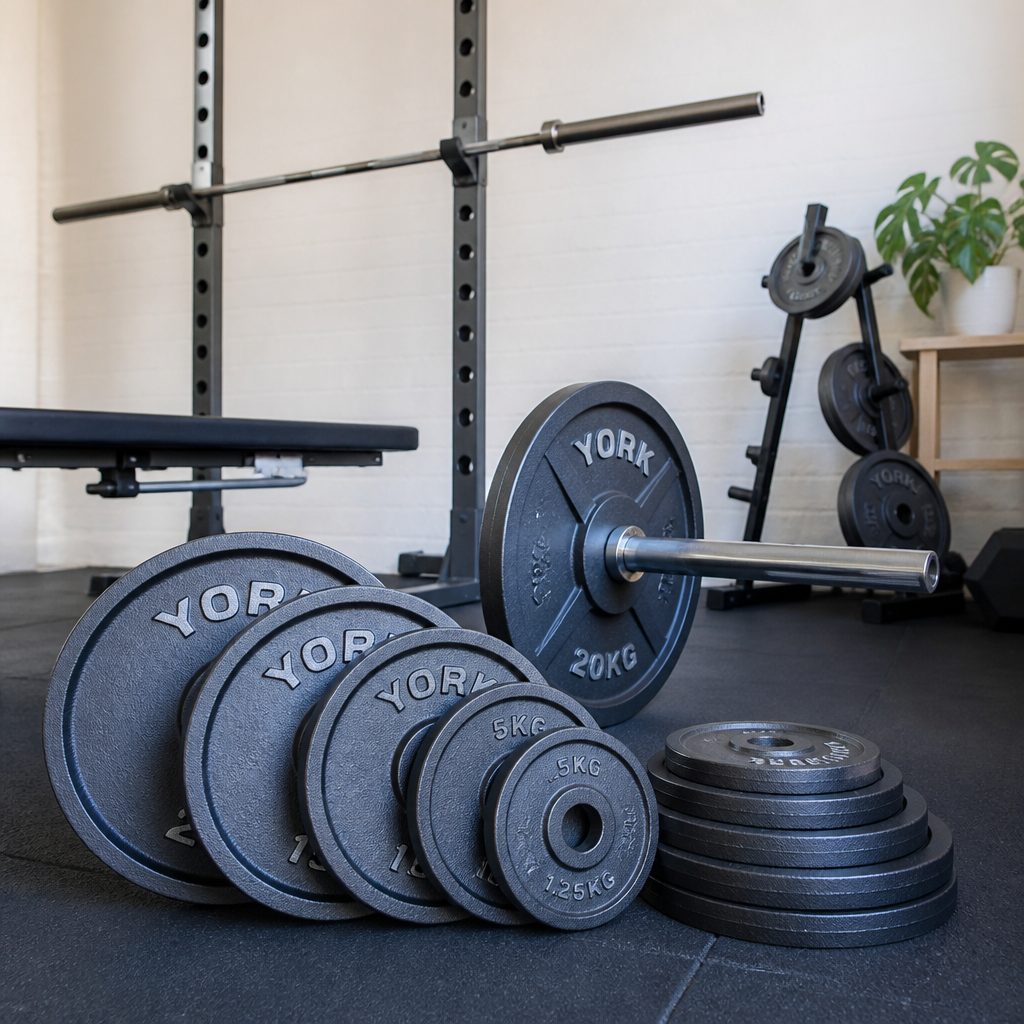
A compact cast-iron collection is an excellent fit for squats, bench press and controlled deadlifts, particularly where bar-sleeve space and storage matter more than dropping tolerance.
Who should buy which plates?
Best all-rounder: REP Fitness Black Bumper Plates
Choose REP if you want one dependable Olympic bumper set for general strength work, deadlifts and occasional dynamic lifts. Low bounce, steel inserts, a ±1% tolerance and the stated 12,000-plus drop test make it the most balanced choice here.
Best on a budget: CAP Barbell Olympic Cast Iron Plates
Choose CAP if your training is conventional and controlled: squats, bench, presses, rows and careful deadlifts. You get compact Olympic loading without paying for drop capability you will not use.
Best for frequent drops: PRx Crumb Rubber Bumper Plates
Choose PRx for recycled crumb rubber and a published 30,000-drop test figure. They suit functional-fitness training and frequent floor contact, provided you allow for their additional bounce and protect light plates.
Best premium specialist pick: Rogue Competition Bumper Plates (KG)
Choose Rogue if dedicated Olympic lifting is central to your home training and you want IWF-certified plates with 450mm competition diameter and a 50.4mm collar opening.
If you are still torn between two categories, simplify it. Do you ever expect the bar to hit the floor quickly? Buy bumpers. Do you mainly lift in a rack and lower deadlifts under control? Buy iron or rubber-coated iron. Do you care about competition-lifting geometry as much as you care about total load? Buy competition bumpers. The right answer becomes rather less mysterious once the bar's journey back down is part of the question.
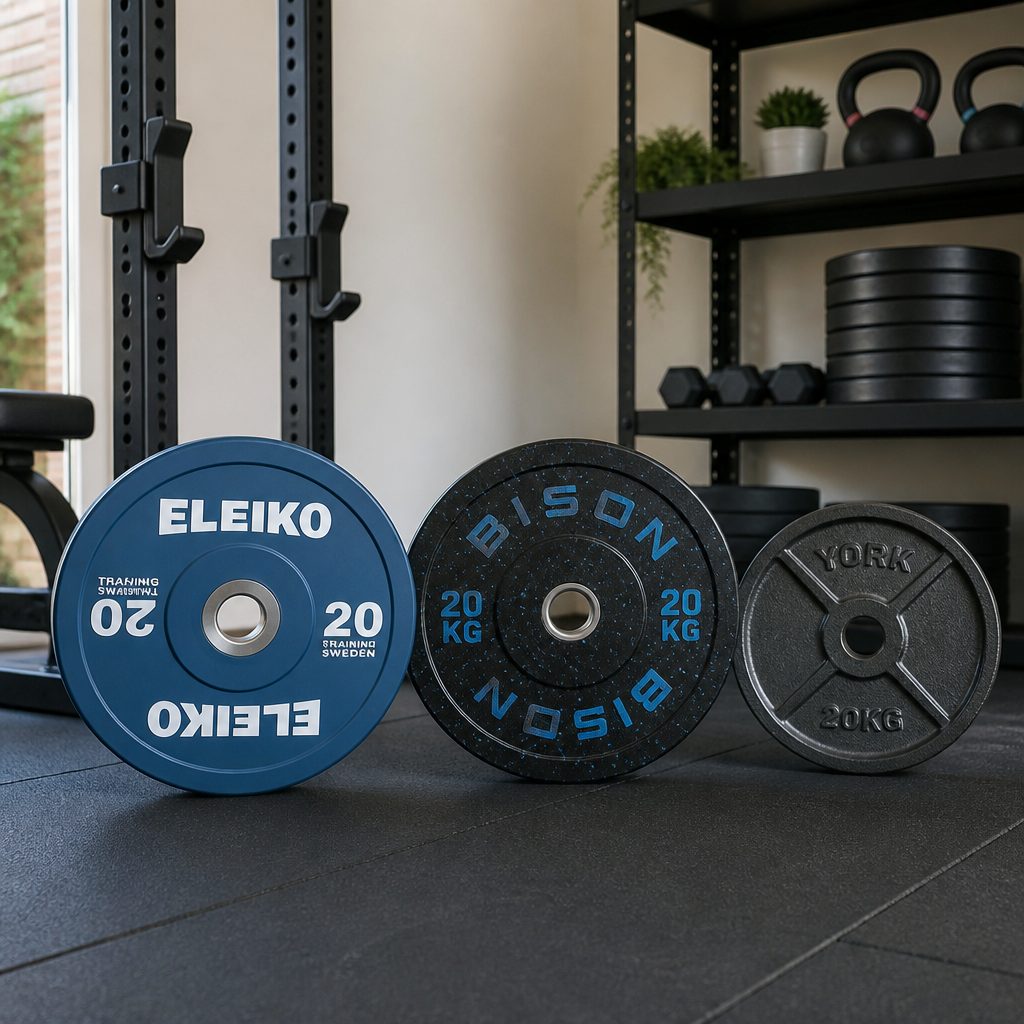
For most first home gyms, a general-purpose Olympic bumper set is the least restrictive place to start; specialist competition plates and compact iron can follow as training becomes more specific.
Frequently asked questions
They are worth it if you deadlift regularly, practise cleans or snatches, or simply want greater tolerance for a bar returning to the floor. Bumpers absorb impact and help protect the floor, bar and plate. If you only bench, squat and perform controlled deadlifts, cast iron can be a more compact and economical choice.
No. A thin rubber coating reduces contact noise and provides some surface protection, but it does not turn an iron plate into a drop-rated bumper. Lower rubber-coated iron under control and reserve repeated drops for purpose-built bumper plates on suitable flooring.
Olympic plates have a bore around 2 inches, usually 50mm or 50.4mm, and fit Olympic bar sleeves. Standard plates normally use a 30mm bore for standard bars and dumbbell handles. Measure your bar before ordering: the two systems are not interchangeable.
Competition-style bumper plates follow a 450mm diameter convention, so the bar begins from a consistent height. Rather than becoming narrower in diameter as they become lighter, bumper plates vary in thickness. That is particularly important for Olympic lifting and pulling movements from the floor.
Yes, provided you lower the bar under control and protect the floor. Cast iron is entirely suitable for conventional deadlifts. The issue is impact: it does not absorb a drop, and smaller plates may not provide standard pulling height or protect themselves when used alone.
Neither is automatically better. Crumb rubber uses recycled material and is made for impact, but it tends to bounce more than dense virgin rubber. Virgin-rubber plates such as REP's Black Bumper Plates aim for lower bounce and more controlled bar behaviour. Choose based on your space and how you train.
The insert is where the plate meets the bar sleeve and it sees repeated stress during loading, unloading and drops. REP uses steel inserts with moulded hooks in its Black Bumper Plates, a design intended to improve durability compared with more typical bumper constructions.
Be cautious. Lightweight bumpers are thinner and more vulnerable. PRx states that dropping its 10lb and 15lb crumb plates on their own voids the warranty. Build the bar so full-diameter, suitably robust plates share the impact, and use appropriate flooring.
Final verdict
The bottom line
Buy REP Fitness Black Bumper Plates if you want the safest all-round answer for a typical Olympic-bar home gym: dense virgin rubber, low bounce, steel inserts, a ±1% stated tolerance and more than 12,000 factory-tested drops make them hard to fault. Choose PRx Crumb Rubber Bumper Plates for a recycled-rubber option built around frequent drops, CAP Barbell Olympic Cast Iron Plates for compact controlled strength work, and Rogue Competition Bumper Plates (KG) when competition-style Olympic lifting is the whole point. The clever purchase is not the most dramatic plate. It is the one that lets you train hard without making every rep an argument with your floor.