
Best Home Gym Kit Under £300 to Get Properly Started
The smartest beginner home gym is not a giant multi-gym with a suspiciously cheerful man on the carton. It is a compact collection of adjustable dumbbells, a useful bench, resistance bands and a mat: enough kit to train your whole body properly, progress for months, and still have a living room when you are finished.
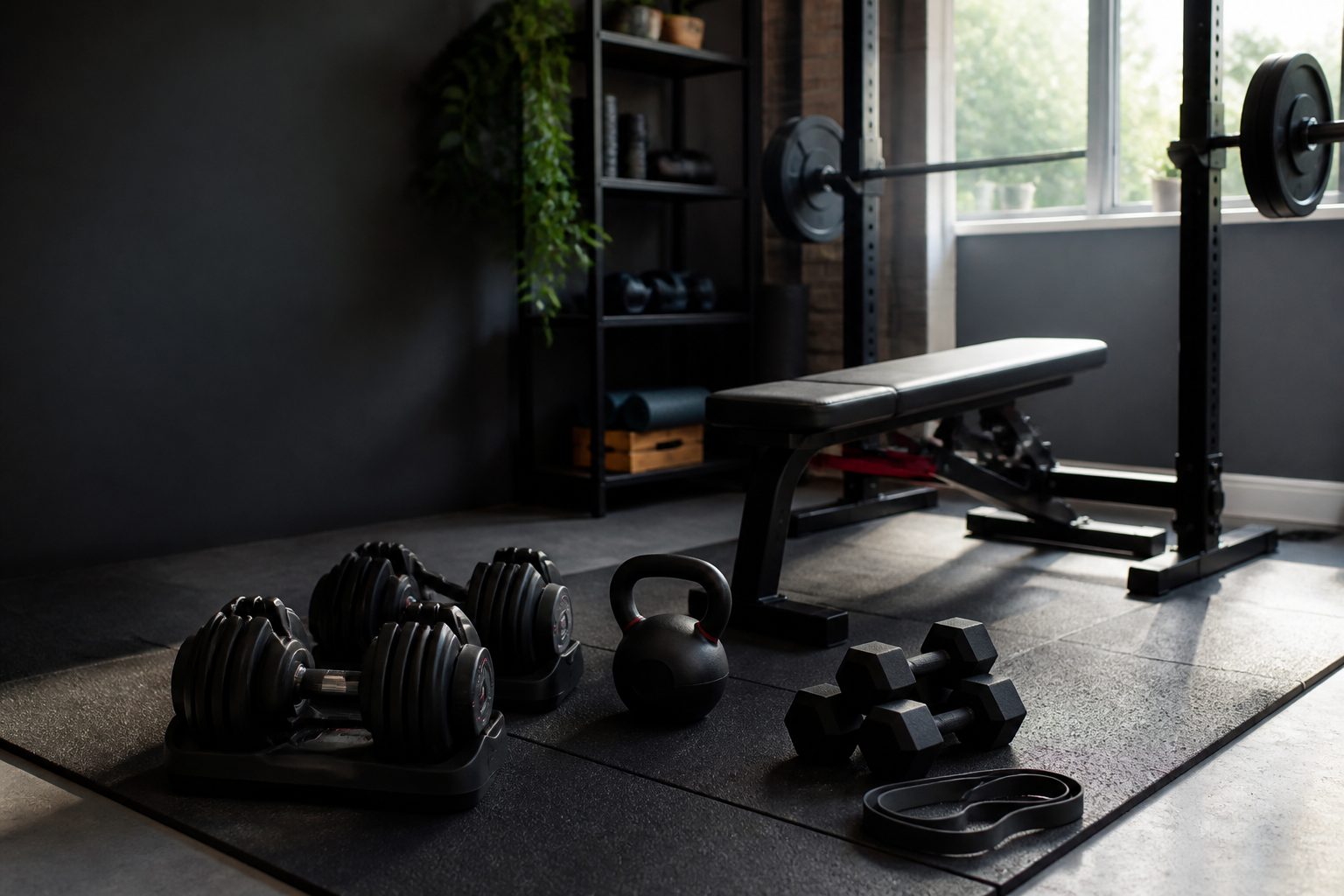
A sensible first home-gym corner needs very little floor space: adjustable resistance, somewhere stable to press, a little pulling work and enough cushioning to make floor sessions pleasant.
 By James Oduya · Staff Writer & Home Gym Columnist · Updated October 14, 2026
What a proper starter gym should actually do
There is a particular sort of home-gym shopping basket that looks extremely impressive and is almost entirely useless. It contains a tiny ab wheel, a pair of weights so light they could be used as decorative bookends, a foam roller and perhaps a neon skipping rope. All perfectly decent objects. None, on their own, a foundation for getting stronger.
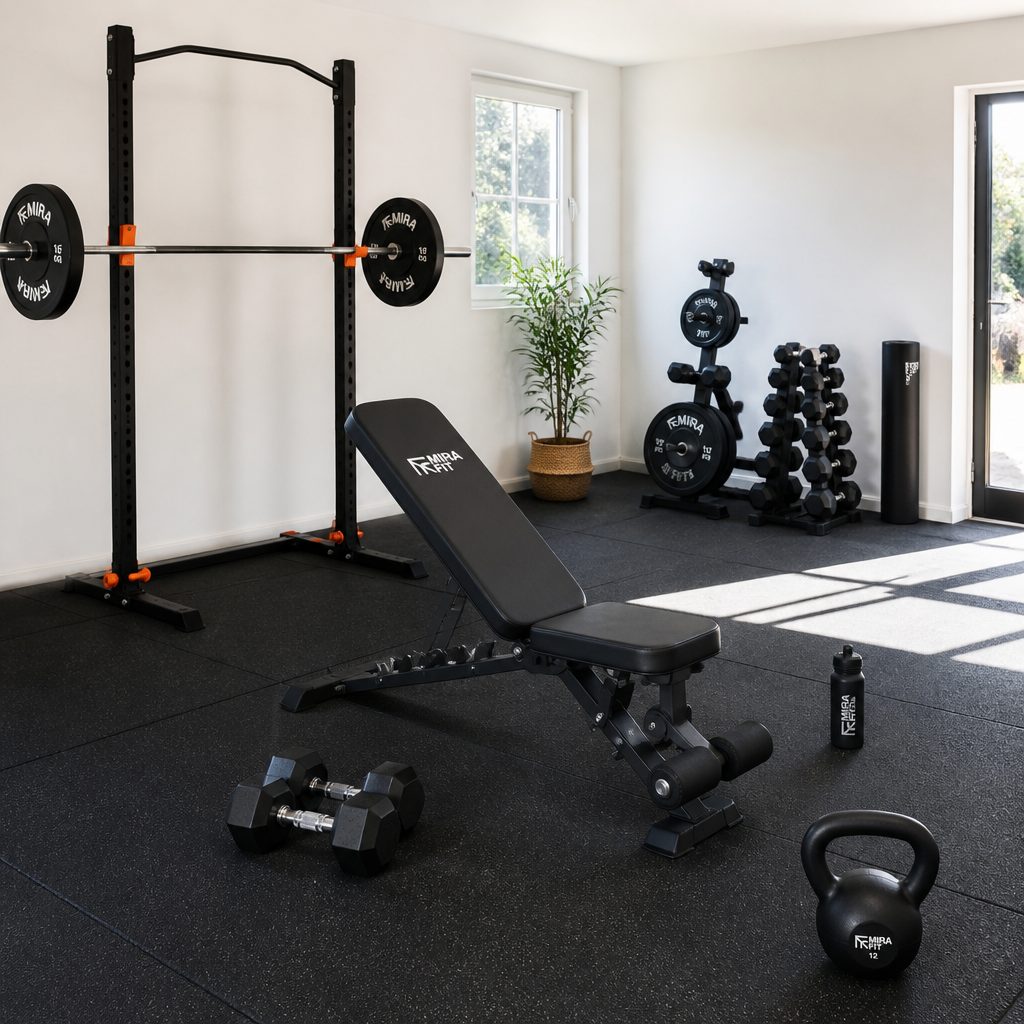
The best beginner layout leaves a clear working area around the bench, rather than placing every item against the wall and hoping lunges somehow happen diagonally.
For a first set-up, I would rather put the budget into a few items that unlock a lot of movement. Adjustable dumbbells give you squats, lunges, rows, presses, deadlifts, curls, carries and more. A bench gives chest work, supported rows, split squats and seated overhead pressing somewhere safe and repeatable to happen. Bands make it easier to train the back, shoulders and smaller muscle groups without needing a cable stack in the spare room. A mat protects both you and the floor. That is the unglamorous answer. It is also the answer that keeps working.
The key word is progression. A kit has to let you make a movement harder over time. That might mean adding a plate, changing a dumbbell setting, moving to a stronger band or improving control and range of motion. If it cannot do that, it is exercise equipment in the broadest legal sense, but it is not a particularly good training tool.
That does not mean you must buy every item on day one. In fact, one of the nicest things about this approach is that it can be built in stages. Dumbbells and a mat get you training immediately. Add bands when you want more pulling and shoulder work. Add a bench when pressing from the floor begins to feel restrictive. The only mistake is buying things in an order that leaves you with several boxes and no coherent workout.
A realistic sub-£300 first set-up is built around the PROIRON adjustable dumbbell set, an adjustable bench, a five-band resistance-band set, a mat and, where your doorway allows it, a pull-up bar. The more expensive quick-select dumbbells and heavier-duty bench options below are excellent individual choices, but they change how the budget needs to be divided.
The shortlist at a glance
These are not five identical "kits" wearing different badges. They are the pieces I would use to build one. The ranking reflects how useful each item is in a first home gym, how much training variety it opens up and how well it supports a sensible beginner programme. Think of it as a shopping list with opinions rather than a bizarre gym-equipment beauty pageant.
| Pick | Best for | Confirmed specification | Why it belongs in a starter gym |
|---|---|---|---|
| PROIRON 40kg Adjustable Dumbbells | Building the core kit | Steel handles, cast-iron plates, connector bar and 143mm handle width | One compact package covers most major dumbbell exercises and can convert into a barbell-style format. |
| Mirafit M150 Adjustable Weight Bench | Stable pressing and support work | Six backrest positions, four seat positions and 260kg total load rating | A proper FID bench turns dumbbells into a far more complete upper-body and leg-training set-up. |
| MuscleSquad 27.5kg Adjustable Dumbbells | Fast session changes | Dial selection, metal plates, 42cm length and two-year warranty | Quick adjustments make supersets and shared home training much less fiddly. |
| Gritin Resistance Bands Set | Low-cost variety | Five resistance levels | Bands add warm-ups, face pulls, rows, triceps work and travel-friendly training with almost no footprint. |
| 15mm Gym Mat | Floor work and protecting surfaces | 15mm thickness | A thicker mat makes core work, kneeling movements and dumbbell sessions kinder to hard flooring. |
A quick note on the Mirafit naming muddle that occasionally pops up in kit lists: the M100 was a power rack, not an adjustable bench. It was a substantial rack with a 250kg maximum load, 64kg net weight and a 213cm overall height. It was also not the item to squeeze into a modest beginner bundle. The M150 is the relevant bench here because it serves the actual job required: supporting free-weight training without swallowing the room.
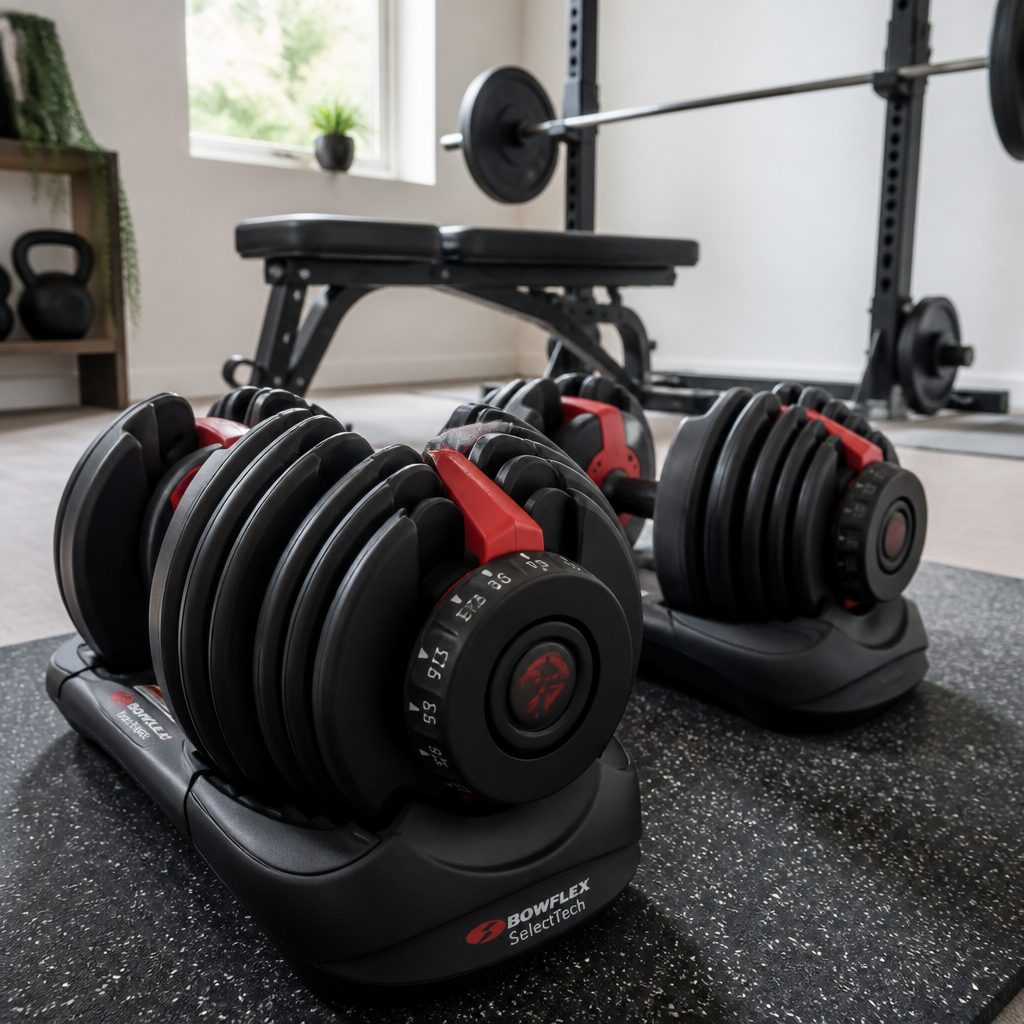
Adjustable dumbbells are the centre of the budget build because they cover squats, hinges, presses, rows, carries and isolation work without a separate machine for each.
Ranked picks for a genuinely useful first set-up
1. PROIRON 40kg Adjustable Dumbbells — Best for building the core kit
If I were choosing the one thing that made the rest of this list possible, it would be the PROIRON adjustable dumbbells. Not because adjustable dumbbells are thrilling. They are not. Nobody has ever written a ballad about changing plates. But they are staggeringly practical when space and budget both matter.
The set includes two solid steel handles, four 0.5kg plates, four 1.25kg plates, four 2.5kg plates, four collars and an extension bar. The plates are cast iron, the handles are knurled steel, and the collars use a rubber O-ring anti-loose design. Those are not glamorous details, but they are the details that matter when a dumbbell is above your chest or next to your foot. You want it to feel like gym equipment, rather than a bag of loose parts with a motivational slogan.
The 143mm handle width was particularly sensible. It left a comfortable gripping area without the handle being so broad that it constantly met your wrists on curls or presses. The extension bar is also more useful than it first appears. It lets the two dumbbell assemblies become a barbell-style tool for movements such as Romanian deadlifts, rows and floor presses. It will not replace a full Olympic barbell set-up. Nor should it pretend to. What it does is widen the exercise menu without demanding more storage space.
Pros
- Cast-iron plates and steel handles are a durable, straightforward combination.
- The connector bar creates an extra training option from the same set of components.
- Small plate increments help beginners progress without giant jumps in load.
- The knurled handles should feel more secure than smooth, plastic-covered alternatives.
Cons
- Changing plates takes longer than selecting a dial setting between exercises.
- Traditional collars and plates are less convenient for fast-paced circuit training.
- They need a little discipline when stored; loose iron plates have a way of migrating.
This is the best choice for the person who wants the broadest possible start without spending the entire budget on the first item. You can begin with goblet squats, one-arm rows, floor presses, overhead presses, curls and Romanian deadlifts. Then, as your confidence grows, you can add Bulgarian split squats, chest-supported rows on a bench, suitcase carries and a great many varieties of lunge that will make walking downstairs unexpectedly theatrical.
2. Mirafit M150 Adjustable Weight Bench — Best for stable free-weight training
Shop Mirafit M150 Adjustable Weight Bench on Amazon UK
A bench is often treated as a luxury. In a small set-up, it is more accurately a multiplier. Dumbbells do a lot on the floor, but a bench gives you better angles for pressing, a stable base for supported rows, a place for rear-foot-elevated split squats and a safer position for seated shoulder work. It lets the dumbbells do their job properly.
The Mirafit M150 was the standout substantial bench in this group. It offered six backrest positions and four seat positions, covering flat, incline and decline work. Its total load rating was 260kg, including the lifter and the weights being used. That distinction matters. Bench ratings can look very impressive until you realise some brands are referring only to the load you hold, which is not especially useful when the bench is also holding you.
At 28kg, the M150 was heavy enough to avoid the nervy shifting that lighter benches can bring to loaded pressing. Its frame used 7cm by 5cm steel tubing, while the padded cushions measured 6cm thick. It had anti-slip fabric, built-in transport castors and a handle, which softened the practical annoyance of moving a fairly serious bench around after training. Flat, it stood 44cm high; in its highest configuration it reached 120cm. The overall footprint was 127cm long and 60cm wide.
There is a catch, naturally. It needs assembly and the relevant spanners were not included. It is also a meaningful lump of bench for a very small flat. This is not the piece to casually lean against a radiator and forget about. Still, if you have a dedicated corner and want a bench that feels planted rather than apologetic, it is a strong long-term purchase.
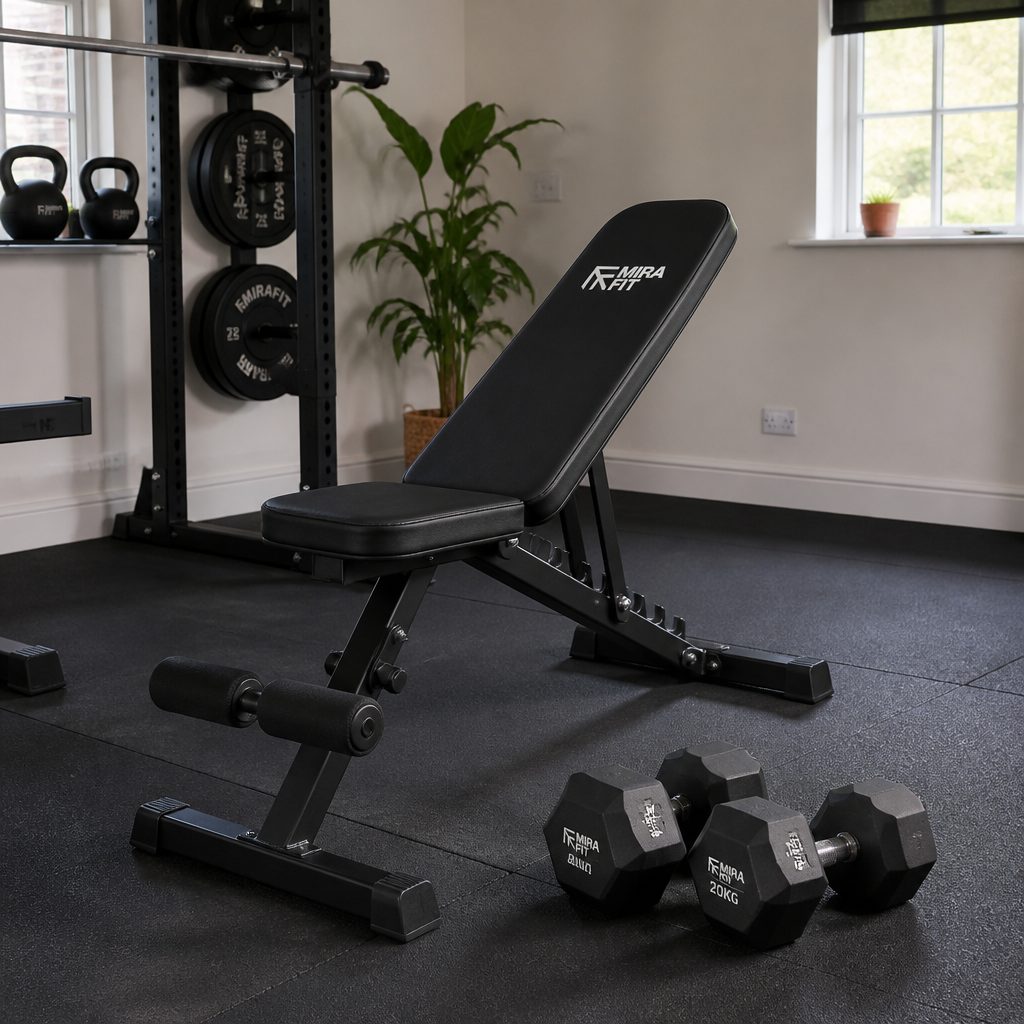
A stable adjustable bench opens up incline pressing, supported rows, split squats and seated shoulder work, rather than limiting dumbbells to the floor.
3. MuscleSquad 27.5kg Adjustable Dumbbells — Best for quick changes between sets
The MuscleSquad adjustable dumbbells took a different route from the PROIRON set. Rather than plates, collars and a connector bar, they used a quick-select dial system at both ends. The appeal is immediate if you have ever tried to swap plates between a set of dumbbell rows and a set of lateral raises whilst the motivation slowly leaves the building.
The 27.5kg-per-hand version sits in the useful middle ground for home strength training. The wider system offered selections in 2.5kg steps from 5kg through to 32.5kg on the higher-capacity model, and the 27.5kg version retained the same central idea: a compact pair of dumbbells that can move from lighter accessory work into serious pressing, rowing and leg training without an extended faff at the floor.
What impressed me most about the MuscleSquad format was its 42cm length. Adjustable dumbbells often become comically long at heavier settings, leaving you to curl something that feels halfway between a dumbbell and a railway sleeper. Keeping the package compact makes a practical difference in pressing, rowing and set-up. The metal plates were another welcome choice. There were no bulky plastic casings trying to make the dumbbells appear friendlier than they were.
Fast adjustments suit real-life training
If you train in short windows before work, after the school run or between other commitments, a dial system keeps the session moving. That convenience has training value; the best programme is often the one you actually complete.
A compact 42cm format
The relatively short design helps the dumbbells feel less intrusive during presses and rows than some long plate-loaded alternatives.
UK-based customer service
MuscleSquad was a UK brand with UK-based customer support, plus a two-year warranty on these adjustable dumbbells.
The downside is simple: quick-select dumbbells make most sense when they are the main investment in the gym. They were a more premium route than plate-loaded basics, so they leave less room in the same budget for a substantial bench, mat, bands and a pull-up bar. They are best for somebody happy to build the set-up in phases, or somebody whose biggest barrier to training is the faff of changing equipment.
4. Gritin Resistance Bands Set — Best for variety without taking up space
Resistance bands are the least exciting purchase on this page and perhaps the most likely to be used constantly. A five-level set such as the Gritin bands is small enough to live in a drawer, light enough to take away and versatile enough to fill several awkward gaps in a dumbbell-only programme.
They are excellent for warming up shoulders before pressing: pull-aparts, external rotations and very light rows all work nicely. They are useful for face pulls, triceps press-downs with a door anchor, glute work, assisted mobility and high-repetition back work. They can also make lower-body training more interesting when the dumbbells are not yet heavy enough to challenge your legs. Put one above your knees for squats or hip bridges and suddenly a basic movement asks more questions.
However, bands are not magic. The resistance changes as the band stretches, which means the tension is not identical through the full range of a movement. That is fine for many exercises, even helpful in some, but it makes them a supplement to dumbbells rather than a replacement. A band row does not feel exactly like a dumbbell row. Nor should we all pretend it does because the band happened to arrive in a cheerful little pouch.
The boring-but-effective band rule
Use bands for the exercises that are awkward to load with dumbbells: face pulls, pull-aparts, high-repetition triceps work, assisted pull-ups and warm-up drills. Let dumbbells handle the big, measurable lifts. That division keeps the programme simple and makes progression easier to track.
5. 15mm Gym Mat — Best for comfortable floor training and protecting flooring
A 15mm gym mat is not an accessory you buy because it will transform your physique. You buy it because kneeling on a hard floor is miserable, dumbbells can be unforgiving on laminate, and the difference between a home gym you use and one you avoid is often embarrassingly practical.
At 15mm thick, this type of mat gives more cushioning than the wafer-thin exercise mats often bundled with beginner gear. That matters for dead bugs, planks, floor presses, kneeling overhead work, glute bridges and stretching. It also gives the dumbbells somewhere less hostile to rest between sets. I would still put weights down with care. "The mat will handle it" is not a recognised lifting technique. But it takes the edge off everyday use and makes a multipurpose room far easier to live with.
This is also the piece that helps you make the gym feel intentional. Roll out the mat, place the dumbbells at one end and the bench beside it, and the room has a training zone. Put everything on bare floor in random locations and the room has the atmosphere of a small hardware accident. The difference is subtle, but motivation is partly environmental. Make starting easy.
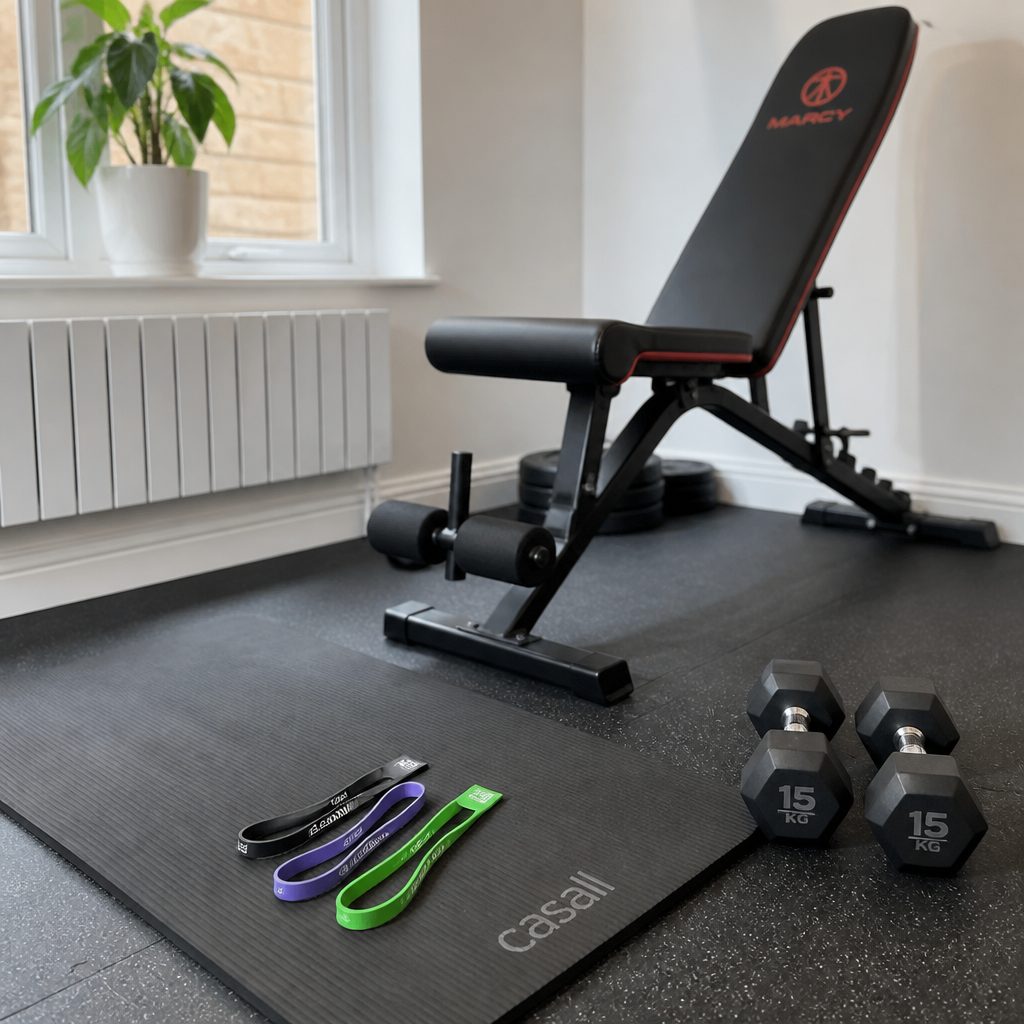
Bands and a thicker mat are humble additions, but they make warm-ups, core work, kneeling exercises and a shared living-space gym much more workable.
How the main equipment compares in real terms
Different kit solves different training problems, so this chart is not a laboratory test or a dubious "score out of ten" invented to create a winner. It is a practical view of how much each category contributes to a first home gym. The percentages show relative usefulness within this specific beginner build: not absolute strength, quality or value across every possible buyer.
The message is not that a mat is half as valuable as a dumbbell in some cosmic fitness calculation. It is that dumbbells should take priority if you are forced to build gradually. The bench comes next once you know you can make room for it. Bands and a mat complete the environment. A pull-up bar is excellent, but only when the doorway is suitable and you are confident using it correctly. Never treat a doorframe like an engineering experiment you have elected to conduct with your body weight.
How to divide the budget without buying nonsense
The most disciplined version of this shopping plan concentrates most of the spend on adjustable dumbbells and a bench, then uses bands, a mat and a pull-up bar as supporting pieces. That sounds obvious, but starter kits often do the reverse: lots of colourful extras and not enough resistance to create a meaningful training stimulus.
- Start with resistance you can progress. Dumbbells are the anchor. Choose the system that best matches whether you value low upfront cost and simple hardware, or quick changes and a more polished mechanism.
- Add a bench only if it has a job. An adjustable bench should offer safe, stable positions for presses and supported work. If it is too light, too wobbly or too narrow for you to use confidently, it is not a bargain.
- Use bands to solve gaps, not duplicate the dumbbells. Build back, shoulder and triceps volume around them, especially where a cable machine would normally be helpful.
- Protect the floor and your knees. A thicker mat makes the kit friendlier to use in the sort of room that still needs to function as a room.
- Leave a little breathing room. Do not spend every last bit of the budget assuming nothing will ever need a storage solution, replacement collar or slightly more sensible floor arrangement.
There is a temptation to chase a single all-in-one item. A multi-gym promises order: one machine, a chart of exercises, perhaps a slightly overconfident photograph on the box. The trade-off is often restricted resistance, limited adjustment and a huge footprint. A modular dumbbell-and-bench approach looks less dramatic, but it lets you adapt as your strength and preferences change.
Measure the room before ordering. The Mirafit M150 was 127cm long and 60cm wide, while its highest position reached 120cm. You also need room to get onto the bench, move dumbbells safely and perform rows or presses without introducing yourself to a wall.
The exercises this kit can cover
A good starter home gym should not merely offer "a full-body workout" as a vague marketing promise. It should let you train the main movement patterns with sensible options. The dumbbells and bench take care of the heavy work. Bands add volume and the pull-up bar, if used, gives you a vertical pull that dumbbells do not quite replicate.
Squat and single-leg work
Goblet squats, double-dumbbell front squats, reverse lunges and Bulgarian split squats all fit comfortably into this set-up. Single-leg training is particularly valuable because it makes modest dumbbell loads feel very substantial.
Hip hinge and posterior chain
Romanian deadlifts, single-leg RDLs, dumbbell deadlifts and hip bridges cover the hamstrings and glutes. The connector bar can make some bilateral movements feel more familiar for lifters used to a barbell.
Horizontal and vertical pressing
Floor press, flat dumbbell press, incline dumbbell press, seated shoulder press and standing press give your chest, shoulders and triceps plenty to do. The bench makes the middle three far easier to programme well.
Rows, upper back and arms
One-arm dumbbell rows, chest-supported rows, band rows, band face pulls, curls and triceps extensions cover the pulling and arm work many basic starter kits neglect.
For a simple three-day routine, use one squat or lunge, one hinge, one press, one row and one band accessory each session. Alternate emphasis across the week rather than trying to annihilate every muscle in a single ninety-minute epic. Start with a load that lets you perform tidy repetitions, write down what you did, and improve one small variable next time. An extra repetition. A slightly heavier setting. Better control at the bottom of the movement. That is progress, even when it is not particularly Instagrammable.
What the expensive-looking alternatives change
The MuscleSquad quick-select design and the Mirafit M150 bench demonstrated an important truth about home gear: convenience and stability are usually where extra budget goes. The simpler PROIRON system gave you traditional plates, steel handles and the connector bar. The MuscleSquad system gave you faster adjustments, compact dimensions and dial convenience. Neither approach was morally superior. They simply suit different habits.
If you train alone, have plenty of patience and want maximum flexibility per purchase, plate-loaded dumbbells are hard to fault. You can see every part, tighten every collar and make very small changes. If you train with a partner, do supersets, have a short lunchtime session or simply know that plate changes will annoy you enough to skip the second exercise, the MuscleSquad design becomes more compelling.
The same applies to benches. A light folding bench can be sensible for a person who must put everything away after every workout. The M150 was a more serious, stable FID bench, but its 28kg construction and full footprint ask for a little more permanent room. Do not choose the better-specification item in isolation. Choose the item you will still be glad to own on a wet Tuesday in February, when the sofa is warm and every unnecessary barrier feels like a personal insult.
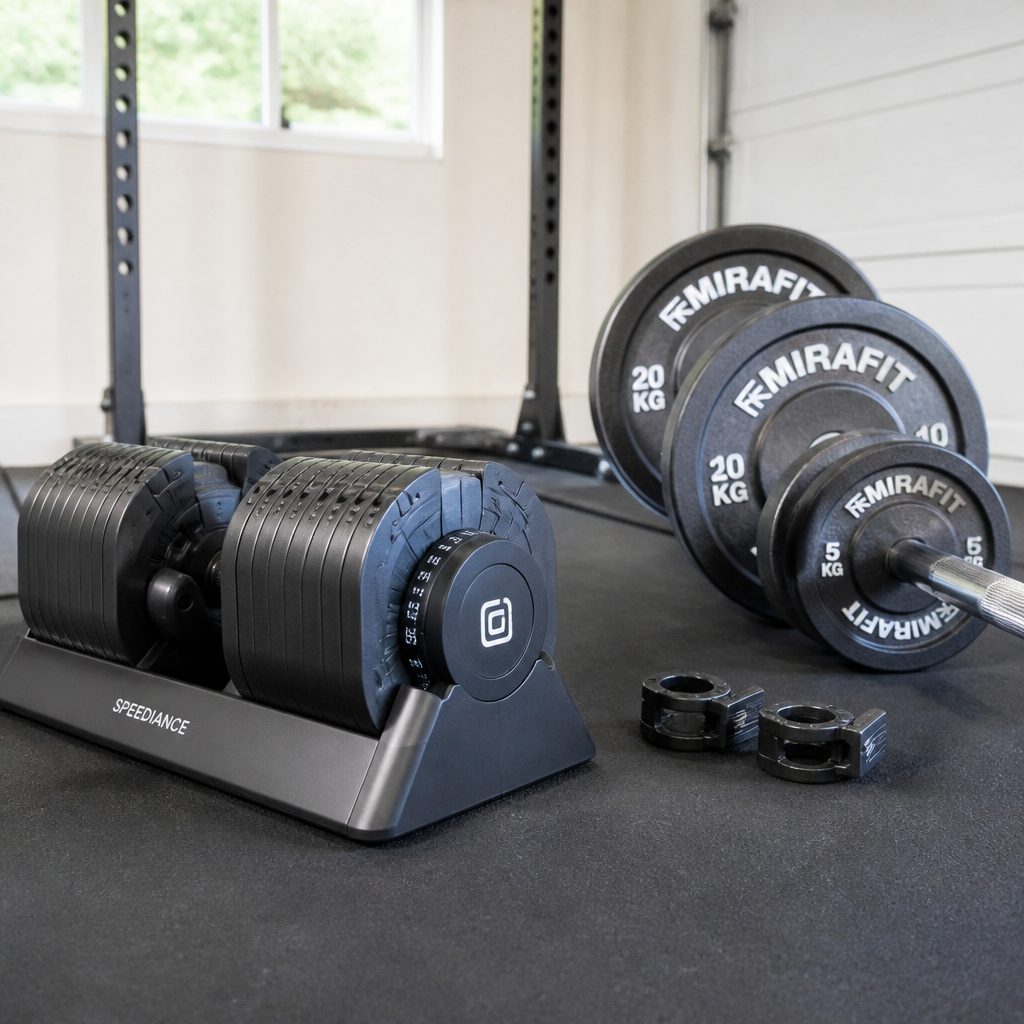
Quick-select dumbbells are particularly appealing for short sessions and supersets, while plate-loaded sets make sense when simple hardware and flexible loading matter most.
Safety, storage and small-space realities
Home training removes the queue for the squat rack. It also removes the person who has just seen you attempt an optimistic lift and politely suggests you reconsider. A little conservatism is therefore sensible.
Check collars before every set with plate-loaded dumbbells. Place the dumbbells down rather than dropping them, especially on laminate or tile. When pressing from a bench, get the dumbbells into position carefully and do not chase failure when you have no safe way to end the set. Keep the mat flat and dry. It sounds fussy until a slightly folded mat becomes the exact place you put your foot during a split squat. Then it is merely annoying.
For storage, keep plates together and collars where they cannot disappear into the mythical dimension inhabited by spare Allen keys. The bench's handle and castors were useful for moving it, but rolling equipment around does not mean it has become invisible. Give it a clear home. Bands can be looped in a small bag or box; do not leave them stretched around door handles, because sunlight, heat and neglect are not their friends.
A doorframe pull-up bar deserves special caution. The bar itself can be brilliantly space-efficient, but no generic advice can verify your particular doorway, frame construction or installation. Follow the manufacturer's instructions, inspect it regularly and do not improvise. If there is any doubt, use band rows, dumbbell rows and other pulling variations until you have a safe solution. Your back will survive without pull-ups for a few weeks. Your plasterwork would prefer not to find out otherwise.
Keep the first month deliberately easy
Leave a couple of clean repetitions in reserve on most sets while you learn the equipment and movements. Home training rewards consistency far more than dramatic first-week heroics. The goal is to still be training next month, not to make sitting down briefly impossible.
Who should buy which pick?
A sub-£300 gym is necessarily about trade-offs, but it does not have to feel compromised. The right version depends on how you train, how much space you have and whether the thing most likely to derail you is lack of resistance, lack of time or lack of tolerance for clutter.
Best on a tight budget
PROIRON 40kg Adjustable Dumbbells. The sensible core choice for a buyer who wants to spread the budget across dumbbells, bands, a mat and other genuinely useful equipment.
Best all-rounder
PROIRON 40kg Adjustable Dumbbells plus Mirafit M150 Adjustable Weight Bench. This is the combination that creates the widest range of productive free-weight sessions.
Best for fast sessions
MuscleSquad 27.5kg Adjustable Dumbbells. Best for people who value fast dial changes, supersets and compact dimensions over the lowest-cost route.
Best for a multipurpose room
Gritin Resistance Bands Set and a 15mm Gym Mat. The smallest, easiest-to-store pieces for building exercise habits before adding larger equipment.
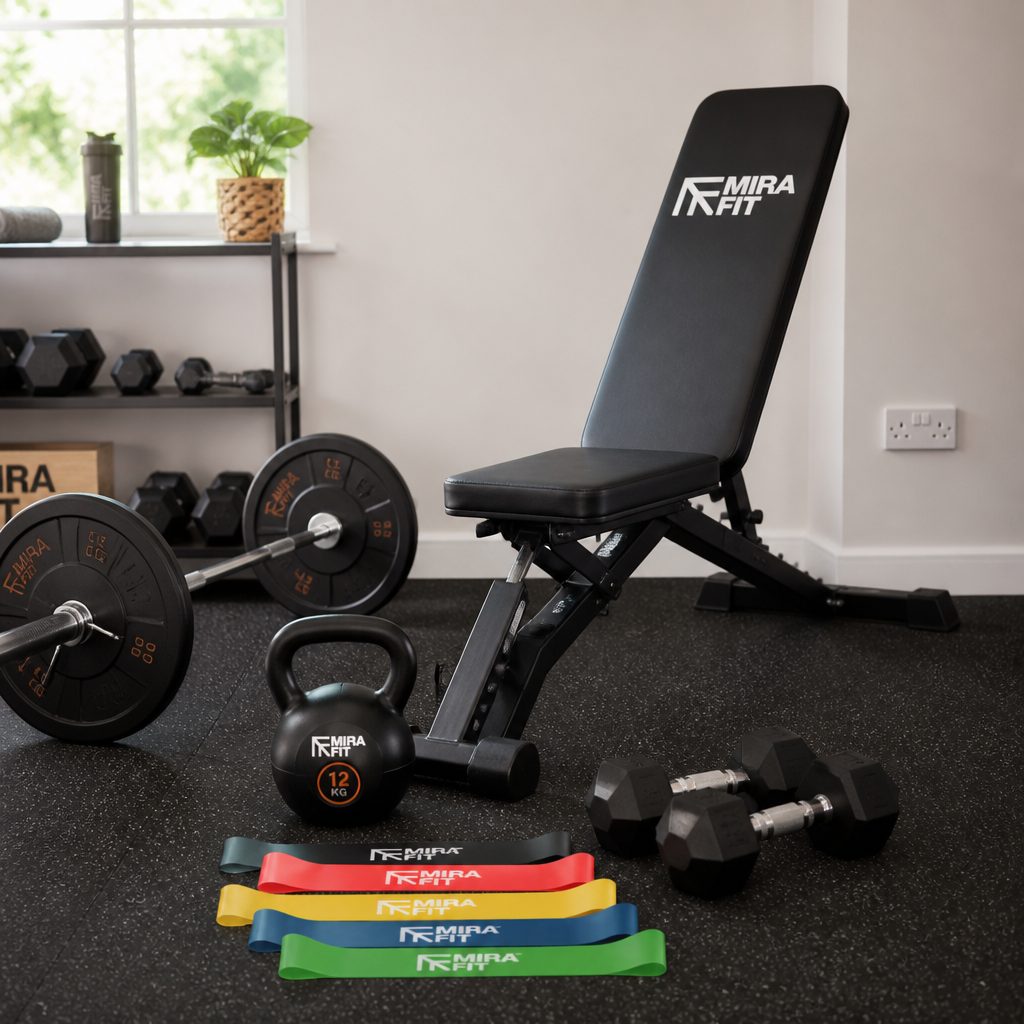
The best starter gym is the one matched to your actual room and routine: simple resistance for beginners, a bench for committed free-weight work, and bands for flexible accessory training.
Frequently asked questions
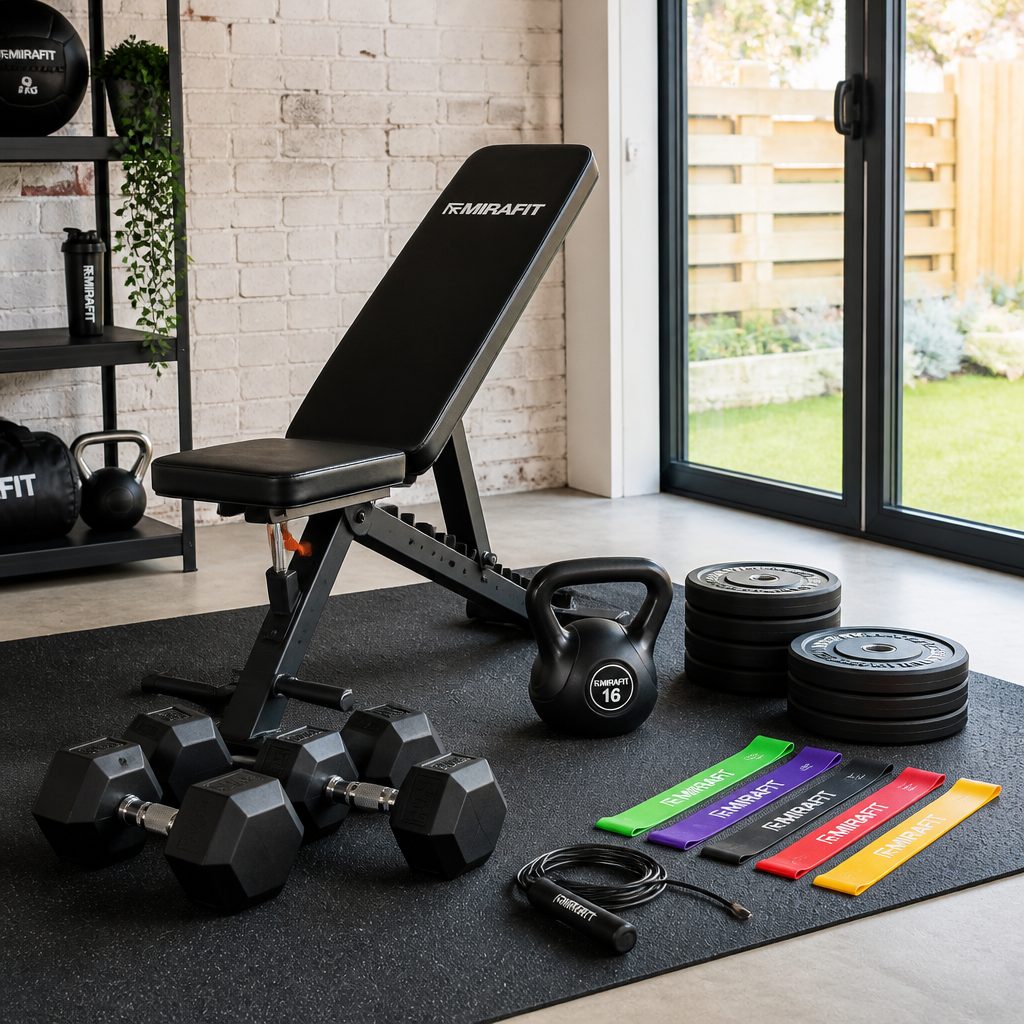
A compact, well-chosen collection of free weights, a bench, bands and floor protection remains one of the most effective ways to start training at home.
The bottom line
The best home gym kit under £300 was not a single boxed product. It was a thoughtful collection built around adjustable dumbbells, then strengthened with a stable bench, bands and a decent mat. Start with the PROIRON 40kg Adjustable Dumbbells if you want the most realistic foundation for a full kit. Choose the MuscleSquad 27.5kg Adjustable Dumbbells if rapid adjustments will genuinely help you train more often. Add the Mirafit M150 Adjustable Weight Bench when you have the space and want free-weight training to feel properly complete. It is not flashy. It is better than flashy. It is enough equipment to get seriously started and keep progressing long after the novelty has worn off.