
Best Walking Pads for Working From Home
The best under-desk treadmills for remote workers who would rather walk through a spreadsheet than keep paying recurring gym fees: compared for quietness, weight limit, deck space and whether they can disappear under the sofa when the workday is done.
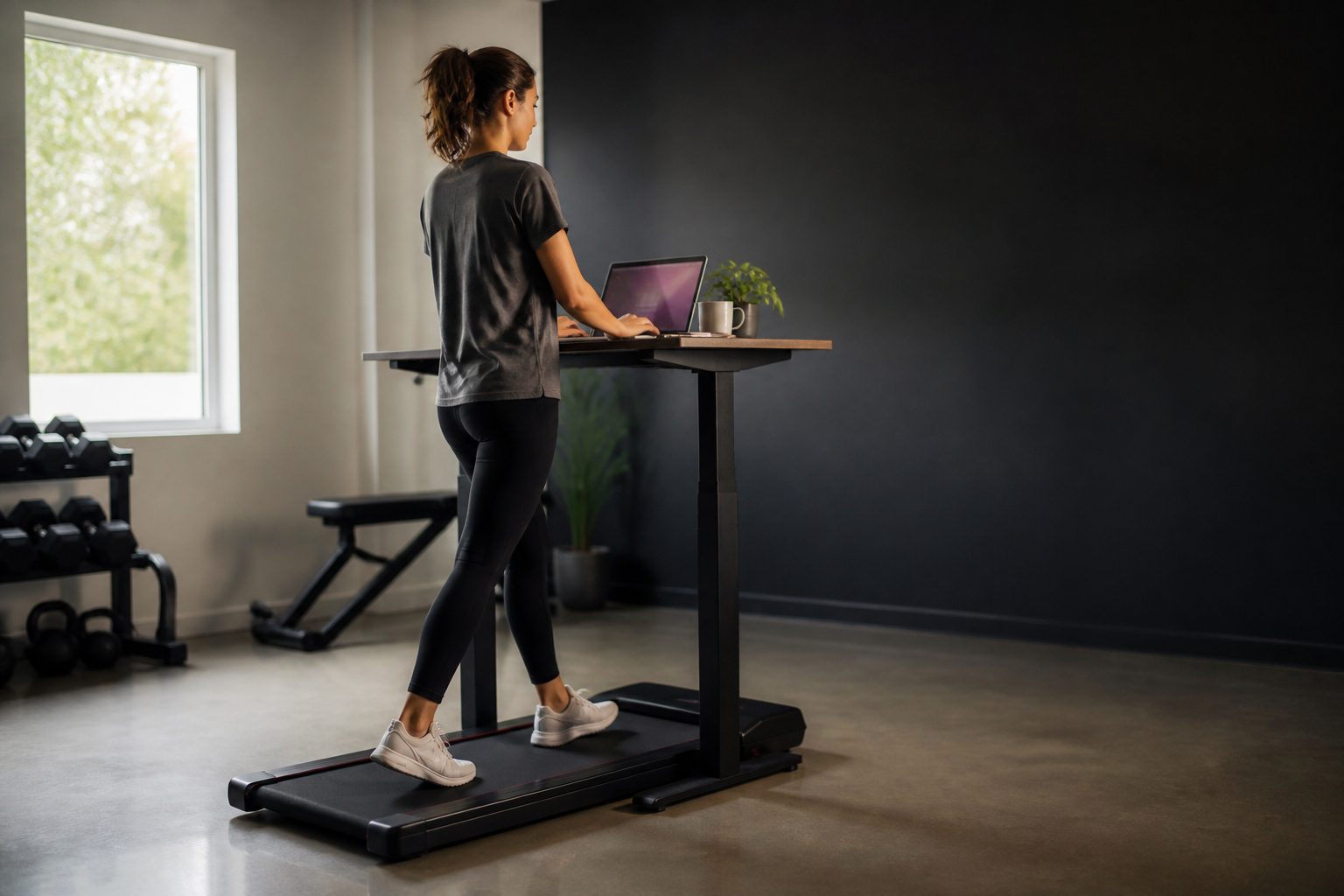
A walking pad beneath a properly adjusted standing desk can turn low-intensity movement into part of the working day rather than another appointment to squeeze into the diary.
 By James Oduya · Staff Writer & Home Gym Columnist · Updated August 24, 2026
Why a walking pad makes sense for home workers
Working from home had solved certain problems beautifully. There was no commute, no damp coat hanging over the radiator and no colleague reheating fish in a communal microwave at eleven in the morning. It had also created a rather efficient route between desk, kettle, fridge and sofa. The step count could become a minor embarrassment before lunch.
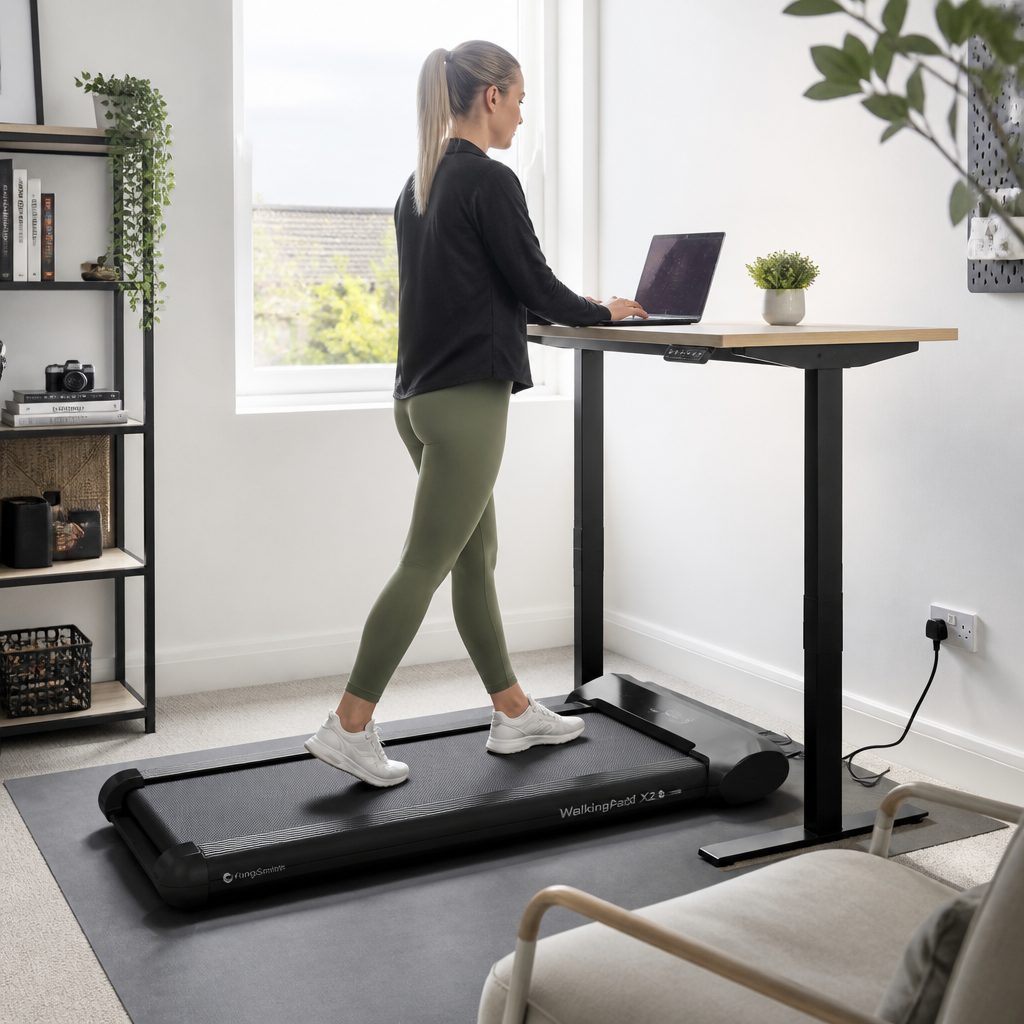
Deck room, walking speed and the practical task of storing the machine matter more in a compact home office than flashy fitness-app extras.
A walking pad does not turn a workday into a boot camp. That is exactly why it can work. At a sensible pace, you can answer straightforward emails, join a meeting where you are mostly listening, read a document or plod through a presentation without turning it into a dramatic performance. It is gentle background movement. The aim is not to sprint whilst trying to explain a quarterly forecast. Nobody needs that sort of chaos.
For many people, the real financial attraction is equally simple. A walking pad is a one-off piece of home gym kit that can support frequent low-intensity movement without another recurring membership charge. It will not replace strength training, outdoor walking or a proper run if those are things you enjoy. But it can reduce the number of days on which you have barely moved outside the kitchen.
The catch is that these machines are not interchangeable. A cheap pad with a short belt may be adequate for a smaller walker at a slow pace, but feel cramped for someone tall. A machine that is merely "quiet" in a product listing can still be intrusive in a small flat with timber floors. And the best folding mechanism in the world is pointless if the folded machine is still too heavy to move without muttering at it.
What matters before you buy one
Start with the desk, not the treadmill. A walking pad needs a stable standing desk or desk converter with enough adjustment to keep your elbows roughly comfortable whilst walking. A low desk encourages you to hunch. A wobbly desk encourages you to make a coffee and abandon the whole plan. Neither is ideal.
Noise is more than a decibel claim
A quiet office sits at roughly 40 dB, whilst normal conversation is around 60 dB. Motor figures are useful, but the belt, your footfall and the floor beneath the machine all contribute. In a flat, a protective mat is usually part of the purchase rather than an optional flourish.
Deck length decides whether walking feels natural
A longer deck gives a taller person more margin for a relaxed stride. The LifeSpan TR1200-Glow Up has a 50-inch deck, while the Goplus 2 in 1 Folding Treadmill has a 39.3-inch deck that is described as adequate for users up to 6 feet tall. That difference is not decorative.
Weight capacity is a comfort and durability consideration
Buy within the stated limit, not right on its edge. The models here span from Egofit's 220 lb capacity to the LifeSpan's 350 lb rating. It is worth being boringly literal about this specification.
Foldability is only useful if you will use it
Some machines fold in half; others are simply slim enough to roll away. Measure the space under your bed, sofa or spare-room desk before falling in love with an elegant product photograph. Your skirting boards have opinions too.
The realistic work-from-home pace
For most desk work, a gentle walking pace makes more sense than chasing the highest speed figure. Typing, mouse precision and speaking clearly on calls all become less convincing as speed rises. Treat extra speed as flexibility for off-desk sessions, not as the reason to buy an under-desk model.
Walking pad comparison table
This is the useful bit if you are trying to compare machines without opening fourteen browser tabs and forgetting why the first tab was there. Where manufacturers publish measurable details, they are shown below. A dash-free table is not a prize in itself; it is better to compare only the figures that genuinely help you choose.
| Model | Motor | Maximum speed | Deck size | Weight capacity | Storage or noise highlight |
|---|---|---|---|---|---|
| LifeSpan TR1200-Glow Up | 2.25 CHP | 4 mph | 20 × 50 in | 350 lb | 47 dB at 1 mph; 59.8 dB at 4 mph |
| WalkingPad A1 Pro | 1 HP brushless | 4 km/h | 47.2 × 16.5 in | 300 lb | 180-degree fold |
| WalkingPad Z1 | 1.25 HP brushless | 3.7 mph | — | 242 lb | Below 40 dB; 0.16 m² folded footprint |
| WalkingPad P1 | 0.75 HP brushless | 6 km/h | 1270 x 650 mm | 100 kg | 32.5 × 21.5 × 5 in when folded |
| Goplus 2 in 1 Folding Treadmill | 2.25 HP | — | 39.3 in long | — | Below 45 dB; folding handrail |
| WalkingPad X218 | — | 11.5 mph | Longest and widest WalkingPad deck | 300 lb | Foldable design |
| DeerRun Q1 Mini | — | 3.8 mph | — | — | Compact, remote-controlled format |
| Egofit | — | 3.1 mph | — | 220 lb | 38 × 18 in; fixed 5% incline |
The LifeSpan is the clear specification leader for deck space and stated capacity. The Z1 is the standout if quietness and a genuinely small folded footprint top the brief. The A1 Pro lands in a particularly sensible middle ground for people who need a higher capacity than the Z1 but still want a fold-flat machine. The X218 is really a different proposition: more treadmill than discreet walking pad, with speed to spare.
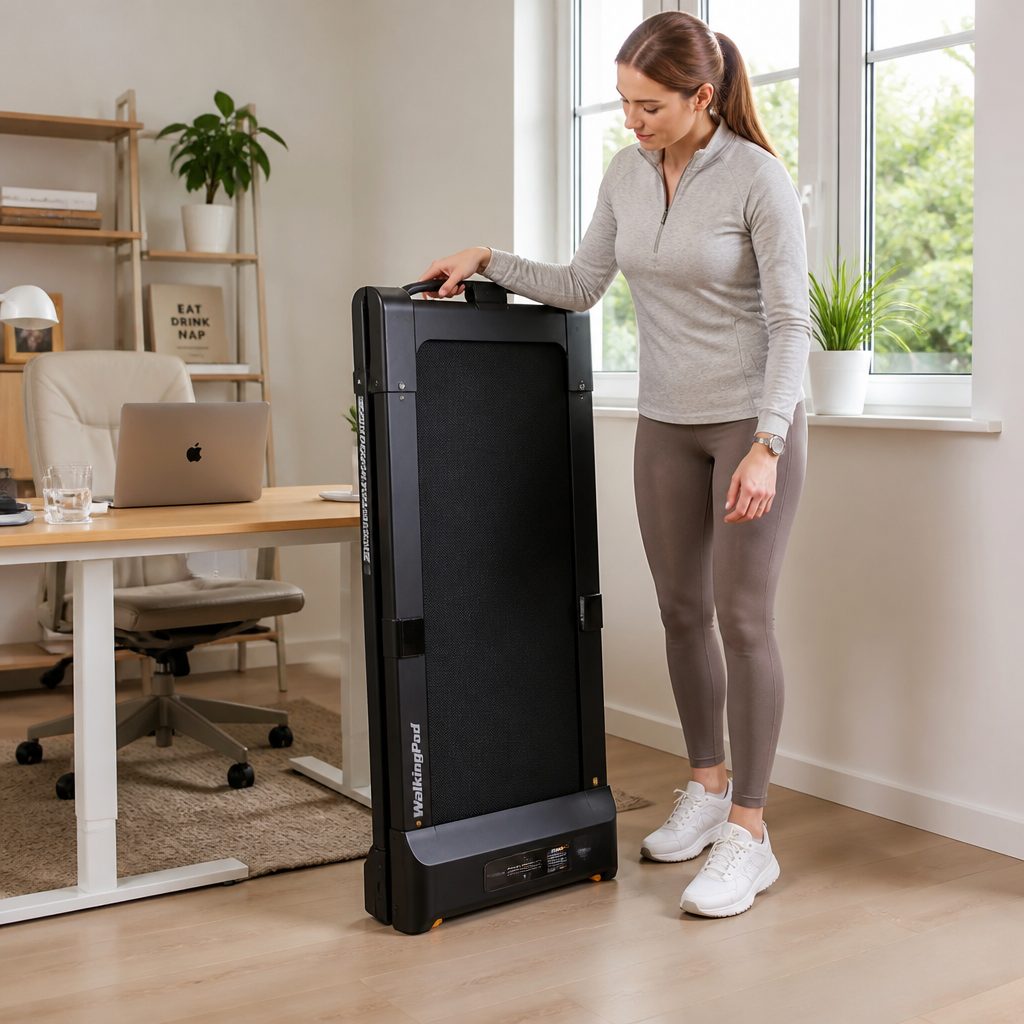
A foldable walking pad can be much easier to live with in a flat, especially when the home office also has to function as a dining room, guest room or both.
The ranked picks
1. LifeSpan TR1200-Glow Up — Best for quiet, serious daily walking
The LifeSpan TR1200-Glow Up is the grown-up option here. It is not trying to be the tiniest or lightest machine in the room. Instead, it brings the kind of proportions and stated capacity that make regular walking feel less like balancing on a moving postage stamp.
Its 20-by-50-inch deck is one of the strongest reasons to buy it. That is a notably generous walking surface, especially beside the 39.3-inch deck length of the Goplus. The 350 lb capacity is also the highest confirmed figure in this guide. If you want a machine that feels properly substantial under a standing desk, rather than merely convenient, this is the pick.
Noise information is unusually helpful. The TR1200 recorded 47 dB at 1 mph, 50.1 dB at 2 mph, 54 dB at 3 mph and 59.8 dB at 4 mph. Those numbers demonstrate an important truth: the same machine can be pleasantly unobtrusive at an email-friendly pace and much more noticeable when pushed harder. At low speed, it should be easier to share a home with than many basic pads.
Pros
- Large 20-by-50-inch deck gives a relaxed walking platform.
- Highest stated 350 lb capacity in this roundup.
- Measured noise figures make its quiet-running claim more useful.
- Six impact-absorbing shocks support a more comfortable daily walk.
Cons
- At 114 lb, it is a substantial machine to move around.
- Its 63-inch overall length needs proper floor space.
- Maximum speed is focused on walking rather than running.
2. WalkingPad A1 Pro — Best fold-flat all-rounder
The WalkingPad A1 Pro makes a convincing case for the type of buyer who needs the pad to disappear at the end of the day. Its 180-degree folding design turns it into a small-suitcase-shaped package rather than a long, awkward slab that must live against a wall.
The deck measures 47.2 inches long and 16.5 inches wide. That is not as broad as LifeSpan's 20-inch platform, but it is long enough to make this feel like a meaningful step up from the smallest budget machines. The 300 lb capacity gives it a substantial advantage over the Z1 and Egofit for walkers who need more headroom.
The A1 Pro uses a quiet, long-life brushless 1 HP motor and offers FootSense automatic speed control, a remote and KS Fit App control. FootSense is handy in theory because it keeps controls out of your hands when you are working. In practice, the remote remains reassuringly simple for anyone who would rather press a button than negotiate with an app before the first coffee.
3. WalkingPad Z1 — Best for quiet flats
The WalkingPad Z1 is the obvious answer for a remote worker whose first concern is noise. Its stated sound level is below 40 dB, which puts its claim below the rough benchmark of a quiet office. That does not mean it becomes silent once actual footsteps and floor vibration enter the equation. It does mean the motor itself is aimed at a particularly discreet use case.
The Z1 also folds into a stated footprint of 0.16 square metres. For a small flat, that figure matters. It is the difference between a machine that is part of the room and one that can be packed away before someone arrives for dinner and asks why your living room resembles a modest sports centre.
The 1.25 HP brushless motor reaches 3.7 mph, which is ample for brisk walking. Its 110 kg, or 242 lb, capacity is lower than the A1 Pro and LifeSpan, so this is a model to choose for its compact, quiet personality rather than maximum robustness. FootSense automatic speed control is included, keeping the Z1 well aligned with hands-busy desk use.
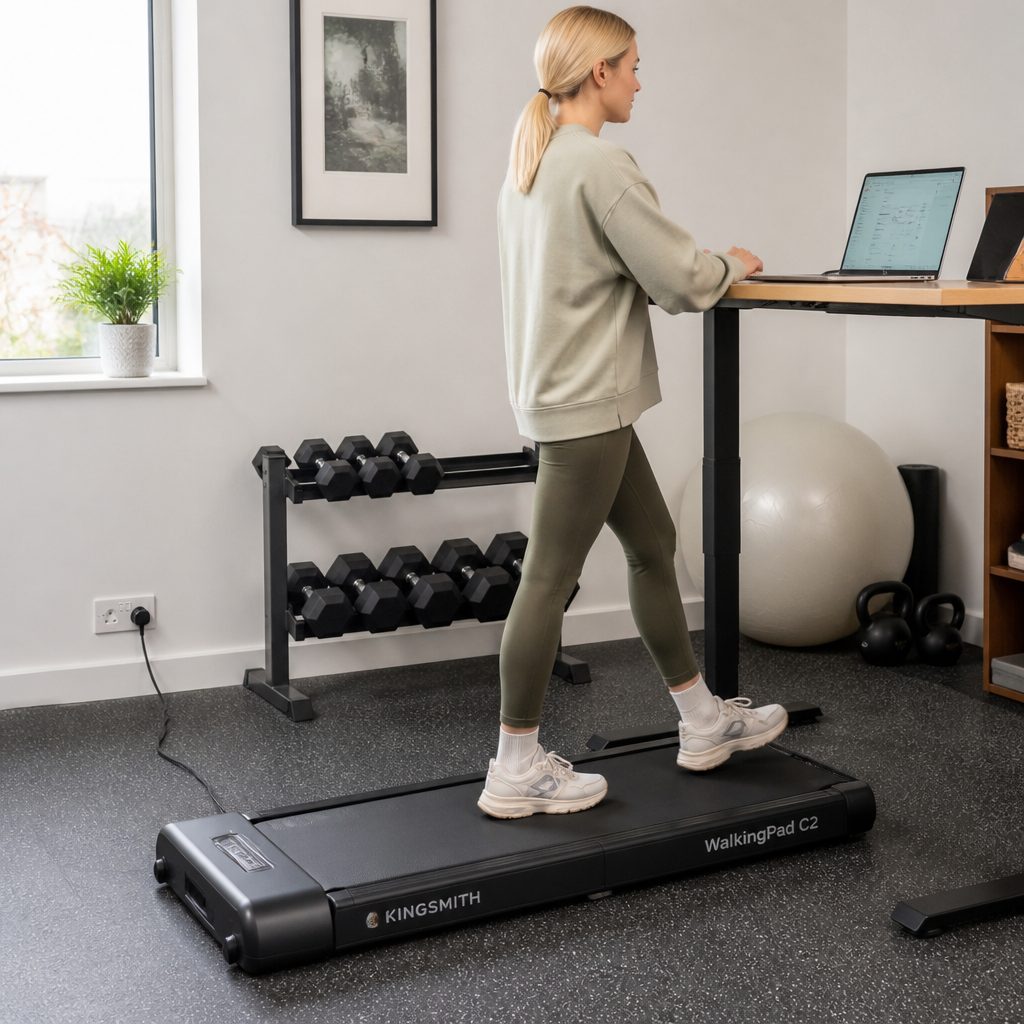
Quietness is particularly important in flats, where motor sound, footfall and vibration can all travel more readily than anyone would like.
4. WalkingPad P1 — Best no-fuss compact walker
The WalkingPad P1 is a sensible choice for someone who values a straightforward under-desk format. It arrives fully assembled, which sounds mundane until you have spent an evening assembling gym equipment with an Allen key designed for ants. No installation means you can concentrate on getting the desk height right rather than reading diagrams upside down.
Its 0.75 HP brushless motor is intended for walking rather than athletic theatrics, and the ultra-slim running board has a 180-degree folding design. Folded dimensions of 32.5 by 21.5 by 5 inches make it an especially compelling option where vertical storage space is limited. It is slim enough to suit a home where every spare inch has already been allocated to something else.
The P1 has three speed-adjustment methods, providing a welcome bit of flexibility for different work setups. It is a clean, practical choice for gentle daily movement, particularly when easy storage ranks above a very large deck or high top speed.
5. Goplus 2 in 1 Folding Treadmill — Best for walking and occasional running
The Goplus 2 in 1 Folding Treadmill takes a more versatile approach. Its folding handrail lets it operate as an under-desk walking treadmill, then transform into a conventional running-style format. That makes it appealing if you do not want two machines occupying your home.
The 2.25 HP motor is a strong figure for this category, and the manufacturer-rated noise level is below 45 dB. It works best at walking speeds below 3 mph when used beneath a desk, which is worth treating as advice rather than a limitation. Below 3 mph is exactly where many people can still type, read and participate in calls without sounding as though they are broadcasting from a ferry deck.
The 39.3-inch deck length is described as adequate for users up to 6 feet tall. Taller walkers should consider that carefully: a machine can technically work, yet still subtly encourage a shortened stride. The Goplus earns its place because it is flexible, not because it is the most spacious desk-walking platform.
Pros
- Folding handrail supports both desk walking and running-style sessions.
- 2.25 HP motor is substantial for a two-in-one design.
- Below-45 dB manufacturer noise rating suits shared homes.
Cons
- Deck length is less generous than LifeSpan and A1 Pro.
- Under-desk use is best kept below 3 mph.
- The raised-handrail format is less visually minimal than a pure pad.
6. DeerRun Q1 Mini — Best budget walking pad
Shop DeerRun Q1 Mini on Amazon UK
The DeerRun Q1 Mini is the uncomplicated budget recommendation. It is smaller and lighter than many alternatives, reaches 3.8 mph and uses a remote for control, with an LED display that shows distance at a glance. For a first walking pad, that is a very understandable specification: press button, walk, get on with work.
Its budget positioning naturally involves compromises. The belt is short, and there is no incline. That makes it better for shorter, slower walking bouts than for taller users wanting a big, open stride. Still, not everybody needs a machine that could double as a commercial treadmill. Some people need help escaping the chair during a long Wednesday afternoon. The Q1 Mini can do that job without making the purchase feel overly serious.
7. Egofit — Best for the tiniest home office
The Egofit is for the genuinely space-starved. At 38 inches long and 18 inches wide, it is the smallest motorised treadmill in this guide. That is a remarkable advantage if your work area is a bedroom corner, a box room or an improvised setup between the dining table and the radiator.
It has a fixed 5% incline, a maximum speed of 3.1 mph and a 220 lb capacity. The built-in incline may appeal to walkers who want a little more challenge from a gentle speed, although it also means you do not get the choice of a completely flat walk. The sinking motor design sits flush with the belt, helping the compact proportions.
There are clear trade-offs. Its stated noise rating is under 70 dB, the loudest claim among the named machines here, and the 220 lb capacity is the lowest. It is the specialist solution for a small space, not the all-round answer for every body or every home.
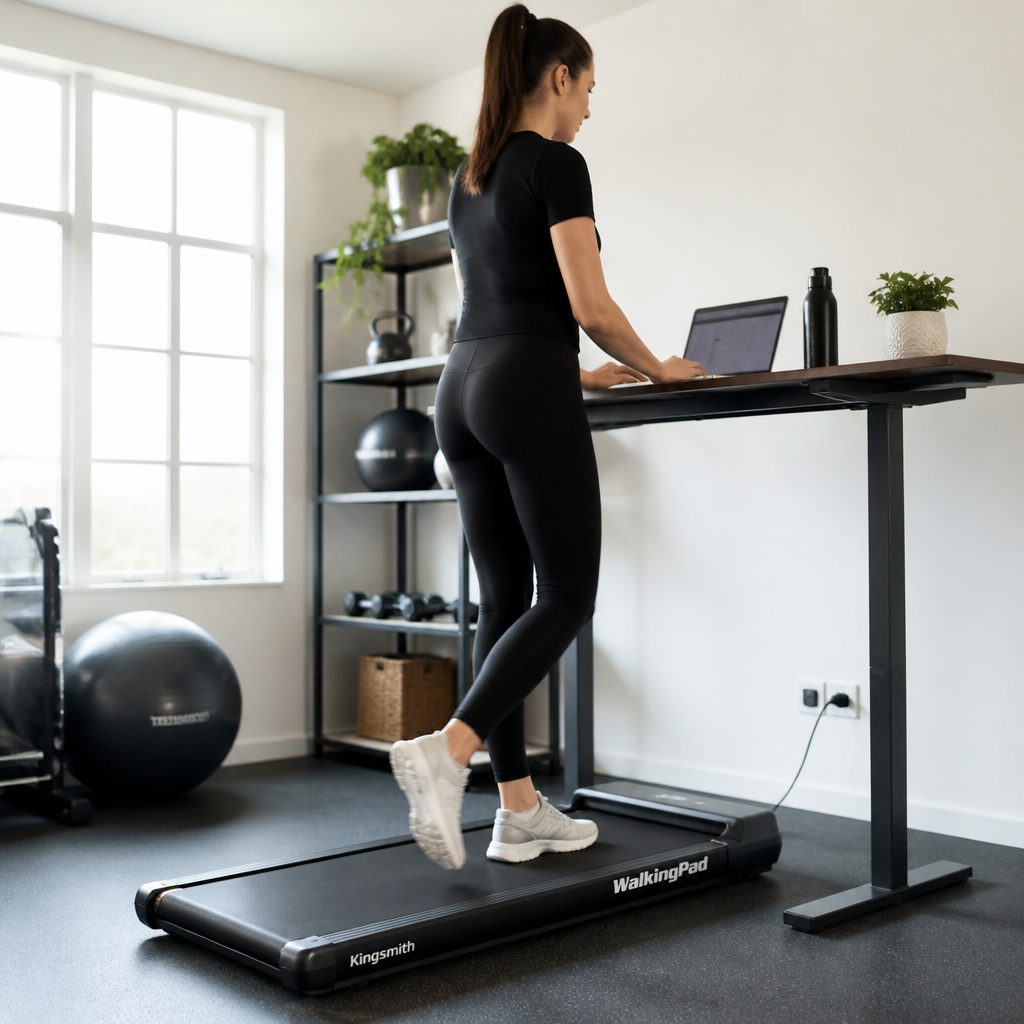
The smallest walking pads suit tight rooms well, but compact dimensions can bring shorter decks, lower capacities and more compromise around noise or stride comfort.
8. WalkingPad X218 — Best premium hybrid treadmill
The WalkingPad X218 sits at the ambitious end of this category. With a maximum speed of 11.5 mph, a 300 lb capacity and the longest and widest deck in the WalkingPad range, it is designed for someone who wants more than a gentle under-desk walker.
It still has the space-saving folding approach that makes WalkingPad products attractive, but the X218's real appeal is versatility. It has advanced shock absorption to reduce impact on knees and ankles, and it can sync with Apple Watch for heart-rate and performance tracking. If you want a machine for slow workday walking, structured running away from the desk and general home cardio, it brings all three ideas together.
That breadth also explains why it is not my first recommendation for a tiny work nook. If your entire requirement is "quietly walk whilst answering emails and put it under the sofa afterwards," the Z1 or A1 Pro is the more focused purchase. The X218 is for the person who wants one serious machine to cover a broader fitness routine.
How quiet are walking pads in real homes?
Noise claims deserve a little scepticism, though not cynicism. A stated motor figure tells you something useful, but it does not account for carpet, laminate, floorboards, a loose desk, the pace you choose or how heavily you land. The LifeSpan's figures show the basic pattern clearly: 47 dB at 1 mph rises to 59.8 dB at 4 mph. Speed matters.
If you live above somebody, protect the floor and avoid assuming "quiet" means "inaudible below". A dense treadmill mat can reduce vibration and protect flooring. It is also worth placing the machine away from the most resonant part of the room where possible. If a desk rattles at walking speed, the desk is now the noisy component. Fitness equipment has a way of exposing domestic truths.
For meetings, a gentle pace is the sensible default. Even a quiet motor cannot prevent your breathing, footsteps and desk microphone from revealing that you are moving. Save brisk walking for listening-only calls, document reading or breaks between focused tasks.
Foldability, storage and flat-friendly setup
Before ordering, measure three things: the space where you will walk, the space where the machine will live, and the clearance below the desk. Do this with a tape measure, not an optimistic glance. The A1 Pro and P1 fold through 180 degrees, while the Z1's Z-fold design has a stated footprint of just 0.16 square metres. Those are meaningful advantages in homes where equipment cannot become permanent furniture.
Remember that a machine's own weight affects storage as much as its folded dimensions. The LifeSpan weighs 114 lb, making it better suited to a dedicated position than frequent lifting. The A1 Pro weighs 28.5 kg, or 63 lb, which remains substantial but is more manageable for a fold-away routine. A pad you can realistically move is the one you are more likely to put away rather than leave leaning in a doorway for three weeks.
Set up the standing desk before the first walk. Keep your screen at a comfortable height, make sure cables have enough slack and begin very slowly. The first few sessions can feel oddly busy because your brain is trying to type, balance and remember why you started walking. Give it time. It becomes less theatrical quickly.
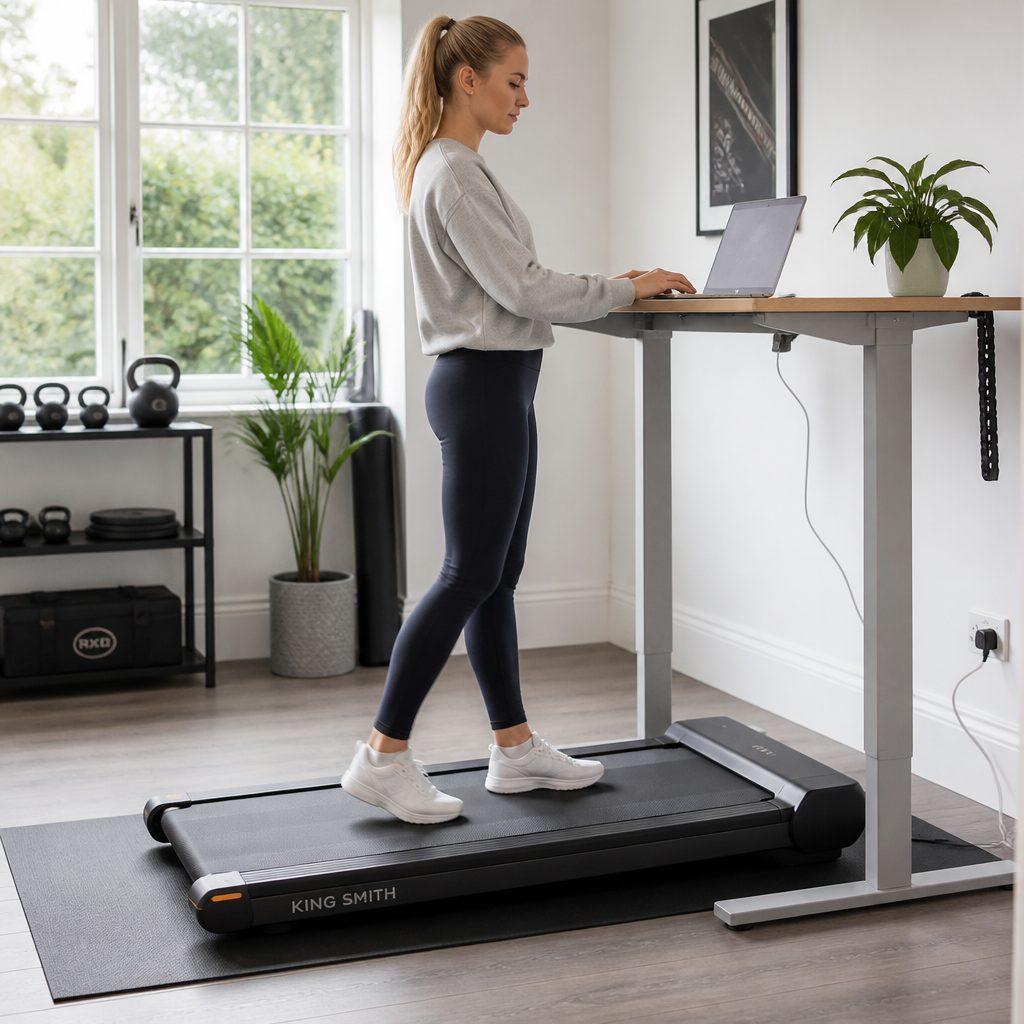
A practical setup includes enough desk height, cable slack, a stable work surface and floor protection—not just a treadmill pushed beneath a tabletop.
Which walking pad is best for you?
There is no universal winner because working from home is not one universal experience. Some people have a dedicated office and can leave a treadmill in place. Others close a laptop at five and need the room to become a living room again. These are the clearest choices by buyer type.
Best all-rounder
WalkingPad A1 Pro. A 300 lb capacity, long 47.2-inch deck and 180-degree fold make it the balanced choice for many home workers.
Best for flats
WalkingPad Z1. Its below-40 dB stated noise figure and compact Z-fold footprint make it the natural small-home specialist.
Best on a budget
DeerRun Q1 Mini. A simple remote-controlled walker for people who want to start moving without buying a more elaborate machine.
Best premium choice
LifeSpan TR1200-Glow Up. Choose it for the expansive deck, 350 lb capacity and unusually detailed low-speed noise figures.
Best for tiny rooms
Egofit. The 38-by-18-inch footprint is difficult to beat where space is the overriding concern.
Best for walking and running
WalkingPad X218. Its 11.5 mph maximum speed and broad WalkingPad deck make it the flexible fitness-first option.
Making the switch from gym fees actually stick
A walking pad earns its keep through repetition, not through one heroic Monday. Start with short blocks. Walk during emails that do not require precision, whilst watching a training video, or for the first portion of an audio-only meeting. Use it as an alternative to the habitual afternoon scroll rather than trying to work through an intense task whilst moving.
It also helps to be honest about what it replaces. A walking pad can replace some gym cardio or the mental pressure of needing to go out after work merely to move. It does not replace resistance training if building strength is a goal, and it cannot recreate the outdoors if a fresh-air walk is what keeps you sane. Fortunately, it does not need to. Its job is to make a sedentary day less sedentary.
The best outcome is modest but powerful: more steps, more regular movement and fewer days ending with the uncomfortable realisation that the furthest you walked was to answer the door. That is not glamorous. It is, however, very useful.
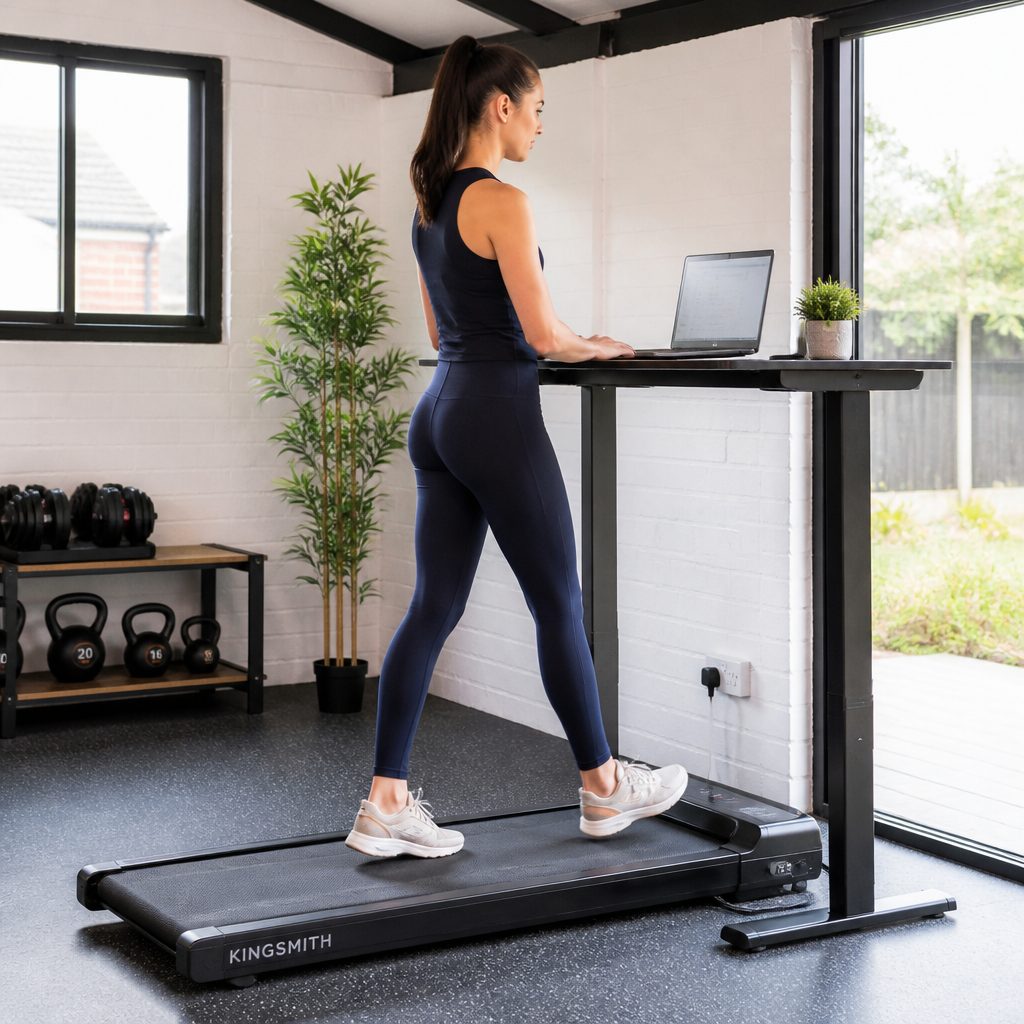
A walking pad works best as an easy daily habit: slow movement during lower-concentration tasks, with more demanding exercise saved for dedicated time.
Frequently asked questions
Yes, but start slowly. Straightforward typing, reading and admin work are usually the easiest places to begin. Detailed spreadsheet work, design tasks or anything needing precise mouse control may be better done standing still or sitting down. A stable standing desk makes a huge difference.
Gentle walking is generally the practical zone for desk work. The Goplus specifically works best under a desk below 3 mph, and that is a useful reference point. Faster speeds are better saved for breaks or dedicated exercise rather than client calls.
They can be, but floor vibration matters as much as motor sound. The WalkingPad Z1 has a stated noise level below 40 dB, while the Goplus is rated below 45 dB. Use a protective mat, consider your flooring and walk gently if neighbours are close by.
The LifeSpan TR1200-Glow Up has the largest stated deck in this roundup at 20 by 50 inches. The WalkingPad X218 is described as having the longest and widest deck in the WalkingPad range, while the A1 Pro offers a 47.2-inch-long deck.
The LifeSpan TR1200-Glow Up has the highest stated capacity here at 350 lb. The WalkingPad A1 Pro and X218 are both rated to 300 lb, while the Z1 is rated to 242 lb and Egofit to 220 lb.
Often, yes, provided you measure the clearance first. The WalkingPad P1 folds to 5 inches high, while the Z1 has a 0.16-square-metre folded footprint. The machine's weight matters too: a large unit may fit physically but still be awkward to move every evening.
It is a sensible addition, especially on hard floors or in upstairs flats. A mat can help protect flooring and reduce vibration. It will not make any treadmill silent, but it can make the setup kinder to both your home and the people below you.
It can replace some low-intensity cardio and make regular movement much easier, which may be enough for people who mainly used the gym to walk. It does not replace every type of training. Think of it as a practical daily activity tool rather than an entire fitness centre hiding beneath your desk.
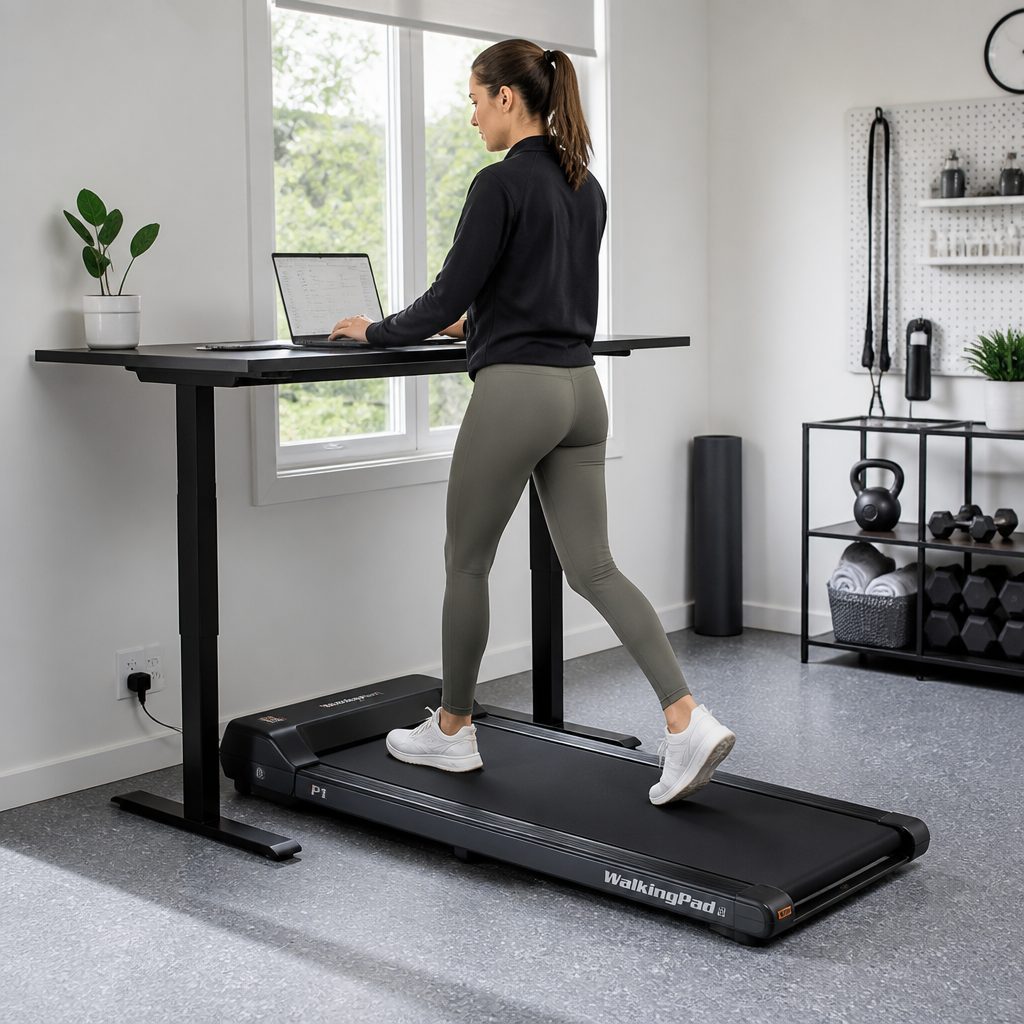
The right walking pad is the one that suits your desk, stride, floor and storage space well enough that using it becomes ordinary rather than aspirational.
The bottom line
The WalkingPad A1 Pro is the best all-round walking pad for working from home because it combines a substantial 300 lb capacity, a long deck and a genuinely practical 180-degree fold. Choose the WalkingPad Z1 if quietness and a small-flat footprint are your overriding priorities. Choose the LifeSpan TR1200-Glow Up if you have space for a larger machine and want the most confidence-inspiring deck, capacity and measured low-speed noise performance. The simple rule is this: buy for the room and workday you actually have, not the imaginary home gym you may build one day. Your future self, and probably your skirting boards, will be grateful.