
Evidence-first buying guidance
Why a factual treadmill buying guide cannot be ranked from missing product information
A useful treadmill guide depends on verifiable model-level details. Without product names, specifications, pricing, dimensions, availability, folding measurements, warranty terms, or test results, publishing picks or comparisons would turn uncertainty into invented advice.
Editorial position: the supplied material contains no identifiable treadmill products and no source data with which to compare them. It would therefore be inappropriate to name a "best" option, assign rankings, populate a comparison chart with implied facts, or make a purchase recommendation. Those actions would require claims that cannot be checked against the supplied record.
 By James Oduya · Staff Writer & Home Gym Columnist · Updated August 23, 2026
The central problem: there is nothing concrete to evaluate
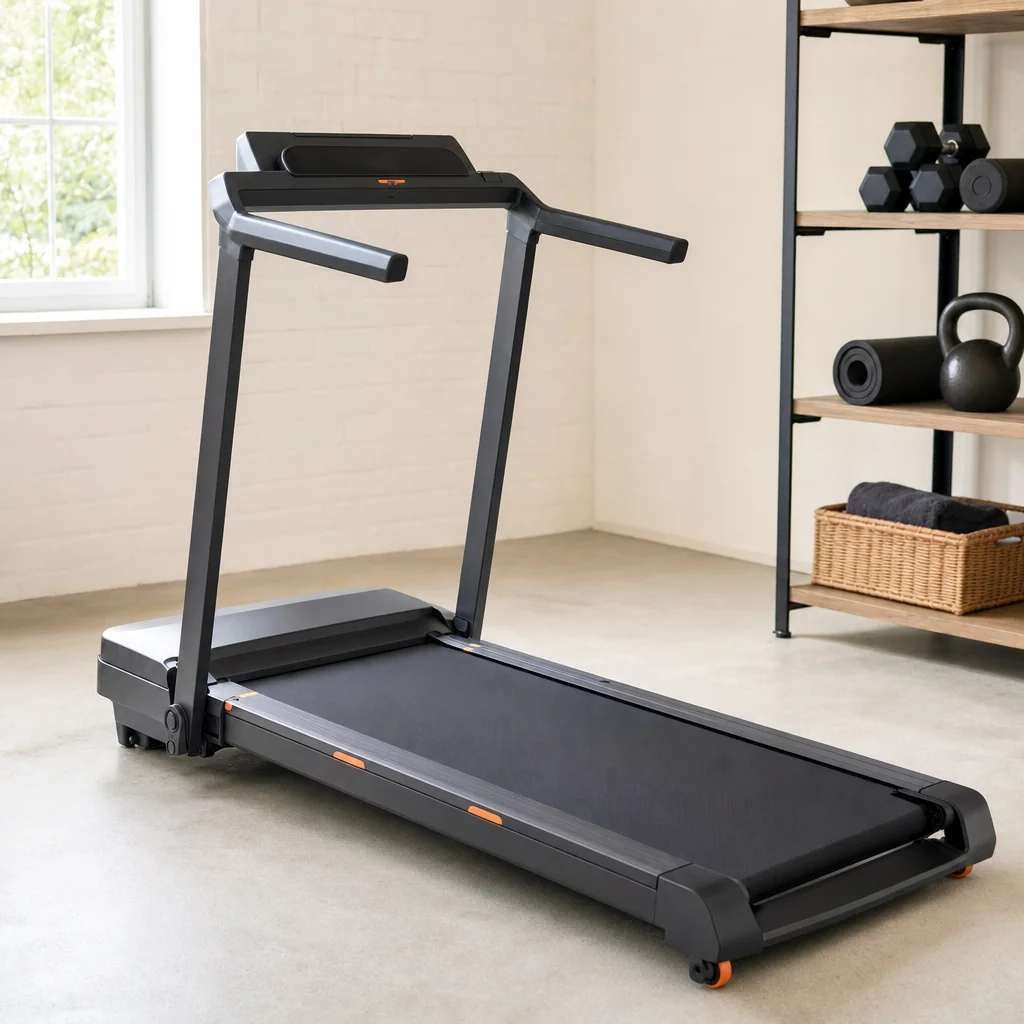
A treadmill buying guide is not simply a list of attractive features. It is an assessment of particular machines sold in a particular market at a particular time. The difference matters. "A folding treadmill with incline may suit small spaces" is a general statement about a category. "This folding treadmill is the best for small apartments" is a product judgment. The second statement needs evidence: the exact model, its assembled footprint, its folded footprint, its weight, how it locks when stored, its incline mechanism, its user-weight limit, its noise characteristics, its current price, and whether it can actually be bought in the relevant region.
None of those model-level facts are present in the supplied material. There are no manufacturer names, model codes, retailer listings, manuals, spec sheets, prices, release dates, inventory notices, or independent testing notes. There is also no indication of the intended country or currency. Even a seemingly basic claim such as "good value" cannot be responsibly made without a price and a comparable set of alternatives. A treadmill that is excellent at one price can be poor value after a discount ends, a warranty changes, or a competing model becomes available.
Missing information also prevents a reader from understanding what kind of treadmill is under discussion. A compact walking pad, a folding home treadmill, a high-speed running treadmill, and a commercial gym unit are all treadmills in a broad sense, but they are designed around different constraints. Their decks, motors, handrails, consoles, storage arrangements, intended session lengths, and maintenance expectations can differ substantially. Treating them as interchangeable would create the appearance of a useful comparison while hiding the distinctions that determine whether a machine fits a real household and training routine.
Why rankings require more than a feature list
Rankings carry a strong implication: that several products were measured against a stated set of criteria and that one product performed better overall, or better for a clearly defined use case. A credible "best overall" label is not a decorative heading. It is a conclusion. Readers reasonably assume the conclusion reflects comparisons in price, performance, usability, durability, safety, support, and suitability for different users.
Without a named product set, there is no candidate pool. Without specifications, there is no reliable basis for comparison. Without test observations, there is no way to separate a promising specification from a frustrating real-world experience. For example, two machines can both advertise a similar top speed, yet feel materially different because of belt width, deck cushioning, rail placement, acceleration behavior, display legibility, or the stability of the frame at faster paces. A list that treats a single headline number as a complete measure of quality is not robust enough for a buying recommendation.
Rankings also require a declared perspective. The right machine for a dedicated runner in a detached home may be a poor match for a walker in an upstairs flat. A buyer with limited storage may prioritize folded height and ease of moving the machine; another may prioritize a long deck and firm stability during intervals. One shopper may value trainer-led programming, while another wants a simple console with no recurring subscription. A guide must decide whether it is ranking general capability, specific scenarios, or a balance of several priorities. It cannot silently assume that every reader values the same thing.
A ranking is a claim about trade-offs
"Best" is meaningful only when the trade-offs are visible. A machine can be lighter but less stable, more compact but shorter in deck length, less expensive but supported by a shorter warranty, or more feature-rich but dependent on a paid platform. The supplied material contains no evidence from which to identify, weigh, or explain such trade-offs.
The minimum evidence needed for each treadmill
Before any product can be compared, it needs a clear identity. That normally starts with the manufacturer, the full model name, and a model number where available. Retail listings often use shortened titles, bundle names, or promotional labels that obscure the exact version being sold. A model name alone may not distinguish between a current revision and an older revision with a different motor, console, warranty, or folding arrangement. Identifying the exact machine is the first safeguard against accidental misinformation.
The next requirement is a source trail. Manufacturer manuals and official product pages are useful for stated specifications, safety information, assembly requirements, and warranty language. Retailer pages can help establish a current selling price and local availability, but their details should be checked because copied specifications and stale stock notices are common. Independent hands-on testing is valuable for observations that are rarely captured in a specification table, such as how difficult a treadmill is to assemble, how much the console shakes at a run, whether the controls are easy to use while moving, or whether the folding mechanism feels manageable for one person.
Evidence record required before a product can be assessed
- Full brand and model identification, including the version or revision when it is stated.
- Official specifications for dimensions, deck size, speed range, incline or decline range, machine weight, and supported user weight.
- Storage information, including whether the unit folds, its folded dimensions, locking method, and whether it can be safely moved by the intended user.
- Current price, currency, seller, availability date or stock status, and any essential costs such as delivery, installation, membership, or accessories.
- Warranty coverage broken down by frame, motor, parts, labour, and electronics rather than summarized as one vague warranty number.
- Testing notes or credible owner evidence covering operation, comfort, noise, console behavior, build quality, and longer-term reliability where available.
This is not an unnecessarily high bar. It is the minimum record that allows a guide to distinguish between facts supplied by a manufacturer, observations made during testing, and editorial judgments based on those facts. Readers deserve to know which type of statement they are reading. A stated 120-kilogram user limit, for instance, is not the same as an independent conclusion that the treadmill remains stable and comfortable for a particular user at a particular pace.
Specifications must be interpreted, not merely repeated
Even when specification sheets are available, they do not automatically answer a buyer's question. A motor figure may be described in peak terms, continuous-duty terms, or with terminology that is not consistently used across brands. It should not be treated as a simple league-table number. The useful question is whether the machine has demonstrated appropriate performance for its intended walking or running use, under the limits the manufacturer states, with acceptable smoothness and heat management over time. That requires context and, ideally, test evidence.
Deck dimensions need similar interpretation. Length and width affect stride freedom, confidence, and safety, but the best dimensions depend on the user's height, gait, speed, and running style. A compact deck can be perfectly suitable for careful walking and may be a rational compromise for a small room. It may be restrictive for faster running, for users with longer strides, or for people who prefer more space around their foot placement. A guide should avoid presenting any single deck dimension as universally adequate without explaining the intended activity and the relevant limitation.
Incline figures can be misleading when stripped of mechanism and usability. A machine may have a stated incline range, but a buyer also needs to know whether adjustment is manual or powered, whether it can be changed during a workout, whether preset programs use it effectively, and whether the floor clearance remains workable in the intended room. A treadmill set at an incline changes the user's position and may place the console, ceiling, or nearby furniture closer than expected. That is particularly relevant in low-ceiling rooms and converted spaces.
Weight capacity is another area where a number alone is incomplete. It is a manufacturer limit, not a universal guarantee of comfort at every pace. Machine stability depends on construction, deck, frame, use pattern, and maintenance as well as the listed capacity. A conscientious guide would report the stated limit exactly, avoid implying a broader conclusion than the evidence supports, and encourage buyers to account for the demands of their intended use rather than treating the limit as a target.
Space, storage, and delivery are practical buying factors
A treadmill can look modest in a product photograph and still be unsuitable for a home. The assembled footprint is only one part of the decision. Buyers also need a safe access route to the machine, clearance around it, a suitable floor, an appropriate power location, and enough ceiling height for the tallest intended user at the steepest likely incline. These are not cosmetic considerations. A machine that technically fits against a wall may be difficult to mount, unsafe to use, impossible to clean around, or impractical to unfold.
Folded dimensions deserve equal scrutiny. "Folds away" can describe very different experiences: a deck that rises vertically but remains deep, a design that becomes shorter but still needs a dedicated corner, or a low-profile unit intended to slide under furniture. The question is not simply whether a product has a folding label. It is whether its stored size, stored orientation, transport wheels, lifting force, and safety latch suit the user and room. A treadmill that requires substantial lifting may not be a realistic daily-storage choice for someone who cannot comfortably handle its deck.
Delivery and assembly can alter the real cost and usability of a purchase. Heavy fitness equipment may arrive in a large carton, require more than one person to move, or need careful placement before assembly begins. Some machines require substantial assembly; others arrive largely built. A product recommendation should make clear whether information comes from the manufacturer, a seller's service offering, or hands-on experience. It should not assume that a buyer has help, a lift, wide doorways, or a ground-floor installation.
A useful room check before shopping
Measure the intended training area, the route from delivery point to room, doorway widths, ceiling height, and the available storage position. Then compare those measurements with official assembled and folded dimensions for the exact model, allowing a sensible operating margin rather than planning for a machine to occupy every available centimetre. This check cannot be completed for unnamed products with no dimensions.
Price is not available, so value cannot be judged
Value is a relationship between what a buyer pays and what they receive. It is not a synonym for low price, premium branding, or a long list of features. A lower-cost treadmill may be good value for someone who walks occasionally and has limited space. The same machine may be poor value for a runner who needs a longer deck, more stable construction, a higher supported workload, and stronger service coverage. Conversely, an expensive machine may offer capabilities a buyer will never use.
The supplied material gives no prices, currencies, sale periods, package contents, shipping charges, subscription conditions, or stock status. That makes any value statement unsupported. Pricing changes quickly, and a price that was accurate at publication can become misleading after a promotion ends. Availability has the same problem. A product that is unavailable in the reader's country, backordered for an unknown period, or sold only through an unfamiliar marketplace cannot straightforwardly be presented as a practical recommendation.
Total ownership cost deserves attention as well. Some treadmills offer app integration, classes, metrics, or guided workouts that may require a paid membership for full functionality. Replacement parts, servicing, extended protection plans, specialist delivery, and electrical requirements can also affect the cost beyond the checkout page. A factual guide should identify these costs when they are known and should say when they are not. It should never imply that a treadmill's digital features are permanently included if the evidence only confirms a trial period or optional platform access.
Warranty and after-sales support are part of the product
A treadmill is a moving mechanical and electronic appliance. For that reason, warranty coverage and access to support are not minor footer details. Buyers need to know what is covered, for how long, in which country, and under what conditions. A warranty may distinguish between frame, motor, parts, labour, electronics, and wearable components. It may require registration, restrict commercial use, exclude damage caused by placement or maintenance, or provide different terms depending on the seller.
Support quality is harder to summarize than a warranty duration. A long stated warranty does not automatically tell a buyer how easy it is to obtain a replacement part, book a technician, or receive a response when a console fails. Reliable evidence may come from official service policies, authorized repair networks, repeated owner reports, or direct testing of support channels. Isolated reviews are not enough to prove a broad service conclusion, but a pattern can identify questions worth asking before purchase.
With no product names and no warranty documents in the source material, there is no basis for claims such as "best warranty," "reliable brand," or "easy to repair." Those phrases are especially consequential because they can encourage a buyer to spend more based on an expectation of long-term reassurance. Where the evidence is absent, the responsible approach is to state that absence rather than convert a brand impression into a factual promise.
What independent testing would add
Official specifications are necessary, but they are only one side of a thorough review. Testing can reveal how a treadmill behaves once it is assembled, used, folded, moved, cleaned, and operated repeatedly. It can assess whether handrails are convenient without obstructing a natural arm swing, whether quick controls can be found while walking, whether the emergency stop is easy to reach, and whether the display remains readable in ordinary indoor light.
Testing also helps put subjective experiences in context. Noise is a good example. A machine's sound depends on speed, user gait, shoes, floor construction, matting, room acoustics, maintenance, and nearby objects. It would be unreliable to promise that an unnamed treadmill is "quiet." A more careful review might describe the conditions of a noise observation, distinguish motor noise from footfall noise, and explain that upstairs use can transmit vibration even where the machine itself does not sound especially loud at the console.
Similarly, cushioning cannot be reduced to a marketing label. Some users prefer a firmer, more stable platform; others seek greater impact attenuation. The relevant question is whether the deck feels consistent, secure, and appropriate for the intended activity. A guide should not make medical claims about injury prevention without suitable evidence, nor should it imply that any cushioning system removes the need for sensible training progression, supportive footwear where appropriate, and attention to discomfort.
Long-term durability evidence has its own limits. A short review cannot prove how every machine will perform after years of ownership. However, testers can report construction quality, maintenance requirements, early issues, parts availability, and patterns found across a sufficiently broad body of reliable owner feedback. They must separate observed facts from predictions. The supplied material offers none of these observations, so no durability score or reliability ranking can be responsibly created.
A comparison table should show evidence status, not invented product data
A conventional buying-guide table creates confidence because it appears precise. But a table full of blank, guessed, or generalized entries would be worse than no table at all. It would suggest that named machines had been investigated when there are no names to investigate. The only accurate comparison currently possible is a record of the missing inputs and the decisions that cannot be made without them.
| Comparison field | Why it matters | Status in supplied material | What cannot be concluded |
|---|---|---|---|
| Brand and model name | Establishes the exact product being discussed. | Not supplied. | No product can be identified, ranked, or linked to a manual. |
| Dimensions and deck size | Determines room fit, storage practicality, and activity suitability. | Not supplied. | No small-space, walking, or running suitability claim can be made. |
| Speed, incline, and operating details | Helps define training capability and control convenience. | Not supplied. | No performance comparison is possible. |
| Price and availability | Required to assess value and practical purchase options. | Not supplied. | No budget, value, or "best deal" recommendation can be made. |
| Warranty and support terms | Informs expected ownership protection and service risk. | Not supplied. | No after-sales or reliability-related recommendation can be made. |
| Independent test results | Provides real-use evidence beyond promotional claims. | Not supplied. | No tested verdict on comfort, noise, stability, or usability can be made. |
General treadmill advice is not a substitute for product recommendations
It is possible to offer general decision-making advice without pretending to review a specific product. Buyers can begin by defining their primary use: gentle walking, regular brisk walking, occasional jogging, frequent running, structured interval work, or shared household use. This decision helps establish which specifications and physical characteristics deserve the greatest attention. It is more useful than beginning with a generic feature list because it connects the machine to the behavior it is expected to support.
For a walking-focused buyer, ease of access, handrail design, control clarity, compact storage, and a stable low-speed experience may matter more than an ambitious top-speed figure. For a regular runner, deck space, frame stability, comfort over longer sessions, acceleration behavior, and practical cooling or maintenance considerations may become more important. For a household with several users, adjustability, console simplicity, user profiles, supported weight, and the effort required to fold or relocate the unit may matter as much as headline performance.
Buyers should also distinguish between features they will use every week and features that only sound impressive in a product listing. A large screen may be valuable to someone committed to guided workouts, but unnecessary to a person who plans to watch their own device. A broad program library may be attractive, but only if it works without an unwanted ongoing cost and the controls remain usable without it. The best feature set is not the longest one; it is the one that supports consistent use in the buyer's actual home.
These are planning principles, not recommendations for unnamed machines. They help a reader form good questions, but they cannot tell that reader which product answers those questions best until reliable product information is available.
How to evaluate claims encountered on retailer pages
Retail pages are often the first place buyers encounter treadmill information, yet they should be read carefully. Promotional descriptions may highlight maximum settings and omit practical constraints. A phrase such as "space-saving" should lead a buyer to seek exact assembled and folded dimensions. "Powerful" should lead to a search for clearly defined motor information, intended usage guidance, and credible test feedback. "Whisper quiet" should prompt questions about test conditions, flooring, and whether the claim refers to motor sound rather than the impact of footfalls.
Photographs can also create false impressions of scale. Wide-angle images can make a long deck look compact, while staged rooms may not show the clearance needed to exercise safely. Product videos can be useful for observing a folding sequence, console layout, and handrail position, but they are still marketing materials unless they provide verifiable measurements and unedited operating context. Buyers should compare imagery with manuals, dimension diagrams, and independent reviews rather than letting a polished scene substitute for a room plan.
Customer reviews can identify recurring concerns, but they should not be treated as a controlled test. A review may concern an older version, a shipping problem rather than the machine itself, a user whose needs differ greatly from the reader's, or a product used in conditions not disclosed. The most useful pattern is consistency across reports: repeated comments about delivery damage, assembly complexity, a difficult app setup, or a particular mechanical issue may warrant further investigation. A small number of extreme comments, positive or negative, cannot establish a general product verdict on their own.
What information would make a future guide possible
A factual multi-product guide can be produced once there is a defined shortlist and usable evidence. At minimum, the shortlist should include the full names of the treadmills to be considered, the intended market or country, and a date or price-check window. That scope prevents a guide from mixing versions that are not sold in the same place or comparing prices that were never available at the same time.
For every candidate, the guide would need official source links or supplied documentation covering specifications, dimensions, warranty, manuals, and current pricing. If there are retailer links, they should identify the seller and the exact variant. If test data exists, it should describe the testing method: how the machine was assembled, which modes were used, whether walking and running were assessed, what floor conditions applied, and whether observations represent a short trial or longer ownership. Transparency about method is what lets readers decide how much weight to give an editorial conclusion.
With that evidence in place, a comparison could responsibly separate categories such as compact storage, straightforward walking use, regular running use, shared household use, and feature-led training. It could report the known limits of each product rather than forcing every machine into an overall ranking. It could also flag uncertainty: a newly released model may have complete official specifications but limited independent reliability evidence, while an older model may have many owner reports but less current availability. Those distinctions are more useful than false certainty.
The appropriate next input
Provide a named product list together with official specifications, prices, availability information, folded and assembled measurements, warranty terms, and any credible test notes. Once those materials exist, they can support a transparent comparison that identifies sources, states assumptions, and avoids converting missing facts into recommendations.
Conclusion: uncertainty should be visible, not hidden
The absence of product information is itself an important finding. It means no factual basis exists for ranking treadmills, comparing specifications, naming a best buy, assessing value, or advising a particular reader to purchase one machine instead of another. Filling that gap with plausible-sounding generalities, invented prices, assumed dimensions, or unsupported performance claims would not help a buyer. It would only make the article look more complete than its evidence allows.
A reliable treadmill guide should be specific about products, clear about sources, current about price and availability, careful about different user needs, and honest about what has and has not been tested. It should distinguish manufacturer claims from observed performance and explain trade-offs instead of presenting a universal winner. Until the required information is supplied, the most accurate conclusion remains straightforward: no multi-product buying recommendation can be made from the available material.