
The Best Under-Desk Bikes and Walking Pads for Cozy Cardio While You Work
Low-intensity movement had become one of the better bits of hybrid working: a gentle walk through a spreadsheet, a few quiet pedal strokes during a call, and no need to turn your lunch break into a military exercise. These are the under-desk bikes and walking pads worth considering if you want more movement without making your home office feel like a branch of the gym.
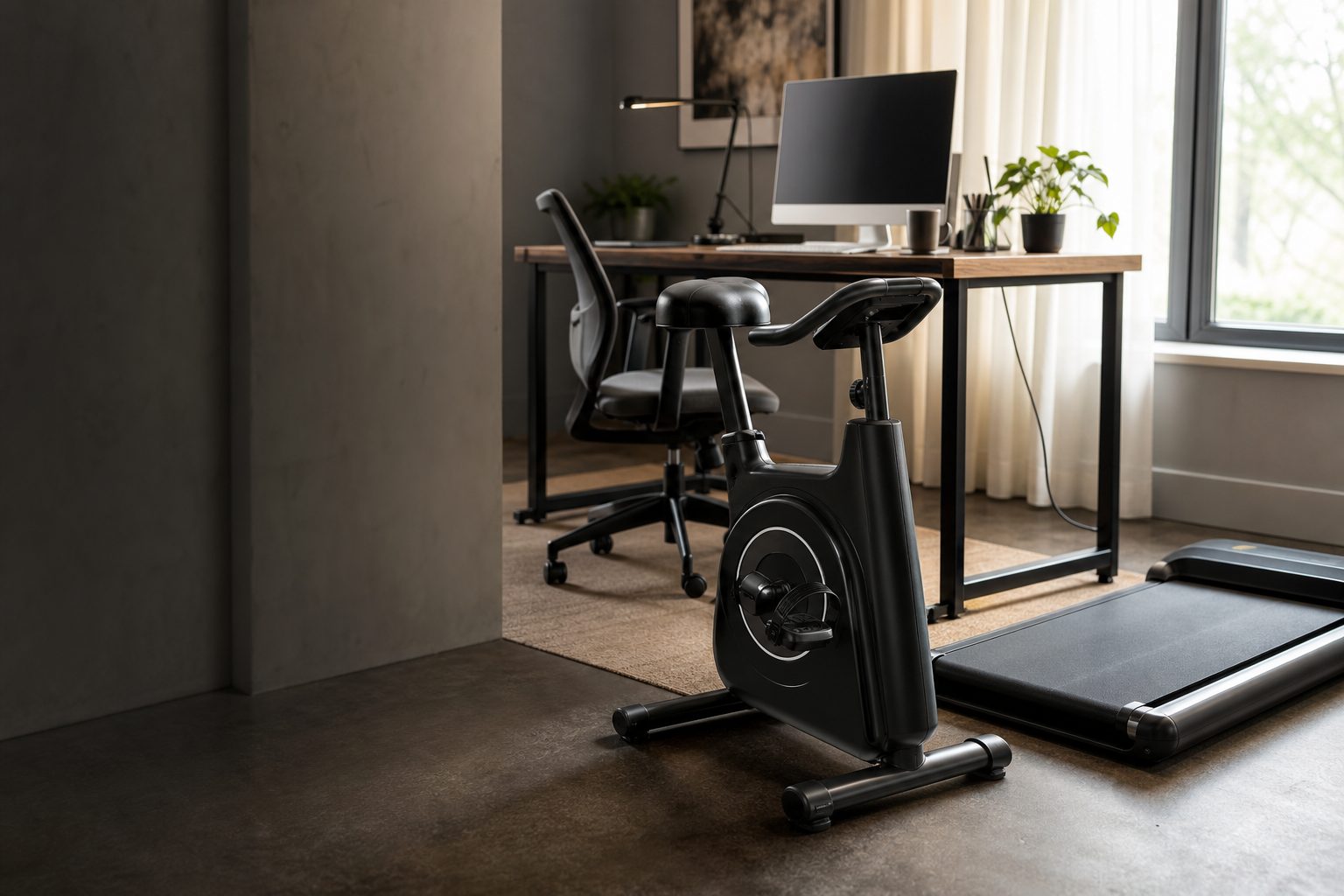
A desk-friendly cardio setup works best when it feels like part of the room rather than a punishment device parked beside the filing cabinet.
 By James Oduya · Staff Writer & Home Gym Columnist · Updated August 15, 2026
Cozy cardio is not lazy cardio. It is sustainable cardio.
The phrase "cozy cardio" had done the rounds because it captured something many people had discovered for themselves. You do not always need a motivational montage, a punishing interval session and a shower immediately afterwards to make movement count. Sometimes the useful session is the one you can repeat: 30 gentle minutes whilst answering emails, a slow walk during an internal meeting, or a bit of pedalling whilst catching up on the sort of admin that somehow breeds overnight.
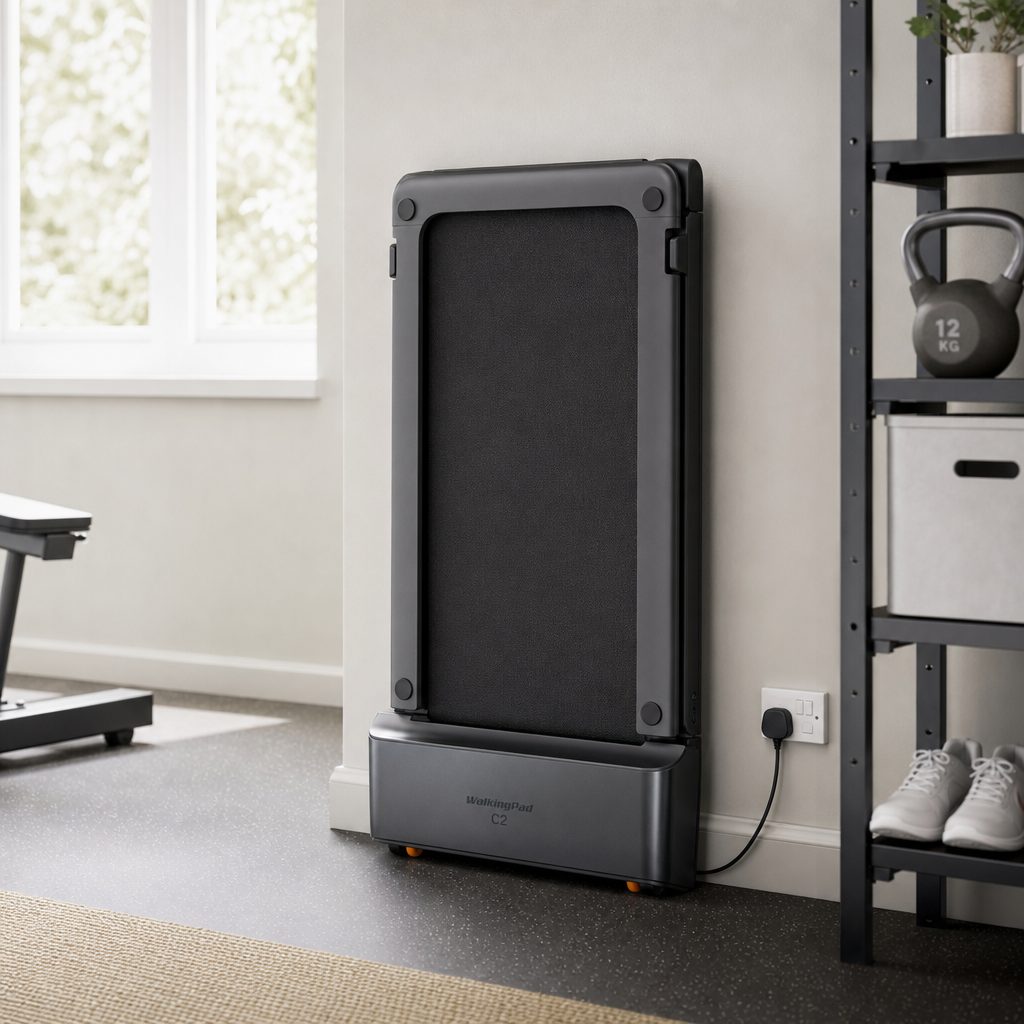
A foldable WalkingPad C2 is designed to reduce the storage headache that often decides whether home cardio survives beyond the first enthusiastic fortnight.
An under-desk bike and a walking pad solve different versions of the same problem. A pedal exerciser keeps you seated, takes the edge off a long day of stillness and is usually the easier option for concentrated computer work. A walking pad changes your posture completely. It asks for a standing desk and a little more attention, but it can turn a sedentary afternoon into a genuinely active one without forcing a separate workout into the diary.
Neither replaces strength training, outdoor walks or cardiovascular work that challenges you properly. That is not the job. The point is to create a lower barrier between "I have been sitting here for four hours" and "I have moved a bit today." That is a worthwhile gap to close.
The cosy-cardio rule: buy the machine that fits your actual working habits. If you rarely use a standing desk, a walking pad will not become more useful merely because it folds beautifully. If you constantly tap your feet in meetings, a seated elliptical may be the very sensible answer.
Walking pad or under-desk bike: choose your working posture first
The most important buying decision is less glamorous than motor power, app compatibility or a large digital display. It is posture. A walking pad requires you to work standing up. That means a desk which can sit at an appropriate standing height, enough clear space around the deck and a task that can tolerate light movement. Reading long documents, taking a non-camera call and dealing with routine email can work very nicely. Precise spreadsheet work or intense typing can be another matter. Your brain may be happy; your cursor might be less convinced.
A seated pedal exerciser is friendlier to focused desk work. You stay at your usual desk, use your usual chair and can normally maintain a much steadier upper body. The compromise is that it offers a more modest sense of whole-body movement. It is a quiet, contained form of activity rather than a replacement for a walk outside. For many remote workers, that is exactly why it works.
Choose a walking pad if standing work already suits you
The WalkingPad C2 and DeerRun Q1 Mini are geared towards walking rather than hard running. Their 3.7 mph and 3.8 mph top speeds make sense for a gradual, work-compatible pace rather than trying to answer Teams messages whilst attempting a personal best.
Choose a seated elliptical if you want the least disruption
The Cubii JR1 uses an elliptical movement and eight levels of magnetic resistance. It is the kinder choice for people who need to remain seated and wish to add movement without rebuilding the whole workstation around the machine.
Make storage part of the decision, not an afterthought
The C2 folds through 180 degrees and has a slim 4.92-inch profile. The DeerRun has built-in wheels. Cubii Go weighed under 20 lb and required no assembly. Those details matter on a Tuesday evening when you simply need the thing out of sight.
How we ranked these desk-friendly cardio machines
This is not a ranking of which machine would win a gym-floor showdown. Frankly, that would be a slightly odd contest. It is a ranking for the person who wants to move more in a shared flat, small home office or spare-room workspace without converting the place into a noisy fitness studio.
I prioritised the qualities that genuinely affect whether you will use one of these machines: a sensible format for work, a manageable footprint, straightforward controls, storage practicality, credible resistance or speed, and enough user capacity to make the product useful to more than a narrow slice of people. Where a model had a confirmed app or display, it earned credit for that too, but connectivity is a supporting act here. Nobody has ever developed a life-changing desk-walking habit because an app gave them an especially dramatic virtual badge.
There is also a deliberate split in this roundup. Walking pads are better for people already committed to a standing desk routine. Under-desk bikes are better for people who need to keep their chair, their keyboard position and their working rhythm intact. The overall winner is therefore the product that makes the most coherent case for its particular role, rather than pretending one category can do everything.
Before you measure anything else, measure knee clearance
A seated unit must fit beneath the desk without forcing your knees into the underside of the worktop on every pedal rotation. A walking pad needs a standing desk and a clear walking zone. A tape measure is not exciting, but it is vastly more exciting than arranging a return for a machine that physically cannot fit where you intended to use it.
The ranked picks
1. WalkingPad C2 — Best for compact standing-desk cardio
The WalkingPad C2 is the best-rounded walking-pad choice here for people who already enjoy standing to work and want a product that takes storage seriously. It combined a 1 HP brushless motor, a 3.7 mph top speed and a 120 × 40 cm belt with a 180-degree folding mechanism. The result was a machine aimed squarely at the home-office reality: you need a stable place to walk, then you need to reclaim the room once you have finished.
At 25 kg, it was not something to casually tuck under a desk with one finger whilst holding a cup of tea in the other. But its 4.92-inch slim profile when stored and suitcase-style folding design make it considerably more realistic for flats and multi-purpose rooms than a permanently open treadmill. No assembly was required, which is a little luxury that should not be underestimated. Flat-pack fatigue has claimed enough weekends already.
The C2 had Wi-Fi and Bluetooth connectivity through the KS Fit app, and its maximum user weight was 100 kg, or 220 lb. That capacity will rule it out for some shoppers, so it is important to be clear rather than polite about it. For those within the limit, though, it offers a polished walking-only format at a pace that makes desk work plausible.
Pros
- 180-degree fold and 4.92-inch profile made storage unusually practical.
- 1 HP brushless motor and 3.7 mph top speed suited controlled walking.
- 120 × 40 cm belt provided a defined, desk-friendly walking area.
- Wi-Fi, Bluetooth and KS Fit app support added optional tracking.
Cons
- 100 kg / 220 lb user limit will not suit every buyer.
- At 25 kg, it still needs a considered storage plan.
- It makes most sense only alongside a well-set-up standing desk.
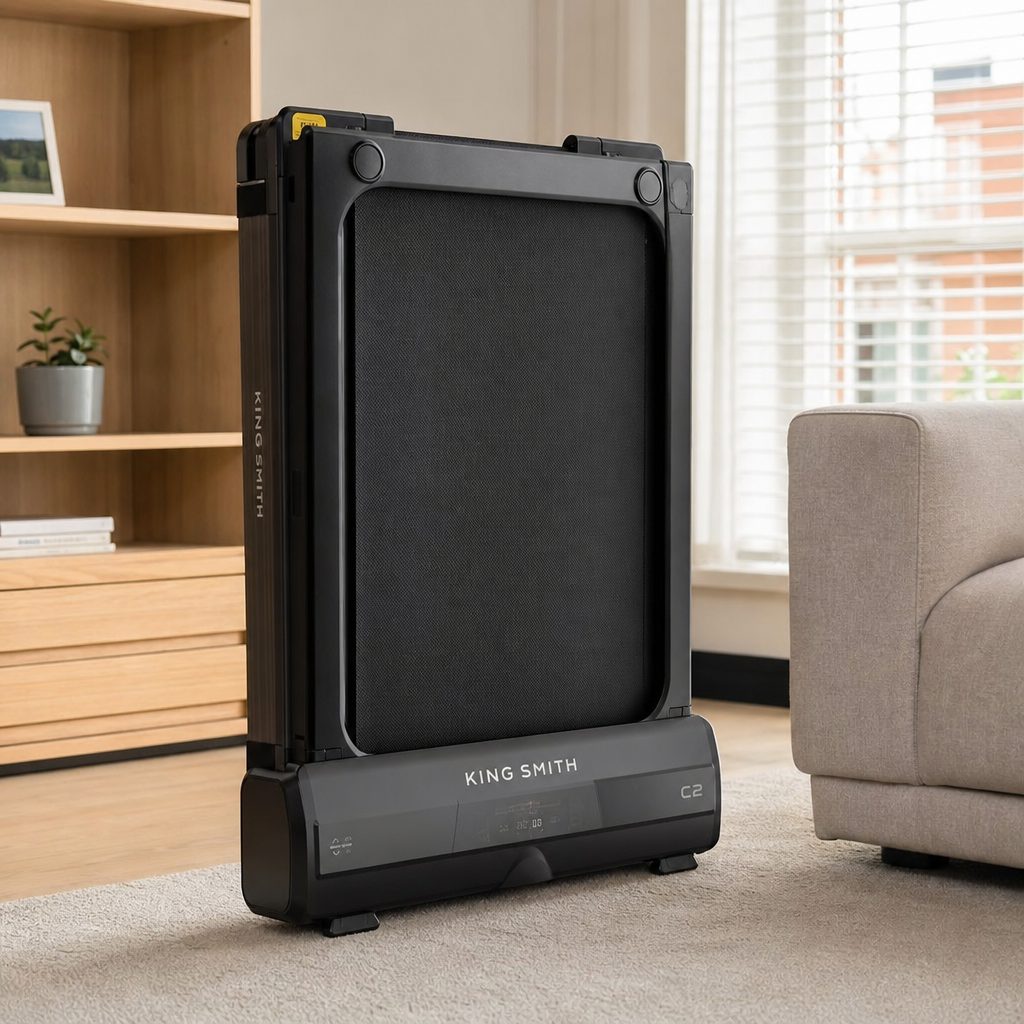
The C2's folding construction is the central feature: it is a walking pad for people whose office is also, inconveniently, their living room.
2. DeerRun Q1 Mini — Best for budget-conscious remote workers
Shop DeerRun Q1 Mini on Amazon UK
The DeerRun Q1 Mini earns its place because it keeps the entry point sensible without abandoning the basics that matter. It had been listed at $149 in the US, a notably lower figure than the WalkingPad C2's $399 US price, and it was designed for the person who wants extra steps during the day rather than a premium home-gym statement piece.
Its 45 × 20 × 4.5-inch dimensions and 38 lb listed weight are helpful in smaller rooms. The walking belt measured 35.5 inches long by 15.5 inches wide, while the top speed was 3.8 mph. That was slightly faster than the C2 on paper, although the practical distinction for typing, emails and calls is tiny. No sensible person should choose between these two purely for a tenth of a mile per hour. We are trying to make workdays healthier, not qualify for Monaco.
Crucially, the standard maximum user weight was 265 lb, above the C2's 220 lb figure, with a 300 lb variant also available. It offered a remote control, Bluetooth app control, LED real-time monitoring and compatibility with the PitPat app, which included AI-driven training, live racing and 3D immersive terrain. Those app extras are not essential to cozy cardio, but they can be useful if you need a nudge on lower-energy days.
Tom's Guide used the Q1 Mini for three months and reported continued solid performance. That does not make it indestructible, nor does it mean every unit on earth will behave perfectly, but it is reassuring evidence for a low-cost desk walking pad.
3. Cubii JR1 — Best for focused seated work
If you need to keep working at a conventional seated desk, the Cubii JR1 is the standout recommendation. It is a seated elliptical rather than a traditional pedal bike, which means the pedalling movement is more compact and is designed to happen below the desk rather than pushing your feet out in front of you as a conventional exercise bike might.
The JR1 had eight levels of magnetic resistance and an LCD monitor for distance, calories, minutes active and RPM. At 23.2 inches long, 17.6 inches wide and 9.8 inches high, it is not microscopic, but it is purpose-built for this particular space. Its listed 25.4 lb weight gives it some substance, which can be helpful when you want a machine to stay put rather than make a slow migration across the carpet during a call.
It connected to Fitbit, Apple HealthKit and third-party apps, and Cubii provided more than 300 free on-demand workouts through its app. That is considerably more ecosystem than many people need, but the basic display ensures you can simply get on with it without turning every small pedal session into a dashboard review.
The big caveat is the 150 lb maximum user weight. That is a restrictive limit and should be treated as decisive, not negotiable. If you are within it, the JR1 is a thoughtfully specified option for gentle movement during concentrated work. If you are not, skip it entirely and look at the LifeSpan instead.
Pros
- Seated elliptical format worked well for a traditional desk setup.
- Eight magnetic resistance levels offered meaningful adjustment.
- LCD tracked distance, calories, active minutes and RPM.
- Fitbit and Apple HealthKit connections appealed to data-minded users.
Cons
- 150 lb maximum user weight is a major limitation.
- It requires enough desk clearance for the elliptical pedal path.
- It delivers gentle seated movement, not the full postural change of walking.
4. LifeSpan C3-SC110 — Best for higher-capacity, serious daily pedalling
The LifeSpan C3-SC110 is the choice for somebody who has outgrown the lightweight pedal-exerciser idea and wants something more substantial beneath the desk. Its 181 kg maximum user capacity is the headline figure, immediately making it more inclusive than the Cubii JR1's 150 lb limit and the WalkingPad C2's 100 kg limit. It also had 16 resistance levels, double the Cubii JR1's eight.
That does not mean you need to pedal hard all day. In fact, that would rather defeat the point of work-friendly cardio. The advantage of greater resistance range is choice: very easy movement on a sleepy Monday, then a more deliberate seated session when you are not trying to edit a delicate document or hold a client conversation.
The C3-SC110 was rated at 300W and carried a lifetime warranty. Those are serious specifications for a category that is often crowded with anonymous small pedal units that look cheerful in product photos and then disappear into the ether when you need help. It is the grown-up option in this list: less about novelty, more about a robust long-term habit.
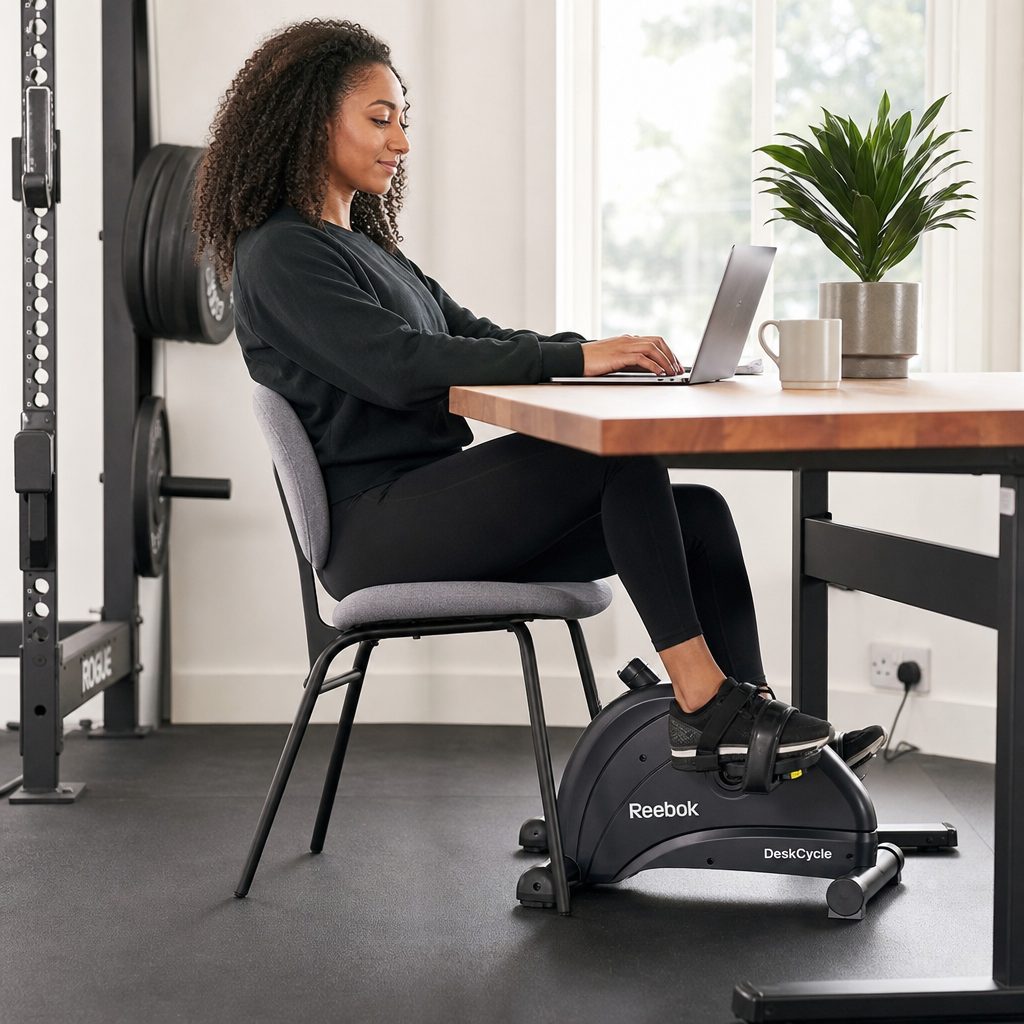
A higher-capacity seated unit makes sense when desk cycling is intended to become a regular part of the working week rather than a passing January experiment.
5. Cubii Go — Best for simple portability
Cubii Go is the straightforward option for people who do not want a permanent machine visually colonising their workspace. It weighed under 20 lb, required no assembly and used Cubii's largest ZeroGravitii flywheel. That combination made it particularly appealing for anyone who works in different rooms, shares an office, or simply wants to put the unit away promptly when the working day ends.
Portability is easy to dismiss until you live with a piece of fitness equipment. The difference between "I can move this now" and "I will deal with that later" can determine whether a product stays in use. Cubii Go's appeal is that it attempts to remove that final bit of friction. Carry it to the desk, pedal, then take it away. No tools. No elaborate rearranging. No negotiating with a folded treadmill that has become an awkward hallway sculpture.
It is best viewed as a convenience-led seated cardio option. If you want a confirmed resistance figure and LCD metrics, the Cubii JR1 gives you those specifications. If you want the more commercial-minded capacity and 16-level adjustment, the LifeSpan is the stronger fit. Cubii Go is for the buyer who prizes a tidy, transferable routine.
6. Cubii JR2+ — Best for Apple Watch and Bluetooth tracking
The Cubii JR2+ is the pick for the person who will genuinely use connected tracking rather than merely admire the idea of it. Its Bluetooth capability and Apple Watch synchronisation are its reason for being in this roundup. It is not inherently more virtuous to collect data, of course. A ten-minute pedal session still counts if nobody awards it a colourful ring.
But tracking can make a low-intensity habit feel more tangible. It gives a sedentary worker a way to recognise movement that might otherwise disappear into the background. If you are already invested in Apple Watch data and want your under-desk exercise to sit more neatly alongside the rest of your activity record, the JR2+ makes the cleaner case than the basic JR1.
Choose it for the connected experience, not because you expect it to turn a desk pedal session into a high-performance training block. It is a tool for consistency, and that is enough.
7. DeskCycle — Best for buyers who want a familiar pedal-exerciser format
DeskCycle is a familiar name in the under-desk pedal category and started from $179.99. It belongs on the shortlist for somebody who wants a dedicated desk pedal exerciser rather than a seated elliptical or a walking pad. That distinction is worth recognising. Some people prefer the more familiar cycling motion, and a pedal-based format can feel immediately intuitive when you are easing into the idea of moving whilst working.
It is not the choice I would make for a feature-led app ecosystem, nor the model to choose when high capacity is your priority; the Cubii JR2+ and LifeSpan C3-SC110 have clearer respective cases there. DeskCycle instead makes sense for the shopper who wants this category in its simplest conceptual form: sit at a desk, pedal gently and reduce the amount of time spent completely still.
At-a-glance comparison: the figures that matter
It is tempting to compare every possible specification, but that can obscure the central decision. The useful figures are the ones that affect fit, use and storage. The table below keeps the comparison focused on what has the greatest bearing on a working-day routine.
| Model | Format | Key figure | Weight / capacity | Standout detail |
|---|---|---|---|---|
| WalkingPad C2 | Walking pad | 3.7 mph; 120 × 40 cm belt | 25 kg; 100 kg / 220 lb maximum user weight | 180-degree fold; 4.92-inch profile |
| DeerRun Q1 Mini | Walking pad | 3.8 mph; 35.5 × 15.5-inch belt | 38 lb; 265 lb standard maximum user weight | Built-in wheels and remote control |
| Cubii JR1 | Seated elliptical | 8 magnetic resistance levels | 25.4 lb; 150 lb maximum user weight | LCD and Apple HealthKit support |
| LifeSpan C3-SC110 | Under-desk bike | 16 resistance levels; 300W | 181 kg maximum user capacity | Lifetime warranty |
| Cubii Go | Seated elliptical | Largest ZeroGravitii flywheel | Under 20 lb | No assembly required |
| Cubii JR2+ | Seated elliptical | Bluetooth connectivity | 265 lbs user capacity | Apple Watch synchronisation |
| DeskCycle | Pedal exerciser | Dedicated desk-pedal format | — | From $179.99 |
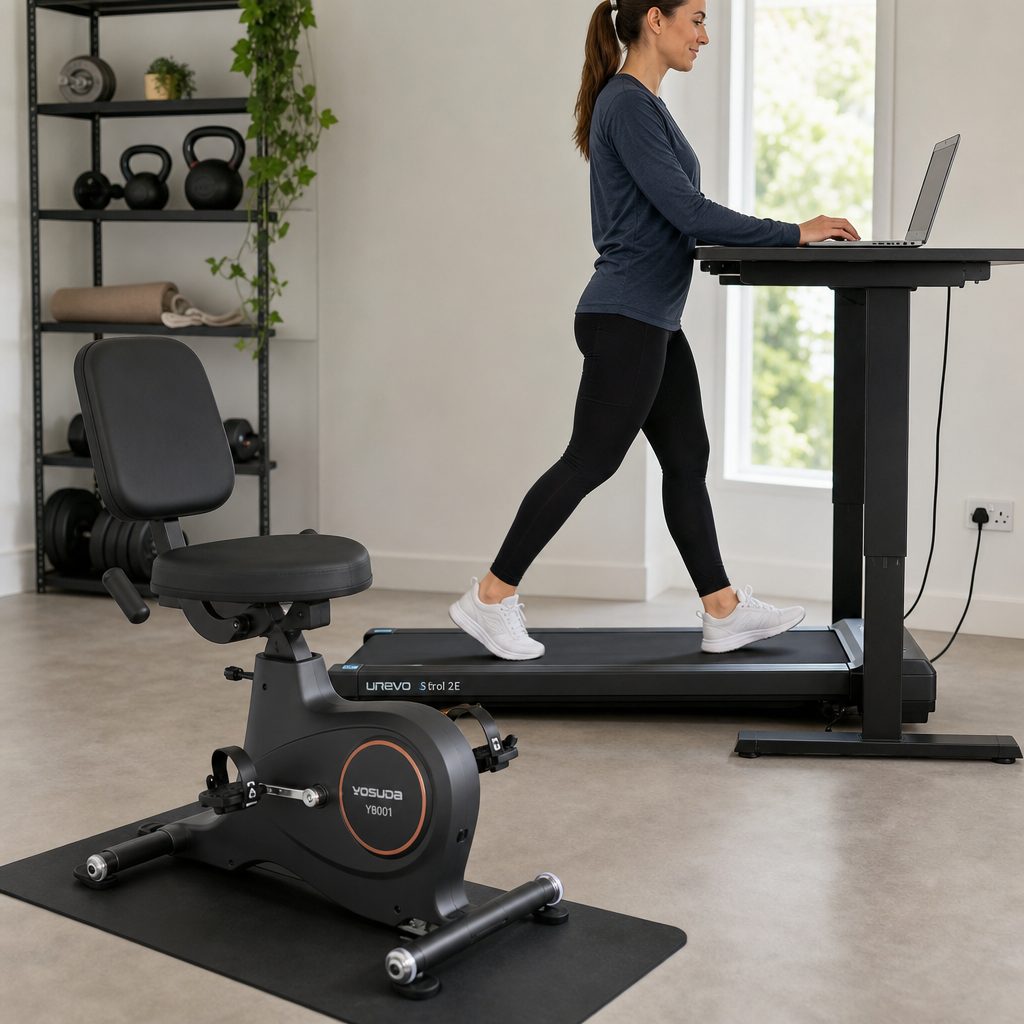
The key comparison is not simply walking pad versus bike; it is standing-work movement versus seated-work movement, and the working day you can realistically maintain.
Price snapshot: the confirmed starting points
Prices change, promotions appear and bundles have a habit of making a tidy comparison slightly untidy. Still, the confirmed figures below give a useful sense of the spread between accessible entry-level walking pads and more established compact cardio brands. These are US prices where stated, so UK shoppers should use them as a broad point of reference rather than a promise of local pricing.
DeerRun Q1 Mini
The budget-led walking-pad entry in this roundup.
WalkingPad C2
Also listed from £369 in the UK.
Cubii JR1
Seated elliptical with eight magnetic resistance levels.
DeskCycle
A dedicated under-desk pedal-exerciser option.
What desk setup actually makes these machines pleasant to use?
A good machine in a poor workstation can still be an irritating experience. For walking pads, the standing desk is the main event. Your keyboard, mouse and display need to sit at a height where your shoulders can remain relaxed rather than creeping up around your ears by 10.30am. Keep the pace gentle enough that you can type naturally. This is not about proving toughness to your inbox.
The DeerRun Q1 Mini and WalkingPad C2 both had maximum speeds just under 4 mph, but desk walking often happens considerably below that. The useful pace is the one where your gait remains natural and your attention stays on the task. You are building low-level movement into a work block, not attempting to write a quarterly report at a speed usually associated with pursuing a bus.
For seated machines, start with chair placement. Move your chair back enough to prevent cramped knee movement, then assess whether the desk edge catches your thighs or knees. A conventional office chair on wheels may roll when you pedal, depending on the flooring and chair setup. The goal is stable, comfortable positioning. If every rotation makes you shuffle backwards, it stops being cozy cardio and becomes a very low-budget escape room.
Making a low-intensity habit stick
The winning strategy is almost boringly modest. Begin with a short, predictable slot that already belongs to your day: the first half of a regular catch-up call, the time spent reading non-urgent emails, or the final 20 minutes before lunch. Keep resistance and speed low. Let the equipment feel easy enough that you do not need a pep talk to begin.
Walking pads can work particularly well during calls where you are mainly listening. A seated unit works better for tasks that need hands steady on a keyboard and eyes fixed on the display. Matching machine to task matters more than chasing arbitrary duration targets. If you find yourself avoiding a piece of kit because using it makes your work harder, the routine will fade. It is not a character flaw. It is just bad workflow design.
The Cubii JR1's LCD offers distance, calories, active minutes and RPM, but try not to let the screen dictate the whole experience. The most encouraging metric can simply be frequency: did you use it on four working days this week instead of none? That is a meaningful change, even if every session felt suspiciously civilised.
A sensible starting pattern
Try gentle movement during one predictable work block each day rather than attempting an all-day marathon immediately. Increase only when your feet, knees, concentration and workspace all agree. Your equipment should support your job, not create a daily dispute with it.
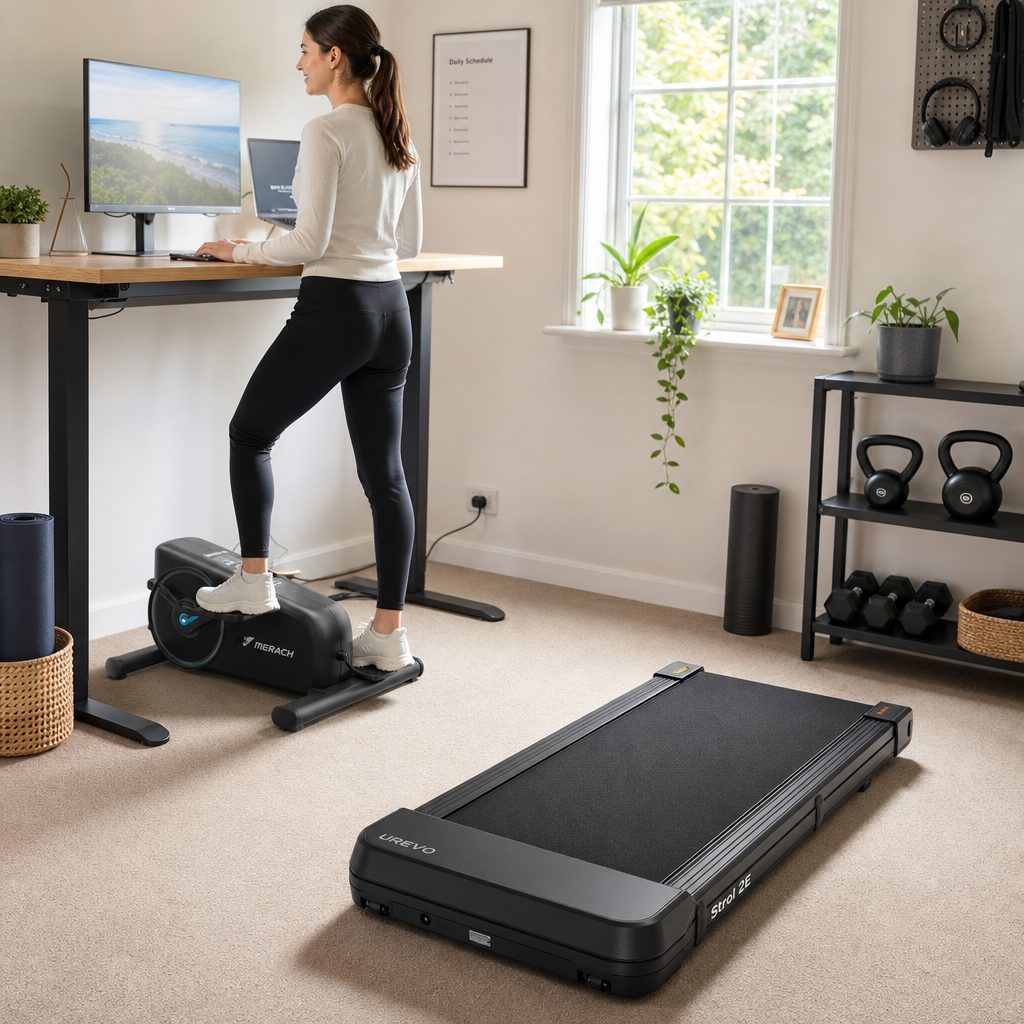
The most sustainable routine is often the least dramatic one: a gentle pace, a comfortable workstation and a repeatable slot in the day.
Best-for awards: which buyer should choose which machine?
There is no single winner for every home office. There is, however, a very clear winner for several distinct kinds of shopper. Start with your own constraints, rather than buying the most glamorous-looking machine and hoping the rest of your working life will adapt around it.
Best on a budget: DeerRun Q1 Mini
At a confirmed $149 US price, it was the most accessible walking-pad route here, with a 3.8 mph top speed, wheels, remote control and a 265 lb standard user limit.
Best all-rounder: WalkingPad C2
Choose it if you have a standing desk and need folding storage, a 120 × 40 cm walking belt, 3.7 mph top speed and optional KS Fit connectivity.
Best for seated desk work: Cubii JR1
Its compact elliptical movement, eight magnetic levels and LCD make it the clearest fit for focused seated work, provided the 150 lb user limit suits you.
Best premium-minded pick: LifeSpan C3-SC110
The 181 kg capacity, 16 resistance levels, 300W rating and lifetime warranty make this the serious long-term under-desk cycling choice.
Best for moving room to room: Cubii Go
Under 20 lb, no assembly and a large ZeroGravitii flywheel make it the natural choice for a flexible, uncluttered setup.
Best for Apple Watch users: Cubii JR2+
Shop Best for Apple Watch users on Amazon UK
Bluetooth and Apple Watch synchronisation give it the most obvious appeal for people who want desk movement reflected in their wider activity tracking.
FAQ: under-desk bikes and walking pads
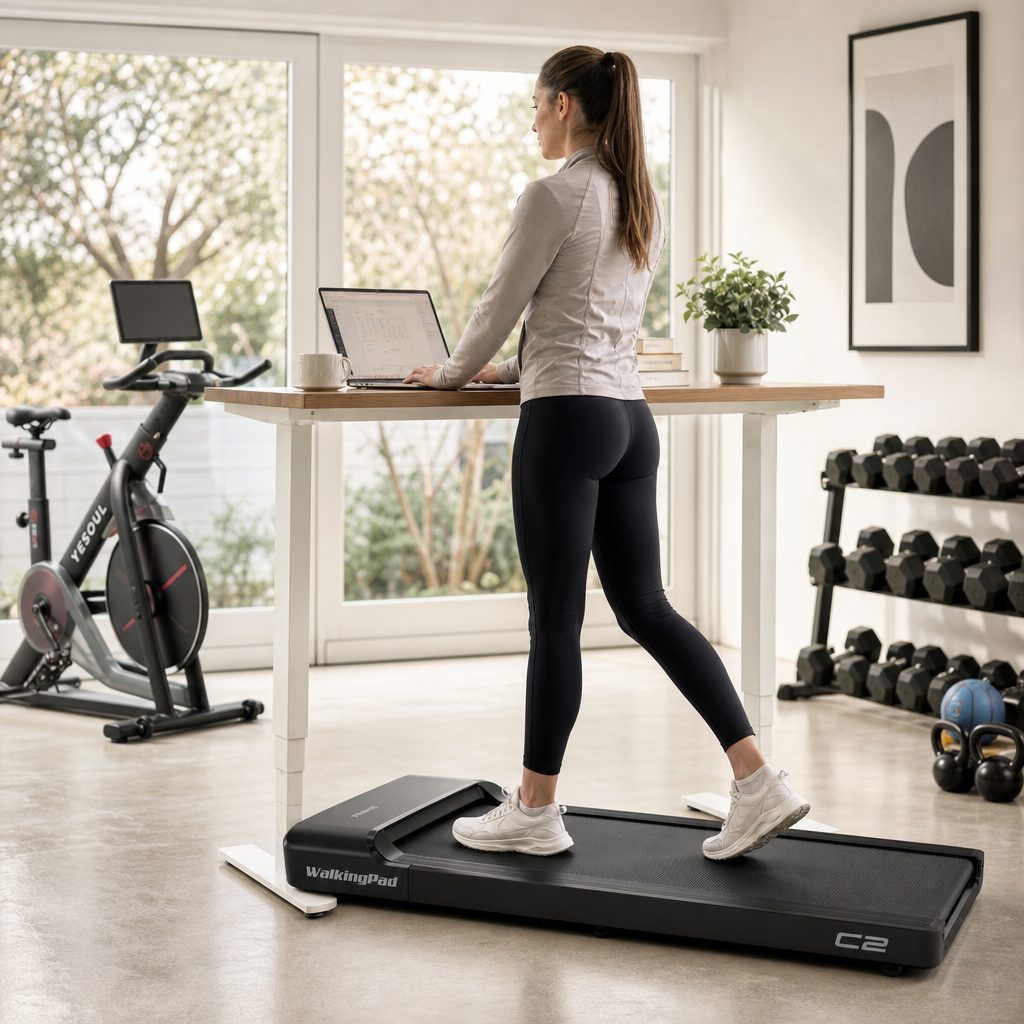
The right machine is the one that makes everyday movement feel easy to begin, easy to stop and easy to repeat tomorrow.
The bottom line
For most standing-desk workers, the WalkingPad C2 is the best overall buy: a 3.7 mph walking pad with a 120 × 40 cm belt, compact 180-degree folding and genuinely useful storage credentials. The DeerRun Q1 Mini is the value-led alternative, particularly for remote workers who want a lower-cost route to more daily steps. If your work needs you seated, the Cubii JR1 is the better fit within its 150 lb user limit, while the LifeSpan C3-SC110 is the more serious high-capacity choice. The real victory is not choosing the most elaborate machine. It is choosing one that quietly earns a place in your normal working day.