
Best Massage Guns Under £150 for Everyday Muscle Recovery
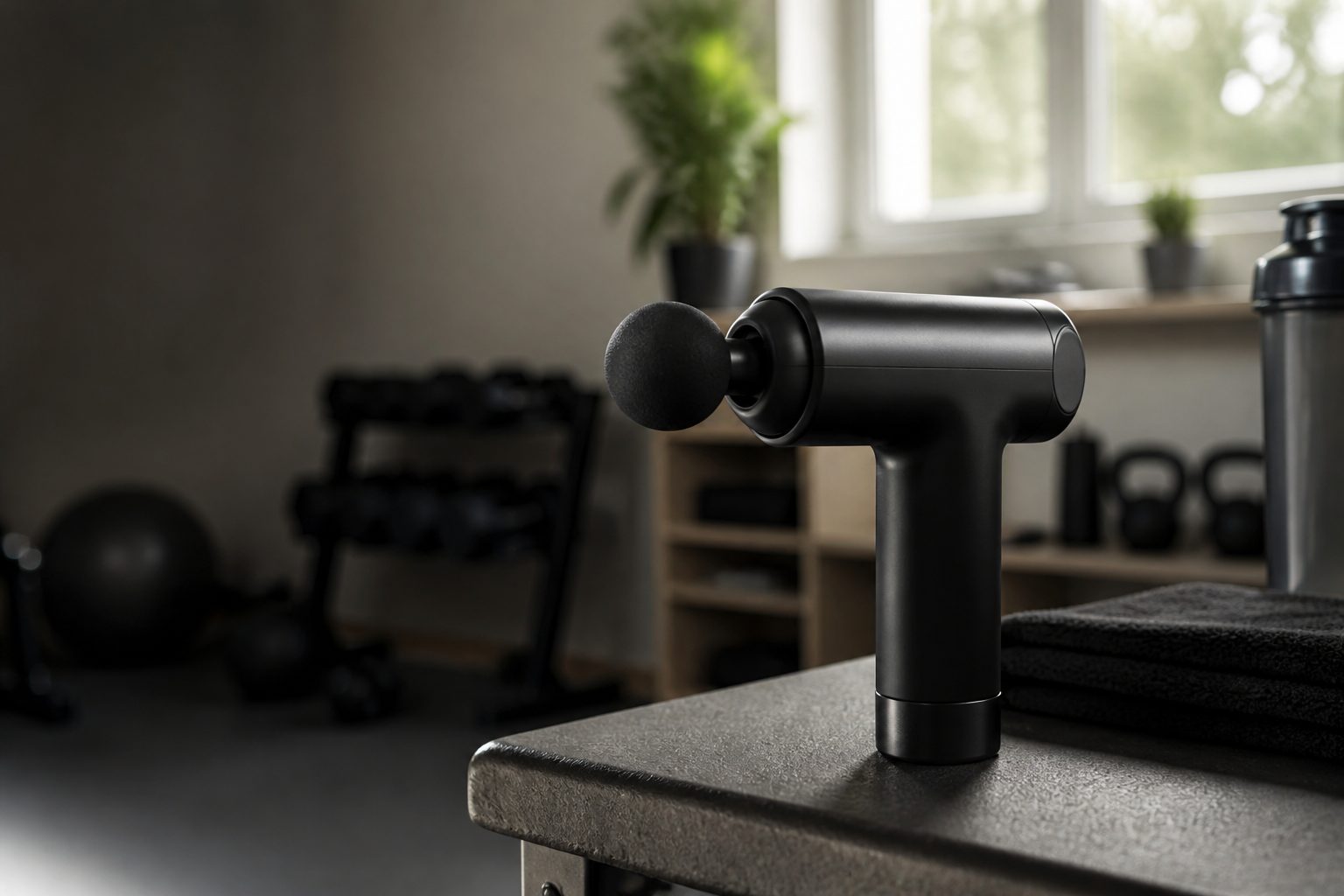
A compact percussion gun makes most sense when it is easy enough to leave within reach after training, rather than buried in a drawer with the resistance bands and the good intentions.
The genuinely affordable Hyperice and Therabody choices are a surprisingly small club. That is not necessarily bad news: it means the decision comes down to what matters at home — useful pressure, civilised noise, battery life and a shape you will actually pick up after a workout.
 By James Oduya · Staff Writer & Home Gym Columnist · Updated October 10, 2026
Why this is a tighter category than it first appears
Massage guns have become one of those bits of kit that seem to multiply the moment you start looking. There are full-sized models with arm-long handles, tiny travel devices, heat attachments, app-guided routines and enough interchangeable heads to make you wonder whether you have accidentally bought a small power-tool ecosystem. Yet once the brief is kept sensible — recognised Hyperice or Therabody models, everyday recovery rather than professional-level deep-tissue work, and a modest budget — the shortlist gets very short indeed.
For most home users, that is a blessing. You do not need the biggest motor in the catalogue to loosen calves after a run, ease the general heaviness in quads after a leg session, or give shoulders a few relaxed minutes after hours at a desk. You need a device that is light enough to manoeuvre, quiet enough that it does not turn a Sunday evening into DIY hour, and strong enough that the motor does not give up the instant it meets a reasonably firm glute.
There are three sensible routes here. The Hyperice Hypervolt Go 3 is the current all-round choice, bringing a claimed 45lb of stall force, a long battery life and five carefully spaced speeds. Therabody's Theragun Relief goes in the opposite direction: deliberately gentler, notably quieter, and especially appealing if comfort and ease of handling matter more than aggression. The older Hyperice Hypervolt Go 2 remains worth considering only when its limited-market status and louder operation are properly understood. It is a previous-generation option, not a bargain portal to the latest technology.
The useful distinction: amplitude tells you how far the head travels with each percussion, whilst stall force is a guide to how much pressure the motor can resist before it slows or stops. Both current main picks use 10mm amplitude. The large separation is in available resistance to pressure.
I would also set expectations correctly before getting into the rankings. A massage gun is a recovery tool, not a medical fix, an excuse to attack an injury, or a substitute for sensible training load, sleep and food. It can feel excellent after a session. It can be a welcome little ritual. But it cannot negotiate with a hamstring that you have persistently ignored for three months. Nothing can, other than perhaps a physio and an honest diary.
What matters for everyday muscle recovery
The flagship-style spec sheet can distract from what home users really notice. If you use a massage gun two or three times a week, you will notice whether it buzzes loudly enough to make conversation awkward. You will notice whether it becomes tiring to hold against your back. And you will definitely notice whether a flat head feels versatile enough for your usual muscles or whether you spend every session wishing for a different attachment.
Stall force is the practical power figure
A higher figure does not mean that harder is always better. It does mean the gun is more likely to keep working when you apply a controlled amount of pressure into larger, denser areas such as glutes, quads and calves. For an everyday user, it is the difference between a capable tool and one that feels tentative.
Noise changes when you will use it
The difference between roughly 45dB and up to 65dB sounds like a dry spreadsheet point until you are using it in a flat, beside somebody watching television, or late at night. Quietness is not glamorous. It is, however, very easy to appreciate.
Battery life removes friction
A long-running compact gun is simply easier to live with. You can keep it in a gym bag, use it for several short sessions, and not have every recovery routine end with the same mildly irritating hunt for a cable.
Weight matters more than it sounds
On paper, all three are portable. In the hand, a lighter device is more forgiving when you are reaching calves, upper back or shoulders without assistance. A gun that feels awkward is one that eventually becomes ornamental.
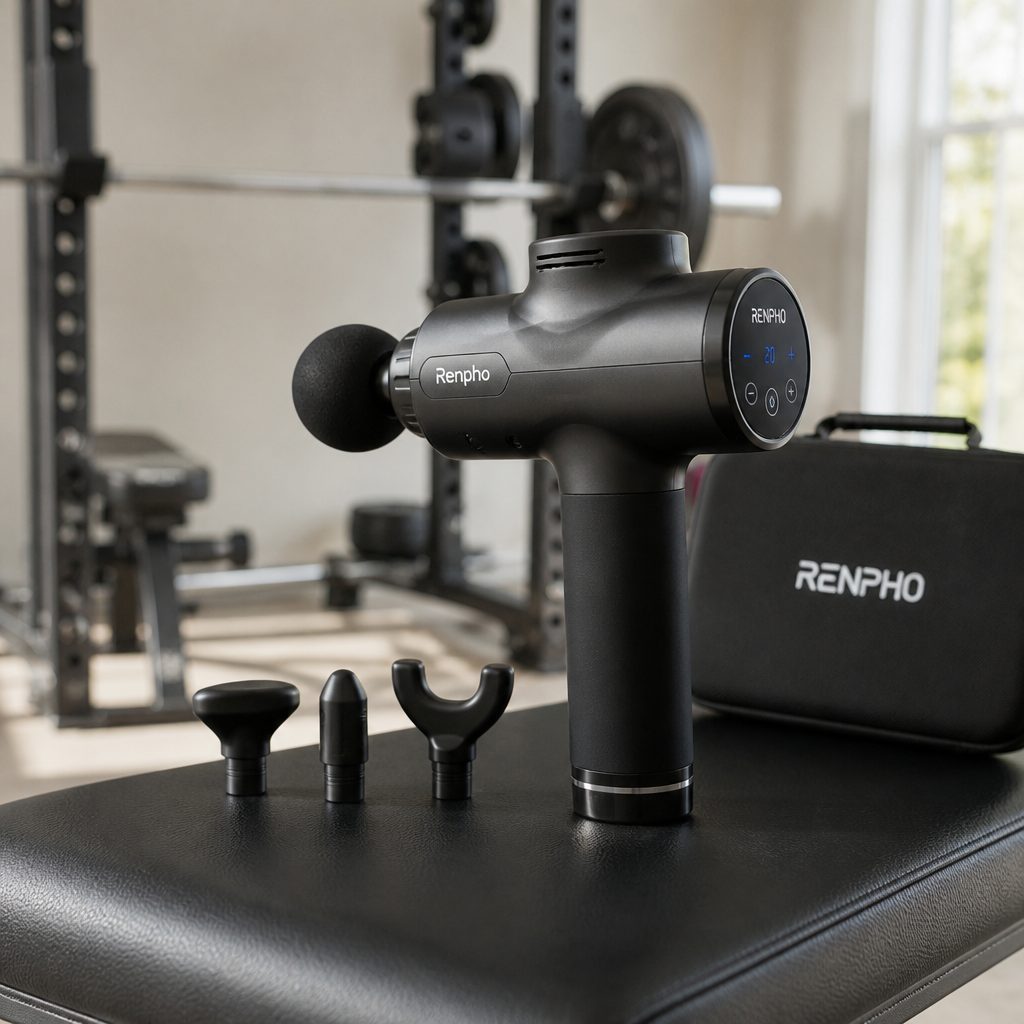
The best budget massage gun is rarely the one with the longest list of marketing claims; it is the one whose power, sound and handling suit the muscles you actually work.
How the three models compare at a glance
The table below is deliberately focused on the figures that have a meaningful bearing on ordinary home use. The current Hypervolt Go 3 is clearly the performance-led choice. Theragun Relief puts ease and quietness first. Hypervolt Go 2, meanwhile, remains an older portable alternative with respectable battery life but less refinement than the newer Hyperice model.
| Feature | Hyperice Hypervolt Go 3 | Therabody Theragun Relief | Hyperice Hypervolt Go 2 |
|---|---|---|---|
| Best for | Everyday all-round recovery | Gentle, quiet daily use | Older compact Hyperice ownership |
| Stall force | 45lb | 20lb | Up to 200 lbs |
| Amplitude | 10mm | 10mm | 3mm |
| Speed range | Five levels, 1,500–2,500 PPM | Three levels, 1,750–2,400 PPM | 2,200–3,200 PPM |
| Noise | 55dB | About 45dB | Up to 65dB |
| Battery life | About four hours | 120 minutes | Three hours |
| Weight | 0.73kg | 1.3lb | 1.5lb |
| Notable extras | Pressure sensor, app compatibility, USB-C charging | Lightweight, gentle daily-use focus | Two massage heads and charging adapters |
The quick read
If your priority is working into bigger muscles with a little confidence behind the treatment, the Hypervolt Go 3 has a very substantial advantage. If you want the least imposing experience for regular light use, Theragun Relief has the better temperament. The Go 2 is principally a legacy option for someone who finds it through a remaining retailer or the second-hand and refurbished market.
The ranked picks
These rankings are not based on which model promises the most dramatic post-workout transformation. That sort of claim is best met with a raised eyebrow. They are based on usable output, noise, battery endurance and how each device fits the realistic routines of someone training at home, commuting to a gym, playing weekend sport or simply trying to feel less creaky after a long day.
1. Hyperice Hypervolt Go 3 — Best for everyday all-round muscle recovery
The Hyperice Hypervolt Go 3 is the straightforward winner for most people. It is the compact massage gun that most convincingly avoids the usual entry-level compromise: plenty of portability, but not so little motor resistance that you need to hover over the muscle rather than treat it. Its 45lb stall-force figure is the standout number in this group, particularly beside the Theragun Relief's 20lb. That is not a small difference hidden behind a decimal point. It is the central reason the Go 3 feels like the more capable all-round recovery device.
Its 10mm amplitude is sensible for a compact design. It is not trying to pretend that it is a huge deep-tissue device, and I rather like that honesty. Instead, the Hypervolt Go 3 offers enough movement for routine work on calves, quads, hamstrings, glutes, forearms and upper traps, whilst the 45lb resistance means you can use measured pressure on denser areas without the motor immediately waving a white flag.
The five speeds run from 1,500 to 2,500 percussions per minute. This is a well-judged range for a home user. The lower end is appropriate for warming up an area or easing into sensitive muscles; the faster settings make more sense when you want a livelier finish after training. You also get a digital dial rather than an overly fussy control arrangement, which is useful when you are trying to change pace one-handed rather than operate a tiny spacecraft.
QuietGlide technology kept the stated sound level to 55dB. It is not silent — no percussion gun is, despite what some adverts appear to imply — but it is much more civilised than the older Go 2 at up to 65dB. For a device you may use in the living room, that matters. The pressure sensor with three LED indicators is also genuinely helpful for newer users. It gives feedback when you are adding pressure, reducing the tendency to press harder simply because doing something forcefully feels more productive.
Hyperice included a Flat and a Wedge attachment. The Flat head is the daily driver, useful over broad areas and for general post-session work. The Wedge is better suited to scraping-style treatment around shoulder blades or for working along legs in a more targeted way. The Go 3 also works with Hyperice's separate Heated Head Attachment, which may appeal if warmth forms part of your preferred wind-down routine. It is not essential, but the option makes the gun a little less boxed-in over time.
Pros
- Class-leading 45lb stall force for this shortlist.
- About four hours of battery life is excellent for regular home use.
- Five clearly useful speed settings cover gentle and firmer routines.
- Pressure feedback helps keep treatment controlled rather than overenthusiastic.
- USB-C charging is convenient for modern travel and home setups.
Cons
- It includes only two attachments.
- At 55dB, it is quieter than the Go 2 but not the quietest pick here.
- The one-year warranty is shorter than some buyers may expect from a premium fitness brand.
The Hypervolt Go 3 was unveiled on 10 March 2026, so it was still a properly current model as this guide was written on 10 October 2026. It is also approved for carry-on luggage, which makes practical sense given its compact positioning. If you want one massage gun for a household, a gym bag and occasional trips away, this is the most rounded answer. It has the muscle for active users without drifting into oversized flagship territory.
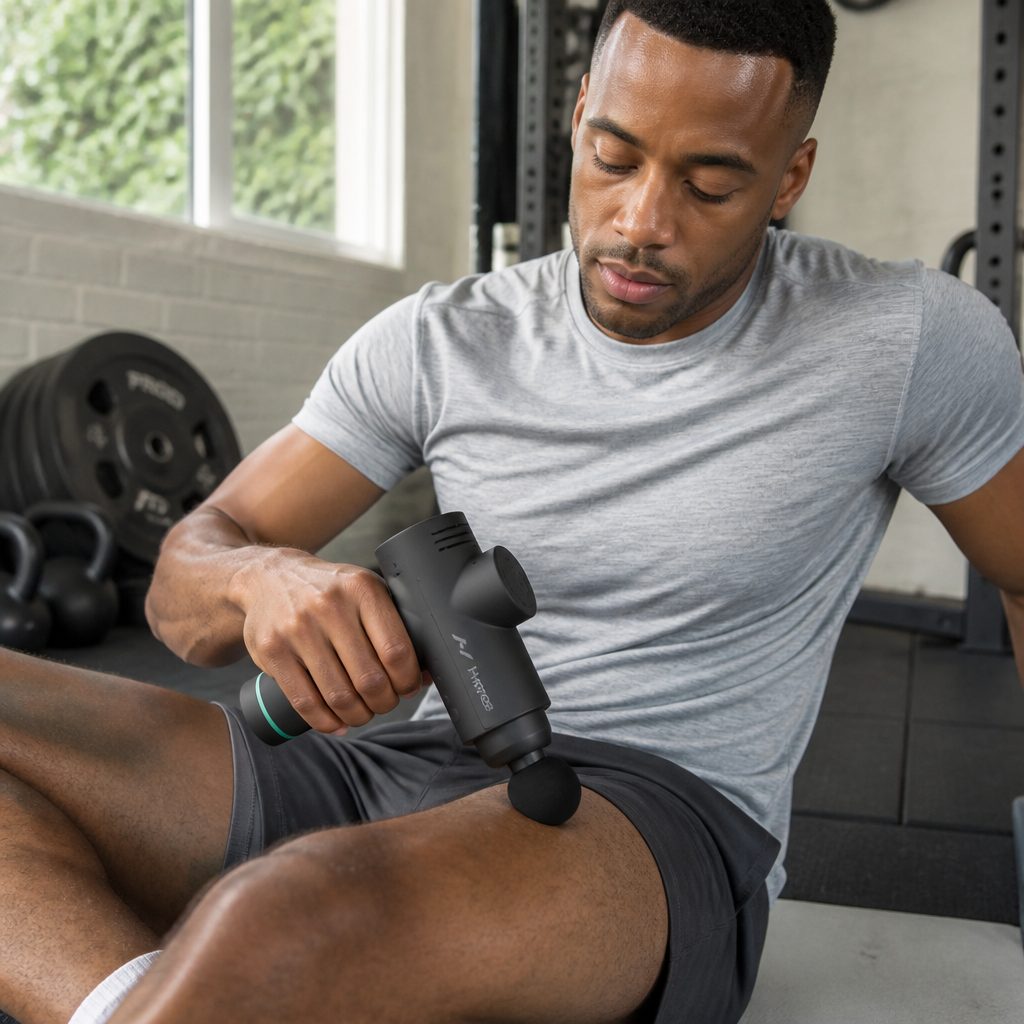
Hyperice's Hypervolt Go 3 pairs a compact form with enough stall force to remain useful on larger muscle groups, not merely on the easy bits.
2. Therabody Theragun Relief — Best for gentle, quiet daily use
The Therabody Theragun Relief takes a more welcoming approach. This is the pick for people who do not want their recovery device to feel like a piece of industrial equipment, and for anyone who has found more forceful percussion uncomfortable or unnecessarily intense. It is lighter than the Hypervolt Go 3 at 1.3lb, it is designed around gentle daily treatment, and its approximate 45dB noise level is the lowest of the three options.
That quietness should not be dismissed as a luxury. A calmer gun is easier to use when somebody else is at home, easier to reach for during an evening wind-down, and less likely to create the strange sensation that you are drilling into your own calf. Theragun Relief is a good match for people who want a brief recovery routine after walking, Pilates, a gentle gym session, gardening, cycling or a long day at a desk. Not every ache needs to be met with maximum available hardware.
There are three speed settings from 1,750 to 2,400 PPM. That gives you less fine control than the Hypervolt Go 3, but it also keeps operation very simple. This is not the model for repeatedly experimenting with every intensity setting in pursuit of some perfect secret combination. It is the model for switching on, choosing a comfortable level and getting on with a short routine. For many people, especially first-time owners, that is exactly the appeal.
The important trade-off is its 20lb stall force. On a smaller muscle group or when you are using a light touch, that is entirely appropriate. On a thick quad or glute, particularly if you are used to hard strength training, it places a clear ceiling on how much pressure you can add. The 10mm amplitude matches the Go 3, but amplitude alone does not tell the full story. If you press into a dense area and the motor has less resistance in reserve, the overall sensation will be gentler.
Pros
- About 45dB makes it the quieter choice for shared homes.
- Light 1.3lb build is easier to manage for everyday self-treatment.
- Simple three-speed setup suits newcomers and gentle routines.
- 120 minutes of battery is enough for regular short sessions.
- Its softer character is well suited to seniors and light daily use.
Cons
- 20lb stall force is not ideal for forceful work on dense muscle.
- Only three speed settings limits adjustment compared with the Go 3.
- It is better for maintenance than pronounced deep-tissue treatment.
Theragun Relief is therefore not "worse" than the Hypervolt Go 3; it is more specialised. If you are someone who prefers a calm, consistent and less intimidating recovery tool, its limitations are arguably part of the point. Choose it because you want gentleness, low noise and easy handling. Do not choose it expecting it to replicate the firmer feel of a more powerful gun on heavy-training days. It will not, and there is no need to pretend otherwise.
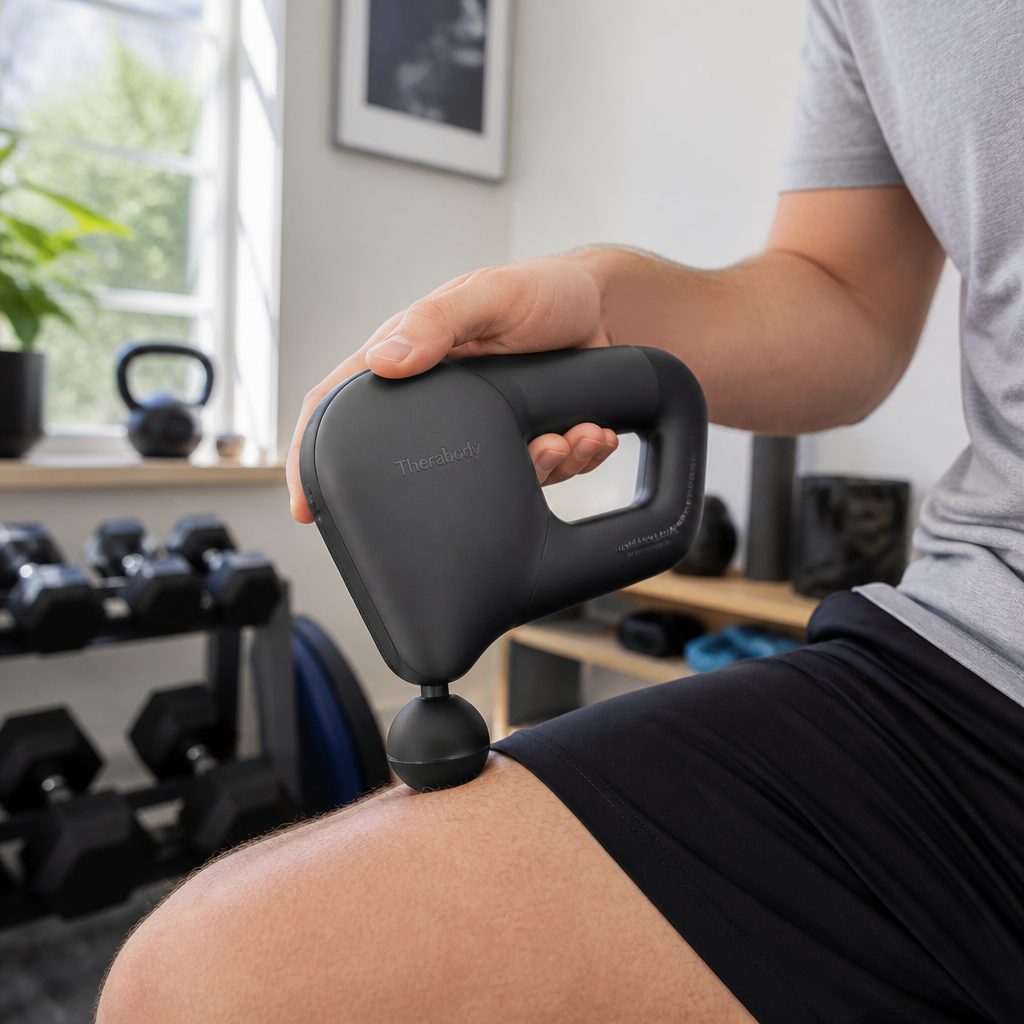
Theragun Relief is the softer-spoken option: lighter in the hand and notably calmer in a shared living space than a more forceful percussion gun.
3. Hyperice Hypervolt Go 2 — Best for a previous-generation compact find
The Hyperice Hypervolt Go 2 was the earlier portable Hyperice model and, by October 2026, had largely been replaced by the Hypervolt Go 3. That matters. It should be approached as a legacy product found through limited remaining stock, refurbished outlets or the second-hand market, rather than treated as a current alternative with identical support and refinement.
There are still things to like. It is light at 1.5lb, offered a three-hour battery life, and came with two massage heads and charging adapters. For somebody who wants a small Hyperice device for occasional basic use, those essentials remain sound. Its speed range of 2,200 to 3,200 PPM is also brisk. At the higher end, it can feel energetic enough for a quick pre-training wake-up on calves or a post-session pass over thighs.
But the numbers reveal why the newer Go 3 is the better default. The Go 2 can reach up to 65dB, making it materially louder than both current alternatives in this guide. It lacks Bluetooth connectivity, and there is no confirmed manufacturer stall-force or amplitude figure to put alongside the Go 3's clearly stated performance credentials. That does not make the Go 2 ineffective. It does mean you should buy it for what it is: an older, basic portable unit, not a hidden equivalent of the newer model.
Pros
- Three-hour battery life remains practical for occasional use.
- 1.5lb portable weight works well for a gym bag or travel.
- Includes two massage heads and charging adapters.
- Higher top speed may suit those who enjoy a brisk percussion feel.
Cons
- Up to 65dB is considerably louder than the newer options.
- No Bluetooth connectivity.
- It is an older model with limited availability.
- The Go 3 offers a much more current, better-specified proposition.
The sensible buyer for the Go 2 is very specific: someone who finds one in excellent condition, understands that it is an earlier-generation model, and values the compact Hyperice format more than current features. Check condition carefully if buying second-hand, make sure the charger and heads are present, and be realistic about whether its noise will bother you. It has a place, just not the first-place spot it once might have held.
Power, noise and battery: the figures that decide the ranking
The performance gap looks especially clear when the key metrics are viewed side by side. The chart below is not an attempt to turn different measurements into a mythical single "performance score". That would be tidy, but rather misleading. Instead, it shows the relative scale of the confirmed headline figures within each relevant category.
In day-to-day use, the Hypervolt Go 3's battery is the quiet hero. Four hours is a lot of short recovery sessions, especially when most people use a massage gun in bursts rather than marathon treatments. You could comfortably use it after several workouts before it becomes a charging chore. Its USB-C charging is another small but meaningful convenience, because it reduces the number of proprietary cables that somehow end up living behind the sofa.
Theragun Relief's 120-minute battery is less expansive but entirely reasonable for its role. Two hours of runtime is still plenty when your typical routine might be five to 10 minutes across a few areas. If gentle maintenance is the goal, it should not feel restrictive. The Go 2's three-hour figure likewise remains decent, though that benefit is tempered by its older position and higher noise output.
Noise is more personal than power. A lifter in a detached garage gym may barely care about the difference between 55dB and up to 65dB. Someone in a flat, or somebody recovering in the same room as a sleeping child, will care quite a lot. Theragun Relief is the clear pick where sound is the central concern. Hypervolt Go 3 makes the best overall compromise. Go 2 is best avoided by anybody who wants a discreet treatment device.
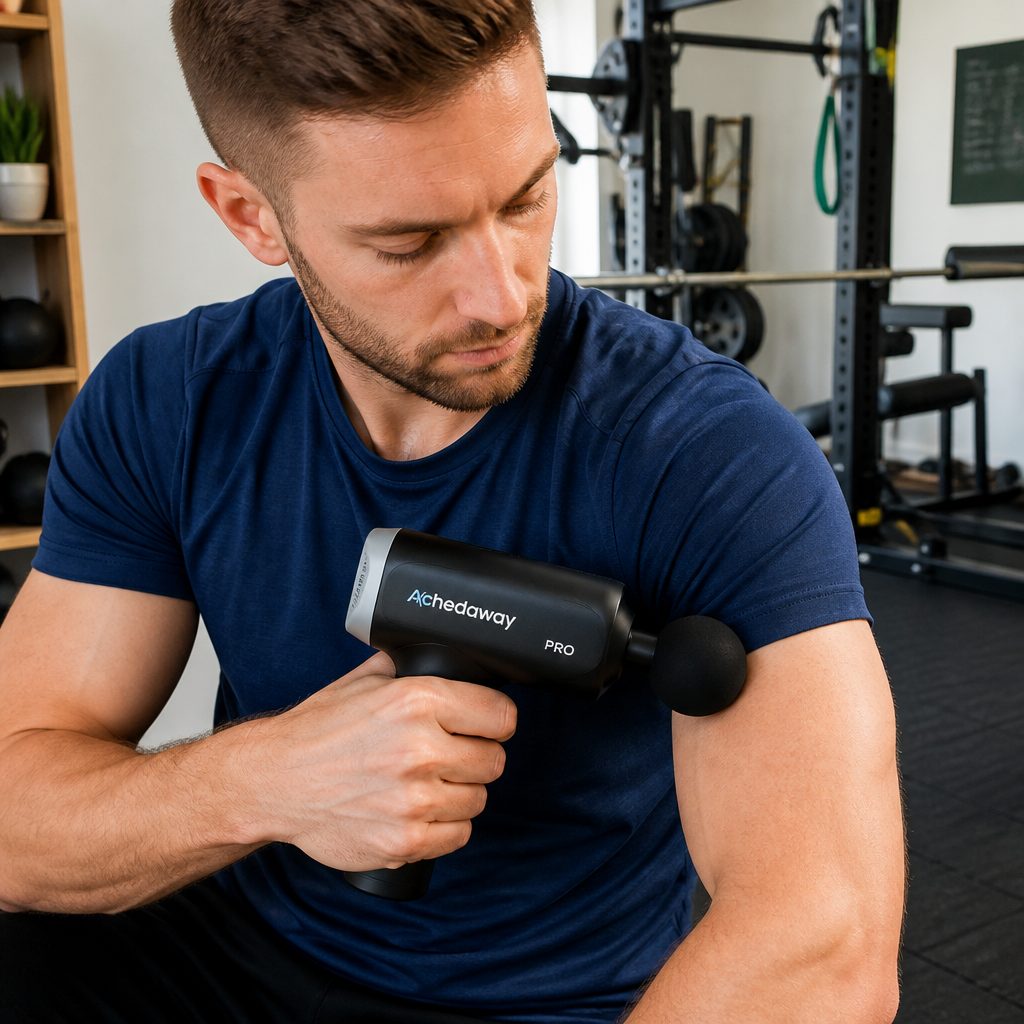
A little pressure is often enough. The advantage of stronger stall force is control on denser areas, not permission to treat every muscle as though it owes you money.
How to use a massage gun without overdoing it
There is a tendency to treat percussion as though the goal is to find the most uncomfortable setting and endure it with grim determination. That is rarely necessary for everyday recovery. A better approach is to start at a low setting, let the head glide slowly over the muscle, and pay attention to how the area responds. If your body tenses up, you are probably trying to win an argument that did not need to happen.
For calves after a run, use a broad attachment and move gradually from ankle towards knee, avoiding the joint itself. On quads, a Flat attachment makes sense for a general pass over the larger muscle area. For glutes, where the muscle is denser, the Go 3's additional stall force provides more headroom, but even there, controlled pressure is more useful than maximum pressure. A few calm passes are often more pleasant and more repeatable than one dramatic assault.
Shoulders and upper traps deserve particular restraint. People often carry tension there, then attack the spot with a percussion gun because it feels satisfyingly direct. Keep the treatment on the muscle, avoid the front and sides of the neck, and do not work directly over bones or joints. The same basic rule applies everywhere: treat the soft tissue around the problem area, not every hard bit that happens to be nearby.
A better recovery routine
Try a short, repeatable sequence: start gently, spend a little time on the larger muscles that worked hardest, then stop before the area feels irritated. Pair the gun with an easy walk, normal hydration and a decent meal. Recovery is gloriously unglamorous when it works.
A massage gun should not be used on an acute injury, an area with unexplained pain, significant swelling, numbness, bruising or broken skin. If you are managing a medical condition, have concerns about circulation, or are unsure whether percussion is appropriate, seek professional medical advice first. This is the dull but important bit. Your future self will be grateful that you did not attempt to percussion-gun your way through something that needed proper attention.
Which model suits your training style?
Your training matters because it determines how much force you genuinely need. A person doing hard barbell sessions, regular football, hill running or demanding indoor cycling will usually appreciate the Hypervolt Go 3's stronger motor resistance. Not because they need to punish their legs after every session, but because larger, worked muscles respond better to a tool that remains stable under modest pressure.
Someone doing yoga, Pilates, regular walking, light resistance training or gentle mobility work may find Theragun Relief more appealing. Its quietness and less forceful character lower the barrier to use. It is the massage gun equivalent of making a cup of tea rather than reorganising the entire kitchen: pleasant, manageable and likely to happen regularly.
The older Go 2 sits outside that simple split. It may still satisfy a user who values a compact device for occasional use, but it is not the model I would seek out if both current alternatives are readily available. It has a legacy place, not a leading one. Its louder operation alone makes it less suited to the relaxed everyday use that most buyers have in mind.
Strength trainers
Best pick: Hyperice Hypervolt Go 3. The 45lb stall force gives it the most confidence on quads, glutes and calves after heavier sessions.
Flat dwellers and shared homes
Best pick: Therabody Theragun Relief. Its approximate 45dB sound level is the friendliest option for low-fuss evening use.
Gentle daily recovery
Best pick: Therabody Theragun Relief. Light weight, simple controls and a softer approach make it easy to live with.
Travel and one-gun convenience
Best pick: Hyperice Hypervolt Go 3. It is carry-on approved, compact and offers about four hours of battery life.
Refurbished-market hunters
Best pick: Hyperice Hypervolt Go 2. Consider it only as a well-kept older compact option, with its louder operation in mind.
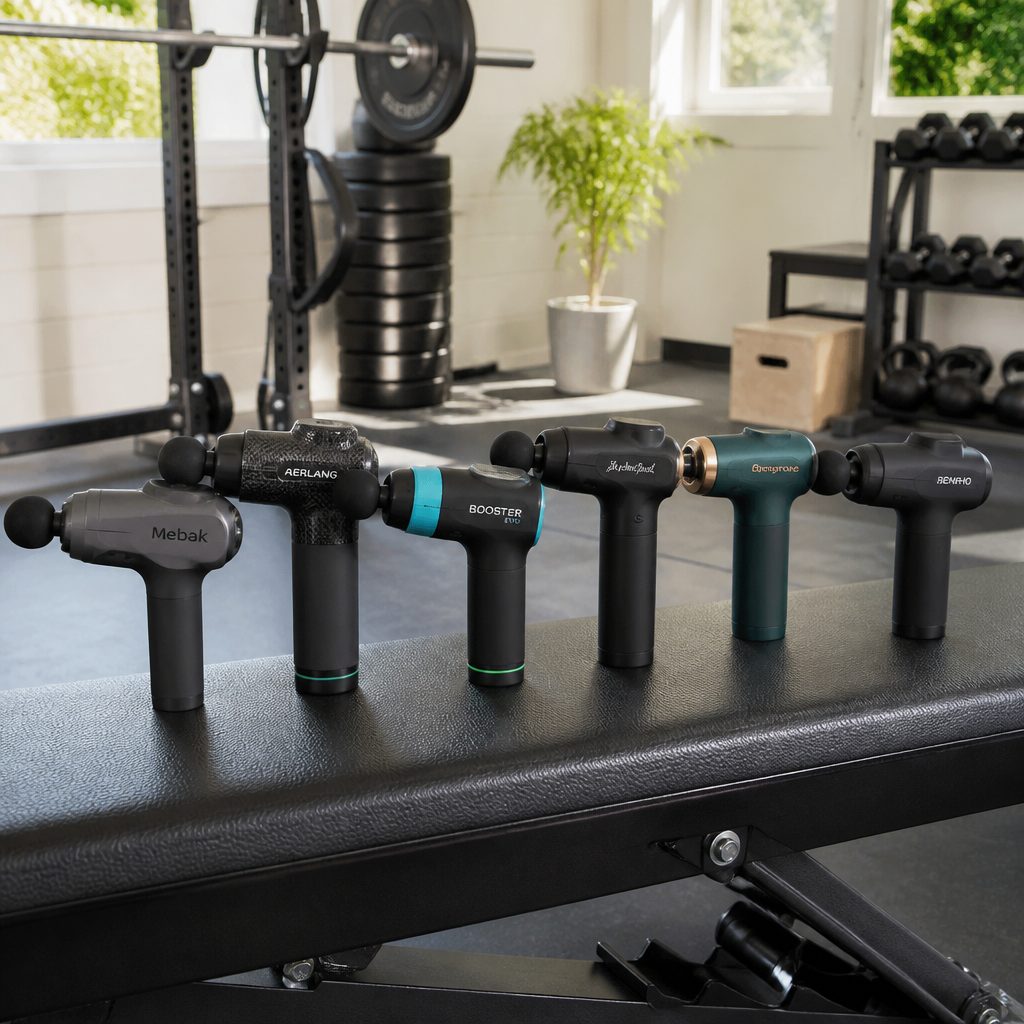
Choosing between these models is less about chasing the biggest claim and more about matching the gun's character to your actual training, household and tolerance for noise.
Attachment choice and app features: useful, but not the main event
It is easy to get distracted by accessories. The Hypervolt Go 3 has two included heads: Flat and Wedge. That sounds modest beside some larger massage-gun bundles, but it is enough for a great many people. Flat is the practical broad-coverage attachment you will probably use most. Wedge adds a more focused option for areas where you want a different angle or a scraping-style pass.
More attachments are not automatically better. If a case contains six heads but you use the same two every time, the other four become small rubber monuments to optimistic shopping. What matters is whether the supplied options suit your routine and whether the motor itself delivers a comfortable, controllable treatment. On that front, the Go 3 is well judged.
Its Hyperice App compatibility may be helpful for people who like guidance. Guided plans can reduce the "what on earth do I do with this?" period that follows an accessory purchase. They are especially useful if you are new to percussion and would prefer an outline for a specific muscle area rather than randomly wandering around your leg. Still, app guidance should be a bonus rather than the reason to choose a device. You should be able to use a massage gun confidently without needing your phone to grant permission.
The Go 2 did not have Bluetooth connectivity, which is another reminder of its older-generation position. For some, that will be utterly irrelevant. If you know your routine and want only a switch, a speed button and a moving head, you may regard apps as one more notification opportunity. Fair enough. But for a first-time owner, the newer Go 3's connected guidance and pressure feedback offer a more reassuring learning curve.
The ownership details worth considering before you buy
Think about where the massage gun will live. If it stays at home, a slightly heavier design may not matter much. If it travels between work, gym and home, compact weight and charging convenience matter a great deal more. Hypervolt Go 3's 0.73kg weight is manageable, and its carry-on approval reinforces its usefulness as a travel-friendly option. Theragun Relief's 1.3lb weight is lighter still, which can matter to anyone with reduced grip strength or a preference for minimal effort.
Then consider how you normally recover. Are you someone who has a deliberate post-training routine, or someone who remembers recovery only when walking downstairs becomes a formal negotiation? The former may benefit most from the Go 3's longer battery, multiple speeds and stronger output. The latter may actually use the Theragun Relief more often because it feels less cumbersome and more relaxing. The best device is not the objectively strongest one if it remains in a cupboard.
For a previous-generation Go 2, ownership needs a little more caution. Treat a used or refurbished purchase like any small battery-powered fitness device. Examine the physical condition, ensure its supplied components are included, and judge whether the saving is meaningful enough to accept an older platform and higher sound level. The model was not bad. It simply had the misfortune of being succeeded by a more capable compact sibling.
A sensible priority order: choose comfort and use frequency first, then noise, then motor resistance. Extra modes and accessories should come after those basics. A massage gun that is easy to pick up is more valuable than a specification sheet you admire once.
The final buying decision in plain English
For most shoppers, the decision is refreshingly uncomplicated. Choose the Hyperice Hypervolt Go 3 if you want the strongest and most versatile compact model in this group. Its 45lb stall force, 10mm amplitude, five speeds, 55dB sound level and about four-hour battery make it the best all-round tool for normal gym-goers, runners and active people. It has enough authority for dense muscles without stepping into unnecessary flagship excess.
Choose Therabody Theragun Relief if your priority is a quieter, lighter and gentler experience. It is especially well suited to those who are new to massage guns, want something for relaxed daily maintenance, or do not need substantial pressure on larger muscles. Its lower motor resistance is a real limitation, but it is also part of why the product feels less intimidating.
Choose the Hyperice Hypervolt Go 2 only with clear eyes. It is an older model, it is louder, and it does not offer the newer Go 3's current feature set. It can still be a perfectly serviceable compact gun when found in good condition, but it is no longer the obvious choice for a new buyer who wants the best balance of performance and refinement.
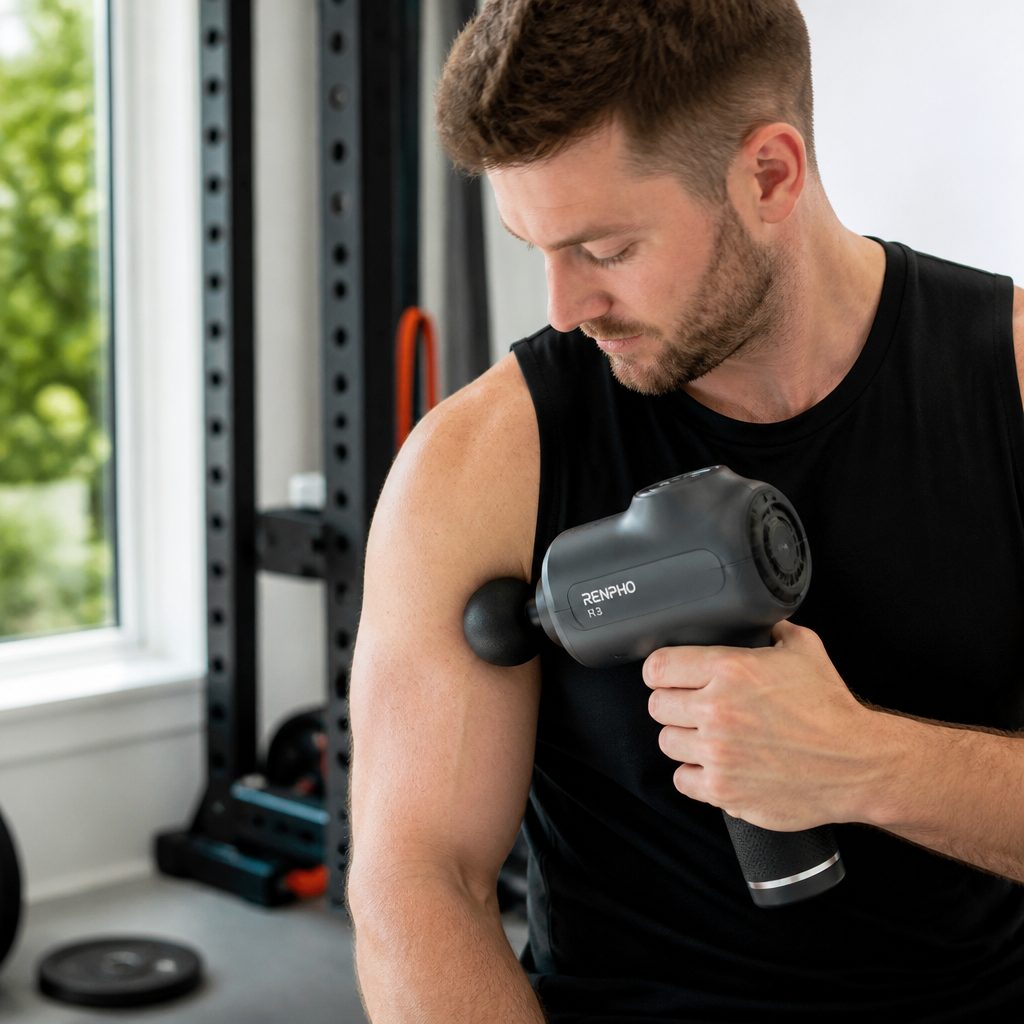
Everyday recovery does not need to be complicated: the right device should make a few minutes of calm, controlled muscle work feel easy to repeat.
Frequently asked questions
Verdict: buy for the recovery routine you will actually keep
Hyperice Hypervolt Go 3 is the clear best buy for most people. It combined the group's strongest stated stall force with a sensible 10mm amplitude, five speed settings, about four hours of battery life, USB-C charging and a manageable 55dB sound level. It is the one to choose if you want a compact massage gun that feels properly capable after regular gym work, running or sport.
Therabody Theragun Relief is the best quiet and gentle alternative. Its lighter build and approximately 45dB operation make it particularly appealing for relaxed daily use, seniors, beginners and shared households, provided you do not need a great deal of force on dense muscle.
Hyperice Hypervolt Go 2 belongs in the legacy column. It can still serve as a compact older device when found in good condition, but the newer Go 3 is the more complete choice. Pick the one that makes recovery feel easier, not more complicated. Your legs have already done enough admin for the day.