
Best Foam Rollers and Massage Guns for Recovery at Home
Recovery has finally become less about looking busy with a protein shake and more about staying capable for years. These are the foam rollers and massage guns worth considering for loosening stiff legs, managing everyday training tension and making your home gym feel a little more sustainable.
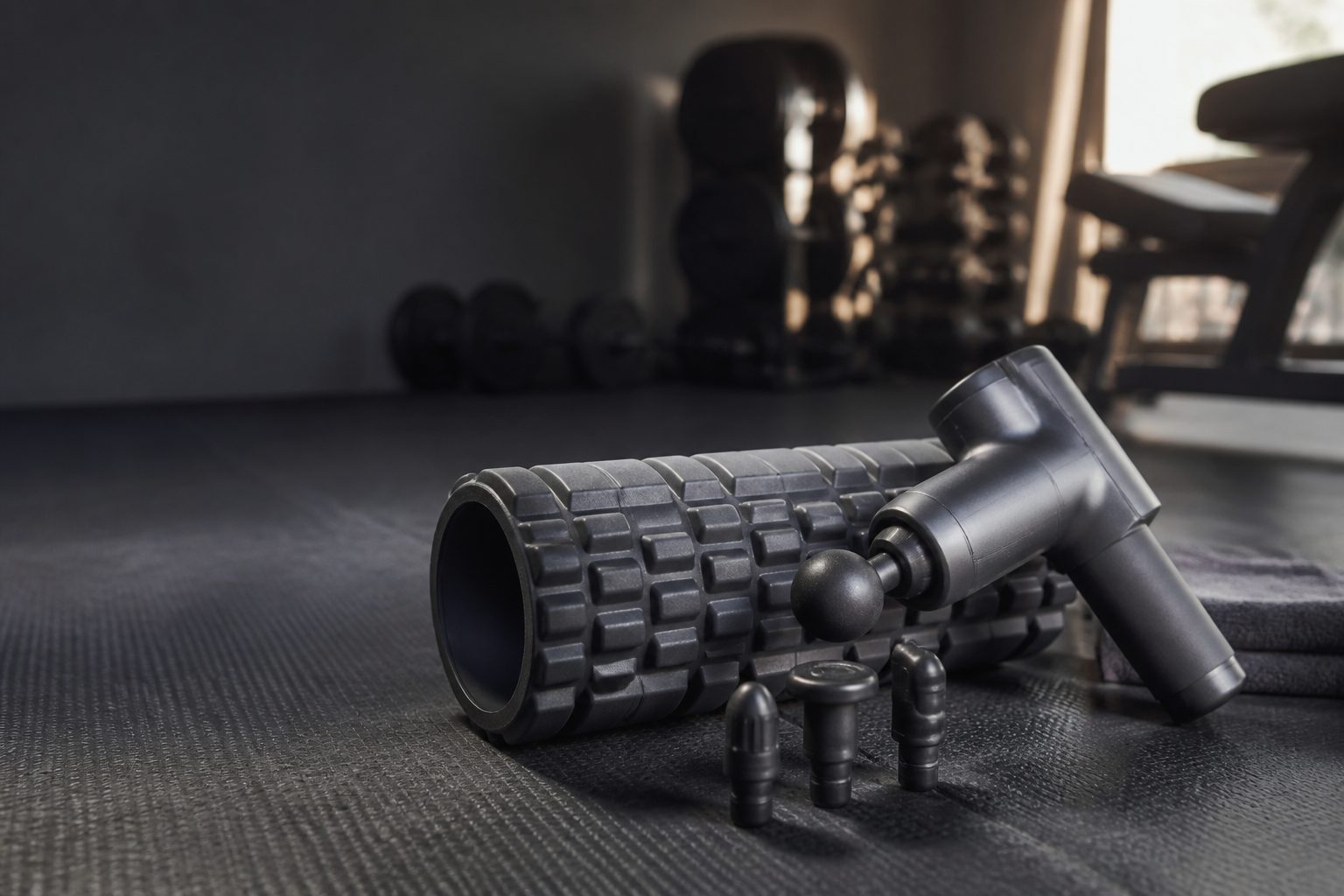
A practical home-recovery setup is not glamorous, but a roller and a sensible massage gun cover a remarkable amount of post-training maintenance.
 By James Oduya · Staff Writer & Home Gym Columnist · Updated August 29, 2026
Why recovery gear belongs in a longevity-first home gym
There was a time when recovery equipment felt a bit optional: something elite athletes did in a treatment room, or something the rest of us bought after a particularly enthusiastic leg day. By 2026, that attitude had changed. Training for longevity meant caring about whether you could squat, run, carry bags, work at a desk and train again next week without feeling like a folding deckchair.
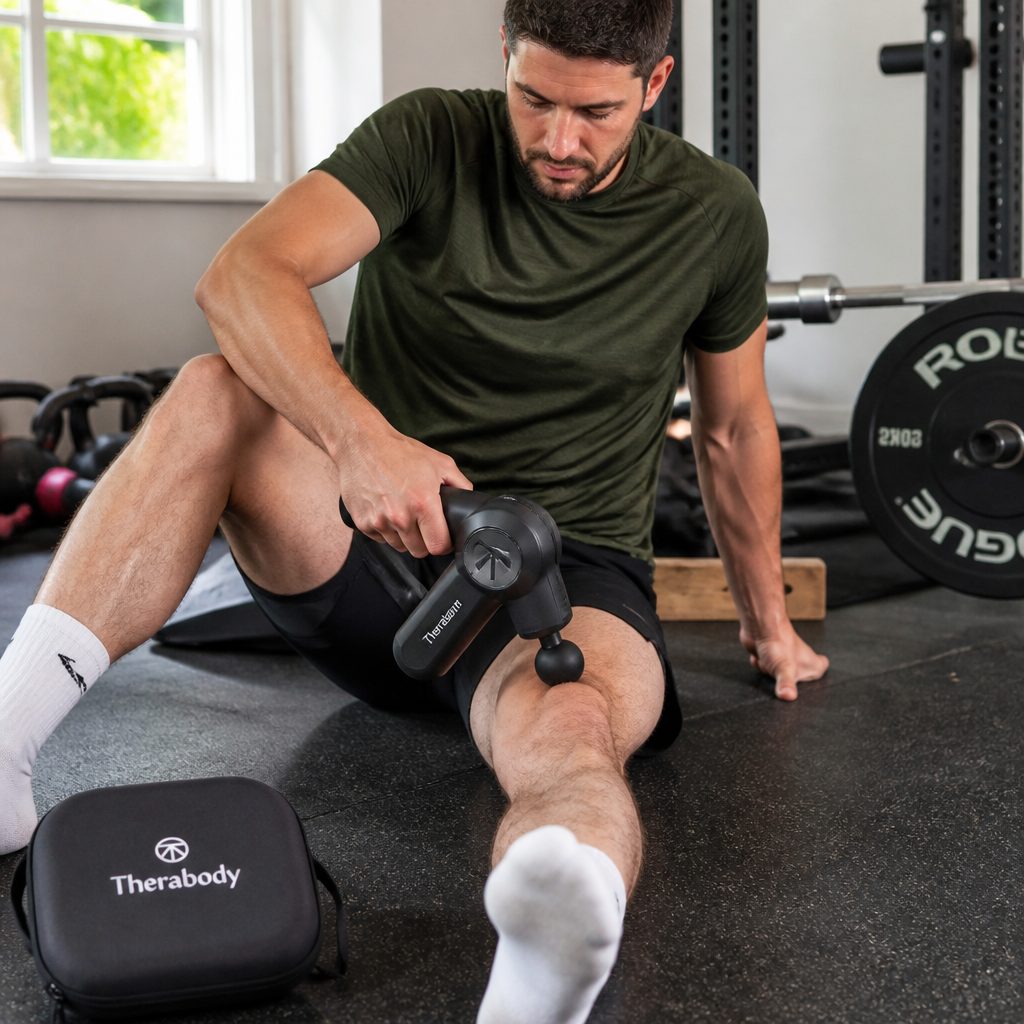
A massage gun earns its place when a single calf, quad or shoulder needs attention quickly rather than a full floor-based mobility session.
A foam roller and a massage gun are not miracle devices. Neither replaces sleep, nutrition, sensible programming or seeing a qualified clinician when pain is persistent or worrying. They do, however, make it much easier to build a short mobility and comfort routine into a normal week. That is their real appeal. Five unglamorous minutes spent on your calves, quads, glutes or upper back can be more useful than owning the fanciest recovery gadget that remains in a cupboard with the bread maker.
The two tools solve slightly different problems. A roller is the broad-brush option. It asks you to move your own bodyweight over a surface, which makes it excellent for large muscle groups and for slowing down enough to notice where you are genuinely stiff. A massage gun is the precision instrument. It is better when one calf feels grumpy, your upper traps have spent all day supporting your laptop posture, or you have about sixty seconds before leaving for a run.
For most people, the sensible starting point is a conventional foam roller plus a budget massage gun rather than one extravagant device trying to do everything. That combination handles lower-body mobility, full posterior-chain work and targeted tension without making recovery feel like another full-time job. The good news is that it need not be complicated. The slightly less exciting news is that it still requires you to actually use it.
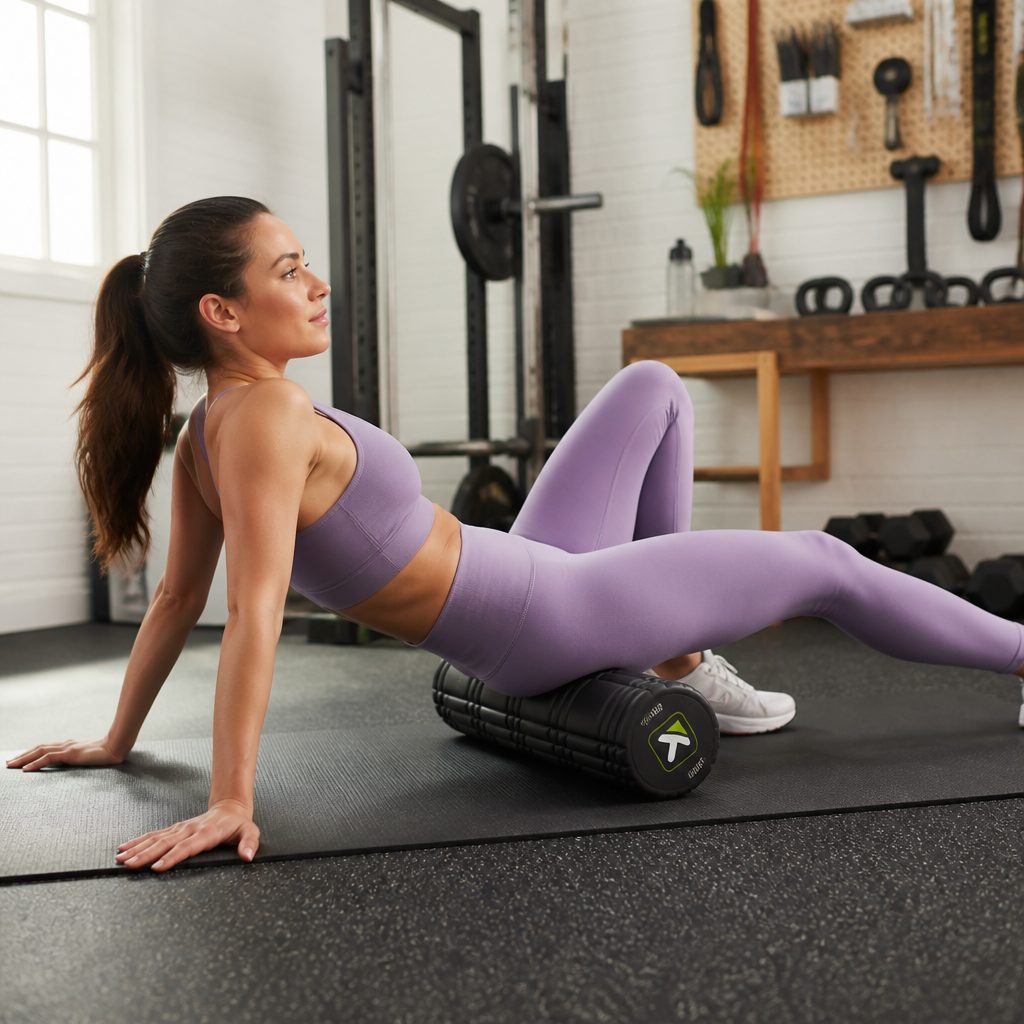
A traditional foam roller remains the simplest route to working across the glutes, hamstrings, quads and upper back with controlled bodyweight pressure.
Foam roller or massage gun: choose the job, not the trend
If you have only room or budget for one tool, start by thinking about your most common complaint. Runners and cyclists usually get more value from a roller because calves, quads, hamstrings and glutes reward slower, full-length passes. Desk workers may prefer a compact gun because it is much easier to reach the shoulders and upper back without converting the living-room floor into a small Pilates studio.
Strength athletes are the group most likely to benefit from both. Heavy training can leave broad areas feeling generally loaded and one or two spots feeling disproportionately tight. A roller helps you work through the first category. A higher-amplitude massage gun can be reserved for the second. In neither case is "more force" automatically better. If the session feels like you are attempting to tenderise a steak, back off. Recovery should leave the area feeling calmer and more mobile, not bruised and offended.
Use rollers for moving, not merely enduring
Long, controlled passes on big muscle groups are the point. Pause gently at a tender area if it feels useful, but do not turn every session into a grimace competition.
Use guns for awkward, localised tension
A massage gun is especially handy on calves, quads, glutes, shoulders and the upper back, where a roller can be awkward or too blunt an instrument.
Only buy powered features you will use
Vibration, apps and multiple heads can be worthwhile, but a simple roller has no battery to manage and is ready whenever your hips decide to complain.
The useful two-tool formula
A TriggerPoint GRID Original paired with the TOLOCO Deep Tissue Massage Gun makes an exceptionally sensible home setup: the roller handles broad mobility, whilst the gun handles targeted work. It is not flashy. That is rather the point.
How we ranked these recovery tools
This roundup is organised by practical use case rather than by a vague idea of "best". A roller that is brilliant for a new exerciser need not be the one a strength athlete wants after a hard lower-body session. Likewise, a small quiet gun designed for quick shoulder relief is not trying to compete directly with a deep-tissue device.
I have prioritised useful characteristics: density and surface design for rollers; amplitude, noise, weight, battery life and attachment choice for massage guns. Those are the details you notice after the initial excitement wears off. A six-hour claimed runtime sounds less dramatic than a neon display, admittedly, but it is much more helpful when you have forgotten where the charging cable lives.
The ranking also reflects the current longevity-over-aesthetics shift. The best recovery tool is the one that supports consistent training and everyday movement without demanding drama, endless app attention or a degree in sports massage. There is room here for premium equipment, but there is no automatic prize for spending more.
Ranked picks: the best foam rollers and massage guns
1. TriggerPoint GRID Original — Best all-round foam roller
The TriggerPoint GRID Original is the easy recommendation because it gets the central compromise right. Its EVA foam construction is firm enough to feel purposeful but not so punishing that beginners abandon it after one dramatic encounter with their IT bands. The distinctive Distrodensity Zones are designed to mimic the varied pressure of massage hands, rather than presenting one completely uniform cylinder against every part of your body.
That makes it a particularly good roller for people who want one dependable item to cover quads, calves, hamstrings, glutes and the upper back. It is also a properly low-maintenance purchase: no noise, no power, no charging routine, and owner reports suggested a lifespan of more than a decade. There were more than 41,000 reviews behind its long-standing popularity, which is rather more reassuring than an anonymous roller claiming to transform your fascia before breakfast.
Pros
- Firm, controlled feel suits regular use without excessive punishment.
- Textured zones add useful variation across large muscle groups.
- No battery, software or maintenance to think about.
Cons
- Needs enough clear floor space for comfortable use.
- Cannot isolate one knot as quickly as a massage gun.
- May still feel quite assertive on very tender tissue.
2. TOLOCO Deep Tissue Massage Gun — Best budget massage gun
TOLOCO's Deep Tissue Massage Gun is the practical value pick for anyone who wants proper capability without treating recovery like a luxury hobby. It offered 12mm of amplitude, a level that gave it a more convincing deep-tissue claim than many tiny vibration-led devices, and it combined that with claimed battery life of up to six hours. That is enough capacity for normal home use without constantly putting the charger into your mental to-do list.
It also arrived with ten heads, including ball, bullet, fork and flat designs, plus shapes aimed at areas such as the plantar fascia and Achilles. Most people will mainly use two or three attachments, if we are honest, but the range is useful while you learn what feels best on different areas. Its smart LED touch screen shows battery level and current speed, whilst its quoted 40–50dB operating range is relatively civilised for a budget device.
Pros
- Strong specification for a budget-minded home user.
- Wide head selection encourages more targeted use.
- Long claimed runtime and clear touch-screen feedback.
Cons
- More attachments also mean more pieces to store.
- It does not have the premium ecosystem of Therabody.
- Deep-tissue feel is not a substitute for clinical treatment.
3. Therabody WaveRoller — Best vibrating roller for guided recovery
The Therabody WaveRoller is for the person who enjoys the broad contact of a foam roller but wants vibration and a little more structure around their routine. It is a compact 12-inch by 5-inch roller with five vibration settings, and it connects to the Therabody App for guided routines. That makes it less of a passive cylinder and more of a recovery tool that can prompt you through a purposeful session.
Its internal 12V lithium-ion battery provided up to 180 minutes of total life. That is enough for plenty of shorter sessions, though it also means charging becomes part of ownership in a way it never will with a basic roller. Vibration can make a familiar rolling routine feel smoother and more engaging, particularly when you are trying to unwind after demanding strength work. Whether that justifies the extra cost is personal. The standard GRID does an awful lot without a single electronic component.
Pros
- Five intensity options give more control than a static roller.
- Therabody App guidance helps hesitant users create a routine.
- Good choice for full-body post-training work.
Cons
- Charging is another small domestic responsibility.
- More expensive than a conventional roller.
- Vibration will not appeal to everybody.
4. RENPHO Massage Gun R3 — Best portable massage gun for desk workers
The RENPHO Massage Gun R3 is the one to consider if portability, low noise and a gentle learning curve matter more than aggressive deep-tissue force. At 1.5lb, it is easy to pick up for a quick break between meetings or put in a gym bag. USB-C charging is refreshingly practical, too. One cable can potentially handle rather more of your life, which is always welcome.
Its approximate 9mm amplitude put it in vibration-class territory rather than the truly deep percussive category. That is not necessarily a disadvantage. For smaller muscle groups, upper-back tension and a first massage gun, a less intense approach can make it easier to use consistently. The five-speed setup and 45dB noise figure made this the more desk-friendly choice. Just remember that the quoted six-hour battery claim applied at the lowest setting, so higher intensity use naturally asks more of it.
Pros
- Very portable and easy to keep within reach.
- 45dB operation is considerate around colleagues or family.
- Five speeds offer a beginner-friendly progression.
Cons
- Approximate 9mm amplitude is not for serious deep-tissue seekers.
- Claimed battery endurance drops at higher settings.
- Not the best primary tool for heavily trained legs.
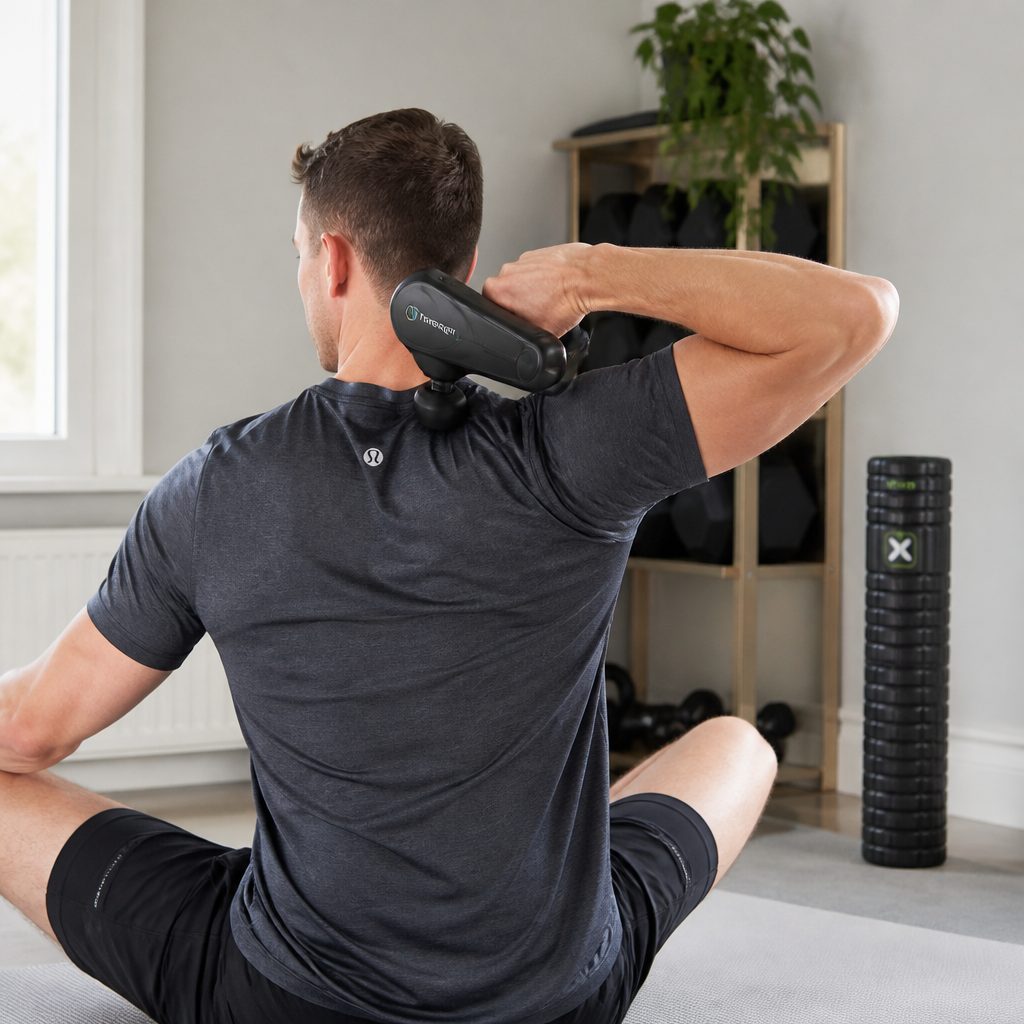
Compact massage guns make sense for upper-back and shoulder tension, especially when rolling on the floor is neither convenient nor especially graceful.
5. Yes4All EPP Foam Roller — Best gentle budget foam roller
The Yes4All EPP Foam Roller proves that recovery does not need to become expensive before it becomes useful. Its gentler density is the key feature here. New exercisers, people returning after time away, and anyone who finds an aggressively firm roller a bit much will usually get more from a surface they can tolerate long enough to use properly.
This is a deliberately simple option. There is no motor, no complicated texture and no pressure to turn a short mobility habit into a high-tech project. It works well for slow passes over the glutes, hamstrings and quads, and it is a sensible first roller before deciding whether you actually want a firmer, more sculpted design. For many home gym users, this will simply be enough.
Pros
- Approachable density helps beginners build a regular habit.
- Simple, quiet and uncomplicated to use.
- Good entry point for lower-body mobility work.
Cons
- Less intense feel may disappoint experienced users.
- Uniform format offers less surface variation than the GRID.
- Still requires floor space and bodyweight control.
6. NAIPO MGG-2103 — Best quiet massage gun for shared homes
The NAIPO MGG-2103 stands out because it combined a 12mm amplitude with notably quiet operation. Its stated 35dB level was among the lowest in the budget class, and the brushless motor was specified at under 45dB. Either way, this was built for people who do not want recovery sessions to sound like they are renovating the kitchen.
It weighed 1.9lb, offered five adjustable speeds from 1200 to 3200rpm, and came with five massage heads. The claimed battery endurance was expressed as up to 20 days, which will obviously depend on how often and how hard you use it, but the general message was clear: it was designed to avoid constant charging. Choose it when quiet use matters as much as depth, perhaps in a flat, a shared home or a household where late-night gym sessions are a thing.
Pros
- Quiet operation is excellent for shared living spaces.
- 12mm amplitude gives it credible targeted capability.
- Five heads and five speeds cover everyday recovery needs.
Cons
- Fewer heads than the TOLOCO package.
- At 1.9lb, it is not as light as the RENPHO R3.
- Long battery claims always vary with settings and usage.
7. Hyperice Vyper 3 — Best premium vibrating roller
The Hyperice Vyper 3 is the premium vibrating-roller choice for buyers who want a high-powered recovery experience and are comfortable investing in a specialist tool. It sits in a different category from the humble static cylinder. Adjustable vibration intensity and a premium build are its central attractions, aiming to make larger muscle-group work feel more purposeful after hard training blocks.
It is best viewed as a luxury addition rather than an essential first purchase. A conventional roller remains more than capable for mobility work, and a massage gun is often better for a single targeted knot. But if you already know that vibration helps you relax into rolling and you want a refined, high-end unit for regular use, the Vyper 3 has a clear place. It is the sort of purchase for the well-used home gym rather than the optimistic January corner of the spare room.
Pros
- Premium option for users who specifically want powerful vibration.
- Adjustable intensity supports different recovery days.
- Well suited to regular full-body rolling routines.
Cons
- Overkill if you are new to foam rolling.
- Powered ownership is less simple than a basic roller.
- Does not replace a massage gun for precise areas.
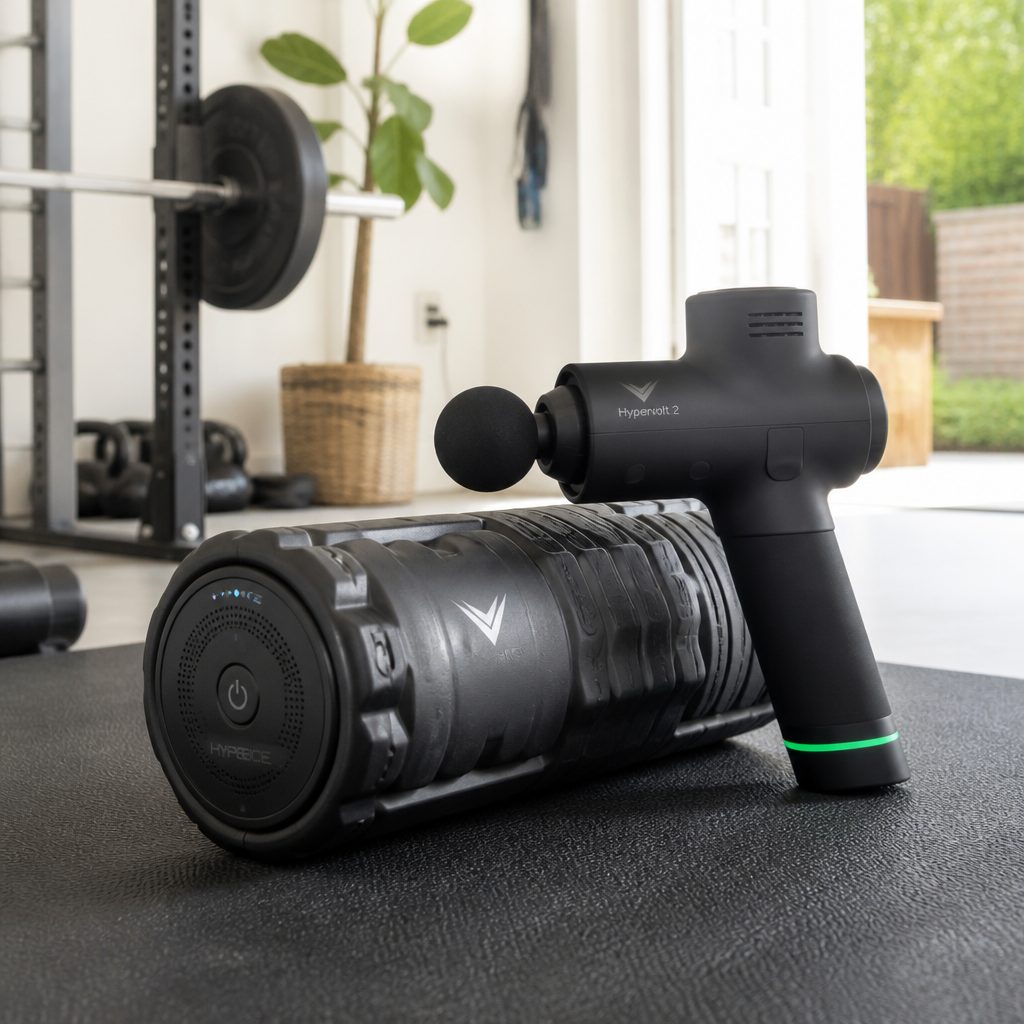
Vibrating rollers add another layer to broad muscle-group recovery, but their real value depends on whether vibration helps you use the tool more consistently.
At-a-glance comparison: what the figures actually mean
The figures below are useful because they stop unlike products being compared as if they were doing the same job. Amplitude matters chiefly on massage guns. Noise and weight matter if you will use the device around other people or carry it frequently. Battery figures matter only for powered devices. A static roller wins that particular contest by never asking anything of you except a bit of floor space.
| Product | Type | Key figure | Noise / power | Best fit |
|---|---|---|---|---|
| TriggerPoint GRID Original | Static foam roller | Distrodensity Zones | Silent; no power | Most home gym users |
| TOLOCO Deep Tissue Massage Gun | Massage gun | 12mm amplitude; 10 heads | 40–50dB; up to 6 hours | Budget targeted recovery |
| Therabody WaveRoller | Vibrating roller | Five vibration settings | 12V battery; 180 minutes | Guided full-body sessions |
| RENPHO Massage Gun R3 | Compact massage gun | Approx. 9mm amplitude; 1.5lb | 45dB; USB-C | Desk workers and travel |
| Yes4All EPP Foam Roller | Static foam roller | Gentler EPP density | Silent; no power | Beginners |
| NAIPO MGG-2103 | Massage gun | 12mm amplitude; 1200–3200rpm | 35dB stated noise | Quiet shared-home use |
| Hyperice Vyper 3 | Vibrating roller | Adjustable high-powered vibration | Powered | Premium home gyms |
Massage gun depth and noise: the practical hierarchy
Massage-gun specification sheets can become a bit theatrical, so it helps to keep the meaningful numbers in perspective. The TOLOCO and NAIPO each listed 12mm amplitude, putting them in the more substantial end of this particular group for reaching into tired calves, quads and glutes. The RENPHO's approximate 9mm was gentler and more compact, which suited its desk-friendly positioning rather well.
Noise was the other meaningful separator. The NAIPO's stated 35dB figure made it the clearest choice where silence matters, followed by RENPHO at 45dB. TOLOCO's 40–50dB range remained reasonable, but it is not quite the device I would reach for during a video call, unless the meeting was exceptionally dull and you had stopped caring about consequences.
These bars are not performance scores. They are simply a visual guide to the disclosed amplitude and noise figures in this roundup. More amplitude is not inherently superior, and lower noise does not make a gun more therapeutic. The best choice is the one whose character matches how, where and how often you will use it.
Simple recovery routines for runners, lifters and desk workers
For runners and cyclists, I would use the roller first. Spend a few controlled passes on each calf, then move to quads, hamstrings and glutes. Follow with a gun on one persistently tight calf or quad if needed. This is not a ritual requiring forty-five minutes and scented candles. It can be a short reset after a run or later in the evening when the legs begin to stiffen.
For strength athletes, use the roller as part of a lower-body cooldown or the following day, working slowly through broad areas. A vibrating roller is attractive here because the five settings on the WaveRoller allow you to match the feel to how beaten-up you are. Save the massage gun for localised tension, particularly calves, quads and glutes. Do not hammer freshly irritated areas simply because the gun is powerful.
Desk workers should take the path of least resistance. That means the RENPHO R3 or NAIPO can be more realistic than a roller for quick upper-back, shoulder and glute attention. Use low intensity initially, keep the device moving, and treat it as a prompt to stand, walk and change position rather than as permission to remain folded over a laptop for another four hours.
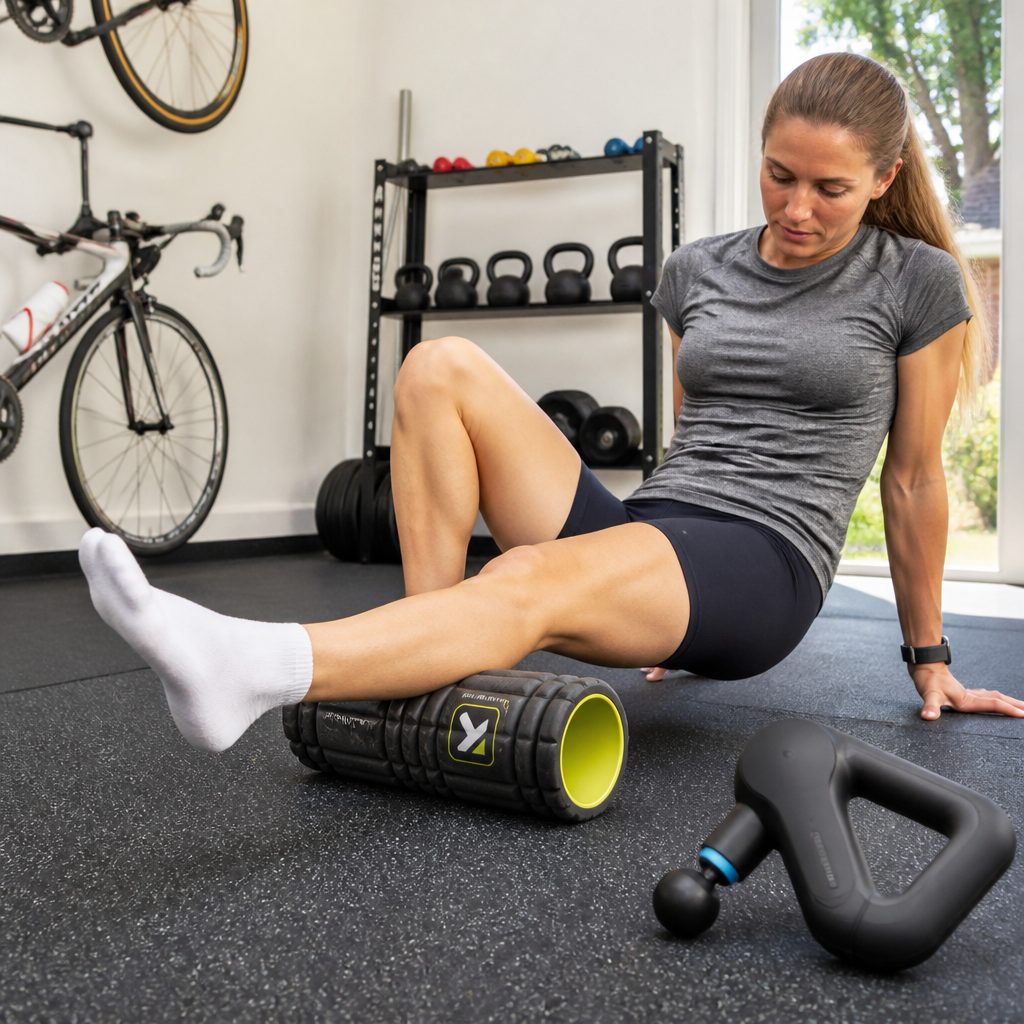
For runners and cyclists, a short lower-body routine covering calves, quads, hamstrings and glutes is often more useful than a long, punishing session once a week.
Where not to use recovery tools
A massage gun and foam roller should feel helpful, not alarming. Avoid rolling directly over joints, the spine, the front or side of the neck, bony areas and obvious bruising. A gun should not be used on numb areas, open wounds, acute injuries, varicose veins or places that feel sharply painful. If you have a medical condition, are pregnant, take blood-thinning medication, have reduced sensation, or are unsure whether your pain is ordinary muscle soreness, speak with an appropriate healthcare professional first.
There is also a behavioural point here. Do not use a recovery gadget to silence pain that changes the way you walk, lift or sleep. Persistent pain, swelling, weakness, tingling or pain after a traumatic incident deserves proper attention. A foam roller is a fine tool. It is not a diagnostic instrument wearing a textured jacket.
Keep pressure tolerable and keep moving. Especially with a massage gun, start low, use short passes and assess how the area feels afterwards. More intensity is not a badge of seriousness; it is simply more intensity.
Best-for awards: which one should you actually buy?
If you want the shortest possible answer, buy according to the friction in your routine. Choose the thing you will reach for. A basic roller used three times a week is more valuable than a feature-packed vibrating model that stays charged in theory and untouched in practice.
Best all-rounder: TriggerPoint GRID Original
Buy this if you want one durable, uncomplicated roller for regular full-body mobility. The balanced firmness and textured zones make it the safest all-purpose choice.
Best on a budget: TOLOCO Deep Tissue Massage Gun
Choose this for strong targeted capability, 12mm amplitude, extensive attachments and long claimed battery life without moving into premium territory.
Best for strength athletes: Therabody WaveRoller
Its five vibration settings and app-guided approach make it the best specialist roller for those who enjoy structured recovery after demanding gym work.
Best premium pick: Hyperice Vyper 3
For the established home gym where vibration-led rolling is already part of the plan, this is the high-end choice with adjustable intensity.
Best for desk workers: RENPHO Massage Gun R3
The 1.5lb body, USB-C charging and 45dB operation make it a very manageable option for brief shoulder and upper-back sessions.
Best for quiet homes: NAIPO MGG-2103
Choose the NAIPO when you want 12mm amplitude but need a notably quieter device for flat living, late sessions or shared spaces.
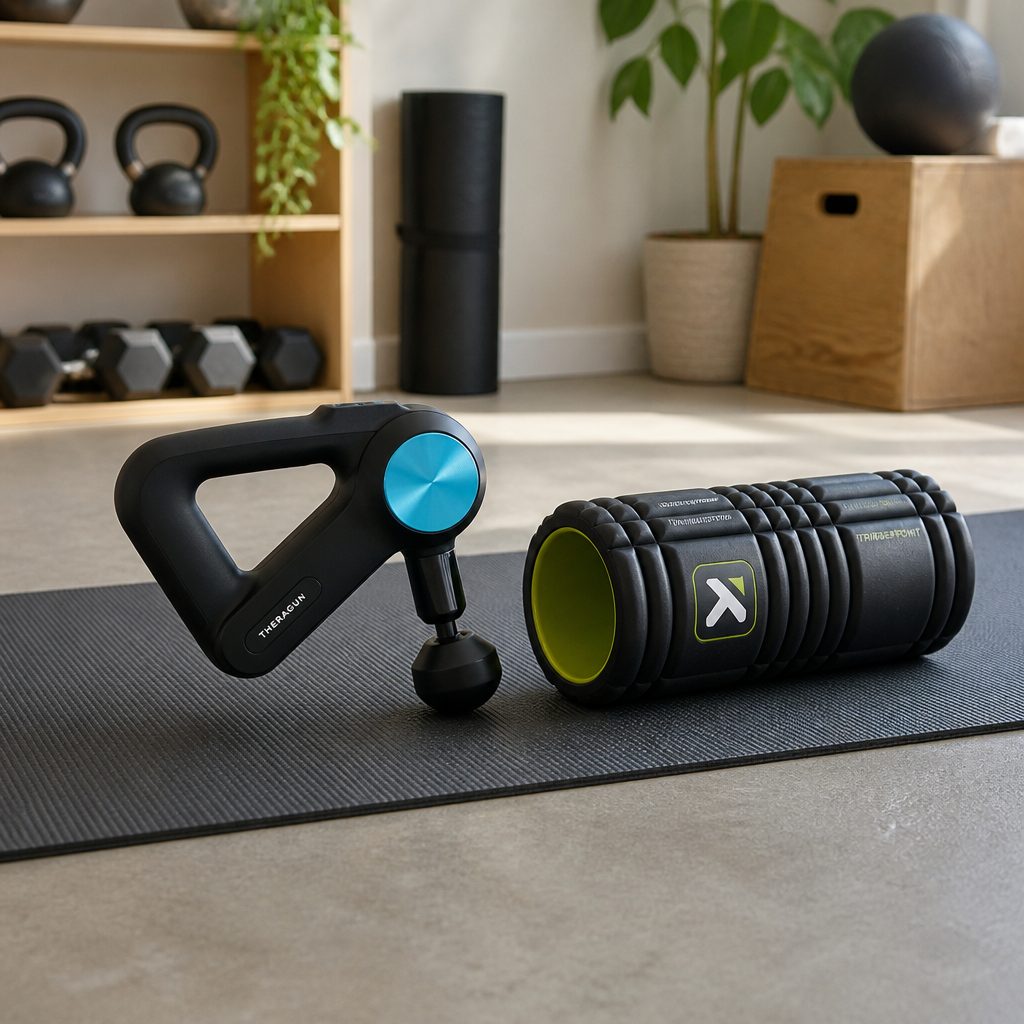
The best recovery tool is usually the one that fits your real routine: a quiet compact gun for quick tension, or a roller already waiting beside the mat.
Care, storage and making the habit stick
Static rollers are beautifully undemanding. Wipe them down occasionally, keep them out of persistent damp, and do not use them as an improvised stool when friends come round. Their simplicity is a major advantage. The TriggerPoint GRID Original and Yes4All EPP Foam Roller can simply live beside your mat, where they become a visual reminder to do five minutes rather than a large object you need to retrieve from a loft.
Massage guns benefit from slightly more care. Store attachments together, recharge before the battery is entirely forgotten, and clean heads after regular skin contact. USB-C charging makes the RENPHO particularly painless in a modern household, while a long claimed runtime reduces charging frequency on TOLOCO and NAIPO. Still, no battery claim can rescue a device that has been left in a drawer for six months.
For habit-building, attach recovery to something you already do. Roll calves whilst watching the kettle boil after an evening walk. Use the gun on your upper back after closing the laptop. Give your quads a few passes immediately after taking off your training shoes. Small, boring and repeatable wins this contest. The longevity approach is not about performing recovery perfectly; it is about staying comfortable enough to keep showing up.
Frequently asked questions
Buy a foam roller first if your main aim is broad lower-body mobility across quads, hamstrings, glutes and calves. Buy a massage gun first if your most common issue is localised shoulder, calf or upper-back tension and you value speed and reach. For an all-round home setup, the two categories complement each other very well.
It can be, especially if vibration makes you more likely to use the roller consistently. The Therabody WaveRoller offers five settings and app routines, while the Hyperice Vyper 3 targets premium users wanting high-powered adjustable vibration. A conventional roller still provides excellent mobility work, though, and needs neither charging nor an app.
Amplitude describes how far the massage head travels with each stroke. In this group, the TOLOCO Deep Tissue Massage Gun and NAIPO MGG-2103 both list 12mm, while the RENPHO R3 measures approximately 9mm. The figure helps explain the character of a device, but comfort, technique and sensible placement matter just as much.
Many people can use one briefly and gently as part of a normal routine, provided the area is not acutely injured and the treatment remains comfortable. Keep it moving, start at lower intensity and avoid treating pain as a challenge to overcome. If an area feels worse after repeated use, stop and seek appropriate advice.
The NAIPO MGG-2103 listed 35dB operation, making it the quietest stated figure in this selection. RENPHO's R3 was rated at 45dB, while TOLOCO operated in a quoted 40–50dB range. Noise varies with speed, but NAIPO is the straightforward pick for shared homes.
Not universally. Texture can create a more varied feel, and the GRID Original's Distrodensity Zones are a real reason to choose it. But a simpler, gentler EPP roller such as the Yes4All can be more comfortable for beginners. The best roller is one you can use with calm, controlled pressure rather than dread.
No. It can be a handy home tool for temporary comfort and routine muscle care, but it cannot assess an injury, diagnose a movement problem or provide the judgement of a qualified professional. Think of it as a useful part of self-care, not a small electric clinician.
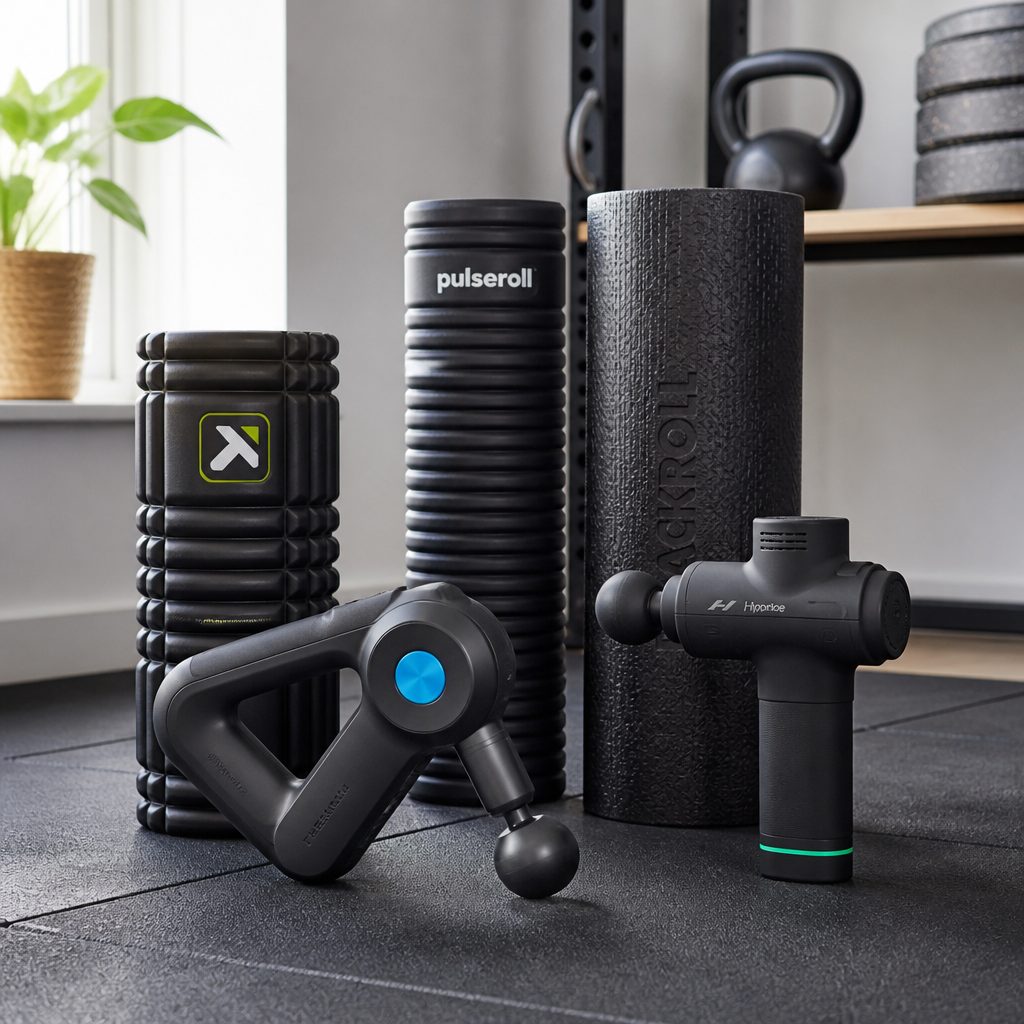
Longevity-focused recovery is less about dramatic gadgets and more about maintaining the small habits that keep training, work and everyday movement feeling sustainable.
The bottom line
The TriggerPoint GRID Original is the best foam roller for most homes because it is effective, durable, silent and uncomplicated. Pair it with the TOLOCO Deep Tissue Massage Gun if you want affordable targeted recovery with 12mm amplitude, ten attachments and strong claimed battery life.
Go for the RENPHO Massage Gun R3 if portability and desk-friendly use are your priorities, or the NAIPO MGG-2103 if quiet operation matters most. For those building a more premium recovery corner, the Therabody WaveRoller and Hyperice Vyper 3 make the case for vibration-led rolling. Whichever route you take, keep the routine short, comfortable and repeatable. That is how recovery stops being an occasional treat and becomes part of training for the long haul.