
Theragun Mini 3rd Gen Review: Is the Pocket Massage Gun Worth Carrying?
The Theragun Mini 3rd Gen is a compact, 400g massage gun with three speed settings and a travel-friendly format. It makes a persuasive case for being the recovery tool you take to the gym, office or weekend away rather than the one that lives in a drawer looking vaguely athletic.
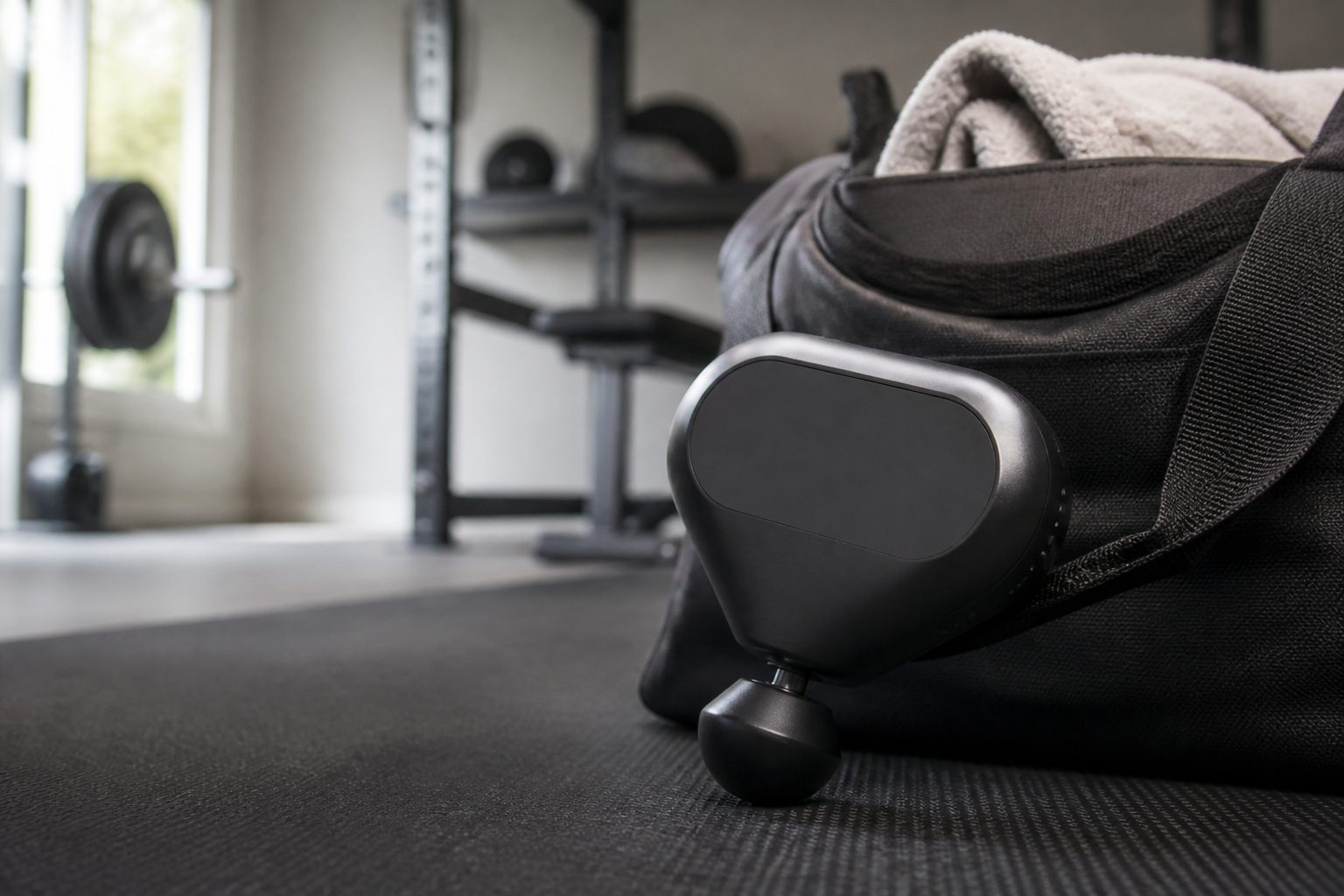
The Theragun Mini 3rd Gen was built around the simple idea that recovery gear is more useful when it actually makes it into your bag.
 By James Oduya · Staff Writer & Home Gym Columnist · Updated October 17, 2026
Theragun Mini 3rd Gen at a glance
Massage guns have a peculiar habit of becoming much larger than their real-world usefulness. The serious-looking full-size models can be excellent after a hard leg session, of course, but they are also substantial bits of kit. They take up space, demand a charging routine of their own, and are not always the thing you fancy carrying alongside trainers, a water bottle, work laptop and the lunch you told yourself would not get crushed.
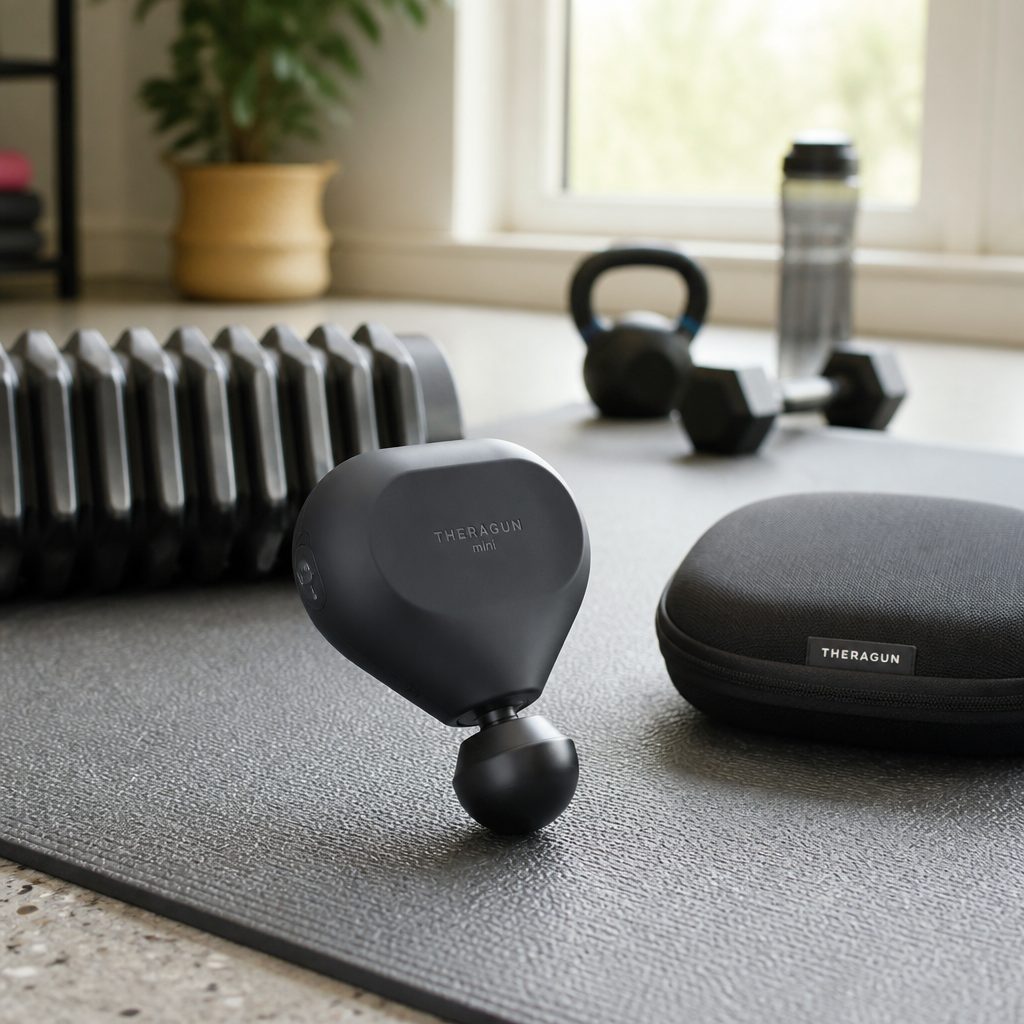
For the right owner, the Theragun Mini 3rd Gen becomes the recovery tool that accompanies real life rather than waiting for an idealised recovery evening that never arrives.
The Theragun Mini 3rd Gen takes the other route. At 400g, it is designed around portability first. That does not automatically make it the right recovery tool for everyone, because a smaller massage gun is necessarily a compromise in certain situations. But it is a very sensible compromise for a lot of gym-goers. If the usual choice is between bringing a compact device or bringing nothing, the smaller device rather wins by default.
Its three-speed layout is equally straightforward. There is no sense here of being asked to operate laboratory equipment before you can loosen up your calves after a treadmill session. The Mini is intended to be picked up, used for a few minutes and packed away again. Sometimes that is precisely the sophistication you want.
The Mini makes the most sense as a convenient self-massage tool before or after ordinary training, commuting and travel. It is not a replacement for clinical assessment where pain is severe, persistent, unexplained or accompanied by swelling, weakness or loss of function.
That distinction matters. It is very easy to mistake a massage gun for a magic wand with a battery. It is not. Used sensibly, though, percussion can be an enjoyable part of a warm-up or wind-down, and a small device is far more likely to become part of your actual routine. I would rather see somebody use a compact massage gun consistently and comfortably than buy an intimidating powerhouse that sees daylight twice a month.
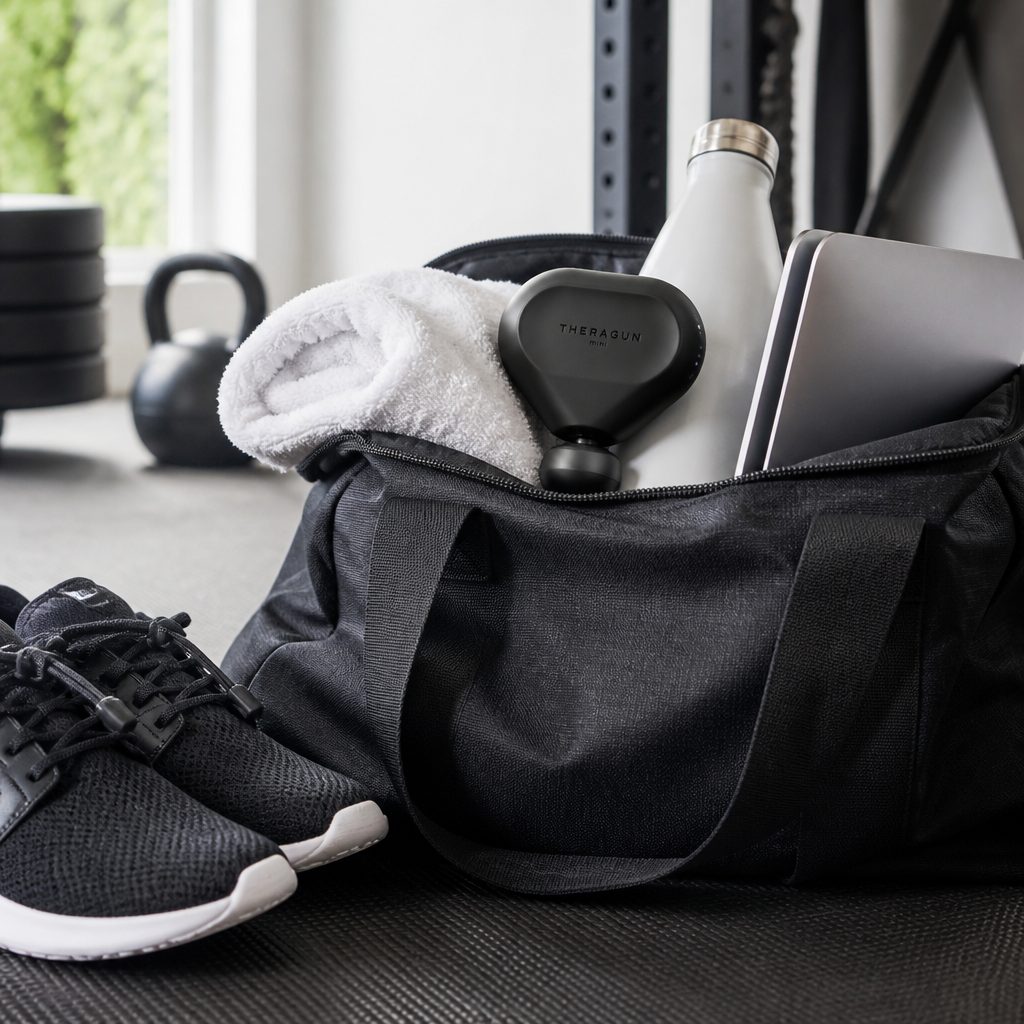
A compact massage gun earns its keep when it can share space with your trainers, towel and work essentials without turning the gym bag into a removal van.
Design and build: small enough to be useful
The fundamental attraction of the Theragun Mini 3rd Gen is not difficult to understand. It is a massage gun that acknowledges the boring but decisive reality of ownership: you have to carry the thing. A 400g device is light enough to feel reasonable in a commuter backpack and modest enough to justify bringing on a trip where every item is competing for space.
That portable emphasis changes the relationship you have with it. A full-size massage gun tends to be a deliberate recovery session. You get home, you find the device, you decide to use it, and you settle in. The Mini is better suited to opportunistic use. It can come out after a lunchtime run, in the changing room after a weights session, or after a long train journey where your hips and upper back have become increasingly displeased with you.
I particularly like that the design does not pretend compactness is merely an aesthetic trend. The smaller format has a practical point. It encourages ownership habits that are easier to maintain. You can keep it near your training kit. You can take it with you. You can use it before stiffness becomes the excuse for skipping the next session. That is not glamourous, but useful gym gear rarely is.
There is also a psychological advantage to a smaller device. It is less cumbersome and less conspicuous to use than something shaped like a power drill for professionals. That may sound trivial until you are in a busy gym and would rather do a quick minute on your quads than stage a small industrial demonstration beside the lockers.
Made for the bag, not the sideboard
The 400g weight gives the Mini a realistic place in a daily gym or commuter bag, where larger recovery devices can feel like an indulgence too far.
A more approachable tool
A small handheld design feels less daunting for brief, targeted sessions on commonly tight areas such as calves, thighs, shoulders and glutes.
Travel-conscious by nature
Its TSA-friendly positioning suits people who want a personal recovery tool that can travel as part of a normal packing list rather than a dedicated kit bag.
Portability for commuters, travellers and gym bags
Portability is not a checkbox on the Mini. It is the whole proposition. If you train before work, squeeze sessions into a lunch break, use hotel gyms, play sport at weekends or simply spend too much of your life sitting in one form of transport or another, the ability to carry recovery equipment changes the point of the product.
I can see the Mini fitting especially well into the pre-work gym routine. You do not necessarily want a long recovery ritual when you have exactly enough time to shower, get dressed and realise you have misplaced one sock. A compact massage gun allows for a short, focused bit of self-massage after training without adding drama to an already tightly timed morning.
It also has a place for the person who trains after work. That familiar post-gym ache is often not the real problem; the issue is that you get home late, you have dinner to make, messages to answer and a vague plan to sit on the sofa until morning. A Mini in the bag can be used before you leave the gym or when you get home, without the friction of fetching a larger device from another room.
The carry-it test matters most
Before buying any massage gun, ask one brutally useful question: will you genuinely take it to the places where you need it? The Theragun Mini 3rd Gen's strongest argument is that its 400g format makes the answer more likely to be yes.
Travel is another obvious use. There is something uniquely stiffening about a day of queues, cramped seating and luggage that is technically within the airline limit but emotionally not. The TSA-friendly nature of the Mini gives it a clear role for regular travellers who want their recovery habits to survive a few days away from home.
Of course, the phrase "pocket massage gun" needs a little common sense. It is compact, not weightless, and it remains a functional piece of training equipment rather than something to forget in the pocket of a slim jacket. But compared with a typical larger massage gun, it is the sort of item you can justify packing. That is a much more valuable thing than being merely small on a product page.
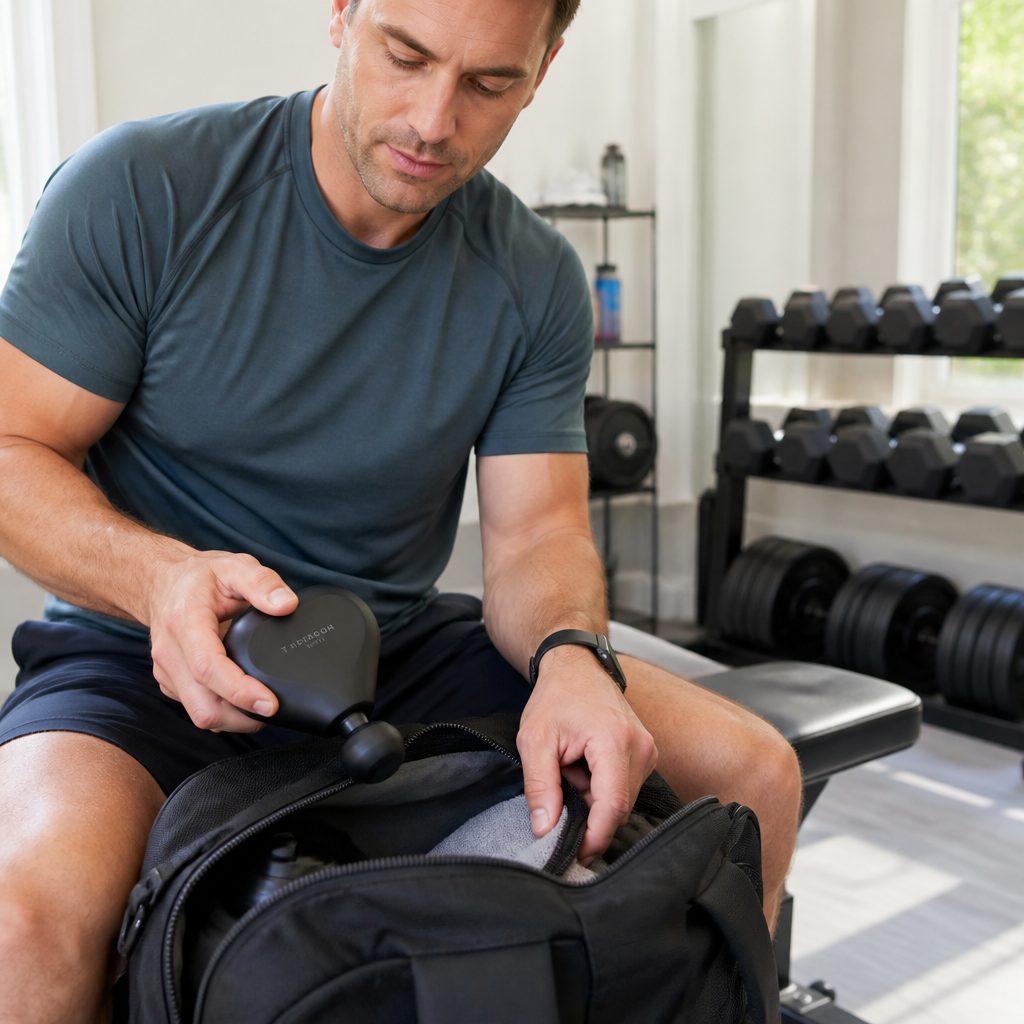
For commuters and frequent travellers, the practical win is simple: the Mini is easier to take along when post-training recovery cannot wait until you are back at home.
Performance: what three speeds are good for
Three speed settings are not an enormous menu of options. That is also rather the point. The Mini does not invite endless fiddling; it gives you a choice of gentler, middle and firmer-feeling use, then lets you get on with it. For people who want a simple personal massage tool, that is often plenty.
The lower setting is the sensible starting point. It makes sense for areas that feel generally stiff rather than deeply knotted, and for anyone new to percussion massage who is unsure how their body will respond. A massage gun should not be a contest. Starting gently and moving only as far as feels comfortable is both less macho and more useful.
The middle setting will probably become the everyday choice for many users. This is where the Mini's compact intent comes through best: several minutes on the legs after cycling, a little attention around the glutes after a desk-heavy day, or a quick pass over the upper back after carrying a bag. It is the sort of level that suits regular use without making every session feel like a wrestling match.
The highest of the three settings is there for moments when you want a more assertive sensation, perhaps after a hard lower-body gym session or a run with more hills than you remembered agreeing to. Yet even at its strongest, the right approach remains controlled rather than heroic. Keep the device moving. Avoid hammering one sensitive spot. Pay attention to how the area feels during and after use.
That final point is not a joyless disclaimer. It is what makes a compact massage gun genuinely effective in daily life. The value is in thoughtful, repeatable use, not in trying to flatten a muscle into complete submission for ten minutes because your training app said "active recovery". Your body is not a trouser crease.
Those scores reflect the central trade-off. The Theragun Mini 3rd Gen is brilliant at being a compact recovery companion. It is less naturally suited to somebody who wants their massage gun to take the place of a larger, more dedicated recovery device after every demanding training block. Neither use case is wrong. They simply ask different things of the tool.
Daily use: the Mini's strongest case
The best gym accessories tend to disappear into your routine. Not literally, hopefully. What I mean is that they become easy enough to use that you stop negotiating with yourself about them. You fill your water bottle because it is by the door. You bring straps because they live in the gym bag. You use the Mini because it is there when you finish.
The Theragun Mini 3rd Gen is particularly appealing for this sort of repeatable routine. You do not need a full session to gain something from it. A couple of measured minutes before training can help you feel more ready to move; a few minutes afterwards can be a pleasant way to downshift. The product works best when it is treated as a convenient part of a broader training habit rather than as the star of the show.
There is a useful discipline in its simplicity too. Three speeds mean fewer choices, and fewer choices mean fewer opportunities to turn basic recovery into an overthought project. You select a comfortable level, use it on an area that feels tight, and stop when you have had enough. It is refreshingly uncomplicated in a fitness world that has occasionally decided every stretch requires a dashboard.
For desk workers, the Mini could be an especially appealing companion. A day at a laptop can leave the hips, calves, shoulders and upper back feeling oddly more fatigued than a session that actually involved moving. Short use around a gym visit or in the evening can feel helpful as part of winding down. Again, moderation is the sensible approach. If an area feels sharp, numb, inflamed or alarming, put the massage gun down rather than attempting an amateur repair job.
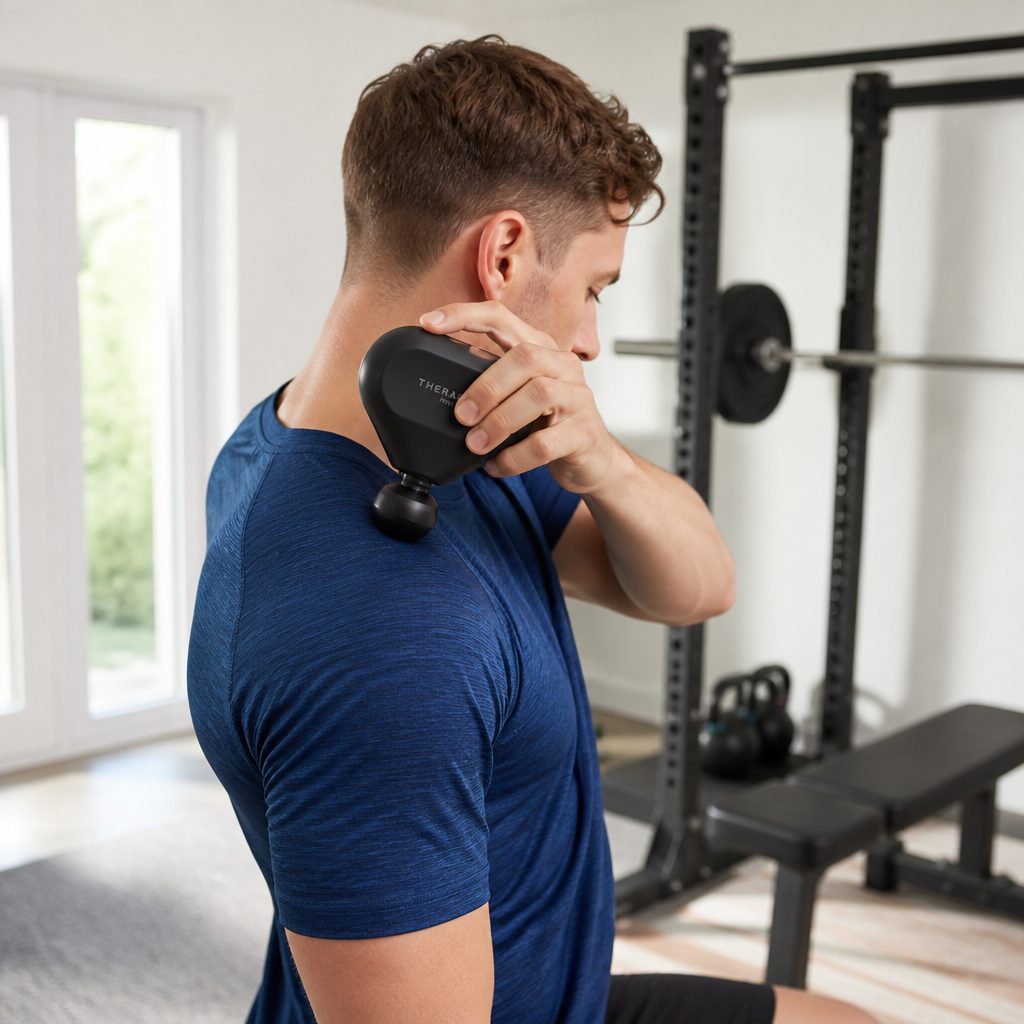
The Mini's three-speed simplicity is better suited to quick, focused use than to turning a post-workout wind-down into another task requiring a manual.
Battery habits and ownership convenience
Battery convenience is harder to quantify than raw performance, but it is enormously important with portable equipment. A massage gun that is easy to carry but regularly uncharged is really just an unusually expensive object lesson in good intentions. The Mini's small-scale appeal depends on treating it like any other bit of portable kit: give it a regular place, build charging into your routine, and it will be ready when you want it.
For gym-bag ownership, I would keep the device somewhere accessible rather than buried beneath spare shoes and old resistance bands. This sounds obvious, but gym bags develop ecosystems. A compact massage gun can disappear surprisingly quickly under the accumulated archaeology of training life. If it has a designated pocket or pouch, you are more likely to remember it and more likely to use it.
Short, targeted sessions are also the natural companion to a travel-friendly device. The Mini is not asking you to spend half an hour treating every muscle from ankle to neck. It suits a practical approach: choose one or two areas, use a comfortable speed, and move on with your day. That is both easier to fit around busy schedules and more in keeping with why people choose a small device in the first place.
There is a nice freedom in owning recovery kit that does not need a permanent place beside the sofa. A portable tool can live with the activities it supports. It can go to the gym, accompany a weekend away, sit near your work bag or travel with you. That flexibility is more valuable than it sounds, particularly if home storage is already at a premium. Not everybody wants their living room to resemble a physiotherapy supply cupboard.
Pros
- At 400g, it is genuinely realistic to carry in a gym bag or commuter backpack.
- Three speeds keep the experience simple and approachable for regular use.
- The TSA-friendly travel focus suits weekends away and frequent work trips.
- A compact format lowers the barrier to quick pre- and post-training self-massage.
- It is better suited to consistent everyday use than a bulky device left at home.
Cons
- A mini format will not suit everyone who wants a more substantial recovery tool.
- Three settings are admirably simple, but less flexible for users who enjoy finer control.
- It is most convincing for focused sessions rather than a lengthy whole-body routine.
- Compact gear still needs a regular charging habit to remain useful on the move.
- It should not be used to ignore pain that needs qualified medical attention.
Comfort, technique and sensible self-massage
How you use a massage gun matters at least as much as which one you own. The Theragun Mini 3rd Gen is at its best when you approach it as a controlled recovery aid, not a machine to press as hard as possible into whatever feels grumpy. More force is not automatically more beneficial. It is frequently just more force.
Start with the lowest setting, particularly when using the device on a new area or after a demanding session. Let it move across the muscle rather than holding it on one exact point. A slow pass over a calf, quad, glute or upper-back muscle tends to make more sense than parking the device in one place and hoping for enlightenment.
It is also worth remembering that some areas deserve extra caution. Avoid using a massage gun over joints, bones, the front or side of the neck, areas with obvious swelling, broken skin or acute injury. Do not use it to work through numbness, pins and needles or sharp pain. If a problem has hung around, changed your movement or made normal exercise difficult, the sensible next step is professional advice, not another level of percussion.
For ordinary post-training tightness, however, the Mini's compact shape can make self-treatment feel much less like an operation. A few minutes on your legs after a run or a brief session around the larger muscles of the hips after squats can be satisfying and convenient. The point is to complement walking, gentle mobility, appropriate training load and good sleep where possible. Recovery is rarely one thing, annoyingly. It would be much easier for everyone if it were.
A useful routine beats a dramatic one
Try a brief, comfortable session on one or two areas you know tend to tighten after training. The Mini's advantage is that it makes small, repeatable habits easy; there is no prize for using it longer or harder than feels good.
Value: pay for the use case, not the fantasy
Value in a massage gun is not just about how serious it looks. It is about whether the format fits your life. A larger device may offer a more substantial ownership experience at home, but it has poor value if it rarely leaves the cupboard. Conversely, a compact unit can represent a very good purchase if its smaller form means it accompanies you to the gym, on trips and through the ordinary rhythms of the week.
The Theragun Mini 3rd Gen should therefore be judged as a premium-minded portable tool rather than as a downsized substitute for every category of massage gun. It is a device for people who care about recovery but do not want to organise their existence around it. That is a substantial group of people, frankly.
For the right buyer, its value is in convenience. It is not difficult to picture who that buyer is: the regular gym-goer with a work commute, the runner who spends weekends away, the office worker trying to manage stiffness around training, or the traveller who has learned that hotel pillows and long-haul seating are not their friends. If that sounds like you, portability may matter more than any spec-sheet arms race.
On the other hand, if you train hard at home, enjoy longer recovery sessions and know you want a device for regular intensive use across larger muscle groups, a larger-format massage gun may make more sense. There is no shame in admitting that a mini product is not designed to solve every problem. In fact, that clarity is refreshing. The Mini is good because it has a clear job.
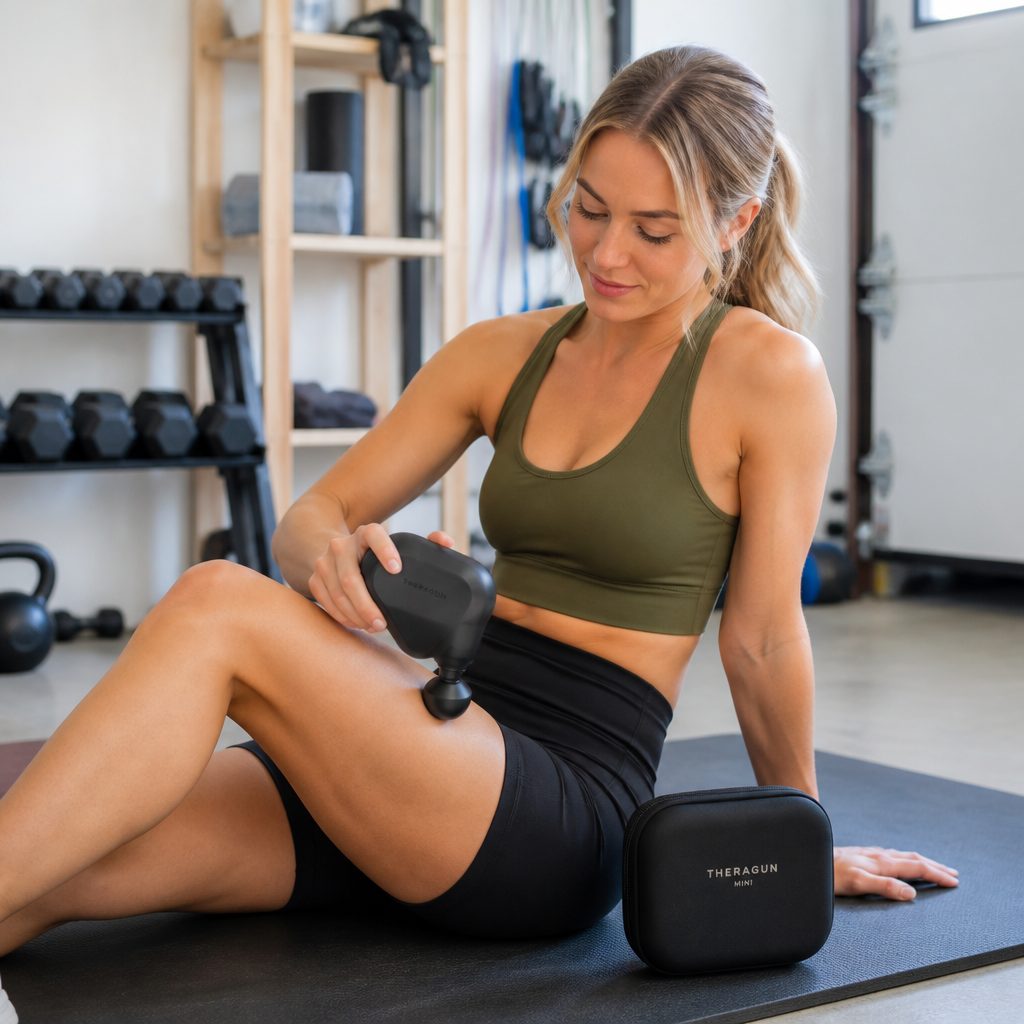
The sensible way to assess the Theragun Mini 3rd Gen is not against every larger massage gun, but against the recovery routine you can realistically maintain on busy days.
Who should buy the Theragun Mini 3rd Gen?
This is a particularly easy product to recommend when somebody's main requirement is straightforward: "I want a massage gun I will actually carry." The Mini's light 400g build and three-speed arrangement serve that person very well. It is compact enough to fit into busy routines without requiring another dedicated bag or a lengthy setup.
Best for regular gym-goers
Choose the Theragun Mini 3rd Gen if you want quick, focused self-massage before or after training and do not fancy carrying a large device alongside your normal kit.
Best for commuters
Its 400g weight makes it a sensible fit for people fitting training around work, where every item in the backpack has to justify itself.
Best for travellers
The TSA-friendly travel positioning makes it a natural choice for people who want their recovery routine to continue away from home.
Best for simple routines
Three speeds suit users who want useful flexibility without a complicated set of settings, modes and decisions after every workout.
I would be more cautious in recommending it to somebody whose top priority is a more involved, at-home recovery setup. If you enjoy taking your time with a massage gun after every heavy session and want that device to be a central part of your training space, the Mini's portable focus may feel limiting. It is not trying to be the biggest or most elaborate option. It is trying to be the one you bring with you.
That makes it a good choice for people who value consistency over theatre. Most of us do not need more equipment that looks impressive on a shelf. We need equipment that works around work, training, travel, family life and the occasional evening when recovery consists mainly of remembering to stand up from the sofa.
Theragun Mini 3rd Gen rating
My score reflects the Mini's success as a portable recovery device rather than an attempt to make it compete directly with substantially larger massage guns. Its best qualities are clarity of purpose, carry-friendly weight and a straightforward three-speed experience. It is not the universal answer to every recovery need, but it does its chosen job very convincingly.
The slightly lower heavy-duty score is not intended as a criticism of the Mini's basic idea. It is merely an honest reminder that portable kit is portable because it makes compromises. In this case, those compromises are likely to be worth it for a huge number of users. A small massage gun that goes with you is often more useful than a more imposing one that never gets packed.
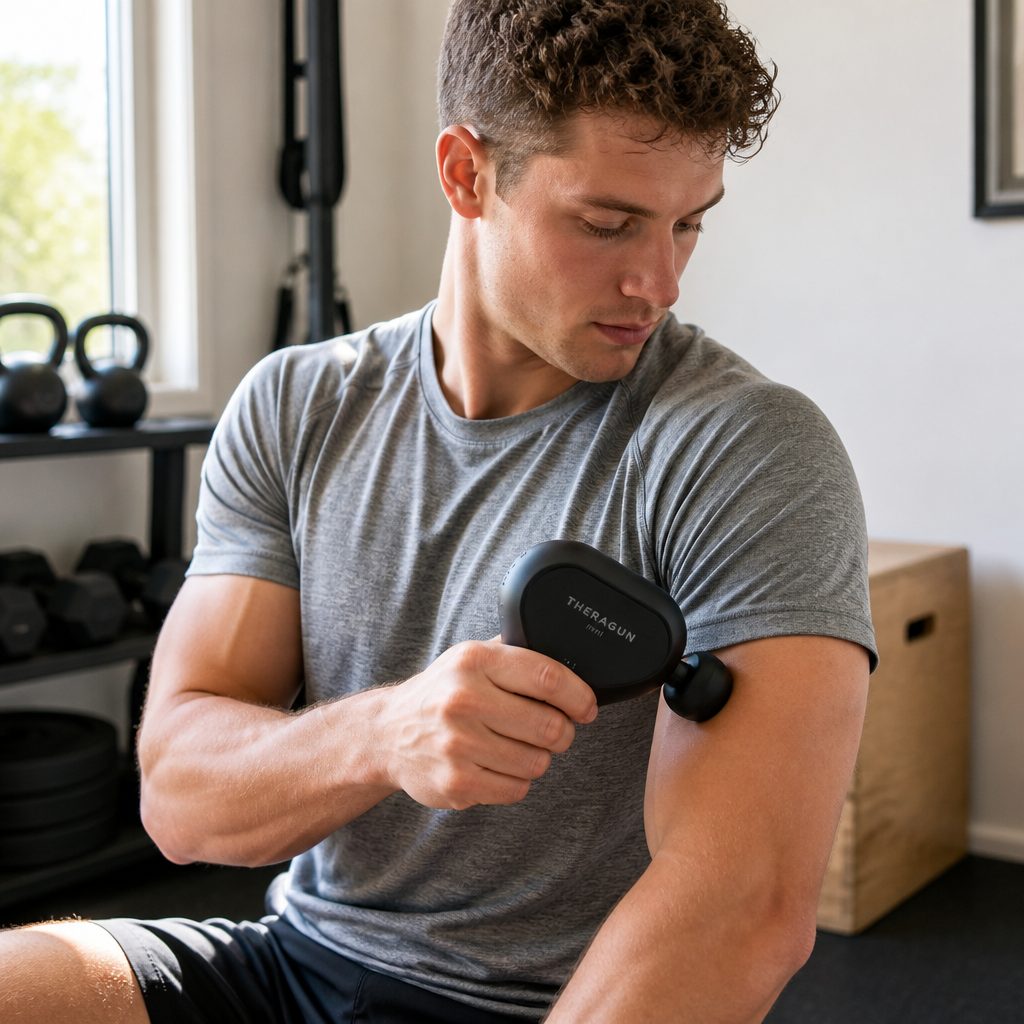
The Mini's appeal is less about replacing a full recovery station and more about making quick, comfortable self-massage part of the training days you already have.
Theragun Mini 3rd Gen FAQ
Verdict: a genuinely useful massage gun for life on the move
The Theragun Mini 3rd Gen earns its place by being sensible. Its 400g weight, three speed settings and TSA-friendly design make it an excellent fit for gym bags, work bags and travel packing. It is not trying to replace every larger massage gun, and it should not be bought with that expectation. It is trying to make quick, comfortable self-massage easier to fit around a busy training life.
If you want a compact recovery companion you will realistically carry, use after sessions and take away with you, this is a strong choice. If your priority is lengthy, heavy-duty recovery at home, look towards a larger format instead. For commuters, regular gym-goers and travellers, though, the Mini's convenience is not a compromise. It is the whole reason to buy it.