The Best Recovery Wearables for Runners Who Hate Wrist Screens
A proper screen-free band can be a quiet companion for easy miles, big training blocks and the occasional day when your legs issue a strongly worded complaint. Here are the recovery wearables worth considering if you want useful data, dependable heart-rate options and less wrist-based faff.
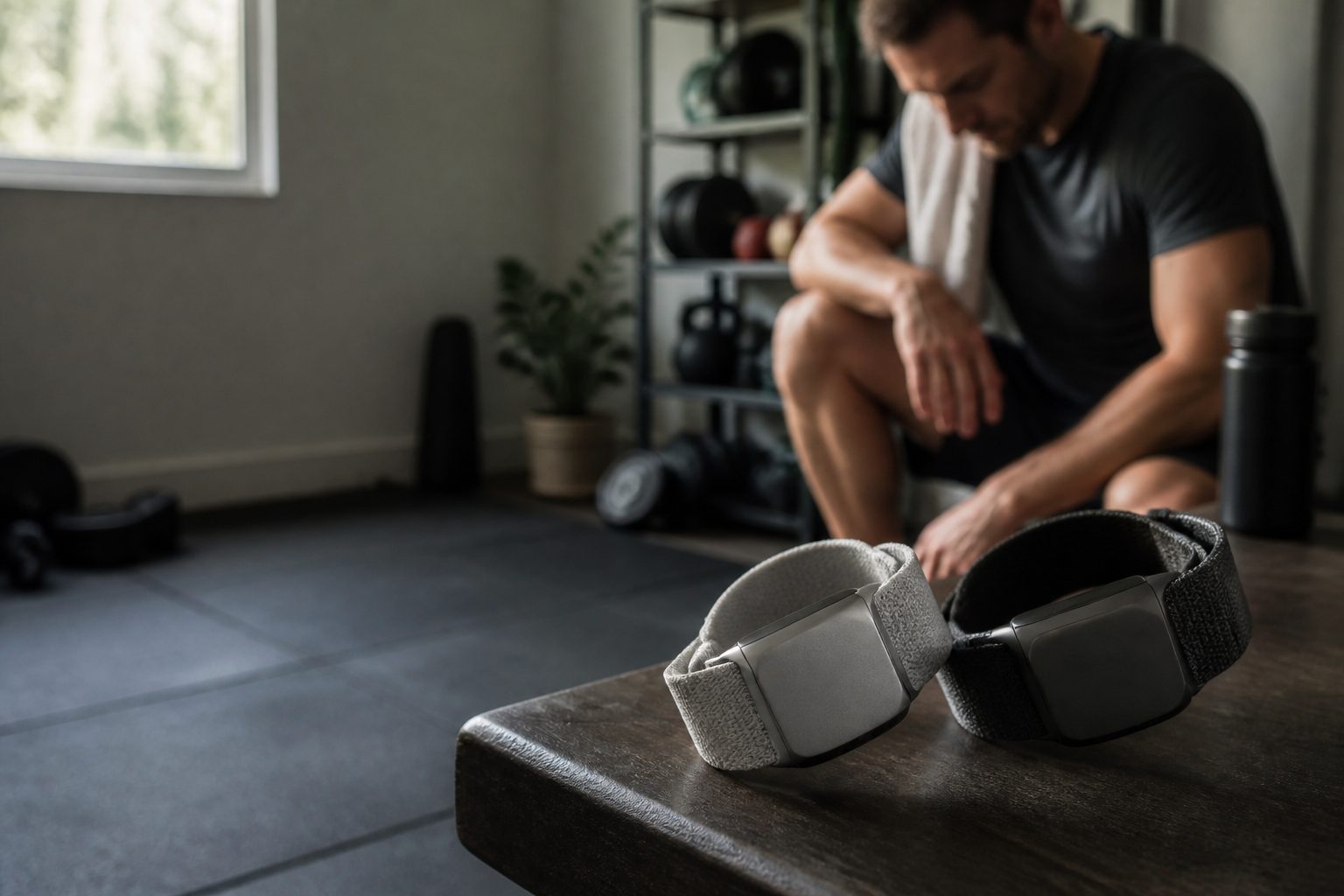
Screenless recovery bands shift the important information to your phone, leaving your wrist wonderfully free of pace alerts, message previews and tiny glowing demands for attention.
 By James Oduya · Staff Writer & Home Gym Columnist · Updated October 30, 2026
Why runners are swapping watch faces for quiet bands
There is a particular kind of runner who likes data very much but does not particularly want to look at it whilst running. That is a recognisable contradiction. You want to know how you slept, whether your heart-rate variability is behaving itself, how hard yesterday's long run actually was, and whether today might be better served by gentle jogging than heroic hill repeats. You do not, however, need a bright little square buzzing at your wrist whilst you are trying to enjoy a quiet canal path.
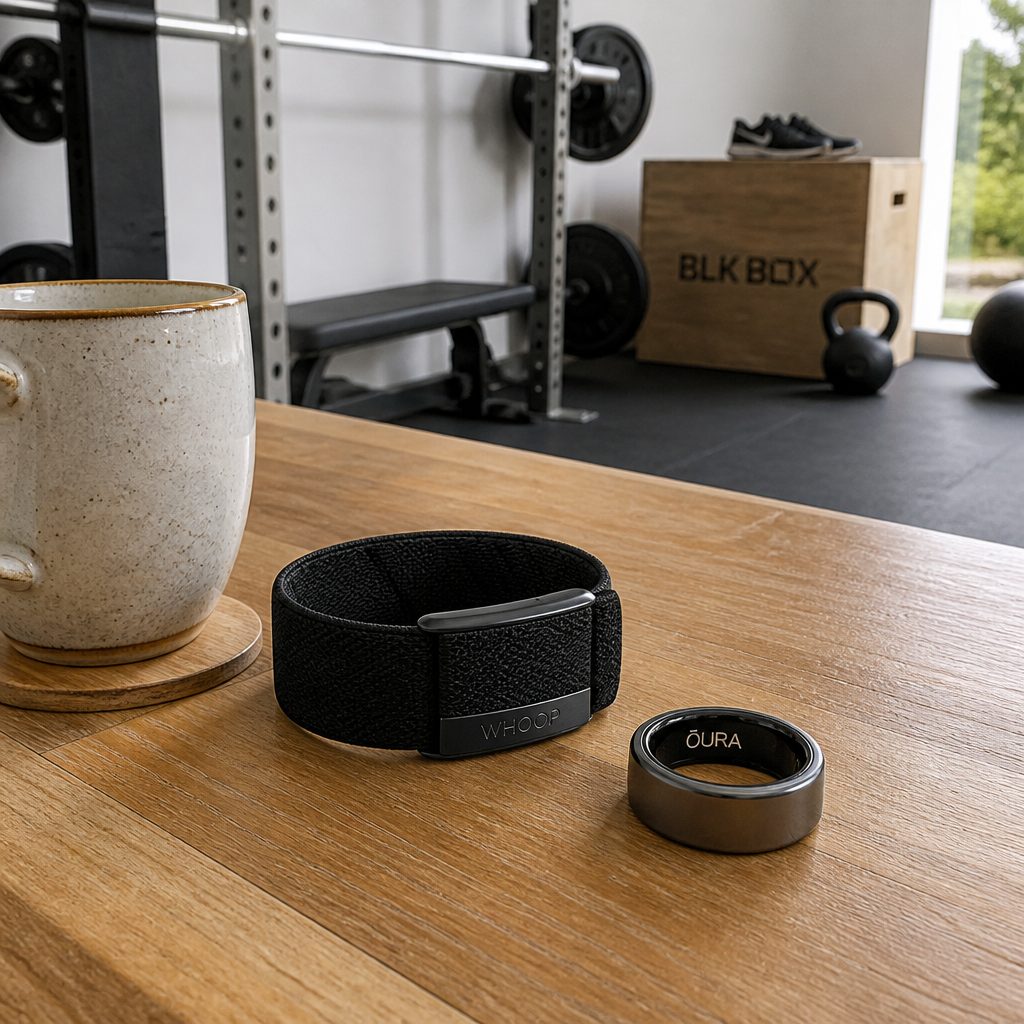
Recovery data works best as a calm weekly pattern rather than a reason to interrogate every morning's number before you have finished your tea.
That is where screenless recovery wearables earned their place. They gather heart-rate, sleep, movement and recovery information around the clock, then put the interpretation in a phone app rather than on your body. Some are intended to sit alongside a proper running watch. Others are designed to be the central health tracker. A couple take a different route again, focusing on heart-rate broadcasting or movement quality rather than trying to become a tiny digital coach with opinions about your hydration.
For distance runners, the important distinction is not whether a band has a screen. It is what it does when you are tired. A useful band should be comfortable enough to wear overnight, make it easy to spot an emerging pattern in sleep or recovery, and ideally offer a sensible way to share live heart rate with the device that is actually recording your run. Battery longevity matters too. The less often you remove a recovery tracker, the less likely it is to spend three days on a bedside table gathering dust and passive-aggressively judging you.
A screenless band is not necessarily a watch replacement. For runners who use route guidance, pace fields or onboard GPS, the sensible arrangement can be a quiet band for continuous recovery tracking and a running watch only when you genuinely want live information.
What to look for in a runner-first recovery wearable
This guide prioritises the things that make a difference across a real training week, not merely a tidy product page. That means whether a band can be worn overnight without becoming irritating, whether it has a credible heart-rate broadcast route, how long it can remain in use between charges, and whether the recovery system tells a useful story rather than simply handing you another number to fret about before breakfast.
There is also a small philosophical point. Recovery scores are prompts, not instructions engraved on stone tablets. A poor night of sleep, an unusually high resting heart rate or a lower-than-usual HRV reading can be useful context. It cannot know that you are fighting off a cold, travelling, caring for a newborn, training for a marathon, or simply feeling unexpectedly brilliant. The best use of recovery data is to notice trends over time, then combine them with your own sense of fatigue, soreness and motivation. Your body remains inconveniently non-downloadable.
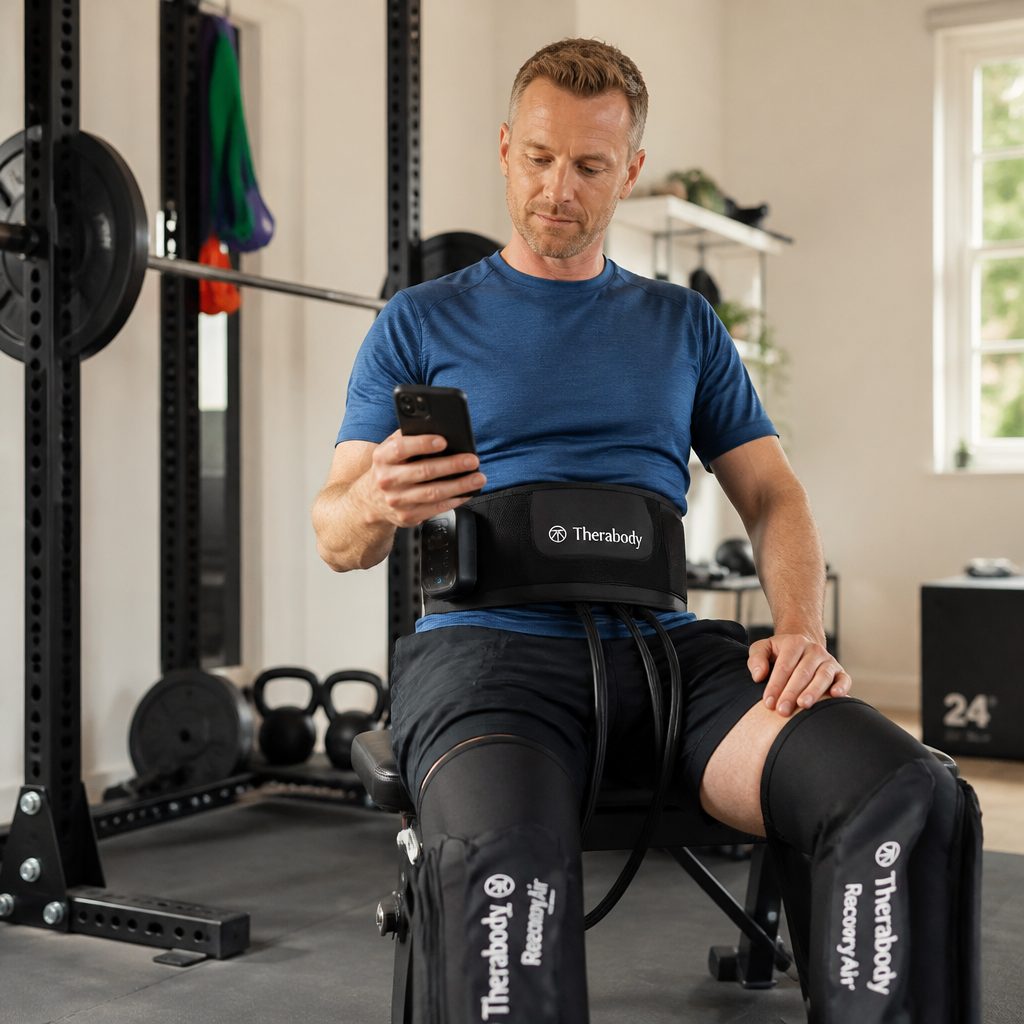
For most runners, overnight comfort and a battery that survives an entire training week matter more than having another dashboard on the wrist.
The five best screenless recovery wearables at a glance
| Wearable | Claimed battery | Water rating | Heart-rate broadcast | Standout runner use |
|---|---|---|---|---|
| Garmin CIRQA Smart Band | Up to 10 days | 5 ATM | ANT+ | Garmin watch owners wanting recovery data without another display |
| Polar Loop | 8 days | WR30 | Bluetooth, up to 164 ft | Simple Polar sleep and recovery tracking |
| WHOOP 5.0 / WHOOP MG | 14+ days | IP68, submersible to 10 metres | Not confirmed | Deep app-led strain and recovery focus |
| Amazfit Helio Strap | 10 days | — | Bluetooth | Upper-arm heart-rate tracking and offline storage |
| Amazfit Helio Strap Pro | Up to 11 days HR sensor; up to 40 days waist sensor | 5 ATM (HR sensor) | — | Movement quality and core-stability context |
The short version is that Garmin CIRQA is the most natural fit for the committed Garmin runner, Polar Loop is the no-nonsense screenless choice for someone who prefers Polar's recovery language, WHOOP remains the specialist for people who want recovery to be their main training conversation, Helio Strap is the practical live-heart-rate option, and Helio Strap Pro is the unusual one: less interested in counting everything and more interested in how you move.
Ranked picks: the best screenless bands for runners
1. Garmin CIRQA Smart Band — Best for Garmin watch owners
Shop Garmin CIRQA Smart Band on Amazon UK
Garmin CIRQA made a great deal of sense for runners already living in Garmin Connect. It was designed as a screenless companion rather than an awkward rival to your existing watch, and that distinction matters. You can wear CIRQA day and night for sleep, Body Battery, HRV status, skin temperature, Pulse Ox and heart-rate data, then put on your preferred Garmin running watch when it is time to chase splits, follow a route or glance nervously at the next hill.
The band supported more than 80 activities and could automatically detect activity, but its more compelling role was continuous background tracking. The 14.8g module kept the core hardware light, whilst total weight was around 20.7g in S/M and 21.2g in L/XL. It used a fabric ComfortFit loop strap with quick-release pins, which is the sort of detail you appreciate at 2am rather more than in a showroom. A stiff silicone strap can feel perfectly fine at breakfast and oddly unbearable when you turn over in bed.
For runners, ANT+ heart-rate broadcast was the key practical extra. That made CIRQA a plausible source of live heart-rate data for paired training equipment or compatible devices, while connected GPS meant location came from a linked phone rather than a separate GPS system in the band. The 5 ATM water rating and battery claim of up to 10 days reinforced its appeal as a band you can simply keep on.
Pros
- Fits neatly into Garmin Connect rather than creating a separate health-data island.
- ANT+ heart-rate broadcast is genuinely useful for runners with compatible kit.
- Body Battery, HRV status, sleep, skin temperature and Pulse Ox create a broad recovery picture.
- Light module, fabric strap and up-to-10-day battery suit continuous wear.
Cons
- No altimeter, so it does not record floors climbed.
- Connected GPS requires another device for location data.
- Best value comes when Garmin Connect is already your training home.
- The single physical button is deliberately minimal rather than a replacement for watch controls.
The CIRQA is not trying to persuade you to abandon a capable running watch. It is trying to make your watch less necessary outside training. That is a very sensible proposition. If you already use Garmin's ecosystem, it is the best all-round pick here because it brings substantial recovery data and ANT+ broadcasting without making your wrist feel like a second office.
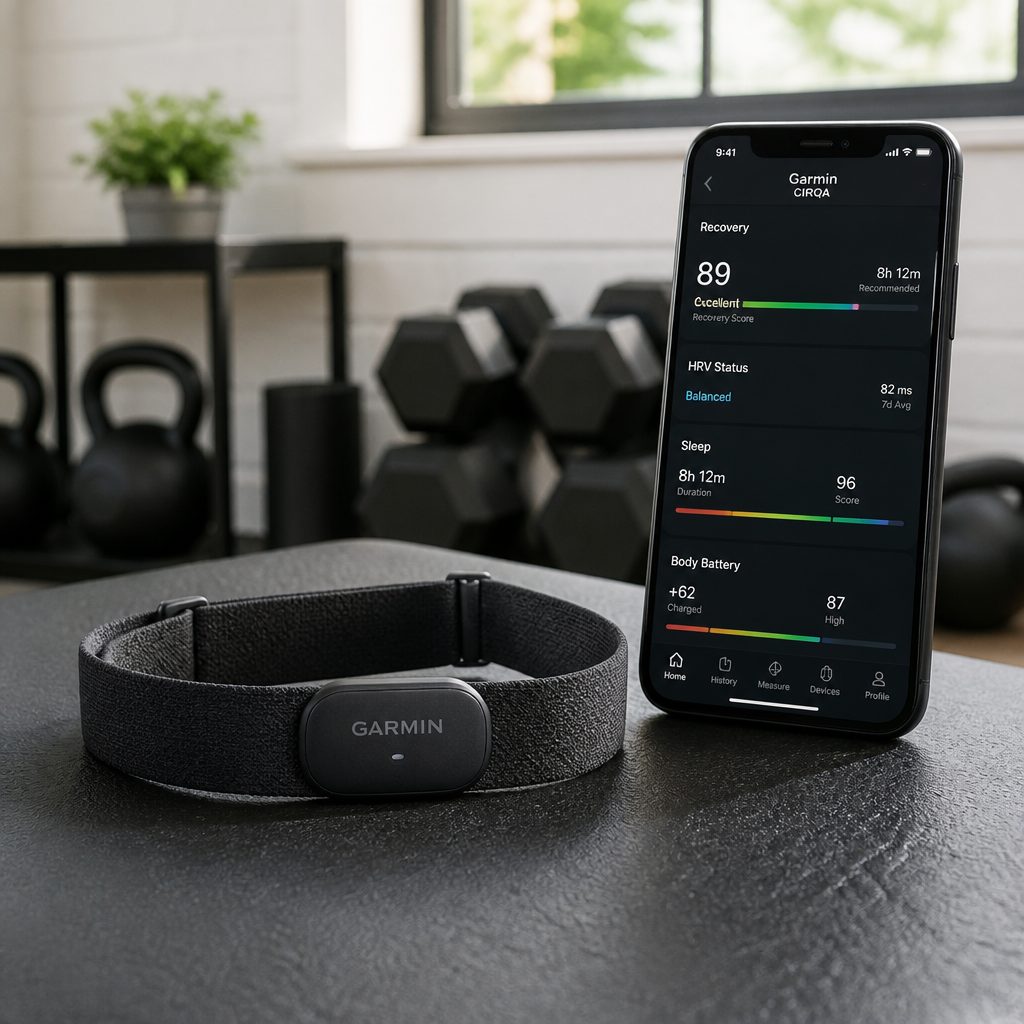
Garmin CIRQA's fabric ComfortFit approach is aimed at all-day and overnight wear, while its app carries the detail rather than a watch face.
2. Polar Loop — Best for simple sleep and recovery routines
Polar Loop takes the minimalist idea seriously. There was no display, no button and no notifications. For some runners, that is not a compromise but the entire point. It gathered the information quietly, synced over Bluetooth 5.1, and left the interpretation to Polar's app rather than trying to interrupt a run, a meeting or a reasonably peaceful evening on the sofa.
The 29g woven band used Polar's Precision Prime optical heart-rate sensor and combined it with an accelerometer. Its sleep package included sleep stages, Nightly Recharge recovery measurement and SleepWise alertness forecasting, while automatic workout detection meant it could notice activity without demanding that you start and stop every session manually. In practice, the appeal is its lack of ceremony. Put it on, wear it, and check the story later.
For runners who still use a watch, bike computer or phone to log sessions, Bluetooth heart-rate broadcasting was an important advantage. Polar listed a broadcast range of 164ft, which is considerably more useful than a vague "works nearby" promise. The eight-day battery is shorter than WHOOP's stated 14+ days and slightly below Garmin CIRQA's up-to-10-day claim, but it remained comfortably long enough that charging did not have to become a nightly ritual. Nobody needs another nightly ritual.
Nightly Recharge puts the night in context
Nightly Recharge is suited to runners who want a clear sense of how the previous night may affect the day ahead, without having to decode a forest of separate widgets.
SleepWise looks beyond bedtime
SleepWise adds alertness forecasting, making the band more useful for anyone trying to balance training, travel, work and the basic human need not to feel permanently wrung out.
Bluetooth heart-rate broadcasting
The confirmed broadcast function makes Polar Loop more than a passive sleep band; it can also play a useful part in a live heart-rate setup.
Choose Polar Loop if the Garmin ecosystem does nothing for you and you would rather have a clean recovery routine than a highly gamified training score. Its stainless-steel case and bezel give it a more substantial physical presence than its screenless concept suggests, but the overall proposition is admirably restrained. It gives you enough to form better habits, then gets out of the way.
3. Amazfit Helio Strap — Best for upper-arm heart-rate broadcasting
Shop Amazfit Helio Strap on Amazon UK
Amazfit Helio Strap is arguably the most obvious choice for runners who care about where the optical sensor sits during a workout. It can be worn at the wrist, and Zepp Health sells an official upper-arm accessory for workouts where wrist movement might interfere with optical heart-rate readings. Upper-arm placement is not magic, of course, but it is a practical route for runners who prefer the sensor away from the wrist during harder sessions.
The band weighed 20g and used Amazfit's BioTracker 6.0 PPG biometric sensor to continuously track heart rate, HRV, sleep stages, stress, activity load and recovery metrics. It supported more than 50 sports modes and could recognise 25 strength-training movements. That latter detail matters more than it first appears. Plenty of distance runners also lift, do mobility work, or spend winter trying to remember where their glutes are. A band that recognises training beyond running can make the broader load picture more useful.
The standout practical feature was Bluetooth heart-rate broadcasting, paired with the ability to store heart-rate information offline for up to 21 days. That gives Helio Strap a clear role for runners who want a sensor they can use in live training but who do not want every outing to depend on immediate syncing. Its advertised battery life was 10 days, putting it on level terms with CIRQA's headline claim and ahead of Polar Loop's eight days.
Pros
- Official upper-arm accessory available for training sessions where wrist movement may affect optical readings.
- Bluetooth broadcasting delivers live heart rate to compatible paired devices.
- Up to 21 days of offline heart-rate storage adds useful flexibility.
- Tracks recovery, stress, sleep stages, HRV and a broad range of sports.
Cons
- Its best running advantage depends on wanting the upper-arm accessory.
- It remains app-led, so there is no on-band glanceable feedback.
- Strength recognition will matter less to runners who only ever run.
- Bluetooth broadcasting may not suit runners whose existing setup centres on ANT+.
Helio Strap is the best choice here for runners who want a screenless recovery band that can also behave like a lightweight, flexible training heart-rate sensor. It feels less tied to one watch brand than Garmin CIRQA, and its official upper-arm accessory is the one feature that could change your buying decision immediately if you have grown tired of optical readings from a constantly moving wrist.
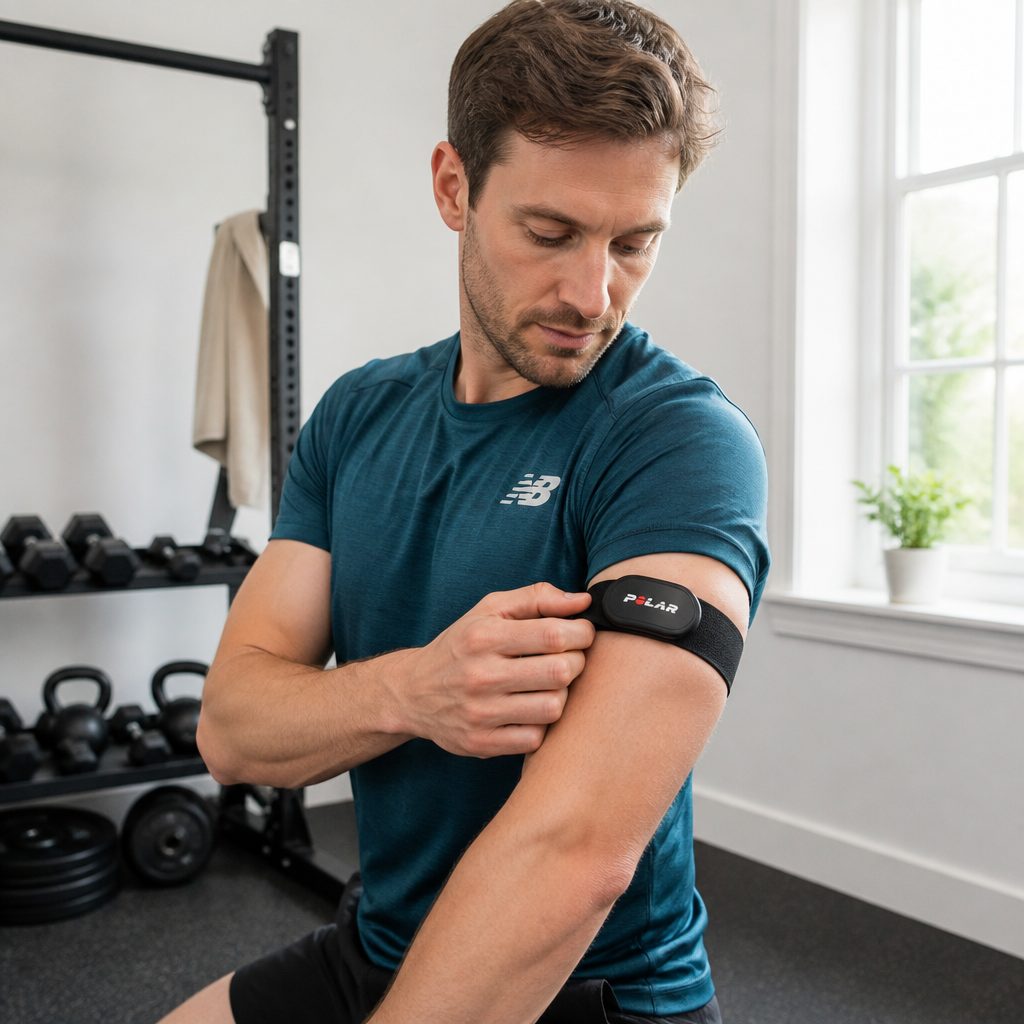
A screenless band with an upper-arm option can suit runners who want continuous recovery tracking but prefer their live heart-rate sensor away from the wrist during training.
4. WHOOP 5.0 and WHOOP MG — Best for recovery-first training analysis
Shop WHOOP 5.0 and WHOOP MG on Amazon UK
WHOOP remained the specialist choice for runners who wanted recovery analysis to be the centre of the experience, not a side tab next to step count. WHOOP 5.0 measured heart rate, HRV, sleep, blood oxygen, skin temperature, respiratory rate, acceleration and movement through its accelerometer and gyroscope. It then used those inputs to calculate Strain and Recovery scores. The wearable itself stayed stubbornly screenless; every interaction happened in the phone app.
That total reliance on the app is either beautifully calm or slightly maddening, depending on your temperament. If you love the idea of removing a display entirely and reviewing the data intentionally, it is the purest expression of this category. If you occasionally want to glance down and check anything at all, WHOOP will not indulge you. Its job is to collect, not chat.
Physically, WHOOP 5.0 measured 34.7mm by 24mm by 10.6mm and weighed approximately 26.5g. It was built from fibre-reinforced polymer, had IP68 water resistance and could be submerged to 10 metres. Claimed battery life of 14+ days was the longest in this roundup for a single everyday band. The Wireless PowerPack could charge it whilst worn in around 110 minutes, while the Basic Charger took around 152 minutes off-wrist. That is excellent practical design for continuous tracking: a recovery device is most useful when it does not create regular gaps in the record.
WHOOP MG added a more specialised layer through Heart Screener features, including on-demand ECG readings with FDA-cleared AFib detection, plus optical blood-pressure trend estimates requiring cuff calibration. The blood-pressure feature was in beta and had been disputed by the FDA, so runners should treat it as an evolving wellness feature rather than a substitute for clinical assessment. WHOOP MG access sat at the most expensive membership level, making it the choice for someone who specifically wanted those additional functions, not merely a runner seeking sleep and readiness context.
A sensible WHOOP buying rule
Choose WHOOP 5.0 because you value the Strain and Recovery approach, not because you feel obliged to turn every training decision into a score. Choose WHOOP MG only if the extra Heart Screener functions are meaningful to you; they should not be the reason to self-diagnose anything after a poor interval session.
WHOOP's major strength is its commitment to the recovery conversation. Its major limitation is the same thing: it is built around a membership model and an app-led experience, so it will not appeal to runners who want to buy hardware, use it quietly and forget about recurring account decisions. For the right person, though, it is exceptionally focused. It makes recovery feel like part of training rather than an afterthought reserved for the day after a race.
5. Amazfit Helio Strap Pro — Best for runners rebuilding strength and stability
Shop Amazfit Helio Strap Pro on Amazon UK
Amazfit Helio Strap Pro took a distinctly different approach from the wrist-only recovery bands. It was a subscription-free training system with two sensors: Helio Core Motion HR for the arm or wrist, and Helio Core Motion Waist for the waist. The arm sensor tracked heart-rate information, while the waist sensor focused on movement quality and core stability. That makes it the most interesting option for runners whose goals are not simply "run more", but "run well enough that my hips stop filing formal complaints".
The Helio Core Motion HR sensor measured 33.96 by 24.29 by 9.63mm, rising to 11.25mm including the sensor base, and weighed 11.4g. The waist sensor weighed 10.7g. Those are notably light components for a two-sensor system. The HR sensor was rated 5 ATM and was suitable for everyday wear, sweating, showering and swimming in shallow water. It quoted up to 11 days of battery life under typical use, while the waist sensor could reach up to 40 days. A magnetic charge took less than two hours for the HR sensor, which used a 232mAh battery.
This is the least conventional pick for a pure distance runner, but it may be the smartest one for the runner returning from a lay-off, building strength after repeated niggles, or trying to make gym work more purposeful. Core stability and movement quality are not glamorous phrases. Neither is doing calf raises. Both can be far more useful than another argument with a recovery score when you are trying to stay healthy through a long block.
The important caveat is straightforward: Helio Strap Pro is not simply a cheaper or more elaborate Helio Strap. It has a different job. If your priority is live heart-rate broadcasting during a run, the standard Helio Strap is the clearer fit. If your priority is a broader training system that brings waist-based movement information into your running and gym routine, Helio Strap Pro is the more distinctive proposition.
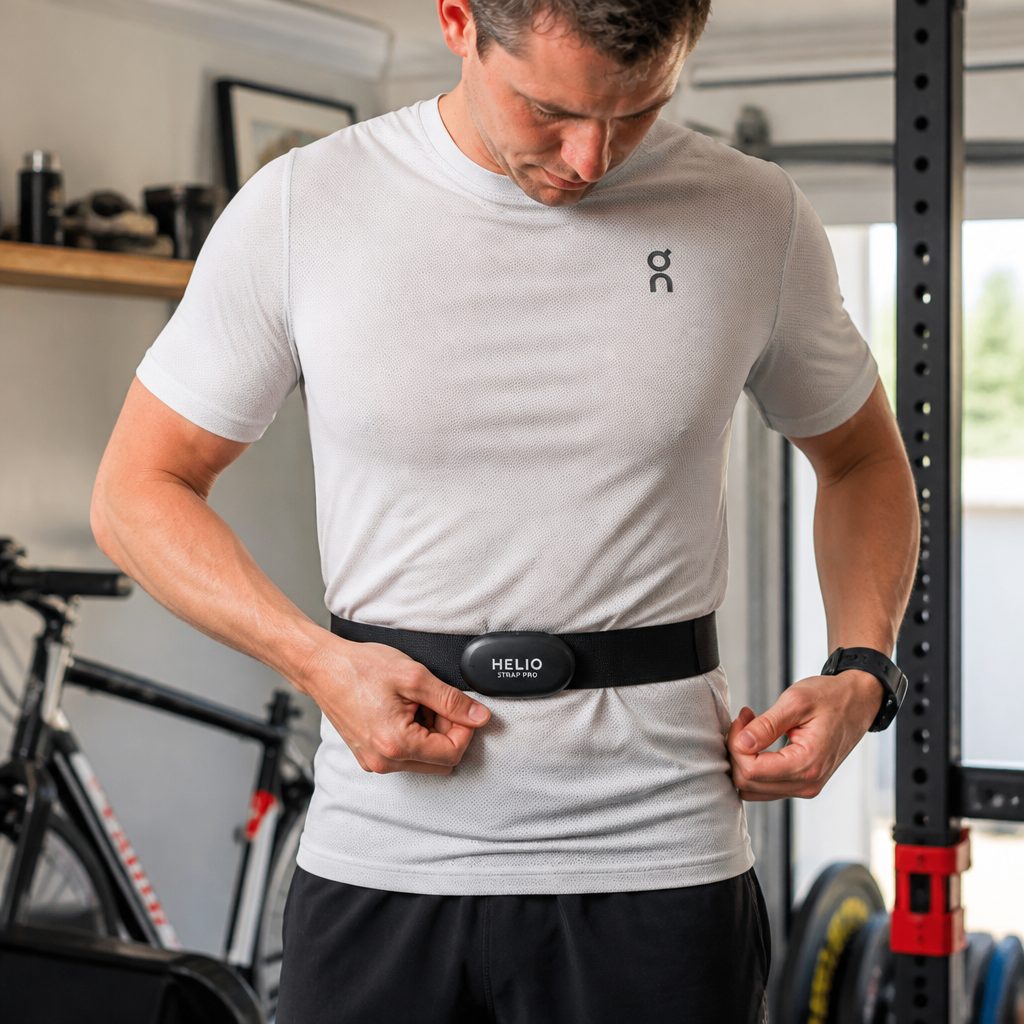
Helio Strap Pro separates heart-rate sensing from waist-based movement tracking, making it the outlier here for runners who want form and core-stability context alongside training data.
Battery life: the boring specification that changes everything
Battery claims are not the most thrilling part of wearable shopping, but they are enormously important in recovery tracking. A band cannot tell you much about overnight recovery if it spends every third night charging. Nor can it build a complete picture of training load if you remove it whenever the battery indicator becomes mildly accusatory.
WHOOP 5.0 led this group with a stated 14+ days per charge, and its wearable charging option was particularly useful because it avoided an off-wrist gap. Helio Strap Pro's waist sensor went much further at up to 40 days, though it has a narrower purpose than a full-time wrist or arm wearable. Its heart-rate sensor offered up to 11 days. Garmin CIRQA and Amazfit Helio Strap each quoted 10 days, whilst Polar Loop quoted eight days.
Those figures should not be treated as a league table divorced from how you train. A runner who wants continuous sleep data, hard-session heart-rate capture and a band worn through swimming will value a predictable week-plus rhythm more than an abstract victory in battery arithmetic. The broad good news is that every pick here was designed around multi-day wear rather than a smartwatch-style daily charge. That alone is a meaningful advantage for the screen-hating runner.
Heart-rate broadcasting: choose the protocol before you buy
Live heart-rate broadcasting is the practical feature that separates a recovery band from a very clever sleep tracker. If you want the band to provide heart rate to a running watch, bike computer, treadmill or fitness app, look carefully at the connection it supports. This is where it pays to be slightly fussy before spending anything.
Garmin CIRQA broadcast heart-rate data over ANT+. That is a natural fit for many Garmin-centred training setups and compatible equipment. Polar Loop used Bluetooth broadcasting, with a stated range of 164ft. Amazfit Helio Strap also broadcast heart rate over Bluetooth and offered the flexibility of an official upper-arm accessory from Zepp Health. WHOOP's available specifications did not confirm a heart-rate broadcast mode, so it should be purchased for its app-based recovery system rather than on the assumption that it will become a live sensor for another device.
Do the dull compatibility check first. If you specifically need ANT+, Garmin CIRQA is the relevant option here. If your training setup accepts Bluetooth heart rate, Polar Loop and Amazfit Helio Strap are the direct candidates. A recovery band can be brilliant and still be the wrong purchase if it cannot talk to the device you actually run with.
There is another reason the Helio Strap deserves attention here. Optical sensors can be affected by movement, and the upper arm is a sensible alternative position during hard running sessions. It will not remove the value of a chest strap for runners who need the most traditional heart-rate setup, but it makes Helio Strap more versatile than a wrist-only band for someone trying to keep their kit light and their wrist free.
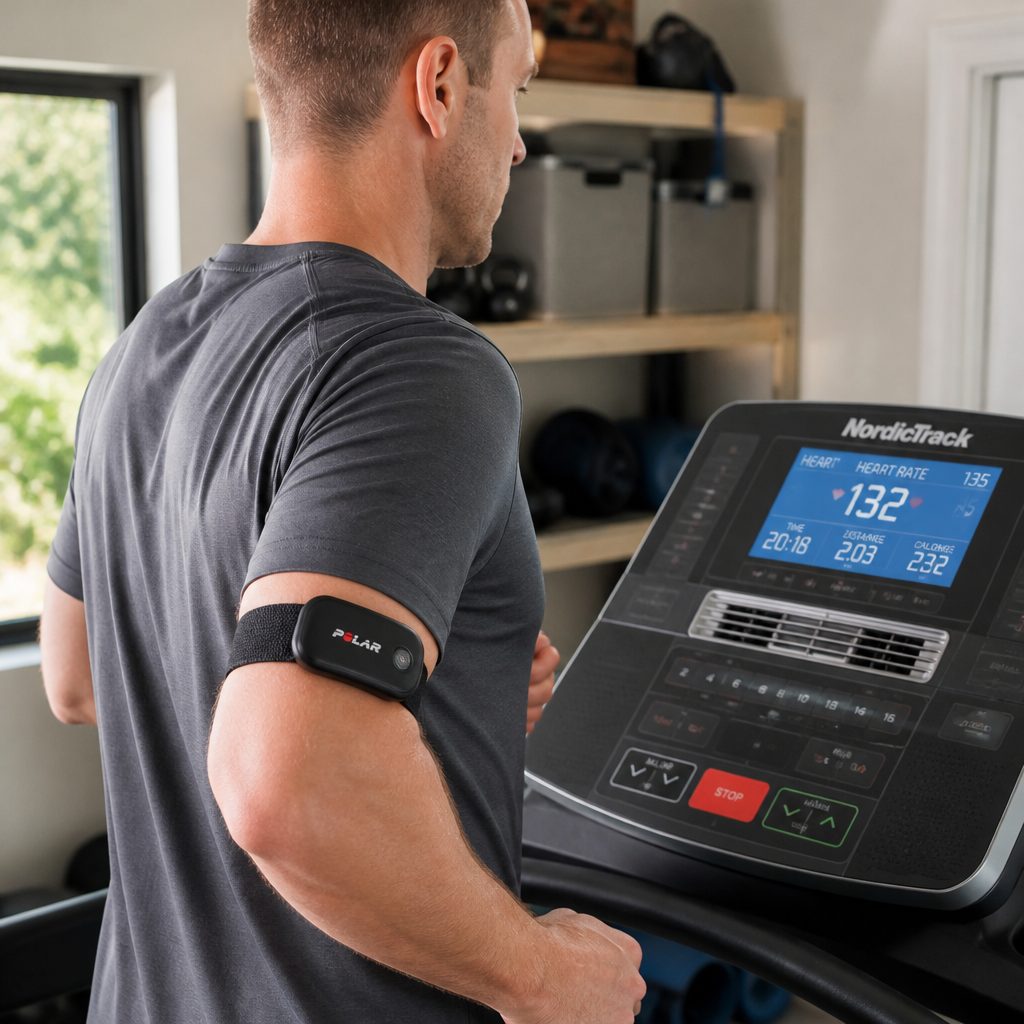
Broadcast capability matters most when a recovery band must also feed live heart-rate data to the watch, treadmill or training device you already use.
Subscription models and ownership: the question nobody enjoys asking
Screenless recovery wearables are not all bought and used in the same way. Garmin CIRQA delivered its useful health and training functions without a recurring subscription. Amazfit Helio Strap Pro was explicitly a subscription-free training system. Those are straightforward ownership propositions: buy the hardware, wear the hardware, and get on with your training.
WHOOP was different. Its experience centred on the membership model and the app-based interpretation of Strain and Recovery. WHOOP MG placed its extra Heart Screener functions at the most expensive membership level. There is no universally correct answer here. Some runners will happily pay for a deeper ongoing analysis platform, particularly if it becomes part of their training routine. Others will understandably prefer to avoid adding another monthly commitment to a life already containing race entries, gels, shoes and the mysterious tendency for running socks to reproduce in drawers.
Polar Loop sat in the more traditional tracker camp: a screenless device built around Polar's sleep, recovery and activity ecosystem. The sensible question is not "which model has the most features?" It is "which model's way of presenting recovery will I still use in six months?" The best platform is not necessarily the most elaborate one. It is the one you understand well enough to make a calm decision after a bad night's sleep.
Who should buy which recovery wearable?
Best all-rounder: Garmin CIRQA Smart Band
Buy it if Garmin Connect already holds your runs and you want continuous recovery data and ANT+ heart-rate broadcasting without another display.
Best for simple recovery: Polar Loop
Buy it if you want sleep stages, Nightly Recharge, SleepWise and automatic training detection in a genuinely quiet no-screen, no-button format.
Best for live Bluetooth HR: Amazfit Helio Strap
Buy it if upper-arm wear via the official Zepp Health accessory, Bluetooth broadcasting and offline heart-rate storage are more useful to you than a wrist display.
Best premium analysis: WHOOP 5.0
Buy it if app-led Strain and Recovery analysis is the main event and you value the longest quoted everyday battery life in this group.
Best for gym-minded runners: Amazfit Helio Strap Pro
Buy it if movement quality and core-stability tracking are meaningful parts of your injury-resilience and strength programme.
There is no honest "best on a budget" verdict here because this is not a category where the right choice should be reduced to a vague price hierarchy. The smarter move is to buy for the role you need filled. Garmin CIRQA is the best ecosystem fit. Polar Loop is the cleanest simplicity pick. Helio Strap is the best training-sensor hybrid. WHOOP is the deepest recovery-first platform. Helio Strap Pro is the one for runners who know their future performance is partly being built in the gym.
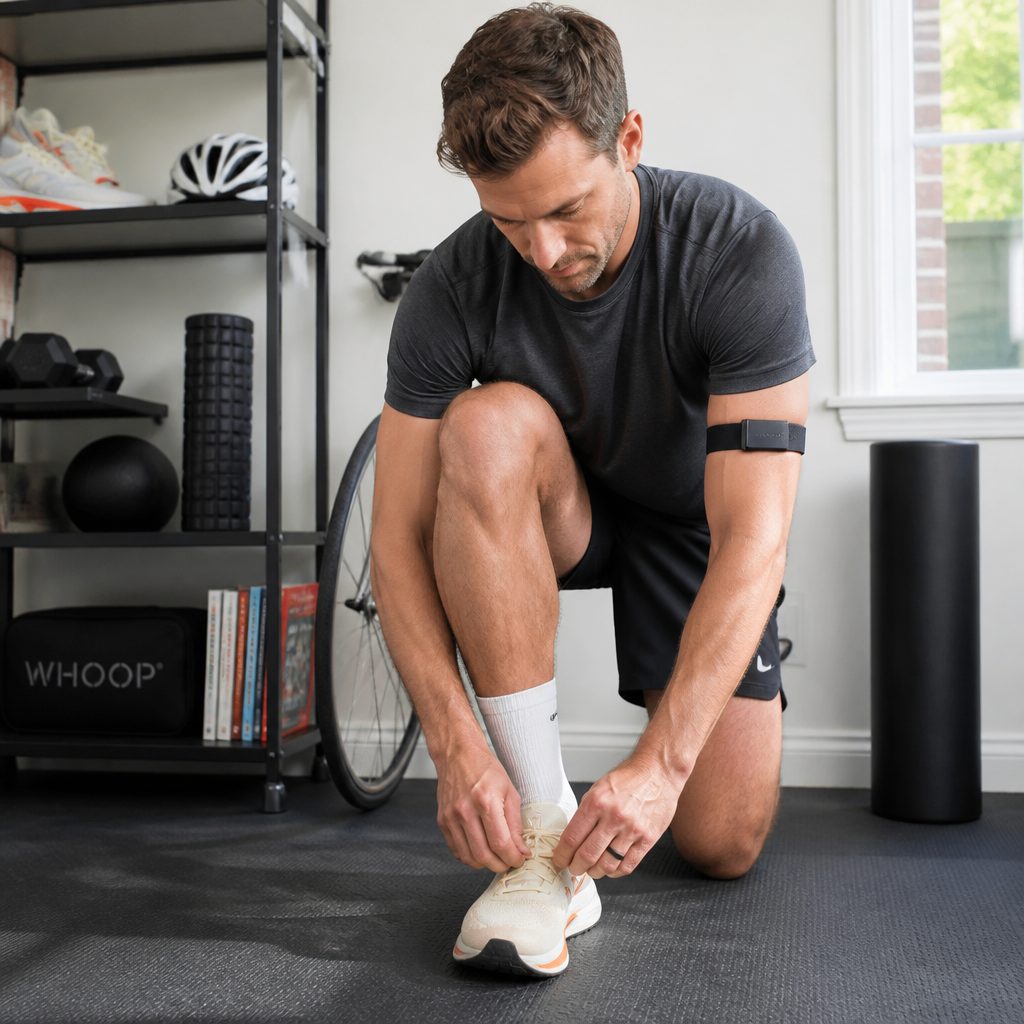
The best screenless wearable is usually the one that slots neatly into your existing running routine instead of attempting to replace every device you already own.
How to use recovery data without becoming ruled by it
The most useful way to wear one of these bands is as an observer, not a boss. Look for a pattern: several restless nights, a meaningful drop in your usual HRV trend, unusually high strain from an easy run, or a recovery result that consistently matches the heavy-legged feeling you had anyway. That combination can help you make a practical adjustment, such as moving hard intervals by a day, making the recovery run genuinely easy, or choosing sleep over one more set of lunges.
What you should not do is cancel every run because a score is lower than you hoped. Data is context. It is not an oracle in a nylon strap. The metrics become most valuable when they help you learn your own response to training load, alcohol, travel, stress, strength work and race-week nerves. Patterns will emerge: whether a late tempo session affects sleep, whether a rest day actually improves readiness, and whether a supposedly "easy" long run was perhaps not as easy as advertised.
This is also why screenless wearables work so well for some runners. They introduce a delay between collecting information and reacting to it. Instead of checking a score every few minutes, you review it deliberately. That little bit of distance can make the data more useful and the running more enjoyable.
Frequently asked questions
Bottom line
For most runners who hate wrist screens, Garmin CIRQA Smart Band is the strongest overall choice if Garmin Connect and ANT+ already form part of the training setup. Polar Loop is the cleaner, simpler alternative for sleep and recovery-minded runners. Amazfit Helio Strap is the smart pick for Bluetooth heart-rate broadcasting and the option of an official upper-arm accessory, whilst WHOOP 5.0 remains the recovery-analysis specialist for people happy with its app-centred membership model. Amazfit Helio Strap Pro is the wildcard worth choosing when movement quality, gym work and core stability matter as much as mileage. The common win is not having another glowing rectangle asking for your attention. Your run can remain a run.