The Best Compression Boots and Wraps for Recovery at Home
The best pneumatic compression boots make the post-training sofa session feel rather more purposeful. Here are the strongest Therabody JetBoots and Hyperice Normatec options for home recovery, from straightforward wireless leg boots to targeted hip and calf wraps.
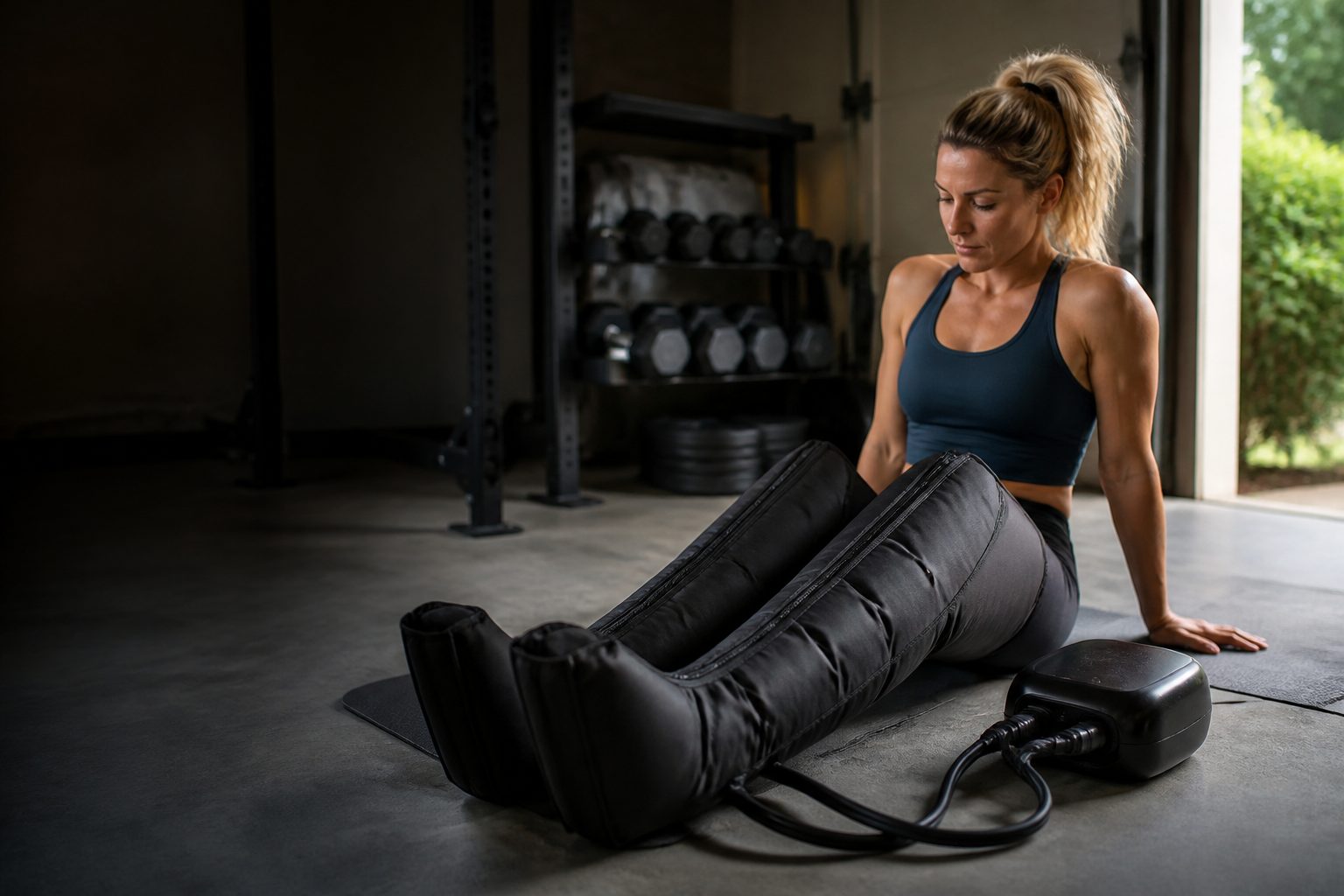
At-home pneumatic compression has moved well beyond the clinic-style boot-and-hose setup, with genuinely portable systems now covering legs, calves and hips.
 By James Oduya · Staff Writer & Home Gym Columnist · Updated October 30, 2026
Why compression boots have become a serious home-recovery tool
Compression boots used to be something you spotted in a professional sports clinic, usually attached to an alarming-looking machine and occupied by somebody who had just finished a very expensive triathlon. That picture changed. Modern systems have put the pump, battery and controls into a package you can use on the living-room floor after a long run, a heavy lower-body day or an afternoon spent gardening with more enthusiasm than spinal awareness.
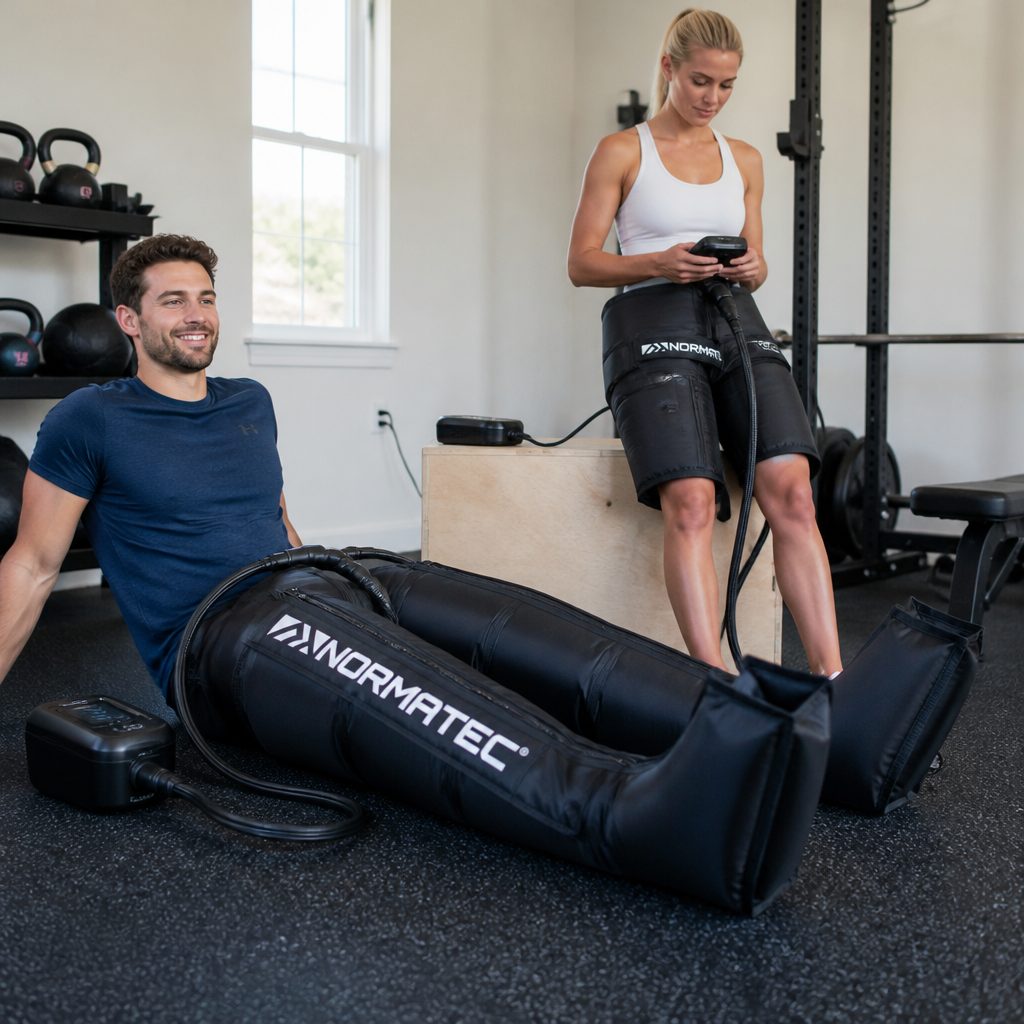
Full-leg boots deliver the broadest treatment area, whilst calf and hip devices make more sense when your recovery needs are concentrated in one place.
The basic idea is simple enough. Pneumatic chambers inflate and deflate around the limbs to create controlled compression. Systems differ in chamber count, pressure range, treatment patterns and whether they use an external control unit. Those details matter. A calf-only device and a full-length boot do not solve the same problem, however similar they may look in an Instagram reel.
For most home users, the decision is less about chasing the most aggressive setting and more about choosing the coverage you will genuinely use. Full-leg boots suit runners, cyclists, lifters and anyone whose lower body routinely feels like it has lodged a formal complaint. Hip wraps are more specific: useful if glutes, hips or lower back are your sticking points. Portable calf compression has its own appeal for travel, desk-heavy days and people who do not want a pair of giant boots living in the hallway.
Compression is a recovery comfort tool, not a magic shortcut around sleep, food, sensible training volume or proper medical advice. If you have a circulatory condition, an acute injury, unexplained swelling or any concern about whether compression is suitable for you, speak to an appropriate healthcare professional before using it.
What to look for before buying
Start with the body part, not the marketing language. If your feet, calves, quads and hamstrings all feel battered after training, full-leg boots are the logical format. If the issue is mostly tight calves after flights, long desk days or treadmill work, a smaller lower-leg unit may be the one you actually pack and use. And if your discomfort tends to settle around the hips, glutes and lower back, a dedicated wrap is a far better answer than trying to angle a leg sleeve in an undignified new direction.
Wireless versus wired
Wireless boots are wonderfully tidy. You pull them on, select a session and avoid negotiating an external console and connecting hose. Wired systems remain perfectly practical at home, especially if you value established software controls and targeted zone settings over minimalist storage.
Pressure is only part of the story
A higher maximum figure is not automatically "better". Chamber overlap, sequencing, targeted zones and whether the controls let you tailor duration can matter just as much. You want a session that feels firm and restorative, rather than like being slowly shrink-wrapped for export.
Session control and battery routine
Look at how long a charge lasts, whether the controls are simple enough to use when tired, and how tightly the timer fits your real routine. The best recovery device is the one you can start without needing a tutorial and a cup of tea first.
Fit and intended use
Check sizing carefully. A boot that reaches your thigh properly is very different from one that stops too short, and a system intended for quick warm-up use may not be your favourite for winding down before bed.
A useful buying rule
If compression will be used mostly at home after hard sessions, choose the coverage first and the connectivity second. A gorgeous app does not make up for a boot or wrap that misses the part of your body you actually want to treat.
The best compression boots and wraps, ranked
These picks cover the sensible home-buying landscape: full-leg wireless convenience, the more established console-led Normatec experience, genuinely targeted hip treatment and compact lower-leg recovery. There is no single winner for every person. There is, thankfully, a winner for most common training habits.
1. Therabody JetBoots Prime — Best for straightforward wireless full-leg recovery
Therabody JetBoots Prime is the cleanest recommendation for someone who wants full-leg pneumatic compression without turning their lounge into a minor equipment depot. Each boot has its own integrated rechargeable system, so there is no separate console and no external hose to unravel. That sounds like a small thing until you are sore, hungry and trying to begin a recovery session before motivation wanders off.
The Prime uses four overlapping air chambers per boot for gapless compression, backed by FastFlush Technology. There are four pressure settings: 25, 50, 75 and 100 mmHg. Four time choices cover 20, 40, 60 minutes and continuous use, whilst the built-in LCD offers one-touch operation. It is a refreshingly self-contained design. No app is required, and for plenty of people that is a feature rather than a compromise.
There are three pre-set approaches: Recovery, Warm-Up and Isolation. The boots also include infrared LED therapy and vibration capability, plus a wipeable inner lining. Battery life is rated at 180 minutes per charge. The range comes in Short, Regular and Long options, with boot weights from 2.51kg to 2.86kg depending on size. It folds down and arrives with a drawstring backpack and protective pouch, which makes it one of the more realistic systems to carry between home, gym and weekend trips.
Pros
- Fully wireless design keeps setup pleasingly simple.
- Four overlapping chambers create gapless leg coverage.
- Four clear pressure levels reach 100 mmHg.
- Built-in controls mean no phone is necessary.
Cons
- Pressure adjustment is less granular than JetBoots PRO Plus.
- No companion app for session tracking.
- It treats legs rather than hips or lower back.
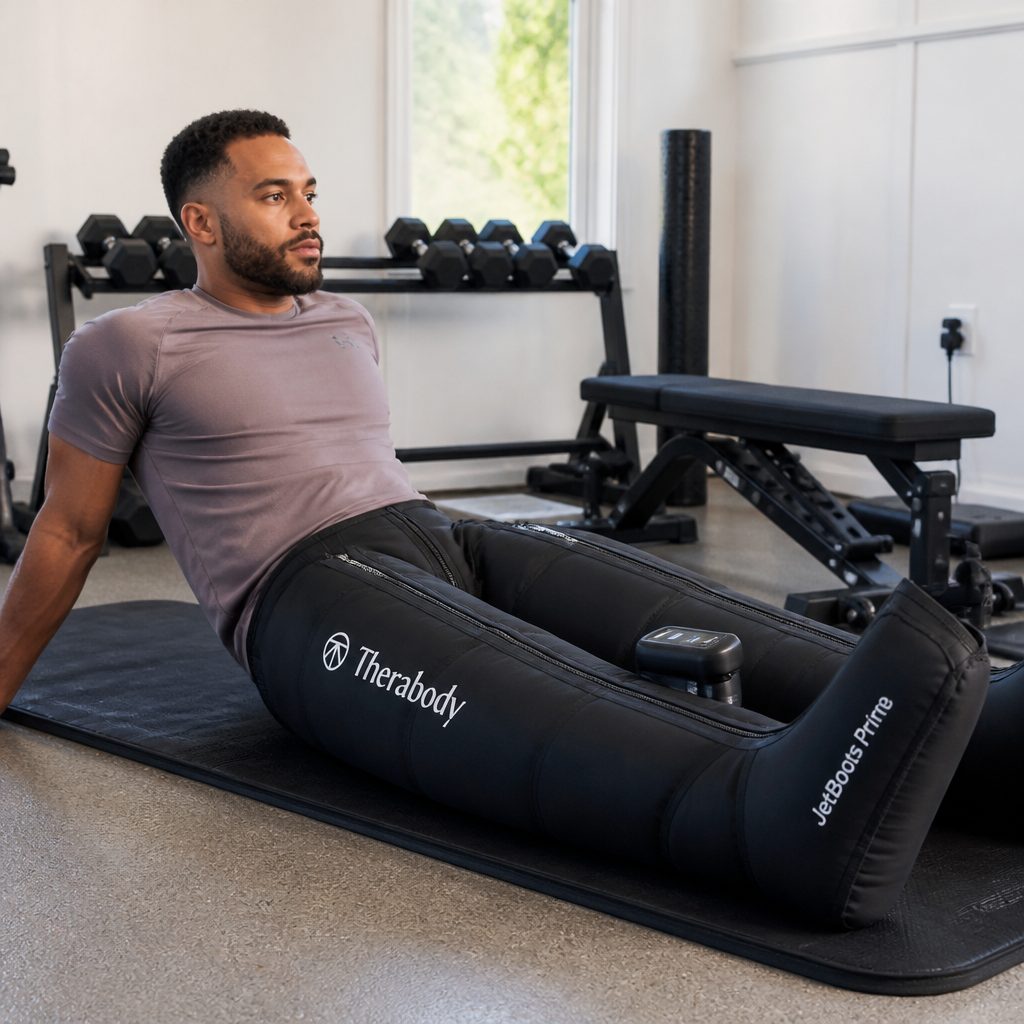
Therabody JetBoots Prime prioritises a tidy, self-contained setup: integrated pumps, on-boot controls and full-leg coverage without external tubing.
2. Hyperice Normatec Elite Legs — Best for premium wireless leg compression
Hyperice Normatec Elite Legs is the premium wireless choice for buyers who want the brand's five-zone compression system without the external controller found on Normatec 3. The pump is integrated into each leg sleeve, the system has no hoses, and HyperSync technology coordinates both boots. It is exactly the sort of design that makes regular use easier: less equipment on the floor, fewer loose bits to charge and less temptation to leave it in a cupboard.
Each leg has five air chambers and seven customisable compression levels, with pressure reaching up to 110 mmHg per zone. ZoneBoost is the useful party trick here. It lets you add extra time and pressure to a chosen zone, so you can focus attention around a part of the leg that feels particularly worked over. That degree of targeting makes sense for runners with cranky calves, cyclists who want more lower-leg attention, or lifters who know precisely where yesterday's session has left its calling card.
Battery life reaches up to four hours per charge. At 1.45kg per boot, it is a relatively manageable full-leg package, and the individual boot measures 15.5 by 40.5 inches. This is still full-leg recovery equipment, not something you casually stuff into a small backpack, but the lack of an external unit removes a surprising amount of friction.
Why it ranks so highly
The Elite's appeal is not simply that it is wireless. It combines cable-free use with five-zone treatment, seven intensity levels and ZoneBoost targeting. If you know you will use those adjustments, it earns its premium positioning.
3. Hyperice Normatec 3 Legs — Best for app-guided recovery and targeted zones
Shop Hyperice Normatec 3 Legs on Amazon UK
Normatec 3 Legs remains a very strong choice if you do not mind a wired setup. It uses a rechargeable control unit connected to the sleeves, and the boots themselves retain the broad five-zone structure: foot, ankle, calf, knee and thigh. Hyperice calls the process PULSE Technology, built around pulsing, gradient compression and distal release. In plain English, it is designed to move the sensation through the leg rather than merely squeeze everything at once and hope for the best.
It offers seven intensity levels with a pressure range of 30–110 mmHg (with 40–110 mmHg as the typical operating range). ZoneBoost adds 10 mmHg of extra pressure for 60 additional seconds in a selected area. This remains one of the clearest examples of targeted compression being more meaningful than a blunt "high" setting. If your calves are the problem, you can direct extra attention there rather than treating the whole leg identically.
The console battery lasts for more than three hours, and Bluetooth connects the system to the Hyperice app for routines and session management. There are Short, Standard and Tall sizing options. The internal hose design means you are not dealing with exposed tubes trailing up the side of each boot, although you still have a connecting hose between sleeves and the console. It is less minimalist than Elite, certainly. It is also an established, capable system that gives deliberate users plenty to work with.
Pros
- Five overlapping compression zones from foot to thigh.
- ZoneBoost provides a focused 60-second pressure increase.
- Bluetooth app supports routine selection and session tracking.
- Three size options accommodate a wider range of heights.
Cons
- The external control unit and hose add setup clutter.
- Less convenient for spontaneous, grab-and-go use.
- A separate carrying case is required for the neatest travel arrangement.
4. Therabody JetBoots PRO Plus — Best for multi-modality recovery at home
JetBoots PRO Plus is for the person who sees recovery as a proper part of training rather than a vague stretch performed whilst scrolling through emails. It is fully wireless, uses four overlapping chambers and adds TruGrade Technology for sequential pressure. FastFlush Technology completes inflation and deflation in around 60 seconds, which keeps the sessions moving rather than making you wait for the device to finish its little mechanical monologue.
Its pressure can be adjusted from 20 to 100 mmHg in precise 5 mmHg increments. Treatment length is similarly flexible, from 10 to 60 minutes in five-minute steps. There are eight sports-scientist-designed presets: Recovery, Warm-Up, Lower Leg, Upper Leg, Knee, Joint Therapy, Pain Relief and Sleep Prep. That is an unusually broad menu, and it gives the device a clearer role across training days and rest days alike.
It also incorporates infrared LED light therapy at 850nm, with automatic shut-off after 45 minutes, alongside three vibration settings: low, medium and high. The interior is a smooth, non-porous material intended to be easy to keep hygienic. Battery life sits between 150 and 240 minutes depending on use, and it can operate whilst charging. This is the most feature-heavy leg system here. It is also the one to choose only if you will actually explore those features. Buying a complicated recovery tool to use on the default setting forever is a very efficient way of acquiring an expensive pair of trousers.
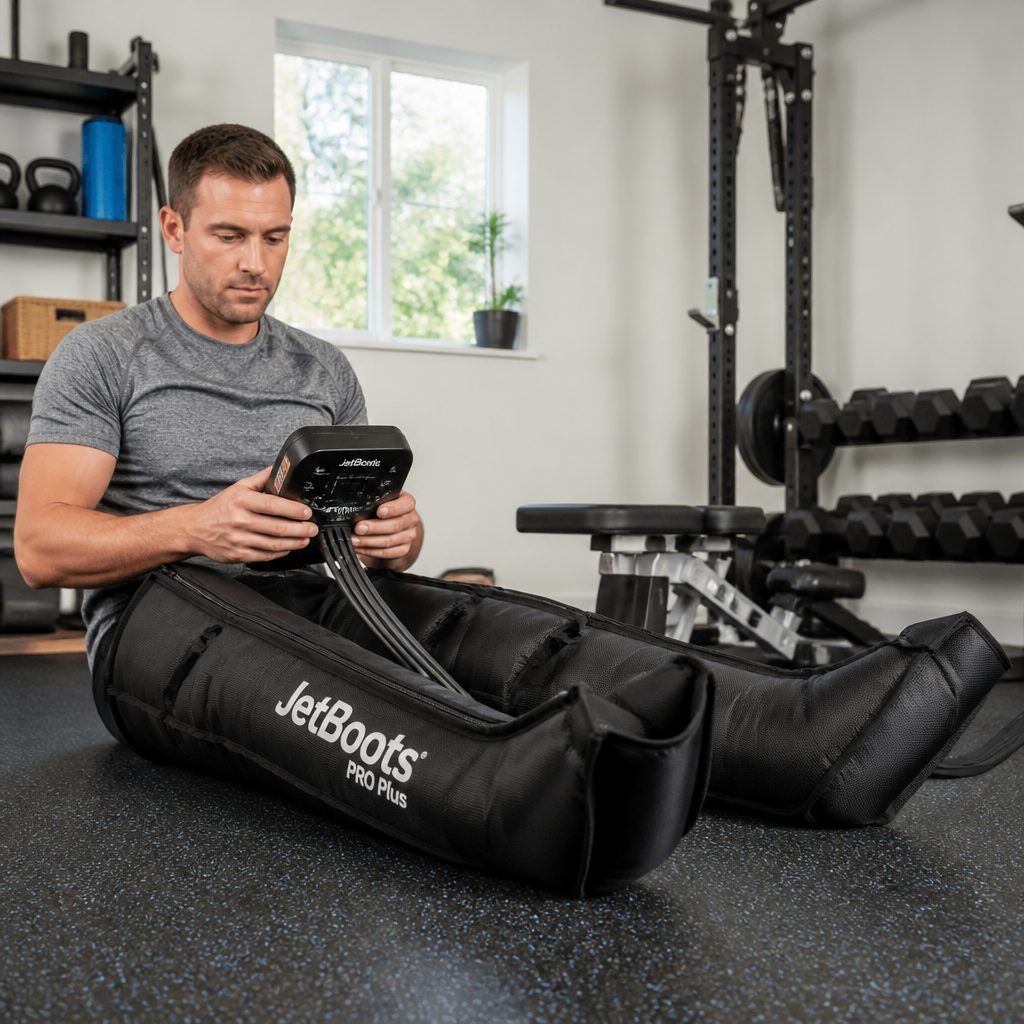
JetBoots PRO Plus brings highly adjustable compression alongside vibration and infrared LED therapy for buyers who want one particularly feature-rich leg system.
5. Hyperice Normatec Premier Legs — Best for simple wireless Normatec ownership
Normatec Premier Legs is the wireless update to the established Normatec leg platform, launched in September 2024. It is the model to consider if you like the Hyperice approach but want the cleaner ownership experience of a hose-free design. For a home buyer, that difference can be bigger than it sounds. Recovery gear tends to be used when you are tired; removing extra setup steps makes consistent use considerably more likely.
The key attraction is the format. It preserves the familiar Normatec focus on pneumatic leg compression in a more streamlined wireless package, aimed squarely at people who want the brand experience without a separate control unit. It sits naturally between a console-led system and the more elaborate Elite proposition: cleaner than traditional wired boots, less about maximum feature density, and easier to live with in a normal home.
This is a sensible choice for someone upgrading from basic compression sleeves or considering their first serious pair of boots. It is also worth considering if the Normatec approach appeals but the thought of cables and a controller has been the thing putting you off. There is no medal for owning the most complicated kit. The useful kit is the kit you put on after training.
6. Hyperice Normatec Premier Hips — Best for hips, glutes and lower-back recovery
Leg boots are brilliant at treating legs. They are not, despite occasional optimistic contortions, a sensible substitute for a hip wrap. Normatec Premier Hips is the dedicated wireless choice for hips, glutes and lower back. That makes it particularly interesting for runners, cyclists, golfers, desk workers and lifters whose tightness gathers around the pelvis rather than lower down the leg.
Its standalone wireless construction is the headline. There is no need to own a separate leg system or controller just to use hip compression, which makes it a much more realistic purchase for somebody whose recovery focus is concentrated in this area. It also makes a good complement to leg boots for a training household where one person wants full-leg treatment and another would rather do something about their lower back after a long day at a desk.
Be clear about the use case: this is not a cheaper, smaller substitute for boots. It is a different tool. If your quads and calves are what ache after squats, buy leg compression. If your hips, glutes and lower back are the areas asking for attention, this is the more targeted answer. That sounds obvious, but choosing by area is perhaps the single easiest way to avoid buyer's remorse here.
7. Hyperice Normatec Lower Legs/Go — Best for portable calf-focused recovery
Normatec Lower Legs/Go is the compact option for buyers who do not need full-leg coverage every time. It focuses on the lower legs and has a 180-minute battery. That makes it the obvious pick for frequent travellers, commuters, runners who mainly want calf attention, or anyone with limited storage and zero appetite for finding space for another large bag of recovery equipment.
The appeal is specificity and portability. Calves receive a surprising amount of punishment from running, court sport, hill walking, standing work and the peculiar modern hobby of trying to hit a daily step target whilst wearing impractical shoes. A lower-leg system is not as comprehensive as full boots, but it can be quicker to reach for and far easier to justify taking away with you.
Choose it because calf-focused treatment is enough for your routine, not because it looks less intimidating than boots. Full-leg systems remain the better answer for broad post-training recovery. The Go wins when small size, straightforward transport and lower-leg focus genuinely matter more than thigh coverage.
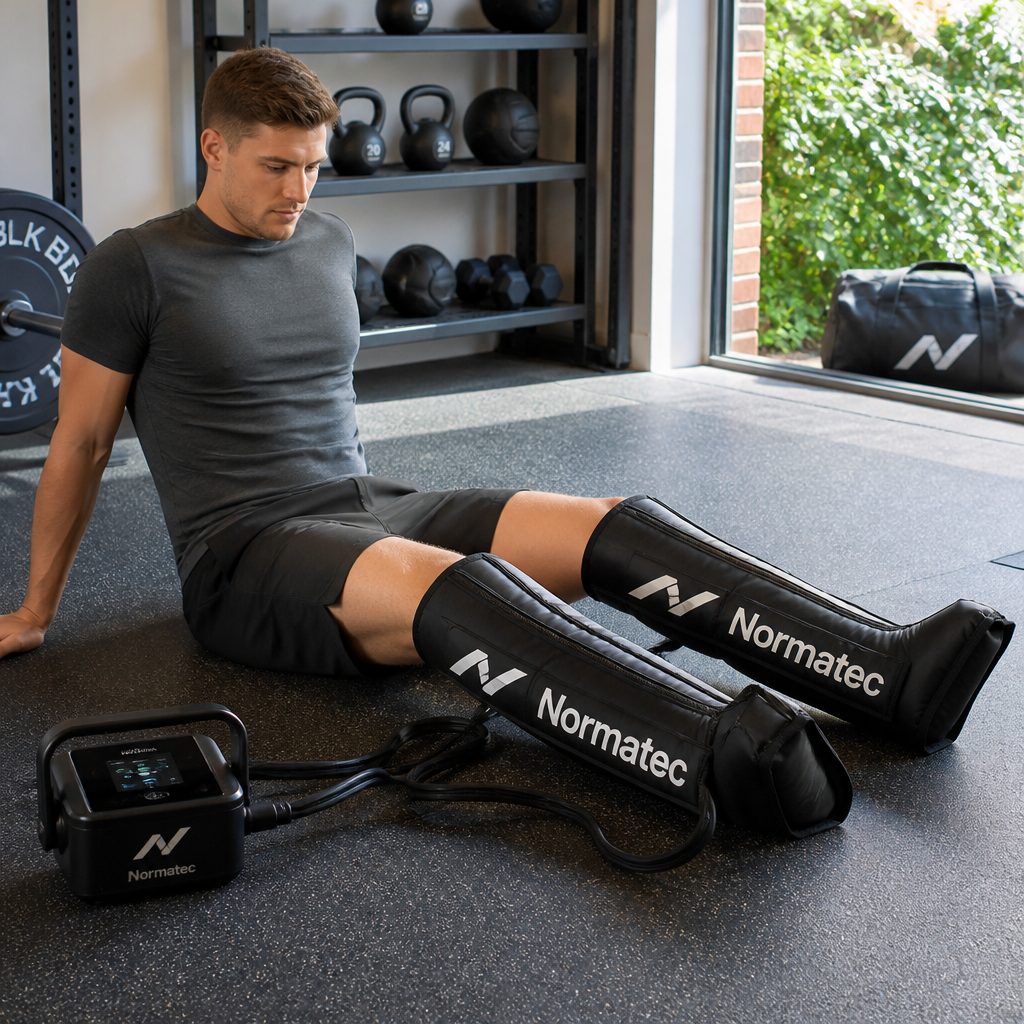
A calf-focused format is the sensible choice for travel and targeted lower-leg use, rather than a compromised replacement for full-thigh recovery boots.
At-a-glance comparison
There are meaningful differences hidden behind the broadly similar promise of "compression recovery". This table is the quick way to identify where each option sits before you become deeply invested in the relative merits of a hose.
| Model | Coverage | Format | Compression control | Battery | Standout strength |
|---|---|---|---|---|---|
| Therabody JetBoots Prime | Full legs | Fully wireless | 25, 50, 75 or 100 mmHg | 180 minutes | Simple LCD-led use |
| Hyperice Normatec Elite Legs | Full legs | Fully wireless | Seven levels; up to 110 mmHg per zone | Up to four hours | Five zones with ZoneBoost |
| Hyperice Normatec 3 Legs | Foot to thigh | Wired console | Seven levels; 30–110 mmHg | More than three hours | App control and targeted boost |
| Therabody JetBoots PRO Plus | Full legs | Fully wireless | 20–100 mmHg in 5 mmHg steps | 150–240 minutes | Compression, vibration and LED |
| Hyperice Normatec Premier Legs | Full legs | Wireless | Normatec pneumatic compression | Rechargeable | Streamlined Normatec format |
| Hyperice Normatec Premier Hips | Hips, glutes, lower back | Standalone wireless wrap | Targeted hip compression | Rechargeable | Purpose-built hip coverage |
| Hyperice Normatec Lower Legs/Go | Lower legs | Portable format | Lower-leg compression | 180 minutes | Travel-friendly calf treatment |
How the headline figures translate in real use
Compression numbers are useful, but they need context. The figure below compares maximum stated pressure or the top pressure setting where that is part of the product's control system. It is not a comfort ranking and not a claim that more pressure automatically means better recovery. Fit, chamber layout and the treatment sequence all affect how a session feels.
In practical terms, JetBoots Prime is ideal if you prefer obvious, widely spaced adjustments. PRO Plus makes more sense if you like fine tuning, because 5 mmHg increments let you land between "pleasantly firm" and "perhaps I got overconfident". Normatec's advantage is its ZoneBoost implementation: additional focus where you need it rather than simply ramping everything up.
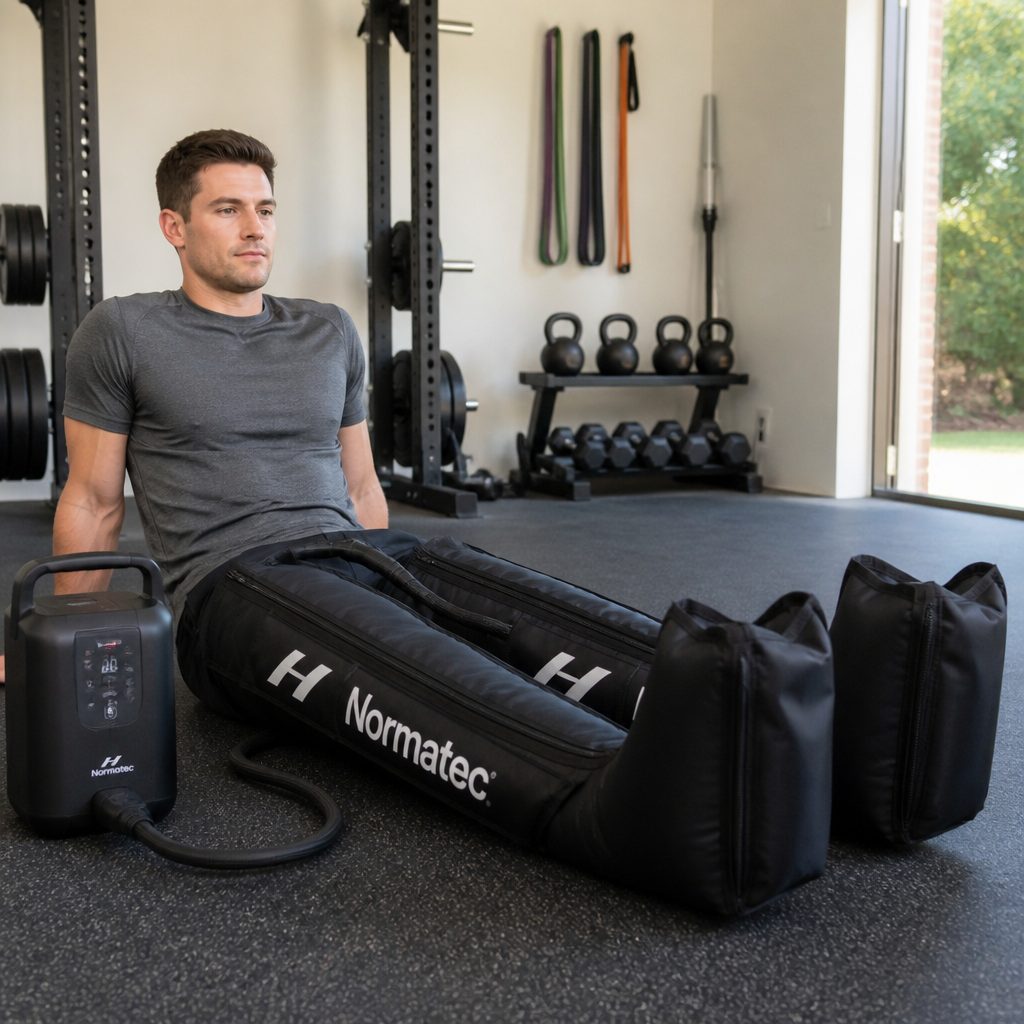
The numbers matter, but overlapping chambers, pressure sequencing and targeted zones determine how compression feels during an actual session.
Wireless convenience versus connected control
There is a genuine lifestyle divide between the fully integrated systems and the console-led Normatec 3. Neither is inherently superior. It depends on what causes you to skip recovery. If your barrier is clutter, cables and effort, choose wireless. JetBoots Prime, JetBoots PRO Plus, Normatec Elite Legs and Normatec Premier Legs all make a strong case because they reduce setup to putting them on and pressing a button.
If you like tracking routines, choosing a structured post-run session and having detailed control through your phone, Normatec 3 has a different sort of appeal. Bluetooth connectivity and the Hyperice app give it more guided interaction. That can be motivating for users who enjoy a system. For others, it is one more app in a world already fully stocked with apps asking whether you have drunk water today.
Choosing purely on app support alone is unlikely to lead to the best decision. On-device controls are excellent for tired people, and tired people are the primary audience for recovery gear. But if targeted zone work is a meaningful part of your buying decision, Normatec 3 and Elite Legs deserve particularly close attention because ZoneBoost is more than a decorative label.
Which model suits your training?
Best entry point for full-leg wireless boots
Therabody JetBoots Prime. The strongest straightforward full-leg wireless option for buyers who want wireless use, four pressure settings, useful battery life and no dependence on an app.
Best all-rounder
Hyperice Normatec Elite Legs. A premium wireless design with five chambers, seven levels, ZoneBoost and up to four hours of battery life.
Best premium feature set
Therabody JetBoots PRO Plus. Best for people who want granular compression adjustment plus infrared LED therapy and three vibration intensities.
Best for app-guided sessions
Hyperice Normatec 3 Legs. The pick for structured app control, five zones and a focused 60-second ZoneBoost treatment.
Best for hips and glutes
Hyperice Normatec Premier Hips. The dedicated wireless wrap for targeted hip, glute and lower-back compression.
Best for travel
Hyperice Normatec Lower Legs/Go. The practical portable pick when calves are the main focus and full boots would be overkill.
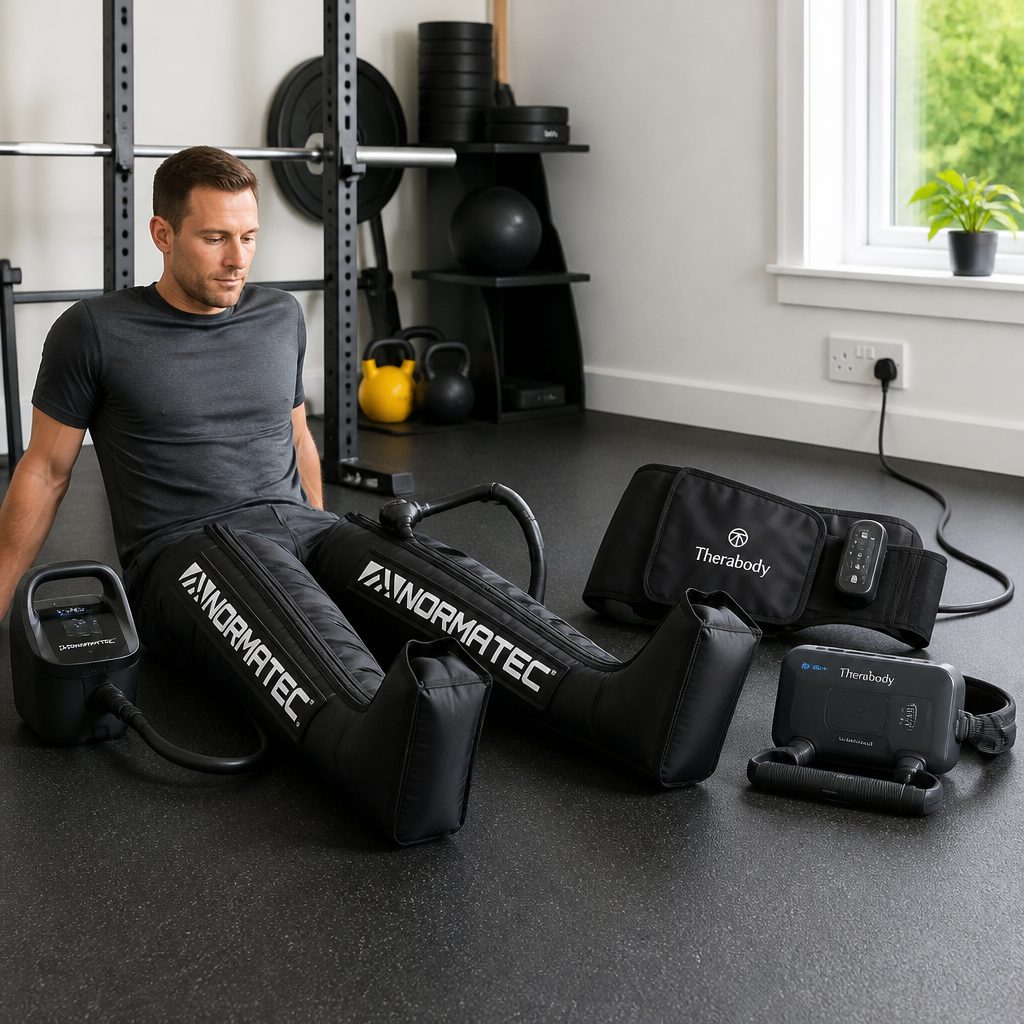
The right choice depends on where your training leaves you sore: full-leg systems suit broad recovery, while a hip wrap or calf device tackles a more focused job.
Getting the most from compression at home
A good session begins with a boringly sensible choice of intensity. Start lower than you think you need, especially if you are new to pneumatic compression. The goal is firm, comfortable compression rather than discomfort. You can increase settings over several sessions once you know what feels appropriate for you.
Use it as a deliberate part of a wider routine. After a hard run, a sensible pattern might be: walk a little, hydrate, eat something proper, shower, then sit down with compression while you sort dinner or watch something you were going to watch anyway. On rest days, it can simply be a chance to put your feet up. That is not an elite-level protocol. It is a realistic one, and realistic routines survive busy weeks.
For JetBoots Prime, the 20-minute setting is the easy starting point. For PRO Plus, the 10-to-60-minute flexibility and specific presets allow more tailoring. Normatec users who know one area routinely feels more loaded can make sensible use of ZoneBoost rather than defaulting to a higher all-over intensity. The smaller Lower Legs/Go is especially useful when you want calf attention without committing to a full recovery ritual.
Keep recovery gear clean enough that you want to use it. Wipeable interiors and smooth surfaces are genuinely helpful after repeated sessions, particularly if boots are shared in a household. A little routine maintenance is much less glamorous than recovery technology, but considerably more hygienic.
Value, bundles and where to check before you buy
Compression systems sit across a broad premium spectrum, and the live purchase picture can vary with retailer bundles, seasonal promotions and included accessories. Avoid comparing only the headline cost. Compare what you will use: integrated wireless convenience, treatment coverage, app support, targeted zones, portability and the need for a separate carrying solution all have practical value.
The best-value model is not necessarily the least expensive one. If a wireless full-leg boot gets used three times a week because it is easy, it may prove more worthwhile than a sophisticated wired system that stays boxed because setting it up feels like a faff. Equally, do not pay for infrared LEDs, vibration or app features if the reason you wanted compression was simply to help your calves feel less grumpy after a Sunday run.
Frequently asked questions
Yes. Integrated pumps remove the control unit and connecting hose from the routine, which makes a session quicker to start and simpler to store afterwards. Therabody JetBoots Prime, JetBoots PRO Plus and Hyperice Normatec Elite Legs are particularly appealing if convenience is the main reason you are shopping.
Choose full-leg boots if you want broad treatment across feet, calves, knees and thighs after demanding lower-body training. Choose Hyperice Normatec Lower Legs/Go if calf-focused recovery and portability matter more than full-thigh coverage. It is a focused tool, not a reduced version of the same thing.
ZoneBoost lets you focus extra pressure and time on a selected compression zone. On Normatec 3, it adds 10 mmHg for an additional 60 seconds. It is useful when one area, such as a calf, needs more attention than the rest of the leg.
No. Therabody JetBoots Prime and JetBoots PRO Plus have built-in LCD controls and do not require an app. Normatec 3 offers Bluetooth app connectivity for users who want custom session tracking and routine selection, but app control is not essential to effective home use.
Hyperice Normatec Premier Hips is the dedicated choice because it is designed to treat the hips, glutes and lower back. Leg boots can be excellent for leg recovery, but they do not replace a wrap made for that part of the body.
No. A higher setting is not automatically more helpful or more comfortable. Begin at a manageable level, pay attention to how it feels, and use targeted controls where available. Fit, chamber design and sequencing matter as much as the maximum pressure figure.
JetBoots Prime is rated for 180 minutes per charge. JetBoots PRO Plus provides 150 to 240 minutes depending on use. Normatec Elite Legs reaches up to four hours, Normatec 3 lasts more than three hours from its console battery, and Lower Legs/Go has a 180-minute battery.
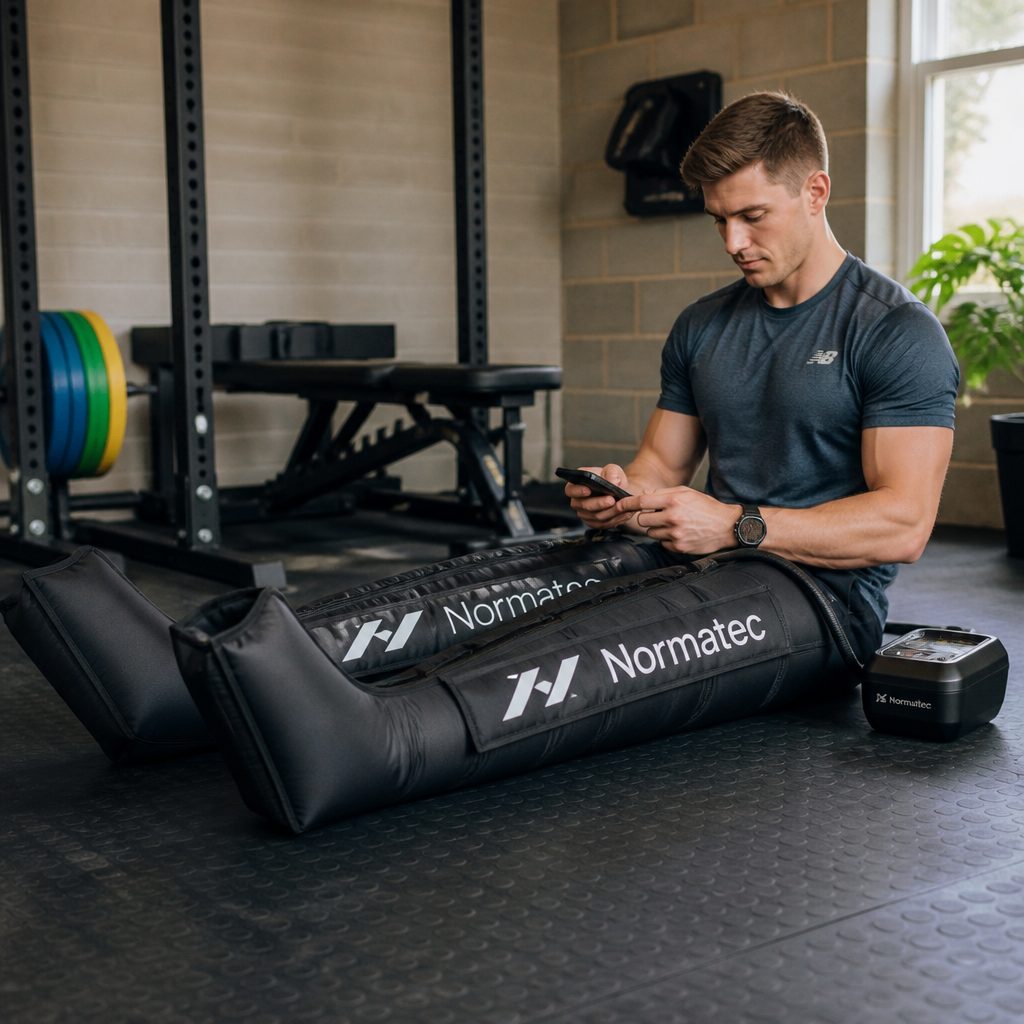
The best recovery setup is the one that fits naturally into your real routine, whether that means a quick calf session after a run or full-leg treatment on the sofa.
The bottom line
For most people wanting cable-free, full-leg recovery at home, Therabody JetBoots Prime is the sensible place to start: uncomplicated controls, four pressure settings, overlapping chambers and a genuinely tidy design. Hyperice Normatec Elite Legs is the stronger premium wireless pick if five zones, ZoneBoost and a longer battery matter to you. Choose Normatec 3 Legs for app-led structure and targeted control, JetBoots PRO Plus for the broadest multi-modality feature set, Normatec Premier Hips for dedicated hip and lower-back work, and Lower Legs/Go when portable calf recovery is the whole point. Buy for your body's problem, not the flashiest specification. Your post-leg-day self will be grateful.