Screenless tracker wars: Fitbit Air, Garmin CIRQA and Polar Loop take on WHOOP
Three major brands have launched subscription-free screenless fitness bands in 2026, putting real pressure on WHOOP's once-uncontested market position.
 By James Oduya · Staff Writer & Home Gym Columnist · Updated November 01, 2026
What you need to know
- Google Fitbit Air (£84.99), Garmin CIRQA (£179), Polar Loop (£149.90) and Amazfit Helio Strap (£99) all launched in 2025–2026 with no mandatory subscription
- WHOOP raised $575 million in March 2026 at a $10.1 billion valuation, but its subscription model now faces direct competition at every price point
- DC Rainmaker framed the Garmin CIRQA as Garmin's attempt to stop "competitive bleeding" to rivals rather than a single knockout blow
The subscription-free wave arrives
The screenless fitness tracker market has been upended in 2026. In the space of fourteen months, Google, Garmin, Polar and Amazfit have each released a screen-free wearable band aimed squarely at WHOOP's loyalists — and not one of them requires a penny in ongoing subscription fees. For UK buyers, that means the recovery-tracking technology once associated with elite athletes and steep annual bills is now available for a one-off outlay starting at £84.99.
The competitive pressure comes at a notable moment for the category's pioneer. WHOOP closed a $575 million Series G funding round on 31 March 2026 at a valuation of $10.1 billion — nearly triple its last publicly reported valuation of $3.6 billion from 2021. The round was led by Collaborative Fund and included the Qatar Investment Authority, Mubadala, Mayo Clinic and Macquarie Capital, alongside athlete investors including Cristiano Ronaldo, LeBron James and Rory McIlroy. WHOOP founder and CEO Will Ahmed has described an IPO as an inevitable next step, and the company reports it has surpassed 2.5 million members and achieved positive cash flow. By any measure, WHOOP is thriving — but the window in which it operated without serious screenless competition has closed.
Google Fitbit Air: the low-cost disruptor
The most disruptive launch in pure price terms came from Google. The Fitbit Air, announced on 7 May 2026 and on sale in the UK from 26 May, costs £84.99 as a one-time purchase with no mandatory subscription. Google says the device is "simple, affordable and comfortable enough to wear 24/7," and the specs back up the accessibility pitch: at 12 grams with the band (5.2 grams without), it is 50% smaller than the Inspire 3. Battery life is rated at up to seven days, with a five-minute fast charge delivering a full day of power.
Sensors include AFib alerts, SpO2, HRV, heart rate, a temperature sensor, stress monitoring and sleep tracking, all feeding into the Google Health app — the rebranded successor to the Fitbit app, which Google also unveiled on 7 May. A three-month Google Health Premium trial is included with UK purchases, though the premium tier remains optional. The Air is available in the UK directly from Google and through Amazon UK, Argos, Boots and EE Tech & Gaming, all at £84.99.
The device was teased by NBA star Steph Curry on Instagram ahead of the formal announcement. A Stephen Curry Special Edition is available in the US at $129.99, though UK pricing for that variant has not been confirmed.
Garmin CIRQA: the ecosystem play
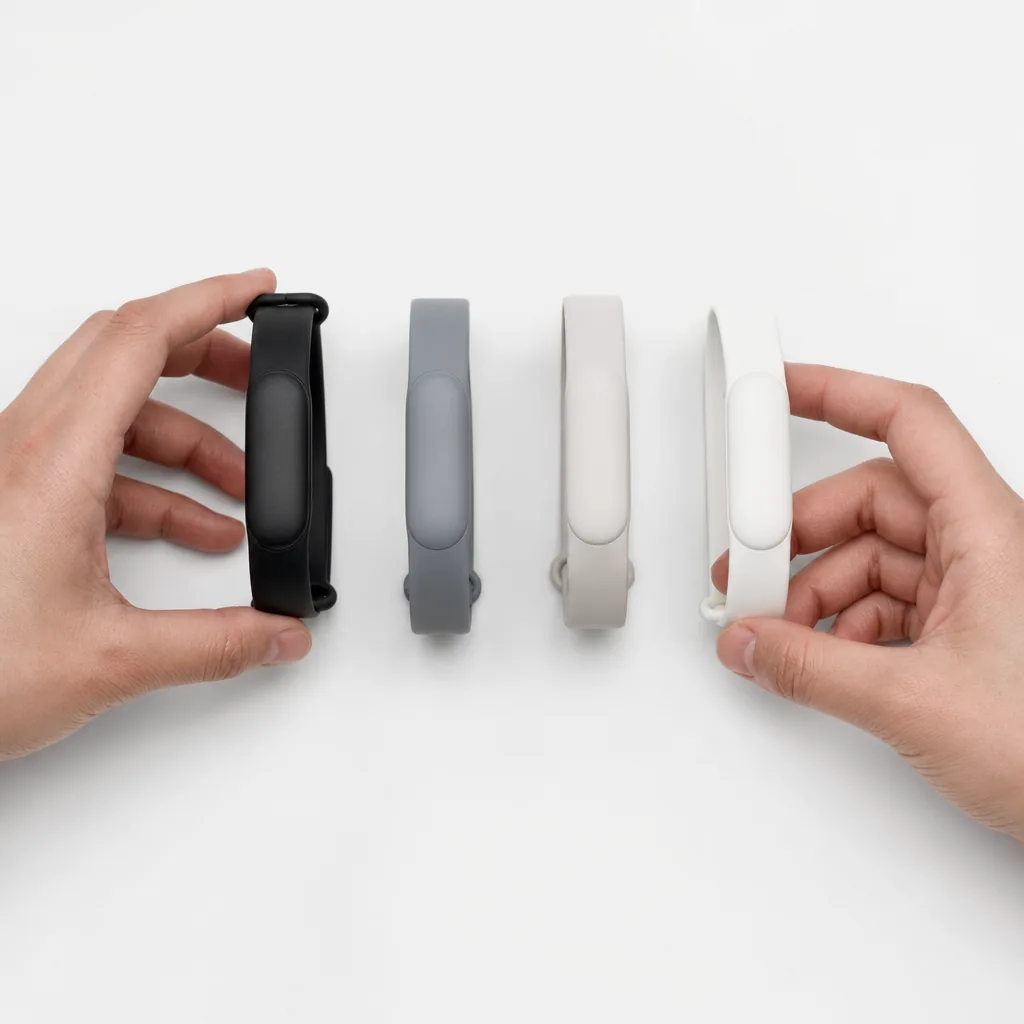
Garmin announced the CIRQA Smart Band on 21 July 2026 — the company's first screen-free wearable — with availability from 24 July at £179 in the UK. The CIRQA monitors heart rate, Body Battery energy levels, Pulse Ox and skin temperature via the Garmin Connect app, and Garmin claims it can identify over 80 different activities. Battery life is rated at 10 days. The tracker sits inside a fabric loop with a single button; there is no screen.
A product page had briefly appeared on Garmin's own website in January 2026, and FCC authorisation was granted on 20 January 2026 with a confidentiality period that expired on 19 July — one day before the announcement. In a hands-on published on launch day, DC Rainmaker framed the CIRQA as delivering "the long-requested screenless Garmin tracker without a required subscription," arguing the product is more about stopping competitive bleeding to WHOOP, Fitbit and Amazfit than being a "killer" of any single rival. Core Connect features remain free; the optional Connect+ tier adds little for most users, according to DC Rainmaker.
Polar Loop and Amazfit Helio Strap: the earlier movers
Polar got there first. The Polar Loop — its second-generation screenless band — launched on 3 September 2025 at £149.90, with all features free in the Polar Flow app and no premium subscription tier whatsoever. It uses Polar's Gen 3.5 optical heart rate sensor, offers up to eight days of battery life and water resistance to WR30, and includes proprietary recovery tools SleepWise and Nightly Recharge. Reviewers at WearableBeat noted in February 2026 that Polar "nails the pricing strategy" but flagged unreliable workout detection and a clunky app as weaknesses that keep it from genuinely challenging WHOOP's dominance.
Amazfit entered with the Helio Strap at £99, offering 10-day battery life, wrist or upper-arm wear, and recovery scoring through its Zepp app with no subscription required. In June 2026, Amazfit added the $199.99 Helio Strap Pro — a two-sensor kit with a waist-worn pod designed to measure muscular load for HYROX-style hybrid training.
What UK buyers are looking at
The practical picture for UK shoppers is now as follows:
- Google Fitbit Air — £84.99, no subscription required, ~7-day battery
- Amazfit Helio Strap — £99, no subscription required, ~10-day battery
- Polar Loop — £149.90, no subscription required, ~8-day battery
- Garmin CIRQA — £179, no subscription required, ~10-day battery
- WHOOP — hardware bundled with membership, £199–£359 per year, 14+ days battery
WHOOP's hardware is non-operational without an active subscription, meaning the cost comparison over two or more years shifts decisively in favour of the new rivals. Whether they can match WHOOP's depth of coaching insight, community features and data accuracy over time remains the key open question — but on price, availability and accessibility, the screenless tracker market of late 2026 looks very different from the one WHOOP built its reputation in.
Why it matters
For UK buyers, the shift is straightforwardly good news: where WHOOP's subscription could cost between £199 and £359 every year on top of the hardware, every new rival offers its core features free through a companion app. That means a £84.99 one-time purchase now gets you AFib alerts, HRV tracking, sleep staging and recovery scoring — functionality that would have cost several hundred pounds annually just two years ago. The subscription-free model also removes the anxiety of being locked in: if the band stops suiting you, you stop spending. Whether these challengers can match WHOOP's depth of insight and community pull is a separate question, but on price and accessibility alone, the market has fundamentally changed.