
Screenless tracker wars: four brands now battling WHOOP on price
Google, Garmin, Amazfit and Polar have all entered the screenless fitness band market in 2025–26, giving WHOOP its stiffest competition yet.
 By James Oduya · Staff Writer & Home Gym Columnist · Updated October 13, 2026
What you need to know
- Google's Fitbit Air launched in May 2026 at $99.99 with no mandatory subscription and FDA-cleared AFib alerts
- Garmin's CIRQA Smart Band arrived in July 2026 at £179.99 in the UK, adding ANT+ and wrist-or-arm versatility
- Polar Loop launched in September 2025 at £149.50 with a subscription-free promise; Amazfit Helio Strap is back in UK stock at £99.90
A niche no more: the screenless band goes mainstream
The screenless fitness tracker — a band that monitors your body around the clock without ever flashing a display at you — spent years as WHOOP's personal territory. That changed fast. By the middle of 2026, four separate rivals had entered the category, and between them they cover almost every price point from £99 upwards. The subscription model that WHOOP built its business on is now under serious competitive pressure.
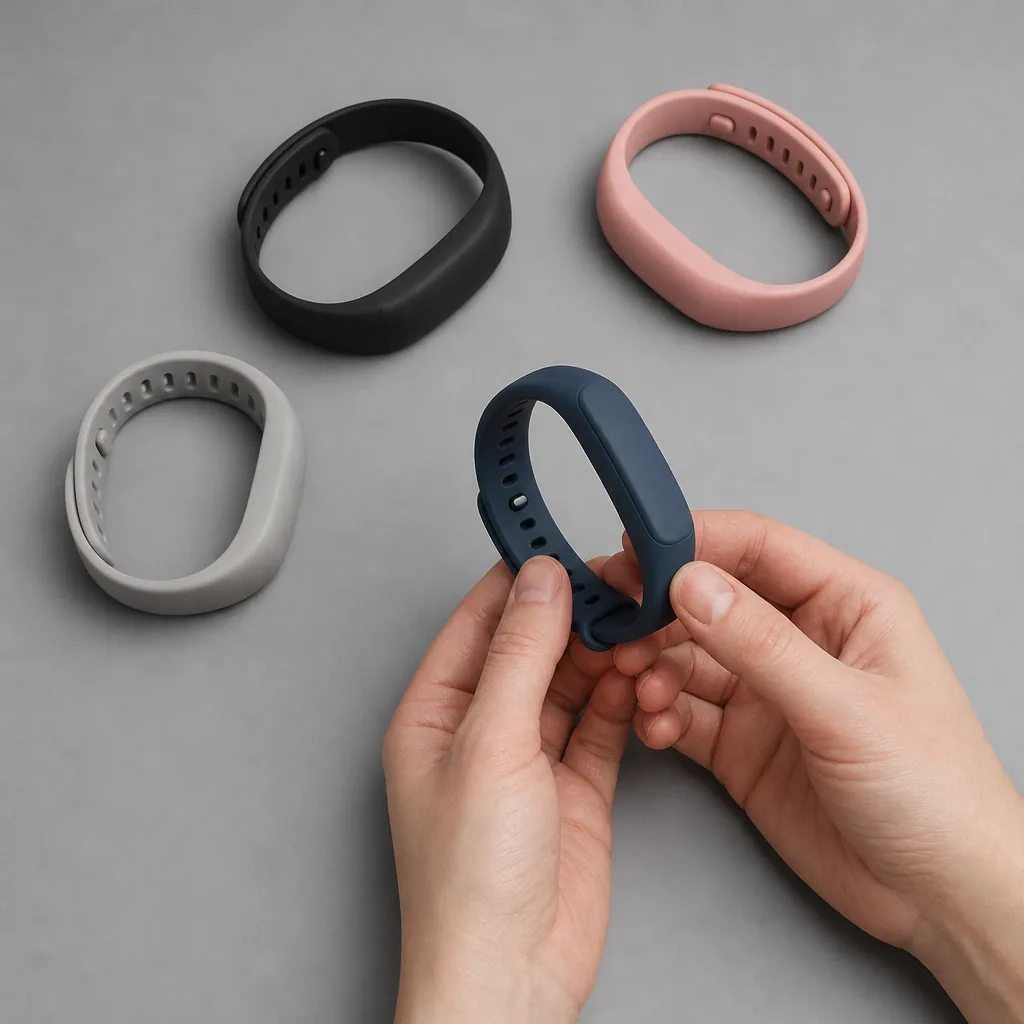
The most significant arrival is Google's Fitbit Air, which shipped on 26 May 2026 at a US price of $99.99. A UK price in pounds has not been confirmed by Google, but the device has attracted wide attention as the first time a mainstream consumer technology brand has matched WHOOP's screenless form factor at an accessible price point. At 12 g with band — described by Fitbit as the smallest and lightest Fitbit ever made — it tracks 24/7 heart rate, SpO2, sleep stages, HRV and, notably, AFib rhythm alerts using FDA-cleared background monitoring. Battery life is up to seven days, with a five-minute fast-charge option that delivers a full day of use. Core tracking requires no subscription; an optional Google Health Premium tier is priced at $9.99 per month, and every device ships with a three-month trial included.
Garmin and Polar target the performance crowd
Garmin announced its CIRQA Smart Band on 21 July 2026, with orders opening three days later. Priced at £179.99 in the UK, the CIRQA sits at the upper end of the challenger field. Its 27 × 47 × 9 mm module weighs 14.8 g and is built from fibre-reinforced polymer, with a 24 mm fabric ComfortFit strap available in black, French Gray, berry and navy across S/M and L/XL sizes. Battery life reaches up to 10 days, and the band carries Bluetooth and ANT+ connectivity — a useful detail for anyone who already trains with Garmin sensors. Unusually for a screenless band, it can be worn on either the wrist or the upper arm. Core features including VO2 Max, HRV status and training readiness need no subscription; Garmin Connect+ is optional at $6.99 per month. Accessory bands are sold separately at £44.99.
Polar entered the category earlier, with its Loop shipping on 10 September 2025 at £149.50. The company made a direct point of its pricing model at launch, confirming that "every feature is ready on day one" and that no subscription is required — a deliberate contrast with WHOOP, whose cheapest tier costs a minimum of $199 per year. The Loop offers up to eight days of battery life and includes Polar's SleepWise daytime alertness prediction and Nightly Recharge recovery tool, as well as Training Load Pro for workout monitoring. Reviewers have noted limitations, however: there is no SpO2, no skin temperature sensor and no ECG at the £149.50 price point, and some activity tracking inconsistencies have been flagged.
Amazfit: back in stock, and a second generation on the way
Amazfit's Helio Strap has had a more turbulent road in the UK. The original band launched in June 2025 but went out of stock before the end of that year, frustrating potential buyers. It returned to Amazfit's UK store in early June 2026 at £99.90. The band weighs around 20 g, tracks heart rate, sleep, stress and more than 50 workout modes including HYROX Race, and claims up to ten days of battery life. No subscription is required; data is accessible through the Zepp app. A more advanced Helio Strap Pro is also available at £199.90, adding the BioTracker 6.0 PPG sensor, a temperature sensor and a geomagnetic sensor.
A second-generation Helio Strap is also on its way. Zepp Health CFO Leon Deng confirmed at the company's Q2 2026 earnings call that the Helio Strap 2 is on track for the second half of 2026. An FCC filing surfaced in May 2026 listing two model numbers — A2671 and A2672 — under the category of "Smart sensor," showing a rectangular module with a rear optical sensor array and a 230 mAh battery. Confidentiality documents submitted with the filing were requested to remain sealed until around early to mid November 2026, which may indicate a launch is expected before that window.
What WHOOP still has — and what it costs
WHOOP remains the benchmark in one important respect: it has the strongest published scientific validation record, with peer-reviewed comparisons against polysomnography showing the closest results among bands in this category. Its top-tier Life subscription at $359 per year also adds on-demand ECG via medical-grade hardware — something none of the challengers currently offer at any price. But the cost adds up quickly. WHOOP One, the cheapest tier, reaches $597 over three years because membership is mandatory. The Fitbit Air, by contrast, costs $99.99 once, with core tracking working indefinitely at no further charge.
The bottom line for UK buyers
The four challengers now span a meaningful range:
- Fitbit Air — from $99.99 (UK price unconfirmed in GBP); subscription-free core; AFib alerts; lightest in class
- Amazfit Helio Strap — £99.90; subscription-free; 50-plus workout modes; Gen 2 imminent
- Polar Loop — £149.50; subscription-free; strong sleep tools; limited sensor set
- Garmin CIRQA — £179.99; ANT+ connectivity; wrist or arm wear; 10-day battery
The choice will come down to ecosystem, sensor priorities and how much the monthly-fee model matters to you. For the first time in the category's short history, it genuinely does not have to matter at all.
Why it matters
For UK buyers who have been priced out of WHOOP's mandatory subscription model, 2026 has suddenly opened up genuine alternatives at almost every price point. The cheapest option — the Fitbit Air or Amazfit Helio Strap — undercuts WHOOP's three-year cost by roughly £400 or more, and both work without a recurring fee. The arrival of a mainstream tech giant like Google in this niche signals that screenless tracking is no longer a specialist concept, which should keep pressure on prices and push feature development faster. WHOOP still holds a meaningful edge in published scientific validation, but the subscription argument is getting harder to make.