
Polar Street X Review: An Affordable AMOLED Sports Watch With a Flashlight
Polar's March 2026 sports watch arrived with an AMOLED screen, an unusually capable integrated flashlight and a spec sheet aimed squarely at gym-goers, runners, commuters and weekend cyclists. It looked like a very convincing value play on paper. In daily use, it was more nuanced than that — mostly in the way a good budget sports watch often is.
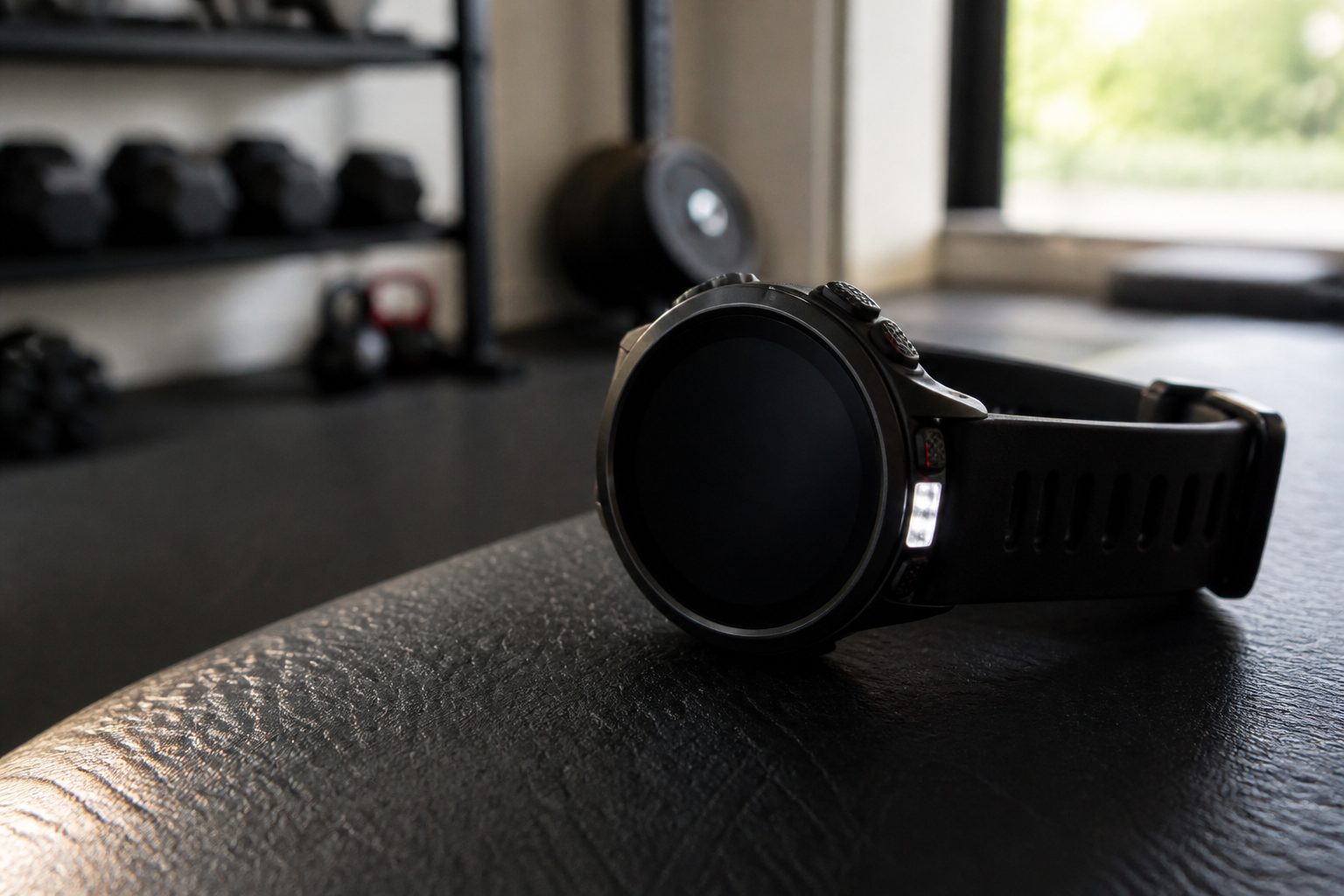
The Polar Street X combined a round AMOLED screen, full sports-watch controls and a proper white-and-red LED torch in one distinctly urban-looking package.
 By James Oduya · Staff Writer & Home Gym Columnist · Updated October 12, 2026
Polar Street X: the quick take
Shop Polar Street X on Amazon UK
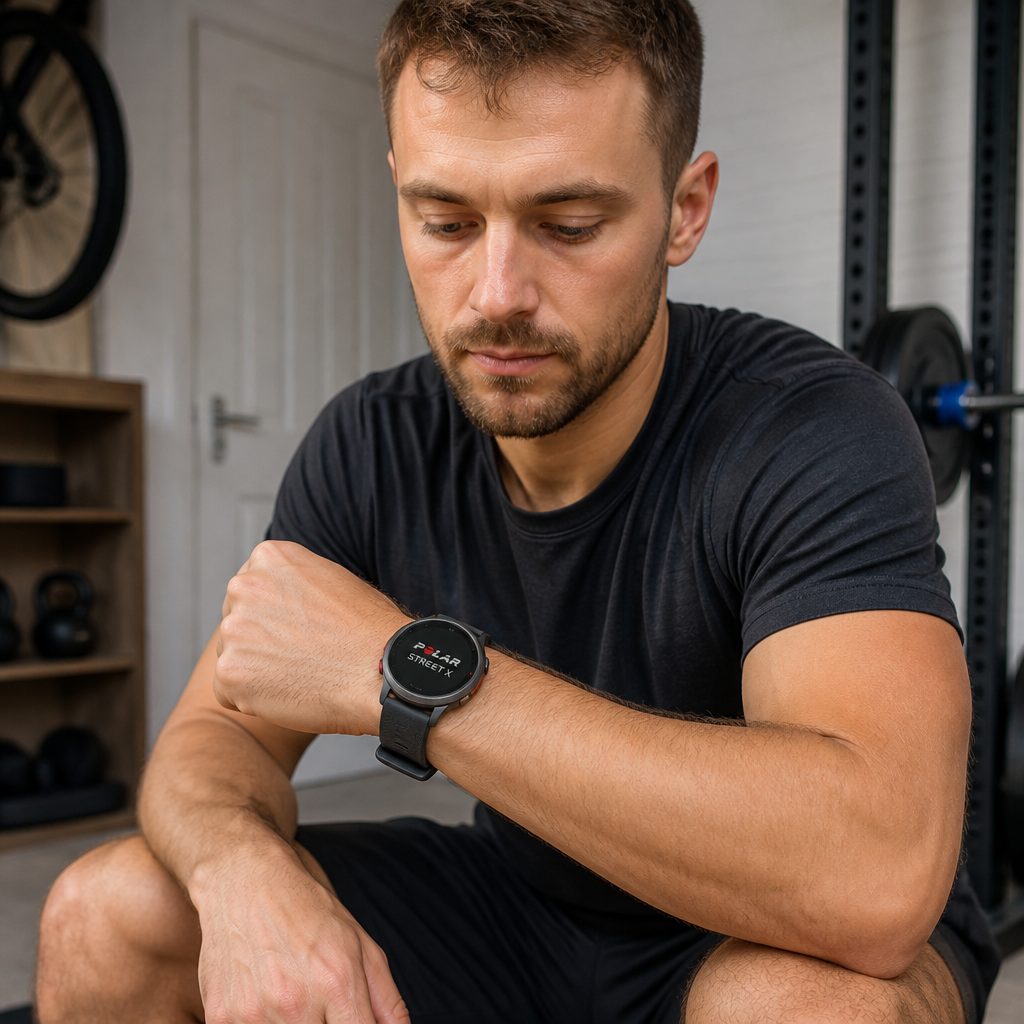
The Polar Street X worked best as an everyday sports companion: capable enough for structured training, light enough for sleep tracking and practical enough for the walk home afterwards.
The Polar Street X was launched on 25 March 2026 as a single-model watch rather than the beginning of a sprawling family of almost-identical devices. That was a refreshing choice. You picked Night Black, Snow White or Forest Green, then got on with your life. No "Pro" version held hostage behind a more expensive case finish. No smaller model quietly omitted half the useful functions. No spreadsheet required before breakfast.
Its pitch was simple enough to understand in a shop doorway: an urban, lifestyle-first sports watch with real Polar training tools, a bright circular AMOLED display, 170-plus sport profiles and an integrated LED flashlight. The headline feature sounded slightly daft at first. A torch in a watch? Very Dick Tracy. Yet it became one of the more persuasive practical additions once you considered early dog walks, finding keys in a dark hallway, checking a bike lock, or simply not wanting to illuminate the entire bedroom at 5am.
There was much to like. At 48g including its strap, the Street X stayed light enough for sleep tracking and gym work. The 45mm polymer case carried a MIL-STD-810H claim, WR50 water resistance, a compass, barometer, skin-temperature sensor and Polar's familiar recovery ecosystem without a subscription. The claimed 43-hour GPS training battery life also proved broadly believable in use. That is a remarkably good foundation for a watch positioned beneath many of Garmin's more serious-looking entry options.
The complication was accuracy. The single-frequency GPS was perfectly adequate in open or suburban spaces, but it did not consistently thrive between tall buildings. More concerningly, the wrist heart-rate sensor produced mixed results and could be around 10 beats per minute away during long cycling testing. That does not turn the Street X into a bad watch. It does mean that gym regulars who care deeply about live heart-rate zones should budget mentally for a chest strap, or at least approach the wrist reading with the healthy scepticism normally reserved for a treadmill calorie counter.
My short version is this: the Polar Street X was an excellent watch for someone who wanted plentiful sports features, recovery insight and long GPS endurance without drifting into premium-watch territory. It was less convincing for an athlete who treated optical heart-rate data as gospel, needed detailed onboard maps, or regularly trained in dense city centres where tall glass buildings made satellite reception work for its supper.
Polar Street X specifications at a glance
The Street X had more substance than its lifestyle-focused marketing initially suggested. It was not merely a step counter in colourful trainers. Polar gave it a credible sensor list and the broad software suite that had long been one of the brand's strongest arguments.
The square-on basics were sound. The case measured 45 x 45 x 13.8mm and used an eight-screw chassis. Without the strap, it weighed 28g. That did not make it invisible on the wrist, because the 45mm diameter was still substantial, but it avoided the top-heavy sensation that can make some rugged-ish sports watches feel like a small household appliance strapped to your arm.
Its 1.28-inch AMOLED panel ran at 416 x 416 pixels beneath Gorilla Glass 3. Polar sensibly left always-on display disabled by default. Gesture wake was the standard arrangement, and it was the sensible arrangement if battery life mattered more than constantly seeing the time while attempting a deadlift. Always-on was available, but the battery penalty was substantial enough that it should be treated as an intentional choice rather than a harmless switch.
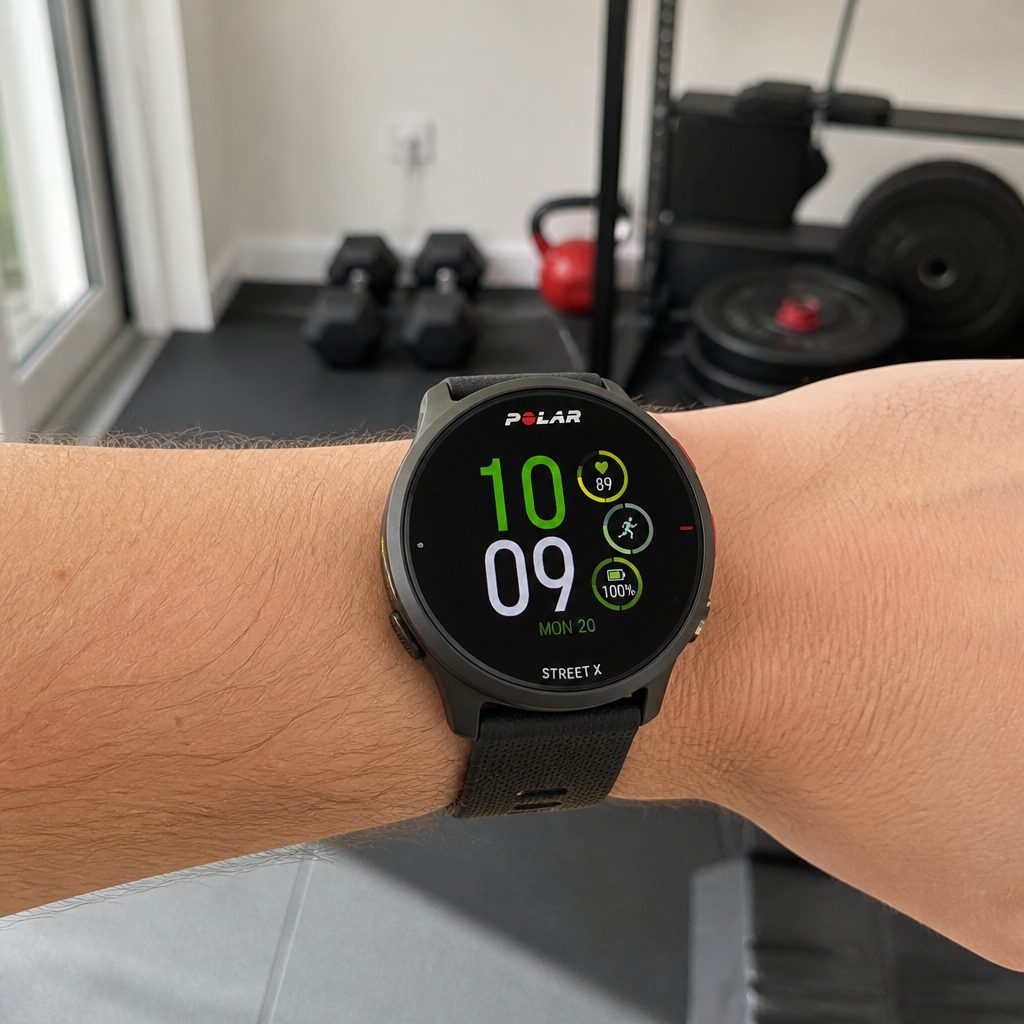
The Street X used a 1.28-inch, 416 x 416 AMOLED panel, while the physical case stayed relatively light at 48g with its strap.
Design, fit and the appeal of a watch that did not take itself too seriously
Polar called the Street X an urban sports watch, and the description made sense once it was on the wrist. It did not have the aggressively tactical presentation of some outdoor watches, nor did it try to impersonate a jewellery-first smartwatch. Instead, it landed in the middle: sporty enough for a gym session, restrained enough for a commute, and practical enough for someone who spent a fair amount of life getting caught out after sunset.
The bio-based polymer case was an intelligent choice. Metal would have added a more expensive feel, certainly, but it would also have added weight and probably encouraged a price jump. For an exercise watch, low mass was usually the better luxury. The 48g total made the Street X easy to forget during a long ride, and more importantly, easy to leave on overnight. A recovery watch that lives on a charger every evening is a rather expensive alarm clock.
The Street X's 13.8mm thickness was not feather-thin, but it had a reason to exist: the watch had an actual LED flashlight rather than using the screen at full brightness and pretending that counted. The chassis also packed in a barometer, compass and battery capable of meaningful outdoor sessions. For a one-watch gym-and-weekend setup, that compromise felt reasonable.
There was a useful practical distinction here. Plenty of people wanted a fitness watch for lifting, a run or two each week and general activity tracking, but did not especially want their wristwear to look like it had been issued for a polar expedition. The Street X offered less intimidation and more day-to-day wearability. In Snow White or Forest Green it also had a little personality, which is no bad thing. Sports watches did not need to be only black plastic and existential seriousness.
The Street X operated from -20°C to 50°C. That was a generous working range for British training, where the most likely issue was not extreme heat but remembering gloves on a winter morning and pretending this had been part of the plan all along.
The AMOLED display was good, not class-leading
AMOLED was a major part of the Street X proposition. Compared with a basic memory-in-pixel sports watch screen, the panel made watch faces, metrics and menu graphics feel much more immediate. Blacks looked properly black, colours had life, and checking intervals or a FitSpark prompt indoors was pleasant rather than merely functional. For gym training especially, that mattered. A watch screen had to be readable between sets without requiring the visual concentration normally reserved for solving a parking meter.
At 416 x 416 pixels, the display also had the resolution to present data cleanly. The circular shape looked tidy, and Polar's interface made sensible use of it for exercise fields and daily metrics. Gesture wake was the better default because it preserved the long-running character of the device. Raise the wrist, see the information, move on. It was not exactly a revolutionary interaction model, but it remained remarkably effective.
The caveat was peak brightness. In testing, maximum brightness felt a little dull beside other watches at this level. That was not the same as saying the Street X was unreadable outdoors. It was not. But if you had become accustomed to a very bright premium AMOLED watch, the Polar could look a little restrained in hard sunlight. It was the sort of limitation you noticed while glancing down during a bright midday run, not one that ruined a workout.
Always-on mode complicated the display story. It gave the Street X a more conventional watch-like presence, particularly when worn at work or in the gym, where repeated wrist gestures can feel mildly theatrical. However, it moved real-world smartwatch endurance closer to three or four days. Other reports put the practical result at four to five days with always-on active and exercise logged every day. That was still usable, but it was not the relaxed, charge-once-and-forget-about-it experience the watch delivered with gesture wake.
Display tip
For most buyers, I would leave always-on display switched off. Gesture wake preserved the Street X's strongest battery advantage, and the AMOLED screen still looked sharp when summoned. Always-on was best reserved for people who genuinely valued a continuously visible clock during work or training.
The flashlight was not a gimmick — mostly
Let us deal with the fun bit. The Street X had an integrated flashlight offering four white-light levels and one red-light mode. It was not a feature that most people would put at the top of a shopping list, which was probably why it had a chance of becoming surprisingly useful. Like a car's heated windscreen or a well-placed coat pocket, it seemed unnecessary right up until the exact moment it stopped being unnecessary.
The white light was powerful enough to illuminate objects at around 5m at night. That was a proper practical result, rather than a token glow for locating a crisp packet under the sofa. It could help with a dropped gym locker key, a dark gate latch, a poorly lit path, sorting through a kit bag after an evening class, or checking the chain and lock on a bike. It was not a replacement for a dedicated head torch on a night trail, naturally. It was better understood as a very convenient emergency and utility light that happened to live on the thing already attached to your body.
The red mode made even more sense after dark. Red light was easier on the eyes in low-light surroundings, whether you were checking the time in a shared bedroom, looking inside a tent, or trying not to blast your own night vision before an early run. That might sound faintly niche, but it was a thoughtful inclusion. It also gave the watch a little outdoor credibility despite its street-focused identity.
Polar did not overcomplicate the execution. There were no strobe patterns, SOS mode, flash mode, metronome function or automatic sunset behaviour tied to a running profile. Garmin and Amazfit had offered more elaborate lighting options elsewhere, and people who used a torch for serious night safety might reasonably miss those extras. But "basic" was not automatically "bad". The Street X did the core job, and it did it with useful output.
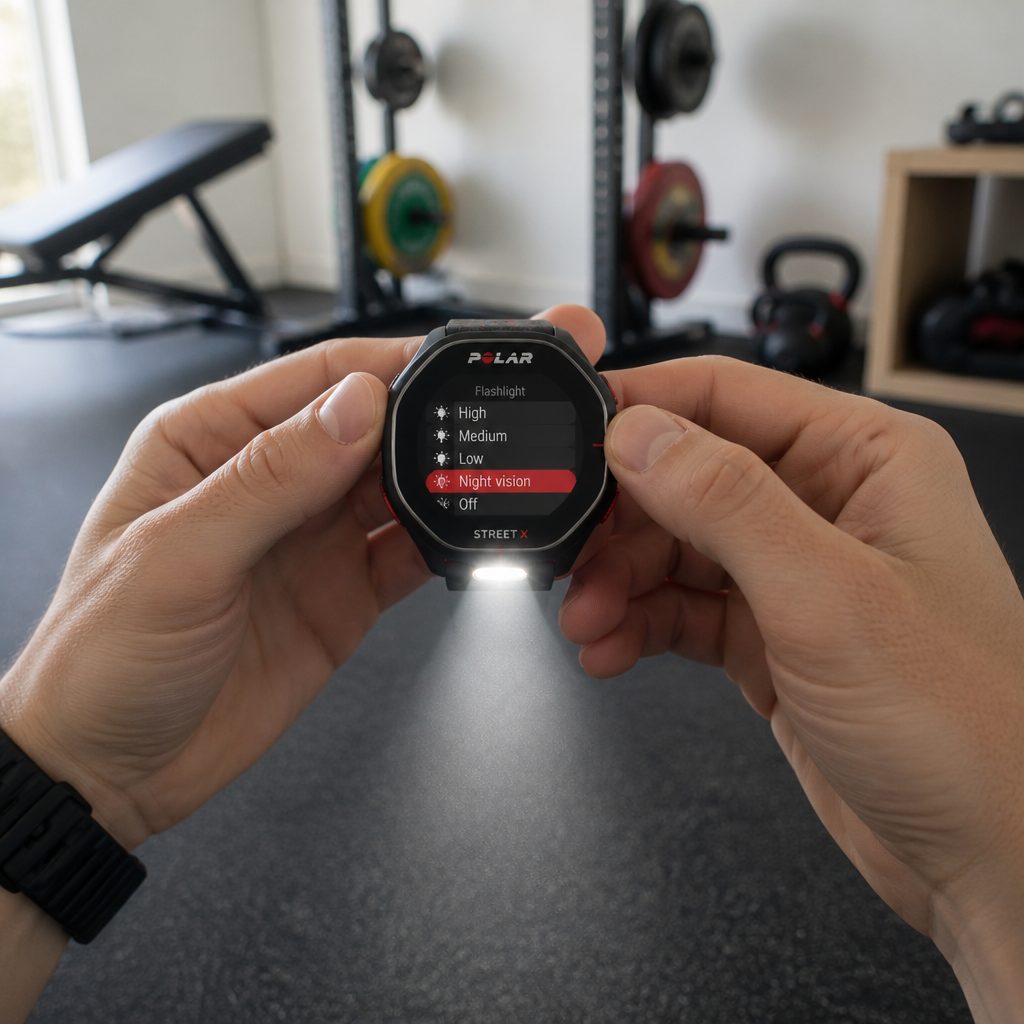
The built-in LED offered four white-light levels for practical illumination and a red mode intended to be gentler on dark-adjusted eyes.
Useful for the unglamorous moments
The Street X torch was at its best finding a lock, zip, door key or wayward bit of kit when a phone was buried in a bag or needed saving for navigation.
Red mode had genuine merit
The red light made sense for camping, pre-dawn preparation and any situation where preserving low-light vision was more useful than throwing maximum white light around.
Not a substitute for dedicated safety gear
There was no automatic running light or SOS pattern, so runners regularly training on unlit roads still needed reflective clothing and proper visibility equipment.
Battery life was one of the Polar Street X's strongest arguments
Battery performance was where the Street X felt unusually well judged. Polar claimed up to 10 days in smartwatch mode, up to 43 hours in GPS training mode and up to 170 hours in eco mode. Marketing claims had become a little like gym mirror lighting: flattering, occasionally suspicious, and best approached with context. Happily, the Street X's GPS endurance held up rather well.
In a cycling test that recorded more than 20 hours with always-on display disabled, the watch still finished with 43% remaining. That was a substantial result. It did not merely scrape past a long weekend of riding; it suggested enough remaining headroom for normal day-to-day use around those activities. It also broadly supported the 43-hour claim for performance training with GPS and optical heart rate engaged.
For mixed real-world ownership, battery life reached up to nine days with six hours of GPS activities included. That was exactly the kind of outcome that mattered for normal gym-and-running use. Most people did not need a watch to survive a week-long ultra expedition. They needed it to make it from Monday through several gym visits, a couple of runs and a longer weekend outing without the inconvenience of another cable added to the bedside pile. The Street X did that nicely.
Always-on display was the unavoidable trade-off. With it active, real-world battery life moved down to roughly three to four days, with another real-world account putting it at four to five days when exercise was recorded every day. That was still respectable for an AMOLED watch, but it changed the ownership rhythm. Instead of charging when convenient, you had to notice the battery. That was not catastrophic; it was simply less elegant.
The proprietary magnetic charging arrangement was the one less glamorous note. The cable ended in USB-C, which was welcome, but the watch end itself was Polar-specific. You could not simply borrow a cable from your phone or any old smartwatch drawer. It was not a deal-breaker, but it was worth treating that little lead as a permanent resident of your travel kit rather than something that would inevitably turn up later.
GPS performance: fine outside town, less happy in the urban canyon
The Street X used multi-constellation, single-frequency positioning across GPS, GLONASS, Galileo, BeiDou and QZSS. That was a more serious arrangement than plain GPS alone, and it gave the watch a good chance in normal conditions. In easier suburban testing, it frequently matched reference tracks precisely. Once satellite reception was established, there were reports of it matching a Garmin Tactix 8 benchmark route closely. That was encouraging and, for ordinary road running or cycling away from dense high-rises, entirely sufficient.
Its weaknesses appeared in the exact environment its name seemed designed for: streets with tall buildings. In a large town environment, its track fell short of reference devices including the Garmin Forerunner 970 and Apple Watch Ultra 3, with errors of up to 10 metres. It also took a while to lock GPS in some testing, with the signal drifting in and out. Neither issue was rare among single-frequency watches, but it was unfortunate on a device marketed with urban sport in mind.
That needed context. A 10m GPS error was not likely to matter much for a casual park run, a relaxed weekend cycle or a general activity log. It could matter for someone who carefully followed a route through city streets, wanted exact pacing around tight bends, or measured every run against the previous one. The Street X was competent, not elite, at location tracking. It would be unfair to expect dual-frequency flagship behaviour, but equally unfair to overlook the gap.
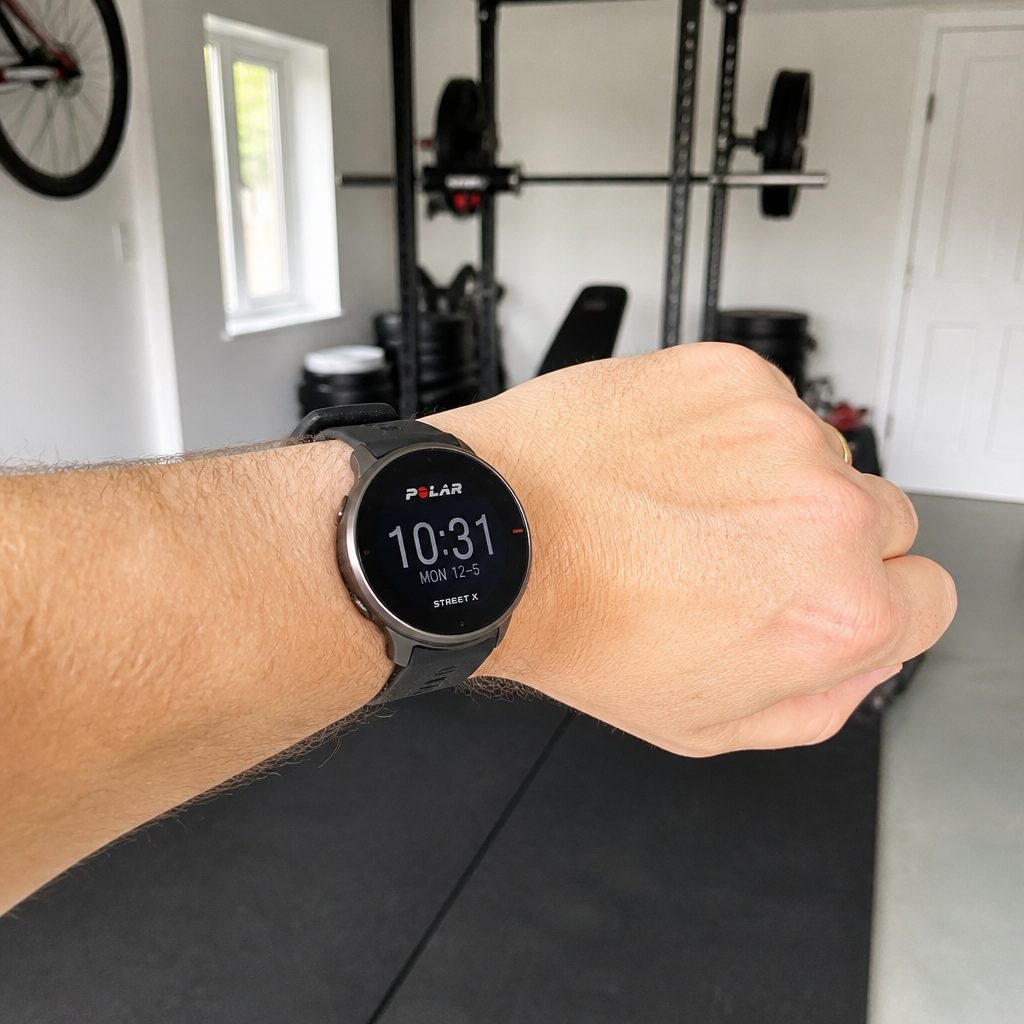
In open and suburban conditions the Street X could closely match benchmark tracks, but tall buildings were more challenging for its single-frequency GPS system.
| Test context | Polar Street X | Garmin Forerunner 970 | Apple Watch Ultra 3 |
|---|---|---|---|
| Role in dense-town GPS testing | Single-frequency multi-constellation watch under test | Reference device | Reference device |
| Dense urban track result | Errors reached up to 10m from reference tracks | Reference track used for comparison | Reference track used for comparison |
| Suburban and easier conditions | Frequently matched reference tracks precisely | Reference comparison device | Reference comparison device |
| Best buying interpretation | Good for normal outdoor training outside dense urban corridors | Better suited as a high-end accuracy benchmark | Better suited as a high-end accuracy benchmark |
This was also the point at which route navigation expectations required managing. The Street X had no onboard maps. It could provide route guidance for routes imported through Komoot or Polar Flow, alongside its compass and barometer, but it was not a miniature topographic map strapped to your wrist. For following a planned route on familiar roads, that could be enough. For spontaneous hiking, complicated trail networks or travel in unfamiliar places, it was a clear limitation.
Heart-rate accuracy was the Street X's biggest weakness
Polar used its Precision Prime Gen 3.5 optical heart-rate sensor in the Street X, and the results were mixed. During sport it was broadly serviceable, which is the charitable but accurate phrase. On some sessions it behaved perfectly reasonably. On others it could be around 10 beats per minute out, including cycling tests covering more than 200 miles. Testing against a Polar Loop optical band, a Polar H9 chest strap and a COROS Pace Pro optical sensor judged it the least accurate of the compared devices, with good and bad readings appearing without an obvious pattern.
That inconsistency was frustrating because Polar's training platform made so much use of heart-rate information. Training Load Pro, Nightly Recharge, FitSpark workouts, FuelWise guidance, wrist-based running power and the Work-Rest Guide all became more meaningful when the foundational intensity reading was dependable. If your heart rate was underestimated during a hard interval, the watch's interpretation of training stress could be softer than reality. If it was overestimated, a recovery message might become unnecessarily gloomy. No one needed a plastic rectangle telling them they had overreached because it had briefly confused vibration with cardiovascular drama.
For steady gym sessions, walking, easy runs and general daily tracking, the Street X could still be useful. Optical sensors tended to cope better when movement was regular, the watch was fitted firmly and sweat or movement artefacts were limited. Problems became more likely in cycling, strength work involving wrist flexion, intervals and any activity where grip changes or vibration entered the picture. That was not exclusive to Polar, but the Street X's results were less consistent than they should have been.
Pros
- Long GPS battery life was backed by a demanding 20-plus-hour cycling result.
- Recovery and training tools came without a subscription.
- The flashlight provided genuinely useful white and red illumination.
- More than 170 sport profiles covered mainstream and niche activity well.
- AMOLED display and 48g total weight made it pleasant for everyday wear.
Cons
- Optical heart-rate accuracy could be inconsistent and around 10bpm out.
- GPS was less dependable around tall buildings and could take time to lock.
- No onboard maps, music storage, contactless payment or TrainingPeaks sync.
- The display was a little less bright than some similarly positioned AMOLED watches.
- Always-on display reduced real-world endurance sharply.
The practical fix was uncomplicated: anyone who trained by heart-rate zones, raced regularly, or wanted reliable data for demanding cycling and interval work should pair the Street X with a chest strap such as Polar's H9. That added another device and reduced the simplicity of the bargain, of course. But it also transformed the watch into a much more credible training companion because it let Polar's genuinely good analysis work with a more trustworthy signal.
Training tools and recovery data: this was proper Polar territory
Where the Street X delivered above its apparent price category was the breadth of Polar's software. There were more than 170 sport profiles, including skateboarding, inline skating, callisthenics and indoor climbing as well as expected modes such as running, cycling and gym training. That range mattered more than it first appeared. A watch did not need to become precious about what counted as "real" exercise. If you climbed indoors on Tuesday, lifted weights on Thursday and spent Sunday on skates, the Street X was happy to log the lot.
The recovery suite was similarly strong. Training Load Pro assessed how much work you had been doing. Nightly Recharge considered overnight recovery. Sleep Plus Stages and HRV gave a clearer view of sleep quality, while nightly skin temperature added another wellness signal. None of those features could diagnose illness or replace listening to your body, but together they created a useful pattern over time. They were at their best when viewed as prompts for reflection rather than orders from a small illuminated manager.
FitSpark supplied daily workout suggestions, which could be particularly useful for people whose gym programming needed a nudge rather than a full military campaign. FuelWise offered nutrition guidance for longer training, while wrist-based running power and Work-Rest Guide made the Street X considerably more ambitious than a simple lifestyle watch. Importantly, those features did not require a recurring subscription. That was a meaningful advantage for buyers who were tired of paying again to see information produced by hardware they already owned.
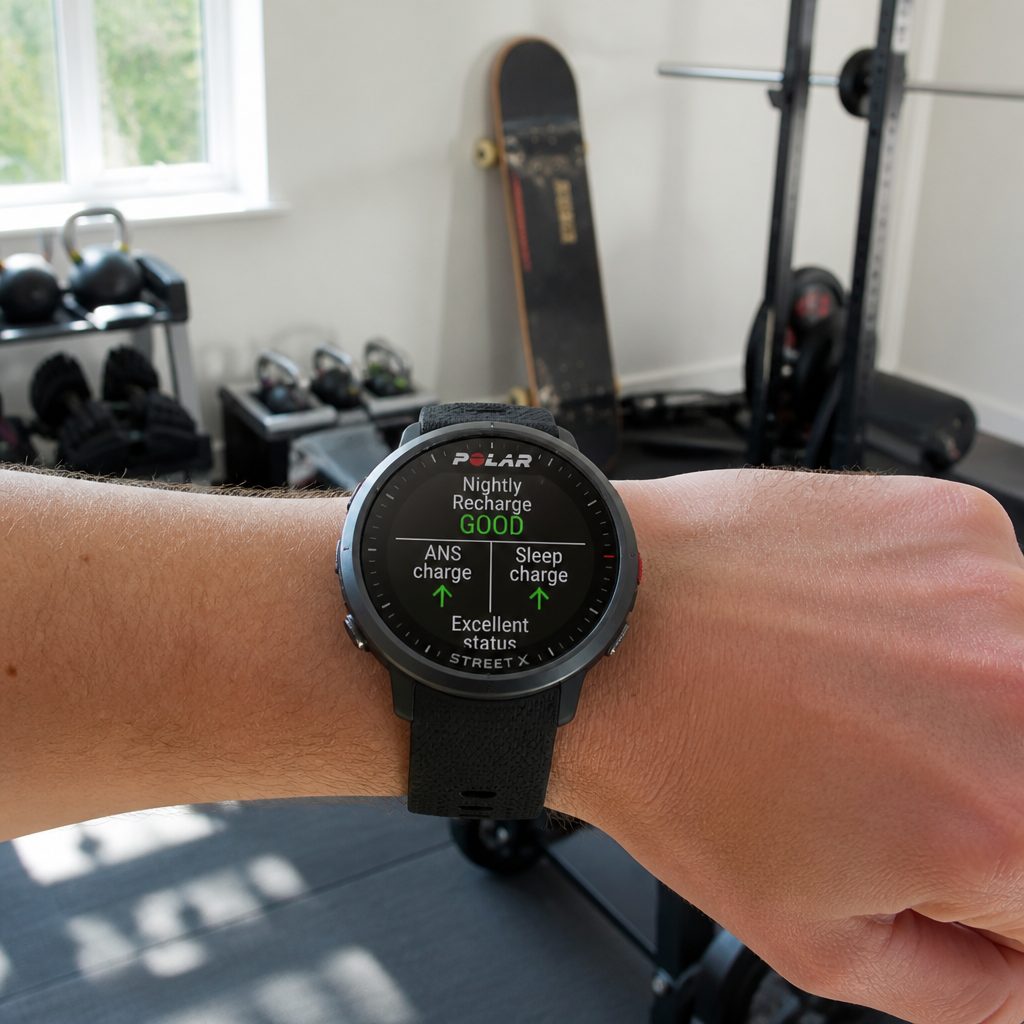
Polar's software gave the Street X a serious training side, with recovery metrics, FitSpark sessions, FuelWise guidance and sport profiles ranging from gym work to skateboarding.
Nightly Recharge and Sleep Plus Stages
These tools made sense for people balancing gym sessions, work, commutes and inconsistent sleep. The useful question was not "did I sleep perfectly?" but whether a pattern was building over several weeks.
FitSpark and Work-Rest Guide
The Street X was well suited to gym users who wanted practical daily structure. It was particularly helpful when enthusiasm was high but programme planning was somewhere behind the laundry basket.
Komoot and Polar Flow routes
Route guidance was useful for planned runs and rides, although the lack of onboard mapping meant the experience remained guidance-led rather than a fully fledged navigation platform.
What the Polar Street X left out
The Street X was impressive because it chose its priorities, not because it tried to include everything. The omissions were worth being clear about. There was no music storage, so anyone who preferred leaving their phone behind on a run would need another solution for audio. There was no contactless payment, which made the watch less handy for post-run coffee or an emergency train fare. And there was no TrainingPeaks synchronisation, which would matter to more structured athletes using that platform as the centre of their training life.
There was also no ECG and no SpO2 sensor. For many gym users, that would not matter at all. Health sensor shopping had become slightly feverish, and more measurements did not always mean more understanding. Still, buyers comparing spec sheets should know that the Street X focused its attention elsewhere: training load, sleep, HRV, temperature trends and activity guidance rather than attempting a maximal checklist of health features.
Storage was limited at 32MB, with 37MB memory, and the 275MHz processor was built for the task rather than for smartwatch theatrics. The Street X was not trying to be a tiny phone. That was arguably a virtue. Bluetooth LE handled connectivity with the Polar Flow app and services including Strava, where a 60-day trial was offered, and Komoot. There was no suggestion that the watch wanted to hijack every notification from your wrist or turn a training session into an inbox management exercise.
For some buyers, those omissions would settle the matter. If music, payments and map-rich navigation were non-negotiable, the Street X was simply not the right watch. For others, leaving them out helped keep the experience focused. It remained a sports watch first, with enough everyday convenience to be worn all day, rather than a smartwatch trying to remember it had a running mode.
Buy it for the training platform, not the app extras
The Street X made the strongest case for itself when judged as a Polar training and recovery watch with an AMOLED screen and useful torch. Buy it expecting payments, offline music and full maps, and you will spend too much time noticing what it did not do.
Does Polar Street X undercut Garmin's entry watches on paper?
On paper, yes — and this was the heart of the Street X story. Against many entry-level Garmin propositions, Polar assembled an unusually tempting list: AMOLED display, flashlight, up to 43 hours of GPS training, up to 10 days of smartwatch use, a barometer, compass, skin temperature, 170-plus sport profiles and a complete recovery suite without a subscription. That was a lot of watch for a buyer who cared more about gym work, basic navigation and battery life than the prestige of a particular logo.
It was especially persuasive because Polar did not charge separately for the useful interpretation layer. Training Load Pro, Nightly Recharge, Sleep Plus Stages, HRV data and FitSpark all arrived as part of the experience. That helped make the Street X feel like a deliberate value alternative rather than a stripped-down entry model whose owner would soon be tempted into upgrades.
Garmin's advantage was not erased, though. The reference devices used in urban GPS testing demonstrated the gap that remained at the higher end, particularly around difficult satellite conditions. Garmin also had a broader ecosystem and, depending on model, more mature options around navigation, safety, payment and accessories. The Street X did not win by matching every Garmin in every category. It won by giving a particular buyer more of the features they might actually use for the money.
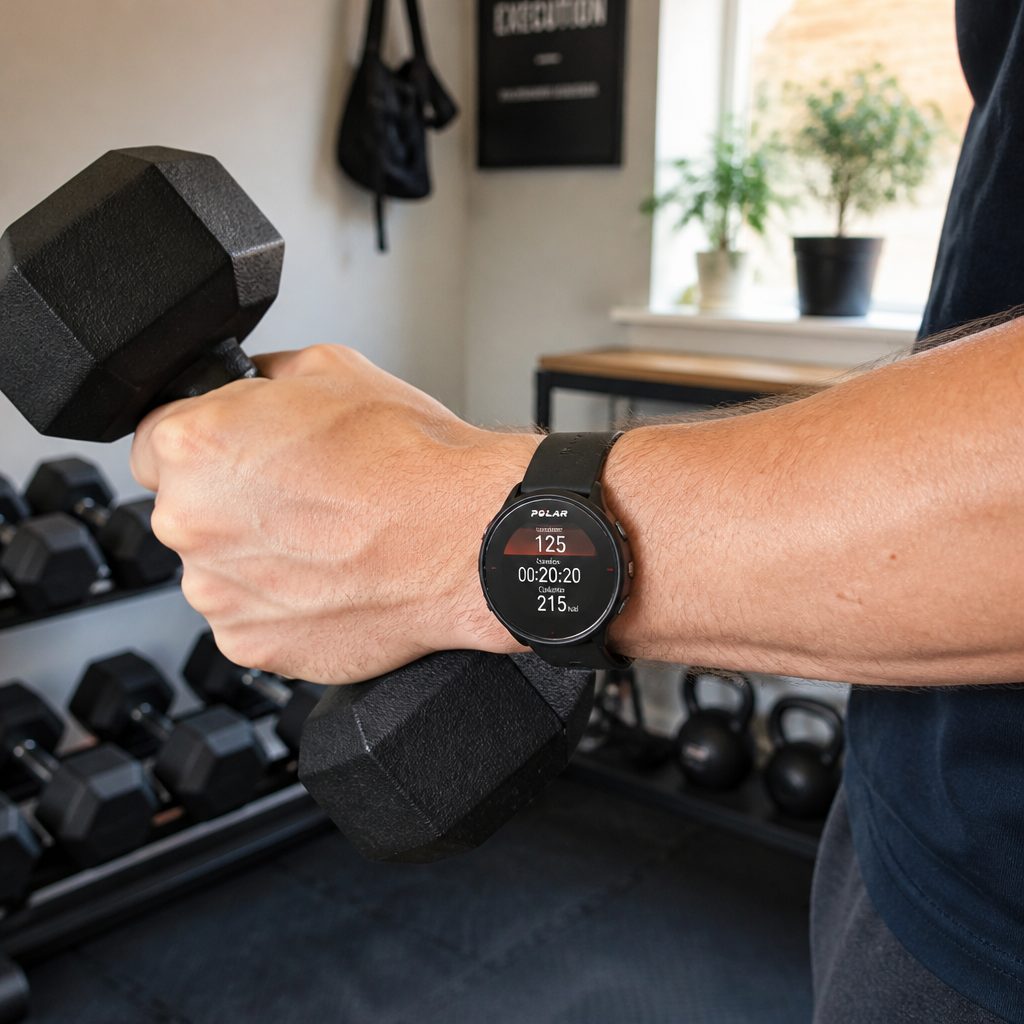
The Street X's core appeal was its unusually complete sports-and-recovery package, particularly for gym users who valued long battery life and did not need premium navigation features.
| Buyer priority | Best pick | Why |
|---|---|---|
| Best budget AMOLED sports watch | Polar Street X | It combined AMOLED, long claimed GPS endurance, a flashlight and Polar's no-subscription training suite. |
| Best for dense urban GPS confidence | Garmin Forerunner 970 | It served as a reference device where the Street X showed up-to-10m deviations around tall buildings. |
| Best for high-end urban smartwatch comparison | Apple Watch Ultra 3 | It was another reference device used in testing where Street X positioning lagged in difficult city conditions. |
| Best for gym, recovery and mixed activity | Polar Street X | FitSpark, Work-Rest Guide, sleep insights and more than 170 profiles created a particularly rounded training package. |
Gym regulars
Buy if you want recovery trends, daily workout direction, callisthenics support and a watch light enough to wear overnight. Use a chest strap if live heart-rate precision is central to your training.
Casual runners
Buy if most routes are suburban, park-based or open-road runs and you value battery life, clear metrics and Polar's coaching tools over maps and music.
Weekend cyclists
Buy if you want serious endurance and route guidance for planned rides. Pair a heart-rate strap for structured training, especially when cycling data matters.
Urban all-rounders
Buy if you want one practical watch for commutes, sport and everyday use, but recognise that the GPS was less confident in dense streets lined by tall buildings.
Living with it every day
The Street X was easier to recommend once you stopped viewing it solely as a running watch. It was a versatile daily training companion. You could wear it to the gym, glance at a FitSpark suggestion, track the session, leave it on overnight for sleep and recovery information, then take it on a weekend ride without worrying that a couple of hours of GPS would send it pleading for a charger.
That kind of low-maintenance ownership was valuable. Sports watches often started out as fitness tools and quietly became another electronic obligation. The Street X mostly avoided that. Gesture wake protected battery life. The polymer construction kept it comfortable. Polar Flow supplied a sensible home for training data. The torch added a small but memorable practical edge. None of this was glamorous, and that was rather the point. Good gym equipment earned its keep by being there when needed, not by making a song and dance about itself.
Its limits became clearer for people with specialised needs. Someone running through central London every evening might be better served by a watch with stronger positioning in difficult urban GPS conditions. Someone who refused to carry a phone would miss music and payments. Someone following a demanding structured plan through TrainingPeaks would need a different platform. And anyone who based session intensity on wrist heart rate alone could become frustrated by the sensor's unpredictability.
But for the intended buyer — younger, active, mixing lifting, commuting, running, casual cycling and perhaps a bit of climbing or skating — the Street X felt coherent. The full Polar suite made it feel more grown-up than its lifestyle styling implied. The flashlight made it memorable. The battery made it easy to live with. It was not the best sports watch at everything, but it was unusually good at being useful.
Polar Street X FAQ
Final verdict: Polar Street X
The Polar Street X was one of 2026's more interesting affordable sports watches because it did not simply chase a low price. It paired a good AMOLED screen, excellent GPS battery performance, a remarkably handy flashlight and Polar's rich training-and-recovery platform in one comfortable, approachable package. For gym-goers, casual runners and mixed-activity users, it delivered a great deal of substance without demanding a subscription for the useful bits.
It was not flawless. The wrist heart-rate sensor was too inconsistent for serious data-led training without a chest strap, and its single-frequency GPS could struggle around tall buildings. The lack of maps, payments and music would also steer some buyers elsewhere. Yet those were honest compromises, not fatal ones. If you wanted a long-lasting AMOLED sports watch with proper coaching tools and a torch you would laugh at until you used it, the Polar Street X remained a very sensible buy.