
WHOOP v Polar: What the Ongoing Lawsuit Means for UK Shoppers
WHOOP is suing Polar in a New York court over alleged design copying — and while UK sales of the Polar Loop are unaffected for now, the case could reshape the screenless wearable market.
 By James Oduya · Staff Writer & Home Gym Columnist · Updated September 29, 2026
What you need to know
- WHOOP filed a federal lawsuit against Polar in New York on 14 October 2025, alleging the Polar Loop copies its protected screen-free wristband design
- The Polar Loop (£149.50, no subscription required) is still on sale in the UK — the case is a US matter and does not currently restrict UK purchases
- WHOOP already won a related injunction against Chinese copycat brand Lexqi in February 2026, strengthening its legal position ahead of the Polar ruling
WHOOP takes Polar to federal court over screen-free band design
On 14 October 2025, fitness wearable company WHOOP filed a federal lawsuit and preliminary injunction request against Finnish sports tech giant Polar in the US District Court for the Eastern District of New York. The accusation, laid out across a 38-page complaint, is blunt: WHOOP says Polar created a "wholesale copy" of its signature device design with the launch of the Polar Loop — the Finnish brand's first screen-free wearable band.
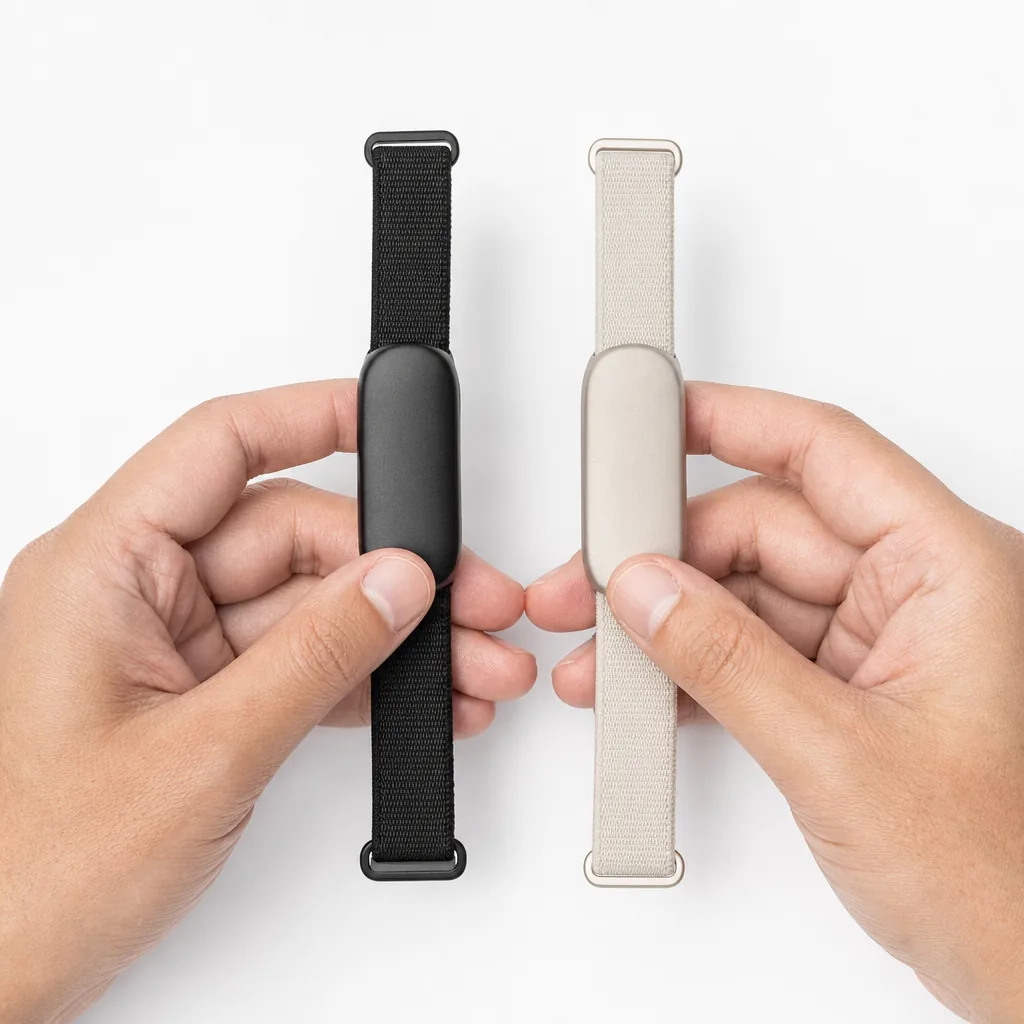
WHOOP is seeking damages, a jury trial, and an injunction to block US sales of the Polar Loop. Polar, for its part, has pushed back firmly. In a statement shared with Tom's Guide, the company said it "firmly denies any allegations of intellectual property infringement," adding: "Our products are the result of decades of innovation and rigorous design processes, and we remain confident in the originality and integrity of the appearance and design of our products."
What exactly is WHOOP claiming?
WHOOP's legal argument centres on trade dress protection under the Lanham Act §43(a) — a US law that can protect the distinctive visual identity of a product, provided those design elements are not purely functional. WHOOP specifically points to three design features it says it owns: a continuous fabric band stretched over the sensor housing, a front-facing form with no display, and thin metallic trim details along the sides.
According to WHOOP's complaint, these visual characteristics have become strongly associated with its brand since the original WHOOP 1.0 debuted in 2015 — more than a decade of market presence that, the company argues, makes the design recognisable enough to cause genuine consumer confusion when a rival adopts the same look.
The Polar Loop, which launched on 3 September 2025 with pre-orders opening the same day and shipments beginning from 10 September 2025, features a textile band attached to a stainless-steel buckle housing Polar's Precision Prime sensor. It is screen-free, weighs just 29 grams, and is positioned as a 24/7 health and activity tracker. Polar describes it as a reimagining of its original Loop band, which first launched back in 2013 — twelve years before the new model arrived.
WHOOP's early legal win against a different rival
The Polar case does not sit in isolation. In September 2025, WHOOP simultaneously sued Chinese company Shenzhen Lexqi Electronic Technology Co., Ltd over what it called near-identical copying of its wearable design. That case moved faster: on 4 February 2026, the US District Court for the District of Massachusetts granted WHOOP a preliminary injunction against Lexqi, effectively banning the sale of Lexqi's tracker in the United States.
The court found that WHOOP was likely to succeed on its trade dress claims, ruling the Lexqi device was "almost identical" to WHOOP's protected design and that WHOOP's design elements were non-functional and distinctive. The injunction was granted subject to WHOOP posting a $200,000 bond — a relatively uncommon outcome in trade dress disputes, where plaintiffs typically face a high bar at the preliminary stage.
Jason Lynch, WHOOP's Chief Administrative Officer and Chief Legal Officer, said in the wake of the ruling: "WHOOP members trust us with their data and rely on our technology to make meaningful decisions about their health and performance."
As of early February 2026 — the last confirmed update available — WHOOP's preliminary injunction request against Polar was still under review by the New York court. No ruling on that request has been confirmed beyond that date.
What UK shoppers need to know right now
Here is the key point for anyone in Britain weighing up these two devices: the lawsuit is a US matter, held in a US court, and it does not currently restrict the sale of the Polar Loop in the United Kingdom. The device is available through the UK Polar website and through UK retailers, priced at £149.50 as a one-time purchase.
That pricing model is itself a sharp contrast to WHOOP's offer. WHOOP operates on a mandatory membership structure — the hardware is bundled with the subscription rather than sold separately, with annual plans running from $199 to $359 a year. The WHOOP 5.0 device, valued at £169, comes included with those plans. The Polar Loop's subscription-free model is arguably one of the most commercially compelling things about it for UK buyers — and, some analysts have noted, a core reason WHOOP may view Polar as a competitive threat well beyond just a design dispute.
For those considering the Polar Loop, it is worth noting what else you get for £149.50: up to eight days of battery life, 24/7 activity and sleep tracking, data syncing to the Polar Flow app on Android and iOS at no extra cost, and a choice of three colours — Greige Sand, Night Black, and Brown Copper. Interchangeable wristbands are available separately at £15.90. There is also an optional Polar Fitness Program subscription at around $11 a month, which generates adaptive training plans, but this is entirely optional and was not part of the base product at launch.
The bigger picture: a wearable industry getting more litigious
The WHOOP v Polar case does not exist in a vacuum. According to industry reporting, it landed just weeks after two other high-profile disputes emerged involving Garmin — one with Strava over logos and branding, and another with Suunto, which claims Garmin copied elements of its smartwatch interface. Taken together, these cases point to a wearable tech sector that is becoming significantly more aggressive about protecting intellectual property.
Garmin is one brand long rumoured to be developing its own screenless tracker. If WHOOP ultimately succeeds in having its design ruled distinctive and legally protectable, it could force any brand — Garmin included — to take a fundamentally different approach to entering the screenless wearable category. Fewer rivals in that space would mean less choice and less price competition for UK consumers, which is reason enough to keep watching this case as it develops.
Why it matters
For UK shoppers, the immediate practical answer is simple: the Polar Loop remains legally on sale here, and nothing in a New York courtroom currently stops you buying one. But the case is worth watching. If WHOOP wins and its screen-free design is formally ruled distinctive and protectable, it could force every rival — including Garmin, long rumoured to be working on a screenless tracker — to think very differently about how they enter this space. That would mean fewer genuine WHOOP alternatives reaching UK shelves, and potentially less competitive pressure on WHOOP's mandatory subscription pricing.