
WHOOP vs Polar Lawsuit Moves to Full Litigation Track
Polar's dismissal bid has collapsed and the case is now heading for a full trial — here is what UK buyers need to know about the fitness band legal battle.
 By James Oduya · Staff Writer & Home Gym Columnist · Updated August 31, 2026
What you need to know
- WHOOP sued Polar in October 2025, alleging the Polar Loop copies its signature screenless band design
- Polar's attempt to file a motion to dismiss collapsed at a pre-motion conference in March 2026; its formal answer was filed on 10 April 2026
- The Polar Loop is on sale in the UK right now at £149.50 with no subscription fees — UK availability is unaffected by the US lawsuit
The legal battle between fitness wearable giants WHOOP and Polar has taken a significant step forward, with the case now locked onto a full litigation track after Polar filed its formal answer to WHOOP's trade dress complaint on 10 April 2026. A bid by Polar to have the case thrown out early collapsed in March, and a trial now appears inevitable — with implications that reach well beyond the courts of New York.
How we got here
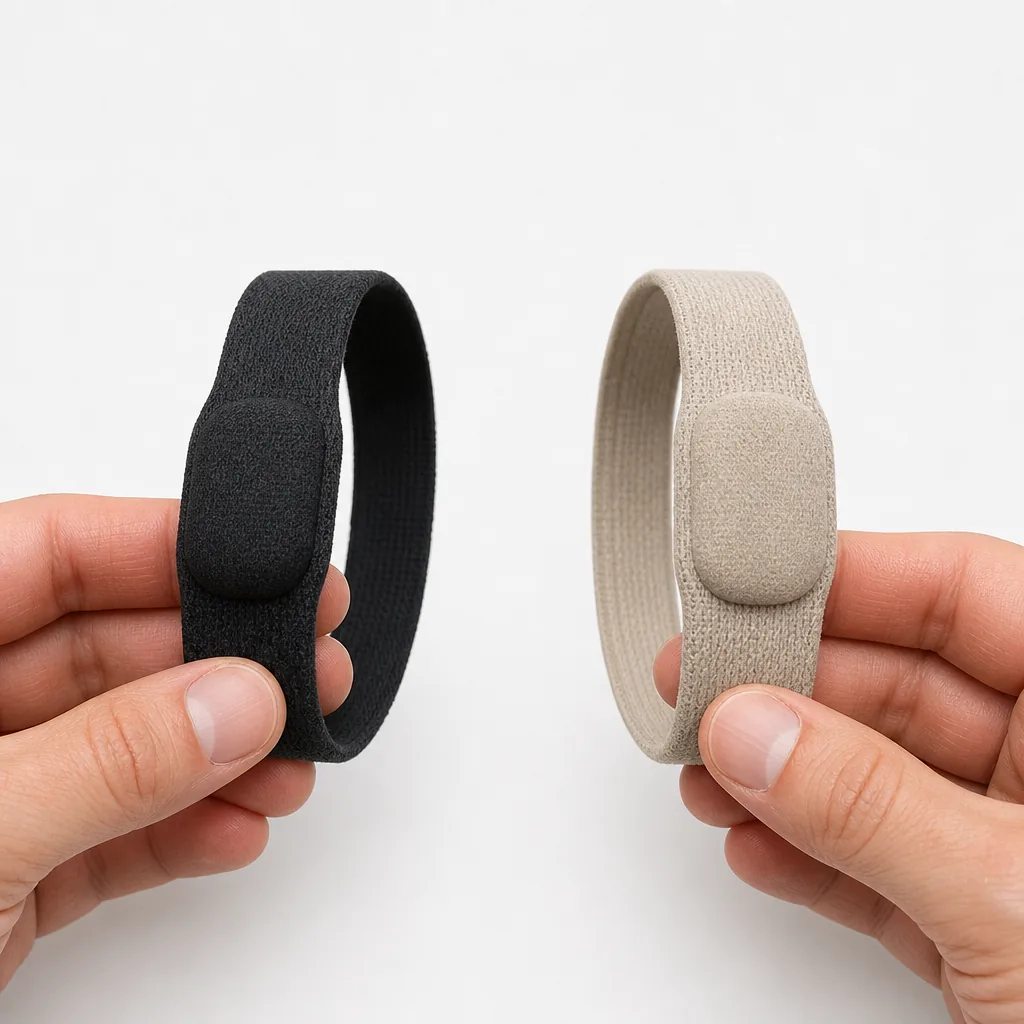
The dispute has its roots in September 2025, when Finnish fitness technology company Polar launched the Polar Loop — its first screen-free wearable band, designed to track activity, sleep, and overall health around the clock without any display or buttons. Priced at £149.50 in the UK and positioned as a one-time purchase with no subscription fees, the device was described by Polar as a reimagined successor to its original Loop band from 2013.
Within six weeks of that launch, WHOOP had filed a federal lawsuit in the US District Court for the Eastern District of New York. Filed on 14 October 2025, the suit named both Polar Electro Oy and Polar Electro Inc. as defendants and brought claims of trade dress infringement, false designation of origin, unfair competition, and trademark dilution under the Lanham Act and New York state law. WHOOP also filed a preliminary injunction request seeking to halt US sales of the Loop while litigation proceeded.
WHOOP — founded in 2012 and headquartered in Boston — argued that the Polar Loop copies the specific design elements that make its own strap "instantly recognisable." According to court documents reported by Garmin Rumors, the protected elements WHOOP identified include: a continuous woven band that covers the sensor housing; thin metallic side accents; a U-shaped clasp that folds over the sensor; and the entirely faceless, screen-free form factor with no display or buttons.
Polar's dismissal bid fails
Polar initially sought to file a motion to dismiss the case, but the court required a pre-motion conference before any such motion could proceed. Following that conference in March 2026, Polar withdrew its request to file a renewed dismissal motion, according to Gadgets & Wearables. The court then directed Polar to file a formal answer, which it did on 10 April. The case is now proceeding on the standard litigation track.
Polar has been unambiguous in its public position. The company told Tom's Guide:
"Polar firmly denies any allegations of intellectual property infringement. Our products are the result of decades of innovation and rigorous design processes, and we remain confident in the originality and integrity of the appearance and design of our products."
Polar told MobiHealthNews specifically that the Loop reflects its own longstanding design approach and does not infringe WHOOP's intellectual property. WHOOP did not respond to media requests for comment, according to MobiHealthNews.
WHOOP's position strengthened by separate ruling
Separately, WHOOP received a boost in February 2026 when the US District Court for the District of Massachusetts granted it a preliminary injunction against Shenzhen Lexqi Electronic Technology Co., ordering the Chinese electronics manufacturer to immediately halt US sales of its own allegedly infringing wearable. According to BusinessWire, that ruling came on 4–5 February 2026.
Analysts cited by Gadgets & Wearables noted that preliminary injunctions of this kind are rarely granted unless a judge believes the plaintiff has a strong chance of winning at full trial. While the Lexqi and Polar cases involve different respondents and distinct fact patterns, the Lexqi win is widely seen as strengthening WHOOP's broader litigation strategy.
WHOOP is also pursuing a separate case against Bevel in Delaware, and faces other industry disputes involving Meta. The company announced a $575 million capital raise in April 2026, the same week it filed suit against Bevel.
What the Polar Loop actually offers
For anyone weighing up a purchase in the meantime, the Polar Loop's specifications are straightforward. The band weighs 29 grams, tracks heart rate, daily activity, and sleep continuously, and stores four weeks of data on-device. Battery life is rated at eight days of continuous use. It is available in three colourways — Greige Sand, Night Black, and Brown Copper — with interchangeable wristbands sold separately at £15.90 each.
Crucially, all features are available without any ongoing subscription. That is a deliberate commercial distinction from WHOOP, which operates primarily on a subscription model. No trial date in the WHOOP versus Polar case has yet been confirmed.
The bigger picture
At its core, this lawsuit asks a question that the fitness technology industry has not had to answer before: can a company own the look of a screenless fitness band? If a US court ultimately finds in WHOOP's favour, the implications for product design could extend well beyond one rivalry. Any brand considering a no-display health tracker would need to think carefully about how it approaches materials, clasps, and form. That, analysts suggest, could meaningfully constrain consumer choice in what is currently a fast-growing product category — on both sides of the Atlantic.
Why it matters
For British consumers, the Polar Loop remains legally available at £149.50 with no monthly subscription, making it a meaningfully cheaper alternative to WHOOP's subscription-based model. WHOOP's lawsuit targets US sales only — UK trade law operates entirely separately — so there is no immediate threat to UK shoppers. That said, if WHOOP wins in the US, it could encourage similar IP actions in European courts, which might eventually affect the design of screenless, subscription-free trackers reaching UK shelves. The outcome also matters for the category as a whole: a ruling that WHOOP can protect the look of a screenless band could shape how every future no-display health tracker is designed globally.