
Screenless Tracker War: Five Bands Now Taking On WHOOP
Garmin, Google, Amazfit, and Polar have all entered the screenless fitness tracker market, giving UK buyers genuine alternatives to WHOOP for the first time.
 By James Oduya · Staff Writer & Home Gym Columnist · Updated August 24, 2026
What you need to know
- Five screenless fitness trackers are now competing head-to-head: Garmin CIRQA, Google Fitbit Air, Amazfit Helio Strap, WHOOP 5.0, and Polar Loop
- Prices range from £84.99 (Fitbit Air) to £349/year (WHOOP Life subscription tier), making value-for-money the central battleground
- Garmin and Fitbit both require no ongoing subscription, directly undermining WHOOP's dominant position
A comparison published by Gadgets & Wearables on 26 July 2026 confirmed what the fitness tech industry has been watching unfold across the past year: WHOOP now has five serious competitors in the screenless tracker space, with Google, Garmin, Polar, and Zepp Health all shipping viable alternatives that collect health and performance data without putting another display on your wrist.
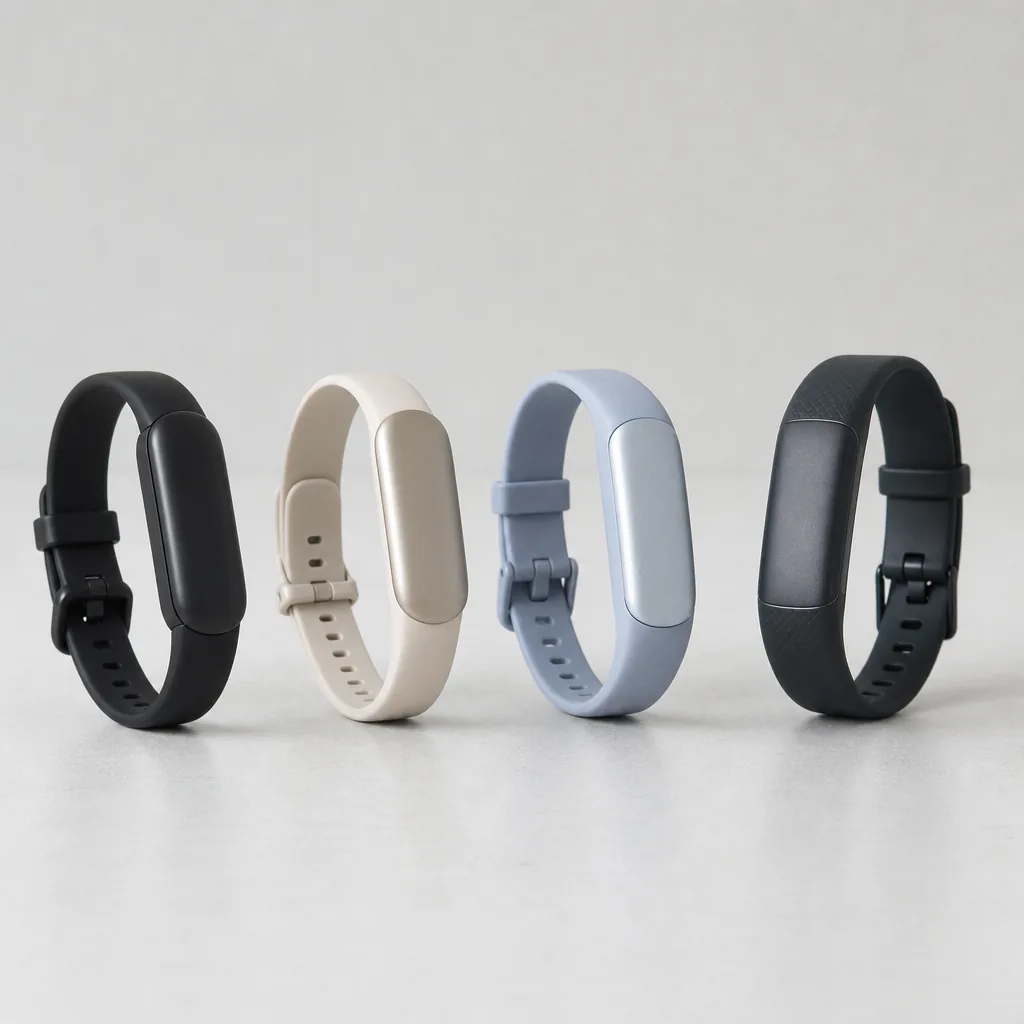
A few years ago, that sentence would have been unthinkable. Choosing a screenless tracker mostly meant deciding whether you were willing to pay for WHOOP. In 2026, that is no longer the case — and for UK buyers watching their monthly outgoings, the shift matters considerably.
The five contenders
The devices now competing in this space are the Garmin CIRQA Smart Band, the Google Fitbit Air, the Amazfit Helio Strap (and its newer Pro sibling), the WHOOP 5.0, and the Polar Loop. Each targets a slightly different buyer, and the pricing spread is wide.
The Fitbit Air is the most accessible entry point. Google launched it on 7 May 2026 at £84.99, with units hitting store shelves from 26 May. Weighing just 12 grams with the band, it packs in 24/7 heart rate monitoring, AFib alerts, SpO2, heart rate variability, and sleep stage tracking. No subscription is required for core tracking, though Google offers three months of Health Premium free, followed by £9.99 per month. Crucially, the Fitbit Air is the first Fitbit hardware built around Google's Gemini AI, which powers a personalised coaching feature inside the rebranded Google Health app — formerly the Fitbit app, renamed on 19 May 2026. It is also the first new Fitbit hardware in three years.
The Garmin CIRQA Smart Band arrived shortly after, announced on 21 July 2026 and available to buy from Garmin's website from 24 July, priced at £179.99. It is Garmin's first screenless fitness tracker. The band uses Garmin's Elevate Gen 4 sensor — not the latest generation — fitted into a fabric-loop design that can be worn on the wrist or the upper arm. Garmin product manager Chrissy Wheeler explained the sensor choice directly: "the reason we didn't go for the very latest one is the size of the module," which would have made the band thicker. Battery life is claimed at 10 days, and the device can identify over 80 activities. Crucially, like the Fitbit Air, there is no required subscription. Susan Lyman, Garmin Vice President of Consumer Sales and Marketing, said: "with no subscription required, CIRQA Smart Band helps you stay on top of your health and fitness goals."
Tom's Guide's Dan Bracaglia, writing on 23 July 2026, placed CIRQA between the cheaper Fitbit Air and subscription-dependent WHOOP 5.0, arguing that its balance of price, battery life, and training and sleep insight meant both rivals "should be a bit worried." Gadgets & Wearables' comparison concluded that Garmin offers the deepest training tools of any device in this group that does not require a subscription.
The Polar Loop launched before either of those devices, beginning to ship on 10 September 2025 at $199.99 — though a confirmed UK price has not been established via search. It offers eight days of battery life, stores four weeks of data, and brings training load, HRV, and recovery metrics comparable to the pricier Polar Vantage series. The catch, according to reviewers, is Polar's own Flow app, described as dated and poorly optimised for a screenless experience. The Loop also lacks vibration, SpO2, and a user-facing temperature metric — omissions that are hard to overlook at this price.
Zepp Health's Amazfit Helio Strap, the Gen 1 device that launched in June 2025 at $99.00, was described by Wareable as "an easy recommendation" for anyone wanting a screenless, data-driven experience at a one-off price. In June 2026, Amazfit followed it with the Helio Strap Pro, available to pre-order in the US from 19 June 2026 at $199.99 and aimed squarely at hybrid athletes and HYROX competitors. The Pro uses a dual-sensor system — one on the upper arm, one at the waist — with a claimed 44-day battery on the waist unit. No subscription is required. A confirmed UK price has not been announced.
Then there is WHOOP 5.0 itself. The hardware represented WHOOP's first update since 2021, and claims 14-plus days of battery life. WHOOP's model remains subscription-based, with three tiers in the UK: WHOOP One at £169 per year, WHOOP Peak at £229 per year, and WHOOP Life at £349 per year. The top tier is required to access the WHOOP MG device, which adds ECG and blood pressure insights. DC Rainmaker highlighted WHOOP's Training Readiness metric as a competitive strength, but noted that Garmin's equivalent metric updates continuously rather than just in the morning.
What this means for UK buyers
The subscription question is now central to every buying decision in this category. WHOOP's cheapest annual plan costs £169 — nearly double the entire purchase price of a Fitbit Air. For occasional gym-goers or runners who want passive health tracking rather than elite performance monitoring, the case for paying an ongoing fee has become much harder to make now that Garmin and Google are both in the room with capable, subscription-free alternatives.
Gadgets & Wearables' expert consensus, published in July 2026, summarises the market neatly: Garmin offers the deepest training tools without a required subscription; Fitbit Air is the lightest and cheapest entry point into passive tracking; and WHOOP still runs the strongest recovery platform — but costs significantly more over time. For most UK buyers, that calculus now runs firmly against the subscription model unless recovery monitoring is the primary reason for buying.
- Best value, no subscription: Google Fitbit Air — £84.99
- Best training depth, no subscription: Garmin CIRQA Smart Band — £179.99
- Best recovery platform, subscription required: WHOOP 5.0 — from £169/year
- UK prices for Polar Loop and Amazfit Helio Strap Pro not yet confirmed
The screenless tracker market has, in the space of roughly 12 months, gone from a niche occupied almost entirely by one brand to a genuinely competitive space. The pressure on WHOOP to justify its subscription model has never been greater.
Why it matters
Until very recently, choosing a screenless fitness tracker in the UK essentially meant choosing WHOOP — and accepting its subscription costs. That is no longer true. With Fitbit Air at £84.99 and Garmin CIRQA at £179.99, both offering no mandatory subscription, buyers can now access serious recovery and training data without committing to an annual fee that starts at £169. For the majority of recreational runners, gym-goers, and hybrid athletes in the UK who want actionable health data without a screen on their wrist, 2026 is the first year the market has genuinely delivered a range of credible options at different price points.