Garmin Index S2 hit with US class action over body-fat accuracy
A lawsuit filed in Illinois alleges Garmin marketed a smart scale as accurate when the underlying technology is inherently unable to deliver reliable body-composition readings.
 By James Oduya · Staff Writer & Home Gym Columnist · Updated November 04, 2026
What you need to know
- A proposed class action filed 29 May 2026 in Illinois alleges Garmin's Index S2 cannot accurately measure body fat, BMI or other body-composition metrics
- The suit targets foot-to-foot BIA technology used across most consumer smart scales, arguing Garmin promoted it as "accurate" without disclosing its limits
- UK buyers cannot join this US action — no settlement, fund or claim form exists as of November 2026 — but the case may force changes to Garmin's global marketing language
Garmin is facing a proposed US class-action lawsuit alleging that its Index S2 smart scale cannot reliably measure body fat, BMI or other body-composition metrics — despite years of marketing that told consumers "accuracy matters when it comes to your goals." The case, filed on 29 May 2026 in the US District Court for the Northern District of Illinois, is listed as Maurer v. Garmin International, Inc. et al, case number 1:26-cv-06389, and names Garmin International, Garmin USA and Garmin Ltd. as defendants.
Who is suing, and why?
The named plaintiff is Victor Maurer of Mount Prospect, Illinois, who says he bought the Index S2 in August 2024 for $149.99 — roughly equivalent to the scale's £129.99 UK RRP. Maurer alleges that when he compared the scale's body-fat and BMI readings against a DEXA scan — widely regarded as the clinical gold standard for body-composition measurement — the numbers differed significantly. The 56-page complaint was brought by law firms Lee Segui PLLC and Pearson Warshaw LLP.
At the heart of the case is what the filing calls Garmin's "Deceptive Biometric Marketing" — a campaign the complaint says uniformly told buyers the Index S2 accurately measures body fat percentage, BMI, skeletal muscle mass, bone mass and body water percentage.
The technology at issue
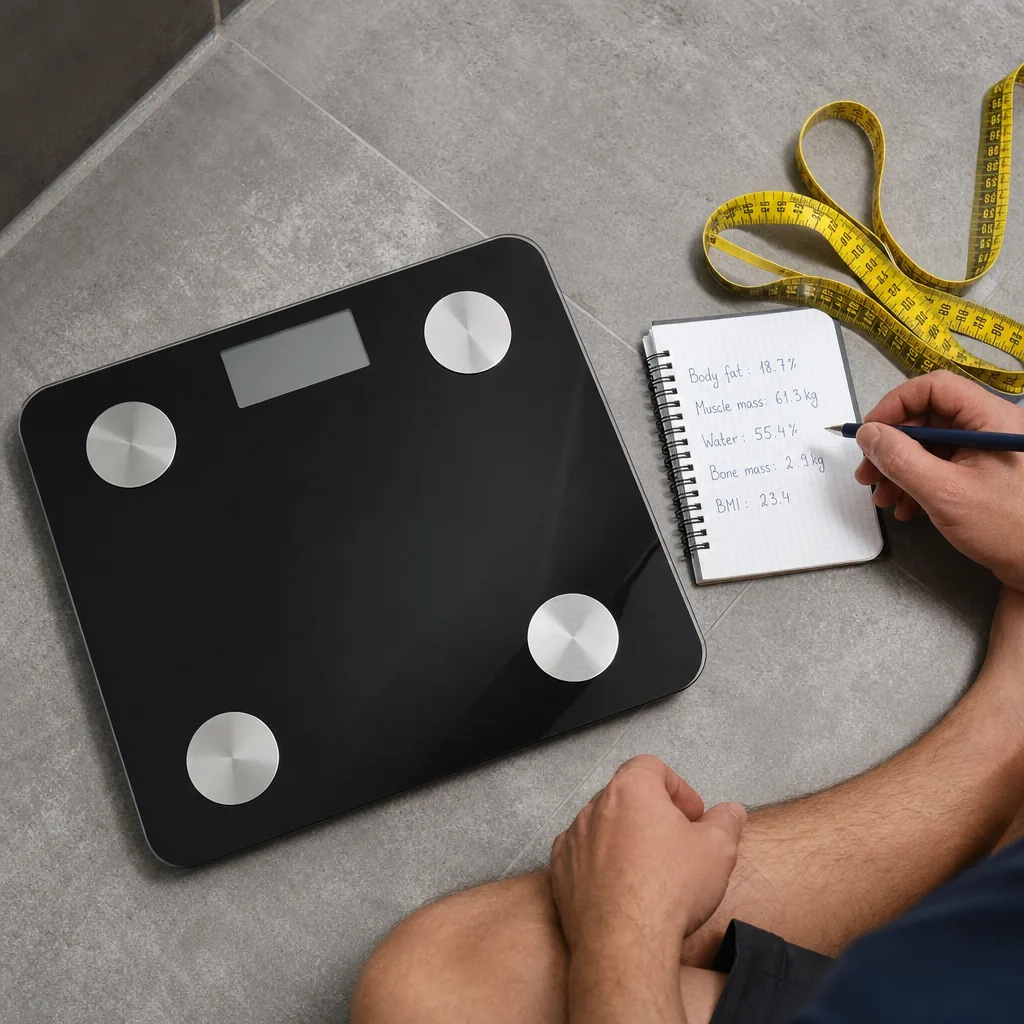
The Index S2 uses foot-to-foot bioelectrical impedance analysis (BIA), the same technology found in the vast majority of consumer smart scales. The complaint argues this method is fundamentally unsuited to the accuracy claims Garmin makes, stating, according to reporting by Singletracks, that:
"the foot-to-foot BIA technology in the Smart Scale is incapable of accurate body composition measurements, rendering Garmin's representations regarding the Smart Scale's capabilities false, misleading, and deceptive to consumers."
The complaint goes on to explain that foot-to-foot BIA "skips over the waist and above," measuring only the lower body and extrapolating everything else — a method the suit says can over-represent body fat in people who carry more fat in their thighs. Notably, the filing concedes the scale is "likely as reliable as traditional scales" for straightforward weight measurement; the problem, it argues, is specific to body-composition claims.
To support its technical case, the complaint cites two peer-reviewed studies: a 2021 paper in JMIR mHealth and uHealth finding foot-to-foot scales underestimated fat and muscle mass by as much as roughly 8 kg versus DEXA, and a 2022 study in the British Journal of Nutrition finding differences of up to 5 percentage points. Neither study tested the Index S2 specifically.
Marketing language in the spotlight
The suit points to Garmin's own product page — with its "Accuracy matters when it comes to your goals" tagline — and an Amazon listing promising accurate body-fat readings. Also highlighted, as reported by Watches Reviewed and The 5k Runner, is a statement made at the product's launch by Garmin VP of Worldwide Sales Dan Bartel:
"The Index S2 builds on the success of the first-generation Garmin smart scale with exceptional accuracy."
Legal commentators have noted that while a broad "everyone does it" defence might have some traction given BIA's industry-wide use, an unqualified accuracy claim from a named executive at launch is a complicating factor for Garmin's position.
What the lawsuit is seeking
The complaint brings six causes of action, including violations of Illinois consumer-fraud and deceptive-trade-practices statutes, common-law fraud, breach of warranty and unjust enrichment. It seeks class certification, damages, restitution, and an injunction against the marketing — as well as a declaration that the Index S2 "cannot accurately measure body composition." That declaration, if granted, would effectively require Garmin to overhaul or abandon its body-composition marketing altogether.
The suit proposes both an Illinois class and a multi-state class covering states with similar consumer-fraud laws, with an amount in controversy exceeding $5 million.
Where things stand now
As of November 2026 the case remains pending. Garmin had not issued a public response to the lawsuit at the time of initial reporting, and the company's quarterly report for the period ending 27 June 2026 states that management does not expect a material loss from its legal matters. The allegations have not been proven in court. Typical next steps include Garmin filing an answer or a motion to dismiss, followed — if the case survives — by briefing on class certification.
There is no settlement, no fund and no claim form connected to this lawsuit as of November 2026.
What UK buyers need to know
The Index S2 is widely sold in the UK at a £129.99 RRP through Argos, Currys and Boots, though street pricing has fallen: Boots currently lists the scale at £98.99, reduced from full price, with the best available price at the time of writing sitting at £104.99. That still puts it well above budget smart scales from brands such as Renpho, which offer the same foot-to-foot BIA body-composition metrics for around $30 in the US.
UK owners cannot join this US action, and UK consumer law differs from the Illinois statutes cited in the complaint. However, should the case succeed or prompt a settlement, Garmin may come under pressure to revise its marketing language globally — including on UK retail listings at Argos and Currys that currently describe body-composition features without caveating BIA's inherent limits.
- The Index S2 supports up to 16 user profiles — unusually generous for a consumer scale — and runs for up to nine months on four AAA batteries.
- It connects via Wi-Fi 2.4 GHz, Bluetooth and ANT+, and has a maximum weight limit of 181.4 kg.
- The scale is available in black and white and has been on sale since October 2020.
Garmin is separately fighting a patent-infringement lawsuit from rival Suunto, making this the latest in a series of legal challenges for the company.
Why it matters
The Index S2 sells for £129.99 RRP in the UK through Argos, Currys and Boots — a substantial premium over budget rivals that offer the same foot-to-foot BIA technology for a fraction of the price. If the court ultimately finds that Garmin oversold the scale's body-composition capabilities, the company may be compelled to revise its marketing language on UK retail pages, which currently describe those metrics without caveating BIA's inherent limitations. For now, UK shoppers eyeing the scale — available at Boots for as little as £98.99 at the time of writing — should treat body-fat and muscle-mass readings as approximate indicators rather than clinical measurements, whoever makes the scale.