
Garmin Fenix 9 Pro 43mm Review: Is the Smaller Flagship a Better Everyday Watch?
The 43mm Garmin Fenix 9 Pro is the rare serious outdoor watch that does not feel as though you have strapped a miniature field instrument to your wrist. It gives up meaningful battery endurance to the larger models, but gains something equally useful: the willingness to wear it every day, every night and through the sort of gym session where a 51mm case can feel faintly ridiculous.
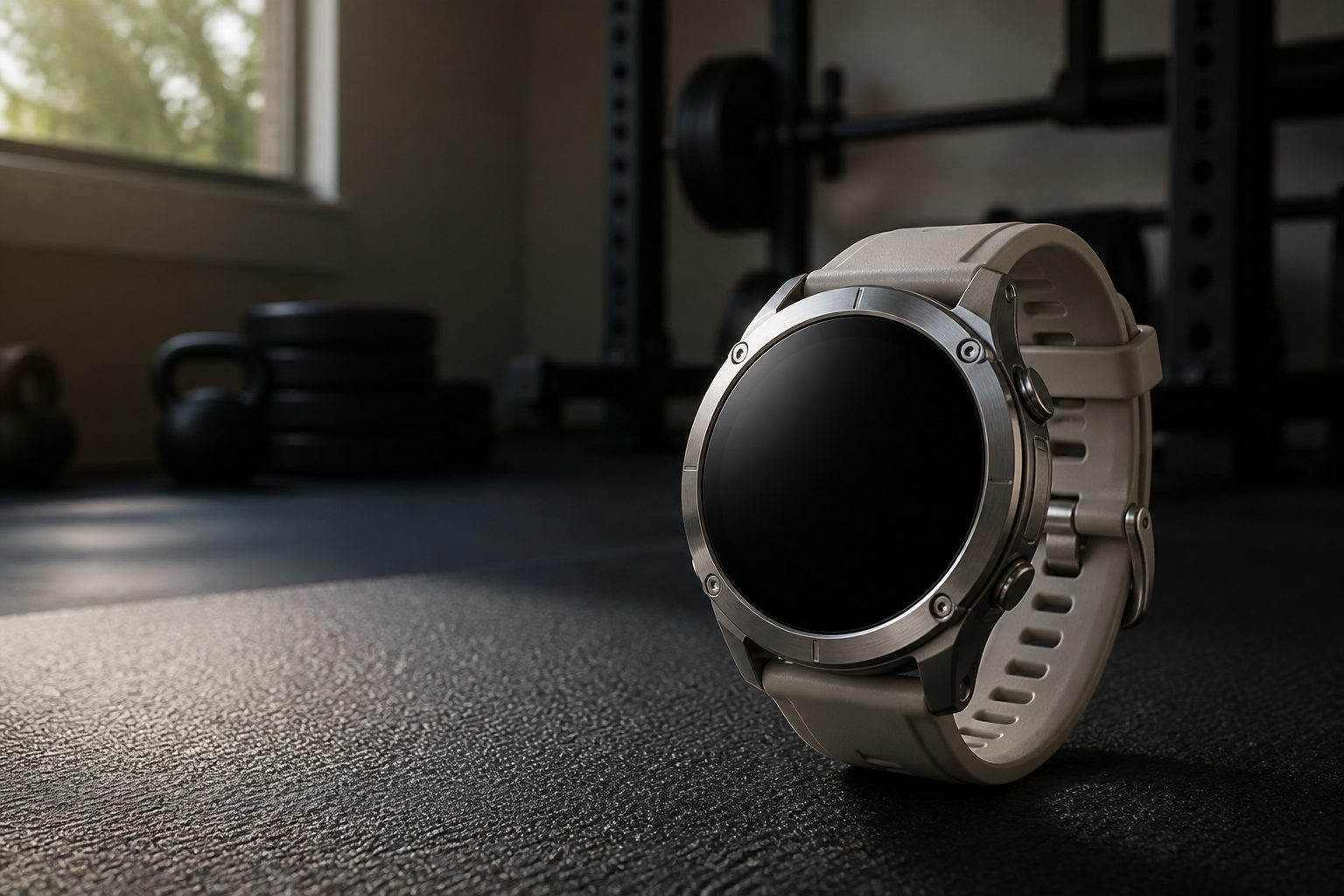
The Garmin Fenix 9 Pro 43mm keeps the full titanium, sapphire-topped flagship formula in a case that is far easier to wear beyond the trail.
 By James Oduya · Staff Writer & Home Gym Columnist · Updated September 14, 2026
Garmin Fenix 9 Pro 43mm: the short version
Shop Garmin Fenix 9 Pro 43mm on Amazon UK
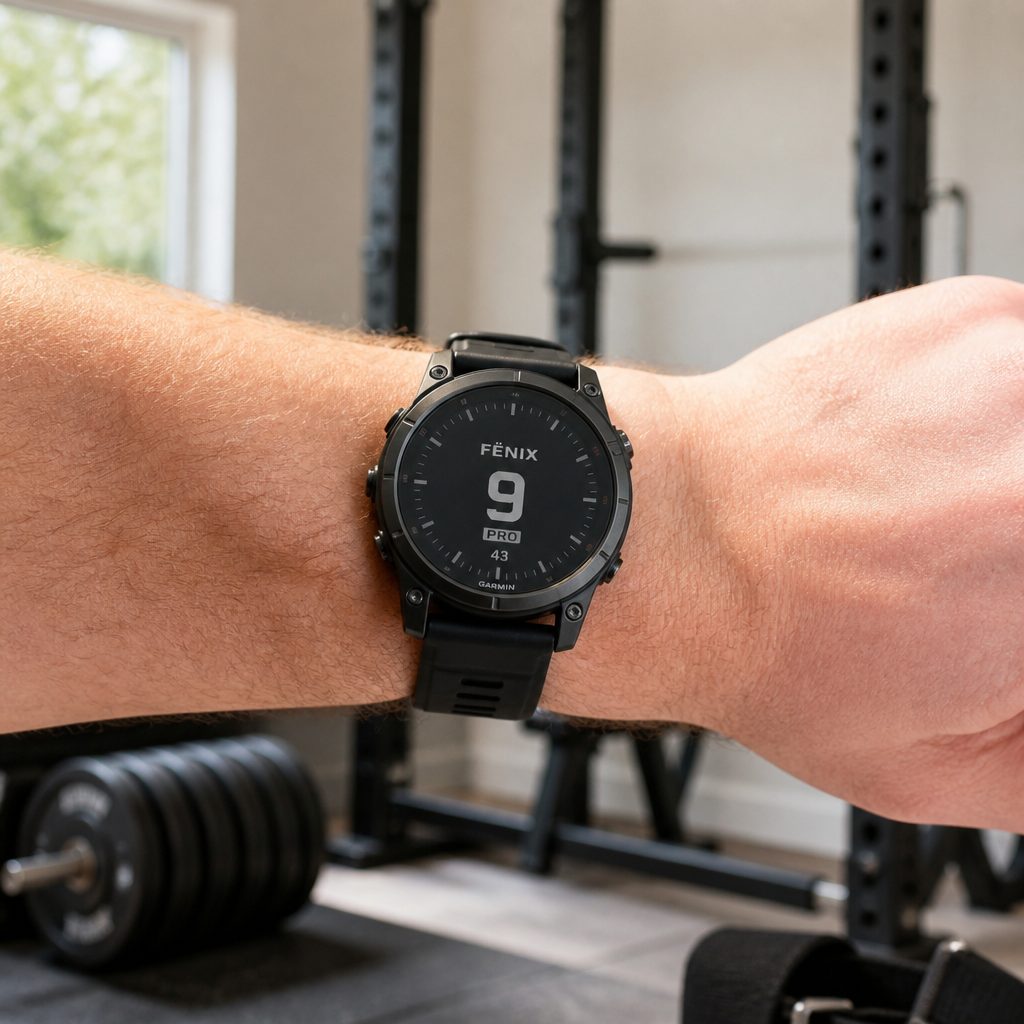
At 13.3mm thick, the compact Fenix 9 Pro sat half a millimetre slimmer than the previous 43mm Fenix 8, a small number that still helps at the cuff and under lifting straps.
Garmin's Fenix family had long been built around a very particular idea of a flagship sports watch: enormous capability, enormous stamina, and, rather often, an enormous wrist presence. The Fenix 9 Pro 43mm changed the balance. It remained an unapologetically premium multi-sport watch with multi-band GNSS, maps, dive capability, 64GB of storage, sapphire crystal and a full titanium body. Yet its 43 x 43 x 13.3mm dimensions made it a much more plausible companion for normal life.
That distinction matters more than it first appears. A training watch can have every sensor and sport mode going, but it is of limited use if it spends half the week on a bedside table because it catches on knitwear, knocks against kettlebells, or simply feels too bulky to sleep in. The smaller Pro was not featherweight at 62g with its band, but it was considerably less imposing than the 51mm model at 99g. On a narrower wrist, or on anyone who simply prefers a conventional-looking watch, that difference was not subtle.
There was a compromise, naturally. The 43mm AMOLED model offered up to 10 days in smartwatch mode, while the 51mm version reached 31 days. Big watches have room for big batteries. Physics remained annoyingly unpersuadable. Still, a weekly charge cycle in ordinary mixed use was a very workable result for a watch with a 1.3-inch, 3,000-nit AMOLED display and proper navigation credentials.
Key specifications at a glance
The crucial point is that the compact case did not mean a stripped-down specification. Garmin did not treat the 43mm Pro as a junior flagship. It received the same premium construction and the same broad outdoor credentials as its bigger AMOLED siblings. For gym users, runners and hikers who had previously chosen a smaller watch simply to avoid the visual heft of a larger Fenix, that was excellent news.
A properly compact Fenix, not a compromised one
The 43mm Pro's best feature was not a sensor, software screen or headline figure. It was proportion. Its round case was small enough to sit neatly on wrists that larger adventure watches tend to overwhelm, whilst remaining substantial enough to look and feel like a serious tool. The full titanium body helped here. It gave the watch a more resolved, higher-end feel than the fibre-reinforced polymer construction of the standard Fenix 9, which used a titanium rear cover rather than an all-titanium body.
Garmin achieved that full-metal construction through a nano-moulding process that bonded titanium and polymer at a molecular level. That is an unusually technical sentence for a watch review, I know, but the practical outcome was straightforward: a robust case without turning the 43mm watch into a dense metal puck. The case-only weight was 45g. Add the supplied band and it reached 62g, just one gram above the standard 43mm Fenix 9.
For strength training, that compactness made a real difference. A large watch can press into the wrist on a front-rack position, collide with the back of a dumbbell during presses, and become something you are constantly conscious of. The 43mm was not invisible, but it was much less intrusive. I would still take any watch off for heavy barbell work if it risks contact with the knurling. Titanium is lovely; scraped titanium is less lovely.
The QuickFit 20mm band system also suited the smaller case well. It made changing from a sweat-friendly training strap to something smarter for work pleasantly simple. This was an outdoors watch capable of expedition duties, certainly, but it was also the first Fenix size in the line-up that felt naturally suited to a shirt cuff, a commuter train and a restaurant table without advertising itself from three postcodes away.
The Fenix 9 Pro 43mm was available only with an AMOLED display. Garmin did not make a Solar 43mm Pro, so buyers who prioritised the MIP screen and maximum solar-assisted longevity needed to look at the 47mm or 51mm Solar models.
The AMOLED display is spectacularly usable
The 1.3-inch AMOLED panel used a 416 x 416 resolution and could reach up to 3,000 nits. Garmin described it as the brightest display it had shipped, and it was a significant upgrade in the sort of outdoor visibility that matters when you are actually moving. A watch screen that looks marvellous in a dark living room but turns into a glossy little mirror on a bright hill is not terribly heroic.
In direct sunlight, the Fenix 9 Pro's panel had the punch to make maps, data fields and notifications easy to pick out. It was also roughly brighter than the standard Fenix 9's approximately 2,000-nit screen. That does not make the base model difficult to read, but it did give the Pro a more assured feel in bright conditions. It is one of those upgrades that sounds luxurious until you use it during a run, then return to a dimmer watch and start squinting at your own wrist like a Victorian inspecting a telegram.
AMOLED also made the Fenix feel more enjoyable when it was not in workout mode. Watch faces had richer colour, menus looked cleaner, and the map detail had greater visual separation than it did on MIP displays. The trade-off was predictable: OLED's brightness and colour cost energy. The Fenix 9 Pro 43mm was still a multi-day watch rather than a nightly-charge smartwatch, but it did not have the almost carefree endurance of the Solar versions.
Sapphire crystal protection
The AMOLED display sat beneath sapphire crystal, a sensible match for a watch expected to survive gym bags, rocks, door frames and the occasional careless encounter with a cast-iron kettlebell.
Faster map handling
The updated map engine made panning around maps up to 30% faster, while the revised perspective view showed more context nearby and further ahead on a route.
A useful Pro-only torch
The built-in flashlight included white, red and green modes. The red and green options were particularly sensible for preserving night vision, rather than merely being a tiny torch included for bragging rights.
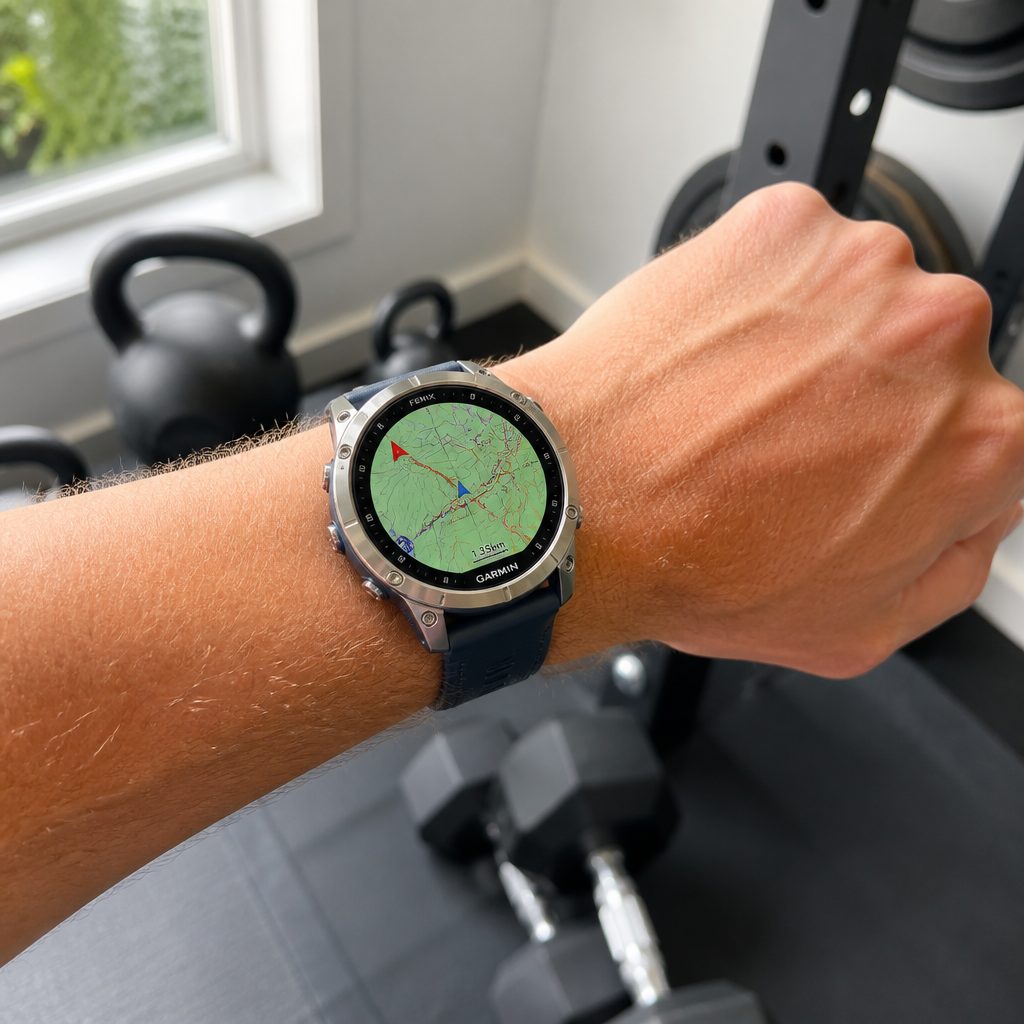
The 1.3-inch AMOLED panel is bright enough for outdoor route checks, while the smaller case keeps the screen close to the wrist rather than perched above it.
Training performance: plenty of depth, no smaller-watch penalty
The Fenix 9 Pro 43mm was a genuine all-rounder for people whose training did not fit into one tidy category. It had multi-band GNSS for outdoor sessions, substantial onboard storage, Bluetooth, ANT+ and Wi-Fi connectivity, and Garmin's Elevate Gen 5 heart-rate sensor. The latter was unchanged from the Fenix 8 Pro, and testing found readings virtually identical when watches were used on the same run.
That continuity may sound underwhelming if you were hoping for a dramatic sensor revolution. In practice, it was better read as reassurance. The Fenix 9 Pro did not arrive with a shiny new sensor that changed the character of its training data; it retained a known platform and paired it with a newer processor. Garmin confirmed that the Pro used a newer chip than the standard Fenix 9, likely from the same newer family at different speeds. The benefit was less about fireworks and more about the watch feeling responsive when using its more demanding features.
For gym regulars, the detail and breadth were almost excessive in the nicest possible sense. You could wear it for a structured lifting session, then use it for a run, a weekend hike and a swimming session without changing devices or lowering your expectations. It was also rated to 10 ATM and 40 metres for diving, using the Bühlmann ZHL-16C decompression model. Most readers will never need that, obviously. But a flagship watch that can handle diving has very little to prove during a sweaty circuit class.
The caveat with optical heart-rate sensors remained familiar. Fit mattered. A loose watch, especially during kettlebell swings, rowing or intervals with plenty of wrist flexion, could produce less reliable readings than a properly positioned watch. The smaller 43mm case actually helped some people here, because it was easier to settle comfortably above the wrist bone and keep firmly in place without feeling like a cuff. There is no glamour in a secure fit. There is, however, rather more value in it than in pretending all training data is magic.
Navigation and outdoor credentials are still the Fenix point
It would be easy to focus on the 43mm model as the "everyday" Fenix and overlook what it could do outdoors. That would be a mistake. Garmin did not remove the serious adventure credentials to make the watch more compact. Multi-band GNSS was here, maps were here, and the new map engine gave the interface a more confident feel when panning about and finding your place.
The perspective map view was a notably practical improvement. It offered more context both immediately around you and further along your route. On a familiar park run, that is pleasant. On an unfamiliar hillside, it is considerably more than pleasant. The ability to look ahead without reducing the nearby route to a vague line has genuine value when weather turns, light fades or you realise that the path marked on your plan is now mostly sheep and optimism.
The Fenix 9 Pro range also introduced inReach connectivity across 43mm, 47mm and 51mm size options. Select inReach models added LTE and satellite connectivity, broadening the appeal for people who genuinely spend time beyond reliable phone coverage. The important compact-watch victory was simple: choosing 43mm no longer meant being excluded from this part of the range. Smaller wrists were finally invited to the whole party.
The compact model makes the most sense for mixed training
If your weeks contain gym work, commuting, a few runs and the occasional long walk rather than repeated all-day mountain missions, the smaller watch's comfort advantage is likely to matter more often than the larger models' colossal battery reserves. Buy for the sessions you actually do, not just the adventure brochure version of yourself.
Battery life: the main reason to choose 47mm or 51mm instead
Here was the central decision. The Fenix 9 Pro 43mm offered up to 10 days in smartwatch mode and 15 days in low-power mode. It was rated for up to 18 hours of normal activity tracking, seven hours of activity with music, nine hours of activity with LTE LiveTrack, 50 hours in max battery mode and 22 hours in extended battery mode.
Those are useful figures, but they were not magic. In mixed real-world use, with at least 30 minutes of activity tracking a day, a weekly charge cycle was a sensible expectation. During a two-hour hiking or trail activity, one test saw battery level fall from 83% to 66%: a 17% reduction. That is the sort of evidence worth taking seriously, because it turns a headline "up to" figure into a more human planning conversation.
For a normal week of gym sessions, dog walks, sleep tracking and a couple of runs, weekly charging is entirely reasonable. It is still much less maintenance than many mainstream smartwatches demand. For a long weekend of navigation-heavy hiking, however, it asks you to think ahead. The 51mm AMOLED Fenix 9 Pro stretched to 31 days in smartwatch mode and up to 45 hours in max-accuracy GPS mode. That was a huge endurance gap, and there is no clever wording around it.
It is also why the 43mm model should not be bought by every Fenix fan merely because it is tidier. If you routinely run ultras, spend multiple days trekking, record long rides with navigation, or dislike charging anything on principle, the larger cases were objectively better tools. The 43mm was better when it was on your wrist. The 51mm was better when you were a long way from a plug socket.
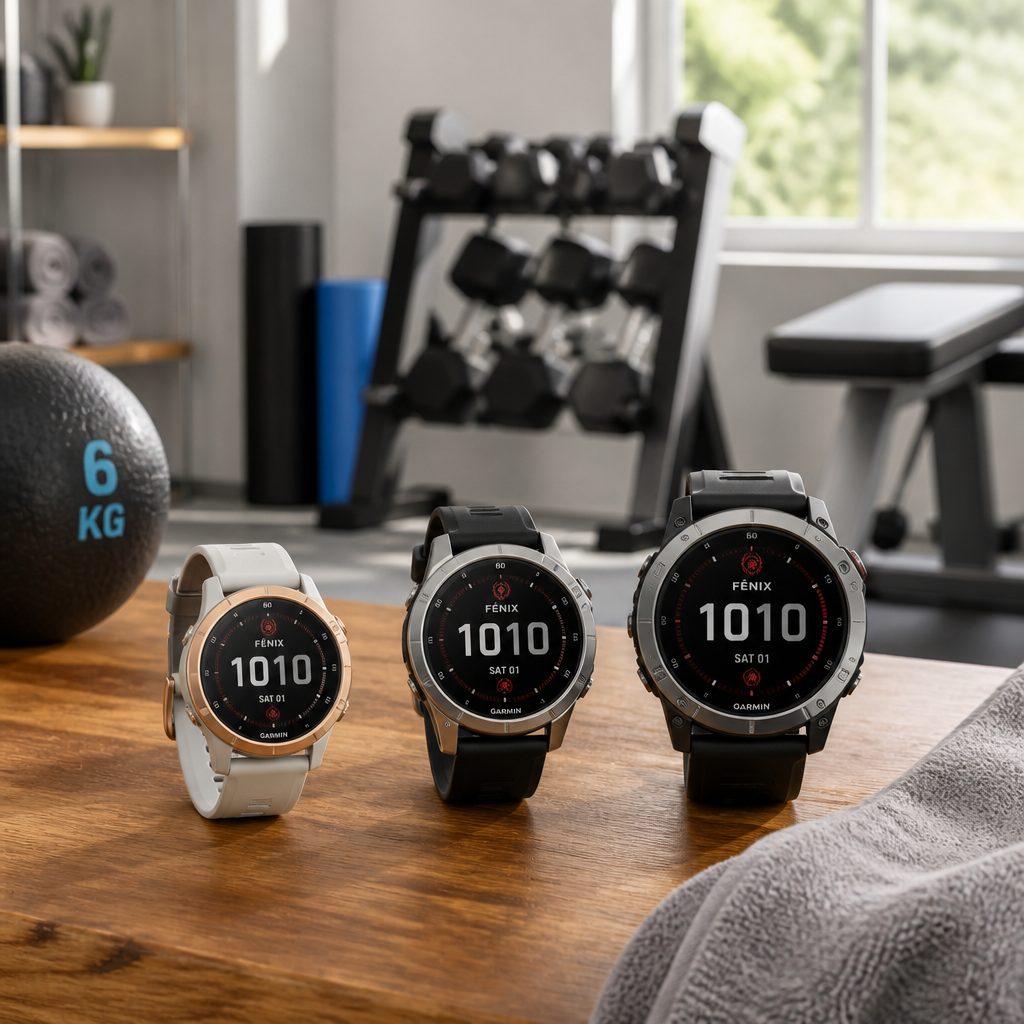
For gym sessions and ordinary daily activity, the 43mm battery is practical; for repeated all-day navigation, the 47mm and 51mm cases carry a clear endurance advantage.
Garmin Fenix 9 Pro 43mm versus 47mm and 51mm
The Fenix 9 Pro family made choosing a size more consequential than choosing a colour. Every size delivered a premium sports-watch experience, but their practical personalities were different. The 43mm was the comfort-first model. The 47mm was the familiar middle ground. The 51mm was for people who wanted the largest display, longest endurance and did not mind a watch that very definitely announced itself.
| Feature | Garmin Fenix 9 Pro 43mm | Garmin Fenix 9 Pro 47mm | Garmin Fenix 9 Pro 51mm |
|---|---|---|---|
| Case dimensions | 43 x 43 x 13.3mm | 47 x 47 x 13.8mm | 51 x 51 x 15.8mm |
| Weight with band | 62g | 78g | 99g |
| AMOLED display | 1.3-inch, 416 x 416 | 1.4-inch, 416 x 416 | 1.5-inch, 466 x 466 |
| Smartwatch battery | Up to 10 days | Up to 16 days on Fenix 9 47mm | Up to 31 days |
| Normal activity battery | Up to 18 hours | Up to 14 days | Up to 56 hours |
| Best fit | Smaller wrists and all-day wear | Balanced screen and case size | Long expeditions and maximum readability |
The most interesting row is weight. The jump from 62g to 78g was noticeable, but manageable for many wrists. The move to 99g was another matter. The 51mm was not absurdly heavy in outdoor-watch terms, but it was 37g heavier than the 43mm. Over a long hike that may not matter. During sleep, lifting, typing and the mundane business of wearing a watch every day, it absolutely can.
Screen size followed a similar pattern. The 51mm model's 1.5-inch, 466 x 466 display was superb for maps and large data fields. Its screen was 15% larger than the Fenix 8's without increasing case size. But the 43mm's 1.3-inch panel was no hardship, particularly because it carried the same 416 x 416 resolution as the 47mm. Text was crisp, maps were readable and the display did not feel like a compromise until you put it beside the enormous 51mm.
Comfort at the gym, in bed and at work
This is where the smaller Pro earned its place. Plenty of people buy high-end Garmin watches for training, then discover that comfort determines whether they obtain useful recovery and sleep data. If you take the watch off overnight because it feels cumbersome, you lose part of the picture. If you leave it in a drawer for lifting because it catches on equipment, its impressive activity range becomes academic.
The 43mm wore more like a robust everyday watch than a piece of outdoor hardware. Its 13.3mm thickness was also half a millimetre less than the 43mm Fenix 8. No one should pretend half a millimetre changes civilisation. Yet on the wrist, especially with a close-fitting sleeve or wrist wraps, tiny reductions can stop a watch feeling awkwardly tall.
For gym work, I would particularly recommend this size to people who train with dumbbells, cable handles or kettlebells, where the wrist is often flexed and the case can become a nuisance. It is also a good fit for Pilates, yoga and indoor cycling users who want Garmin's wider health and activity ecosystem without wearing something that looks designed to survive a polar crossing. You can survive a spin class in a 51mm Fenix. You may simply not need to make quite such a statement about it.
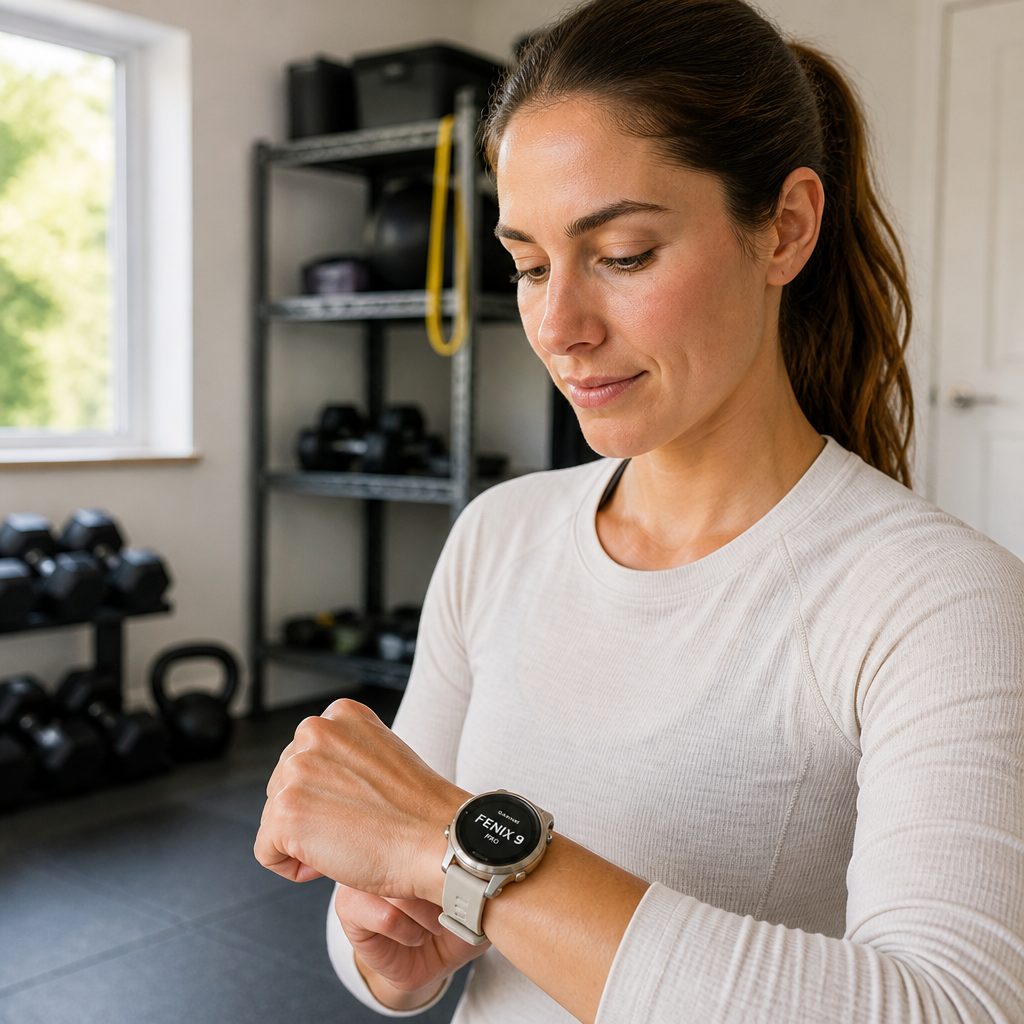
The 43mm case is the sensible choice for people who want full Fenix capability during training but prefer a watch that sits discreetly under everyday clothing.
Garmin Fenix 9 Pro 43mm: strengths and frustrations
Pros
- Compact 43mm case made flagship Fenix capability realistic for smaller wrists and all-day use.
- Full titanium construction, sapphire crystal and a 10 ATM water rating delivered a genuinely premium, hard-wearing package.
- The 1.3-inch AMOLED display reached up to 3,000 nits and was exceptionally easy to read outdoors.
- Multi-band GNSS, 64GB storage, maps and 40m dive capability meant no meaningful loss of serious sports features.
- Pro-only white, red and green flashlight modes were practical rather than merely decorative.
Cons
- Up to 10 days of smartwatch battery life was modest next to the 51mm Pro's 31-day figure.
- A two-hour trail activity used 17% battery in observed mixed use, so long days need planning.
- There was no 43mm Solar Pro alternative for buyers who preferred MIP display endurance.
- The heart-rate sensor delivered continuity rather than a new leap over the Fenix 8 Pro.
- The full flagship specification made most sense only if you would genuinely use its sport and navigation depth.
Who should choose the Garmin Fenix 9 Pro 43mm?
This was not the automatic best Fenix for everyone. It was, however, the best Fenix 9 Pro for a surprisingly broad group of people who had previously assumed that a serious Garmin had to be physically large. The right choice came down to the role the watch played on your wrist during the other 23 hours of the day.
Best for gym regulars
The Fenix 9 Pro 43mm is the strongest pick for lifters and mixed-training users who want rich tracking without a large case interfering with wrist movement or equipment.
Best for smaller wrists
The 43mm model retains the titanium, sapphire, AMOLED and mapping experience while looking proportionate on a narrower wrist.
Best everyday all-rounder
For commuters, runners and weekend walkers, this is the Fenix that is easiest to keep on from morning through sleep tracking.
Best for expeditions: choose 51mm
The 51mm Pro is the better specialist tool for extended navigation and maximum battery endurance, provided its larger size suits your wrist.
There was also a sensible case for the 47mm AMOLED model. If a 43mm watch looked too small on your wrist, but the 51mm sounded like overkill, the middle size offered a 1.4-inch screen and a less extreme physical footprint. This review's conclusion is not that smaller was universally better. It is that smaller was, at last, fully flagship.
Is it good value as a premium training watch?
The Fenix 9 Pro 43mm sat firmly at the premium end of the sports-watch market, so value depended on whether you would use its breadth. It was easy to admire the titanium, sapphire, AMOLED screen and diving credentials. It was harder to justify them if your entire training life consisted of three indoor treadmill runs a week and a vague intention to try hiking next spring.
For committed exercisers, though, the proposition was more coherent. You were not buying a watch solely for step counts or notifications. You were buying a durable platform for training, recovery tracking, gym sessions, outdoor navigation and daily wear. The 64GB storage, multi-band GNSS and updated map performance gave it longevity as a practical tool, not just a shiny new screen to glance at during meetings.
The standard 43mm Fenix 9 complicated matters a little. It matched the Pro's 1.3-inch 416 x 416 screen resolution and 10-day smartwatch battery estimate, weighed 61g with its band, and was actually 0.5mm thicker at 13.8mm. The Pro's meaningful upgrades were its up-to-3,000-nit display, full titanium body, sapphire lens, newer processor and flashlight. Those are substantial upgrades for someone who appreciates build quality and outdoor usability. They are less compelling for a buyer who only wants Garmin's core activity functions.
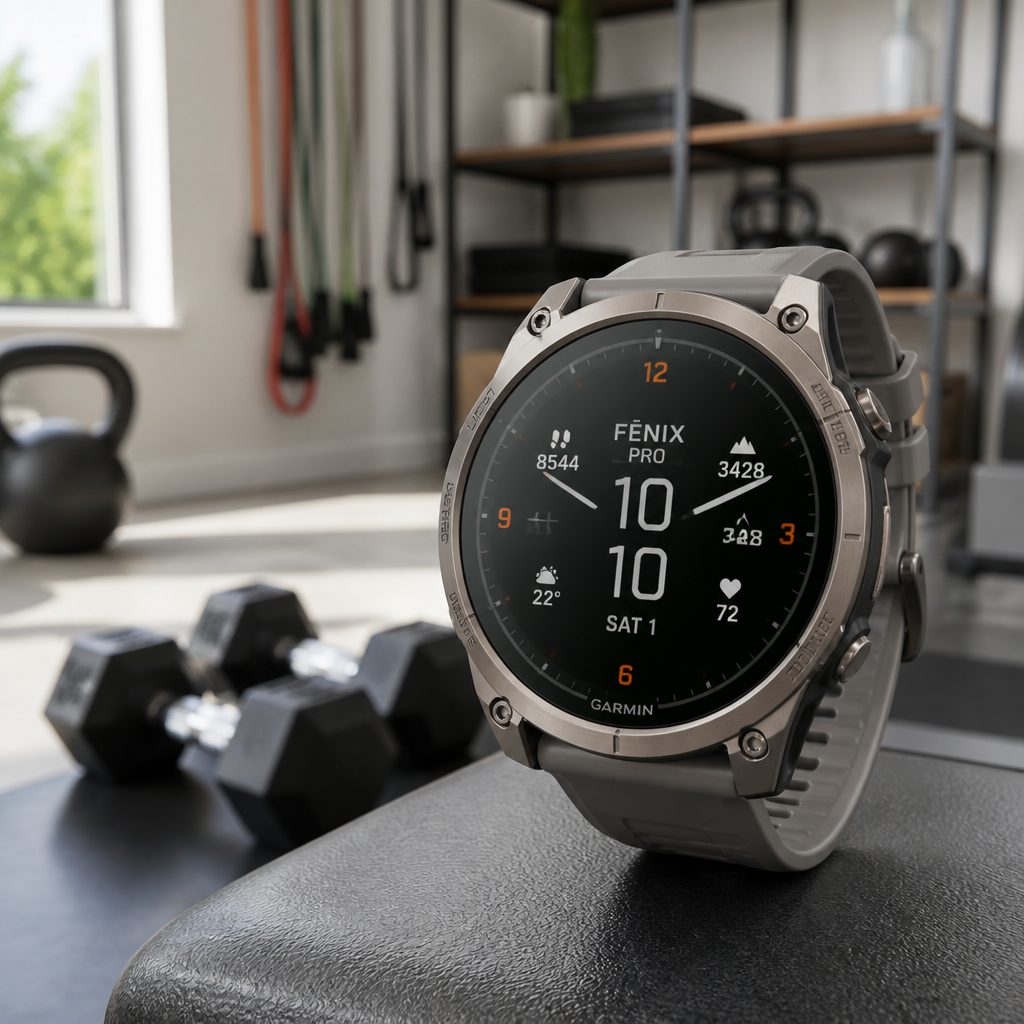
The premium argument for the Pro rests on the full titanium build, sapphire lens, brighter AMOLED screen and practical flashlight rather than a simple increase in basic workout tracking.
Everyday use after the novelty wore off
A good flagship watch should become boring in the best way. You should stop thinking about it because it works, sits comfortably and has enough battery to avoid becoming another little domestic chore. The Fenix 9 Pro 43mm came close to that ideal, with one qualification: high-demand activities could make battery awareness part of the routine.
For ordinary days, its 10-day smartwatch claim gave enough buffer that missing a planned charge was not disastrous. The AMOLED display made it pleasant to use for quick checks, and the case looked refined enough that it did not feel out of place away from training. The green and red flashlight modes were the kind of feature you might dismiss at first, then use to find something in a dark hallway without waking everyone else. A small luxury, perhaps. A nice one.
The watch also made a compelling argument for choosing comfort as a performance feature. Wear it comfortably overnight, and you are more likely to maintain consistent data. Wear it throughout the working day, and you capture the less glamorous parts of activity and recovery. Wear it during a spontaneous walk or an unplanned gym session, and you do not lose the record simply because your larger watch felt too cumbersome that morning.
That was the 43mm Pro's quiet achievement. It did not make the Fenix less capable. It made the Fenix easier to live with.
Frequently asked questions
No. Its 1.3-inch AMOLED display used a sharp 416 x 416 resolution, and the screen could reach up to 3,000 nits. The 51mm model was undoubtedly better for people who want the largest possible map view, but the 43mm was entirely practical for route guidance and data fields.
Garmin rated it for up to 10 days in smartwatch mode, up to 18 hours in normal activity mode, seven hours with activity and music, and nine hours with activity plus LTE LiveTrack. In mixed use with at least 30 minutes of daily activity tracking, a weekly charge was a realistic expectation.
Yes. Its smaller 43mm footprint was one of its biggest advantages for gym users, especially compared with the 51mm model. It was less likely to feel cumbersome during dumbbell work or general training, although taking any watch off for heavy barbell movements remains sensible when there is a risk of contact.
No. Garmin offered Fenix 9 Pro Solar versions in 47mm and 51mm sizes only. The 43mm Pro was an AMOLED model, so buyers who wanted a MIP display and solar-focused endurance needed one of the larger Solar watches.
The Pro had a full titanium body, sapphire crystal, an AMOLED display rated up to 3,000 nits, a newer processor and a built-in flashlight with white, red and green modes. The standard 43mm Fenix 9 used a fibre-reinforced polymer case with a titanium rear cover and had roughly 2,000 nits of display brightness.
No. It retained the Elevate Gen 5 heart-rate sensor from the Fenix 8 Pro. Testing on the same run found readings were virtually identical, so this was a case of proven continuity rather than a dramatic new sensor upgrade.
Choose the 43mm if you value sleep comfort, gym practicality, smaller-wrist fit and an understated everyday watch. Choose the 51mm if long GPS activities, a larger 1.5-inch display and up to 31 days of smartwatch battery life matter more than compactness.
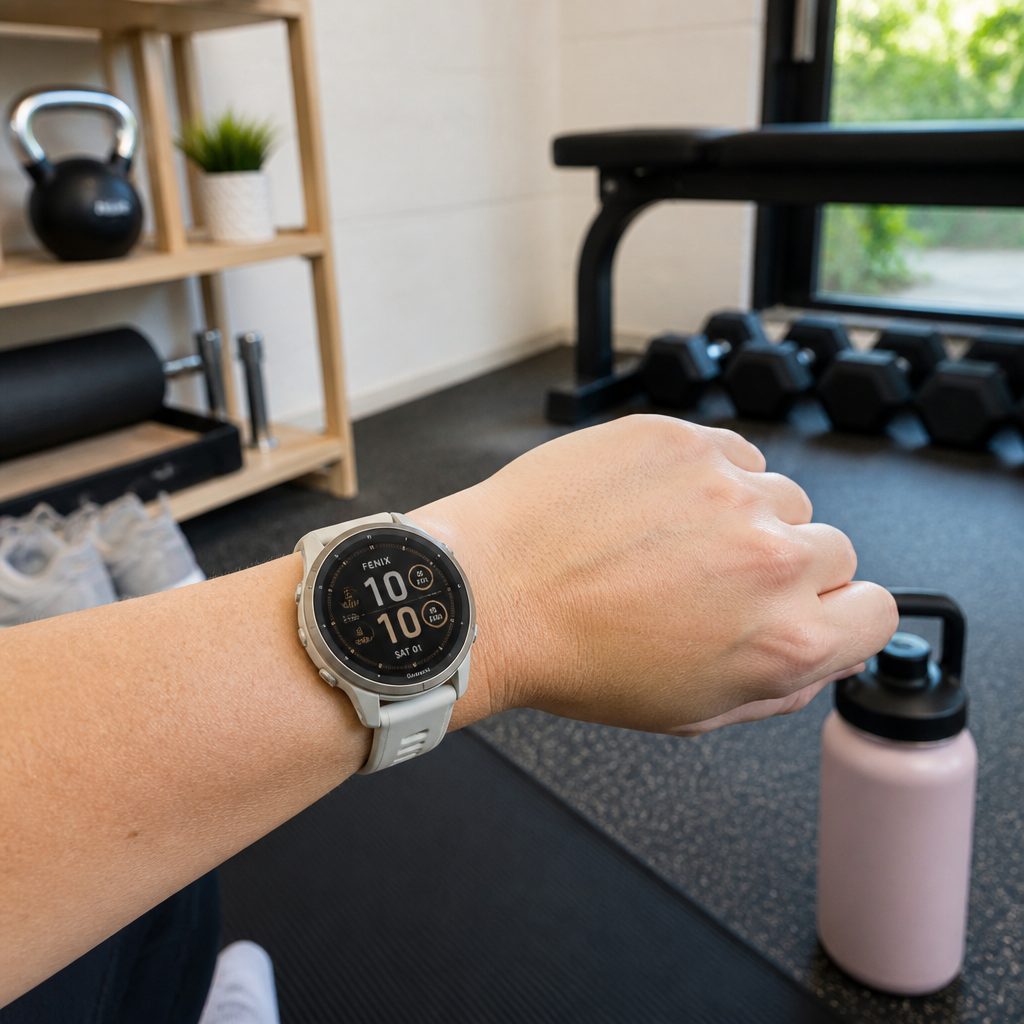
The Fenix 9 Pro 43mm is at its best when it is the watch you are happy to wear for the whole week, not merely the device you pack for a big outdoor day.
Verdict: the best Fenix 9 Pro for everyday athletes
The Garmin Fenix 9 Pro 43mm was the most convincing choice in the range for people who wanted an uncompromising sports watch without the bulk traditionally attached to that ambition. Its full titanium body, sapphire display, bright 1.3-inch AMOLED panel, multi-band GNSS, maps, 64GB storage and serious water credentials meant it did not feel like a reduced-capability alternative.
Its limitation was battery scale. Up to 10 days of smartwatch use was good, but it was nowhere near the 51mm model's 31 days, and the observed 17% drain during a two-hour trail activity showed why endurance athletes should think carefully before downsizing. For most gym-goers, runners, commuters and weekend hikers, though, the compromise was more than worthwhile. The smaller flagship was not better because it did more. It was better because you were far more likely to keep wearing it.