
Garmin Fenix 9 confirmed: Enduro 4 nowhere to be seen
Garmin launched the Fenix 9 and Fenix 9 Pro at its Play Harder livestream event on 25 August — but the long-awaited Enduro 4 was a no-show.
 By James Oduya · Staff Writer & Home Gym Columnist · Updated August 29, 2026
What you need to know
- Garmin unveiled the Fenix 9 and Fenix 9 Pro at its Play Harder YouTube livestream on 25 August 2026
- The base Fenix 9 starts at £859.99; the Pro range runs from £949.99 to £1,199.99 across 15 models
- The Enduro 4 was not announced and has no confirmed launch date
Garmin goes live — and leaves Enduro fans waiting
Garmin officially announced the fēnix 9 and fēnix 9 Pro on Tuesday 25 August 2026, streaming the reveal via a dedicated YouTube event called Play Harder at 12:00pm BST. The watches went on sale from 28 August. The Enduro 4, which many in the running community had expected to appear alongside them, was absent from the announcement entirely, and as of today — Saturday 29 August — no new date has been confirmed by Garmin.
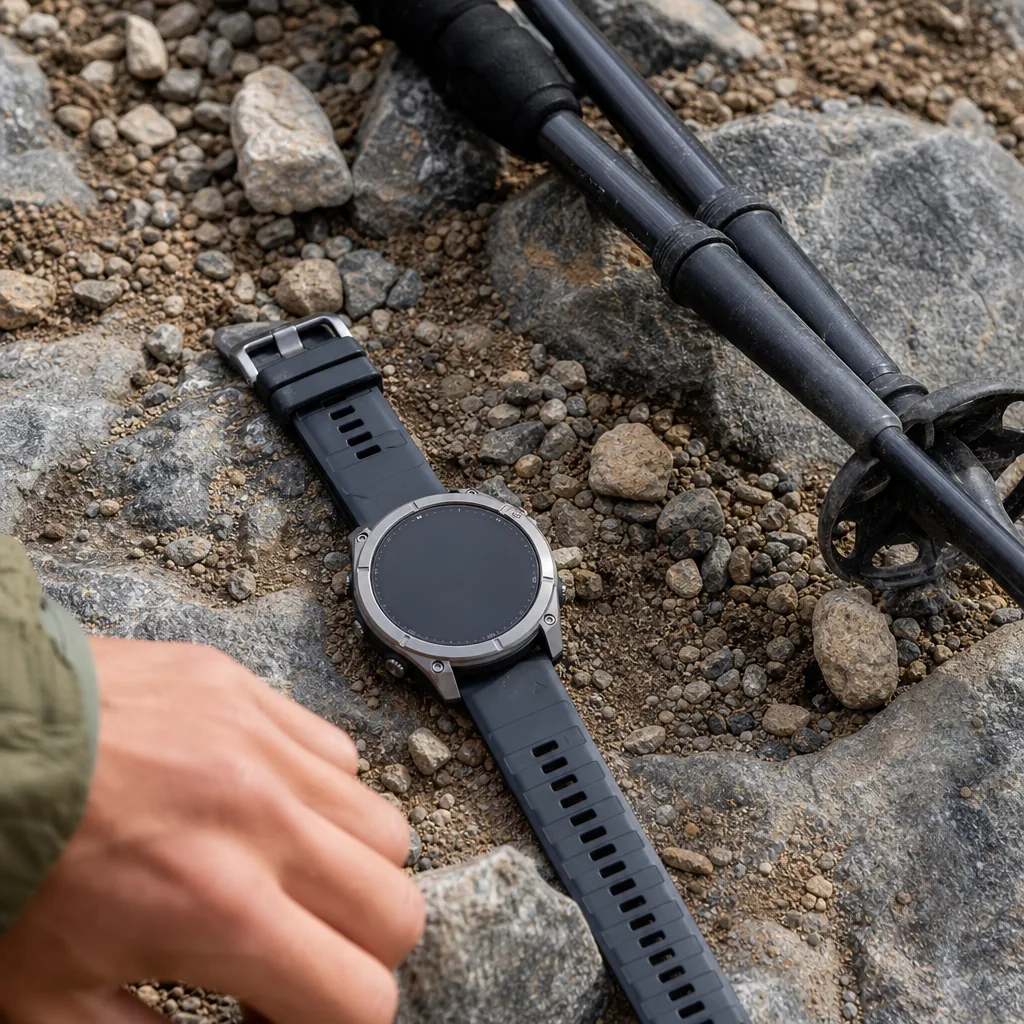
A dedicated launch livestream is still unusual territory for Garmin, which has historically relied on press releases to announce new hardware. The only direct precedent was the Fenix 8, Fenix E, and Enduro 3 reveal on 27 August 2024, which also had its own stream. The Play Harder format signals that Garmin is treating this generation as a flagship moment — and the spec sheet largely justifies that confidence.
What Garmin actually announced
The Fenix 9 lineup comprises five distinct configurations across three case sizes — 43 mm, 47 mm, and 51 mm — for a total of 15 models confirmed at launch. The five variants are:
- Fenix 9 (AMOLED display)
- Fenix 9 Pro (AMOLED)
- Fenix 9 Pro Solar (MIP display)
- Fenix 9 Pro inReach (AMOLED with satellite and LTE)
- Fenix 9 Pro inReach Solar (MIP with satellite and LTE)
The base Fenix 9 uses a fibre-reinforced polymer case with titanium components. The Pro steps up to a full titanium case built using what Garmin describes as a nanoscale bonding process it has not used in previous watches — not merely the titanium bezel that featured on the outgoing Fenix 8 Pro.
Key headline numbers for the Fenix 9: 64 GB of storage (up from 32 GB on the Fenix 8), and an AMOLED panel rated at approximately 2,000 nits — twice the brightness of the Fenix 8 AMOLED. The Fenix 9 Pro AMOLED pushes further still, to 3,000 nits, which Garmin says makes a material difference when reading topographic maps in direct alpine sunlight. Both models carry a depth sensor rated to 40 metres, ECG, and multi-band GNSS with SatIQ.
Battery life and satellite connectivity
Battery figures vary considerably by model and display type. The 51 mm Fenix 9 Pro Solar is rated for up to 75 hours in normal activity mode, rising to 124 hours with sufficient solar exposure and up to 57 days in smartwatch mode with solar charging. The 51 mm Fenix 9 Pro AMOLED is rated for up to 56 hours in activity mode and 31 days in smartwatch mode.
The inReach-enabled Pro variants add built-in LTE and satellite connectivity, covering LTE-M bands 2, 4, and 12 for voice, and NB-NTN satellite bands 23 and 255 for data — alongside Wi-Fi, Bluetooth, ANT+, and NFC. This allows voice calls, text messaging, and SOS communication directly from the wrist. Crucially, inReach is offered across all three Pro case sizes for the first time, meaning the 43 mm model is no longer excluded. Adding inReach costs an additional $100 (approximately £73) and requires a subscription, which starts at $7.99 (approximately £5.86) per month.
UK buyers should be aware of one significant safety caveat: the inReach built into the Fenix 9 Pro uses geostationary satellites, not the same infrastructure as a standalone Garmin inReach Mini 3+ or a personal locator beacon. That means coverage gaps exist, and for remote hillwalking in Scotland or elsewhere, a dedicated PLB or standalone inReach device remains the more reliable SOS option. Garmin recommends checking coverage requirements at its website before purchasing an inReach-enabled model.
New software features
Both models introduce Garmin Epic, a new feature that groups multiple activities into a single shareable story within Garmin Connect. Enhanced stamina metrics have also been updated to help athletes adjust their training load in real time. On the activity side, ArcheryX replaces the previous Archery profile with real-time shooting timing and aiming indicators, and a new Gaming Activity mode adds GameOn app compatibility. Garmin has also upgraded the onboard mapping engine to address the sluggish navigation panning that users of previous models frequently reported, with faster map rendering and round-trip routing now confirmed.
UK prices and availability
The Fenix 9 starts at £859.99. The Fenix 9 Pro and Fenix 9 Pro Solar both start at £949.99, with prices rising to £1,199.99 at the top of the range. All models were available to order from 28 August via Garmin's own site and Amazon, with shipping beginning the same day, according to GPS Training UK.
"fēnix 9 and fēnix 9 Pro are purpose-built for those who want to perform better and venture farther." — Garmin press release, 25 August 2026.
What about the Enduro 4?
Before the event, an Enduro 4 string appeared in Garmin Connect in June 2026, and the watch's FCC filing — model A05170, with a final action date of 5 August 2026 — had been spotted by tracker sites. Garmin CEO Cliff Pemble had also referenced a "significant number of new product introductions" in the outdoor category for the second half of 2026. None of that translated into an announcement on 25 August. Garmin has broken with its previous pattern of launching the Enduro alongside the Fenix, and as of this weekend there is no confirmed date for the Enduro 4 — whether as a delayed H2 2026 launch or something further out remains an open question.
Buyers who were holding out for the Enduro 4 before deciding have no firm timeline to work with. Those ready to commit to the Fenix 9 generation, however, can order now.
Why it matters
For UK buyers, the Fenix 9 arrives at the same entry price as the Fenix 8 did two years ago but with double the storage and a screen twice as bright — a meaningful upgrade without a price hike. Smaller-wristed buyers gain the most from this generation: for the first time, inReach satellite and LTE connectivity is available on the 43 mm case size. The satellite caveat matters too, though — the built-in inReach uses geostationary satellites with coverage gaps, so hillwalkers venturing into remote terrain should treat a standalone inReach device or PLB as a safer fallback for SOS situations.