
Garmin CIRQA Smart Ring certified — pre-Christmas launch signalled
A fleeting Indonesian certification filing has revealed a product Garmin insisted it wasn't making — and the timing points squarely at the holiday shopping window.
 By James Oduya · Staff Writer & Home Gym Columnist · Updated September 05, 2026
What you need to know
- A Garmin CIRQA Smart Ring appeared in Indonesia's e-Sertifikasi database on 12 August 2026, then vanished the following morning.
- Garmin has made no official announcement and has released no specs, pricing or launch date.
- The mid-August filing timing aligns with a potential October 2026 launch — still inside the pre-Christmas retail window.
- Garmin's own executives insisted as recently as early 2026 that a ring was not in their plans.
The filing that wasn't supposed to exist
On 12 August 2026, a routine equipment certificate appeared in Indonesia's e-Sertifikasi database. Filed by PT Garmin Indonesia Distribution and assigned certificate number 125338/DJID/2026, it listed a device in the "Fitness Product" category under brand name GARMIN and model name "CIRQA SMART RING," manufactured in Taiwan. By the morning of 13 August 2026, the listing had disappeared from the public database entirely.
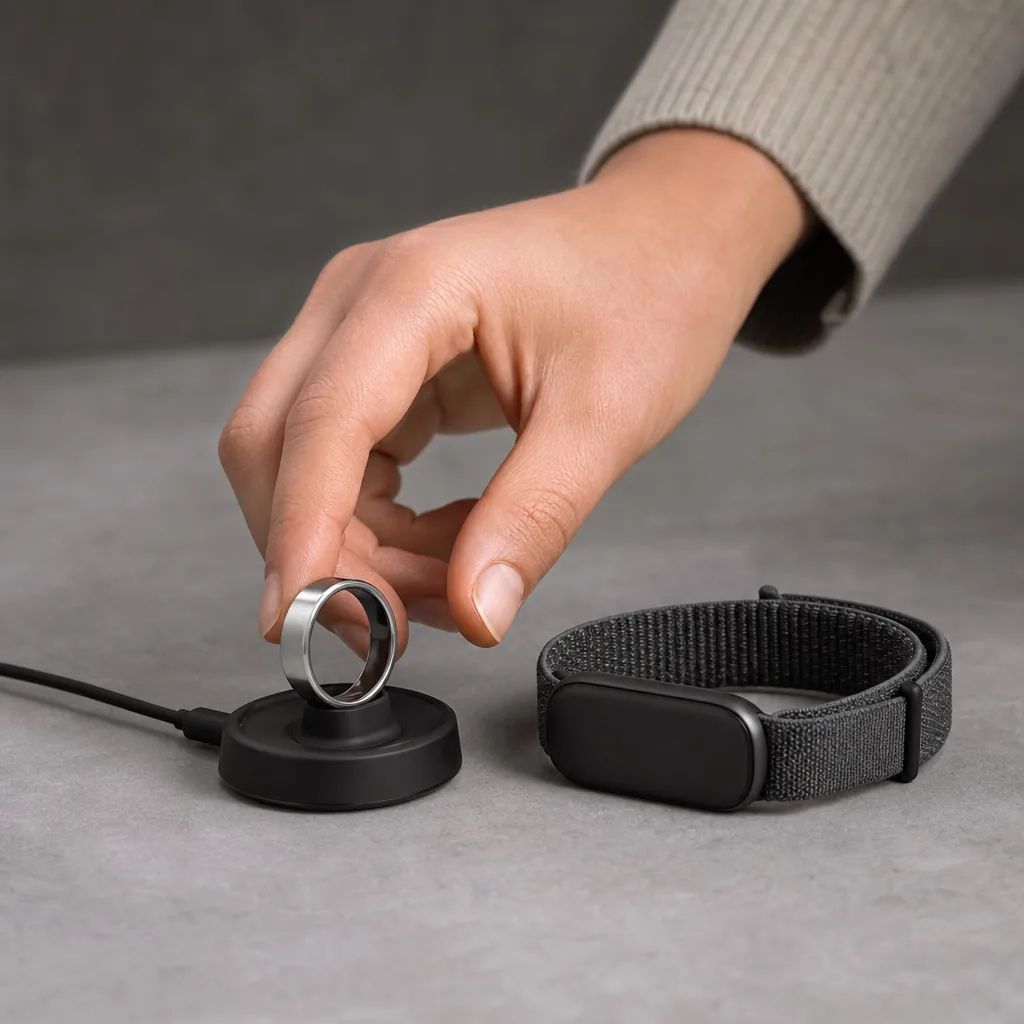
The filing was first reported by the Garmin News blog. Crucially, two adjacent Garmin certificates from the same day — 125337/DJID/2026 for a fitness device and 125339/DJID/2026 for a diving product — remained live in the database. The CIRQA Smart Ring entry alone was removed. As the blog noted, if the filing had been a clerical error you would typically expect a correction rather than an outright deletion.
Garmin has not announced the product. The company has published no product page, released no specifications and confirmed no pricing or launch date. The certification should be treated as a strong signal rather than a confirmation — but it is a signal that is difficult to explain away.
Why the timing points toward Christmas
Regional equipment certifications of this kind are generally filed when a product is in advanced stages of development and approaching market availability — not years ahead of launch. A mid-August filing gives Garmin roughly two to three months before a typical October product announcement cycle, and October is broadly considered the last practical moment to launch a new consumer wearable if retailers are to be stocked in time for Christmas.
October 2026 is the rumoured release window, according to industry observers. Garmin has not confirmed a release date, and a launch slipping into early 2027 cannot be ruled out — but the calendar arithmetic is hard to ignore.
A company that said it wasn't interested in rings
The filing is particularly striking given how explicitly Garmin's leadership had dismissed the smart ring category. At the company's Health Summit in Prague in September 2024, Joe Schrick, Garmin's VP of Fitness, stated directly: "The fidelity of the data on the wrist is going to be better [than a ring] because you have more power, you have more LEDs, you have more sensors, and you have more battery life."
That position appeared to hold well into 2026. On the company's February 2026 earnings call, a Longbow Research question about "non-traditional form factors" led analyst site the5krunner to judge a ring "widely speculated but unlikely," noting Garmin had effectively ruled it out. Garmin also confirmed in February 2026 that its new Thailand manufacturing facility would produce automotive and smartwatch components — explicitly not rings.
No Garmin official has commented on the certification filing or reversed Schrick's stated position on the record. On Garmin's Q2 2026 earnings call on 29 July 2026, Morgan Stanley asked CEO Cliff Pemble directly how far Garmin was willing to go on adjacent wearable form factors — but Pemble's response has not been confirmed in available sources.
The CIRQA family takes shape
The use of the CIRQA name is itself telling. Garmin launched the CIRQA Smart Band on 21 July 2026 — its first screen-free wearable, priced at $199.99 / £179.99 / €199.99 — and described it specifically as its first screen-free smart band. The band uses Garmin's Elevate 4 sensor in a fabric-loop design that can be worn on the wrist or upper arm, tracking heart rate, Body Battery, stress, Pulse Ox, skin temperature, advanced sleep metrics and over 80 fitness activities, with up to 10 days of battery life and no mandatory subscription.
Demand has exceeded expectations. As of Garmin's 29 July 2026 earnings call, some CIRQA Smart Band configurations were showing five to eight week wait times. Applying the CIRQA name to a ring suggests Garmin may be building a broader family of low-profile, screenless wearables rather than treating the band as a one-off. Garmin's earlier CIRQA trademark filings used language broad enough to cover various body-worn sensors beyond wrist devices.
What we do and don't know about the ring
The Indonesian certification provides no technical specifications whatsoever. Sensor type, battery life, connectivity and design details are all unconfirmed. Pricing is equally unclear, though informed speculation — based on the Smart Band's $199.99 launch price — puts the ring somewhere between $199 and $249, with $299 considered an unlikely ceiling. A UK price has not been confirmed.
Expected features, per informed speculation rather than any Garmin announcement, include sleep tracking, HRV status and Body Battery without a mandatory subscription. That last point, if it holds, would be one of the ring's most commercially significant characteristics.
- No confirmed specs, sensors or design details
- No confirmed UK or US price
- No confirmed launch date
- Garmin has not acknowledged the product exists
With Samsung having delayed its Galaxy Ring 2 to 2027, the pre-Christmas smart ring shelf is notably thin. Whether Garmin fills that gap — or makes buyers wait until 2027 — remains to be seen.
Why it matters
For UK buyers, the most compelling angle is what Garmin is almost certain to do with pricing. The CIRQA Smart Band already costs £179.99 with no compulsory subscription, and Garmin has made that model a clear part of its identity. If the ring follows suit — even at a modest premium — it would represent genuinely disruptive value in a market where the Samsung Galaxy Ring launched at $399.99 and Oura charges a monthly fee on top of hardware that already costs $299 to $349. Samsung has also delayed its Galaxy Ring 2 to 2027, leaving the Christmas smart ring shelf unusually bare. A subscription-free Garmin option, arriving at exactly that moment, could reshape buyer expectations for the entire category.